“I don’t want Petit h to have a style” — inside the Hermès workshop where materials lead the design
Founded in 2010 by Pascale Mussard in Pantin, Paris, Petit h transforms unused materials from Hermès’ sixteen métiers. In this interview, Godefroy de Virieu explains why materials come first
Inside the Petit h workshop in Pantin
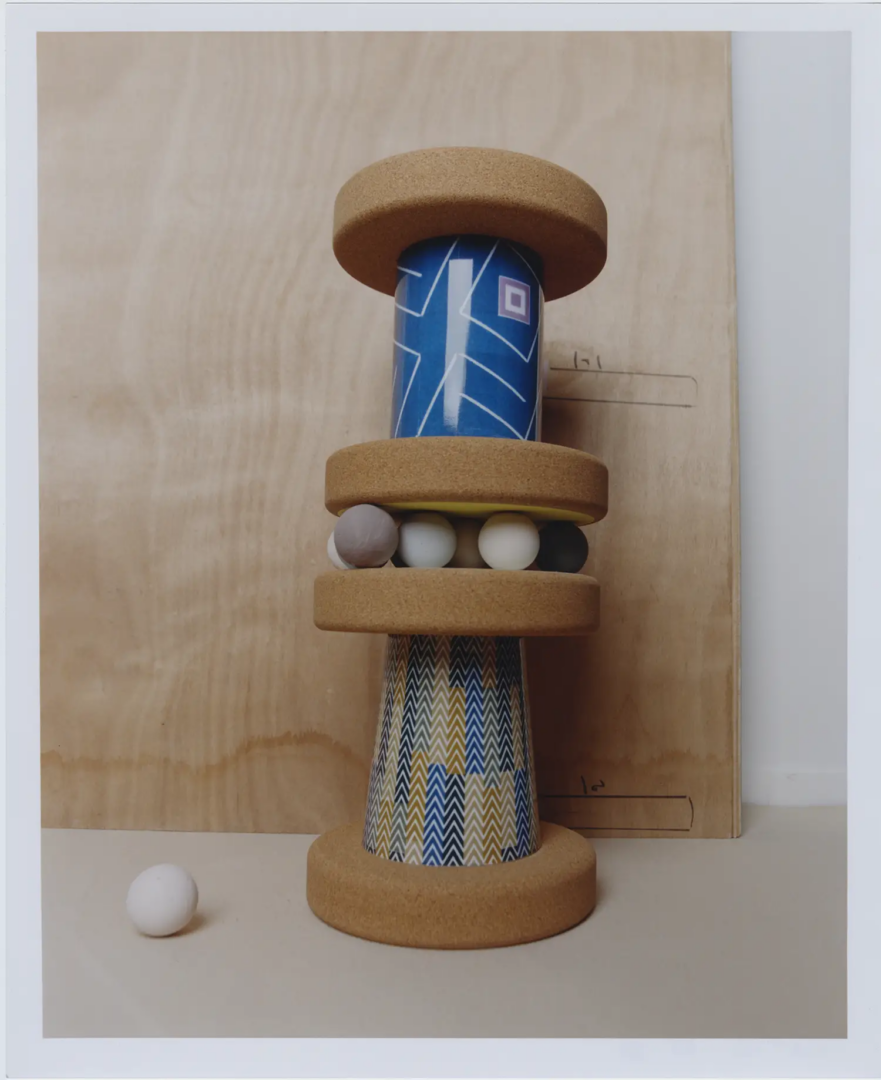
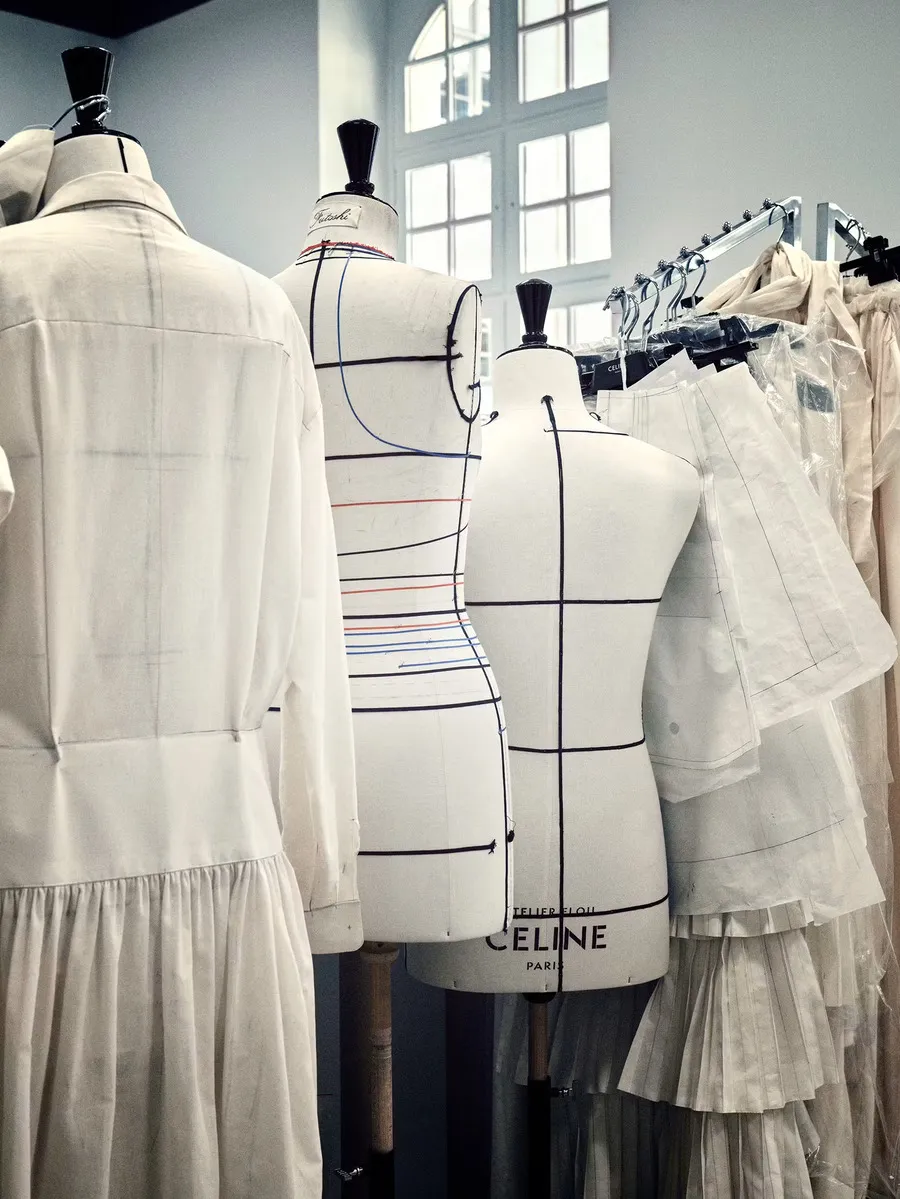
Almost everyone is in today. Patterns are drawn on sheets of paper, fabric samples glued in place. Materials are stacked, twisted, flipped – tested for how they might look, how they might function, what else they could become. We stop at the workstation of Angélique, who is measuring around a porcelain form, surrounded by many more in patterned shades. These are remnants of large vases from Saint-Louis, part of the Hermès group since 1995. The error margin in glassmaking is high, about eighty percent, because if there is even one small bubble, the piece must be destroyed.
“Instead, we collected them here in the workshop, cut them to the right size, and sand them so they can become small stools or coffee tables,” says Godefroy de Virieu, Artistic Director of Petit h since 2018. “At some point we started talking about cork, and how it can protect a piece of crystal if you place it between two round shapes. Angélique is now figuring out how to assemble it all. We’re going to save a lot of waste.”
What is Petit h, the creative laboratory of Hermès
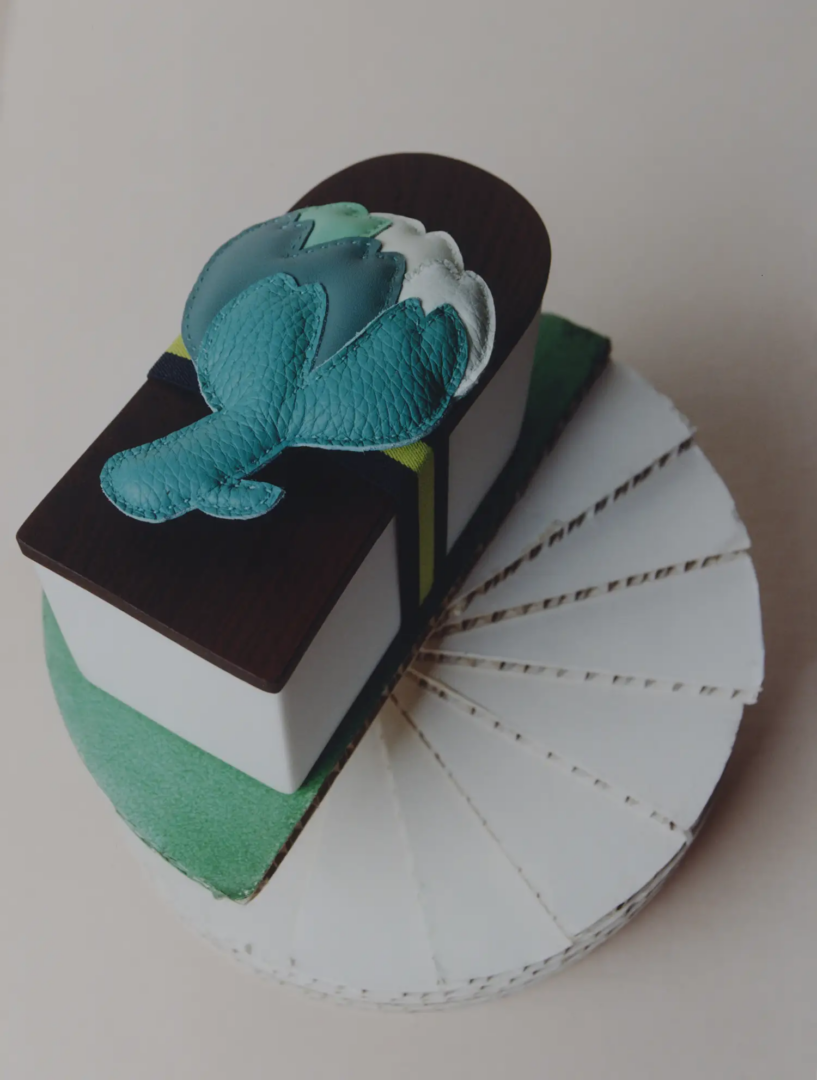
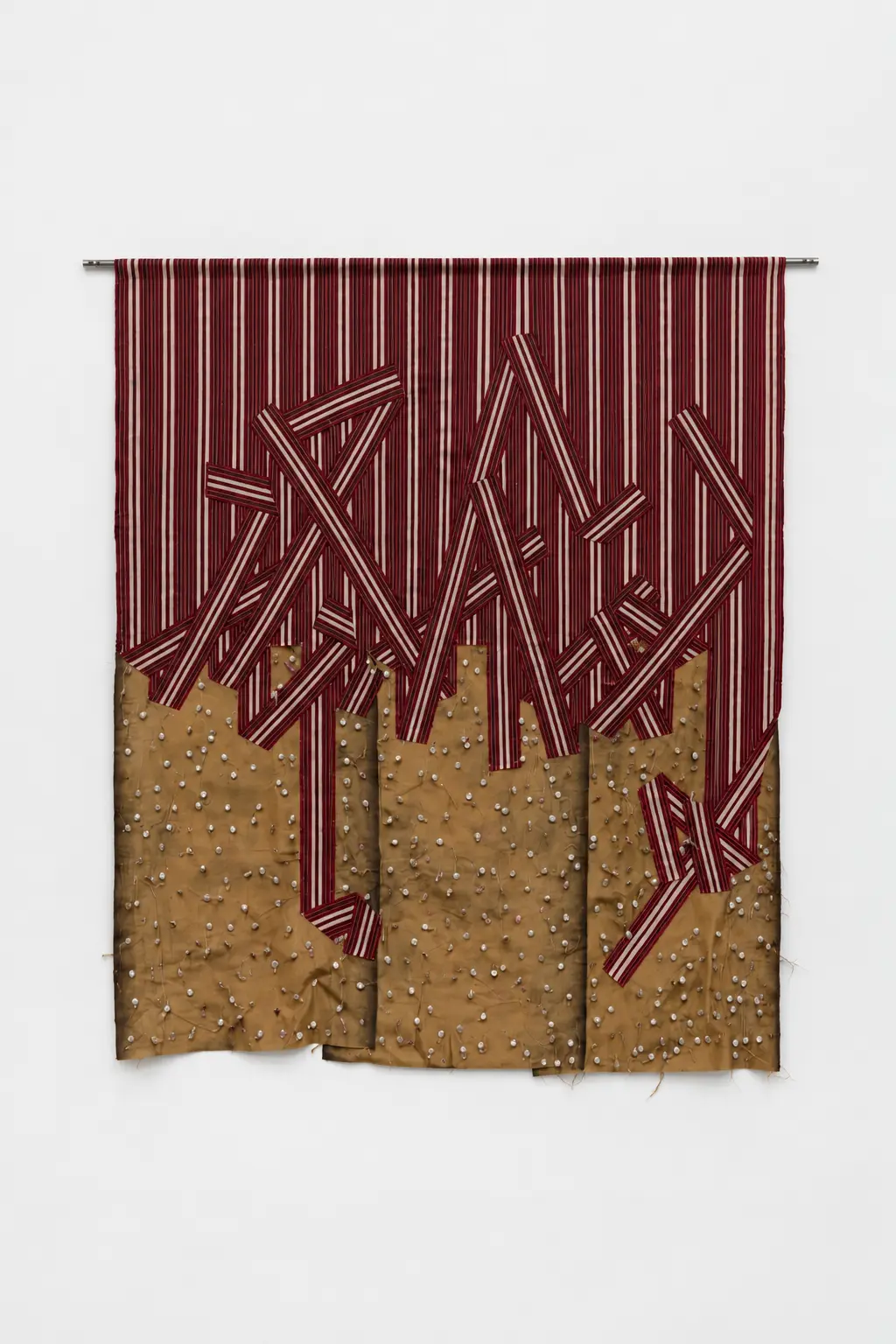
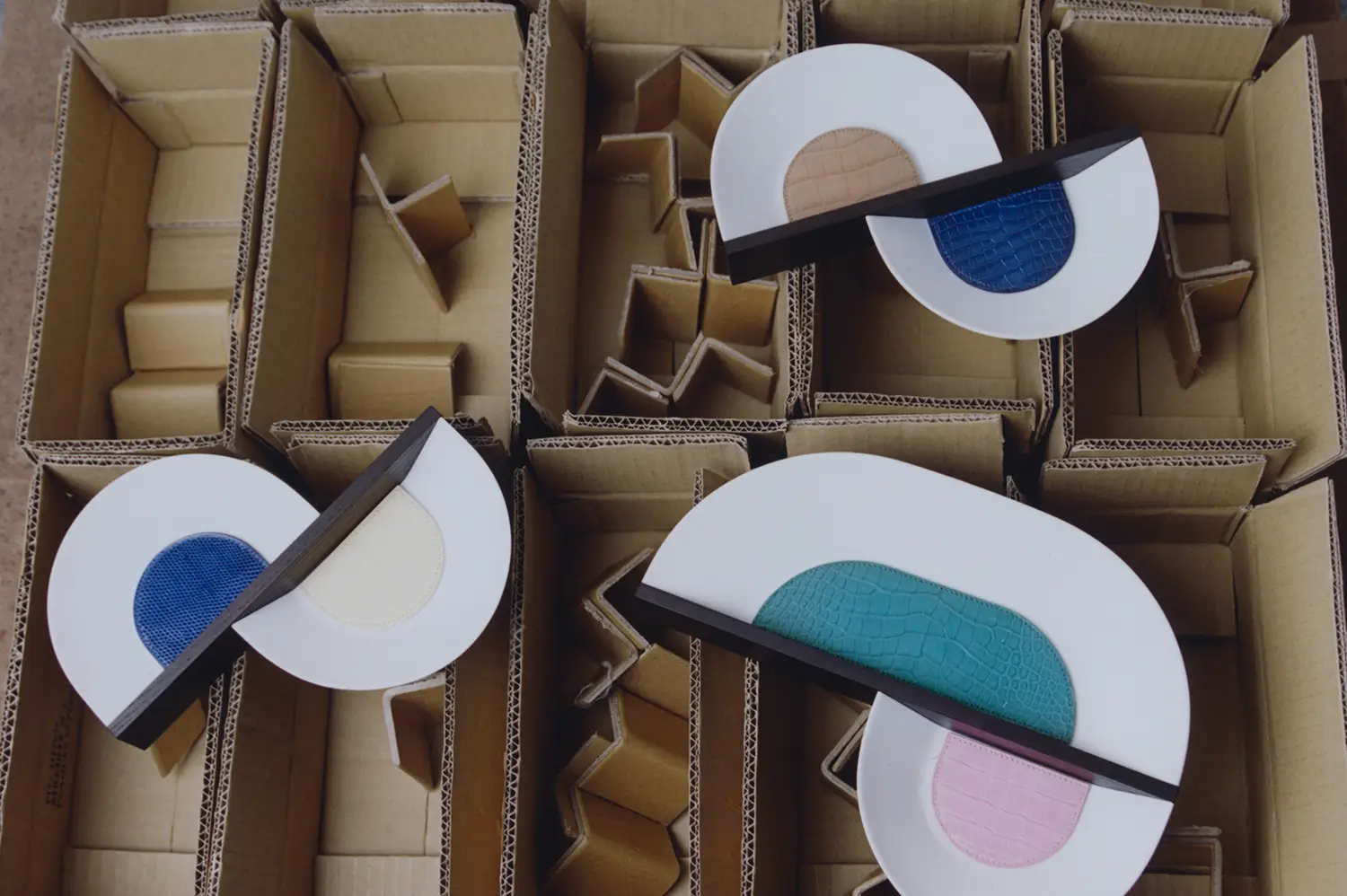
Pantin, northeast of Paris. A short drive out of the city’s production tempo sits this small but structural part of the nearly two-hundred-year-old house of Hermès. In the compact workshop of Petit h, a team of in-house artisans reworks limited volumes of materials the house can no longer use, guided by their own ideas or those of invited artists: porcelain with a scratch, a returned saddle, printed silk scarves with glitches — where the weaving machine failed — a dozen clasps from discontinued handbags. Sixteen years after its foundation as an officially separate métier of Hermès, Petit h has proven that residual value, imperfect by nature, can be the perfect cog in something new. The results range from a stool woven with horsehair (Rosana Escobar), to a hammock macraméed from thirty-five flawed Hermès scarves (Stefania Di Petrillo), broken tableware plates reunited with wood (Eric Benqué), salt-and-pepper shakers closed with buttons (in-house), or a lambskin artichoke wrapper for a porcelain bento box (in-house).
How Hermès reuses materials across its métiers
The offcuts arrive unannounced, in irregular batches, from Hermès production sites across its sixteen crafts, or métiers. These include leather goods and saddlery, art de vivre objects that contribute to the French art of living, and Petit h itself — the most recent addition after tableware, which was formally introduced in 1984.
“We never know how much we’ll get of what,” says de Virieu. It doesn’t matter. Time moves differently here than in the fashion-season-driven branches of the house. Ideas unfold in their own rhythm, and no one is counting — at least not to meet KPIs. That, in part, is because Hermès remains owned by the descendants of founder Thierry Hermès, who long ago decided against traditional marketing.
The cave à matières: Hermès’ archive of dormant materials
Artists come and go to Pantin to develop ideas on site in co-creation with the artisans. Upon arrival, they are first introduced to the building opposite, colloquially referred to as the nursery, or cave à matières by the mostly French staff. This is where dormant materials from the house’s different métiers arrive, such as leather offcuts, crystal, metal pieces, deformed horsebits, and clasps from handbags. Stored on one floor in tall shelving units, they are categorized by métier and color. One employee is tasked with administering the archive, noting what is “wrong” with each piece. Artists are free to browse and touch what they like.
“They come to feel into the materials, take little samples, and go back home,” de Virieu says. “When ideas start forming, they call us. Then we begin the discussion.”
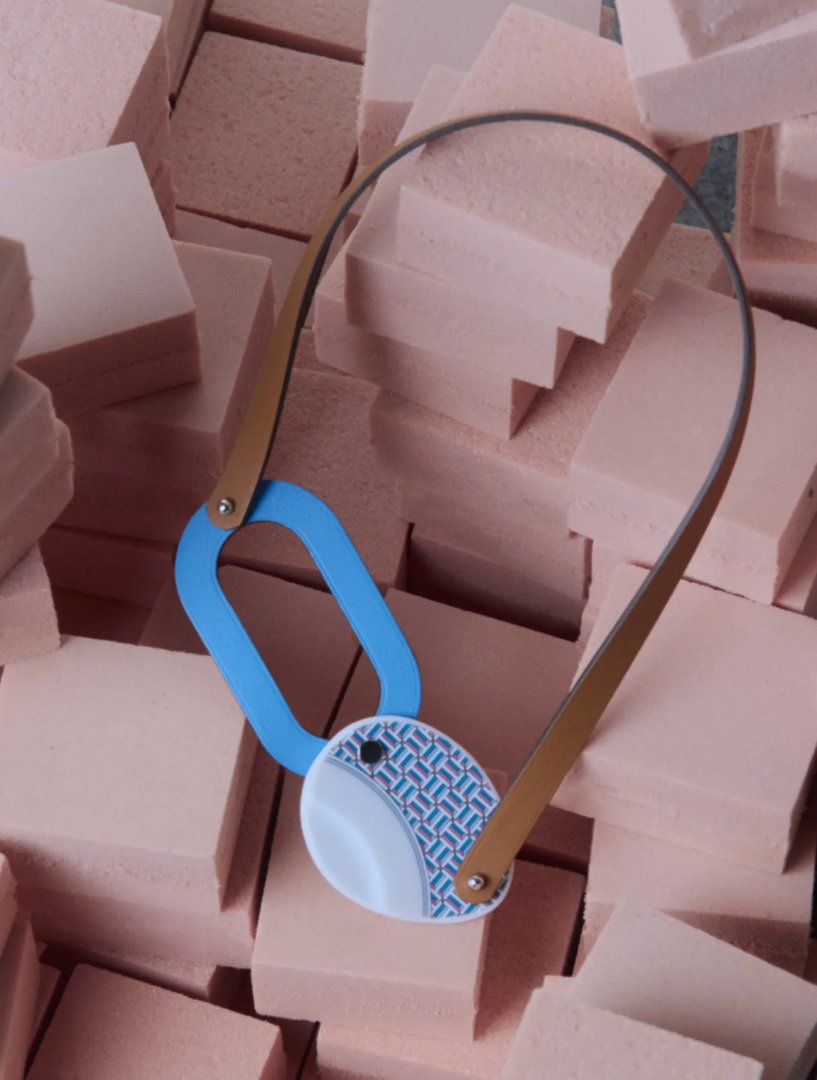
Artists and artisans working together at Petit h
Eight full-time craftsmen work in the workshop on bringing the pieces to life, most of them employed since 2010, supported by an internal design studio of three individuals who collaborate with de Virieu on research, testing, and development.
“The discussions between external artists and our craftsmen sometimes reveal great ideas,” he says. “Petit h is a combination of many presentations, many ideas, many artists. That’s why we don’t have one consistent design language.”
Since its creation in 2010, Petit h has worked with around one hundred artists. Today, the workshop collaborates with around thirty artists, with several more in an exploratory phase. In total, they imagine around a hundred new creations per year. One of the first to experiment with pairing métiers was Gilles Jonemann, who later introduced one of Petit h’s more controversial early pieces: a teapot on wheels, its handle wrapped in silk. His very first invention was a necklace with a porcelain stirrup as a pendant.
“Many big and lesser-known artists followed without the studio ever having a formal recruitment process,” de Virieu says, smiling. What matters is human quality. If famous designers arrive with a fully wrapped-up idea and a 3D print, chances are they won’t get in.
“The artists need to understand the workshop and the people who work here. They need to spend time here. We don’t need to see a 3D model. Just a few words are enough: ‘I’d like to make a clock with a teacup.’ Fine. We’ll start here in Pantin and work on it together.”
“Artists often find us, through bouche-à-oreille — word of mouth,” he adds. “People tell them: you should go to Petit h.”
Mirror Rocaille and the encounter between crystal and concrete
This is the method of Petit h: pairing slightly broken materials with curiosity and creativity. It’s also what drives de Virieu personally. The more unconventional the pairing, the more animated he becomes. “Look at this one,” he says, leading us to the upper floor, where recently finished transformations are displayed.
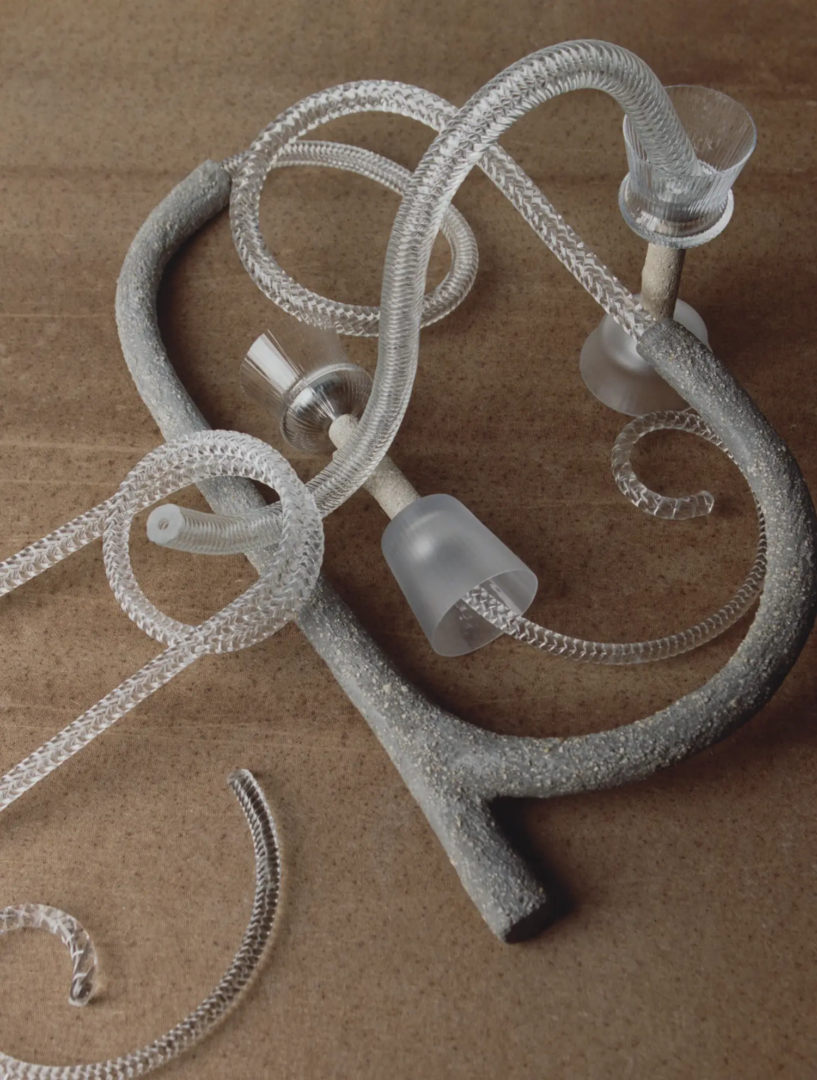
He lifts a rotating mirror skeleton: one half concrete, the other crystal. The components originate from Saint-Louis, the glassmaker. Mirror Rocaille takes its name from a nearly forgotten craft: the eighteenth-century Rococo art of rockwork, known as la rocaille. It takes over a week to complete, because the back has to be as beautiful as the front.
As de Virieu notes, Frédéric is among the last remaining masters of rocaille — a rare artisan able to cascade cement over fragile crystal with extraordinary control. He teamed him up with Paul Bonlarron, who had been involved with Petit h previously. Together, they gave a new purpose to two opposing materials: one fragile and precious, the other sturdy and raw.
“We took these existing parts, placed them on the table, and decided to link them,” de Virieu explains. “The encounter makes sense immediately. Yet, you’ll find yourself looking at it for a long time, trying to understand it, because you’ve never seen these materials together.”
This make-work mentality defines the studio. “We don’t draw objects and then give them shape. The materials determine the shape. I don’t want Petit h to have a style. The materials give it one.”
Cross-craft design at Hermès: from saddles to guitars
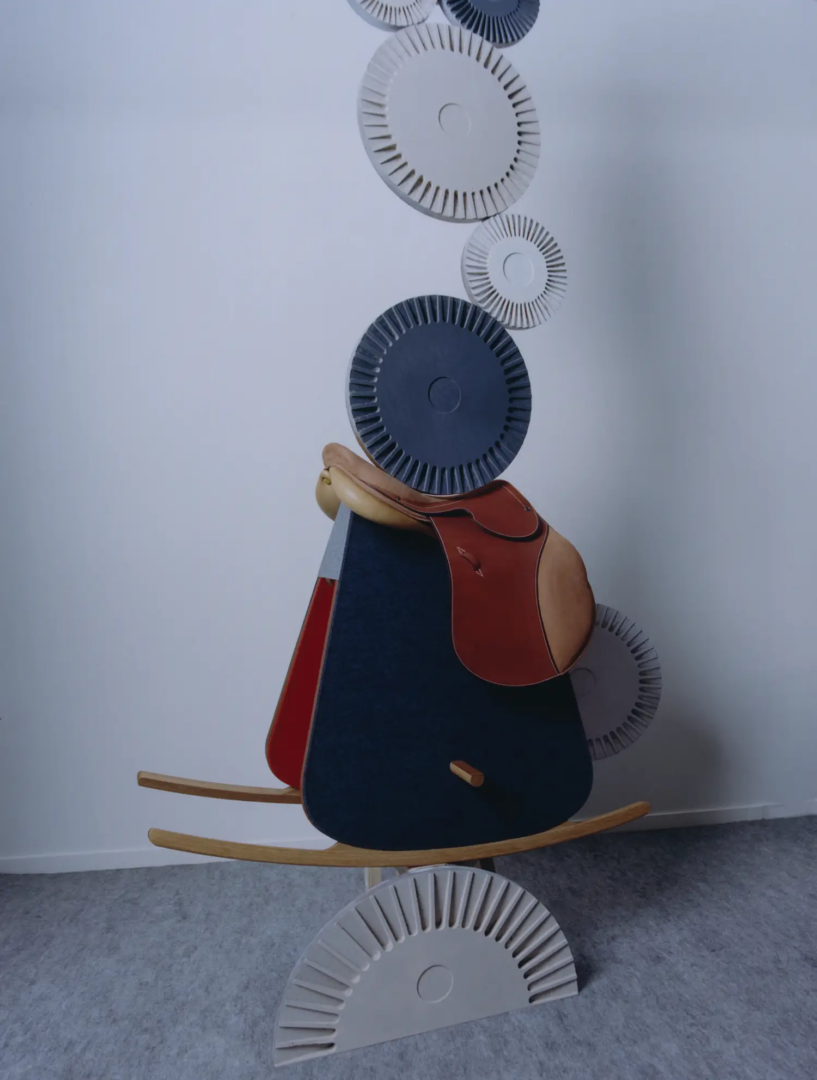
Another example of cross-know-how within the Petit h portfolio is a guitar made from leftover wood and a saddle tree (the wooden “bone” of a saddle), originating from the saddlery and bridlery workshop. “Hermès had never made a musical instrument,” de Virieu says. “Which felt strange, considering music is part of the art of living.” It could be a Hermès product. Saddles, arguably the house’s most original product, also found their way into a chair and a children’s swing. “We didn’t want to deconstruct it — beautiful as it is — so we just put it on a piece of wood, which makes it a rocking saddle,” de Virieu explains.
You can find the footprints of de Virieu, a trained industrial designer at ENSCI in Paris, across the designs too. Shortly after he took his position in 2018, he brought terracotta to the design table: the art of porous, unpolished clay, and not a Hermès métier. Within Petit h such introductions are referred to as invited materials. The Ravel terracotta workshop in the south of France was his own discovery.
Invited materials: terracotta enters the Hermès universe
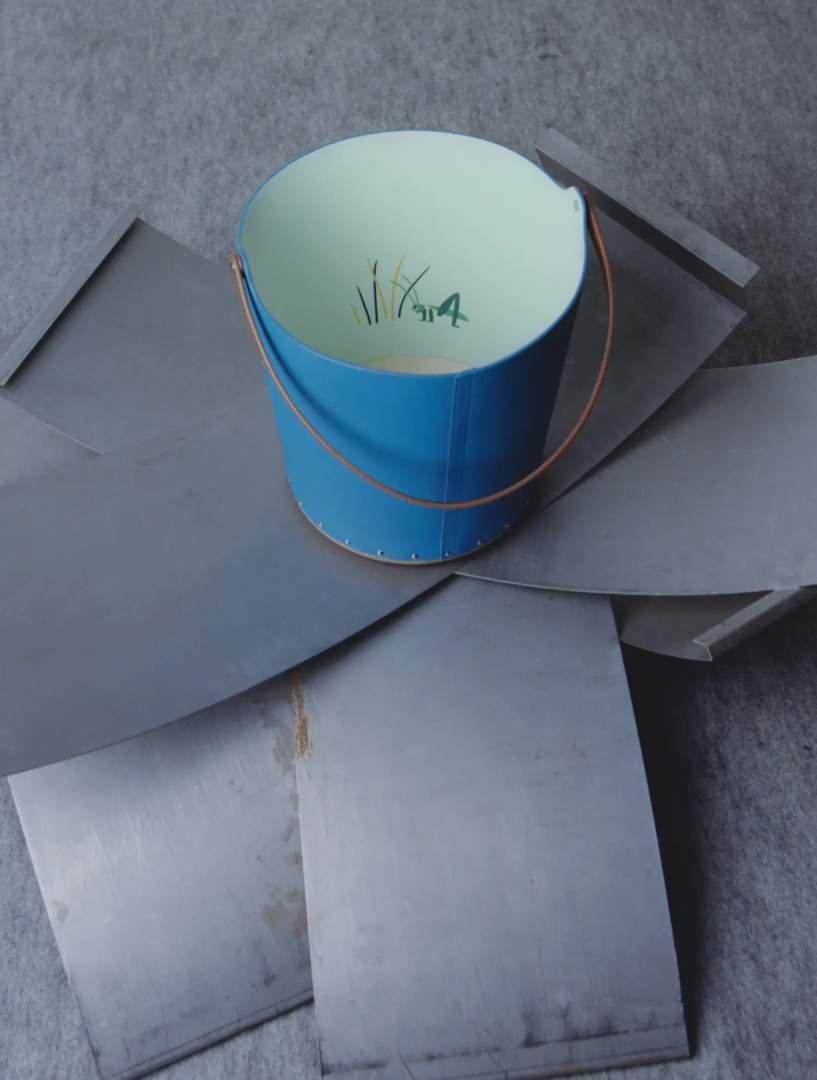
“We gave them our leftover crystal caps and asked their craftsmen to build a carafe.” In moments like these, Petit h functions as a laboratory: a place to rethink function and test how know-how can be transferred. Leather handles, borrowed from a Kelly bag, were added to the baked clay so the object could be carried and hung.
“Two materials that would never usually meet.” Convincing Hermès was not easy. “They kept telling me: we don’t work with this kind of material,” de Virieu recalls. “I insisted. Terracotta is such a primitive, natural material — just like leather or glass. I knew everyone would eventually understand.” When the first mini-collection launched, the response confirmed his intuition.
Pascale Mussard and the origins of Petit h
It’s not a small task to follow in the footsteps of a sixth-generation Hermès family member: Pascale Mussard. “She was around eight when she came up with the idea of Petit h,” de Virieu recounts.
She liked to play in the leather workshop, when it was still located in Paris – saw her great-uncle grab a piece of leather and throw it in the trash, felt appalled, and asked one of the craftsmen, who was working on a saddle, if he could make a little wallet instead. They put it in the window of the boutique below, at 24 Faubourg Saint-Honoré. People stopped for it. They wanted to buy it, and so Hermès decided to develop it into a product. “It wasn’t about fashion,” de Virieu says. “It was common sense.” That original mindset still defines Petit h.
Today, the workshop collaborates with around thirty artists
Mussard’s vision for Petit h was twofold: first, collect materials from all métiers, and then invite creative minds to rethink their function alongside different craftsmen.
“Because creative people without know-how don’t know how to build their ideas,” de Virieu says, “and know-how without creativity goes nowhere.”
It makes sense to team artists and craftsmen up — to bring them into the same room — and yet that is not how our modern world works. “Many of today’s craftsmen want to plug material, move fast, scale, take the money, and leave the business. There is a big need for ecosystems — healthy environments like ours — where people can build things with joyfulness, speak with each other about the process, and learn how to understand themselves.”
Is Petit h a sustainability project?
Petit h is not a strategic ‘zero waste’ initiative. Like any large luxury house, Hermès still produces a significant amount of waste. But de Virieu insists that a responsible mindset has always existed within the company.
He sees it in prêt-à-porter, for example, where Véronique Nichanian long reused surplus fabrics to construct lightweight jackets. “What we now call ‘reuse’ is simply craftsmanship mentality,” he says. “True craftsmen know how to do their craft well, use the best materials to do it, and take enough time to make it so.”
Petit h in Milan and the future of the project
Petit h’s second home is in the Hermès store on rue de Sèvres, located right next to the entrance. The shop windows are renewed seasonally, while new pieces arrive whenever they’re made.
Once a year, Petit h sets off on its travels and makes two stopovers to cross-pollinate with other artistic cities — Milan among them. There will be space for the rocaille candle holders, for example. A new piece will debut as a playful nod to the production hubs along the Po River valley: an oversized beanbag pear made from leather patchwork. “I was wondering if you like this pink,” asks craft artist Elisa.
The pear risks becoming too fuchsia — too powdery, too antique. It should be a welcoming object, something you can sink into when you get home, decides the man who runs the stall. Playfulness, de Virieu understood early on, cannot be underestimated in design. It holds great ideas for solving big problems. And then there is the value of play for its own sake. “You can try it,” he tells us, pointing at the pear that is still white, waiting to be adorned. Too late. The artist himself has already begun to play.
Anna Roos van Wijngaarden
TEAM photography Clémentine Passet, set design Pierre-Alexandre Fillaire, photography assistant Nicolas Darde, set design assistant Brankica Sanadrovic