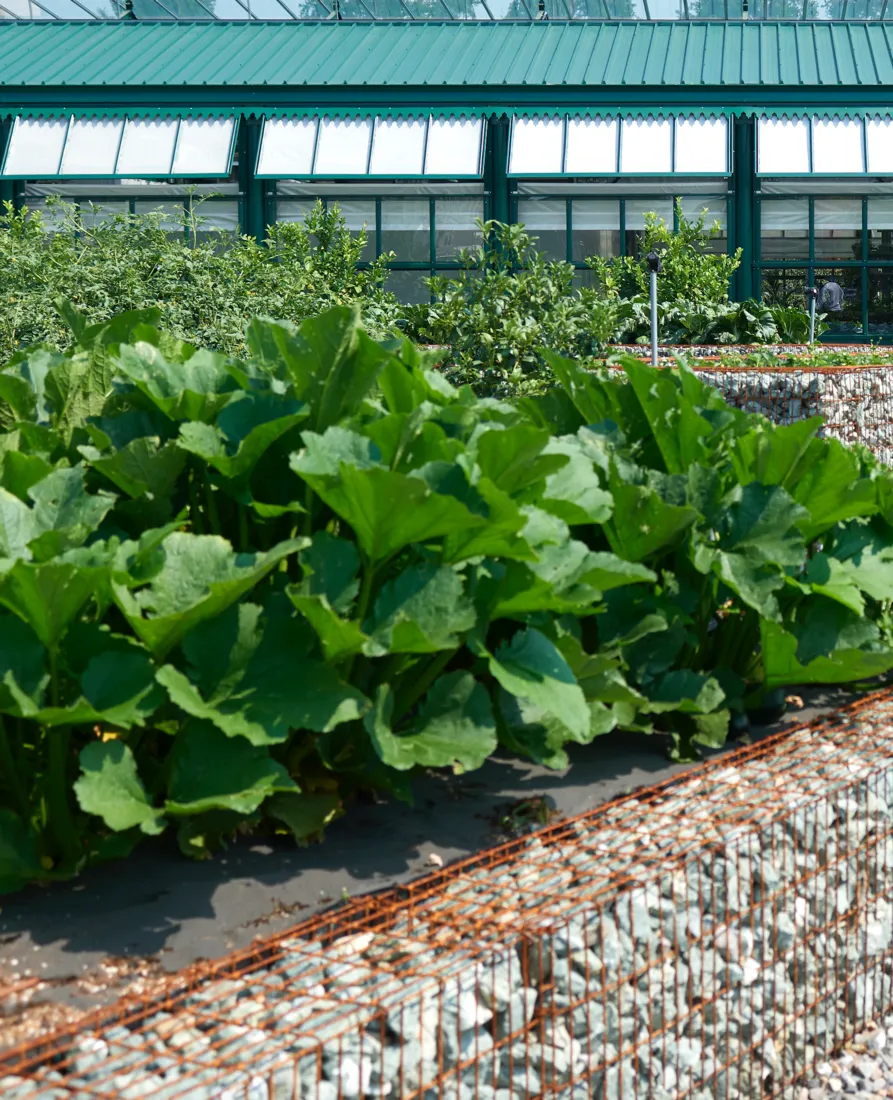
A former textile plant now grows the vegetables of a Michelin-starred kitchen
Spazio The Box covers more than 30,000 square metres north-west of Milan, where four glazed heated bays, gardens and two beehives supply Ristorante Olio, one Michelin star since November 2025
Four glazed, heated glasshouse bays hold aromatic plants, spices, citrus and other crops. Part of what grows there travels a few hundred metres to the pass of Ristorante Olio. Around the bays are terraces and gardens built as raised stone beds, tended year-round by agronomists and gardeners, with two beehives placed among the planting at the back of the property.
All of it stands on a former industrial site of more than 30,000 square metres at Origgio, along the Varesina, in the manufacturing belt between Milan, Saronno and Varese. Inside the perimeter coexist a restaurant, working glasshouses and kitchen gardens, a contemporary art collection, about 100 vintage cars and a workshop for their restoration.
Spazio The Box comes from a project by the Milini family. Luigi Milini ran a company in textile printing; after the patent was sold, the building and the surrounding land were gradually turned into the present complex. Around it run warehouses, infrastructure and commercial activity: gardens, crops and glasshouses were introduced into that context, on surface that could have gone to further commercial functions.
Wood, stone, steel and corten at Spazio The Box
The architecture was developed by a group of technicians and architects coordinated by Luigi and Lucia Milini. Wood clads the façades and the above-ground floors, alongside zinc and vegetation — in the gardens, the greenhouses, on the terraces and in the large planters built into the buildings. Stone, wood, steel and corten recur throughout; inside Olio there are also glass, chromed metals and textiles. The same materials connect spaces with very different functions, from restaurant to exhibition rooms, car areas, greenhouses and gardens.
The language around those choices runs to natural, recyclable materials with a low energy demand in production, eco-sustainable raw materials and treatments. None of it is documented. There are no publicly available Life Cycle Assessments, Environmental Product Declarations, FSC or PEFC certifications for the wood, recycled-content figures for the steel or corten, or information on where the stone comes from. The material composition can be documented; the overall environmental performance, on the available information, cannot be quantified. The most concrete environmental fact remains the conversion of the industrial precedent.
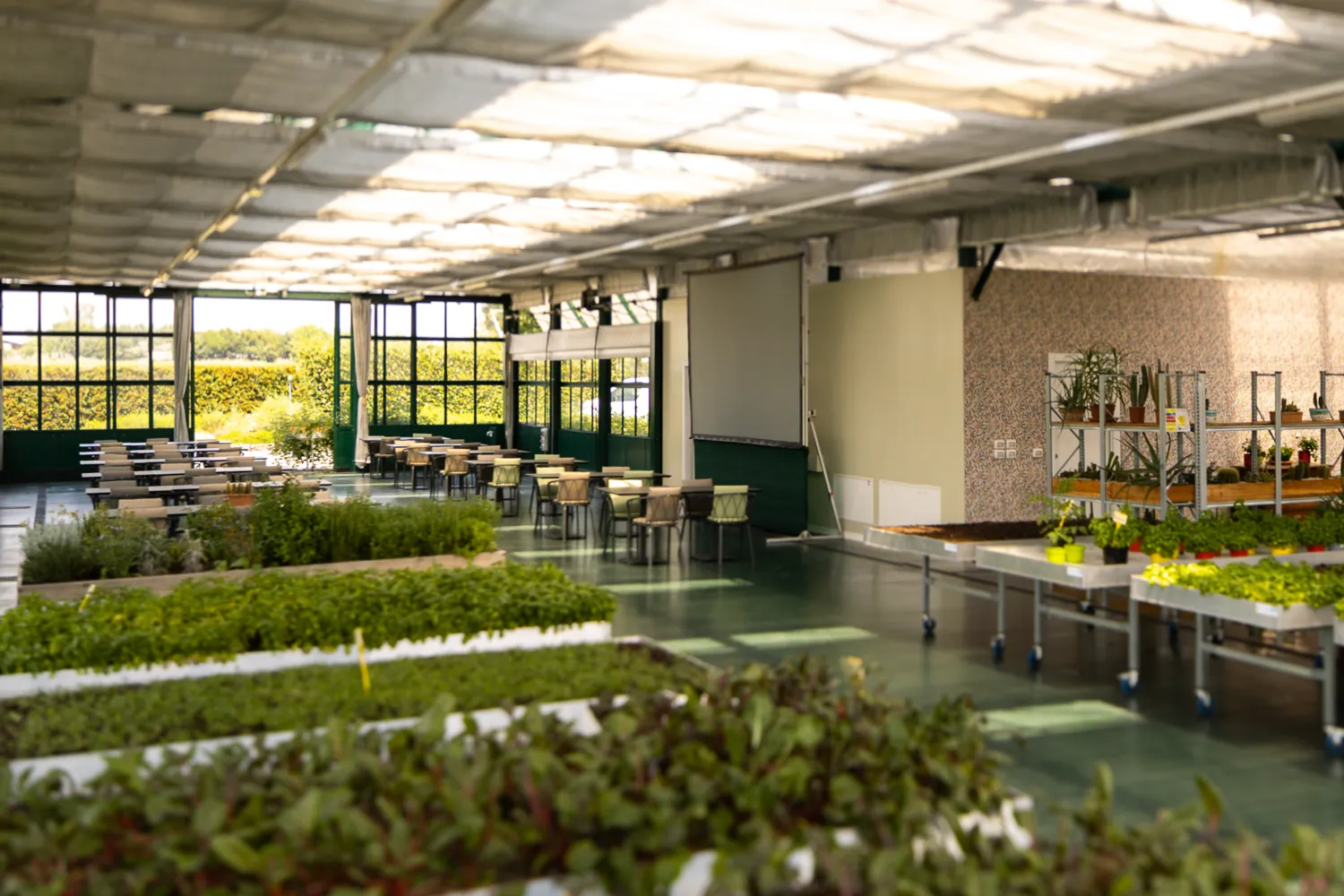
Four heated glasshouses, a hortus conclusus and two beehives
The greenery does not work only as a screen from the surrounding industrial context. Part of it enters the restaurant’s production directly. The layout of the raised stone beds goes under the name medieval garden: a contemporary reinterpretation of the hortus conclusus, not a historic agricultural remnant.
These elements build a stretch of plant habitat inside a largely productive area. There are no surveys of biodiversity before and after the intervention, of the number of species present or of pollinator activity. The beehives and the new flowering are a fact; a measured increase in biodiversity would need specific monitoring.
The greenhouses carry other functions. Part of the car collection is shown inside them and the spaces are used for events, while back-office areas connected to the bays handle catering and service. Agricultural infrastructure, exhibition space and hospitality venue overlap in the same structure.
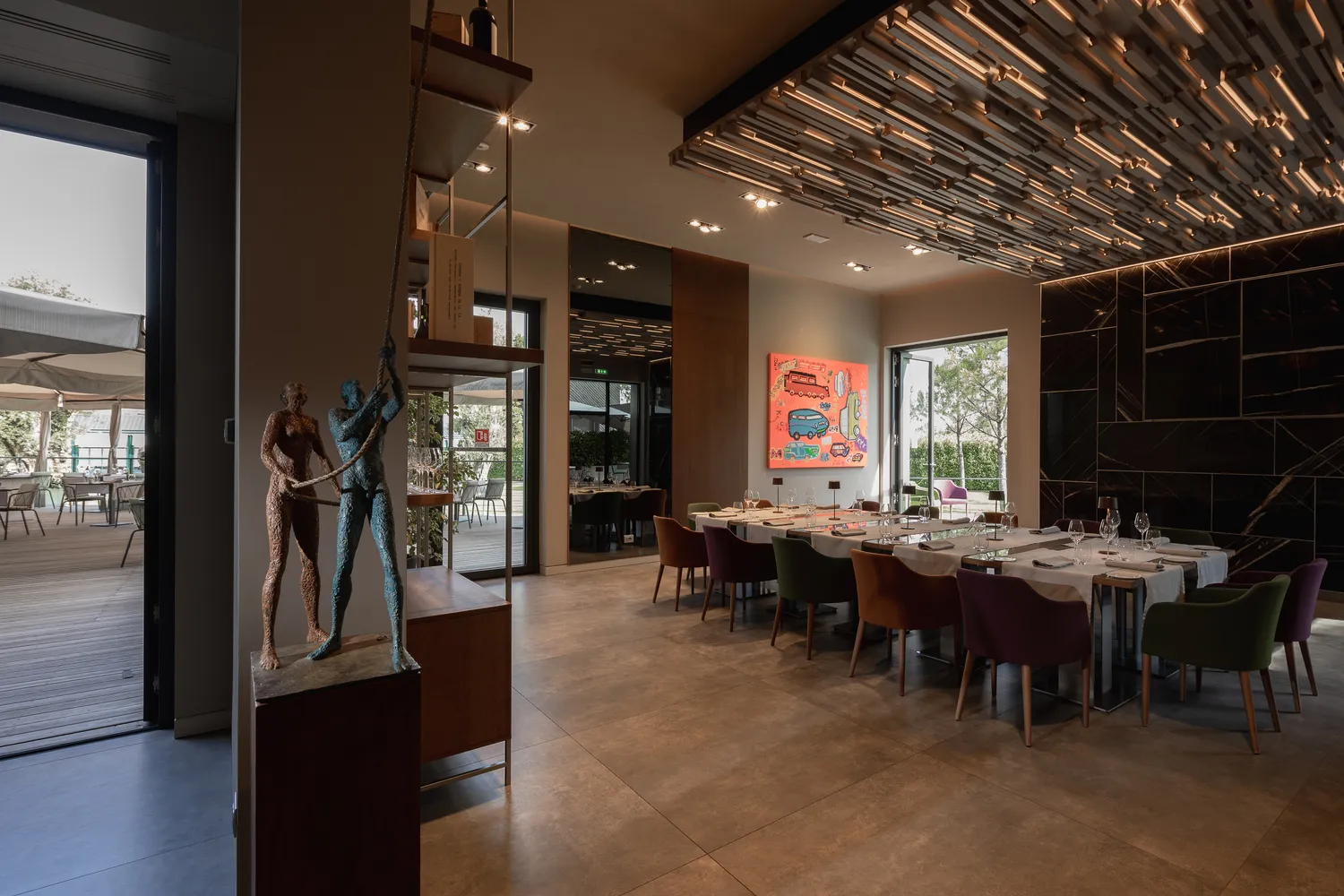
Ristorante Olio, one Michelin star and a garden a few hundred metres from the pass
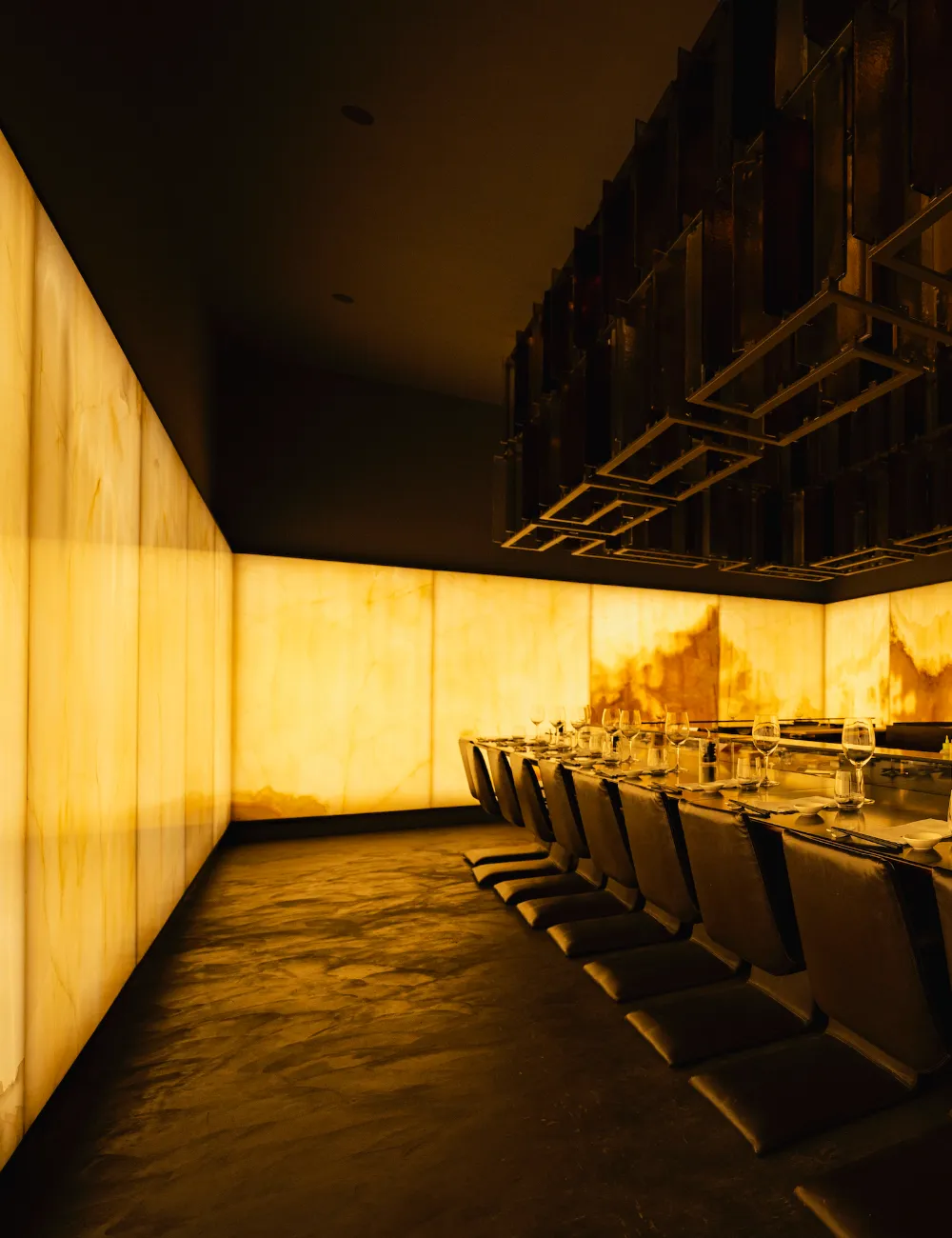
Olio opened in 2020 and is led by executive chef Andrea Marinelli, with a kitchen built on the meeting of fish and plant produce. In November 2025 it received its first Michelin star, entering the Michelin Guide Italia 2026 in the fish-and-seafood and contemporary Italian cuisine category.
The garden allows a very short supply chain for part of the ingredients. Vegetables, herbs and fruit are grown in the kitchen gardens, the greenhouses and the garden of the complex and used according to season and availability, under the formula zero-kilometre garden. This is in-house production, not the whole supply chain: there are no published figures for the surface actually given to crops, the quantities harvested over the year, or the share of the kitchen’s needs covered by internal production. Part of the plant component travels a few tens or hundreds of metres between where it is grown and where it is cooked.
That relationship has moved into the menus. Alongside the fish tasting menus, Olio has for years offered Dall’Orto, a five-course menu entirely vegetarian — a self-contained path for the plant component within a kitchen centred on the sea.
Fish from the Milan market and the Ligurian Sea
Sourcing changes completely from plants to fish. Fish, molluscs and crustaceans arrive daily through the Milan fish market, the Ligurian Sea and Italian suppliers, with traceability, seasonality, respect for minimum sizes and responsible fishing among the criteria, along with the use of species less in demand on the market. The internal micro-chain of vegetables sits beside an inevitably wider fish chain.
There is no publicly available up-to-date supplier list, no share of Italian catch, no ports of origin, no MSC or ASC certification, and no list of species excluded for environmental reasons. Responsible fishing remains a criterion of the kitchen, not an independent certification. Marinelli works through direct relationships with suppliers, which give access to products available in limited quantities and to knowledge on the characteristics and handling of the catch.
Casaliva olive oil from Manerba del Garda in the name of Olio
The relationship with territory extends beyond the perimeter of The Box. The name Olio holds three references — the extra-virgin olive oil of the kitchen, the engine oil of the vintage cars, and the oil paints of the pictures in the spaces. For the extra-virgin it corresponds to a precise geographical origin. Among the oils tied to the restaurant is the Casaliva cultivar from Lake Garda: two references sold by Olio, Solo Casaliva and Gran Cuvée, are produced by Olearia Caldera at Manerba del Garda, in the Brescia area. The system links at least two Lombard territories, Origgio for part of the plant production and Garda for the oil. The chain is not only about distance: it includes direct cultivation, the selection of outside producers, and sourcing that changes with the raw material.
Photovoltaic on the sheds at The Box, with no published output figures
On the roofs of the adjacent sheds there is a photovoltaic system, among the tools used to produce energy for the complex. The energy from the photovoltaic contributes to the running of The Box. There are no public figures for the installed capacity in kWp, the annual output, the total energy demand, the self-consumption share or any batteries. Wider claims about the site’s energy autonomy cannot be verified.
During the construction of Olio in 2020, systems for treating air and hot water were also installed, an air system using UV and extraction systems in the kitchens also linked to UV technology. The available information does not allow their consumption and environmental performance to be assessed.
Step-free routes and a separate gluten-free kitchen at Ristorante Olio
The design includes step-free internal and external routes, covered parking and lifts, along with family services — children’s toilets, changing tables and spaces for breastfeeding. Olio also has a separate kitchen for preparing gluten-free dishes and takes part in the AIC Alimentazione Fuori Casa programme. A physically separate gluten-free kitchen allows a preparation line distinct from the main one, beyond the presence of gluten-free options on the menu.
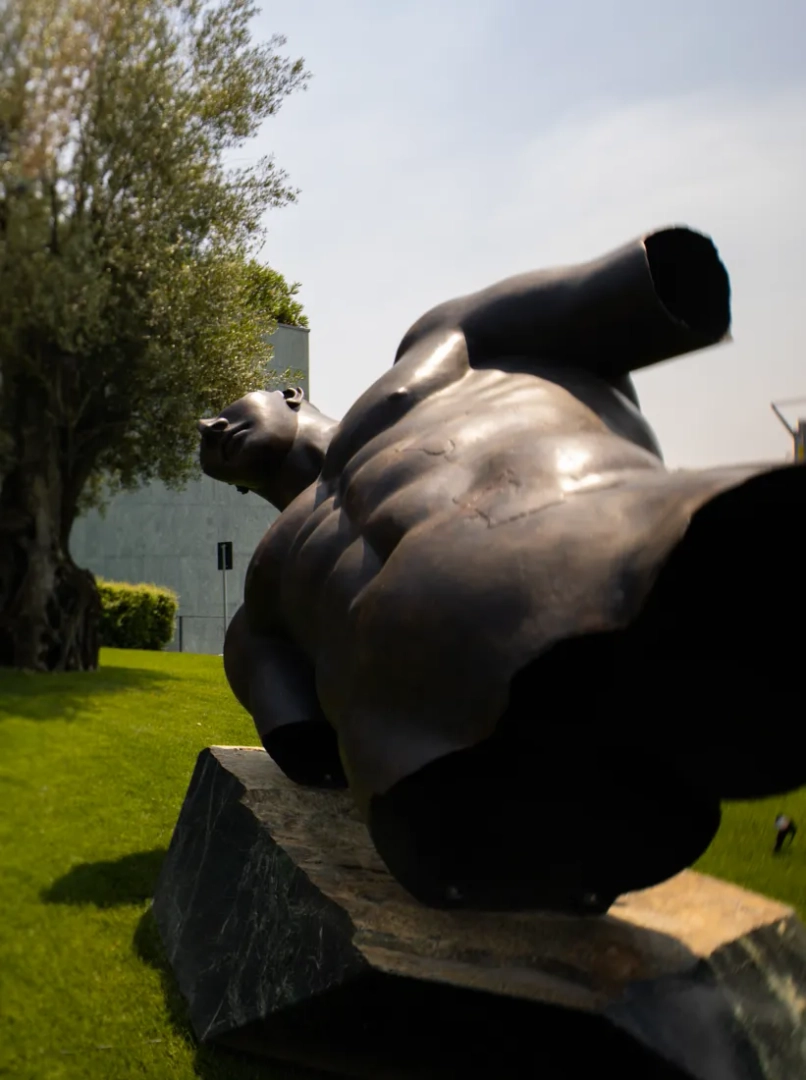
Pablo Atchugarry, Igor Mitoraj and Lorenzo Quinn among the olive trees
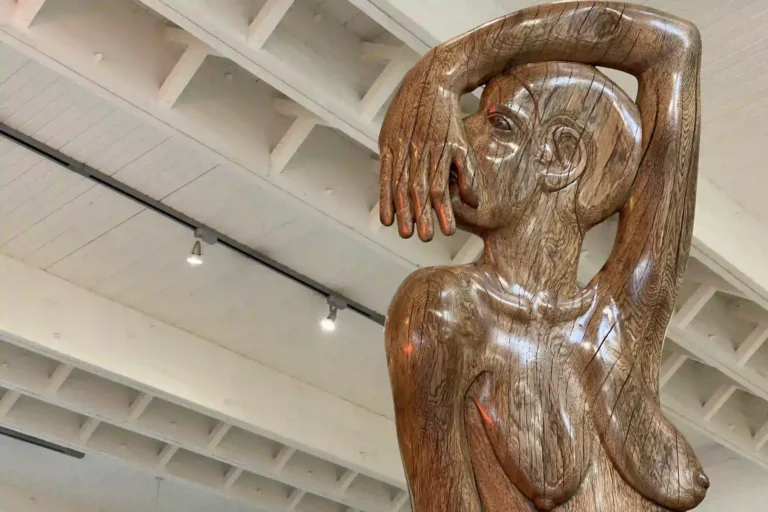
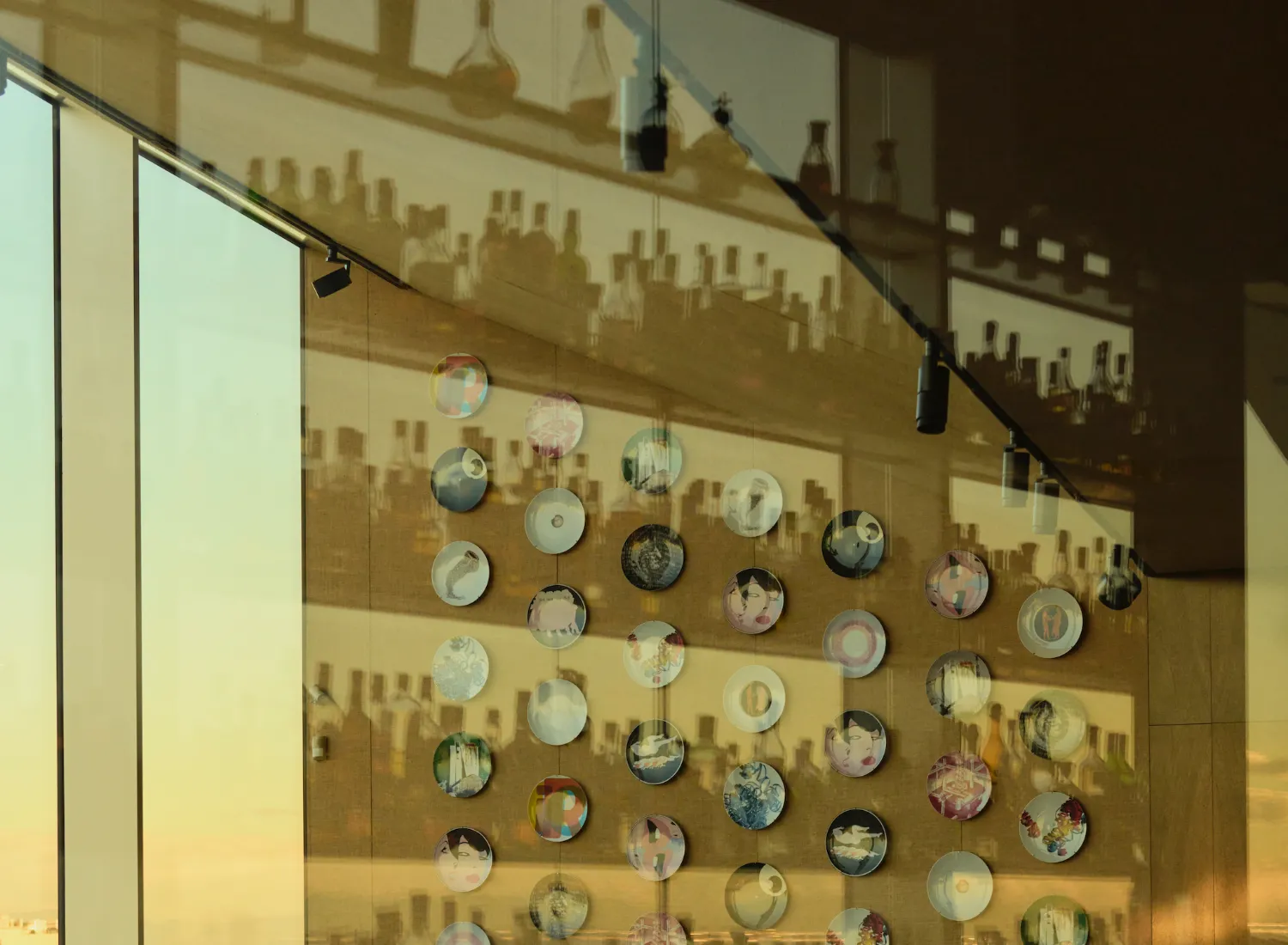
The art collection is spread across the main building, the restaurant, the car hall and the gardens, a diffuse gallery born within the regeneration of the old industrial area. At the entrance, at the top of the staircase, stands a monumental marble sculpture by Pablo Atchugarry, from the series Vita della materia, installed in 2022 after being shown at Palazzo Reale in Milan that same year. In the garden and indoors are bronze sculptures by Giacinto Bosco, built around the themes of the Moon and of lovers. Among the olive trees is a bronze by Igor Mitoraj, while inside, the paintings of Francesco Salvi and Enrico Ghinato bring in automotive imagery directly. The works by Atchugarry, Mitoraj, Salvi and Ghinato come from Galleria Contini in Venice.
To this sequence has been added When an Unstoppable Force Meets an Immovable Object, a 2013 work by Lorenzo Quinn: two figures pull a globe in opposite directions, on a tilting structure that makes the precariousness of the balance physically visible.
TEDx Saronno Salon at The Box on regenerative agroforestry
In June 2026 The Box hosted Coltivare il Paradiso Terrestre, a TEDx Saronno Salon event curated with Soulfood Forestfarms and dedicated to regenerative agroforestry. The discussion brought together scientific research, agriculture and dining, with Andrea Schievano of Soulfood Forestfarms, Matteo Mazzola of Iside Farm, Giuseppe Bertolina of Allegricola and Andrea Marinelli. For the occasion Marinelli built a plant-based dinner around bitter herbs, almond, morels, asparagus, wild garlic, samphire, lemon, yuzu and verbena.
The event moves the environmental theme from the language of hospitality to a discussion of farming systems and the origin of food, and points to the intention of using the spaces also as a place to discuss different agricultural practices.