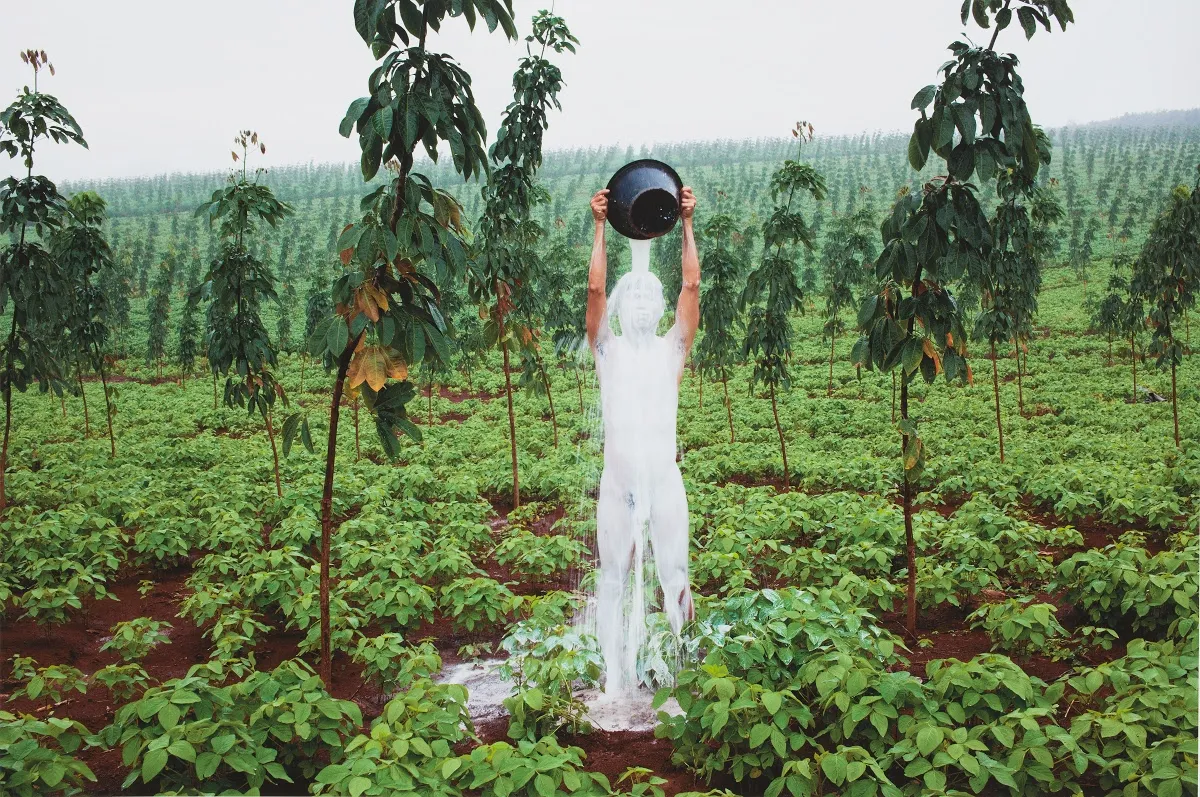
From tapper to mill, the plot disappears: how natural rubber gets its paper trail back
Eighty-five percent of the world’s natural rubber is tapped by smallholders, one tree at a time, and new EU rules now require every buyer to prove which plot the cut came from
Natural rubber runs through daily life: surgical gloves, rain boots, car tires, earplugs, medical devices, toys. No synthetic substitute matches its combination of resistance, elasticity and water resistance.
On 29 June 2023 the EU’s Regulation on deforestation-free products entered into force, naming rubber among the commodities it covers. The framework was later amended by Regulation (EU) 2025/2650. After two postponements, large and medium operators must comply by 30 December 2026, small and micro enterprises by 30 June 2027. Smallholders, who grow most of the world’s rubber, must now produce evidence they never had to provide before. In May 2026 the European Commission issued a simplification package, COM(2026) 191 final, to reduce compliance overhead. The package lowered estimated administrative burdens across covered sectors from 8.1 billion euros to about 2.0 billion euros a year. Implementing Regulation (EU) 2025/1093 introduced country risk benchmarking, placing 51 percent of importing operators under a simplified due-diligence regime that waives formal risk assessment for low-risk origins. The EU Information System for submitting due-diligence statements became fully operational under Implementing Regulation (EU) 2026/1565 in July 2026.
What the regulation requires is a supply chain that can prove where the latex came from.
A wider layer: the Corporate Sustainability Due Diligence Directive
Directive (EU) 2024/1760, amended by Directive (EU) 2026/470, adds a second due-diligence layer alongside the EUDR. The Corporate Sustainability Due Diligence Directive takes direct effect on 26 July 2029. It applies to large firms with more than 5,000 employees and turnover above 1.5 billion euros. Where the EUDR checks a single plot, the directive covers human-rights and environmental risk across the whole value chain.
Polygon mapping: tracing latex back to individual smallholder plots
About 85 percent of global natural rubber output comes from smallholders — small, scattered plantations across Thailand, Indonesia and Vietnam, which together produce more than 70 percent of the region’s rubber.
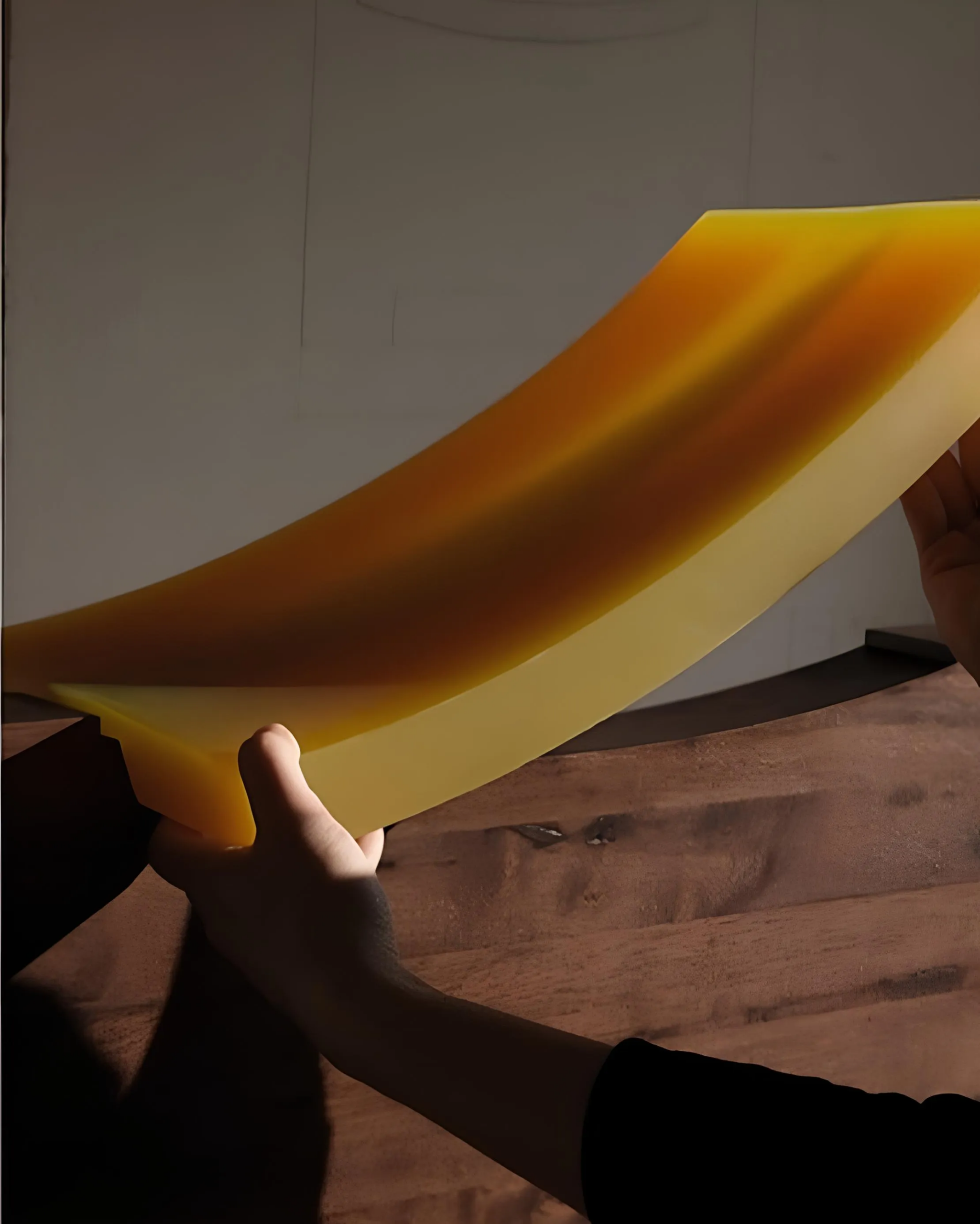
Latex typically passes from tapper to a local dealer, who aggregates cup lump from dozens of micro-farms before it reaches a processing mill. That aggregation point is where individual plot origin disappears. Meeting EUDR standards requires polygon mapping — boundary coordinates for the full plot — for holdings over four hectares, and a single GPS point for plots under four hectares, both matched against remote-sensing data. Traceability platforms working with GPSNR members deploy digital tools built for offline use in remote regions. The tools register smallholder plots and assign each one an identifier that follows a latex batch through the mill.
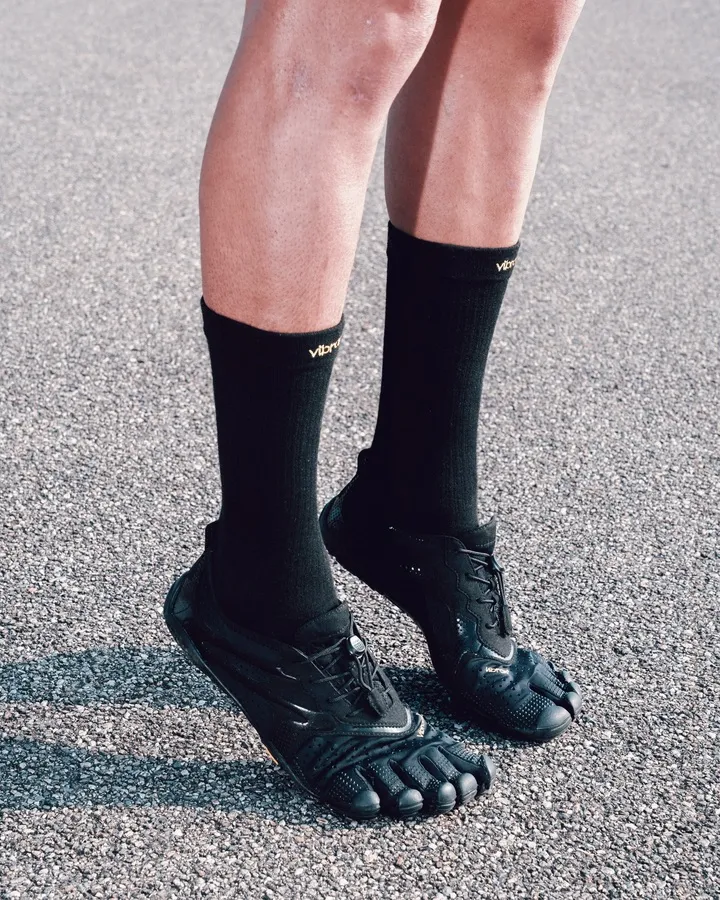
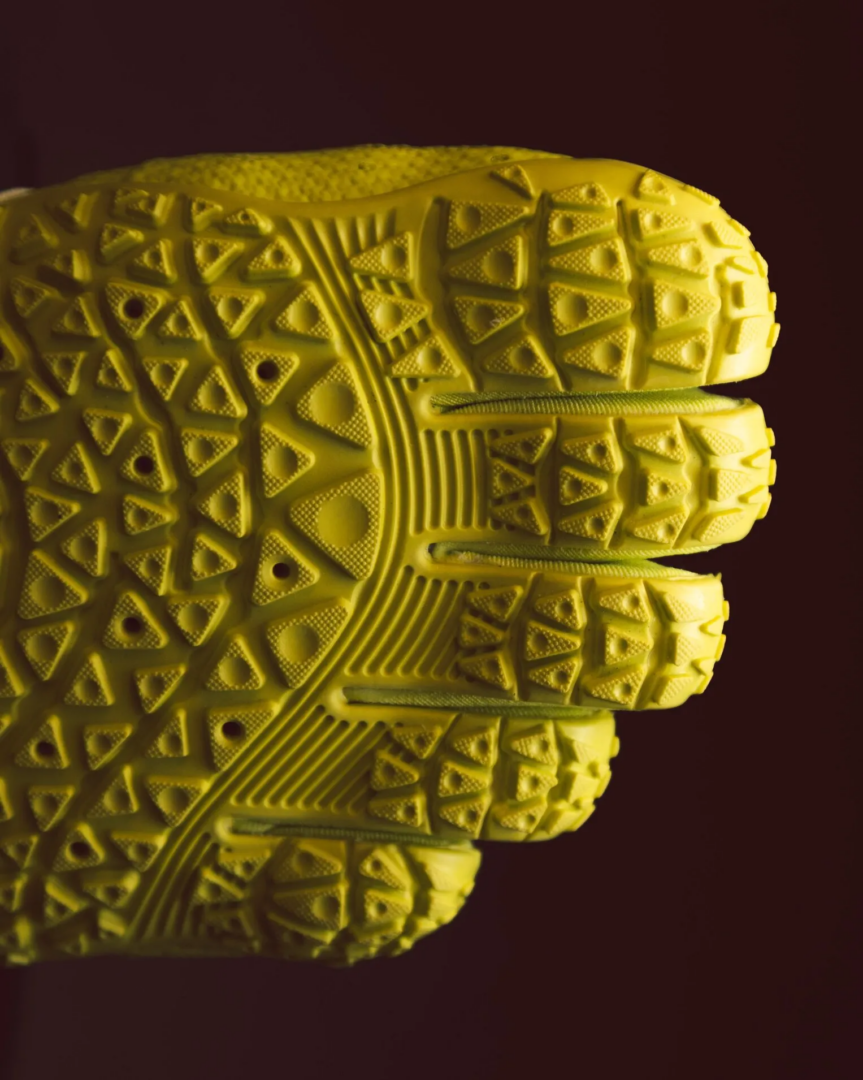
Outsole manufacturers sit in the middle of that chain, between the plantation and the shelf. Vibram, based in Albizzate, Italy, supplies soles to hundreds of footwear brands and has built two compounds around natural rubber: Ecostep Natural and N-OIL, made from more than 90 percent petrol-free ingredients, colored with plant-based pigments in place of synthetic dye. A sole built this way still needs the same polygon-level traceability behind it. The compound’s composition leaves untouched how far back a due-diligence statement has to reach.
Downstream brands: sourcing models
Veja sources wild natural rubber directly from seringueiro (rubber tapper) associations in the Brazilian Amazon, including Amopreab. In July 2025 the brand paid 25.45 reais per kilogram, more than five times the 4.79 reais market rate, plus Fair for Life bonuses meant to keep tappers from turning to deforestation-linked activities such as cattle ranching.
Reltex and Lactae Hevea process fully natural virgin latex from FSC and PEFC-certified plantations in Southeast Asia at their facility in France, using a twelve-day water and hot-air curing cycle. Brands using the material include UGG, for its Neumel Natural style, Goral’s Roma GAT, Rancourt & Co.’s Beefroll Penny Loafer and Knox Boot, and Joseph Malinge’s Blake-stitched Rider Sneaker. Clarks Originals uses FSC-certified natural crepe rubber outsoles for its Desert Boot, with third-party chain-of-custody verification back to the plantations. Icebug uses Biosole outsoles containing 45 percent natural rubber to reduce reliance on synthetic chemicals.
4.1 million hectares: what satellite mapping revealed about rubber deforestation
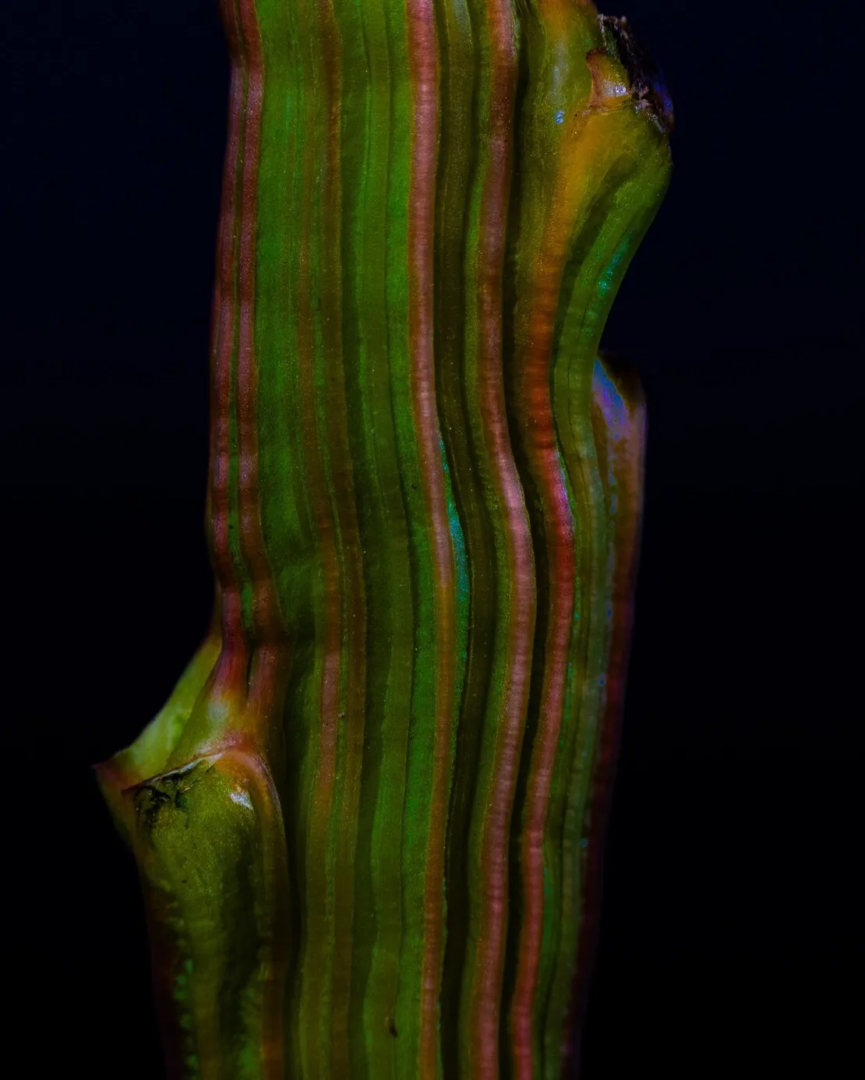
The Royal Botanic Garden Edinburgh, with the Kunming Institute of Botany, the CIFOR-ICRAF China Country Program and the Chinese Academy of Sciences, published a study in Nature in October 2023 that mapped rubber plantations and related deforestation across Southeast Asia using satellite data and cloud computing.
It found 4.1 million hectares of forest destroyed for rubber between 1993 and 2016, almost three-quarters of it after 2001 — a figure the authors argue runs two to three times higher than the numbers underpinning current policy.
«Rubber was already known to lead to forest loss, but quantifying the damage has been challenging. Because it is difficult to distinguish from natural forest on satellite imagery, it has received reduced attention when looking at the losses caused by commercial plantations. However, thanks to expanding earth observation and computing technology, there are increasing opportunities to map ‘difficult’ commodities.» said Dr. Wang, lead author, Royal Botanic Garden Edinburgh.
Buyers can cross-reference mapped farm coordinates against tools such as Global Forest Watch, which use the same satellite methods. This lets them check a plot’s forest-cover history against the regulation’s 2020 cutoff date before the latex enters a shipment.
The GPSNR assurance system: third-party verification weighted by sourcing risk
The Global Platform for Sustainable Natural Rubber runs a risk-based assurance system. Member companies align purchasing policies with its framework, then submit to third-party verification weighted by the risk level of their sourcing region — Thailand, Indonesia, Vietnam and West Africa, including Côte d’Ivoire, among the highest-scrutiny zones.
The system emerged from years of negotiation among smallholder farmers, producers, traders, tire manufacturers and civil society groups within the platform.
Who pays for compliance: the Shared Investment Mechanism
Dropping non-compliant smallholders leaves them in the rubber trade regardless — it pushes them into unregulated markets, with the forest no better off.
GPSNR’s manufacturer members launched a Shared Investment Mechanism in 2024, pooling industry contributions into a fund that supports smallholder mapping and training, moving the cost off individual farmers. By 2025 the mechanism had mobilized about three million dollars for smallholder polygon mapping, land titling and yield optimization. A related lever is yield.
A Bangor University-led study, Rubber’s inclusion in zero-deforestation legislation is necessary but not sufficient to reduce impacts on biodiversity, published in Conservation Letters, found that rubber demand is likely to keep rising. The industry may need 2.7 to 5.3 million hectares of additional harvested area to meet 2030 estimates unless existing plantations produce more.
«Our analysis shows substantial expansion of rubber plantations has occurred in many producer countries since 2010, with rapid increases in new locations such as Côte d’Ivoire. It is critical that existing rubber producers are supported to improve their yields and maintain production, to avoid ongoing expansion of plantation area.» said Dr. Warren-Thomas, first author, Bangor University.
Substituting natural rubber for petroleum-based synthetics, taken alone, raises demand for latex and leaves the land-use problem behind it intact. A compound like N-OIL reduces deforestation risk on one condition: that the added rubber comes from mapped, verified plots. Otherwise a brand’s shift toward natural ingredients pushes harder on the same unmapped smallholder plantations the EUDR exists to check.
Intercropping: raising yields without clearing new land
Intercropping rubber trees with timber species, fruit trees or shade crops gives smallholders more than one income stream, so replanting older, low-yielding trees comes without years of lost pay. That gap pushes some farmers to clear adjacent forest instead of waiting out their old trees’ decline. Co-author Dr. Wang, University of Sheffield’s Grantham Centre for Sustainable Futures, put the stakes plainly:
«Rubber smallholders and industry fear extra burdens placed on them by regulations. However, these studies show that the biodiversity impacts and deforestation from rubber cannot be ignored and that there is a need for solutions that work for smallholders, without putting any more pressure on the planet.»
Guayule, Russian dandelion and devulcanized rubber: latex from outside the tree
Guayule (Parthenium argentatum), a desert shrub native to North America, and Russian dandelion (Taraxacum kok-saghyz), a temperate annual crop, both produce natural latex on land outside tropical forest, offering processors a regional source beyond the Southeast Asian supply chain the regulation targets.
Guayule latex lacks the Type I latex allergy proteins found in Hevea rubber and uses less water. Russian dandelion yields a high-molecular-weight natural rubber comparable to Hevea.
Devulcanized rubber recycling breaks the sulfur cross-links in scrap tires, letting processors such as Tyromer blend ten to thirty percent of the reprocessed material with virgin latex in footwear and automotive parts, reducing how much new plantation area a given product requires.
Editorial Team