Rupture Venice: from Giudecca to Santa Croce, a bookstore becomes a publishing platform
Alexandre Sap’s Rupture relocates to Venice’s museum district, expanding its activities through publishing, exhibitions and international collaborations while continuing to treat books as objects of research rather than retail
From Giudecca to Santa Croce, Rupture Venice as a publishing platform
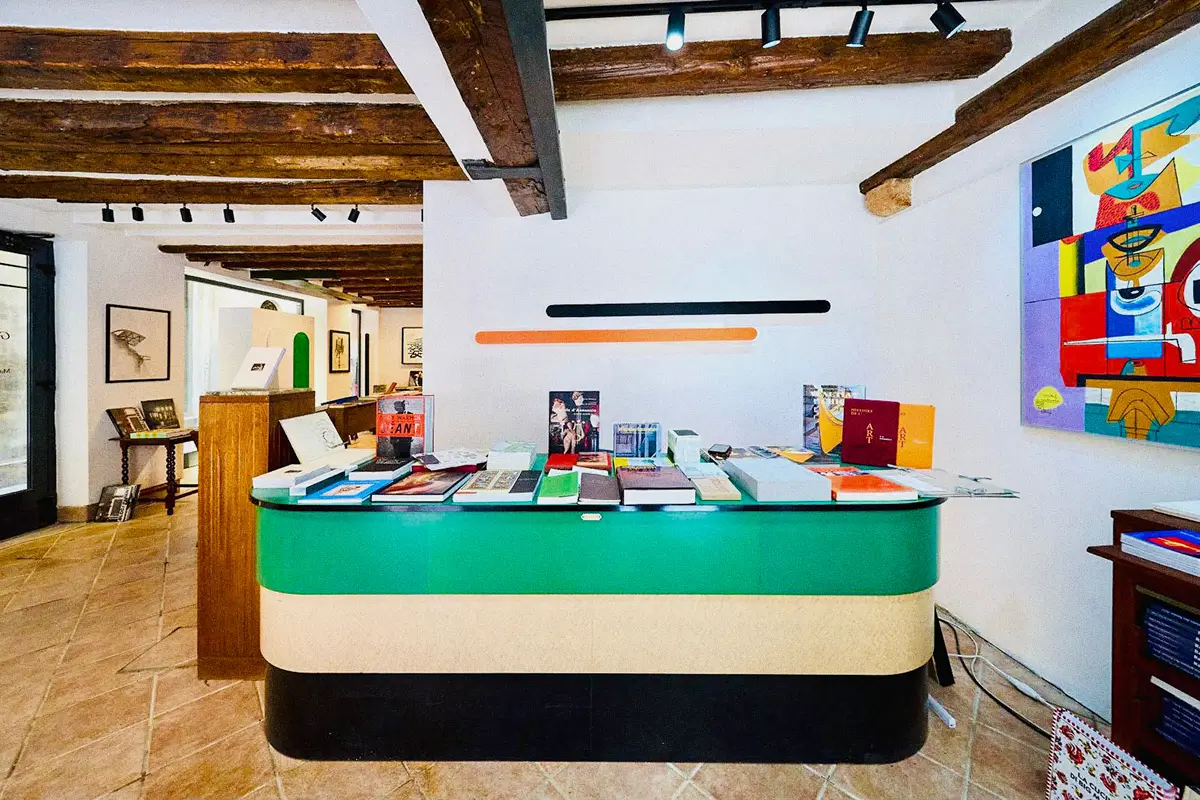
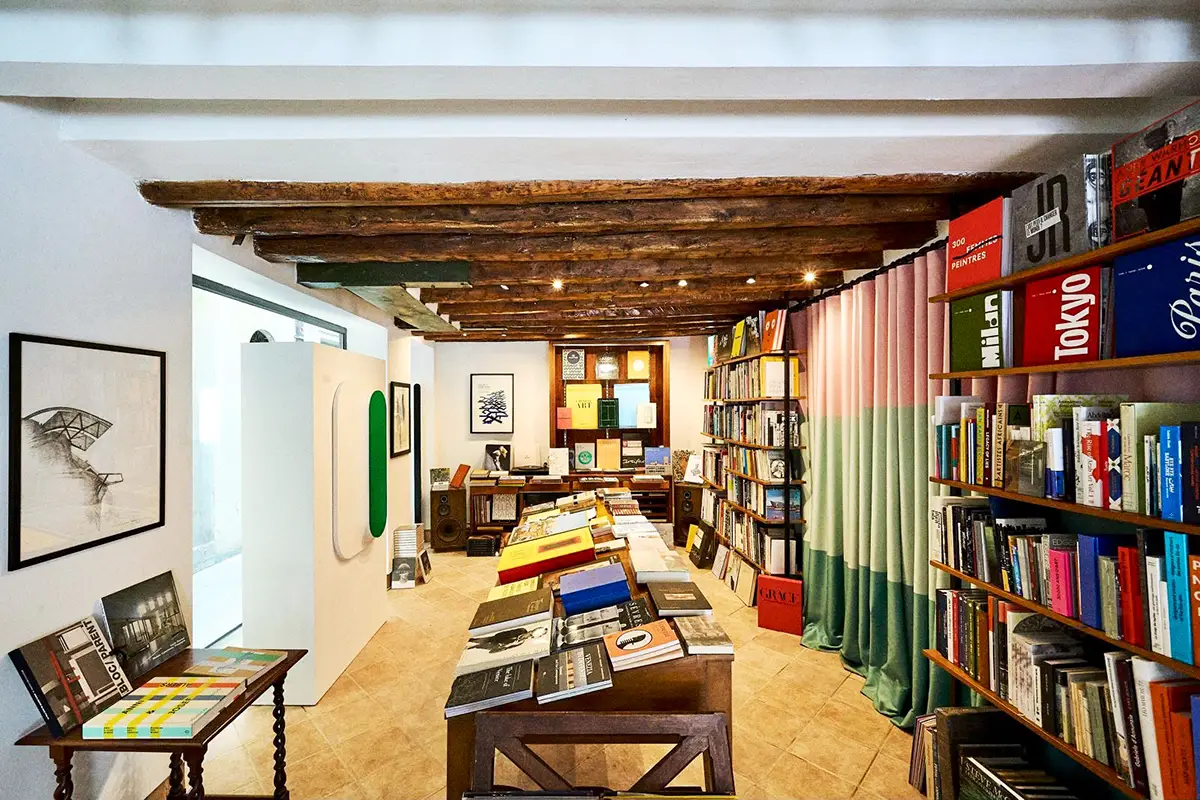
Three years after opening its first Venetian bookstore on Giudecca, Rupture has relocated to the historic center of Venice. The new address, in the Santa Croce district near the San Stae vaporetto stop, marks more than a change of location. It expands the project from an independent bookstore into a platform that combines publishing, exhibitions, editorial production and international collaborations within one space.
Founded in Paris by Alexandre Sap and later developed through locations in Marseille and Paris, Rupture has consistently described itself as something other than a conventional bookstore. The move to Santa Croce reinforces that ambition. Alongside an expanded catalogue of books on architecture, art, photography and design, the new venue introduces Rupture Venezia Publishing, a record label, a podcast production studio and a program of temporary exhibitions.
Sap summarizes the approach with a sentence that has accompanied the project since its beginnings: «Rupture is a gallery of books, not a bookstore. I want to surprise people. I want them to feel like they don’t know where they are.»
Why Rupture moved from Giudecca to Santa Croce
When Rupture first arrived in Venice in 2023, it occupied a small space on Giudecca, away from the city’s busiest pedestrian routes. The choice reflected Sap’s interest in quieter neighborhoods where visitors could spend time reading, listening to music and talking without the rhythm imposed by tourism.
The relocation to Santa Croce follows a different logic. Rather than seeking isolation, Rupture now positions itself within one of Venice’s most active cultural corridors. The bookstore sits a short walk from the Grand Canal, surrounded by museums, foundations and exhibition spaces that attract researchers, architects, artists and visitors throughout the year.
Within a relatively small area are institutions including Ca’ Pesaro, the Museo di Palazzo Mocenigo, the Natural History Museum, Fondazione Prada, Fondazione Berggruen, the Museum of Oriental Art and several independent foundations. Despite this concentration of cultural institutions, Sap observed that no specialist art and architecture bookstore served the district.
Instead of competing with museum bookshops, Rupture proposes to complement them. Exhibition catalogues, independent publishers and specialist titles coexist with books that rarely enter institutional retail channels. The founders also intend to develop collaborations around exhibitions, publications and public events with museums and foundations operating nearby.
Rupture Venice, from bookstore to editorial platform
The expansion of Rupture reflects broader changes taking place within independent bookselling. Across Europe, specialist bookstores increasingly combine retail with publishing, exhibitions and public programming, reducing the distinction between bookseller, publisher and cultural institution.
Rupture follows that trajectory. Books remain at the center of the project, yet they now sit within a wider editorial ecosystem. Visitors encounter reading rooms alongside exhibition spaces, conversations alongside publications, and books selected according to editorial relationships rather than market categories.
«The selection of books is first for me. It’s a very selfish process. I want books to feed me artistically and then I want to share them.»
That method has remained consistent since the first Rupture Record opened in Paris. Alexandre Sap’s background in music continues to shape the project, where books, records and artworks are considered parts of the same cultural landscape rather than separate disciplines.
The founders often describe their catalogue as an “anti-algorithm selection.” Instead of responding to rankings or recommendation systems, publications are chosen through affinity. Older books remain beside recent releases when they continue to contribute to the dialogue the bookstore seeks to establish.
A network built through publshing rather than expansion
The Venice relocation also signals another evolution. Rupture increasingly operates as a publishing network rather than a collection of bookstores.
The acquisition of the architecture publisher Imbernon in Marseille connected Rupture with one of France’s established catalogues dedicated to architecture and urban history. Venice extends that editorial direction through a new publishing house developed locally.
Each city within the Rupture network contributes its own editorial voice. Every location develops publications connected to its local context while remaining part of a shared international framework.
This approach informs the new project titled Library of Libraries. Independent bookstores, archives and publishers from different countries will be invited to temporarily install curated selections from their catalogues inside the Venetian space. Instead of importing complete inventories, each guest presents a focused “micro-library,” allowing visitors to encounter books that rarely circulate through Italian distribution channels.
The initiative transforms the bookstore into a place of editorial exchange. Temporary collections arrive, remain for a limited period and then give way to new selections assembled by another institution. The project mirrors the movement of ideas across publishing networks rather than the permanent accumulation of books on shelves.
Grammatology Part 3: Ora Ïto brings language into architecture
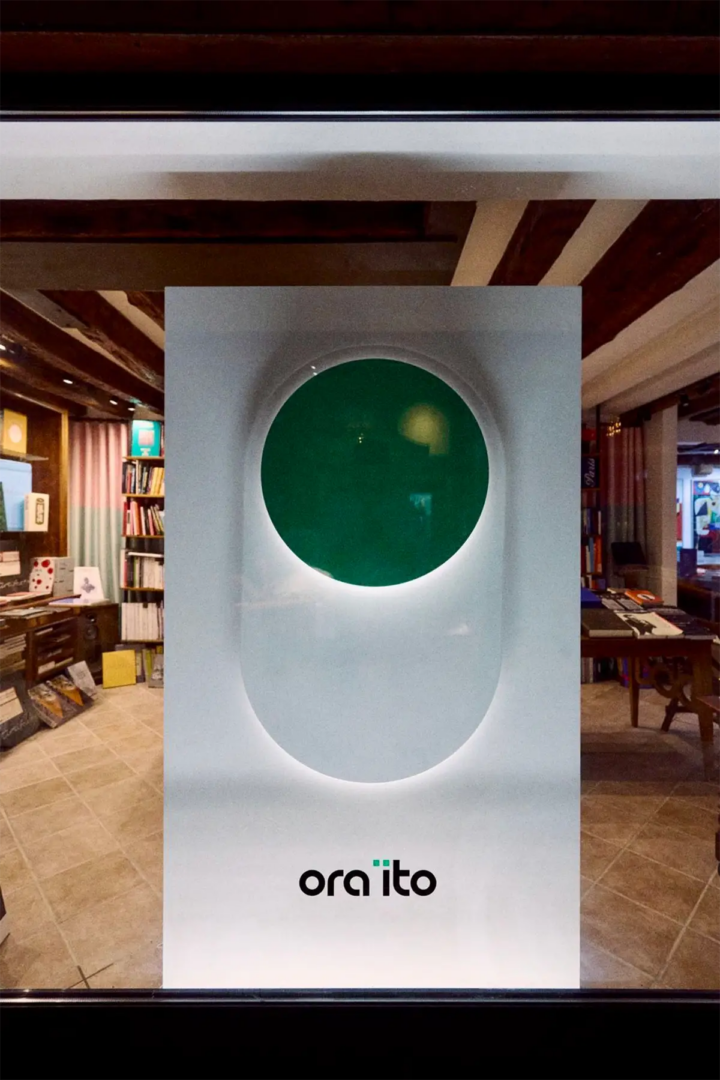
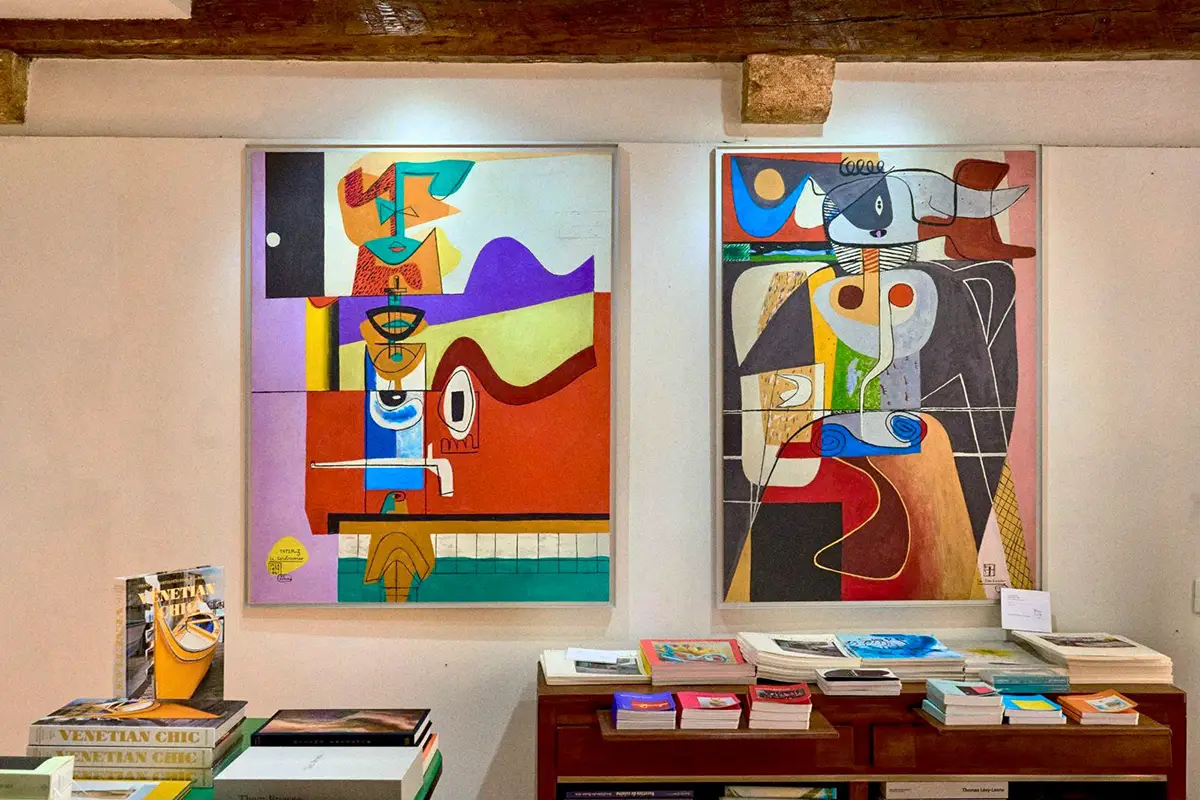
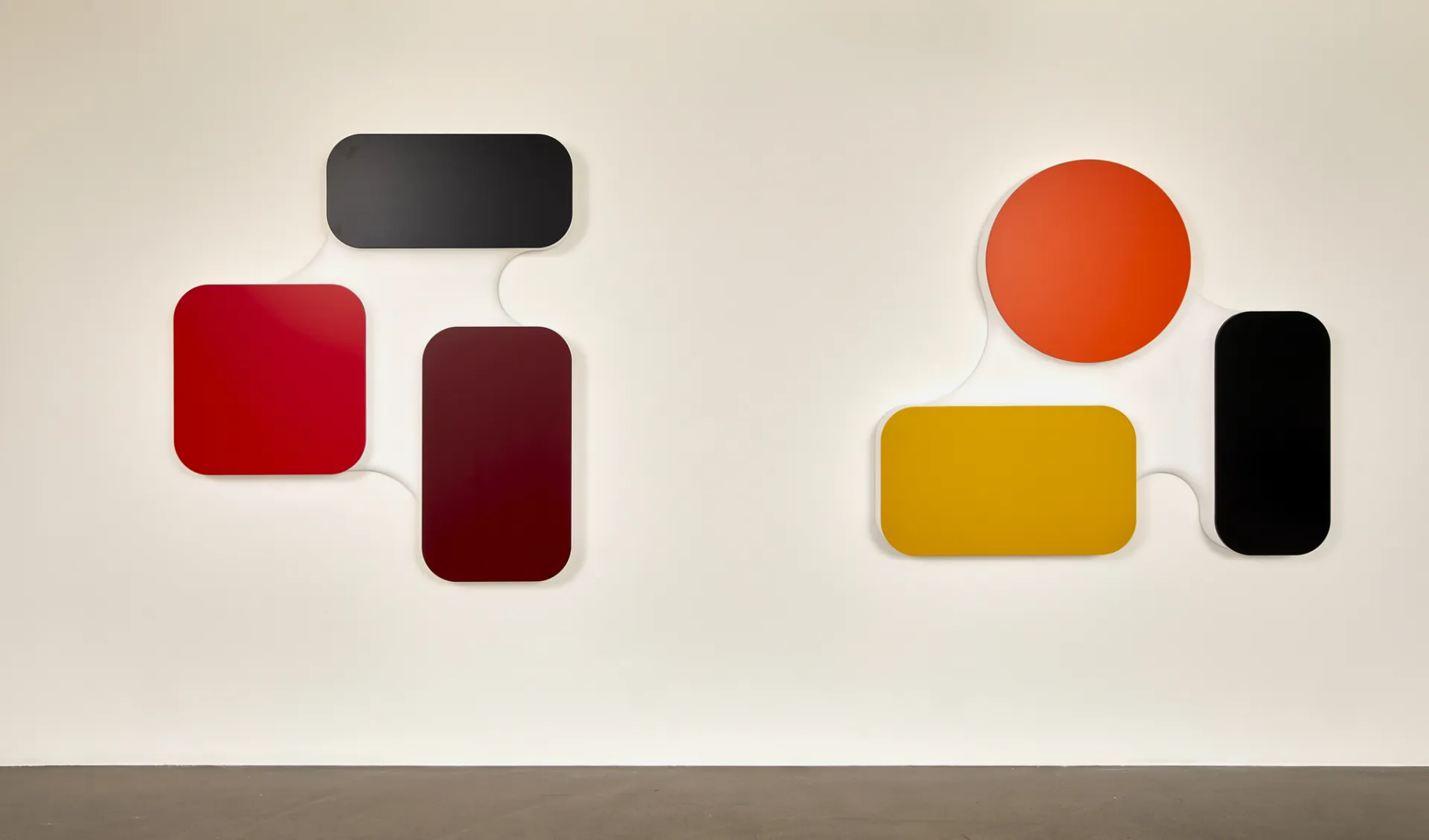
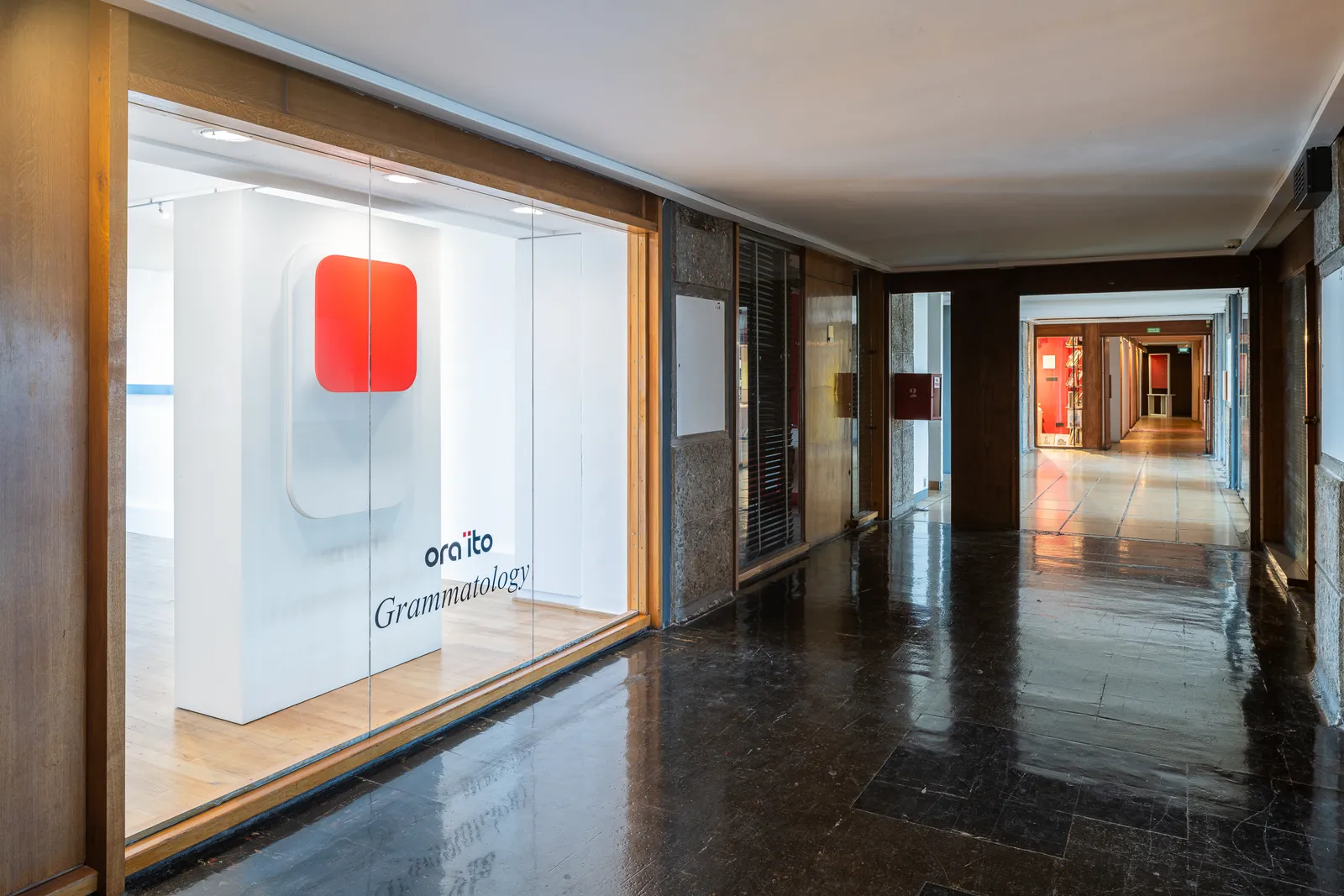
The reopening of Rupture coincides with the presentation of Grammatology Part 3, an exhibition conceived by French designer Ora Ïto. Developed specifically for the Venetian space, the project continues an ongoing investigation into language, geometry and architecture, bringing together visual signs and modernist principles.
The exhibition takes its title from the Greek word grammatology, referring to the study and construction of writing systems. Ora Ïto translates that concept into a series of compositions built from aluminum sheets mounted on mineral resin supports. Lines, circles, squares and rectangles become the basic vocabulary of an abstract alphabet that moves between design and visual art.
Although presented in Venice, the project also establishes continuity with Rupture’s presence inside Le Corbusier’s Cité Radieuse in Marseille. The installation references the architect’s Modulor system, the proportional scale developed after the Second World War to establish relationships between the human body, architecture and space. The exhibition’s primary colors also recall Le Corbusier’s own chromatic language, creating a dialogue between twentieth-century modernism and contemporary design.
Rather than functioning as a temporary exhibition disconnected from the bookstore, Grammatology Part 3 becomes part of Rupture’s editorial identity. Books, artworks and architecture occupy the same environment, allowing visitors to move between printed publications and spatial installations without a clear distinction between exhibition and reading room.
Rupture Venezia Publishing
The reopening also marks the launch of Rupture Venezia Publishing, the Italian publishing branch of the project. While previous Rupture locations concentrated primarily on bookselling and editorial programming, Venice adds publishing as a central activity.
The first title released under the Venetian imprint is Lathe Biosas, a philosophical collection conceived by Francesca Toich. Developed, edited and distributed in Venice, the publication establishes the editorial direction of the new publishing house while reinforcing the city’s historical relationship with printing and book production.
Rather than treating publishing as an extension of retail, Rupture presents it as another way of participating in public discussion. The bookstore becomes the place where ideas are written, edited, printed, presented and eventually distributed across the wider network.
Books as objects that continue to circulate
«We never destroy books here at Rupture. We exchange them. I love the idea that they go from place to place. All you need to do is ask, and most certainly someone, somewhere else will have what you are looking for.» Alexandre Sap
The statement describes a circulation model that differs from conventional bookselling. Publications move between bookstores, publishers and readers through personal relationships built over time. Independent publishers regularly contact Sap with new titles, while bookstores within the Rupture network exchange books according to availability and editorial relevance.
«Local is global,» Sap explains. The phrase reflects the project’s broader ambition. Each bookstore responds to its immediate surroundings while remaining connected to an international network of publishers, artists, architects and readers.
Conversation remains central to the project Rupture
Despite its expansion, Rupture continues to preserve one element that has remained unchanged since the first Paris café-record store: conversation.
The Venice space is designed to encourage visitors to remain inside rather than simply purchase a book and leave. Reading, listening and discussion continue to shape the daily rhythm of the bookstore.
«I want people to come in, grab a book and read the whole thing if they want. The doors to the store are always open. I want the space to be somewhere peaceful people can come to. They can even change the music if they want to. There has to be an exchange of culture and conversation. I want people to find something that they wouldn’t find anywhere else.»
That philosophy also informs the public program. Author talks, publication launches, exhibitions, listening sessions and editorial collaborations are expected to accompany the bookstore’s everyday activity, allowing the space to operate throughout the year rather than only during the Venice Biennale.
Sap often describes one detail that summarizes the project: «I always have a little chair on my side. It’s always an empty chair because I want to have someone to sit with me and discuss. That is the essence of Rupture.»
Independent bookstores after the algorithm
Rupture’s evolution reflects a broader transformation taking place across independent bookselling. Increasingly, specialist bookstores are becoming publishers, exhibition venues, research spaces and community platforms. Their role extends beyond distribution to include commissioning, editing and producing cultural content.
The Venice relocation positions Rupture within this wider European landscape. Rather than functioning solely as a bookstore, the new Santa Croce location brings together publishing, exhibitions, architecture, music and editorial production under one roof. The result is a space where books remain the starting point, but where the conversations they generate extend well beyond the shelves.
Rupture Venezia
Rupture Venezia reopened in April 2026 in the Santa Croce district, near the San Stae vaporetto stop and the Grand Canal. The bookstore forms part of the Rupture network founded by Alexandre Sap, with locations in Paris, and Marseille. The Venetian space combines an independent bookstore, exhibition venue, publishing house, podcast studio and record label, with a program dedicated to architecture, art, photography, design and independent publishing.
Its opening exhibition is Grammatology Part 3 by Ora Ïto, presented alongside the launch of Rupture Venezia Publishing and the Library of Libraries initiative, which brings temporary collections from international bookstores, archives and publishers to Venice.
Editorial Team