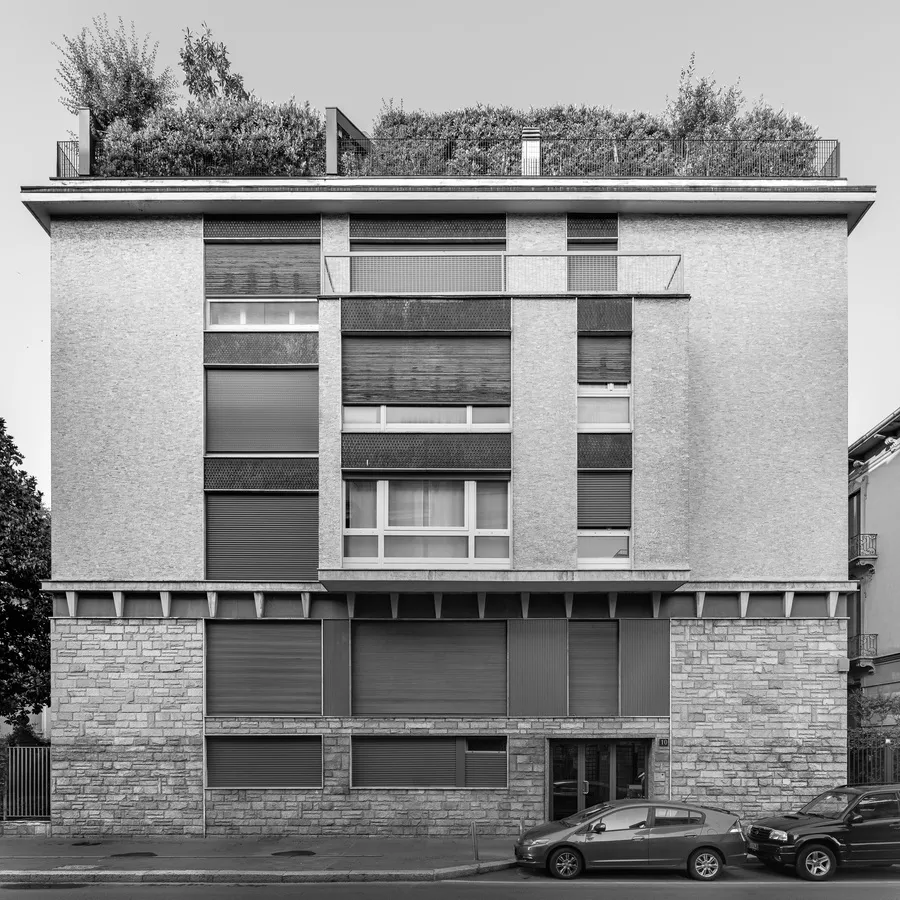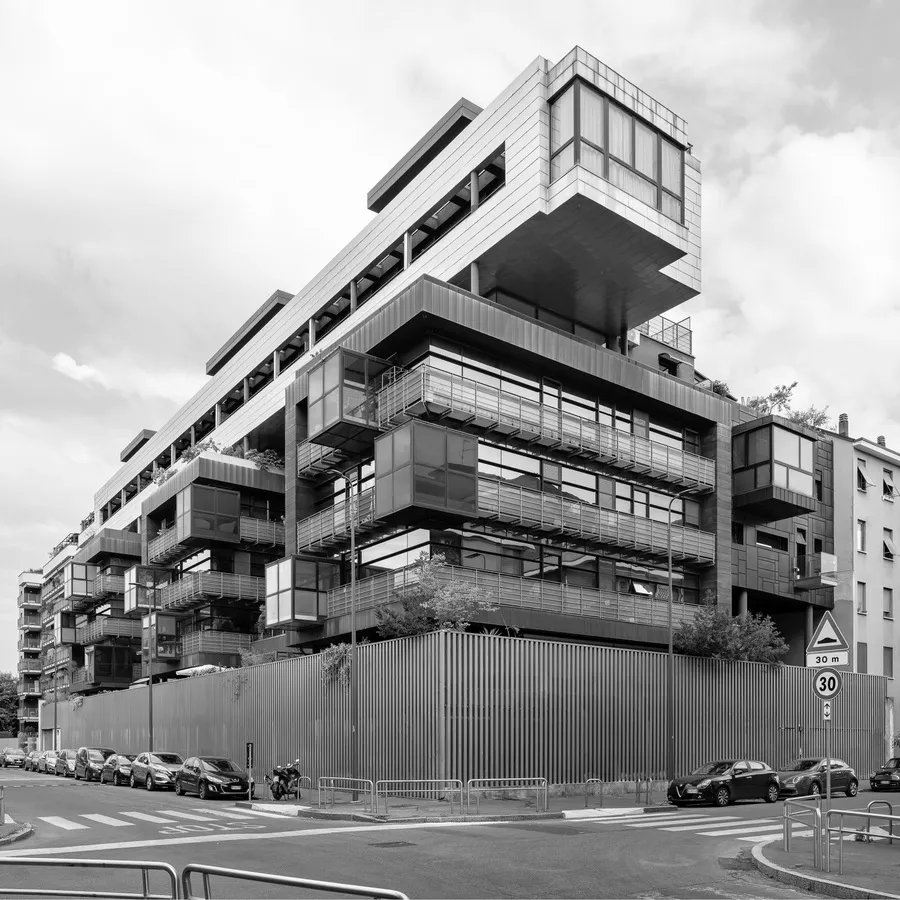
The Sensuality of Measure: Sosthene Hennekam Photographs Milanese Rationalism
From theatrical costume to architectural photography: a project born on Instagram in 2017 has become a map of Milanese architecture — on black and white, Rationalism and the sensuality of measure
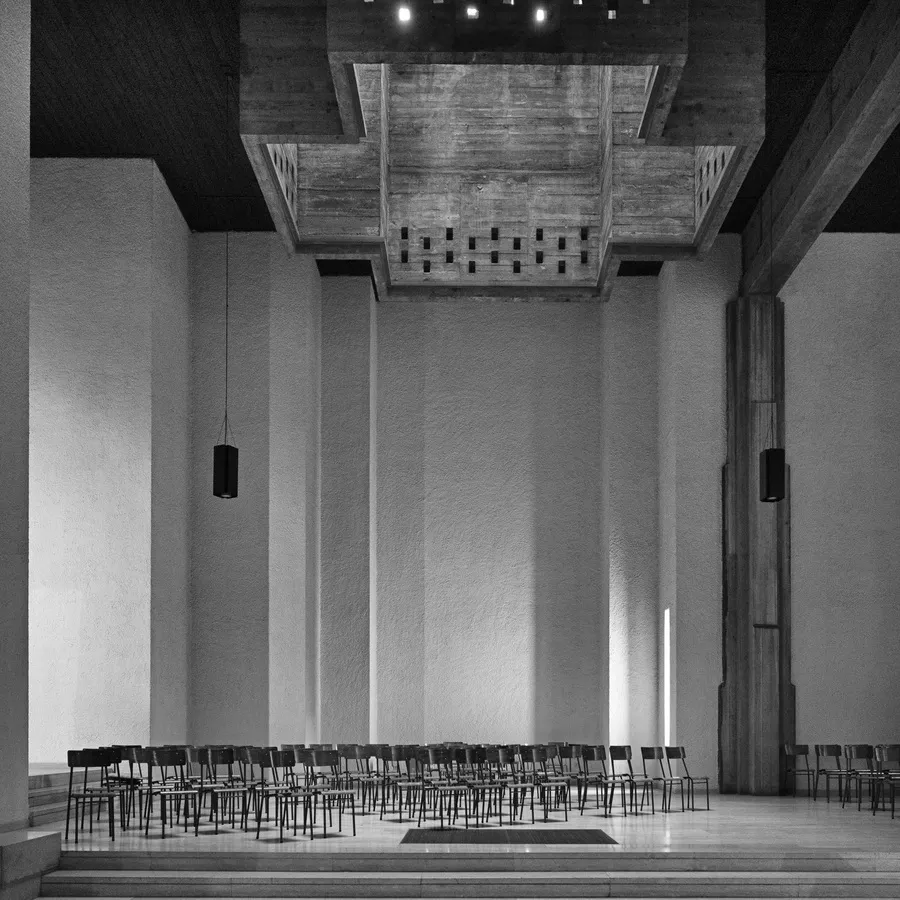
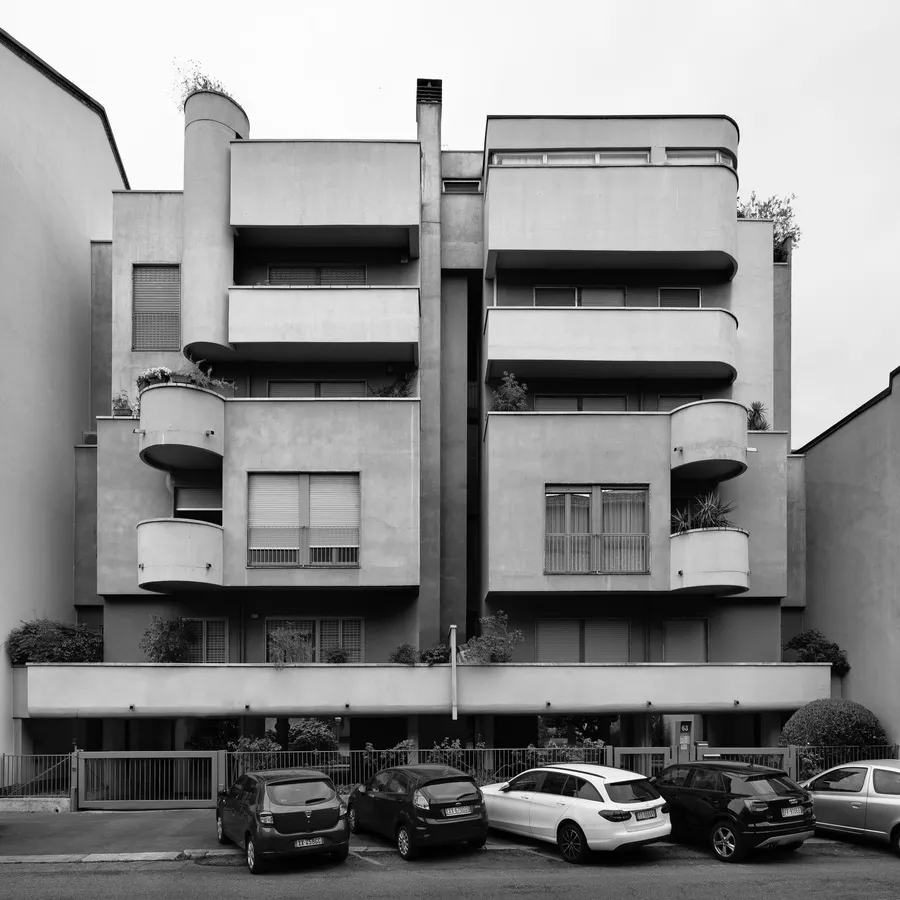
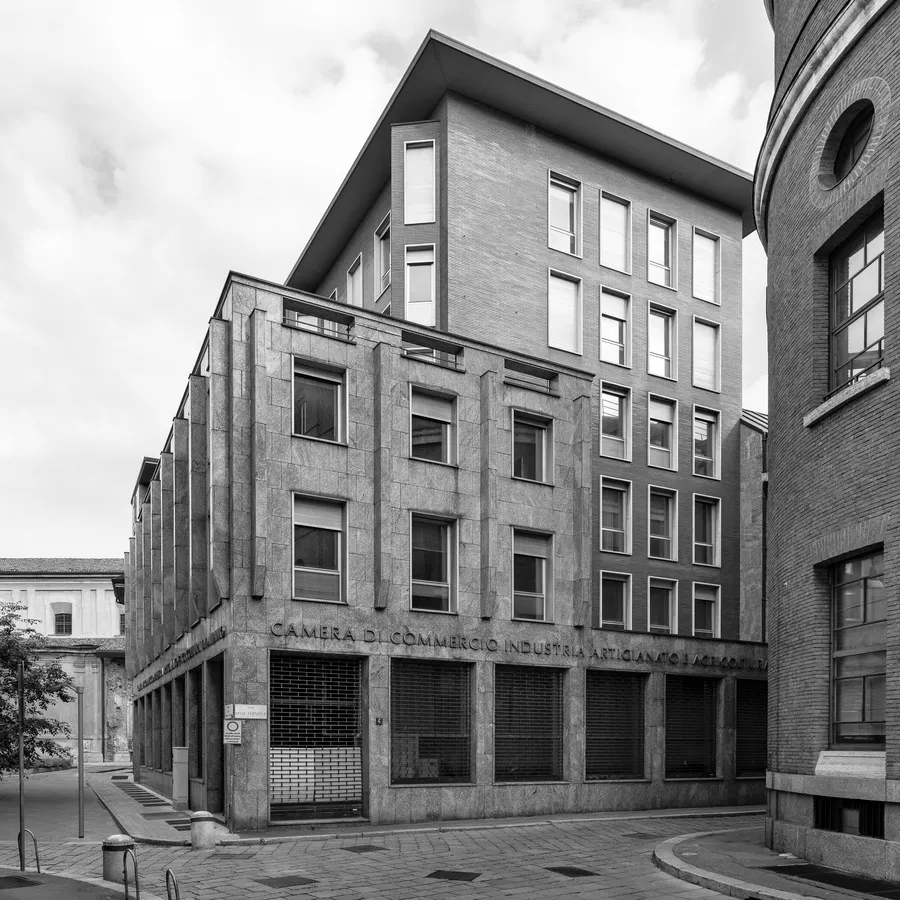
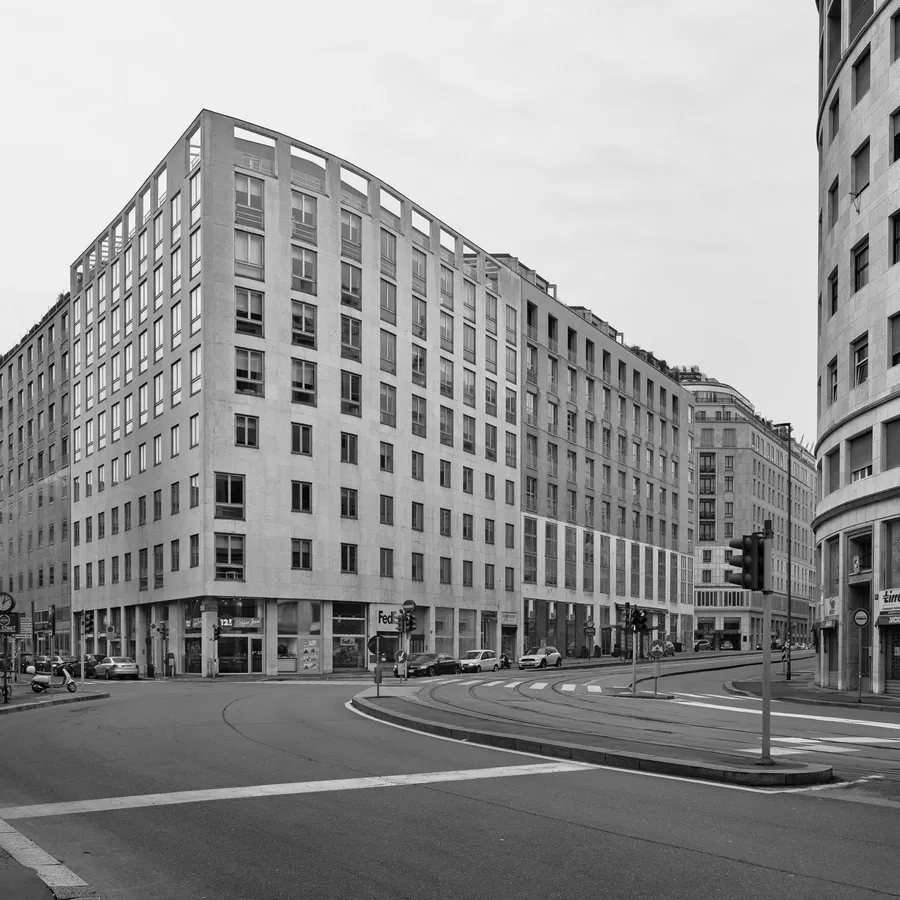
Sosthene Hennekam «I don’t use a tripod, and the first frame comes out of an intuition. Then I go back to the same building ten or twenty times, waiting for the right light, the right atmosphere, until I find the image I had in mind. Post-production can take days, and its purpose is to make the architecture more legible. I remove anything I consider visual interference — tram cables, for instance, which risk turning into a dominant graphic mark — without altering the building itself. I want the architecture to speak, not the context around it.».
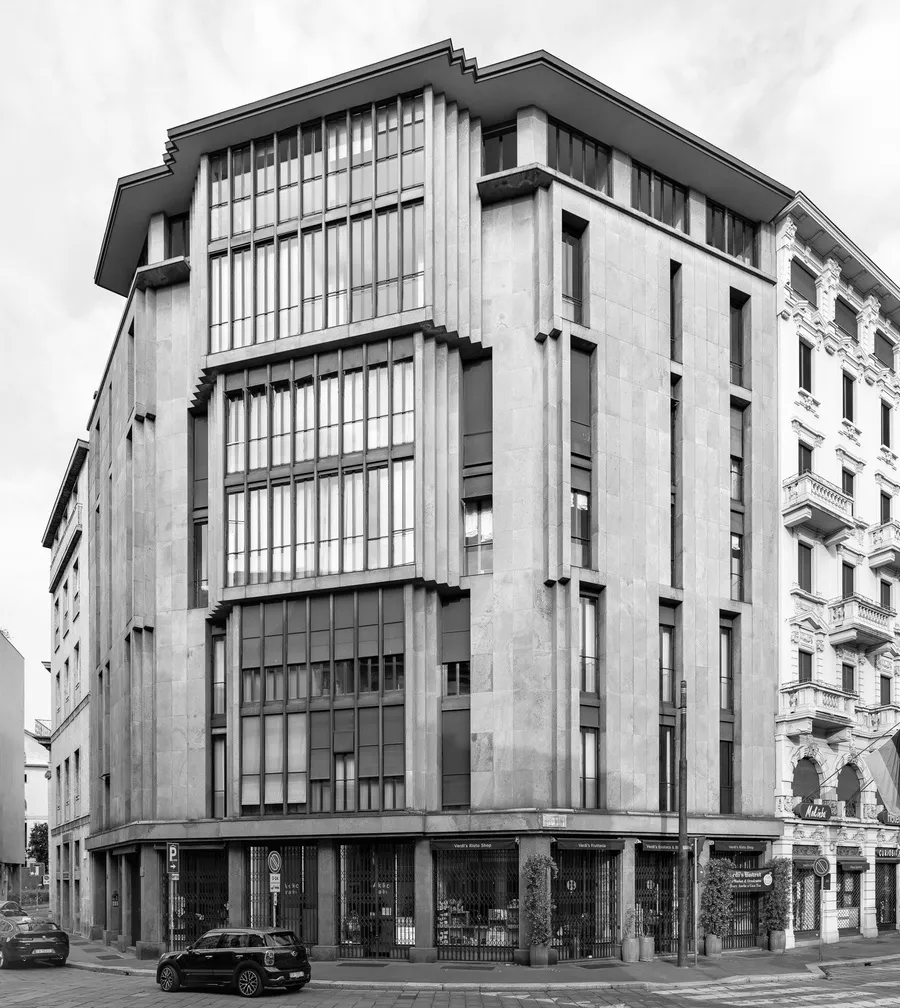
Before photography, Sosthene Hennekam worked in fashion and theatre, designing costumes and building worlds out of material. Today his creative gesture appears inverted: instead of dressing bodies, he undresses buildings. Through black and white he subtracts colour, traffic, advertising, human presence — everything that interferes with the gaze. Milan is a city that shuns flirtation.
Born in the Netherlands and settled in Milan since 2012, after living between Paris, Venice and Los Angeles, Hennekam has found in the city an inexhaustible field of research. With Pure Milano he has built, from 2017 onwards, a visual archive devoted to Milanese architecture: a project born on Instagram, since grown into an app that catalogues thousands of buildings and keeps expanding through study, research and classification.
From Studio Berçot to Thierry Mugler: how a costume designer’s training teaches you to look at a building
SH:Studio Berçot in Paris, a fashion school now closed, produced many of the figures who went on to shape international fashion. More than designing clothes, what I learned there was how to observe: how to develop a critical eye, how to understand proportion, materials, detail. It is a lesson that still accompanies me today when I photograph a building. After my studies I spent two years with Thierry Mugler, working on the menswear line. That is how I ended up in theatre. With a Venetian performer I created The Living Paper Cartoon, a show in which everything — costumes, sets, props — was made of paper. It became a cult piece and toured theatres around the world for almost thirty years.
My father was a photographer and I grew up in a darkroom. I still remember my first Leica: I was six, and he would hand me his old cameras. Looking back now, my path has a single thread running through it: learning how to look, whether at a body, a costume, a stage set or a façade.
An architect manqué: from archives to the history books of Milanese architecture
SH: I was born in the Netherlands, studied and worked in Paris, then lived in Venice for fifteen years, went back to Paris, moved to Los Angeles for six years and finally, in 2012, arrived in Milan. Every city I have lived in has become a place to observe and to understand, and architecture has been my way of reading it. I photographed buildings wherever I lived, at first with no particular project in mind, just for myself. It was a friend who suggested I publish those images on Instagram.
Photographing had stopped being enough. I felt the need to know the buildings I was portraying: who had designed them, in what context they had come about, what story they told. So I began frequenting archives, buying books, consulting historical magazines and building an ever richer database. Today I own a library devoted to Milanese architecture, the product of years of research. I never studied architecture: I am an architect manqué.
What makes a Rationalist façade sensual? The lesson of Pino Musi and Greg Gorman
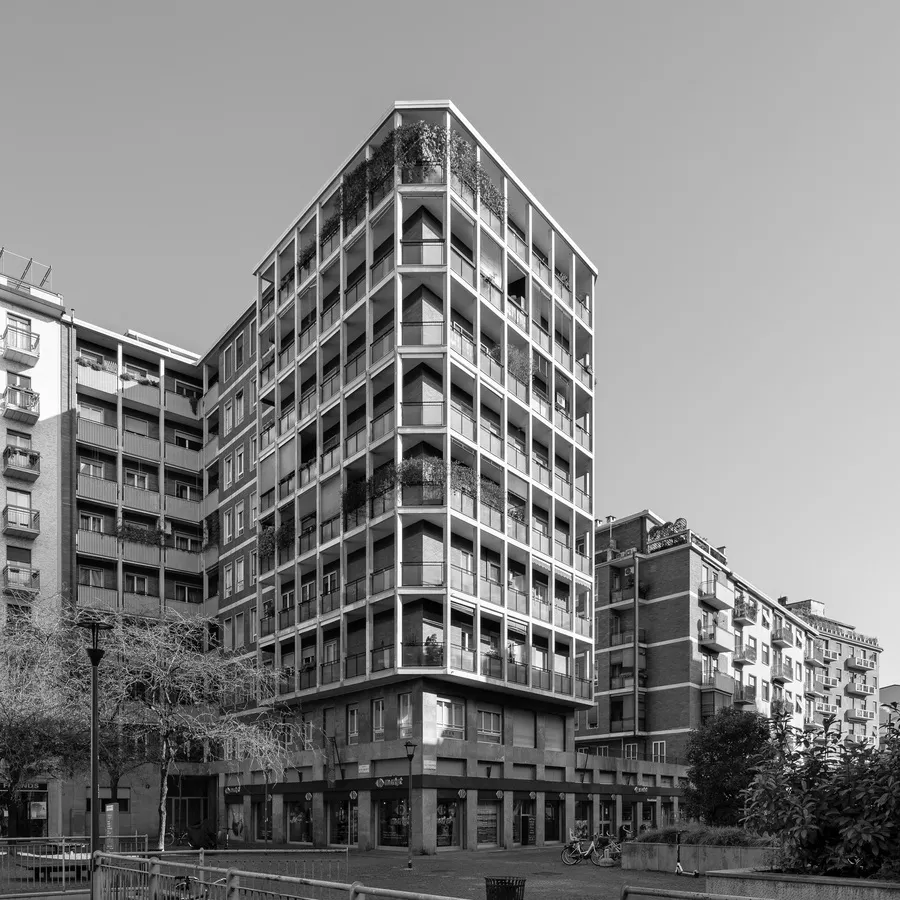
SH: Light gives depth to surfaces, puts geometry under tension and turns an austere façade into something physical. Much of what I know comes from meeting two photographers I consider masters. Pino Musi passed on to me a way of looking at architecture founded on essentiality and on the force of form. Greg Gorman, the American portraitist, taught me the value of black and white and of light: how to sculpt a subject through contrast, stripping away the superfluous to let character emerge.
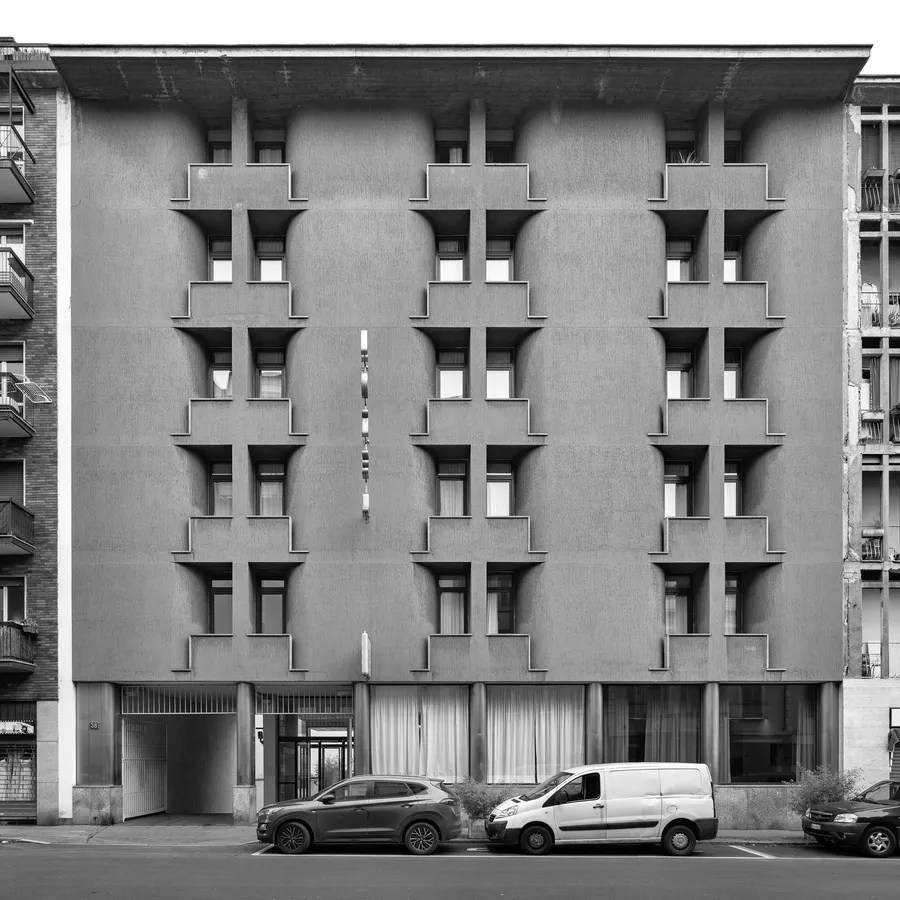
Why photograph Milan in black and white? The perceptual shift that colour conceals
SH: I have shot in black and white since the analogue days. For me it is the most natural language for architecture, because it allows you to read material, proportion, volume and the relationship between light and shadow with greater clarity. Take away colour and the eye concentrates on the essence of the building. There is another aspect that interests me: removing colour means subtracting an element of reality and creating a small perceptual shift. I like the idea that someone who knows a building might rediscover it in a different light through my photographs and, when they encounter it again in person, feel a kind of surprise.
I have experimented with colour. What I would want to avoid is letting it become decorative, or falling into an aesthetic of seductive palettes that end up overpowering the architecture. It could become an evolution of my work in the future, but for now black and white remains a deliberate choice.
Street photography is far from my language. What I am after is a personal way of looking at architecture, one capable of isolating it from urban noise and giving back its force, its proportions, its character. I am interested in an image that conveys my own way of looking at a building, rather than a technical photograph — a kind of survey.
Mario Martinenghi and the minor architectures: bringing attention back to forgotten designers
SH: The masters are a point of reference, and alongside them there is the discovery of so-called minor architecture: reading the urban backdrops we pass every day without noticing, and bringing attention back to lesser-known designers who were nonetheless fundamental to the construction of Milan’s identity. That is what happened with the book on Mario Martinenghi. I wanted to restore visibility to an architect who left his mark on the city and who, for various reasons — an under-appreciated archive, less renown than colleagues who also made their name as designers — has remained at the margins of the story of Milanese architecture.
My eye goes beyond signature buildings. I still surprise myself in front of views I had not noticed. Just this morning, on a walk, I came across a few pieces of architecture I had never looked at properly; I had left my camera at home and the light was perfect. Or I will revisit places I have known for years and suddenly notice a new perspective. That happened recently at the Arco della Pace: seeing it in relation to Gio Ponti’s tower, from an unusual angle, I felt as if I were seeing both for the first time. It is this continual possibility of discovering something unexpected that makes Milan inexhaustible.
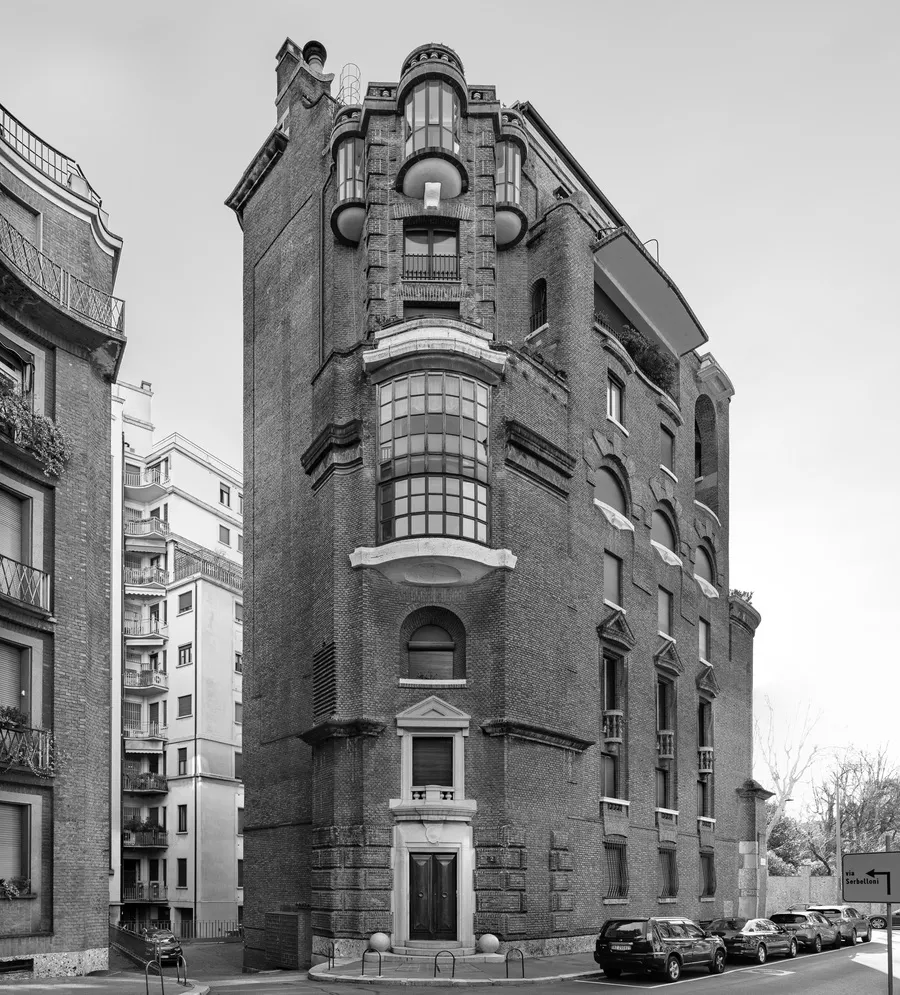
From Instagram profile to app: how Pure Milano became a searchable archive
SH: I started photographing Milan in 2017. Every building pushed me to look for its author, its history, its context, and so the photographic project turned into a work of research. Without realising it, I found myself building an archive that kept growing alongside the photographs. The app came out of that need. At a certain point the material I had gathered had become so vast that Instagram was no longer enough: I needed to organise it, make it searchable and let other people explore it too. Today the app is the natural continuation of Pure Milano: a tool for reading the city, navigating its architecture and discovering connections that would otherwise remain invisible.
Rendering, oxidation and graffiti: which imperfections make it into the frame
SH: The traces of time are part of a building’s life and tell its story. It is different when an external element ends up preventing you from reading it. I have little tolerance for graffiti, for example — less as an aesthetic question than because it covers the architecture and alters its language. It surprises me that Milan continues to be exposed to the phenomenon. In many other cities writing has evolved or found more appropriate contexts, whereas here it becomes an interference that makes it harder to appreciate the quality of the buildings.
Milan lacks the great manifestos, those shared codes that in the past defined a recognisable architectural language. There are still designers of quality, some of whom will leave their mark: I am thinking of the work of Lorenzo Degli Esposti. Compared with the postwar years, though, I sense less freedom to experiment. That ferment is easier to find elsewhere now. I am struck by certain projects built in Jordan, in Iran or in the Netherlands, where I see an architecture capable of being contemporary while keeping its expressive force.
Lucia Mannella