SWAB Barcelona 2026 builds a fair from scaffolding, bread and thermal paper
Reusable timber and edible works: SWAB Barcelona 2026 as a fair assembled, eaten and taken apart
The booths at SWAB Barcelona 2026 stood on scaffolding. Bread formed an artwork. One program offered a pastry in exchange for a smile, recorded by a machine on thermal paper.
The nineteenth edition of SWAB Barcelona ran from the eighth to the eleventh of October 2026. It was the fair’s first edition at the Palau Victoria Eugenia, on the Fira Barcelona-Montjuïc grounds. Professionals entered on the eighth and the public from the ninth.
Scaffolding and wooden components: the booth system at the Palau Victoria Eugenia
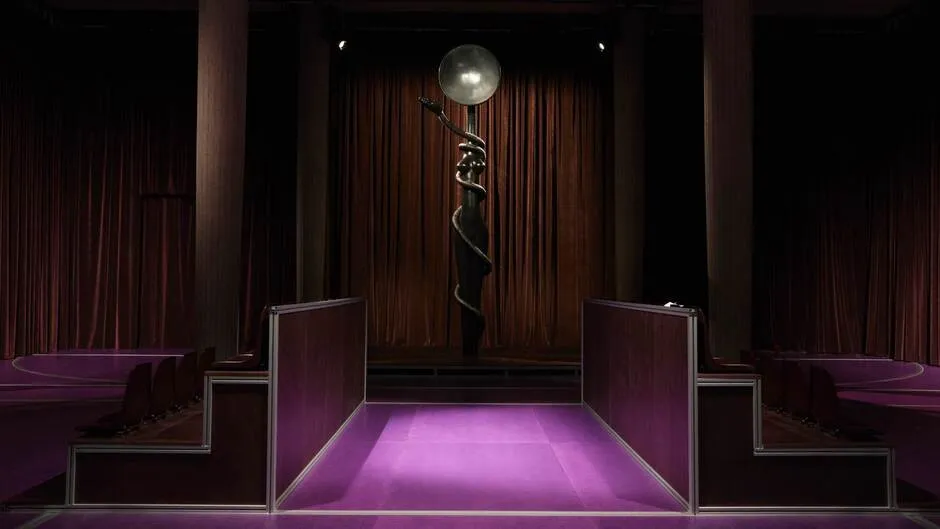
SWAB based its 2026 exhibition design on scaffolding and reusable wooden pieces. The layout covered more than three thousand one hundred fifty square meters of the palace.
The organizers described the system in two ways. One statement presented wood and other reusable elements as a means to reduce waste and the event’s ecological footprint. Another stated that the scaffolding-and-wood design generates no waste. The first describes an intention. The second describes an outcome, and no post-fair account of the dismantling was available at the time of writing.
The fair’s partner list includes the stand company MNA Stands and the carpentry firm Mañana Servicios de Carpintería. It does not specify their roles in the build. Keigio, Amatosole and Magis supplied the furniture for the lounge, the reading area and the VORTEX area. The fair said it chose the pieces for function, for the durability of their materials and for the reduction of environmental impact.
Brick, mosquito nets and mats: Mina Fouladi for OFF-SITE and Tapir Studio for Polar and Tropic
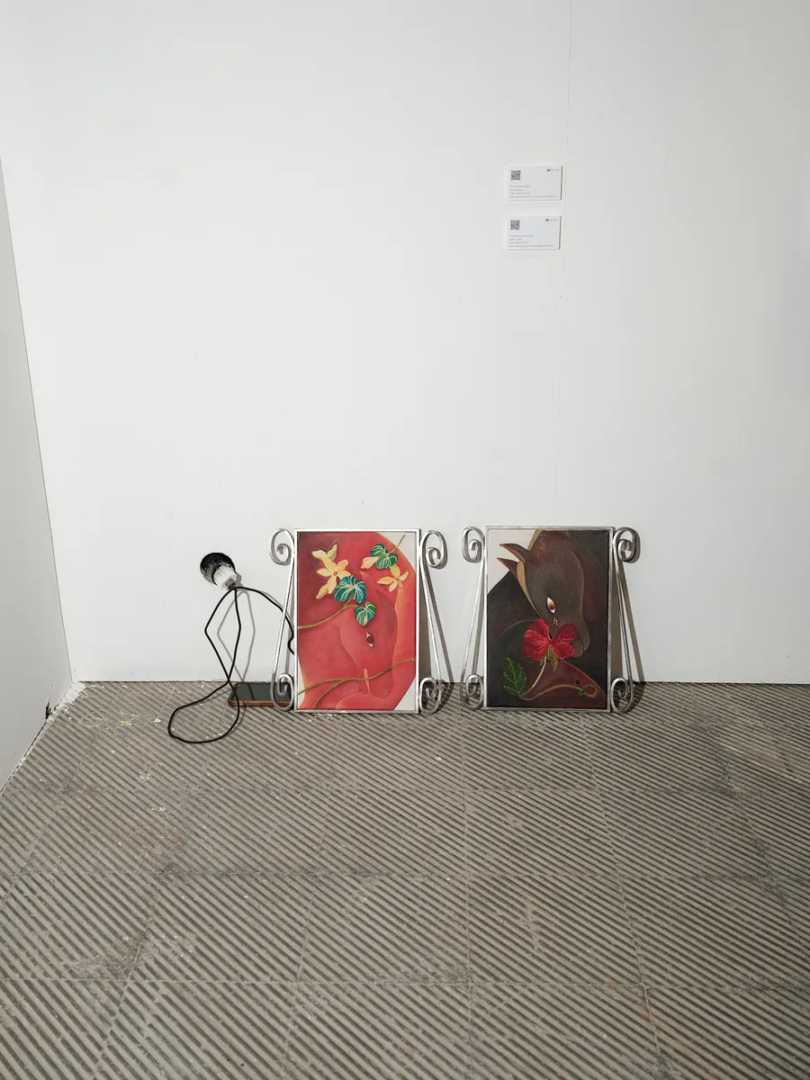
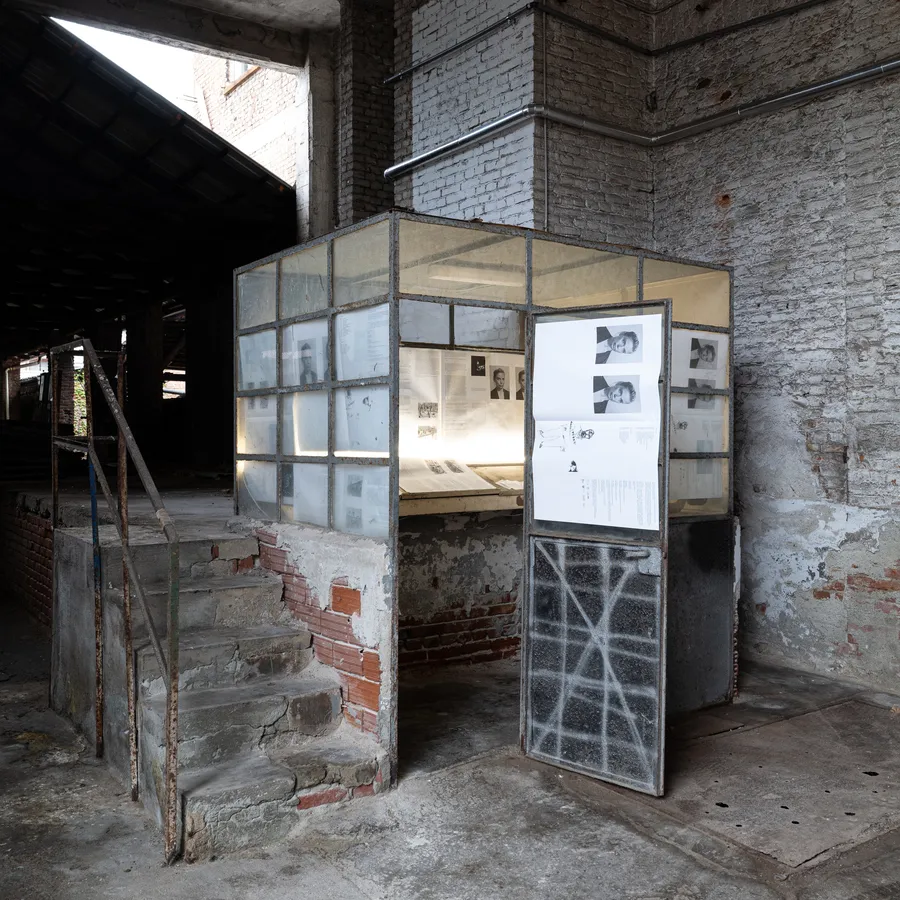
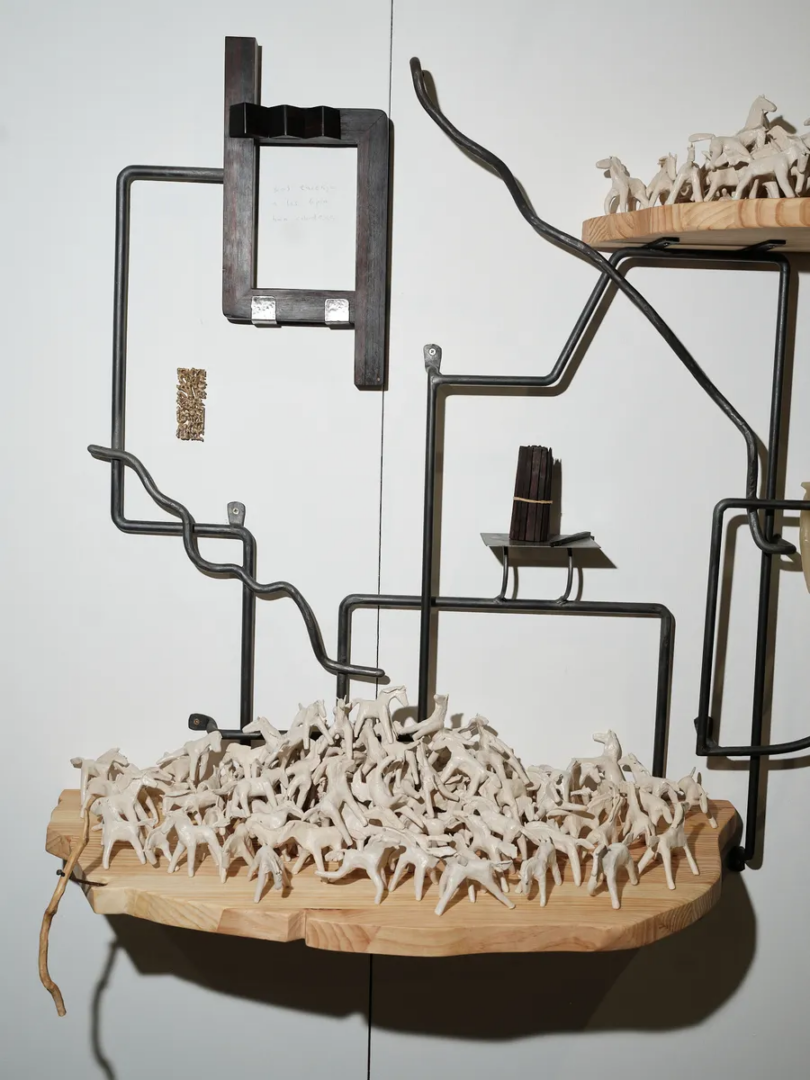
OFF-SITE, a program launched at this edition, deals with mobile, reused or disused spaces outside the circuits of the fair. Outhouse, from the United Kingdom, brought work by Mina Fouladi made on walls and masonry in public space. In one piece, Fouladi painted a road with traffic and streetlights on the face of a brick, inside its mortar joints.
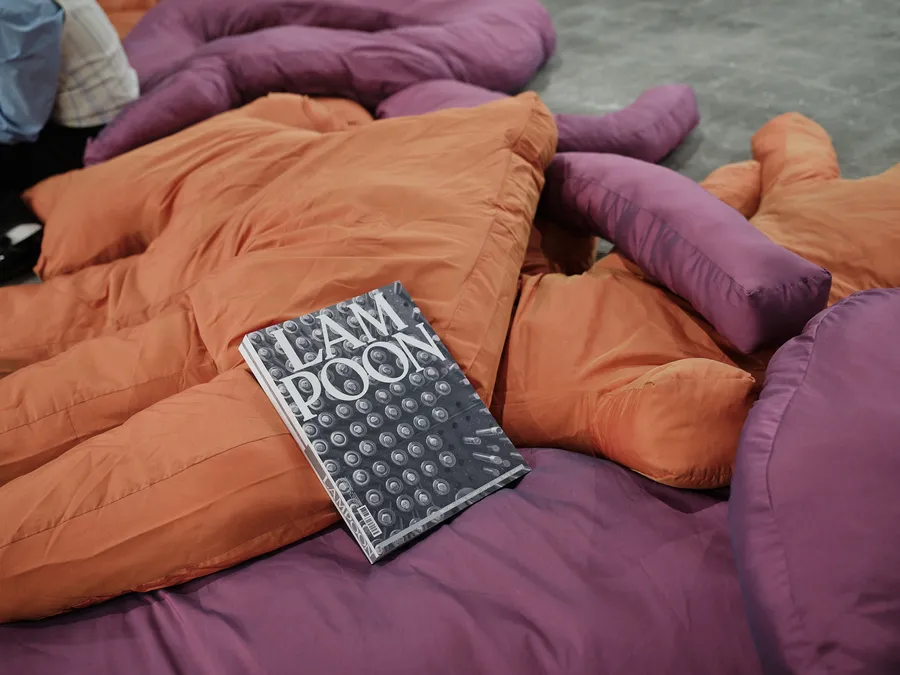
Polar and Tropic links spaces from the Nordic region and Southeast Asia. Through it, Tapir Studio from Malaysia presented Tidur Lambak, an installation of mosquito nets and mats. The work draws on the Malaysian practice of resting in community under mosquito nets, on mats laid on the floor. It turns part of the venue into a place to rest.
Bread as artwork in VORTEX and the GOR food program
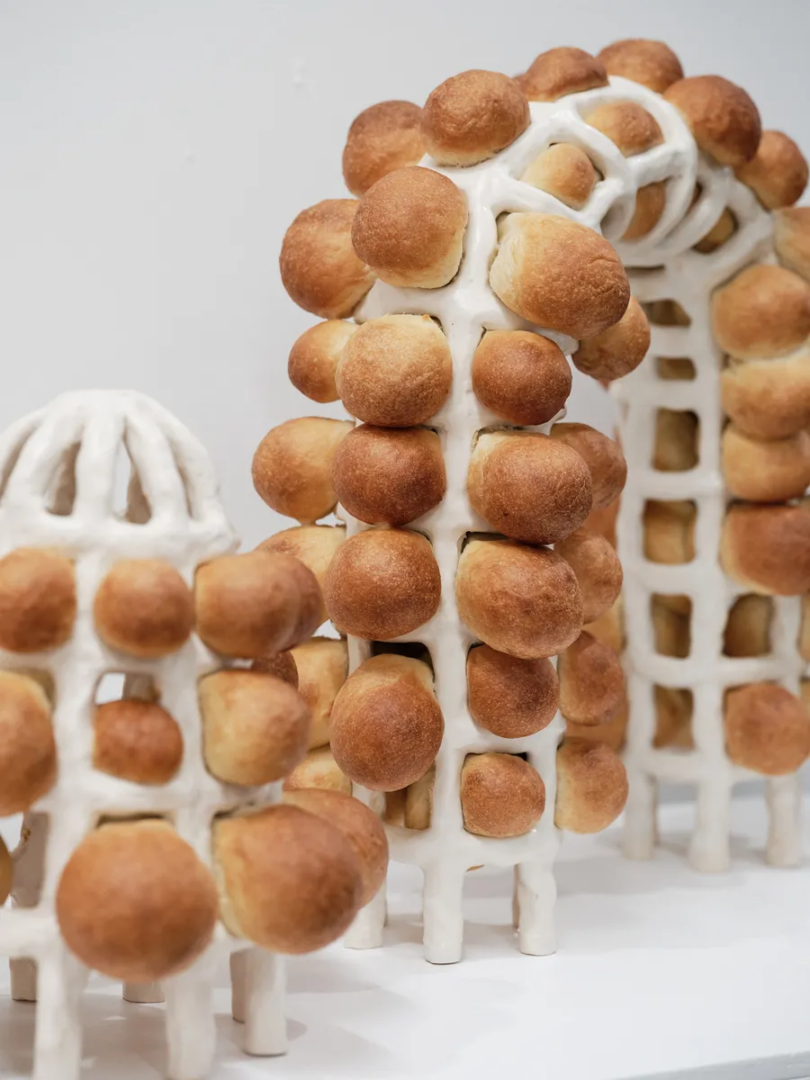
VORTEX, curated by Lena Solà, pairs a gallery from Spain with one from Latin America in each booth. The two present a single project. Ona Galeria, from Cuba, shared a booth with Herrera Gallery, from Barcelona. Their project included FESTÍN by Daniela Labrin, an edible and ephemeral work. The piece stacks bread rolls on a lattice structure. The booth also included a work by Alejandro Cañer.
Food also ran through the public program, under a separate arrangement. The Indonesian collective GOR curated the culinary sessions. The program listed a Welcome Breakfast by GOR from Bandung, The Center of Neutralization: Kinca & Kelapa Parut. GOR invited the 200CENT collective to present Collective Soup, a shared meal for artists, galleries, curators and collectors. Through IN/OUT, GOR also scheduled dinners in Barcelona galleries, outside the venue. At the fair, it planned a food market with no money involved.
The Afterwork, Protocol for Disarming a Recipe, was led by Agustina Fioretti with Fundació Úniques. It was announced as a participatory session that takes one shared recipe apart to trace the origins and routes of its food.
Thermal paper and lotería boards: payment and redistribution at SWAB Barcelona 2026
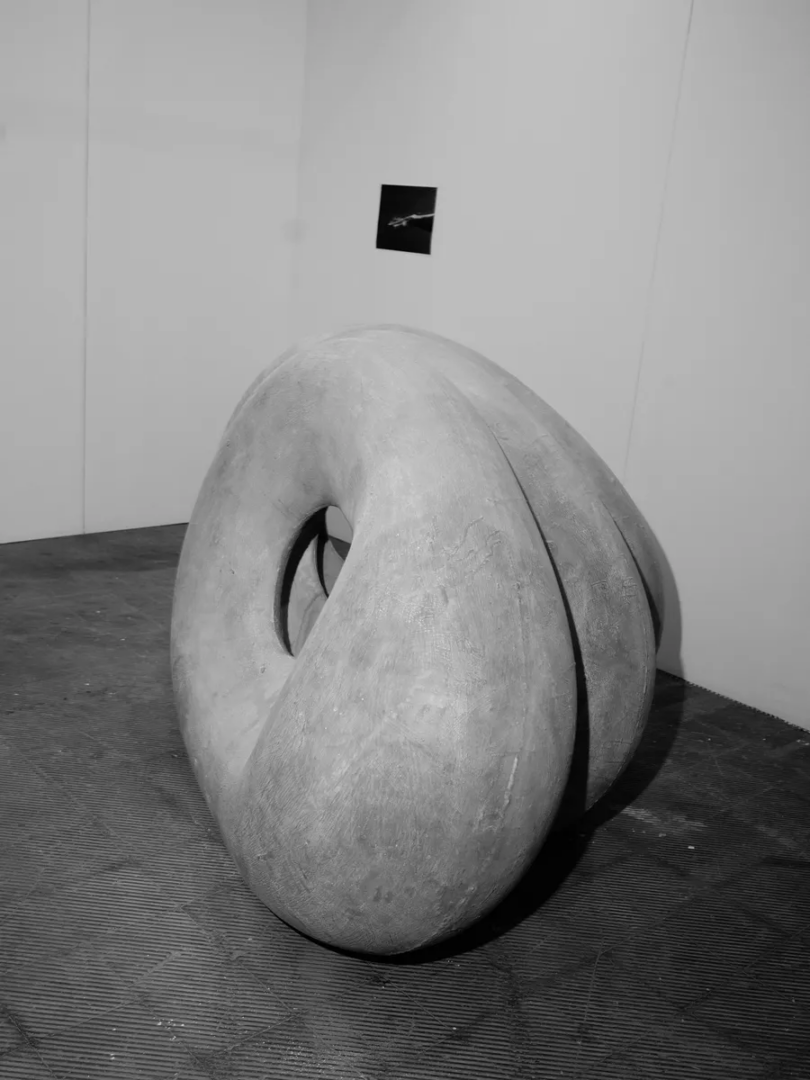
Within its Polar and Tropic series SURABI; carry on, GOR presented kuehsenyum, a social action running since 2011. Its terms are a pastry in exchange for a smile. A machine records the visitor’s facial expression and prints it on a thermal ticket. The smile replaces money as the means of payment, and the ticket keeps a record of each exchange.
damdam, a collective working between Amsterdam and Jakarta, formed in the Lumbung Master program. Lumbung is the Indonesian word for a communal rice barn, where a harvest is stored and shared. At SWAB, damdam organized Lumbung Lottery, a workshop and public event built on the lottery game. The boards follow the lotería format: a numbered tabla of sixteen illustrated squares.
Entry was set at a donation of five euros. damdam announced that the full sum would go to local initiatives in Indonesia. Winners would receive works donated by artists in its network. damdam presented the game as a form of harvesting, based on the exchange of stories and knowledge.
Cleaning and black flags: Maimu Brushwood and Eliyah Mesayer in the venue
Two performances took the venue as their material. In Cleaning for You, Maimu Brushwood was programmed to clean the fair live while singing Finnish lullabies. The persona is the drag alter ego of Timo Tähkänen, presented by Galleria HUUTO from Finland.
ALL ALL ALL, from Denmark, presented an action by Eliyah Mesayer. It moves a series of black flags through the venue with no fixed position. The flags belong to Illiyeen, an imaginary state for stateless people whose flag is black. The action draws on non-monetary markets, where participation, solidarity and the exchange of stories stand in for currency.
MYFAF booth-fee waivers and the Collective Shop
MYFAF, a program of the SWAB Barcelona Foundation, offers three booths free of charge. Eligible projects have less than two years of activity and have not taken part in an international fair. The 2026 booths went to Ulstrup from Copenhagen, Twilight Contemporary from the United Kingdom and DivergenX. DivergenX is a nomadic program, based between the United Kingdom and Switzerland, working toward a space in Geneva. The waiver covers the booth.
A Collective Shop, new at this edition, was set up to sell publications, editions and small-format works. The fair described it as a second source of income for galleries and an entry point for new collectors.
SWAB Barcelona
SWAB Barcelona was founded in 2006 as a fair for emerging artists and galleries. The 2026 edition took place at the Palau Victoria Eugenia, 7 Plaça Carles Buïgas, Barcelona. It listed more than one hundred eighty artists from twenty-two countries, presented by over sixty exhibitors. Its programs were OFF-SITE, VORTEX, Polar and Tropic, MYFAF, and the General and Public Programs. In 2025, the fair recorded over eight thousand visitors.
Editorial Team