Villa Igiea: one hundred rooms where Sicilian industrial history became hospitality
Commissioned by Ignazio Florio Jr. in 1899 and designed by Ernesto Basile, Villa Igiea has survived requisition, institutional ownership, and decades of neglect to reopen under Rocco Forte in 2021
Villa Igiea was not supposed to be a hotel. The building that Ignazio Florio Jr. commissioned from Ernesto Basile at the turn of the twentieth century was designed, at least in its earliest conception, as a sanatorium — a place where sea air, thermal proximity to the Acquasanta springs, and the measured distance from the city’s noise might restore a sick body to health. The name alone announced the program: Igiea, from Hygieia, the Greek figure of health and hygiene, daughter of Asclepius and deity of cleanliness, preventive medicine, and bodily order.
The shift from sanatorium to grand hotel happened before construction was even complete. By the time Basile had finished working on the structure — built between 1899 and 1901 around a pre-existing neogothic shell belonging to the English admiral Sir William Cecil Domville — the plan had changed. What opened was not a clinic but a palace, a statement of social ambition directed outward at the Golfo di Palermo and, through it, at the rest of the world. The original function left traces: a fixation on the body, on care, on the curative powers of the Sicilian climate. It just transferred them from the sick body to the mundane one.
How the Florio family shaped Villa Igiea Palermo as an expression of industrial power and Belle Époque ambition
To understand Villa Igiea, it helps to understand what the Florio family was, and what it needed from architecture. The Florios were not aristocrats in the traditional Sicilian sense — they were industrialists, originally from Calabria, who had built a business empire in Palermo beginning in 1793. By the late nineteenth century, the family controlled tuna canneries, shipping lines, sulphur mines, textile factories, insurance companies, and a bank. Ignazio Jr. and Donna Franca occupied a peculiar social position: wealthier than most of the Sicilian nobility, more modern in taste, more connected internationally, but always navigating the protocols of a world that placed lineage above capital.
Villa Igiea was one of their instruments. Basile also designed Villino Florio in the Olivuzza district, but Villa Igiea carried a different function: it was the family’s face toward the sea, toward Palermo’s expanding notion of itself as a Mediterranean capital capable of receiving foreign royals, diplomats, and moneyed tourists. The Cercle des Étrangers — the social club that operated within the villa — was the mechanism through which this aspiration was organised. In 1907, King Edward VII of England arrived with Queen Alexandra, Princess Victoria, and the Dowager Empress Maria Feodorovna of Russia, disembarking from the royal yacht Victoria & Albert to lunch at Villa Igiea. The building was doing exactly what it was designed to do.
Donna Franca Florio organised this machinery. She is often recalled as an aesthetic figure — her pearls, her portraits, her legendary elegance — but her role was more structural than that. She managed the social architecture of the villa: who received invitations, what the evenings looked like, how the Florios presented themselves to the European aristocracy. Villa Igiea was the stage; she choreographed what happened on it.
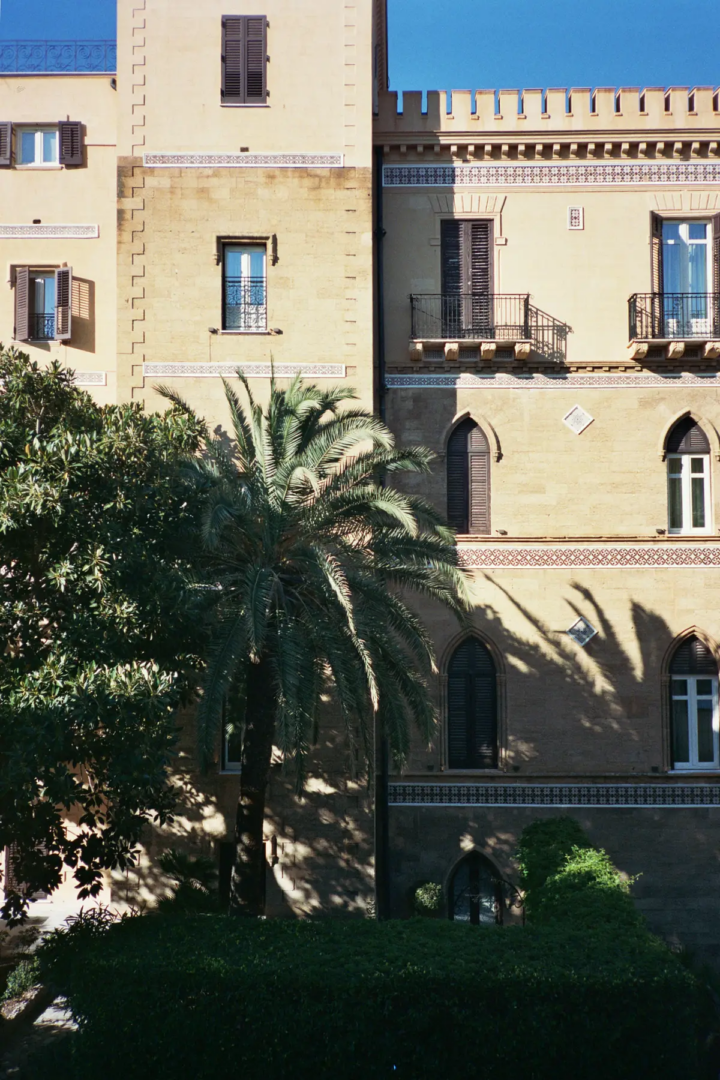
Ernesto Basile and the Liberty architecture of Palermo: why Villa Igiea is not just a beautiful building
Palermo’s Liberty moment was not provincial: at the end of the nineteenth century, the city was participating in the same formal revolution that was reconfiguring architecture across Europe — from Barcelona’s Modernisme to Vienna’s Secession to the Art Nouveau of Paris and Brussels. In Italy, the movement was called Liberty, after the London department store that had introduced Japanese fabrics and decorative reform to British taste. In Palermo, it found its most gifted interpreter in Ernesto Basile.
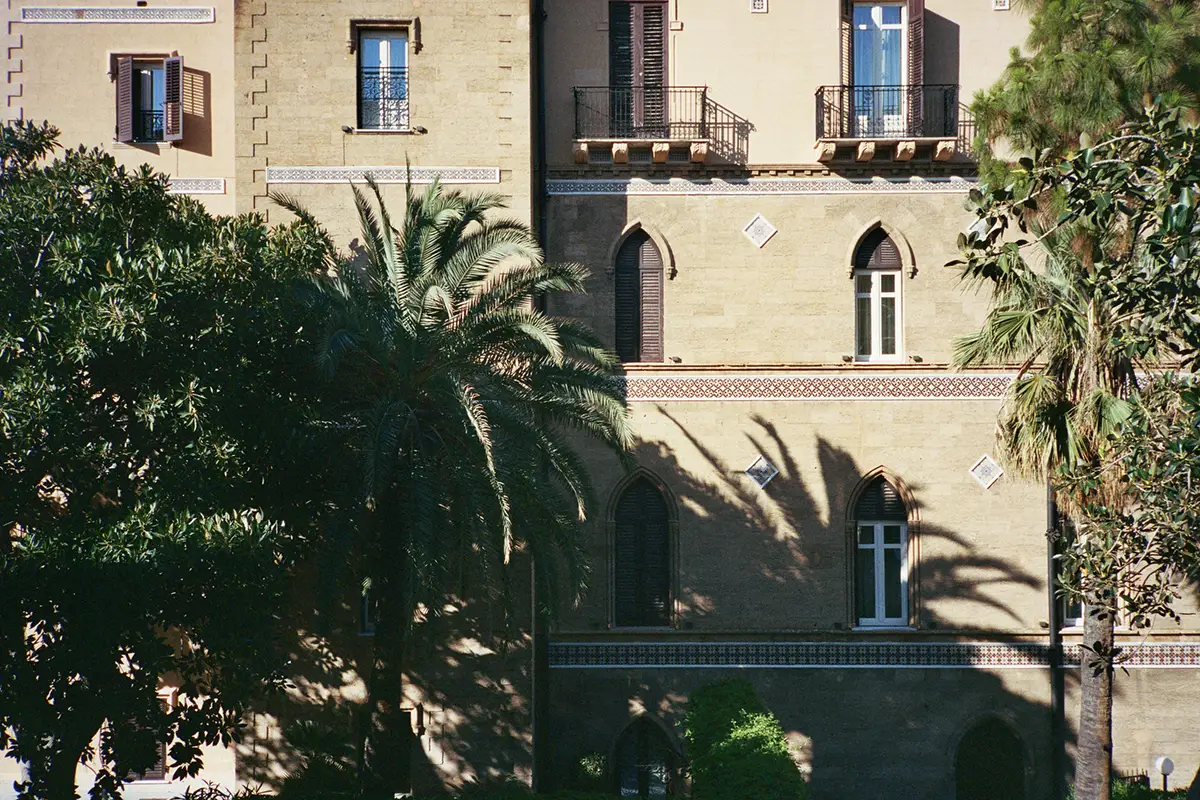
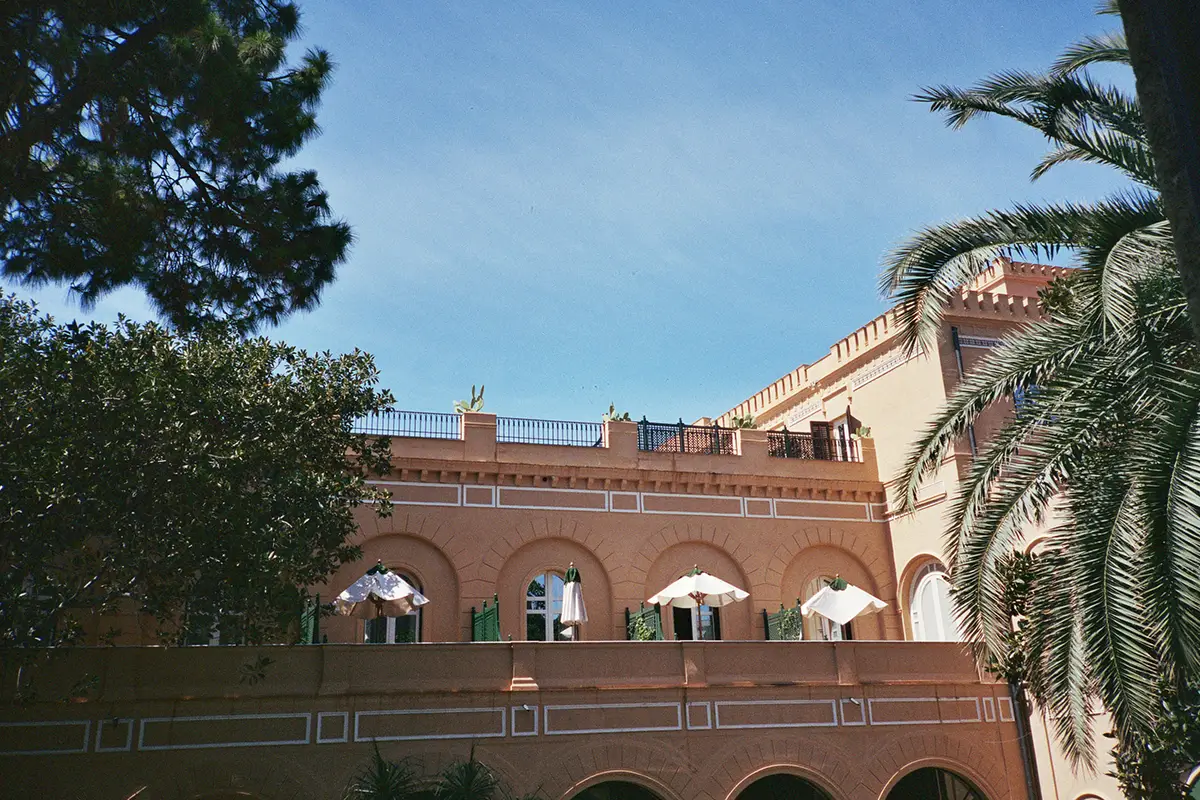
Basile worked in a mode that was simultaneously structural and decorative. His buildings used asymmetry, clustered volumes, towers, loggias, and the integration of external landscape with interior spatial sequence. At Villa Igiea, this translated into a building that performs differently from different vantage points: from the sea, from the garden, from the courtyard, from the rooms themselves. The villa doesn’t have a single facade; it has several faces, each addressed to a different direction of attention.
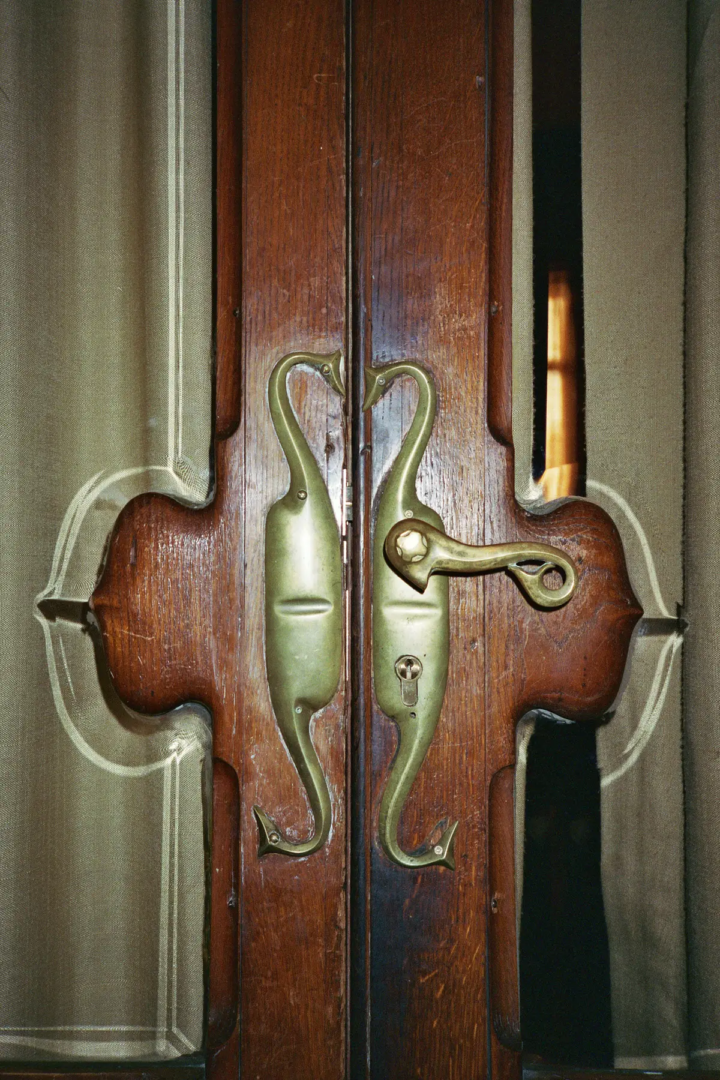
The interior program took this logic to its completion. Basile designed the great sala that now carries his name, and collaborated with the painter Ettore De Maria Bergler, who produced the floral murals in 1900 — female figures surrounded by curling botanical forms, spring allegories rendered in the same organic vocabulary as the architecture. The furniture came from Vittorio Ducrot’s workshop, itself one of the most sophisticated Palermitan cabinet-making operations of the period. The result was what Italian criticism calls an opera totale: a unified aesthetic environment in which architecture, decoration, furniture, and painted surface answer each other.
The Sala Basile at Villa Igiea: Art Nouveau interior in Palermo looks like after the Rocco Forte restoration
The Sala Basile survived the twentieth century in damaged but legible condition. Its murals by De Maria Bergler — panels of botanical ornament and female allegory across the upper register of the walls — retained enough of their original chromatic intelligence to function, after the 2021 restoration, as the governing reference for the entire interior design scheme.
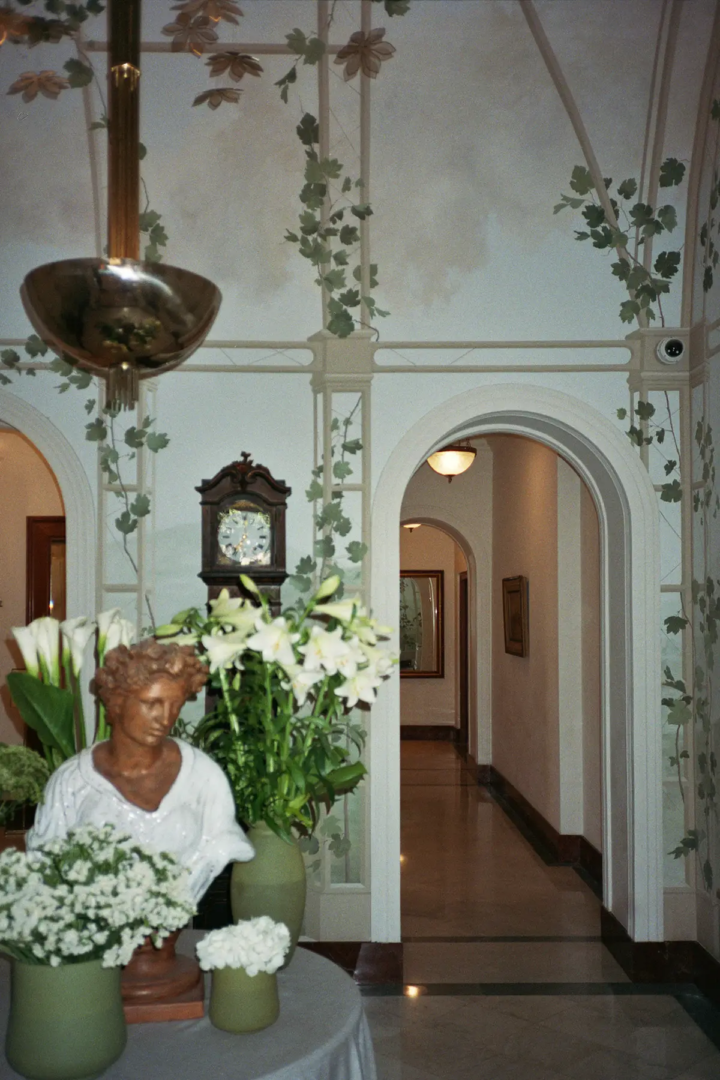
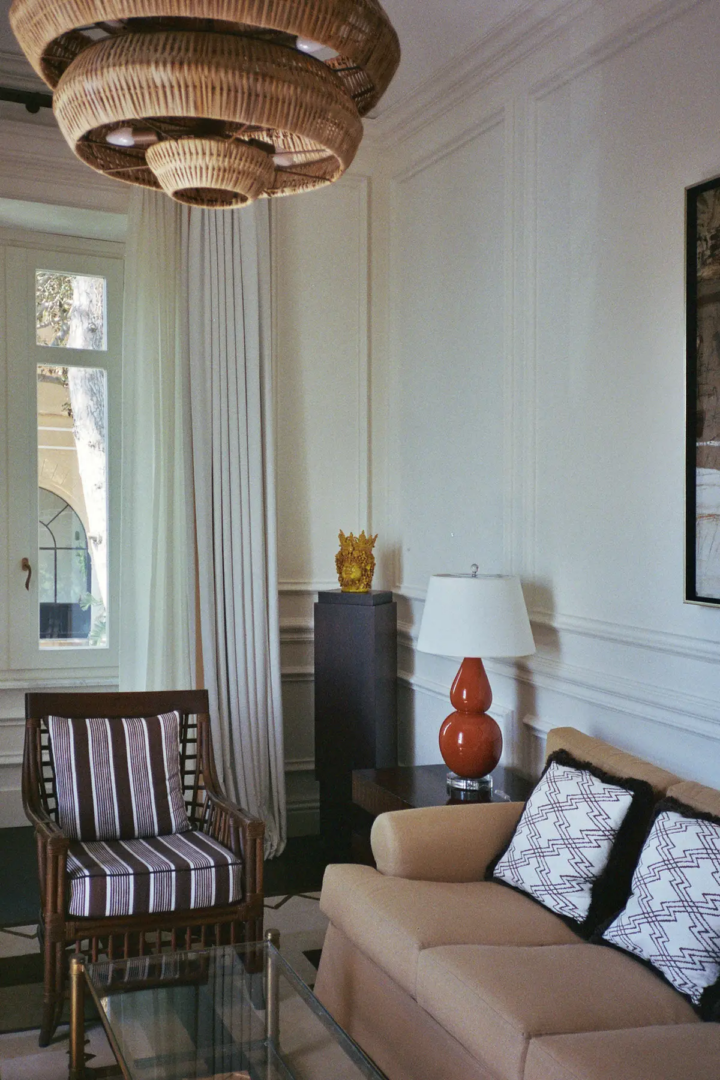
Olga Polizzi, who directed the Rocco Forte restoration with designers Paolo Moschino and Philip Vergeylen, describes the sala as a colour chart: the blues, golds, sage greens, and mineral tones visible in De Maria Bergler’s panels became the palette from which the guest rooms, corridors, and public spaces were built. This is not a literal transcription — the rooms don’t reproduce the sala’s imagery — but a chromatic continuity. The sea, the stone, the vegetation of the Sicilian coast and garden read as the natural counterpart of the painted programme upstairs.
The room is now also a meeting and event space, which could easily feel like a misuse of a protected monument but in practice does not, partly because the scale of the sala accommodates gathering without diminishing the frescoes, and partly because this is what the room was always for. The Florios held dinners here. People came dressed to perform inside it.
From sanatorium to grand hotel to hospital and back: the long twentieth century of Villa Igiea Palermo
Between its Belle Époque apogee and its Rocco Forte restoration, Villa Igiea passed through the full register of institutional functions available to a large Sicilian building in the twentieth century. Both world wars saw it requisitioned as a military hospital. The Florio dynasty, which had been contracting since the early 1900s under pressure from northern Italian capital and structural changes to the shipping industry, lost the villa definitively. The Banco di Sicilia acquired it and eventually returned it to hospitality.
The postwar decades had their own glamour. The winter climate of Palermo — mild, luminous, sheltered by Monte Pellegrino from northern winds — continued to attract wealthy visitors. The galas of the 1950s operated in a different social register from the Edwardian receptions, but the building’s function as a frame for conspicuous social life remained intact. During the production of Il Gattopardo in 1963, Claudia Cardinale, Burt Lancaster, and Alain Delon were among the guests. Earlier, Errol Flynn had appeared in Against Every Flag, partly filmed at the marina below the villa’s walls. The building had passed from social institution to cinematic set, which is not so different a role.
Rocco Forte acquired the property in 2018-2019 and reopened it in 2021 following a comprehensive restoration and restructuring project.
What the Rocco Forte restoration of Villa Igiea actually did: materials, craftsmanship, and the logic of Olga Polizzi’s design
The restoration project’s declared ambition was to preserve the historical fabric while returning the building to functional hospitality. In practice, this meant a series of specific decisions about what to conserve, what to replace, and what to introduce.
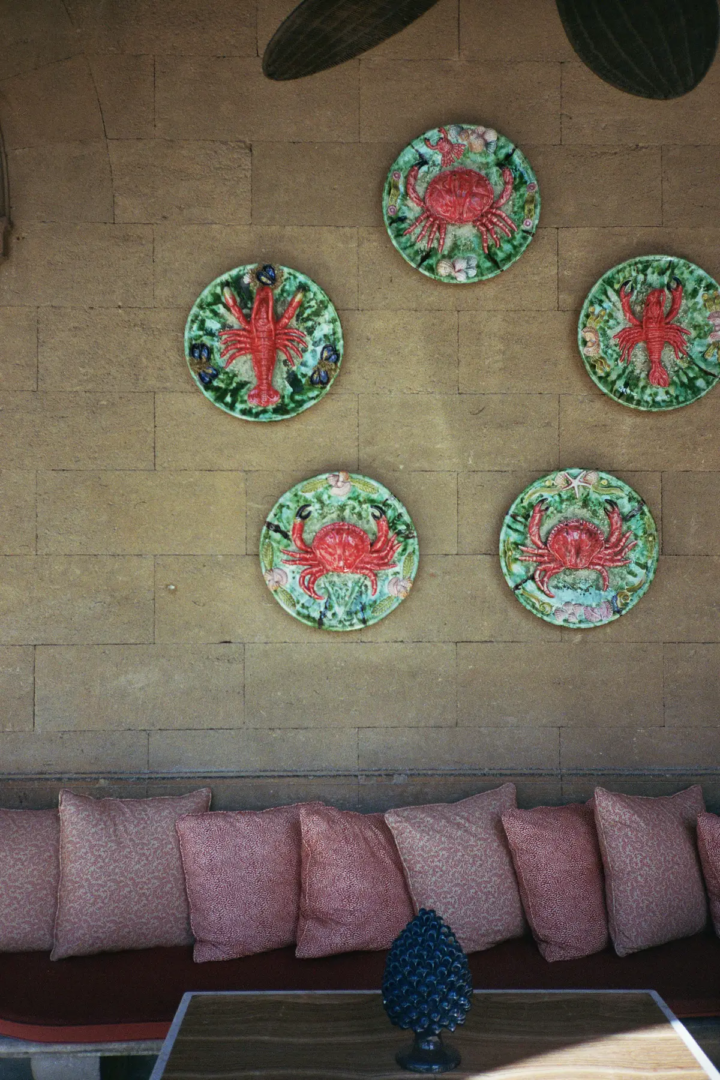
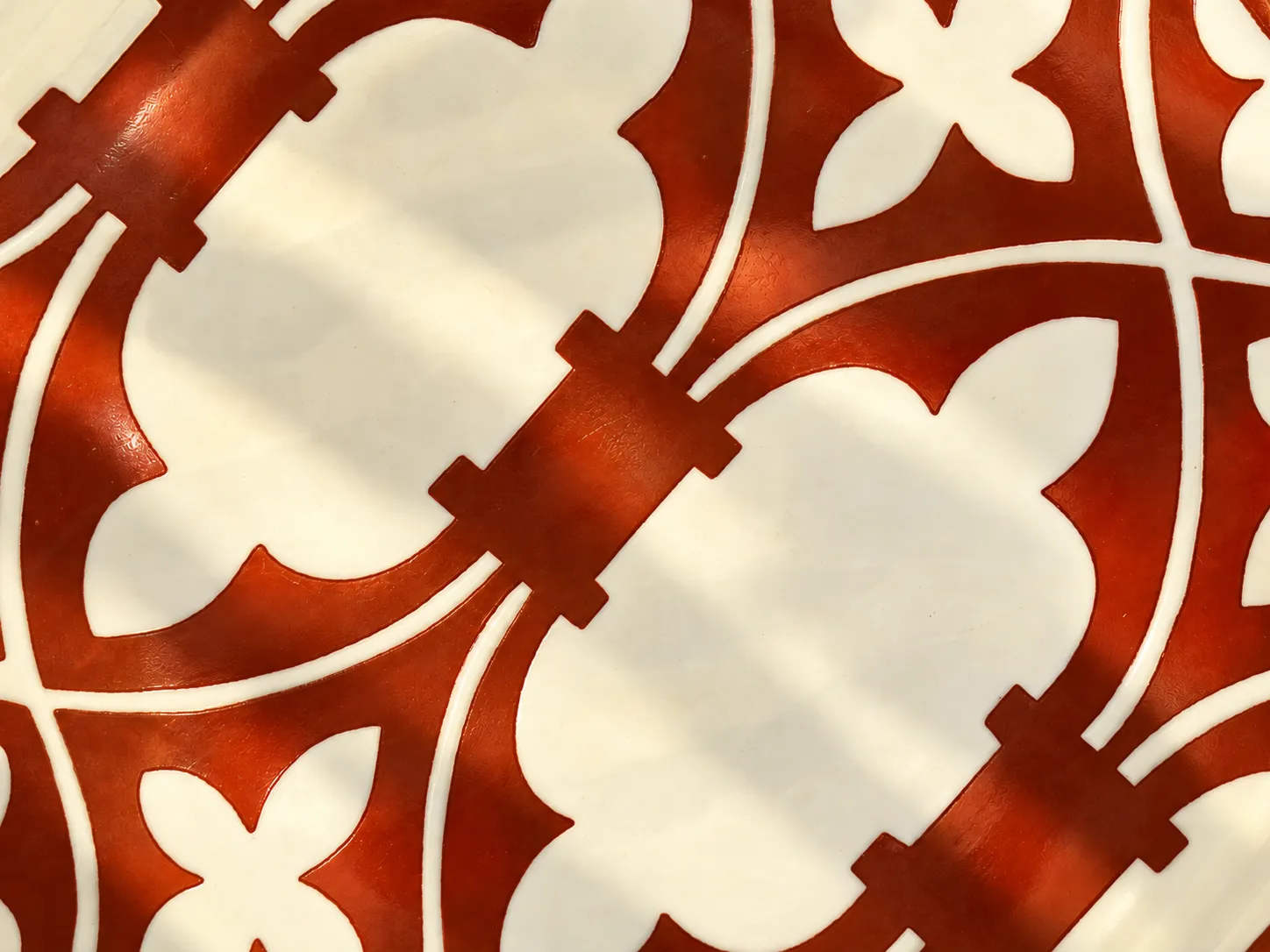
The material choices are legible throughout. Carrara marble in the bathrooms; Sicilian marbles in key public areas; tiles from Scianna Ceramiche, a craft workshop based in Bagheria with roots in the ornamental tradition of Sicilian majolica. Local ceramics by Nicolò Giuliano; brassware from Zucchetti; bathtubs by Kaldewei; lighting fixtures from Palecek. The wallpapers in the rooms and suites were hand-painted and printed by residents of the San Patrignano community in Rimini — a social enterprise that operates one of Italy’s most respected craft rehabilitation programs.
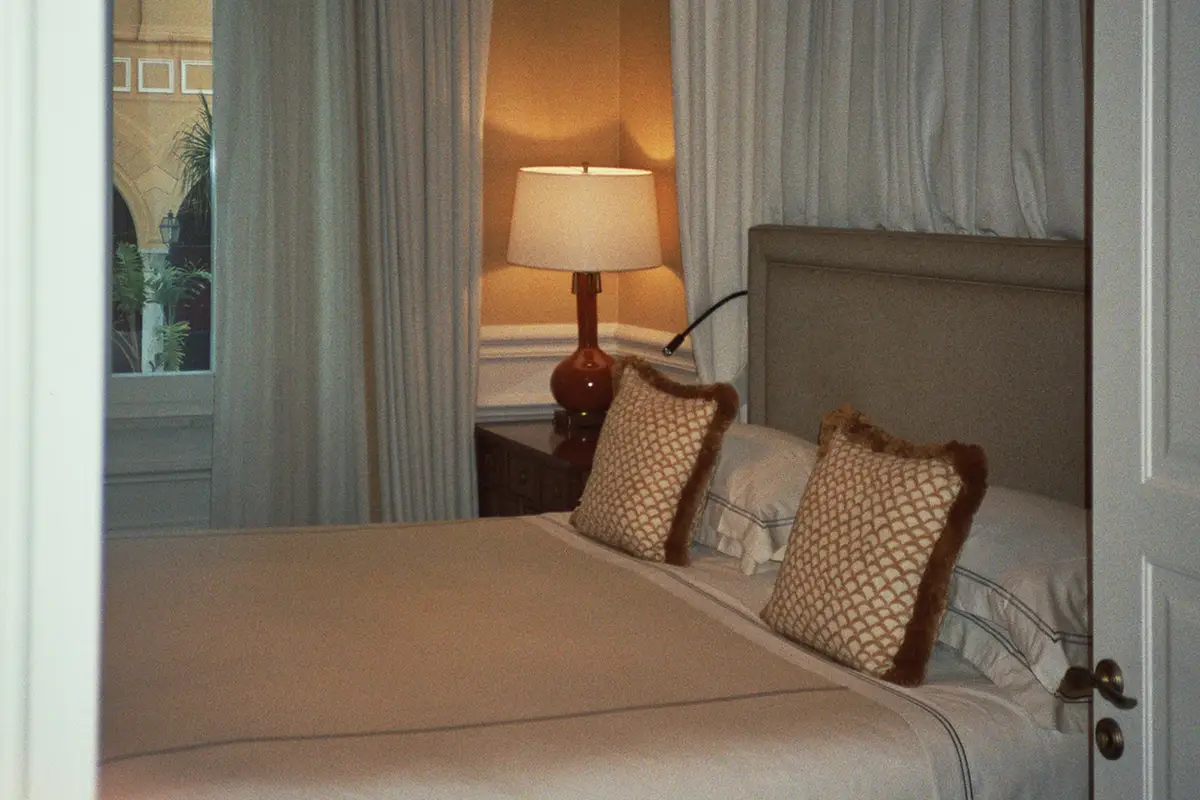
The 100 rooms and suites (distributed across 72 or 78 standard rooms and 22 or 28 suites depending on which official Rocco Forte document you consult, a discrepancy that the press office has not yet resolved publicly) work with high ceilings, tall windows, and palettes drawn from the Sala Basile and the external landscape. The principal suites — Igiea Suite, George V Suite, and Donna Franca Suite — each carry their nomenclature with different weight. The George V Suite references the 1925 visit of King George V to Sicily. The Donna Franca Suite is the more freighted reference: it assigns the name of the woman most central to the villa’s social history to a room, which is a form of homage that inevitably also reduces her.
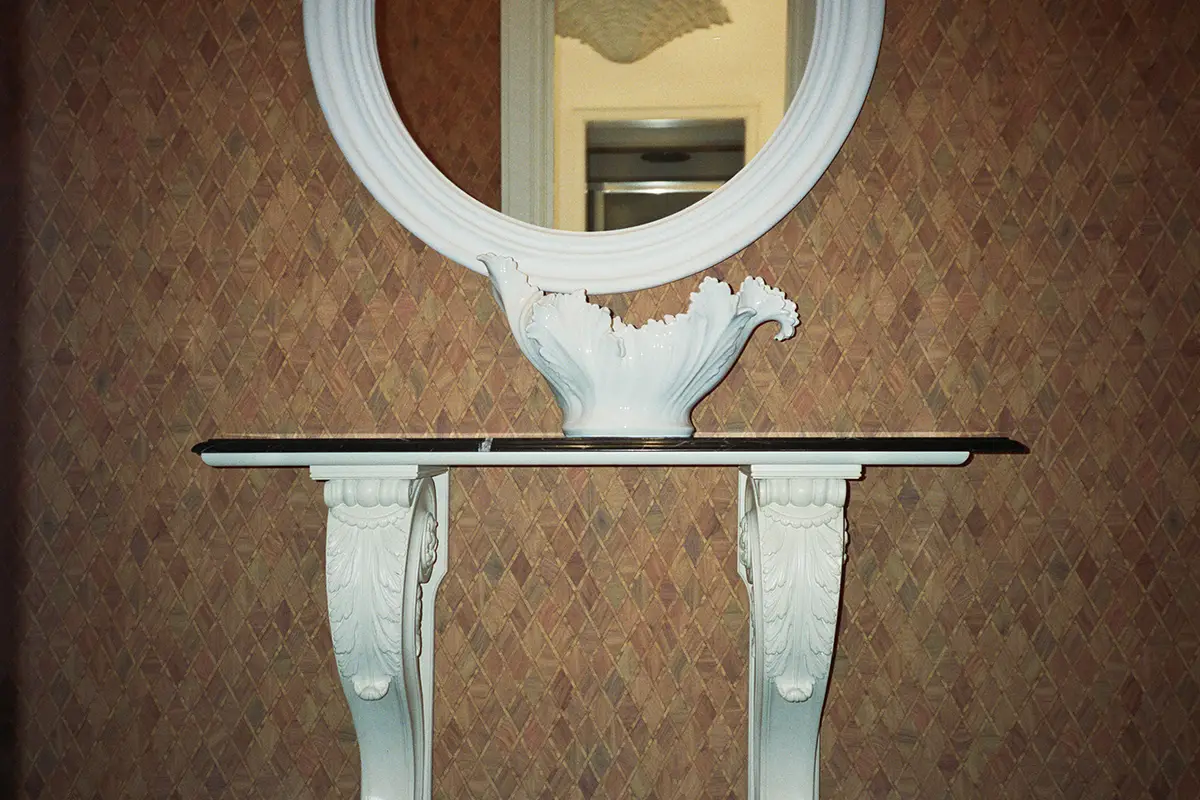
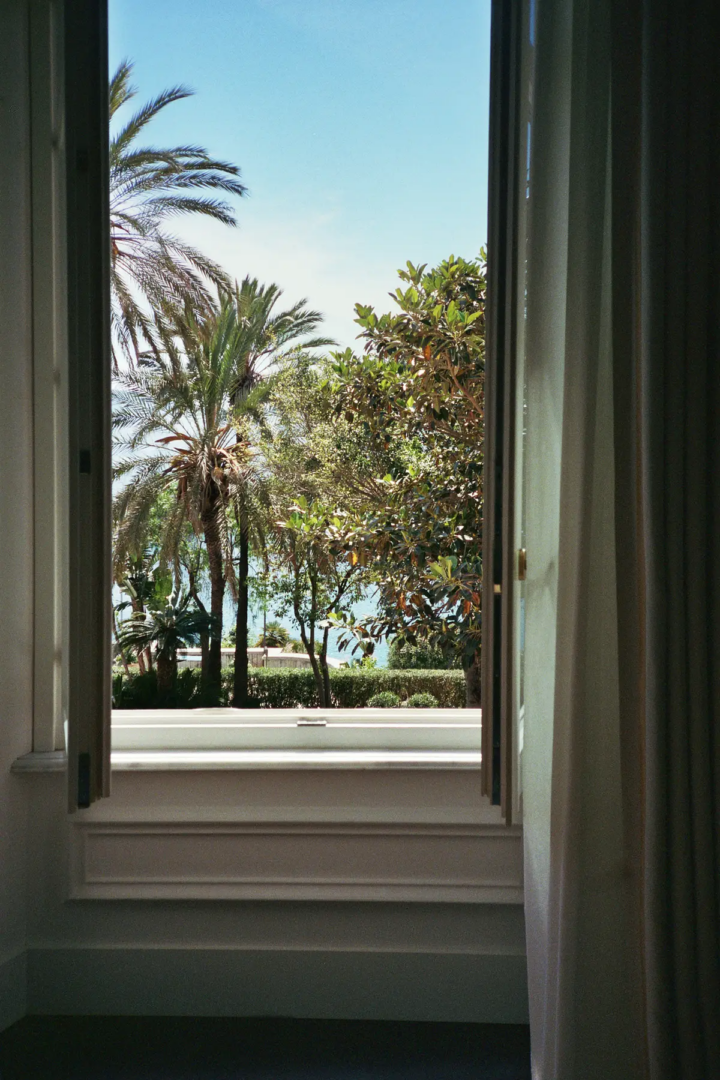
The logic of rattan, arched niches, tile-inlaid furniture, and subtly patterned textiles is coherent without being insistent. The restoration avoids the trap of theme-park historicism but also avoids the opposite trap of aggressive contemporary contrast. The dominant mode is a kind of calibrated restraint: the building’s history is present but not performed.
Florio Restaurant, Igiea Terrazza Bar, and Alicetta Pool Bar: how Villa Igiea approaches Sicilian cuisine and hospitality
Florio Restaurant operates in a Louis XVI-style sala with a menu developed by Fulvio Pierangelini, whose career has moved through several phases of Italian gastronomic culture. The offer is anchored in Sicilian ingredients and aromatics, with produce drawn partly from Villa Igiea’s own kitchen gardens and from the Verdura Organic Farm associated with Rocco Forte’s Sicilian resort at Sciacca.
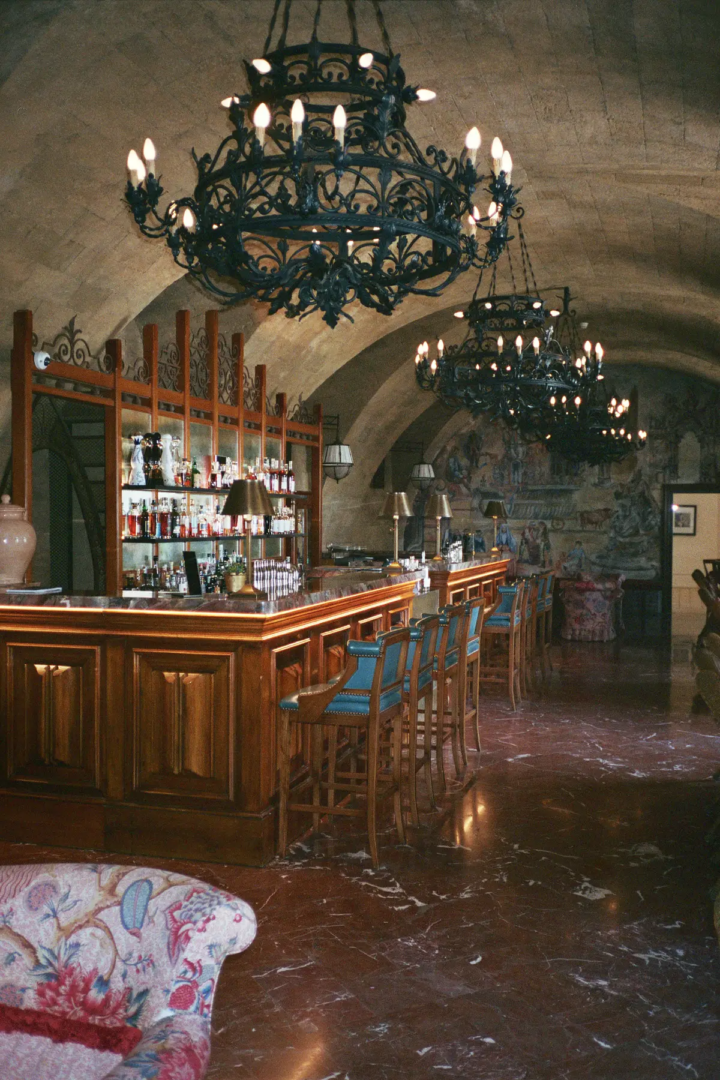
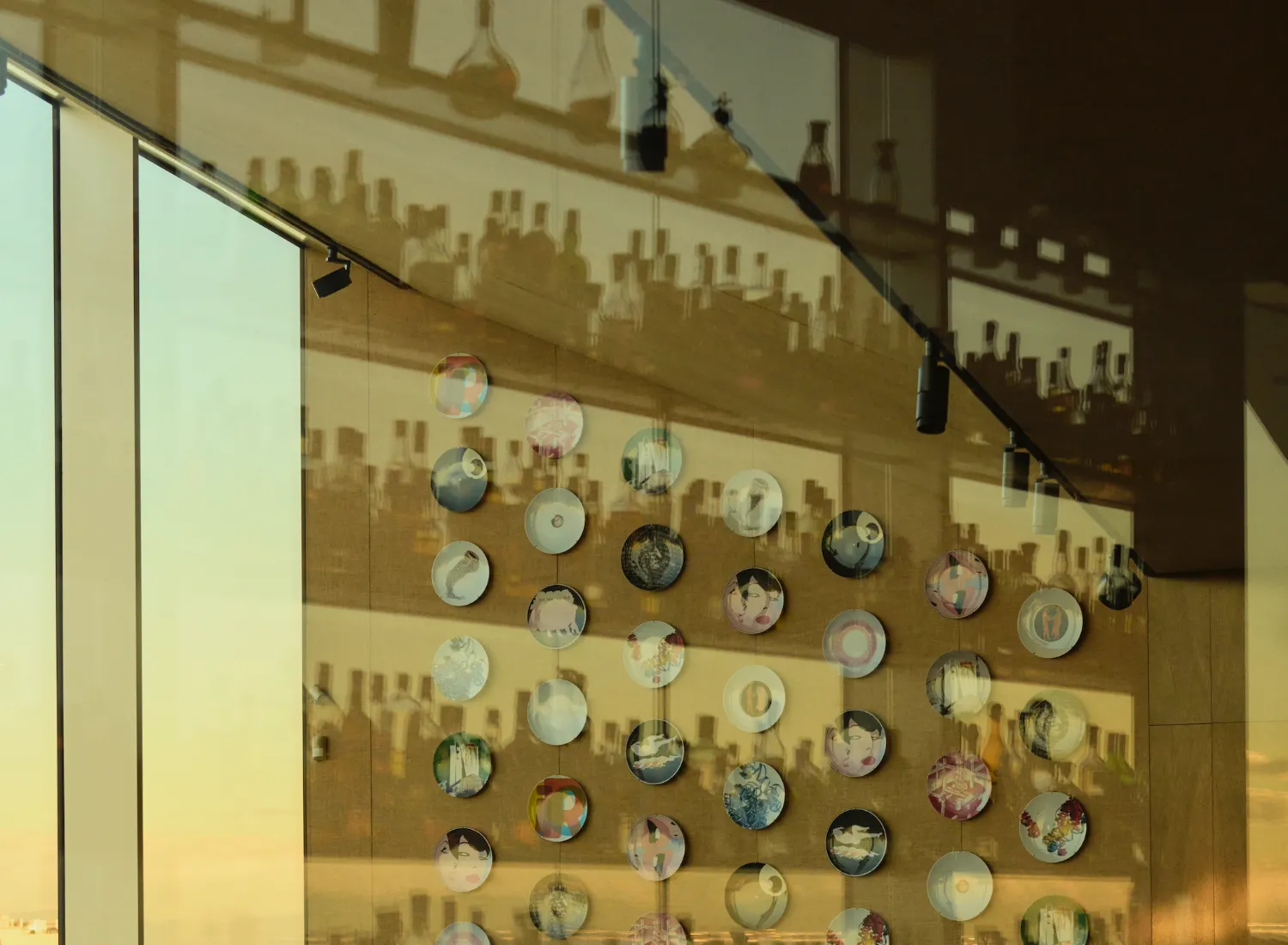
Igiea Terrazza Bar works the aperitivo and cocktail registers from a terrace with an unobstructed line to the Golfo di Palermo. The interior carries 1950s frescoes by the Palermitan painter Gino Morici — a layer of postwar decorative culture deposited on top of the Liberty foundation, part of the building’s accumulated stratigraphic record. The cocktail menu, developed by Salvatore Calabrese and named “Spirit of Igiea,” draws on Sicilian flavour sources and the villa’s social history.
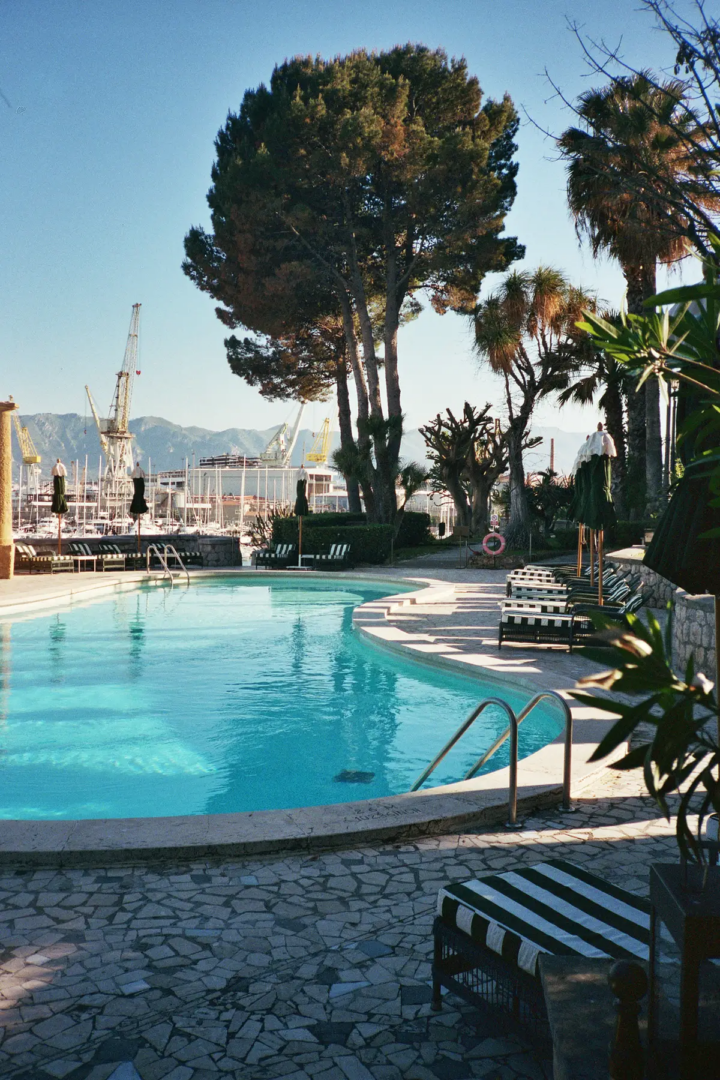
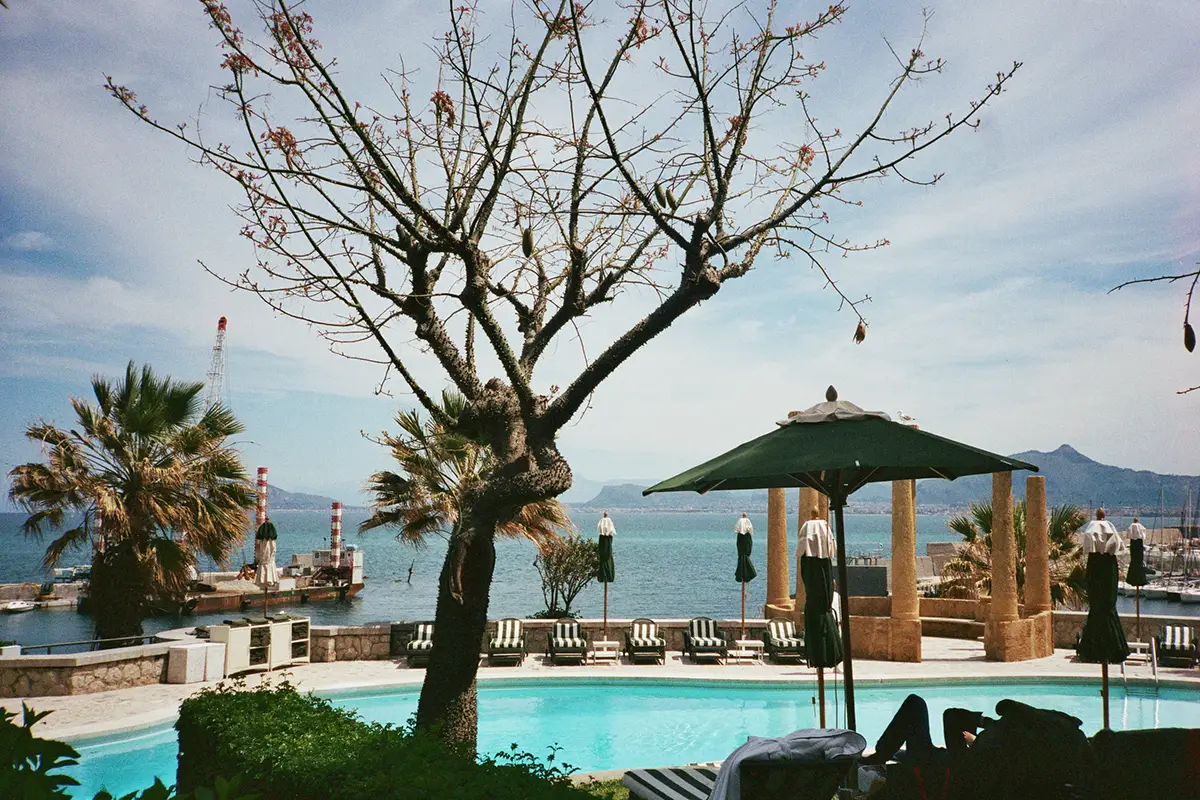
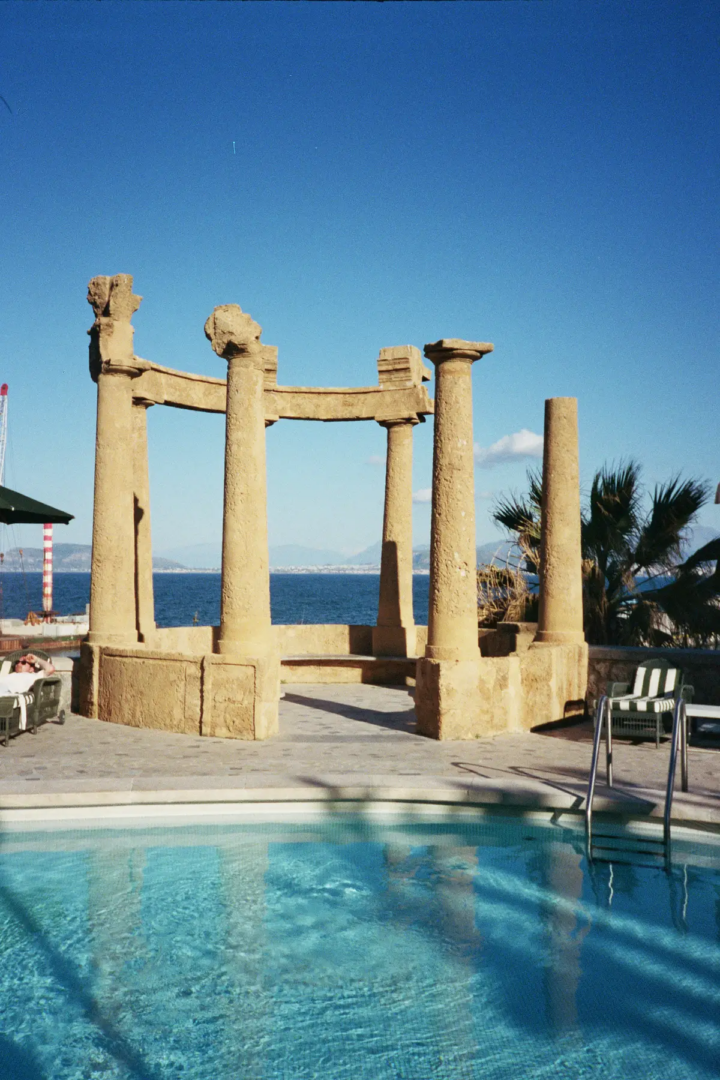
Alicetta Pool Bar operates as the seafood and raw bar beside the outdoor pool — a metal pavilion whose design references the historic garden structure at Palazzo Butera, a few kilometres along the Palermitan coast. The offer: crudi, sashimi, grilled fish and shellfish, local vegetables, pizza. The most casual register of the three, and probably the most useful for understanding how the property positions itself against the resort horizon.
Irene Forte Spa at Villa Igiea: Mediterranean botanics, Sicilian ingredients, and the body as the building’s oldest subject
The spa offer at Villa Igiea is delivered under the Irene Forte brand, which uses a skincare formulation built on ingredients from the Verdura Organic Farm: citrus, olive, almond, aromatic herbs. Four treatment rooms, a double suite with a private terrace, a beauty salon, and a relaxation room with a garden terrace.
This is where the villa’s founding logic reasserts itself most clearly. The original Hygieia reference — the body, the therapeutic function of Sicilian air and sea, the curative ambition of the Acquasanta site — returns in the form of botanical skincare, mineral pools, and the idea of wellness as something rooted in the specific chemistry of a specific landscape. The building began as a project for a sick body. It continues, under a different social register, as a project for a body in search of restoration.
Villa Igiea at Monte Pellegrino: how the hotel’s position above the Porto dell’Acquasanta defines a different way of reading Palermo
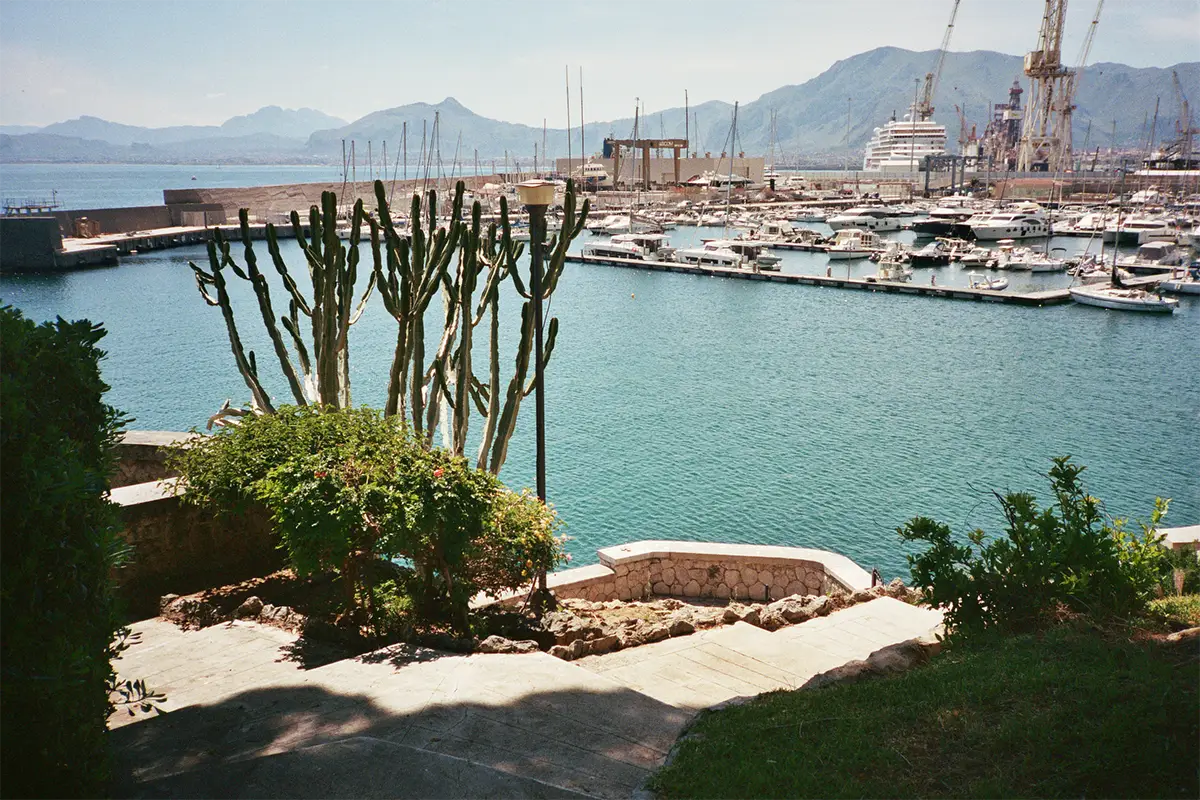
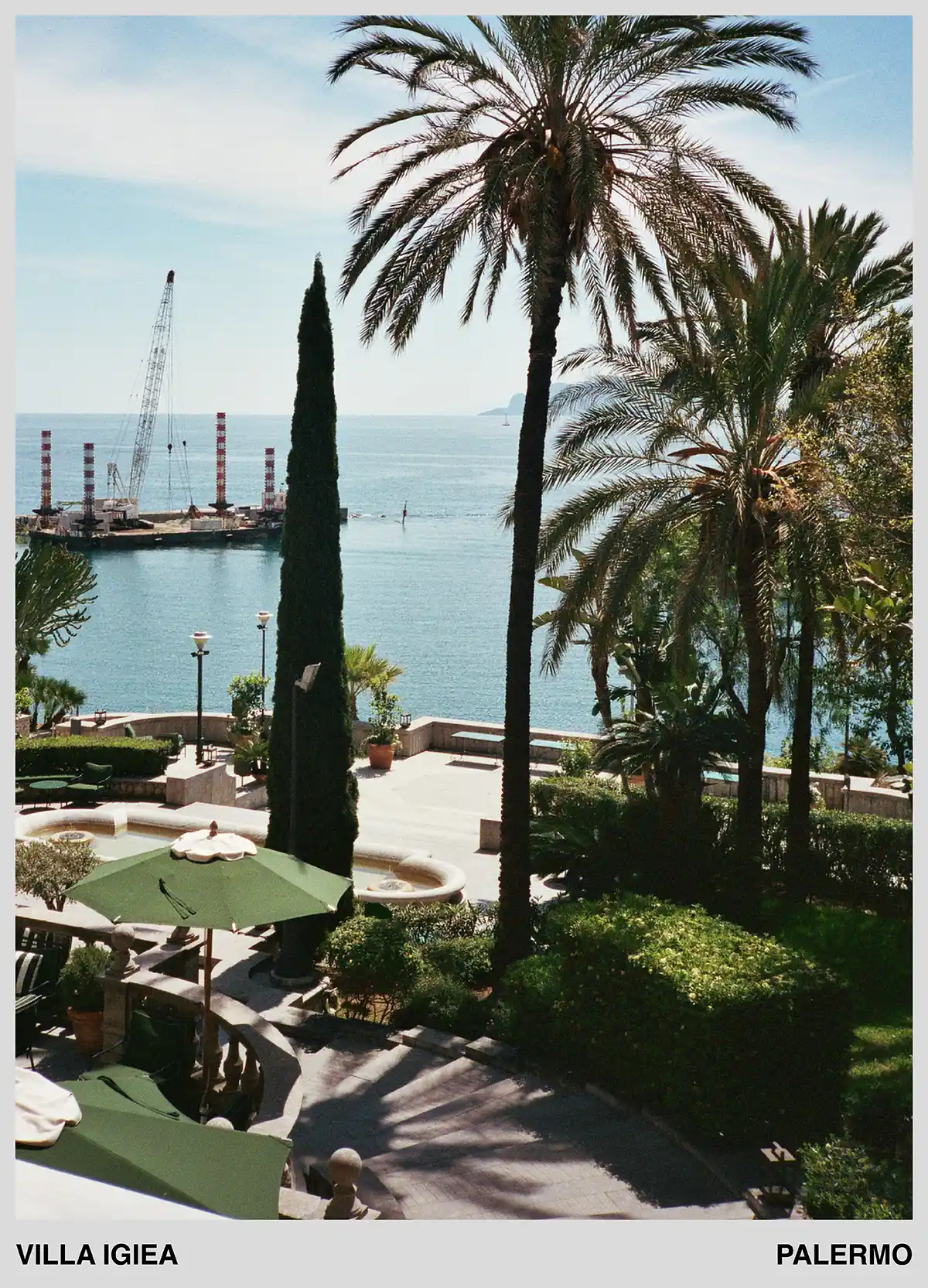
Villa Igiea is not in central Palermo. It sits in Salita Belmonte 43, above the Porto dell’Acquasanta, at the foot of Monte Pellegrino — the promontory that Goethe called the most beautiful cape in the world and that separates the Bay of Palermo from the bay of Mondello to the north. This geography is not incidental to the building’s meaning.
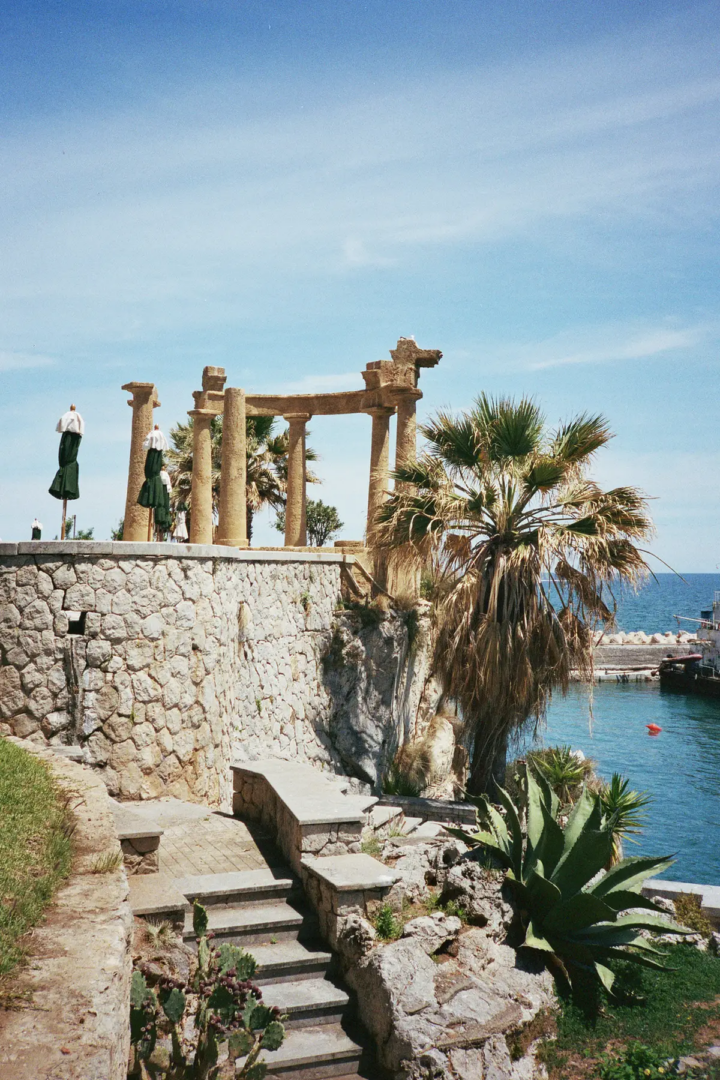
From this position, Palermo is always behind you. What you face is the gulf, the Tyrrhenian, the horizon. The city is present as backdrop, as sound, as context — but the orientation of the building insists on the sea. This is Palermo as it appeared to those arriving from elsewhere: a port, a climate, a destination on the European grand tour of the Mediterranean. The Florio family built here because this vantage point communicated aspiration, openness, and the claim to international relevance.
It also means that Villa Igiea tells a different story from the Palermo of the Ballarò market, the Palatine Chapel, the Norman cathedral, or the Arab-Norman city. It belongs to a specific and often overlooked chapter: late nineteenth-century bourgeois Palermo, confident, capitalised, and briefly cosmopolitan. The building is the archive of that chapter. The restoration has ensured it remains readable.