Rosa Alpina and the Pizzinini family’s making of a territorial system
From a local inn in San Cassiano to an Aman destination, Rosa Alpina remains tied to the Pizzinini family, Ladin culture and the territorial system of Alta Badia
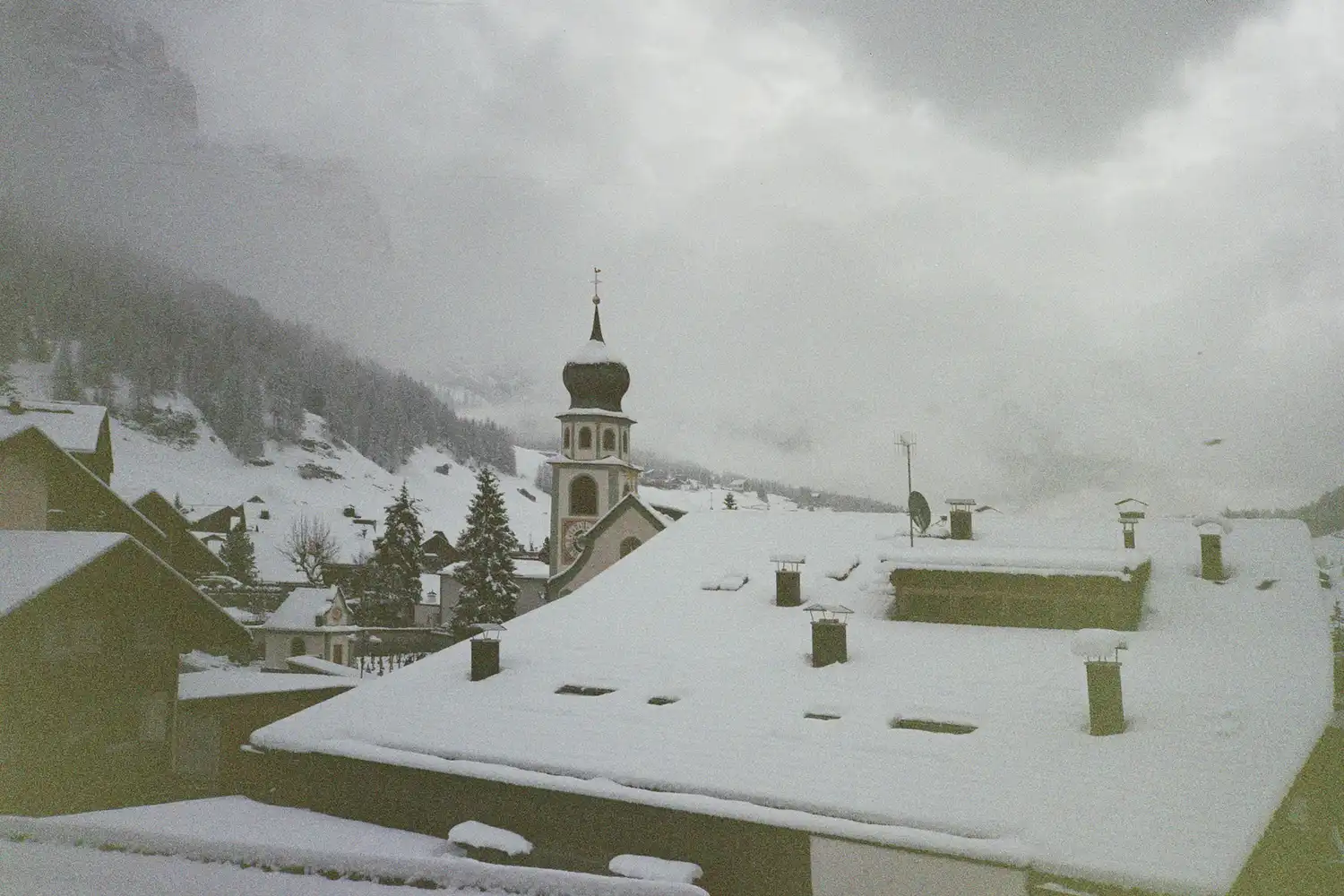
At 1,537 metres above sea level, San Cassiano sits between the Fanes massif and the Pralongia plateau. Val Badia belongs to Ladinia, a cultural and linguistic space running through the Dolomites, rooted in the transformation of Latin in contact with the Rhaetic substratum — the language of the pre-Roman alpine populations. Ladin is still spoken in the valley today, recognised by the Italian state and integrated into schools, road signs, and public life. This is not a folkloric detail: Ladin is the structure through which the Val Badia has mediated centuries of external pressure — Roman presence, Austrian dominion, incorporation into post-war Italy. Through the twentieth century, the valley navigated the transition from the Austro-Hungarian Empire to the Kingdom of Italy and then the Republic, maintaining a continuous tension between three identities: Italian, German and Ladin.
Until the 1950s, San Cassiano was a small-scale village, partially isolated, with an economy constrained by the mountain’s conditions. Its trajectory changed in 1957, when the first ski lift was built. From that point, the village entered progressively into the winter tourism system of the Alta Badia, and eventually into the broader international circuit of the Dolomites.
UNESCO Dolomites: Landscape, Geology, Limit
The Dolomites have been on the UNESCO World Heritage List since 2009 as a serial site: not a continuous range, but nine separate and interconnected mountain systems extending across Veneto, Trentino-Alto Adige and Friuli-Venezia Giulia. The UNESCO recognition addresses two distinct elements. The first is the scenic quality of the rock faces: vertical, pale, visually radical. The second is geological value: the dolomitic strata preserve traces of Earth’s evolution over hundreds of millions of years. The Dolomites are an exposed archive. The rock is a historical matter before it is landscape.
For a hotel in this context, the relationship with the territory is a physical condition, not a marketing position. Materials come from here. Construction restrictions impose precise limits. Access follows the valley’s morphology.
Rosa Alpina: From 1939 to the Pizzinini Family
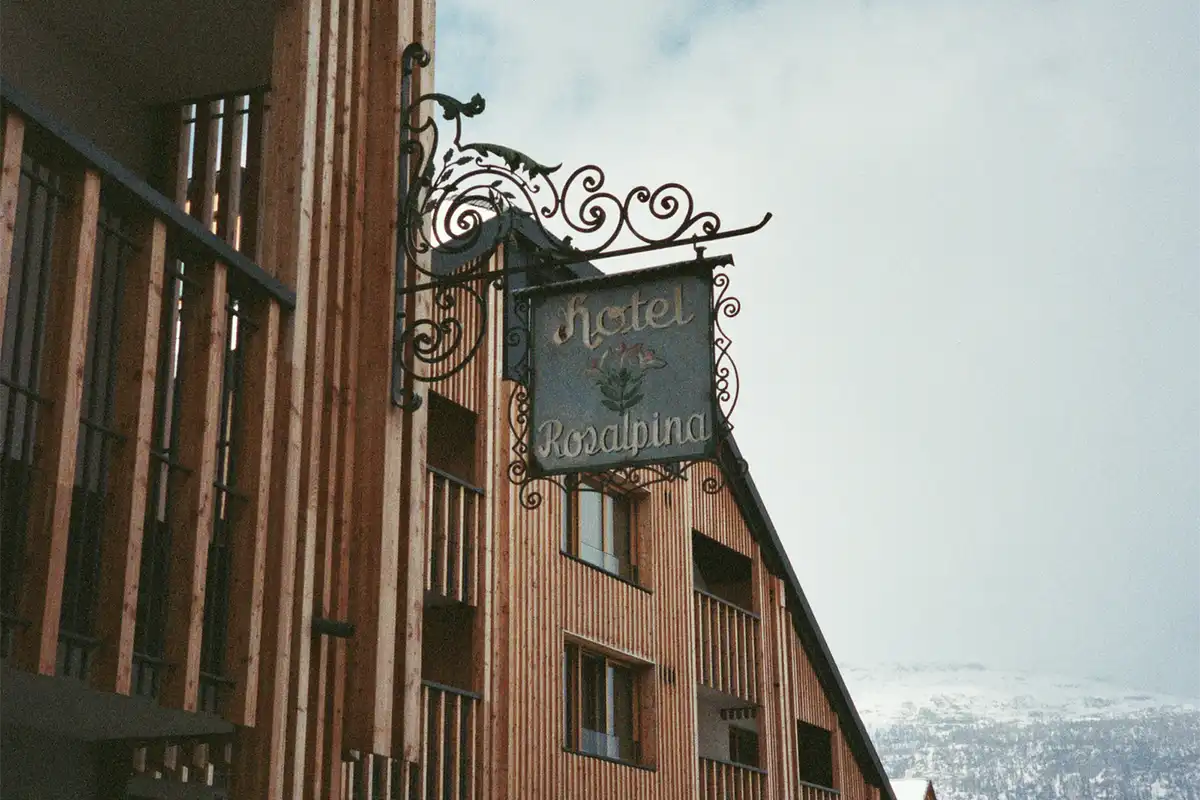
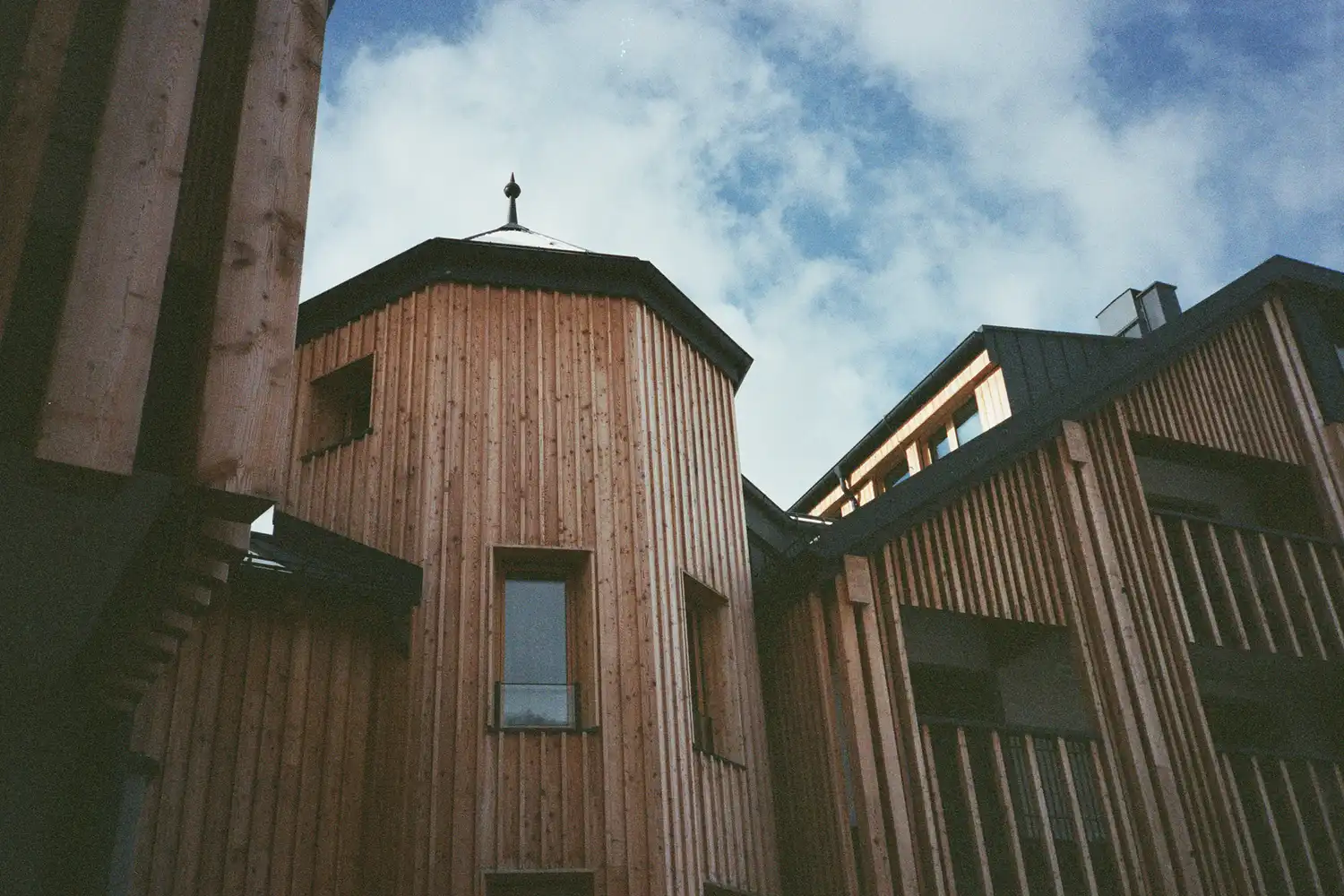
The history of the Rosa Alpina begins in 1939, when the Pizzinini family takes over a small structure in San Cassiano: an inn and a lodge for skiers and walkers. The context is post-war Italian Alto Adige, a border territory where cultural identity and economy are still tightly woven together. Hospitality is a function of the house, the village, the mountain — not yet a service separated from domestic life.
This origin matters. The Rosa Alpina is born as a place of transit before it becomes a destination. A base, a stop. Its identity builds through accumulation rather than design: each season adds something — a room, a service, a relationship with guests who return. The hotel grows following the logic of the place, with available resources, within the limits imposed by altitude.
By 1940, the property was formally in the hands of the Pizzinini family. The structure is still small, mountain tourism still limited. But the village is beginning to change.
Paolo Pizzinini: Infrastructure, Energy, Relationships
In 1968, Paolo Pizzinini took the helm of the Rosa Alpina and initiated decades of expansion and conceptual definition. His tenure coincided with the growth of San Cassiano as a ski destination, the development of Alta Badia’s lift infrastructure and the gradual internationalisation of alpine mountain tourism.
The most significant transformation Mr. Paolo Pizzinini introduces, however, is not visible in the room count or the dining room. It is in the energy infrastructure. The Pizzinini family builds over time a series of private hydroelectric plants that harness the mountain’s watercourses. The sequence begins before Mr. Paolo — one industrial source traces it back to a first plant of 18 kW in 1927 — and continues across decades: a 100 kW plant, then a 420 kW installation in 1980, then a 1,600 kW plant commissioned in 2007. The energy produced powers the hotel and, according to the same source, covers a substantial share of the village’s consumption as well.
This is a practical response to a concrete problem: energy dependence at altitude, in a context where grid infrastructure has historically been fragile and supply costs high. The hydroelectric plant is the most concrete evidence of the relationship between the Rosa Alpina and its territory. The hotel does not consume the landscape — it builds a reciprocal dependence with it.
Under Mr. Paolo’s management, the Rosa Alpina also developed its relationship with local cuisine. Alta Badia has a deep gastronomic tradition — mountain raw materials, preservation techniques, a kitchen that reflects isolation and seasonality. The hotel becomes one of the spaces where this tradition finds expression, long before the restaurant that would bring it global attention comes into being.
Hugo and Ursula: Family Continuity and International Recognition
Hugo Pizzinini is the third generation. Having returned to the Rosa Alpina more than twenty-five years ago, he works with Ursula to consolidate a model that holds together returning guests, local suppliers, craftsmen and loyal staff. The Rosa Alpina does not become an internationally recognised hotel because it grows in size or changes profile. It does so by building a reputation based on continuity and attention — qualities that, in a globalised high-end hospitality system, become distinguishable precisely because they are rare.
During Hugo and Ursula’s tenure, the Rosa Alpina earns membership in Leading Hotels of the World and cemented its position as one of the defining alpine addresses in Europe. This recognition rests on the maintenance of a relational system that involves every component of the place: the mountain, the village, the people.
Aman Rosa Alpina: Jean-Michel Gathy and a New Visual Language
The partnership with Aman is announced in 2020. The agreement involves an extensive transformation of the historic hotel: closure comes in 2023 and the works run through to the reopening on 24 July 2025. The architectural project is signed by Jean-Michel Gathy of Denniston — a practice with a long record of Aman collaborations across Southeast Asia, the Middle East and beyond.
Gathy’s intervention on a building carrying both family history and collective memory requires a precise reading. The result brings the hotel to 51 rooms and suites, with high floor areas across all categories — from Superior Rooms of 43–59 square metres to the Aman Suite at 158 square metres. The structure holds its position and its relationship with San Cassiano, but the visual language shifts substantially.
Wood, Stone, Glass, Dark Metal: Controlling the Alpine Image
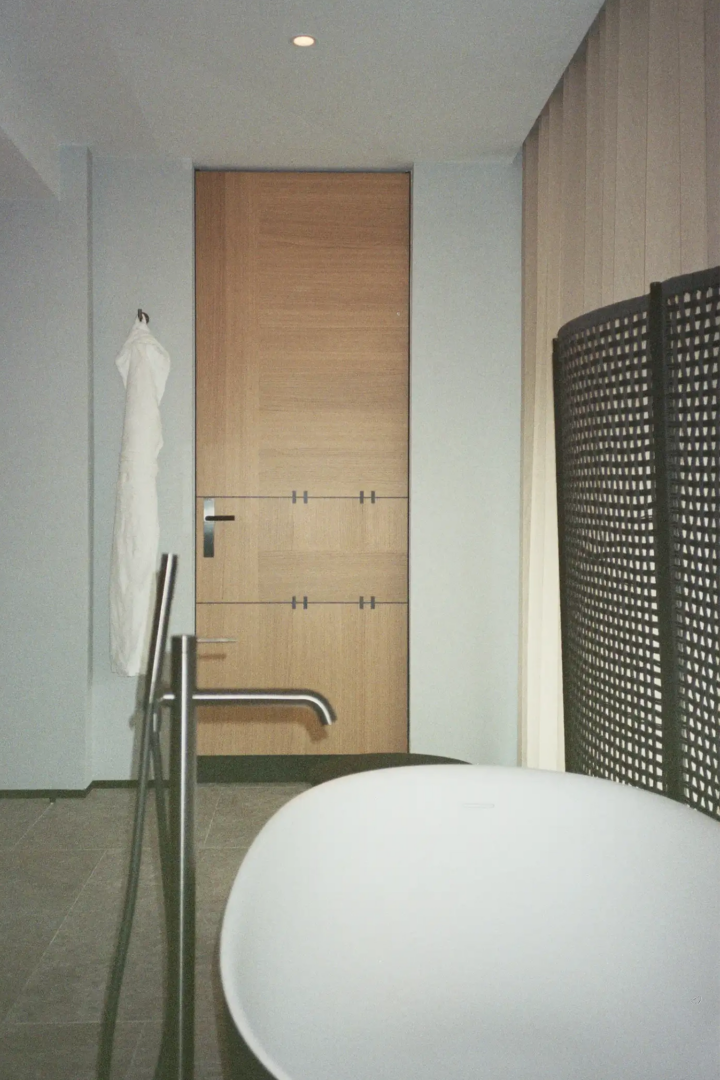
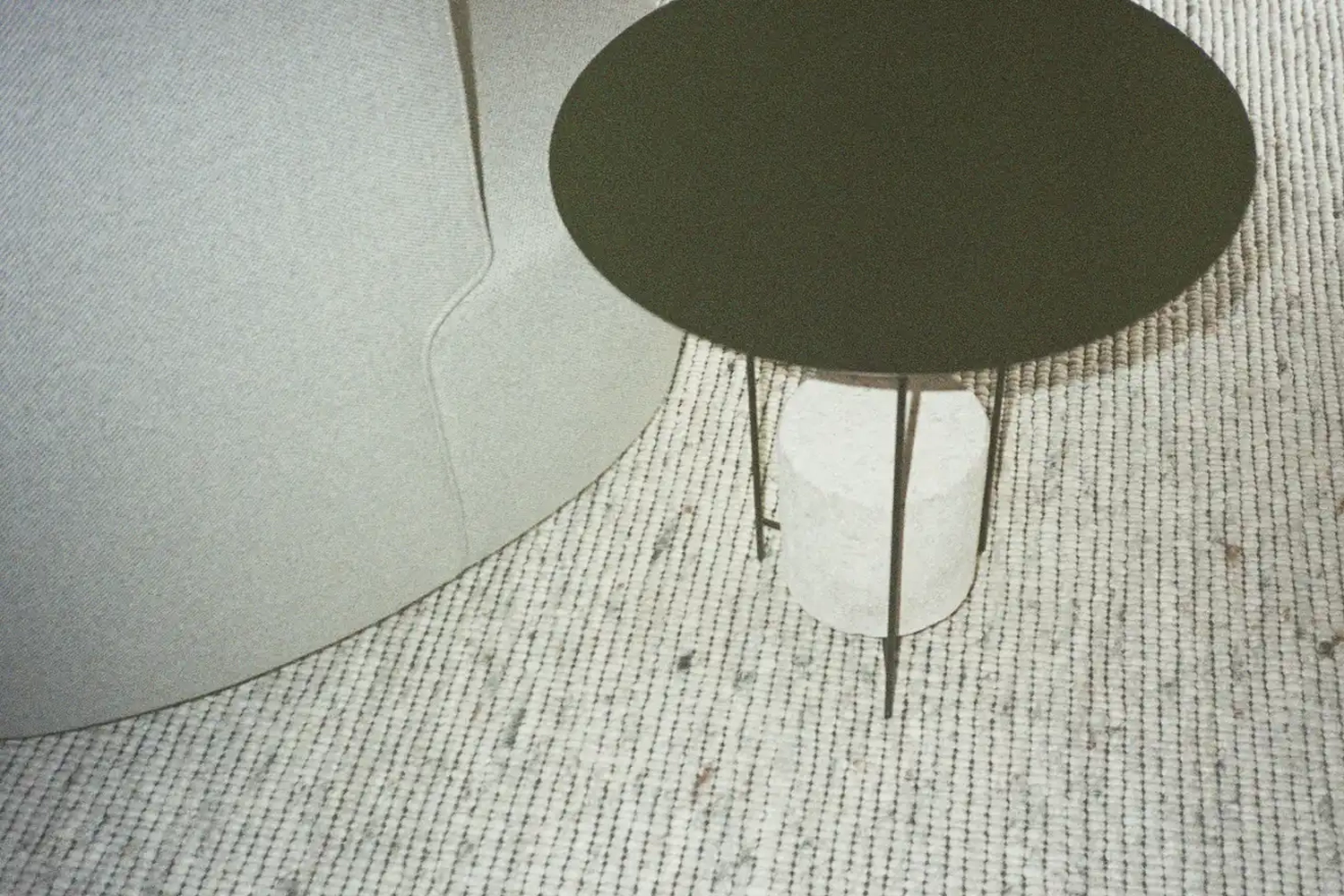
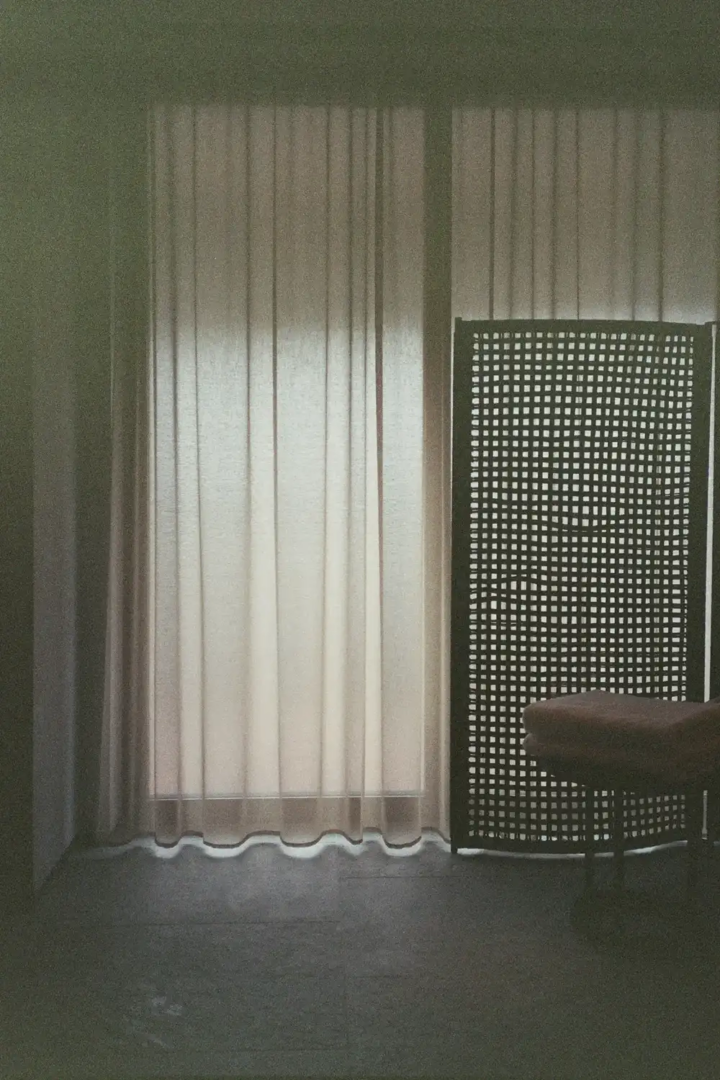
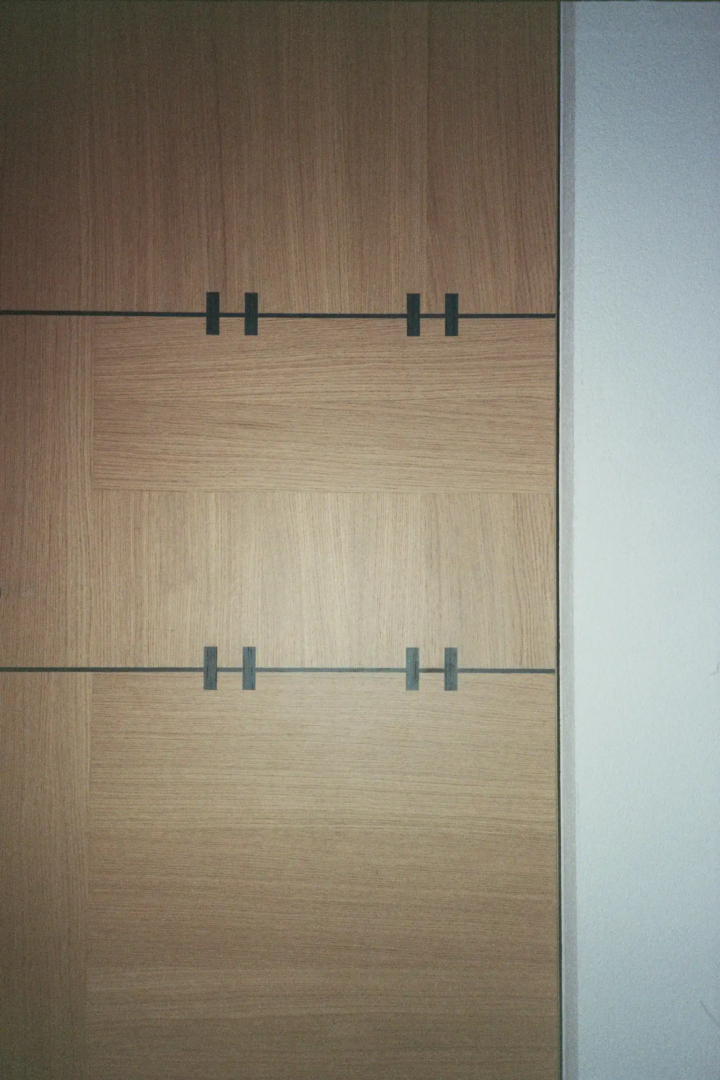
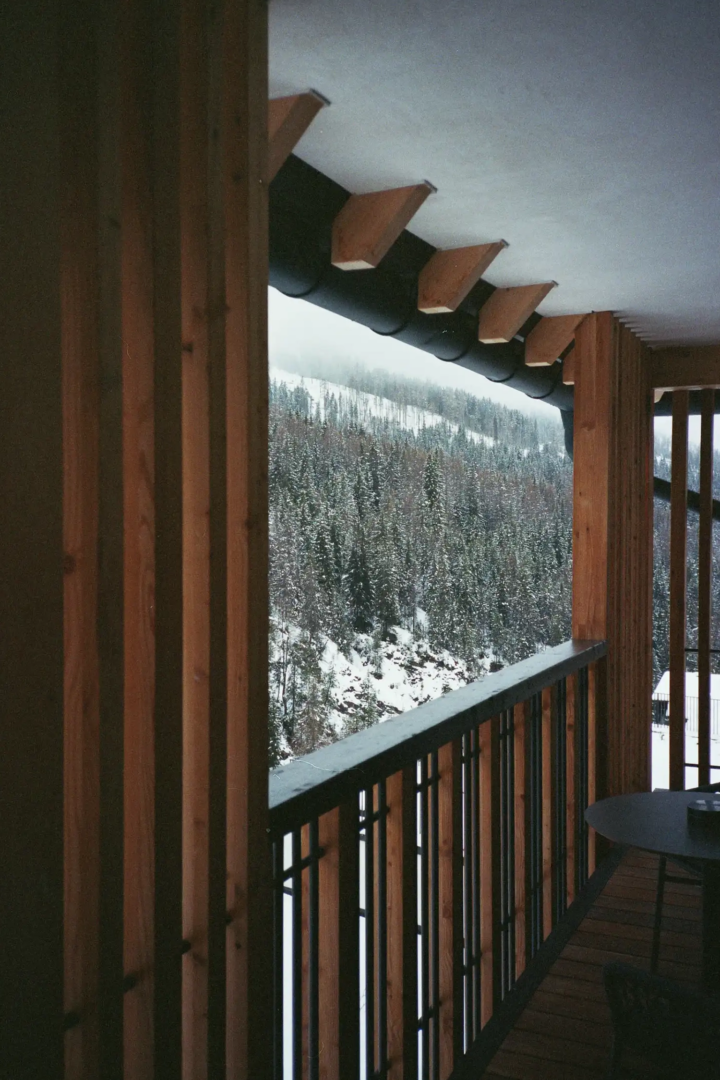
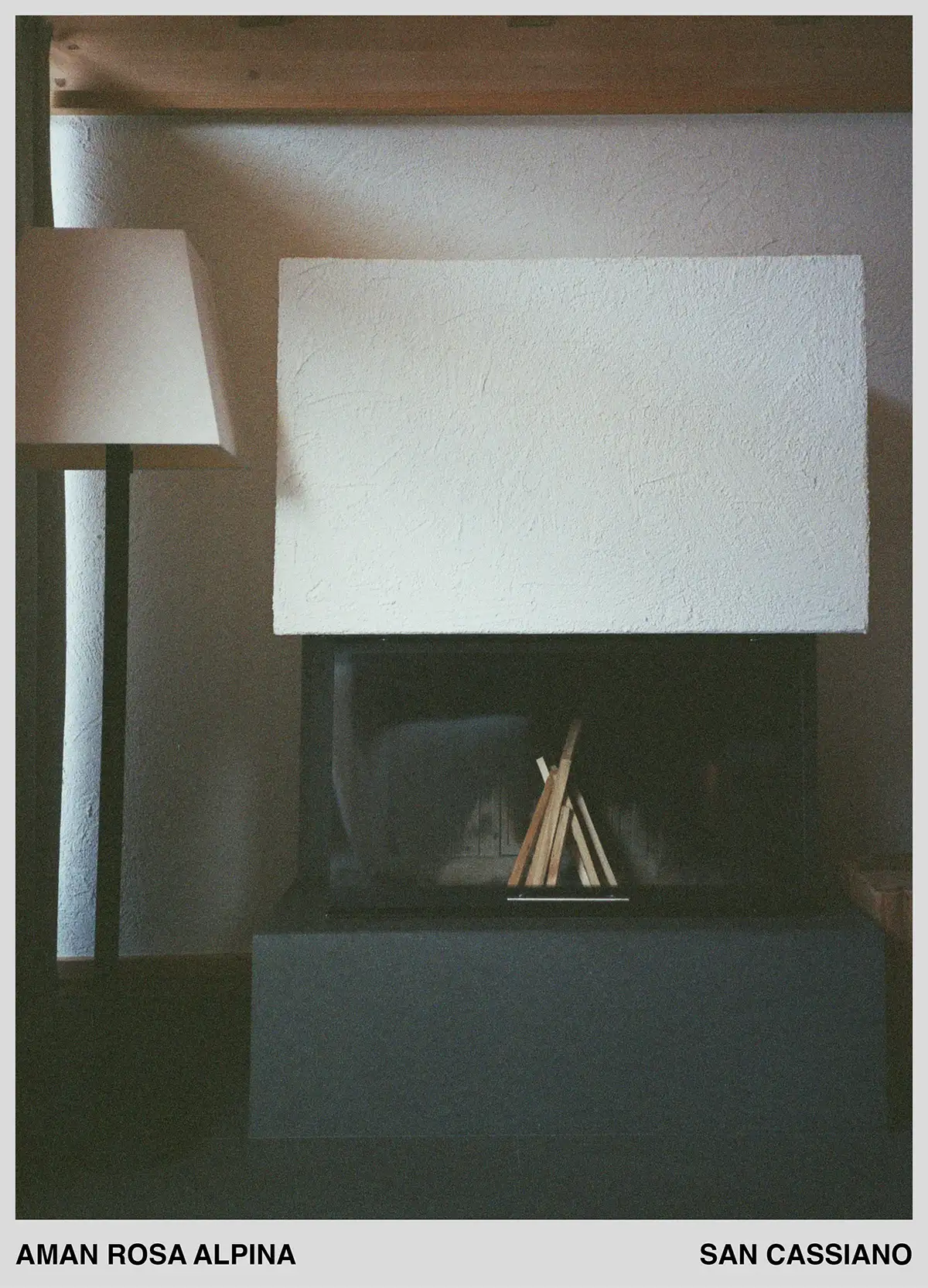
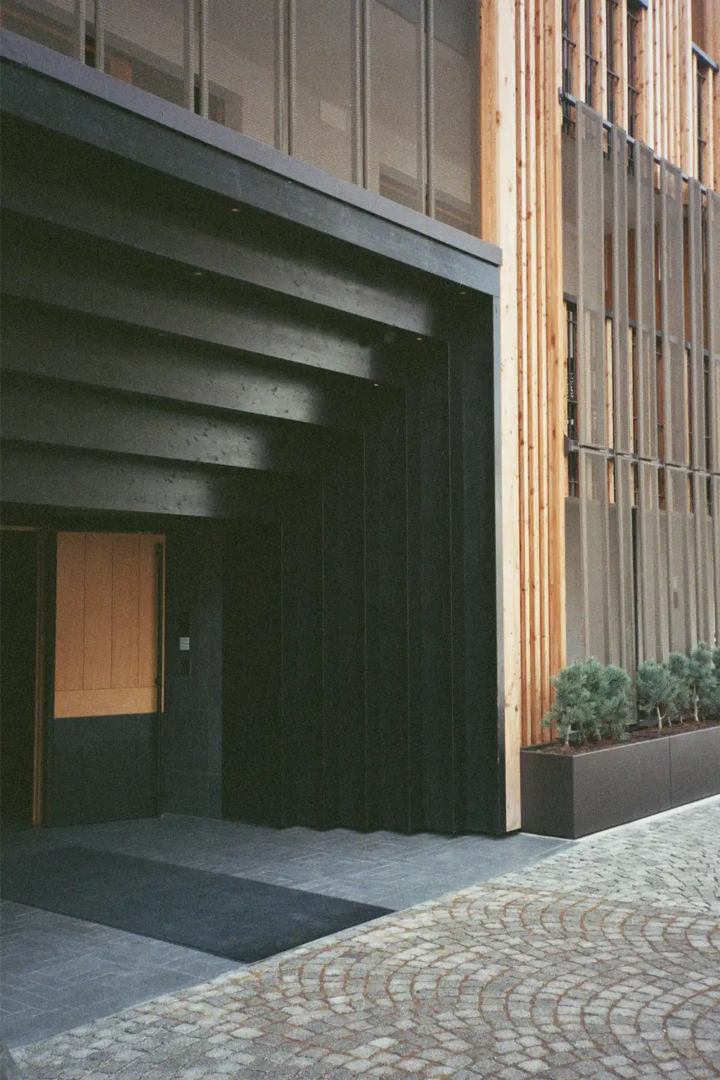
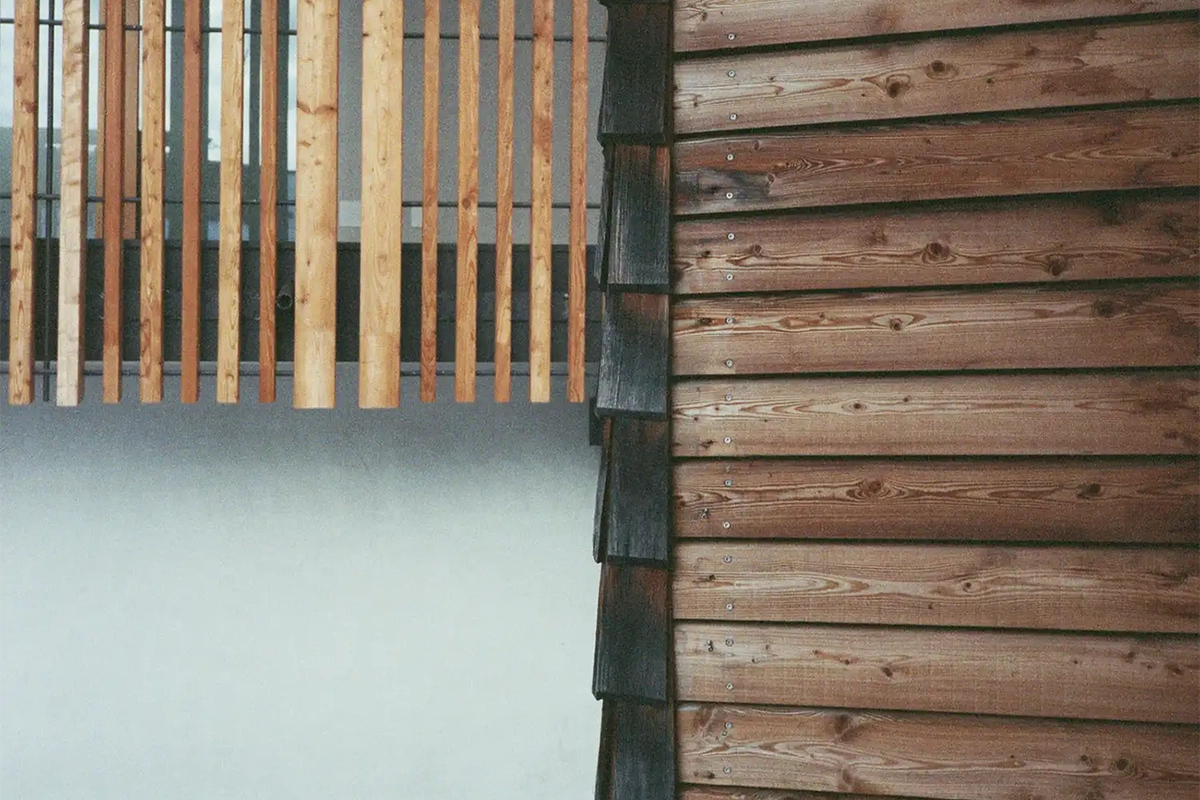
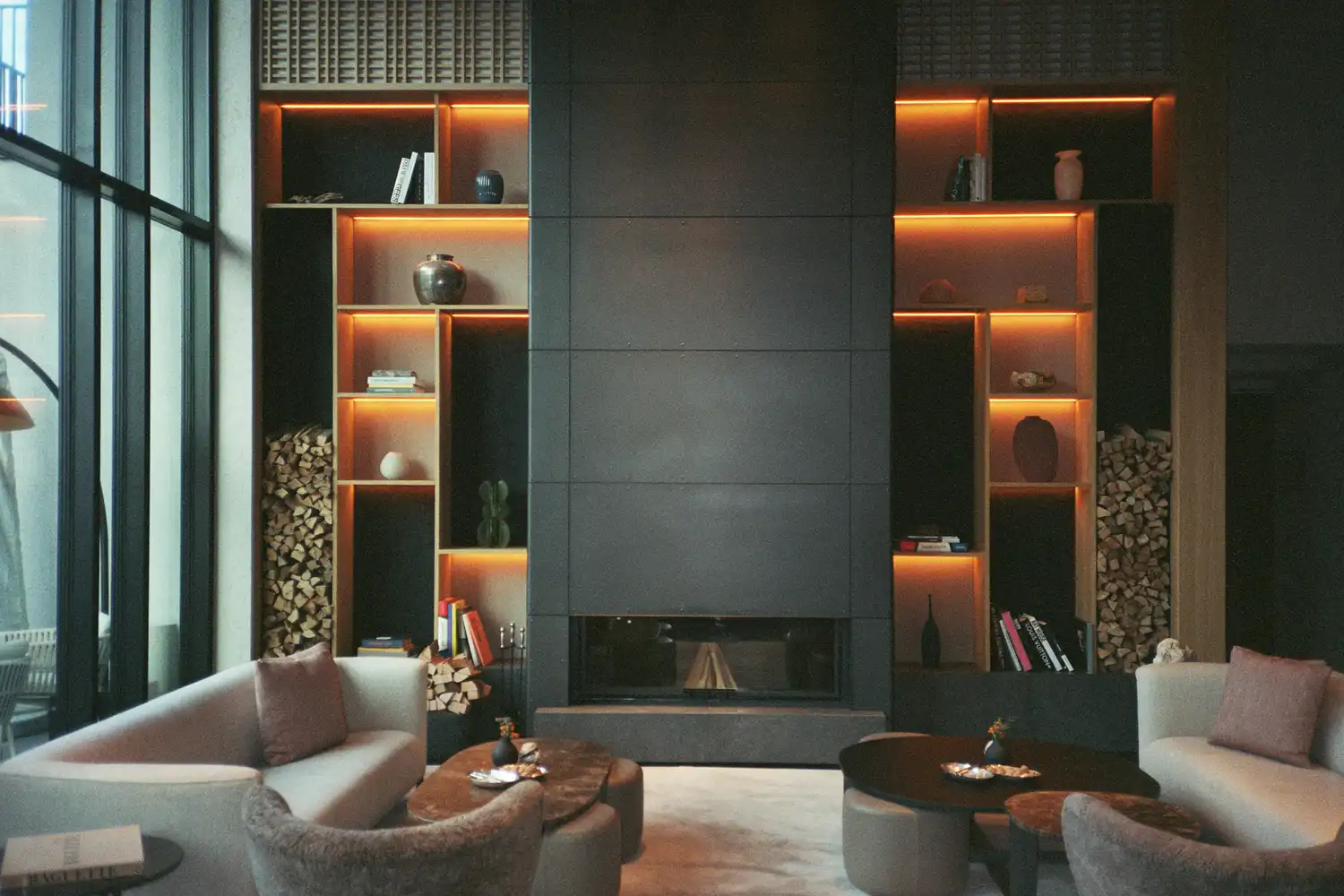
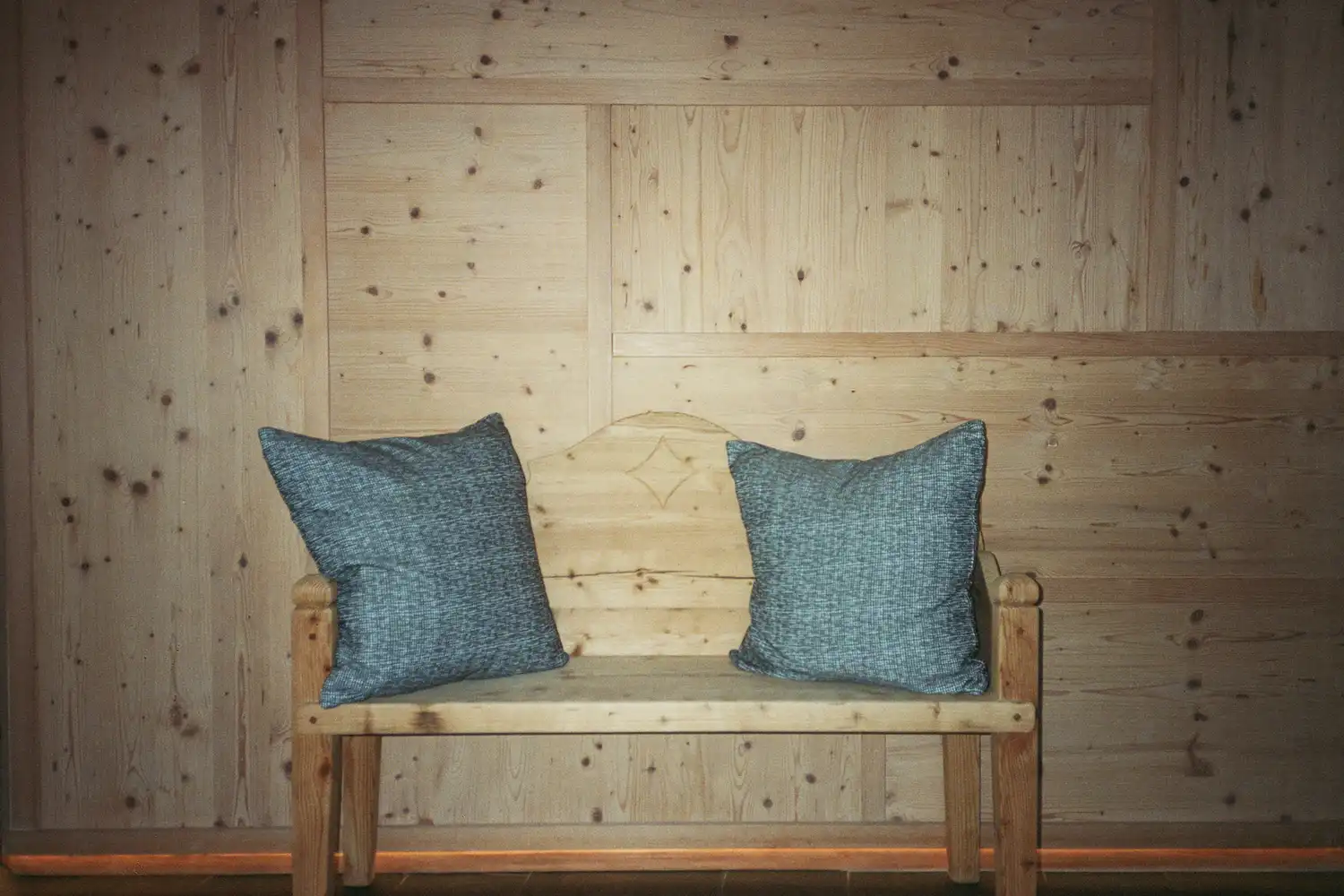
The alpine visual language is present throughout the hotel, but in filtered form. Natural wood, stone, dark metal, full-height glazed surfaces, functioning fireplaces encased in glass, generous balconies opening onto mountain views: the elements belong to alpine architecture, but their composition follows a different logic from the one of domestic accumulation. The old alpine chalet worked through layering — each object had a history, each surface had a patina. The new intervention works through reduction: every element is controlled, every space has a defined hierarchy.
Il Salotto — which replaces the traditional lobby — is a double-height space with large openings, an evening piano bar and an all-day lounge function. The Heritage Room connects to breakfast and events. The Cigar Lounge and Di Vino Room offer private experiences built around spirits, cigars, tastings and rare bottles. The Grill serves seasonal dishes, live grill preparations, locally reworked cuisine, artisan pizzas and an international wine list. Enju introduces a Japanese shabu-shabu offer with a multi-course menu, sake and rare teas.
This last point makes the transformation most legible. The mountain remains a theme, but it is no longer the sole gastronomic reference. The territory is still present, but inside a dining platform that responds to an international audience with expectations and habits shaped by Aman properties in other contexts.
Brigitte Niedermair and Bonotto: The Mountain as Textile
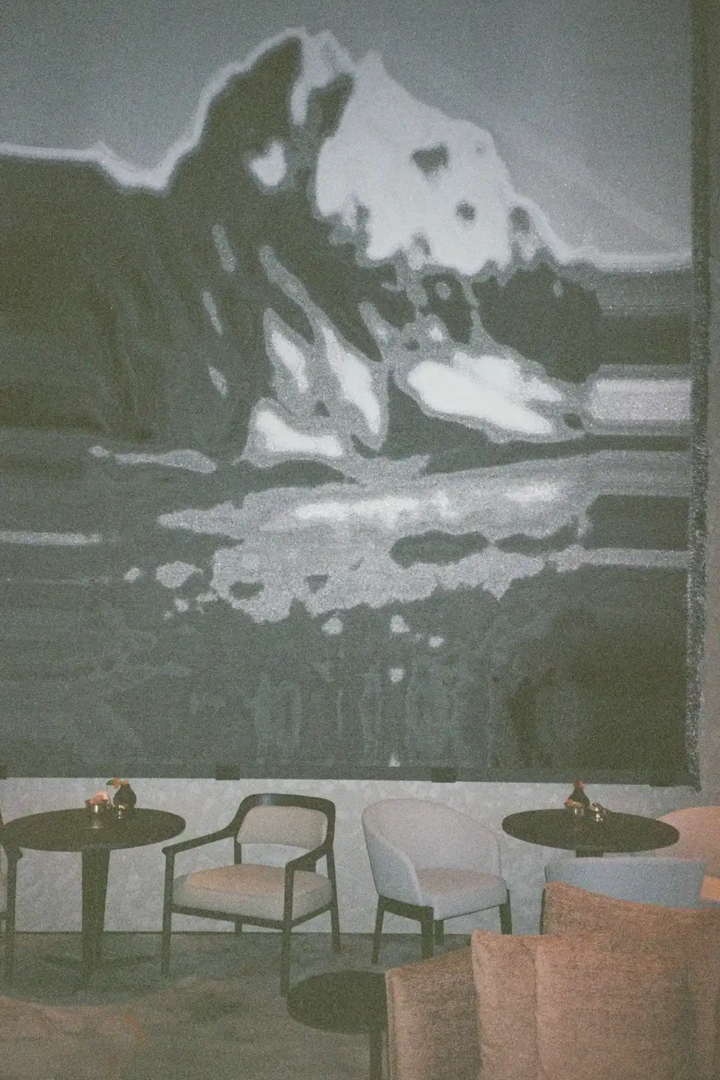
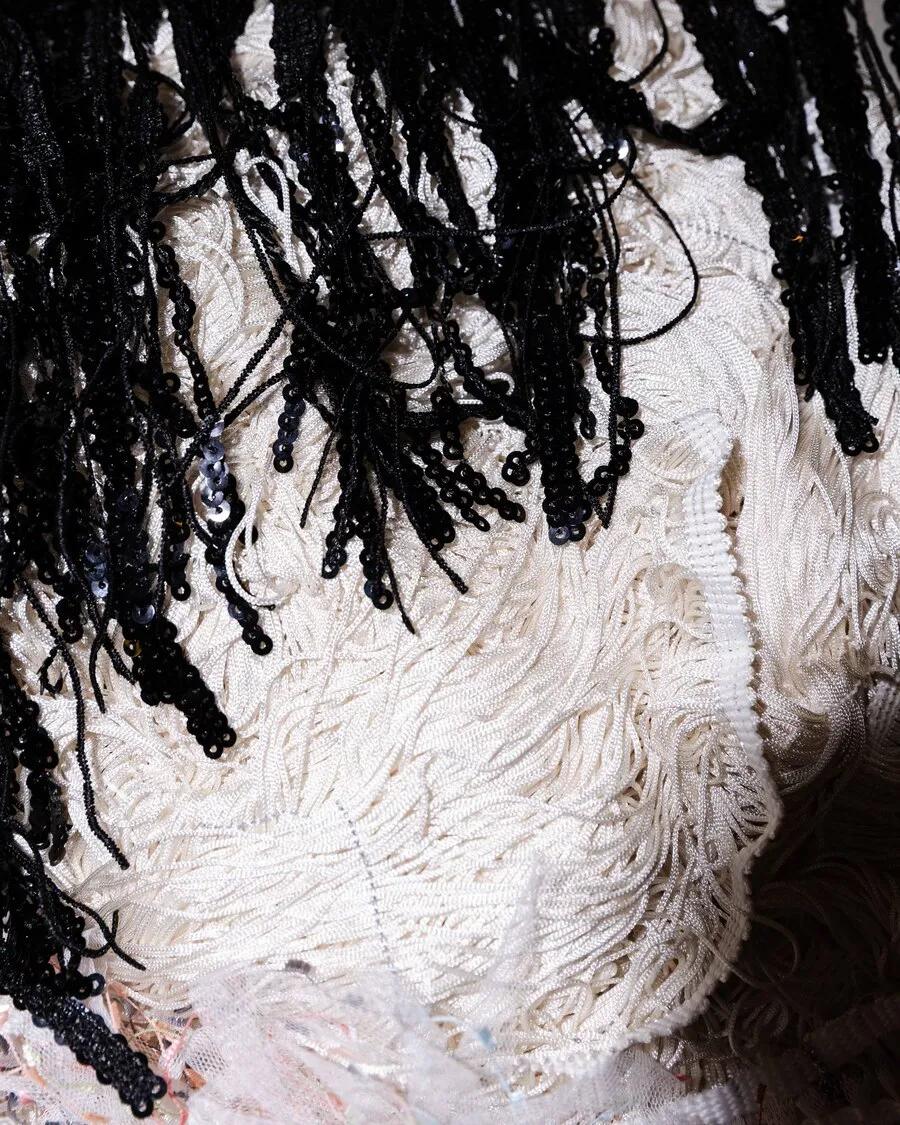
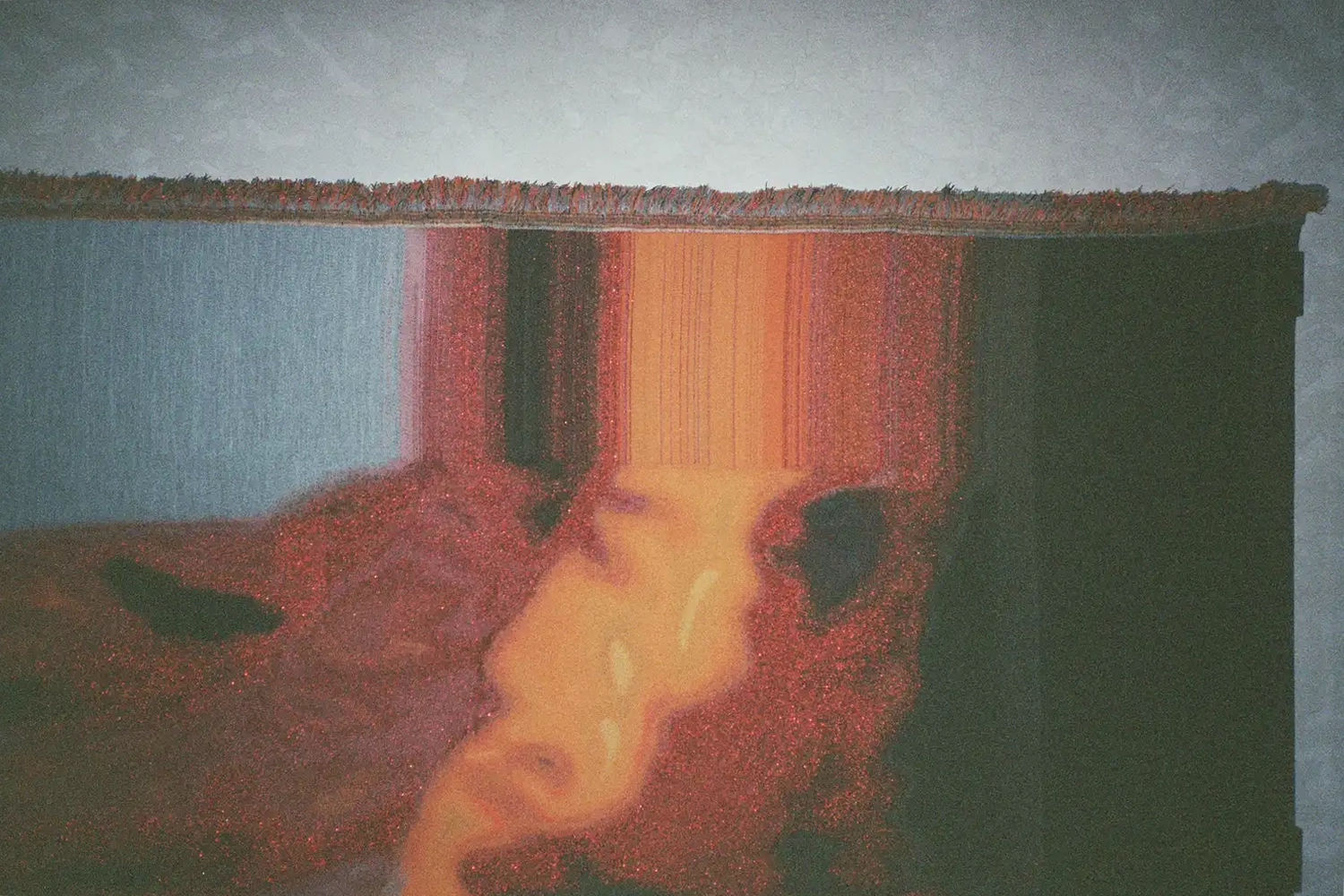
In the reception and Il Salotto hang textile works by Brigitte Niedermair. The South Tyrolean photographer has a personal relationship with the place: in the 1990s she worked in housekeeping at the Rosa Alpina. For the Aman project she created images of the Dolomites that were then woven into tapestries by Bonotto — a Venetian textile manufacturer — using wool, polyamide and viscose fibres.
This is one of the densest passages in the project, and one of the most useful for understanding what Aman does with the history of the place. Niedermair brings into the hotel her experience of physical work in the same building, transformed first into photography, then translated into soft surface through a controlled industrial process. The mountain is not represented in a documentary way: it becomes tactile matter, a surface to be lived with daily. The landscape turns into furnishing. It is a short circuit between personal memory, territory, photographic medium and Italian manufacturing.
Aman Spa: The Mountain as Recovery Infrastructure
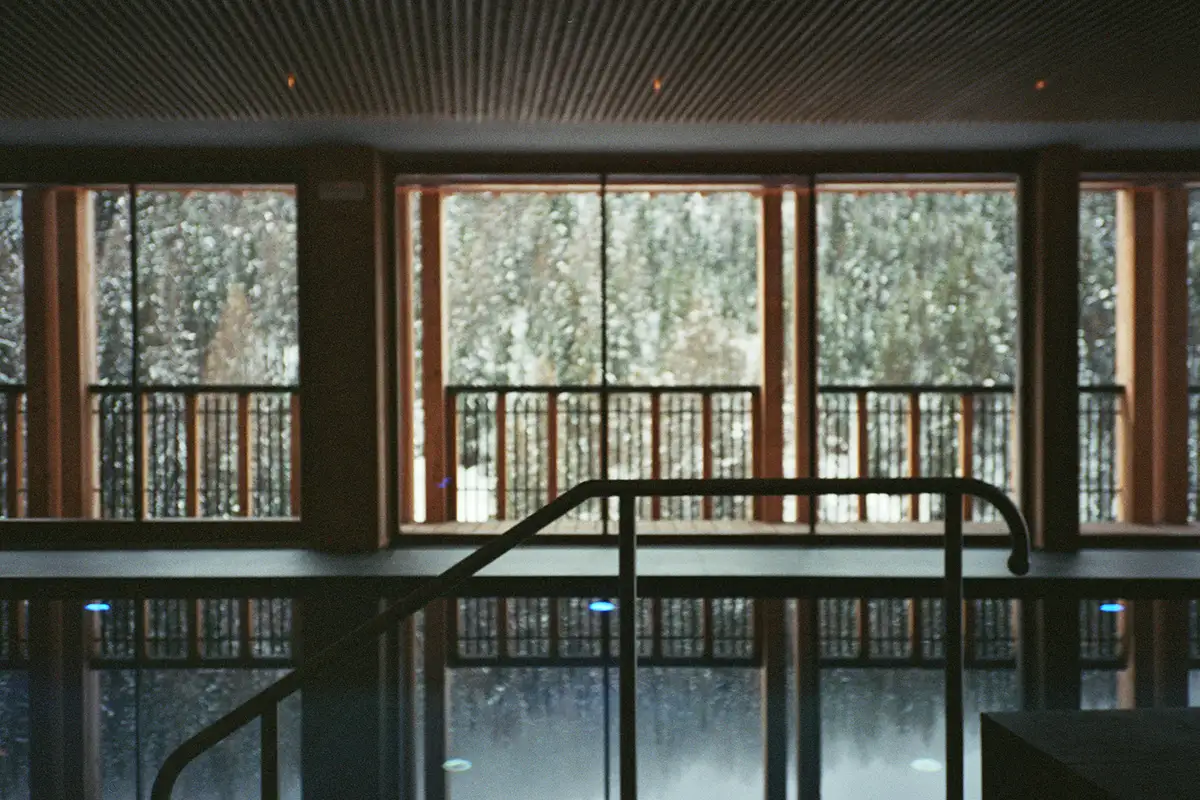
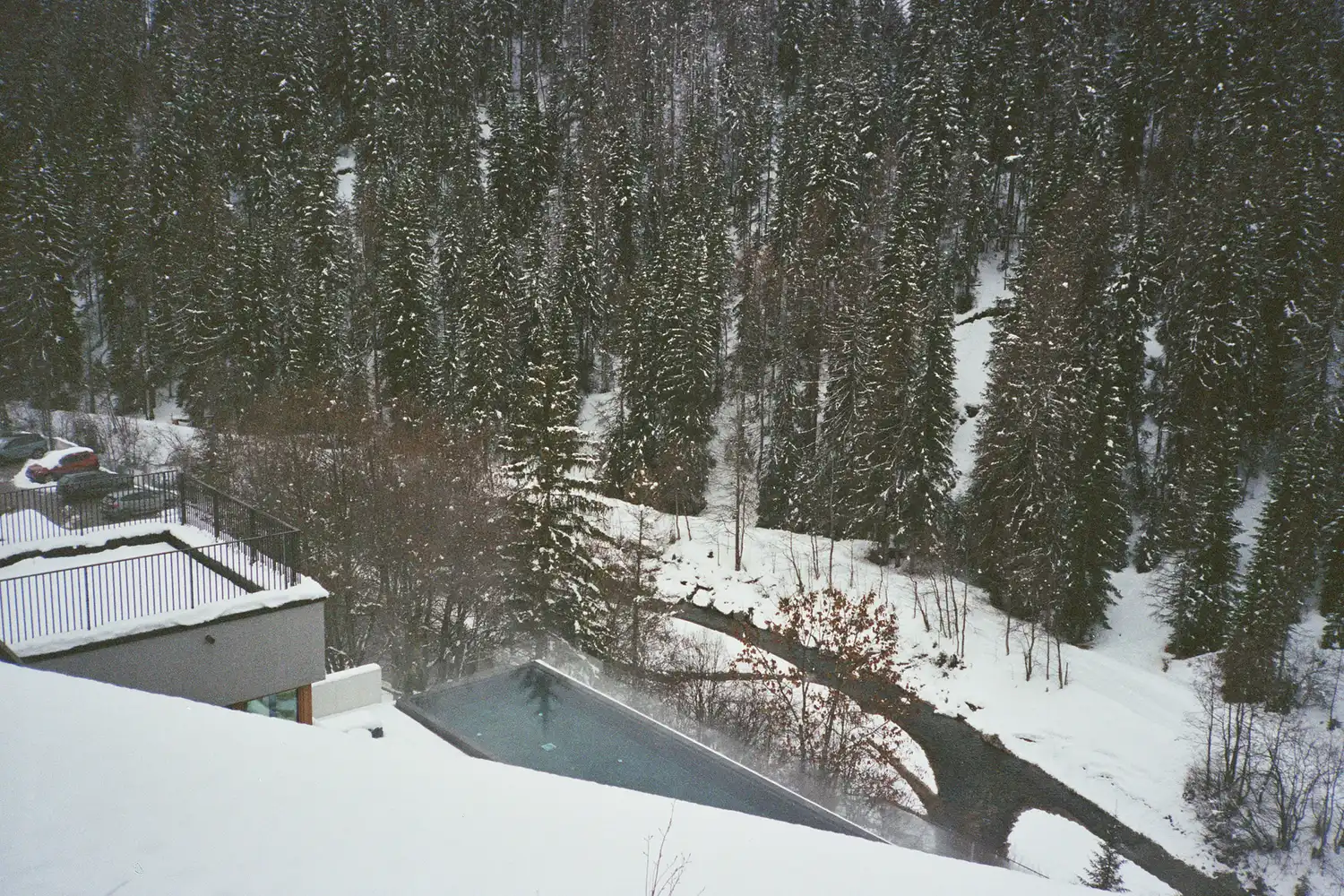
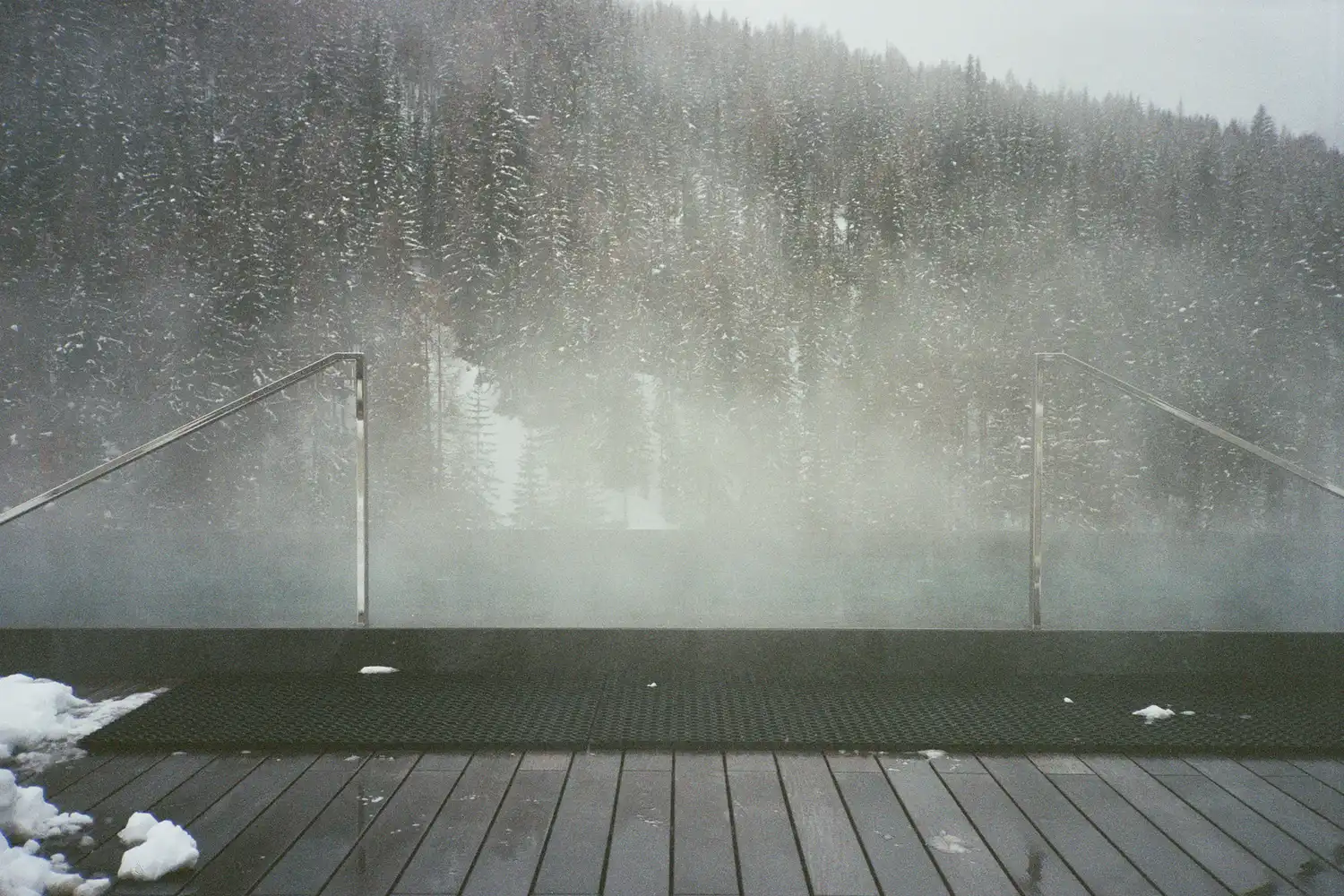
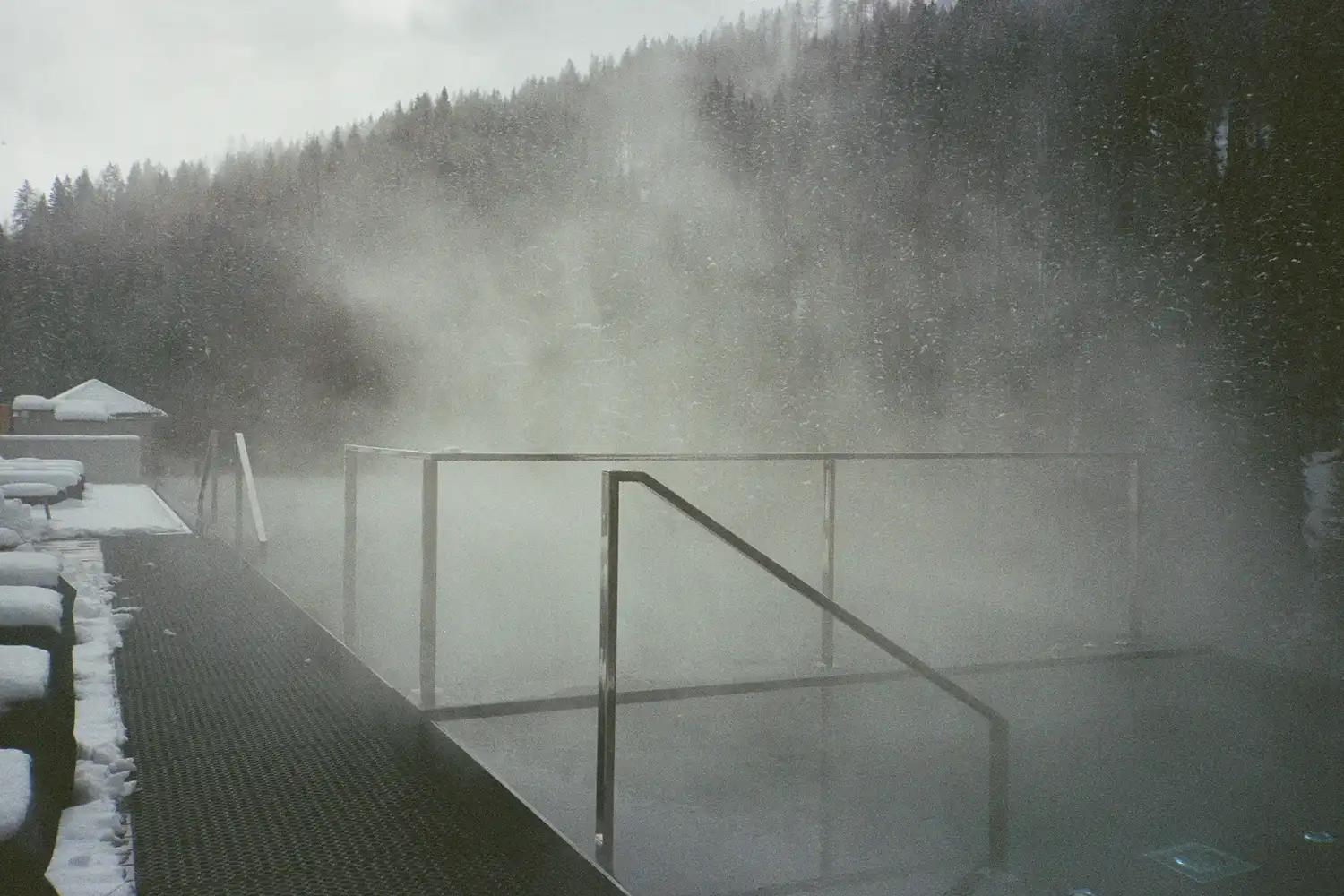
The Aman Spa occupies 1,684 square metres across two levels. The programme includes seven treatment suites, an adults-only indoor pool, a cold plunge, a Finnish sauna, a bio-sauna, a steam bath, a Hair & Nail Salon, two medical treatment suites, a yoga studio, a TechnoGym-equipped fitness room and — outdoors — a heated 20-metre infinity pool. Among the signature treatments is Alpine Muscle Relief, explicitly connected to physical activity at altitude.
The spa is the infrastructure that allows Aman to extend the destination beyond the ski season. Summer, autumn, recovery, longevity, slow stays: the mountain is a system of regeneration, not only a terrain for physical performance. This changes the grammar of the stay. The old alpine model centred on activity — skiing, hiking, climbing — and indoor space was functional to rest between outings. The Aman model inverts the hierarchy: the indoor space is the primary product, and the mountain is the frame.
Activities: Snow, Trails, the Sports Culture of Alta Badia
In winter, Aman Rosa Alpina works on access to Dolomiti Superski — a system covering 1,200 kilometres of runs and 450 lifts. The most immediate connection is Piz Sorega, approximately 300 metres from the hotel, reached via a Ski Butler service and shuttle. Among the curated experiences is Mindful Skiing — an approach to skiing that foregrounds physical and sensory awareness over performance metrics.
Alta Badia has its own precise sports culture. The Gran Risa is one of the most technically demanding descents on the World Cup circuit: the first race was held in 1985, and the course has been a reference point for alpine ski enthusiasts ever since. The Maratona Dolomites — a cycling race crossing the Dolomite passes — is among the most attended non-professional sporting events in Europe, drawing thousands of cyclists each year. The mountain huts in altitude, the network of trails, the tradition of high-altitude trekking: all of this builds a culture of physical movement on the mountain that luxury tourism has incorporated without replacing.
In summer and autumn, activities from the hotel include walking, hiking, mountain biking, road cycling, climbing, via ferrata, golf and skyrunning. Some guides depart directly from the property, reducing the need for transfers. The destination operates across overlapping seasonal cycles, which reduces its dependence on any single product.