Which is the best hotel in Italy? Beyond personal opinion
For ethical entrepreneurship, for sustainability and the Italian art of living well — this isn’t about decor, isn’t about opinion, isn’t about luxury or marketing: it’s about the best hotel in Italy
One day our homes will produce energy independently. Apartment buildings will be fitted with differential dissipators and pyrolysis systems. Before apartment buildings, we’ll see the innovation in hotels.
The hotel industry holds an outpost position in the war against waste, against consumerism, against the pollution of everyday life for all of us — in favour of new habits, of sustainable and shared thinking. Luxury hotels, but not only those — tourism, especially in Italy, when properly managed, is a positive sector for the economy, for income and spending. When properly managed, it must be stressed. Which is the best hotel in Italy for sustainability? People like what they like and preferences are personal — but beyond any opinion, there are rational grounds that can determine a primacy.
The best hotel in Italy isn’t the most expensive
There are guesthouses in Noto with a level of luxury that Paris can’t even imagine. The best hotel in Italy isn’t the most expensive one. It isn’t the hotel designed by the starchitect, isn’t the one hosting parties full of celebrities. The best hotel in Italy probably doesn’t need marketing at all — if anything, marketing might count against the virtue of primacy. It can be in the city, in the mountains, or by the sea.
For Lampoon’s digital edition, in the only section of our publication that can be called Life Style — Lampoon Library — we keep reviewing hotels, in Italy and around the world. The list can’t and doesn’t intend to be complete: it’s a partial selection, based on professional assessments. We try to give an objective review of the hotel businesses we visit, analysing the daily practices of sustainable management. Sustainable isn’t a boring word — it means respect and rigour.
Raw materials, textiles — the luxury of hospitality: Six Senses’ detergent, wood-fibre sheets at Grand Hotel Tremezzo, viscose
The first point of attention is the choice of raw materials: textiles, sheets and towels, sofa upholstery; the absence or limitation of plastic; energy and water management; kitchen ingredients. For Lampoon, sound responsibility in these — and other — practices is the only definition that can be given today to the word luxury. Even before luxury, a magazine like Lampoon wants to present the hotel industry as a potential model for better ethical entrepreneurship.
Six Senses opened in Rome — I met a manager from this property in Singapore, five years ago: the first thing he told me was how the herbs and fruit used to mix cocktails were collected rather than discarded, placed in a macerator to produce the natural detergent used for certain kitchen cleaning operations (the evolution of grandma putting vinegar in the dishwasher instead of rinse aid).
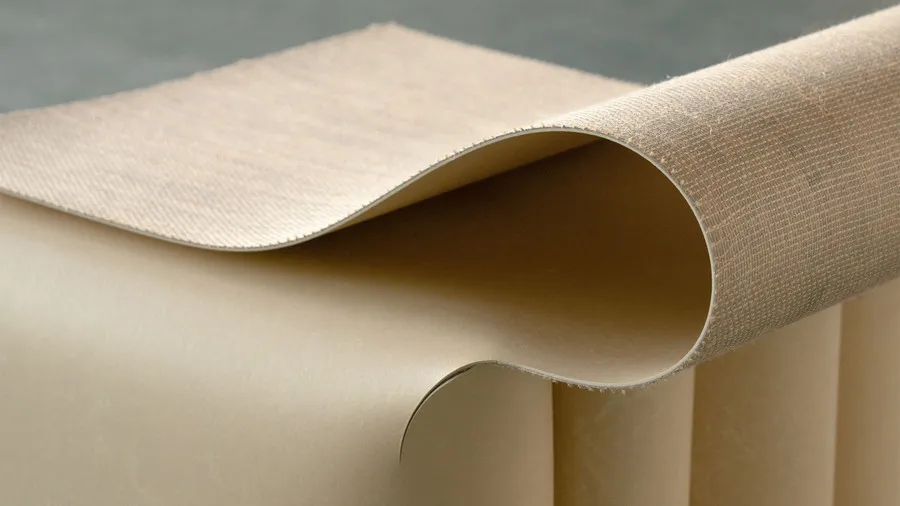
At Grand Hotel Tremezzo, guests sleep on sheets woven from a thread made from wood fibre. The effect resembles silk — and the sheets can be bought through the hotel’s shop. They’re produced by the company Beltrami. On closer analysis by experts, it becomes clear that a thread made from wood fibre is, in fact, a viscose. Today viscose can be produced from waste materials — shellfish shells, orange peels — but when it was first invented, viscose was produced from tree cellulose.
The term viscose originated as an adjective — a viscous substance, somewhere between solid and liquid, consistent enough to be pressed and forced out through minimal-diameter holes. The viscous substance produces extruded threads. Extruded threads genuinely resemble silk, but because of the binder holding the substrate together, they are a synthetic compound. Viscose is a synthetic thread blended with organic material. Sheets woven from synthetic thread can feel pleasant the first night — but they don’t allow the human body to breathe, and they need constant washing to avoid a stale smell. Frequent washing of synthetic sheets leads to abrasion of the fabric itself, with consequent release and dispersion of synthetic microparticles — that is, microplastics. Wherever there are microplastics, there will never be anything sustainable.
The problems of hotel management: staff and the provinces outside the big cities — the focal point is the short supply chain
One of the biggest problems for hotel management is staff recruitment and retention. It’s fair to say this is now a cross-cutting problem for every kind of business — but for hospitality it’s more complex, for two reasons. The first is seasonality. Staying on Lake Como, every business there seems to close from November to March. Both the lake’s microclimate and the area’s cultural offerings could support year-round opening more than one might expect for a seaside location. For an employee, logic suggests that seasonal work is less appealing than year-round work.
The second issue is where many hotels are located — the provinces and the countryside, outside the big cities, where many people would rather live and have a social life. The focal point of this piece: the hotel is a catalyst for the short supply chain. An accelerator of ethical, local, sustainable entrepreneurship, and of building an economic and social district. The hotel, particularly one targeting high-spending guests, must invest in the territory where it operates.
The best hotel in Italy and the country’s hotel heritage
Which is the best hotel in Italy today? Before naming it, let’s take for granted that it’s one that respects some of the points outlined above and below. Hotel heritage is a national heritage we should feel responsible for and invested in — a bit like when you worry about a guest arriving at your home, and remember the upbringing your mother gave you. Everyone wants to come to Italy on holiday, just as we Italians like holidaying in Italy too: we’re nationalists about very few things, but holidays and wine are among them.
No carpeting, natural building, wood, trees and CO2 — ethical entrepreneurship
A few details define every good Italian hotel. No carpeting on the floors: it was unhygienic even before the pandemic, and today it gives off a sense of generic unhappiness. No carpeting, anywhere. It doesn’t matter that it muffles corridor noise — the microbes it traps are more bothersome than the noise.
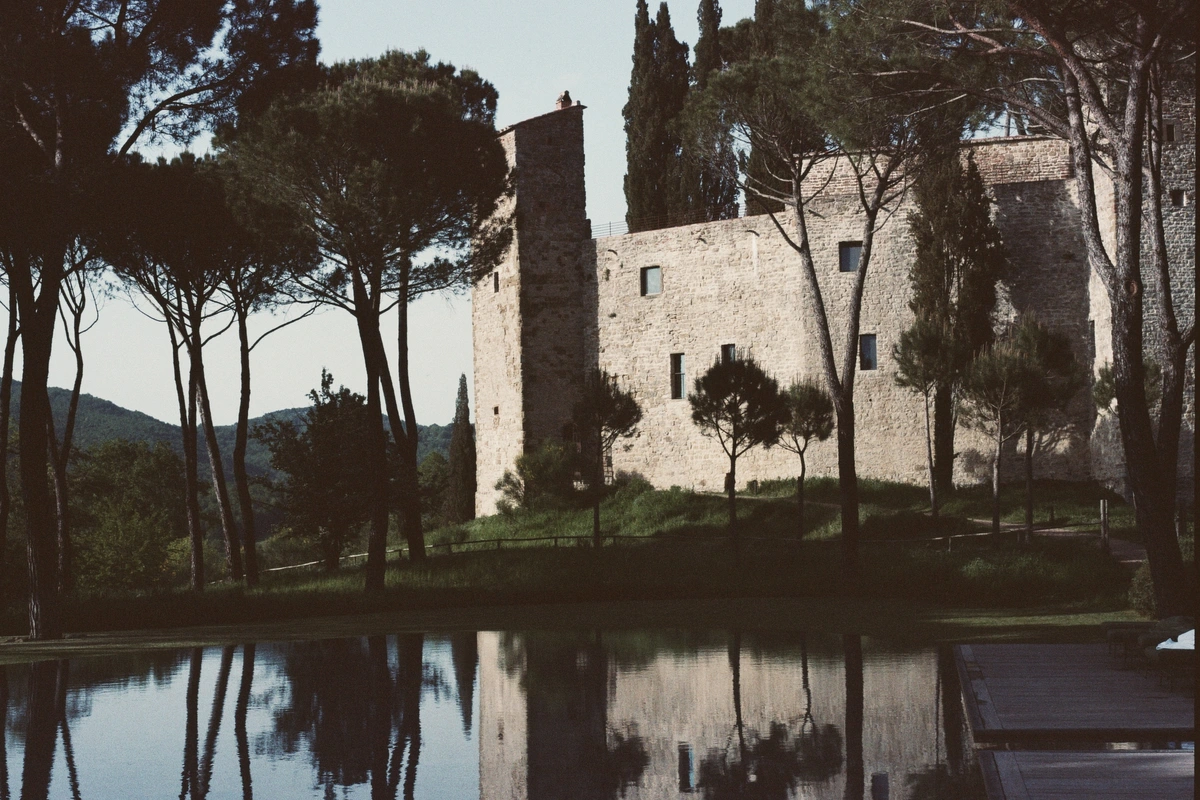
Building materials must be local — that’s the definition of sustainability. If marble is the choice, let it be enhanced marble. A local stone, from the nearby mountains, can offer a shade more coherent with the light from the window. Concrete should be a mix of clay — drawn from the foundation excavation itself — blended with the sand of the site. An example of this approach was set by Matteo Thun years ago now, in building the Vigilius near Lana, close to Merano. Another example is Tenuta dell’Argentaia, in Magliano in Tuscany.
Build with Italian wood, preferably solid timber, bought under forestry control. Trees don’t live forever — if left in nature, they die and return the carbon absorbed over their lifetime to the atmosphere. There’s confusion between the concept of CO2 sequestration and CO2 storage — building in wood, locking it into semi-permanent structures or buildings, is a positive and sustainable act. In this context, using hemp wood in lime production is the most current basis of what’s called natural building: a hotel today, especially if recently built or restored, should be a striking example of natural building — both for its own economic benefit, as noted above, and for a better marketing and advertising story. Again and again: this is ethical entrepreneurship.
Textiles and natural colours, curtains and furnishings
Textiles must be natural — linen, cotton, wool — hemp above all. Hemp is the only fibre that can be called sustainable for the textile industry. Hotels should choose hemp textiles as a first option. Fire-retardant requirements are treatments that can be applied. A room with curtains, upholstery and furnishings made from natural rather than synthetic fabrics has a fresh scent — compared with the closed-wrapper smell found in rooms with polyester fabrics suited to highly colourful prints. A hemp fabric is thermoregulating, and potentially antibacterial.
Colours must be natural — which doesn’t mean white. Optical white isn’t a colour found in nature — even cotton doesn’t naturally produce a uniformly white fabric. Getting to white requires chemical oxygenation steps. A natural colour is that of the fibre itself, always mottled, never uniform, leaning toward sand, ochre, straw — the colour of wood. A naturally coloured fabric withstands constant washing better, reducing polluting and synthetic residue.
No plastic — the bathroom test, soaps, toilet paper
No plastic. There should be almost nothing made of plastic. Plastic should be eliminated — and in any case never chosen in the first place: not for an outdoor chair, not for a sunbed on the beach. Not for the way laundered linen is wrapped when returned. No plastic. A hotel today studies and designs its operations to reduce plastic use to a minimum.
A good test is the bathroom. The bin under the sink shouldn’t have a plastic liner. It should be metal and should be disinfected once a day. In a hotel charging more than a thousand euros a night, bathrooms must have a window. Soap management must be a stated policy: it’s unthinkable that, to wash your hands over twenty-four hours, a bar of soap that’s barely been used should simply be wasted. The bar can be collected, melted down in a water bath, disinfected at high temperatures and reformed. A hotel should be able to, and know how to, implement waste management. Liquid soaps can be offered in refillable containers, but there must be a dispensing mechanism that only staff can operate.
Toilet paper shouldn’t be placed too close to the bowl — male urination can produce splash-back onto the ceramic. Like soap, the rolls should be made from recycled materials. In a world where constipation is widespread, a footstool to raise the knees should be available near the toilet, with a suggestion to use it. This too can be good marketing practice and a way to build customer loyalty: no one will ever be more grateful to you than the person you’ve taught how to relieve themselves better in the morning.
Even a single flaw in a hotel’s cleaning standards should be flagged — out of respect for the money we’re spending, but also to alert the property to an objective problem. Your complaint can be constructive: are we capable of turning a reproach into a courtesy?
The best hotel in Italy today — oranges, sugar, chickpea flour, glycaemic index
Which is the best hotel in Italy today? The oranges are squeezed on the spot, not an hour earlier; fruit must be seasonal and local. A hotel should have its own vegetable garden, certainly if surrounded by countryside — it could have one on the roof of an urban building, given that urban properties tend to operate on a large floor plan. You can find plenty of avocados in Mexico, in Spain — perhaps in Sicily. Not in the mountains. Salmon shouldn’t be served in abundance either. Chocolate should be blended with Italian hazelnuts — with little sugar. Little fat. Italian cakes made with little butter, focaccia made without lard but with olive oil — no survey is needed to remember how much everyone enjoys breakfast with freshly baked focaccia. Even better, farinata — chickpea flour has a good protein-to-carbohydrate balance, and a low glycaemic index.
A hotel can teach a few practices that improve life at home. Not only for sustainability — more simply, for living well. A grateful guest, charmed and shown the way to better days, will want to return to wherever they were taught so much. A gourmet restaurant shouldn’t replace traditional, simple, home-style cooking: most people who come to a hotel, if they don’t feel at home, will go back to their own.
The minibar, CBD and condoms — the Gritti’s internal courtyard in Venice
A room needs a table to work at a computer. We live at the mercy of connectivity: to disconnect from it, you have to master it first. Evening turndown service — the coverage expected as standard in five-star properties — shouldn’t arrive before eight in the evening, unless there’s certainty the guest has gone out for the night. The minibar can be updated — not supermarket products, but ones chosen with the same care for the short supply chain. CBD oil and condoms can be offered as a complimentary touch. Rooms overlooking an internal courtyard aren’t acceptable in a hotel where the base room costs 500 euros, not even in Venice — though it can happen at the Gritti.
Luxury hotel rooms, windows and air conditioning
In a luxury hotel, a room should have some outdoor connection: if not a terrace, then a balcony; if not a balcony, then a floor-to-ceiling window. Windows should have mosquito screens, for summer scents. If it’s true that Americans are the top clientele of Italian hotels; if it’s true that Americans prefer air conditioning even to fresh air — it’s also true that Americans come to Italy to find the scent of our flowers. Moonlight, and the breeze filtering through the slats of the shutters. These are the experiences that lend glory to memory — as Proust taught us at Doville. Let’s trust ourselves: a summer sea breeze at night can compete with a cold blast of air conditioning.
Hoteliers and influencers: sustainability and advertising
Some might say these points are debatable — they certainly are. The ones most likely to push back are precisely the hoteliers who see the effort behind such details. The hotelier who complains, caught between irritation and inertia, will be the same one who allocates budget to invite influencers, convinced of the conversions and overlooking the reputational cost — rather than be bothered with sustainability, “which is just a trend, talked about a lot but that nobody actually cares about.”
Be wary when you see too much communication and advertising: if a hotel needs it, that’s not a good sign. Some hotels have damaged their own perception through reckless digital communication. For a hotel of real standing, the only effective advertising is seriousness and word of mouth — the only story worth spreading is attentiveness to waste and energy efficiency.
The best hotel in Italy is in Trentino-Alto Adige
To find the best hotel in Italy, you have to go to Trentino-Alto Adige. In this region, whether due to its special statute or to genuine flair for tourism entrepreneurship, every hotel shows above-average quality (judged against the standards laid out in this piece). The Vigilius has already been mentioned. The Miramonti above Merano is another example. To find the best of all, you have to reach Bressanone and climb from there toward the source of Plose water.
The best hotel in Italy for sustainability and for living well is Forestis, in the Dolomites. An old curative refuge was the subject of an architectural project led by a husband and wife as young as they are capable of choosing well: Teresa Unterthiner and Stefan Hinteregger. Three towers were built in wood with air cavities for temperature control — they rise above the landscape, intrusive, but a symbol of something that works. The property runs on pellets, local wood. The rooms are wood throughout: ceiling, walls and floor. The water running from the taps is the kind that, in a London restaurant, could cost 20 pounds a bottle. Tyrolean apples come fresh and dried — a sure thing, good for digestion. At dinner, the menu is set by the chef — as if we were in an old-fashioned Italian boarding house in the 1950s — but with the necessary refinements: a different menu every evening, with no need to choose from a card. Sourcing is rigorously local. There are a few flaws — but let’s leave the praise as it stands for now. What matters is the journey, the intention — results are reached together.