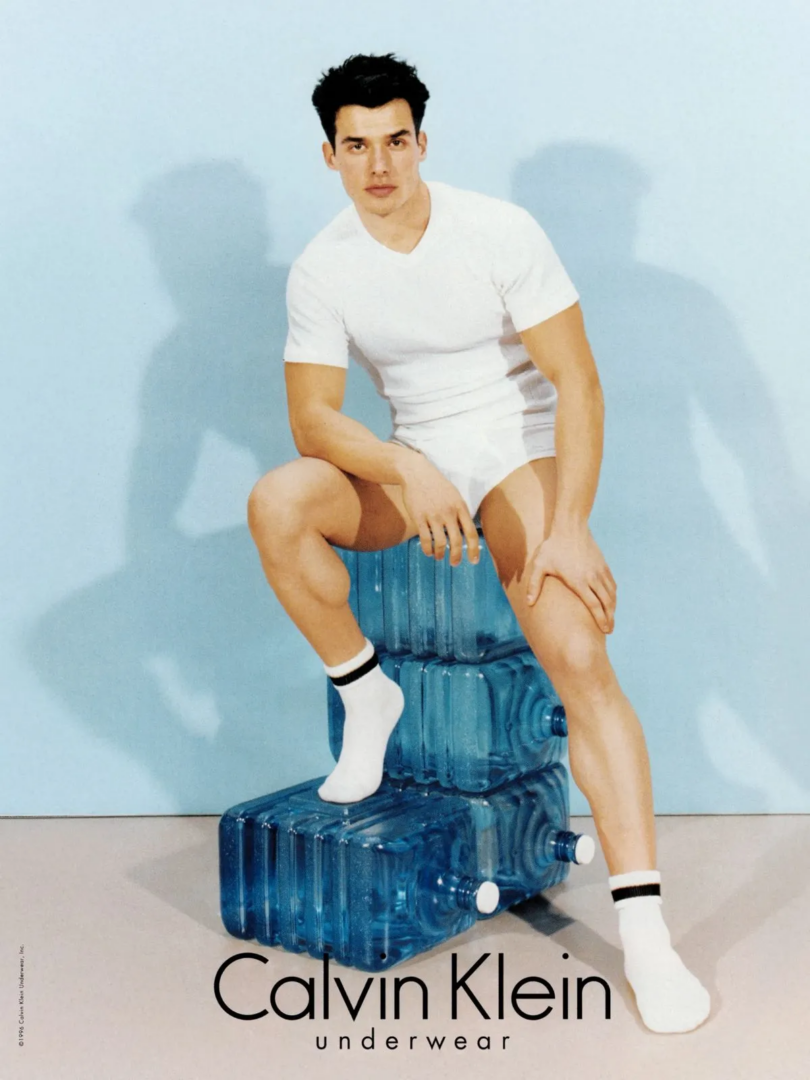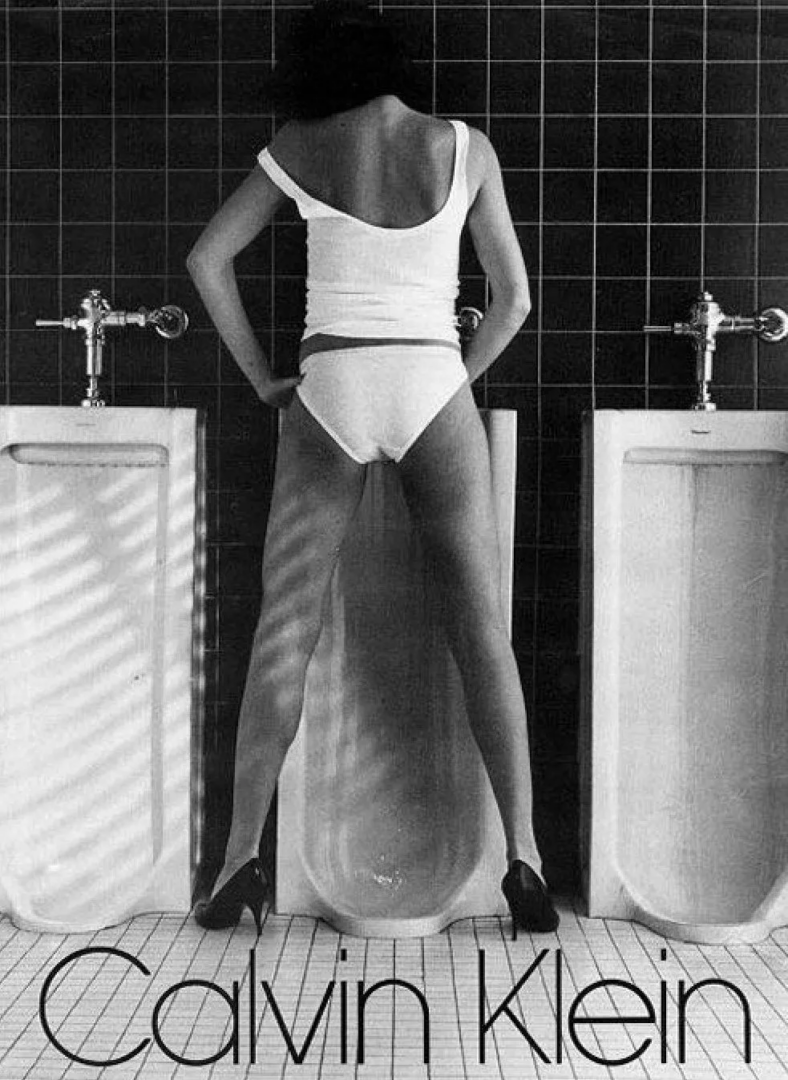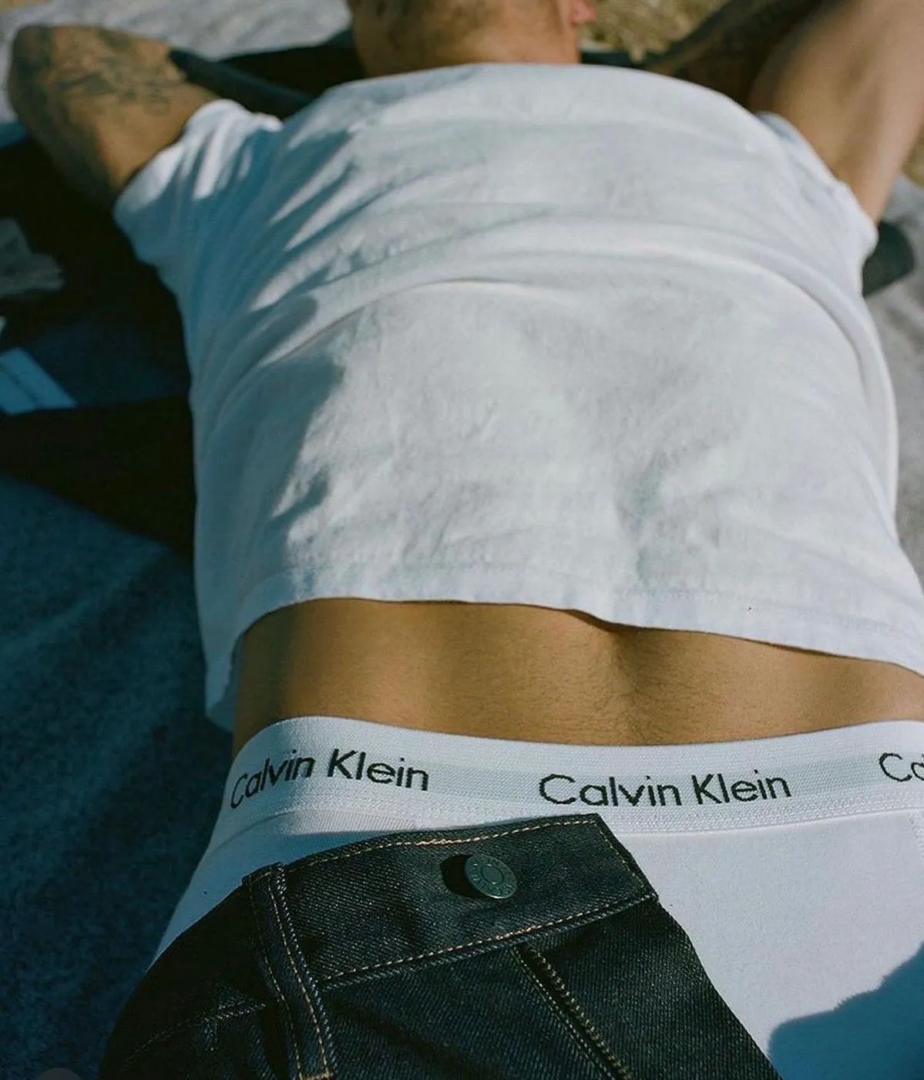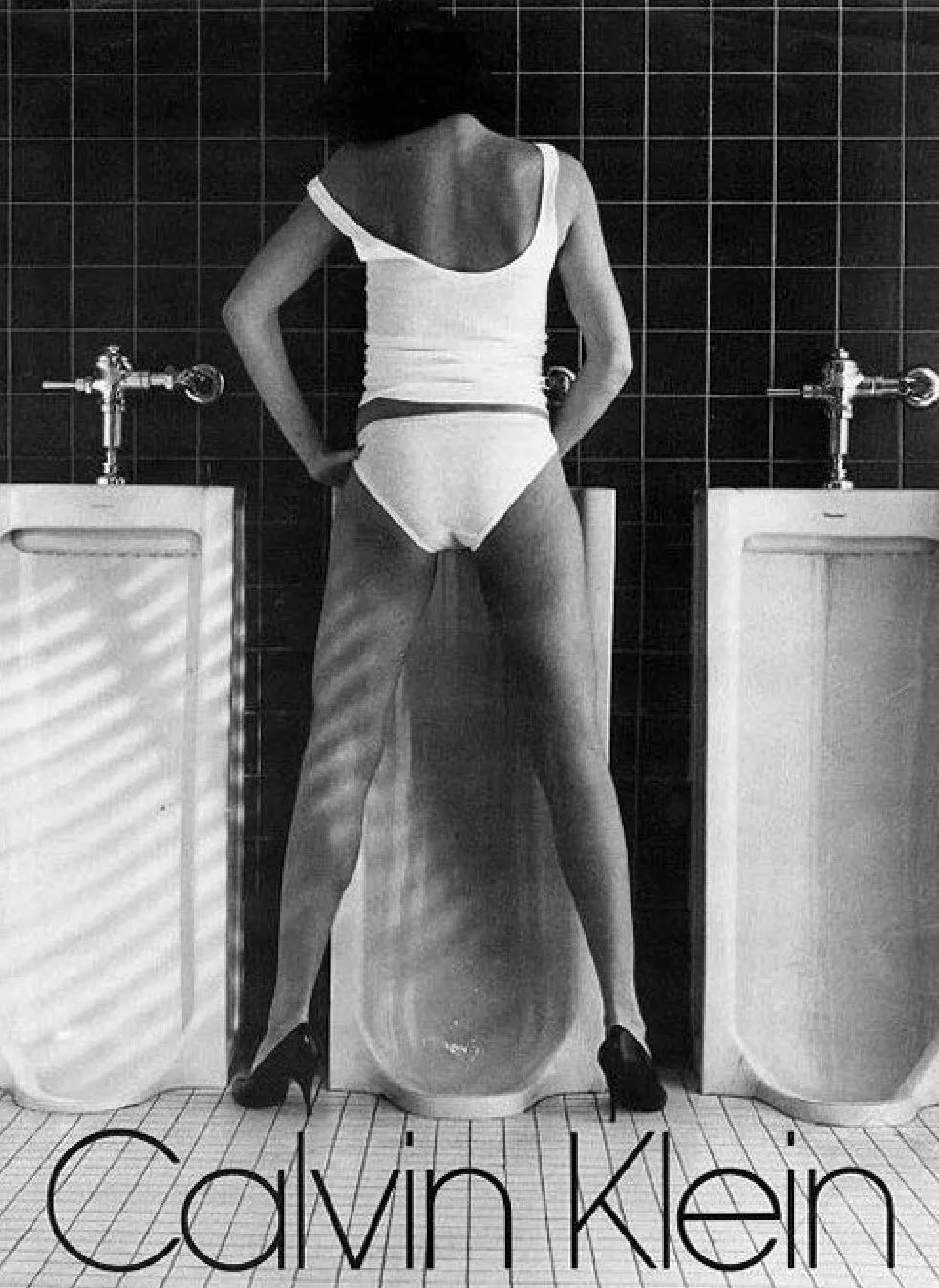
Between me and my Calvins: are we still so horny?
To say “it’s so Calvin” is a way of saying you are looking at someone undressed and being made to want it — and that the wanting is the point
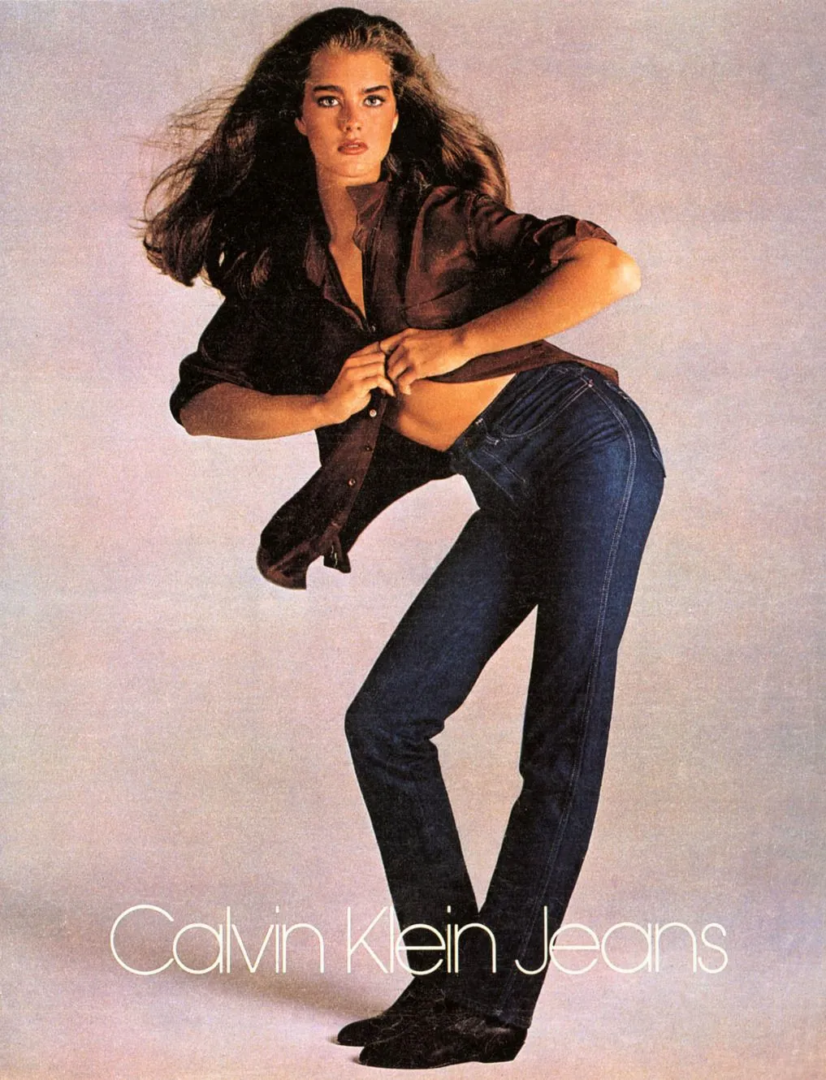
In 1980, a fifteen-year-old Brooke Shields looked into Richard Avedon’s camera and asked what came between her and her Calvins. Nothing, she answered. Networks pulled the spots. The brand sold two hundred thousand pairs of jeans in the first week. The formula was set: minimal product, a recognizable body, a charge nobody asked for.
The male gaze reversed: how Calvin Klein made the male body a spectacle
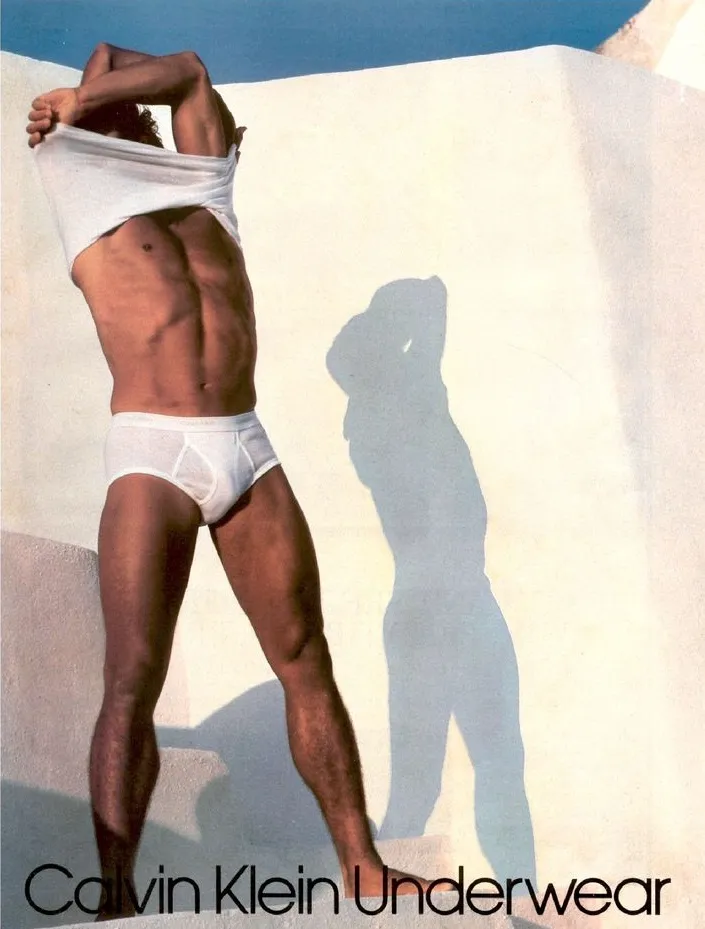
The history of that code is a history of who gets looked at, and how. When Bruce Weber photographed the pole vaulter Tom Hintnaus in a white brief in 1982 — reclining against a white wall on Santorini, the image scaled up and placed above Times Square — he was doing something that mainstream American advertising had largely refused to do. He was presenting the male body as an object of desire. Muscular, hairless, lit for pleasure rather than for labor. The gaze, in the dominant culture of the time, was supposed to move in one direction: from a presumed male viewer toward a female subject. Weber reversed the current.
Weber had come up through a visual lineage that included George Platt Lynes, the mid-century photographer whose studio work circulated semi-clandestinely among gay men in America for decades — bodies rendered with a classical calm that the mainstream could not yet accommodate. What Weber did was import that sensibility into the most public advertising space in New York. The Hintnaus billboard was seen by millions of people who had never heard of Lynes and had no particular framework for what they were experiencing. Many of them experienced it anyway.
Laura Mulvey had published her essay on the male gaze in 1975, five years before the Shields campaign. Her argument — that mainstream cinema structured vision along gendered lines, positioning women as spectacle and men as the bearers of the look — gave critics a vocabulary for what Calvin Klein was doing and, later, undoing. The Hintnaus image broke the model Mulvey described, at least partially. It made the male body available to be looked at. That this was experienced as transgressive, thrilling, or simply new says something about how thoroughly the previous arrangement had been naturalized. The branded elastic waistband riding above the low-cut brief was not just a logo placement. It was a marker on a body that had just been repositioned in the visual economy.
By 1985, the joke had reached the cinema: in Back to the Future, the protagonist is mistaken for a boy named Calvin Klein because the name is stitched across the waistband of his shorts. The brand had entered the culture as shorthand — something you could reference without explanation, confident the audience would follow. That is a different kind of power than selling jeans.
Avedon, Weber, Sorrenti, Meisel: the photographers who built the Calvin Klein image
The look did not arrive fully formed. It was built by a specific group of photographers across several decades, each of whom brought a different inflection to the house’s central proposition.
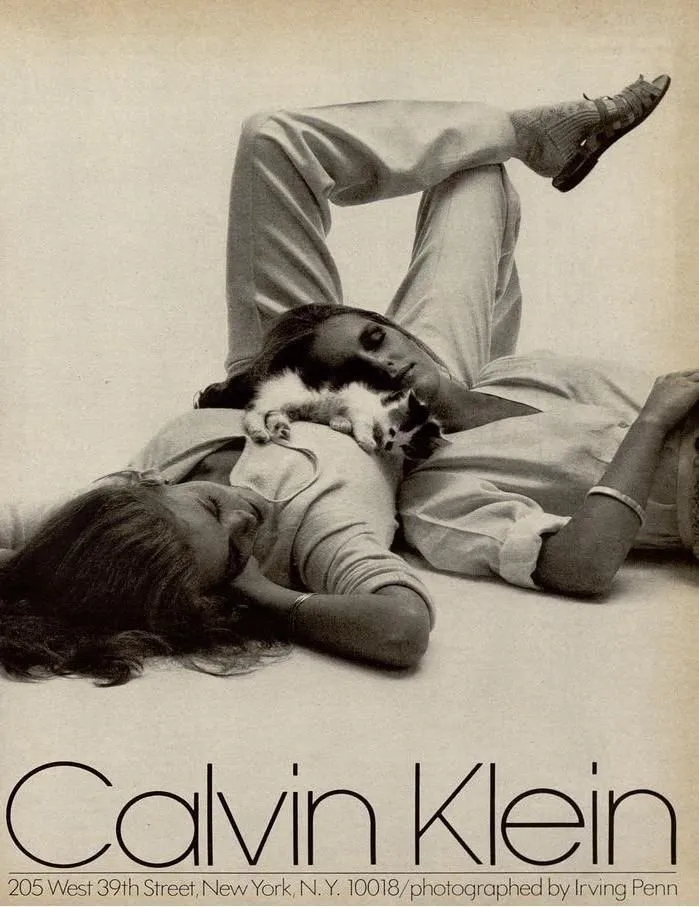
Richard Avedon established the grammar: white ground, direct gaze, the body offered to the camera without apology or narrative. His work for Calvin Klein in the late seventies and early eighties had a quality of confrontation — the subject looked back at you, and the looking back was part of the charge. Avedon had spent years photographing the fashion world’s idea of beauty and had developed, alongside it, a forensic interest in what the face does under pressure. The Calvin Klein campaigns used that pressure differently: the face was still there, but the body had become equally legible, equally the subject of scrutiny.
Bruce Weber brought a different inheritance. His images drew on a long tradition of homosocial and homoerotic American imagery — the athletic body, the locker room, the beach — and found in Calvin Klein a client willing to push that material into the mainstream. Where Avedon’s bodies were confrontational, Weber’s were available: offered, relaxed, sometimes tender. The vulnerability he introduced into images of the male body was genuinely new in the context of mass-market advertising, and it unsettled viewers in ways they were not always able to articulate.
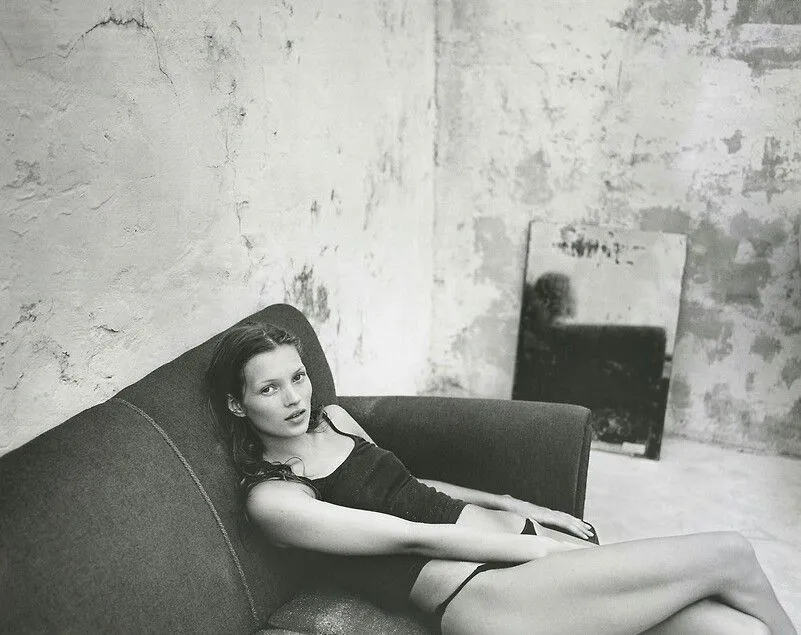
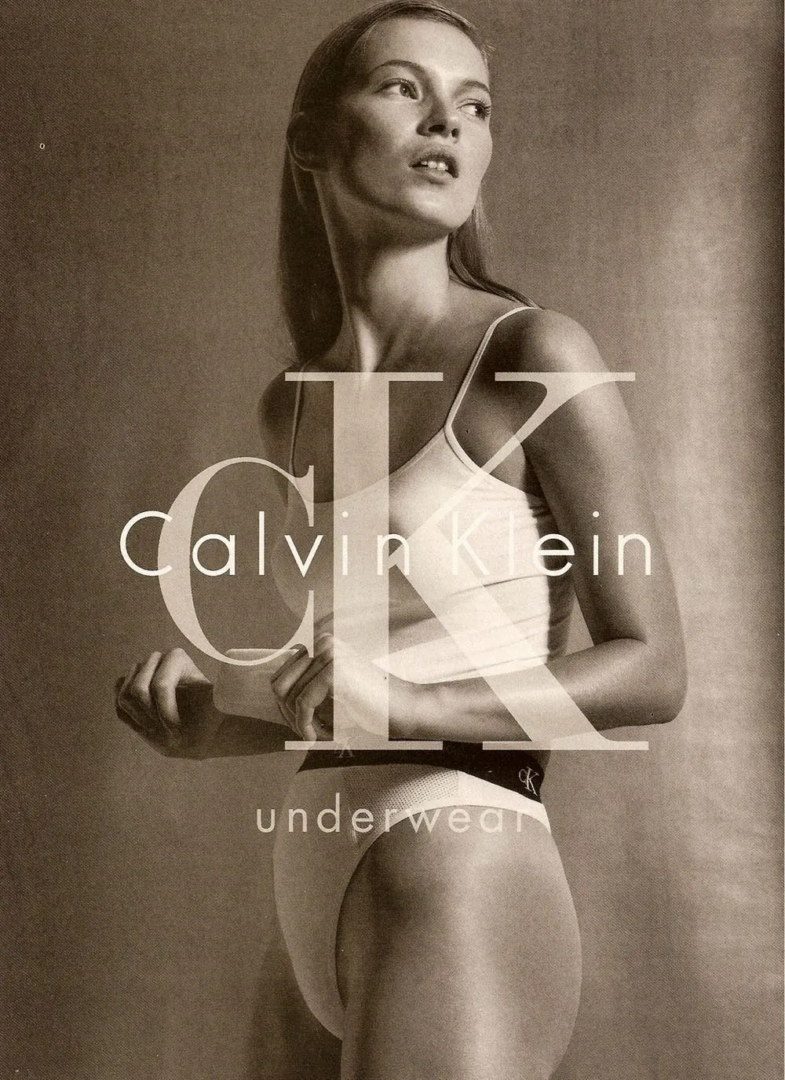
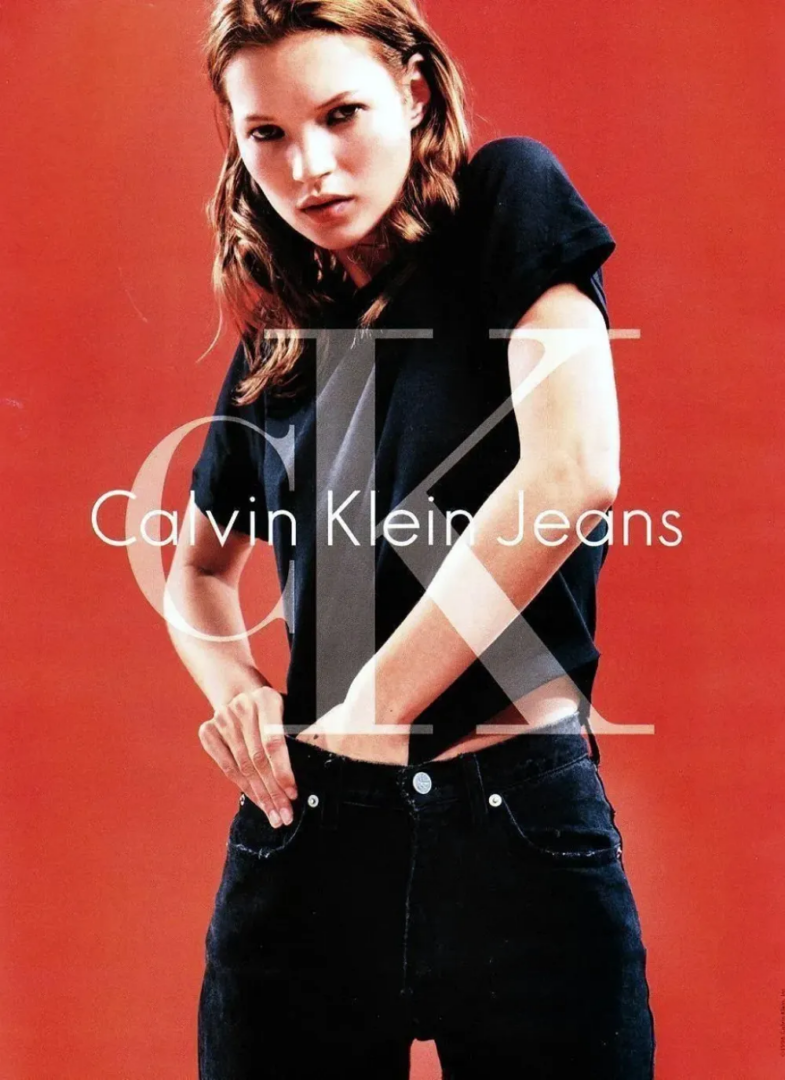
Mario Sorrenti, who shot the Obsession campaign in the early nineties and returned for Bad Bunny three decades later, brought a closer, more disheveled intimacy — the body at close range, slightly undone, photographed as if the image had been taken without permission. The Obsession campaign in particular had a quality of surveillance, of desire caught in the act. Kate Moss at nineteen, photographed by her then-boyfriend, in a series of images that seemed to belong to a private archive rather than a corporate campaign. The intimacy was fabricated, of course. But fabricated intimacy is still intimacy, and the campaign worked precisely because it was difficult to locate the line.
Steven Meisel linked the body to youth, attitude, and the particular social texture of early nineties New York through the CK One period — the brand’s move toward androgyny and the first serious attempt to address a generation that had grown up with AIDS and was deeply suspicious of the libidinal optimism of the eighties campaigns. CK One was shot in black and white, tied to oversized clothing, the antithesis of the body-conscious silhouette. It was, in retrospect, the house’s most culturally specific campaign: rooted in a moment, a city, a set of anxieties and pleasures that could not be entirely extracted from their context. It was also enormously successful, which suggested that the vocabulary of desire was more flexible than the brand’s earlier work had implied.
From Brooke Shields to Bad Bunny: fifty years of Calvin Klein campaign faces
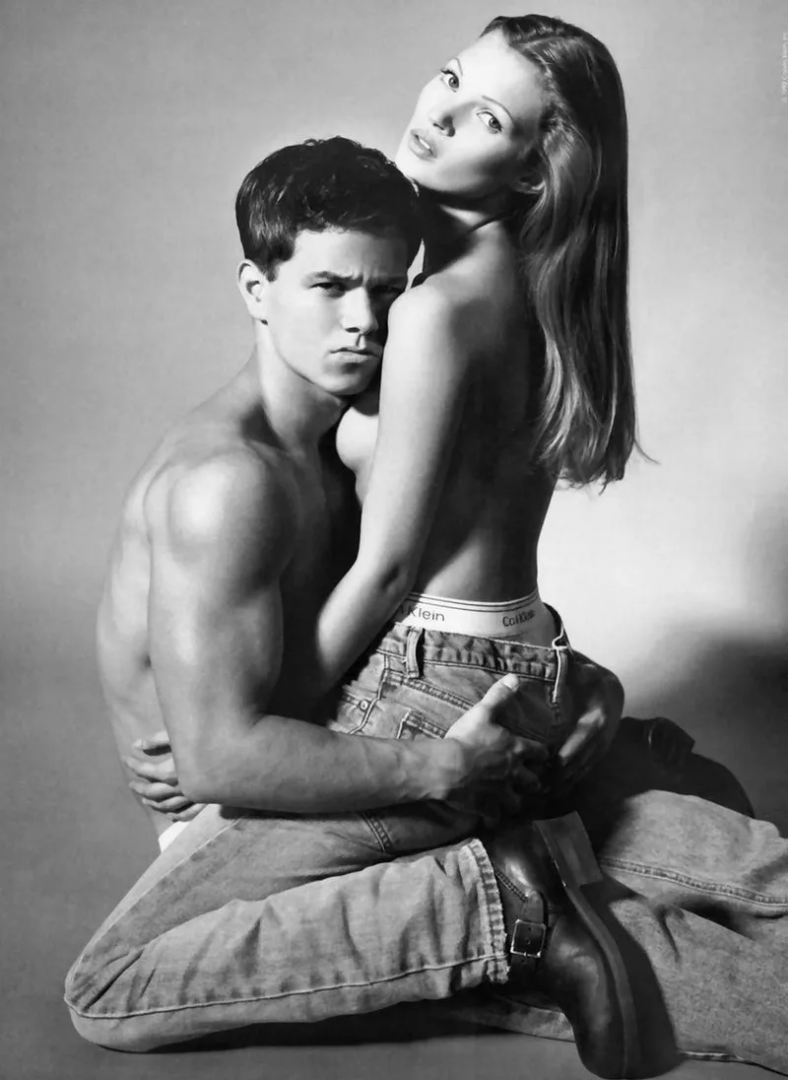
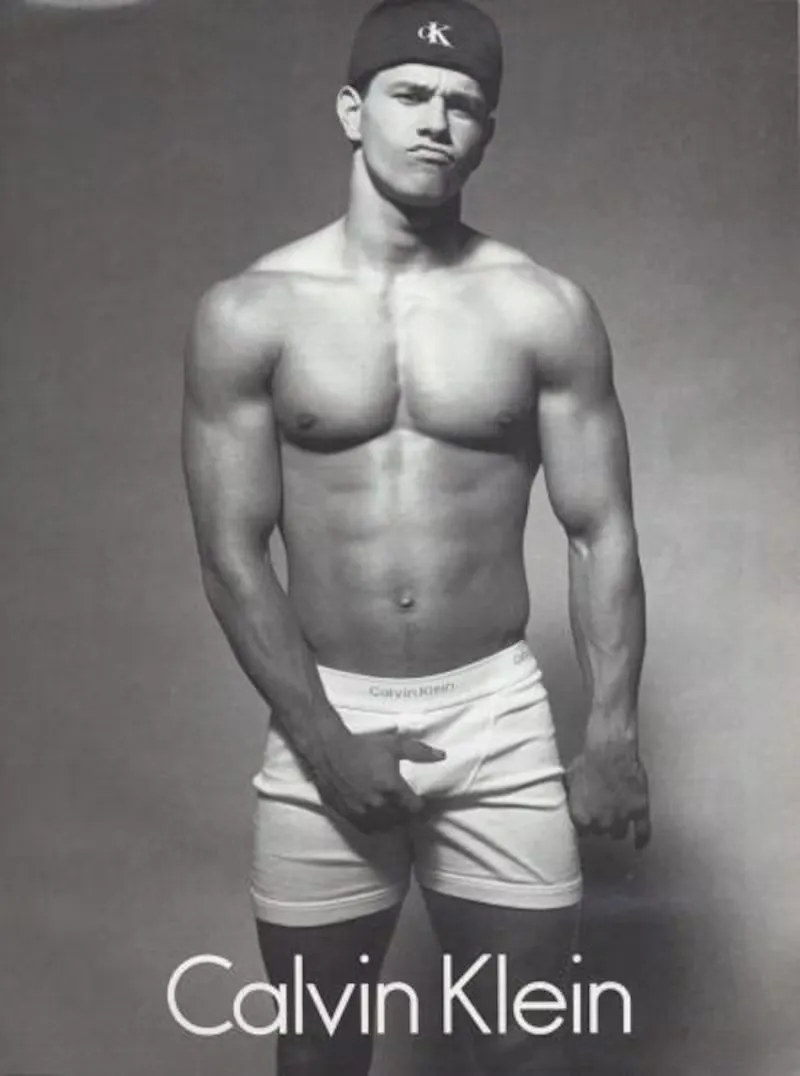
The proposition held across decades and faces, each casting decision a calibration of what the culture could receive and what it still needed to be pushed toward. Mark Wahlberg and Kate Moss in 1992 — the working-class body and the waif, desire stripped of aspiration. Justin Bieber and Kendall Jenner in the #mycalvins era, the campaign’s logic migrated to social media and distributed across millions of user-generated posts in which ordinary people placed themselves inside the brand’s erotic grammar. FKA Twigs in 2023, whose appearance drew both attention and a debate over double standards that the brand absorbed without comment.
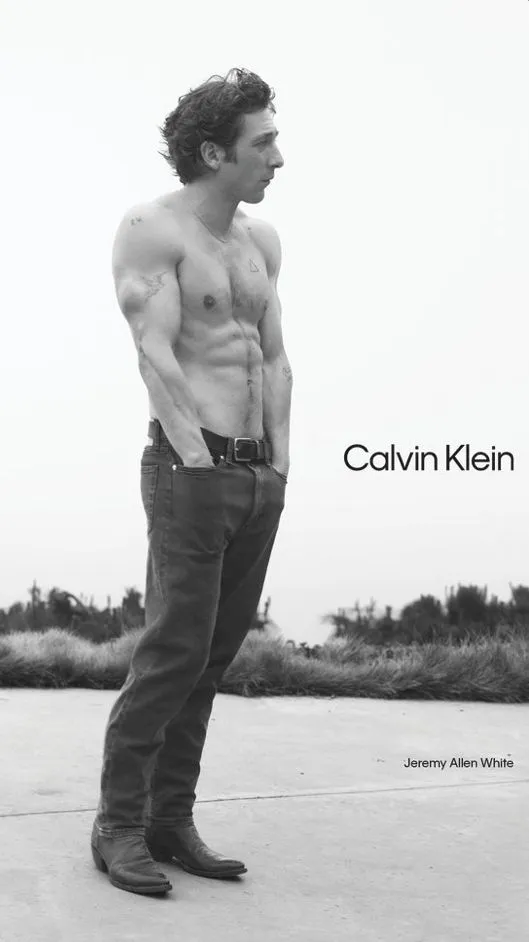
In 2024, the actor Jeremy Allen White, photographed by Mert Alas, tugged at the monogrammed waistband on a Manhattan rooftop. The image placed him in a near-half-century lineage of figures who had stripped down for the company — and it went viral in a way that suggested the formula had lost none of its basic force. The internet’s response to White was not ironic. It was, fairly straightforwardly, horny. Which is to say: the code still worked.
In 2025, Bad Bunny posed in the Icon Cotton Stretch briefs for Mario Sorrenti, the campaign shot in his native Puerto Rico. The choice of Sorrenti — who had photographed Obsession thirty years earlier — was a deliberate suture between the house’s history and its present, and the choice of Bad Bunny was a statement about the geography of desire: that it had moved, that Latin masculinity occupied a different position in the global visual economy than it had in 1992, and that Calvin Klein intended to be located at that intersection. The roster has also run through Idris Elba and the K-pop figures Jungkook and Jennie — each appearance a data point in the brand’s ongoing argument that the erotic charge it produces is universal, or can be made to appear so.
Each cycle followed the same mechanics. The clothing recedes. The body is the subject. The brand is the frame through which the body is made legible as an object of desire.