350 species in one seagrass meadow: how One Ocean Foundation operates
From the Caprera Canyon to Posidonia restoration in Cala di Volpe, One Ocean Foundation builds infrastructure for marine science — the exhibition As Above, So Below in Venice
One Ocean Foundation was established in March 2018 by the Yacht Club Costa Smeralda. The origin traces to Milan, October 2017: the One Ocean Forum, the first forum on marine protection organized in Italy, brought together 800 participants with researchers and international companies. It produced the Charta Smeralda, an ethical code of ten points defining principles and actions for marine protection. Individuals and organizations sign it, committing to measurable behaviors rather than declarations.
The foundation’s mission is to accelerate solutions to ocean issues by engaging international leaders, companies and institutions; promoting a sustainable blue economy; and spreading knowledge of marine ecosystems. The activity is divided into three areas: blue economy, education and environment — each corresponding to funded projects, research partnerships, and published data.
Blue Forest: the largest marine reforestation project in the Mediterranean Sea
Blue Forest, launched in 2023, includes four active sites in Liguria, one in Apulia, and one in Sardinia. The Sardinian expansion, presented in 2025 in the bay of Cala di Volpe, made it the most extensive marine reforestation initiative in the Mediterranean, covering around 80 hectares. It was developed through a scientific collaboration with the University of Sassari, with support from the International School for Scientific Diving, Pirelli and Smeralda Holding.
The object of restoration is Posidonia oceanica, a marine plant endemic to the Mediterranean. The meadows shelter over 350 marine species; one square meter releases 20 liters of oxygen per day; a hectare sequesters 270 tons of CO2 yearly — equivalent to ten hectares of tropical forest. The plant produces about 80 percent of coastal oxygen.
Caprera Canyon: cetacean research and Hope Spot recognition in Sardinia
The Caprera Canyon lies between 15 and 30 miles from Capo Ferro and is home to seven species of cetaceans. Since 2019, the foundation has conducted research and monitoring in the area, aiming for its recognition as an Important Marine Mammal Area and, ultimately, Marine Protected Area status. The canyon has joined the global network of over 140 Hope Spots. In 2020, a partnership with the NATO STO Centre for Maritime Research launched a joint project on environmental and acoustic pollution impacts on marine wildlife.
Business for Ocean Sustainability: mapping corporate impact on marine ecosystems
The Business for Ocean Sustainability report series, developed with SDA Bocconi, McKinsey & Company and CSIC, has reached its third edition. It involves international companies representing about 50 percent of total market capitalization, analyzing how they act on environmental sustainability. A dedicated report on fashion examined sustainability reports from 28 major companies, mapping the sector’s pressures on marine ecosystems along the value chain. The ocean generates an estimated 5.2 trillion dollars annually, with a total asset value of 24 trillion dollars.
Education runs through activities such as the Young Summit and One Ocean Week Milan, addressing schools and the general public.
As Above, So Below in Venice: when a research foundation enters art production
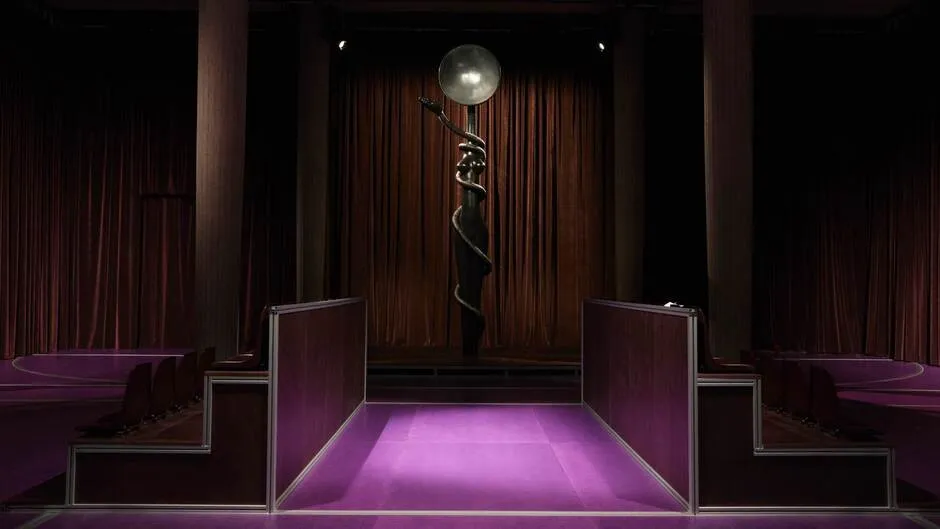
In 2026, this infrastructure extended into contemporary art. As Above, So Below, a collateral event of the Venice Biennale curated by Elizabeth Zhivkova and Farah Piriye Coene of ZEITGEIST19, opened on May 8 inside the former Church of Santi Cosma and Damiano in Giudecca. Developed with One Ocean Foundation, it brought together artists, curators and researchers working across sound, installation, biological research and computational systems: Yoko Shimizu, Antoine Bertin, Marshmallow Laser Feast, Elnara Nasirli, Almagul Menlibayeva and Suad Gara, and Andrea Crespi.
Ecology is everywhere in contemporary art — across biennials, institutional commissions, museum programming. The question this project posed was different: what changes when ecology enters as a condition rather than a theme. It changes what the work requires — research timelines, crews, locations, materials, maintenance. It becomes a production logic.
One Ocean Foundation operated as a production environment rather than a supporting institution. The works resulted from processes distributed across oceanic sites and laboratories, transported by boat, installed in a historical architecture adapted into a functioning technical system.
Yoko Shimizu, Antoine Bertin and Marshmallow Laser Feast: ecology as method
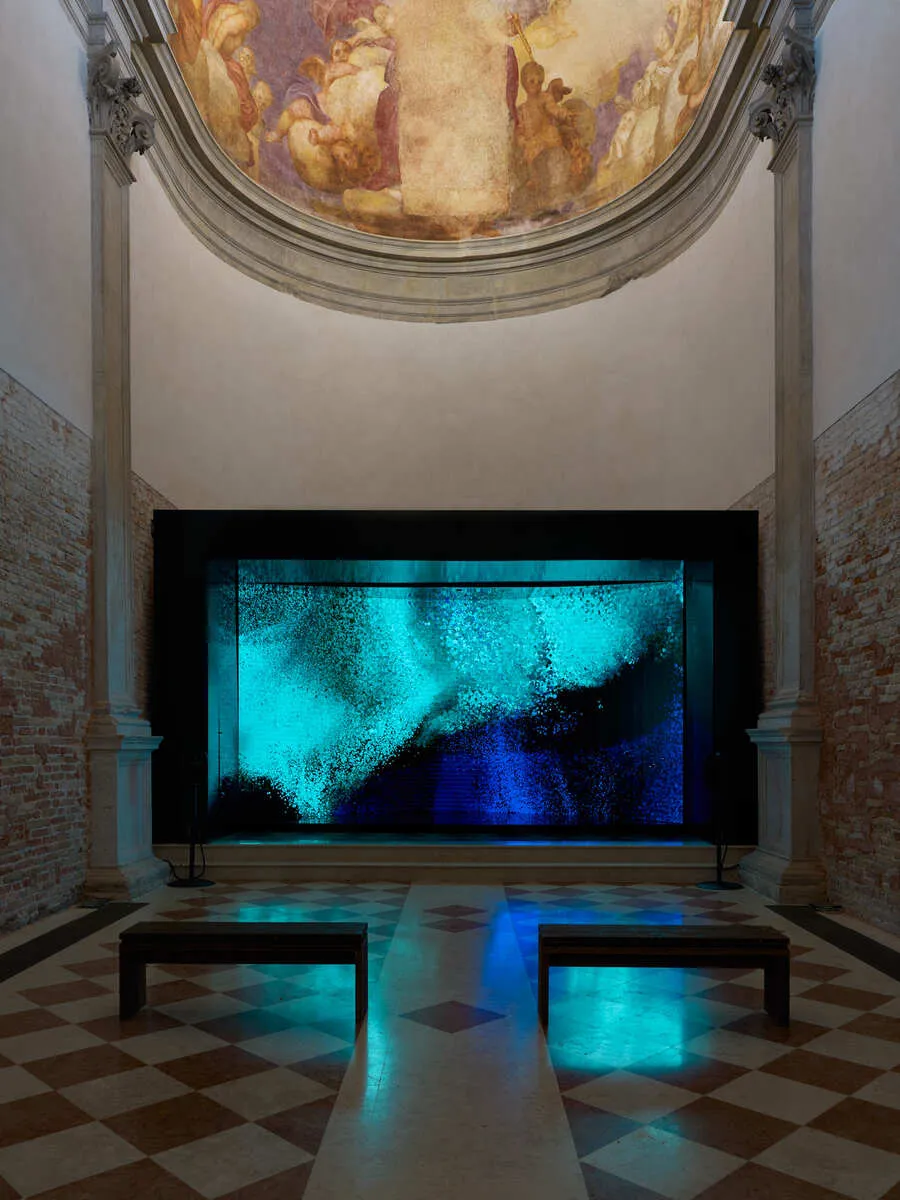
The clearest case was Yoko Shimizu. Through a residency developed by the foundation, the Japanese bio-artist joined a Mediterranean expedition, conducting field research on bioluminescent plankton and microplastics. Her installation, Tides of Light: Meadows of the Abyss, grew from cultivation: living plankton in tanks, managed temperatures, calibrated light, vibrational inputs. The organisms photosynthesize by day and emit light in chemical pulses at night, lasting seconds before their energy depletes. Timing became biological; recording schedules followed circadian cycles. Shimizu described the organisms as collaborators — they age, weaken, react to season and care.
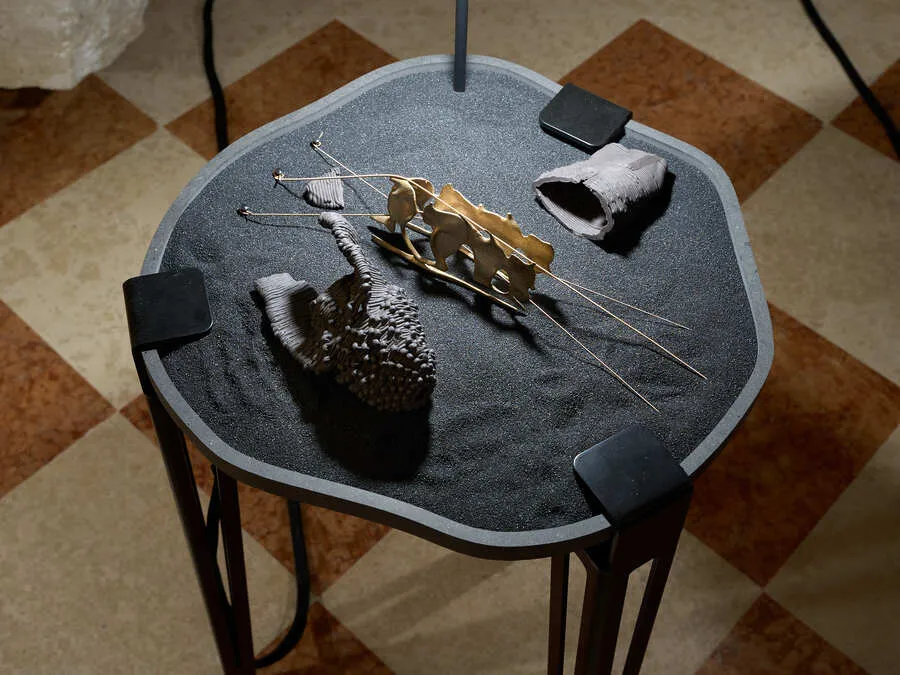
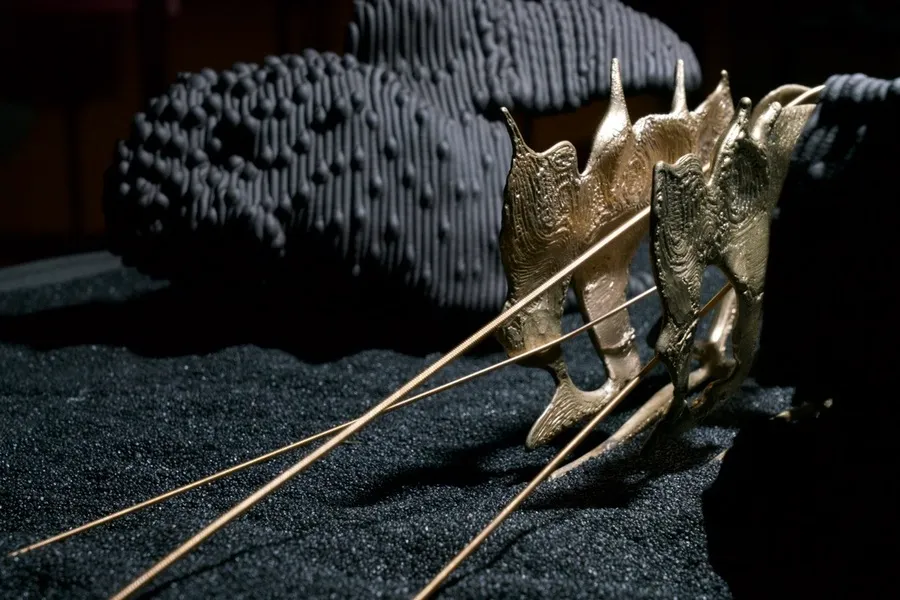
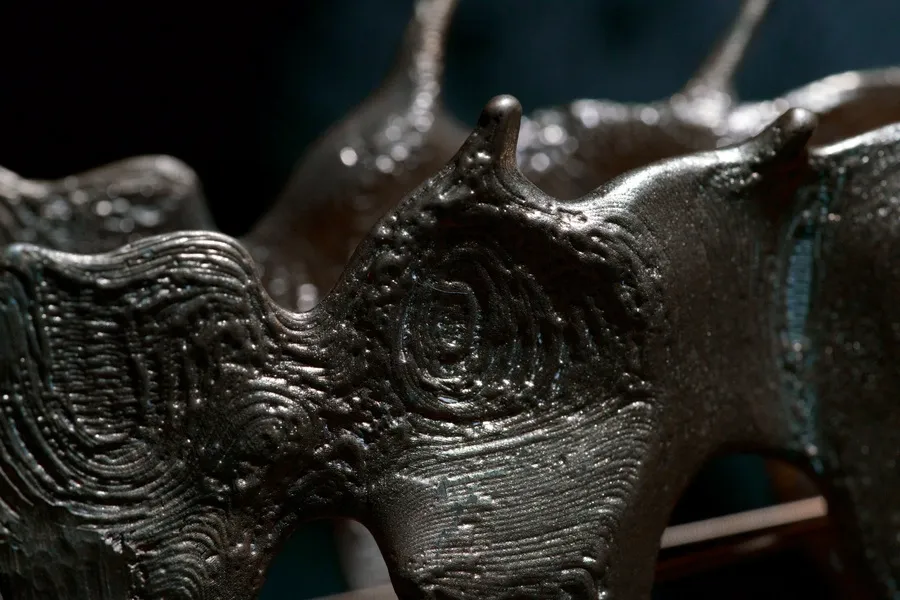
Antoine Bertin’s Fish String Theory started underwater. Armed with hydrophones, he recorded marine activity, boat engines, shifting currents, and silence in the Venetian lagoon — discovering that aquatic life becomes acoustically active in moments of quiet. The installation combined bronze sculptures cast from fish bone drawings, tensioned strings, a machine-listening system and a large language model. Frequencies from the recordings vibrated the materials, producing intermittent resonance.
Marshmallow Laser Feast, working with writer Tom Mustill and researchers from the Applied Bioacoustics Laboratory at the Polytechnic University of Catalonia, built Seeing Echoes in the Mind of the Whale from whale vocalizations, behavioral studies and underwater footage. Machine-learning systems extracted parameters — depth, orientation, movement — translated into vector fields and fluid simulations. The result sat between scientific record and informed speculation.
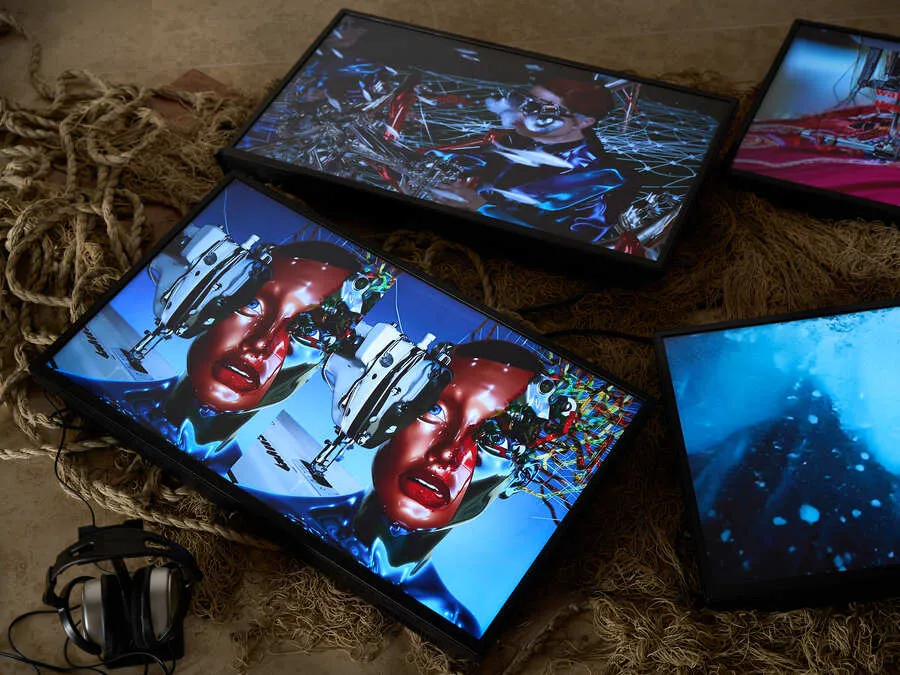
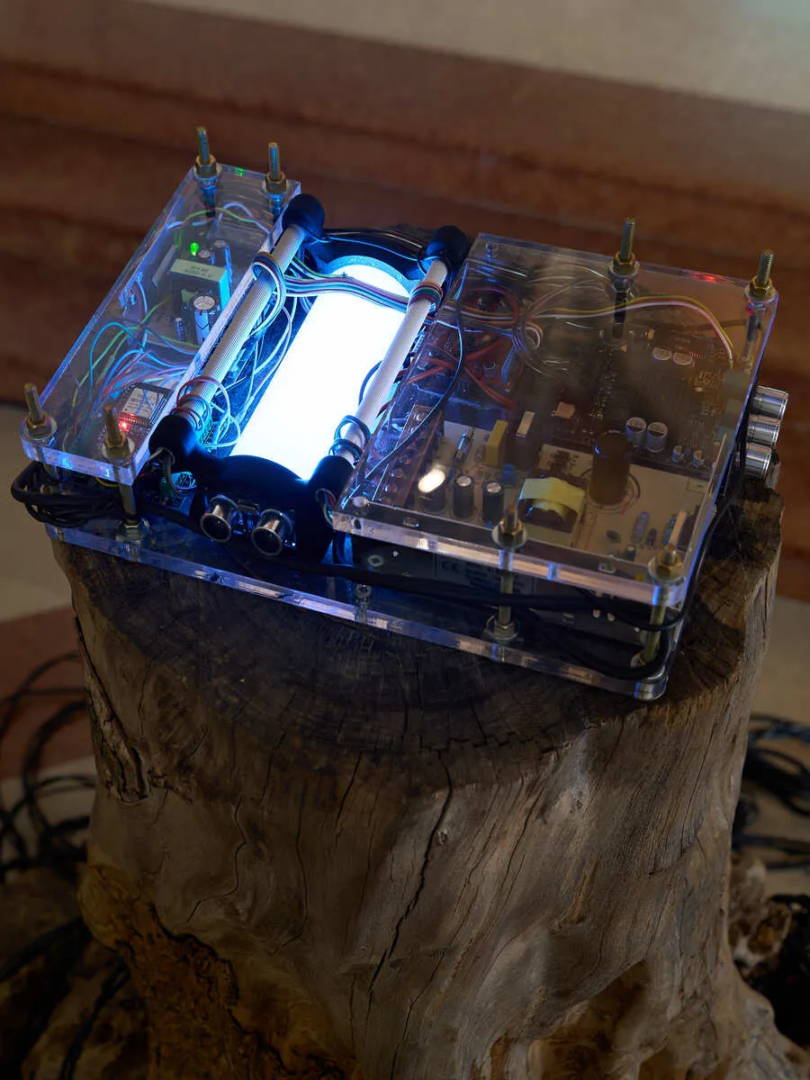
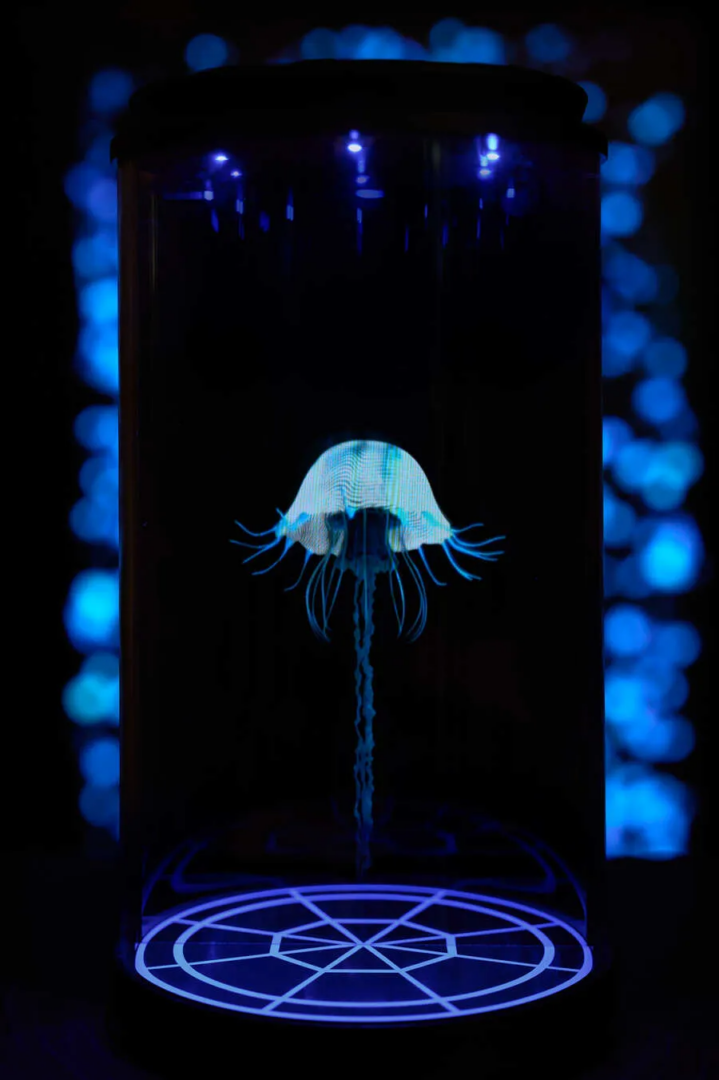
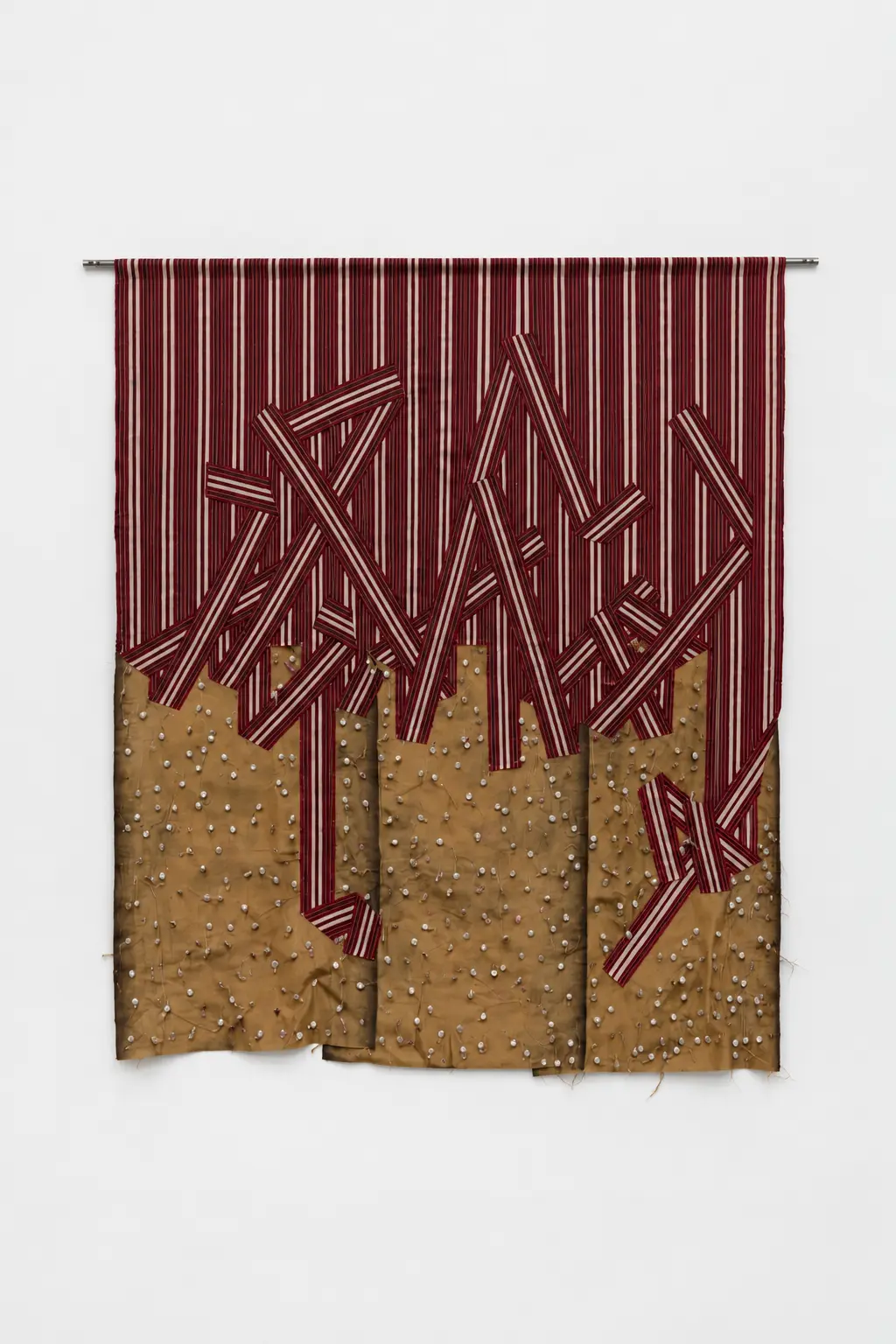
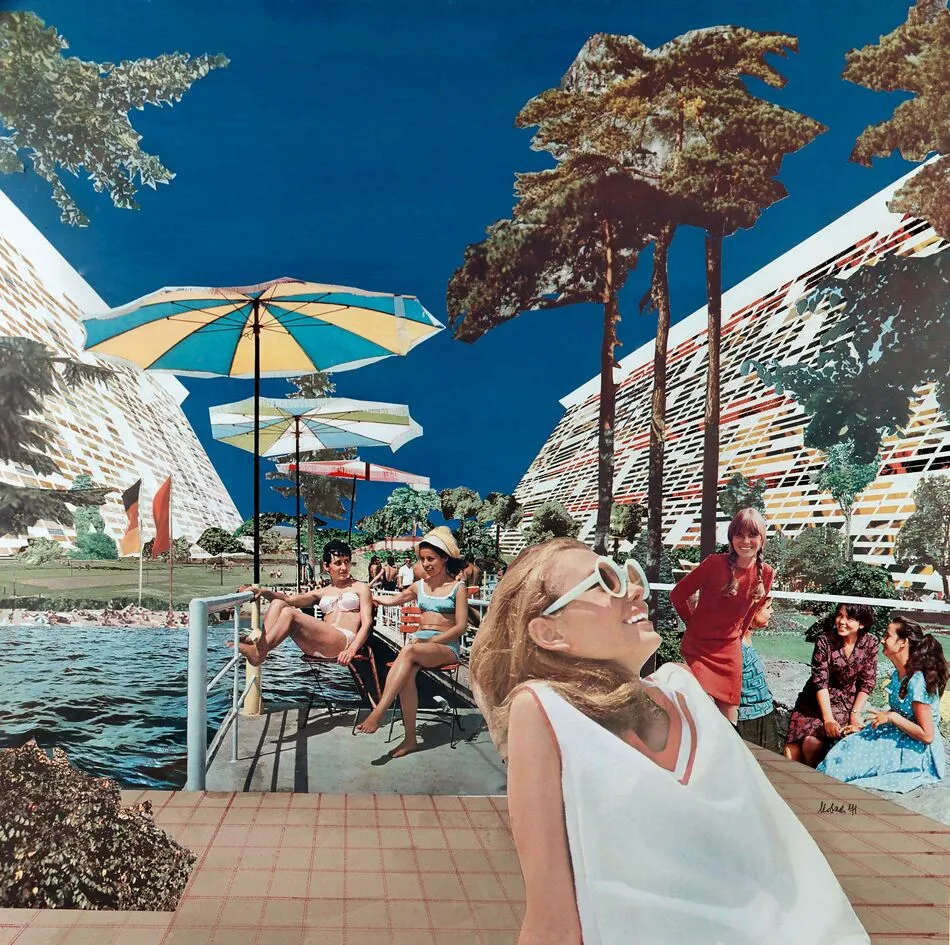
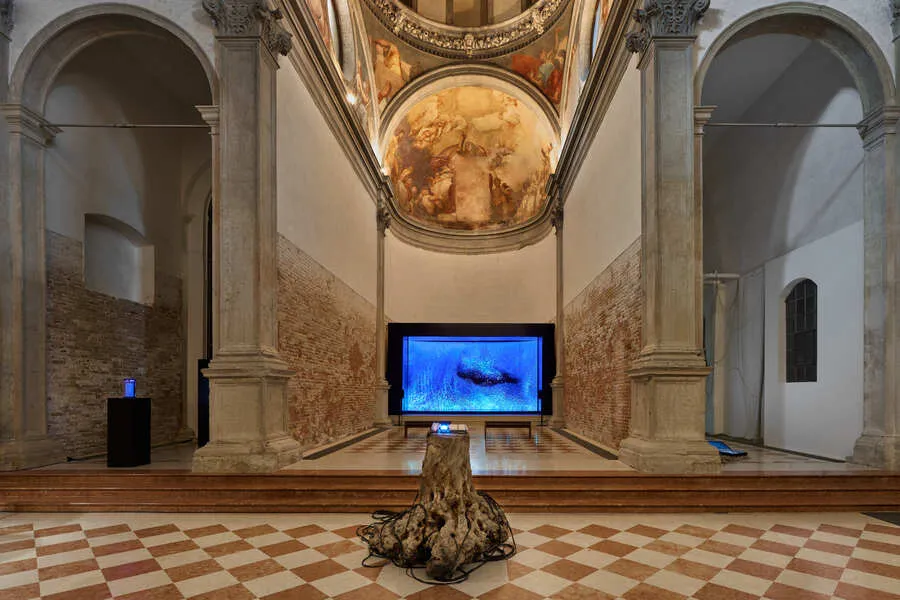
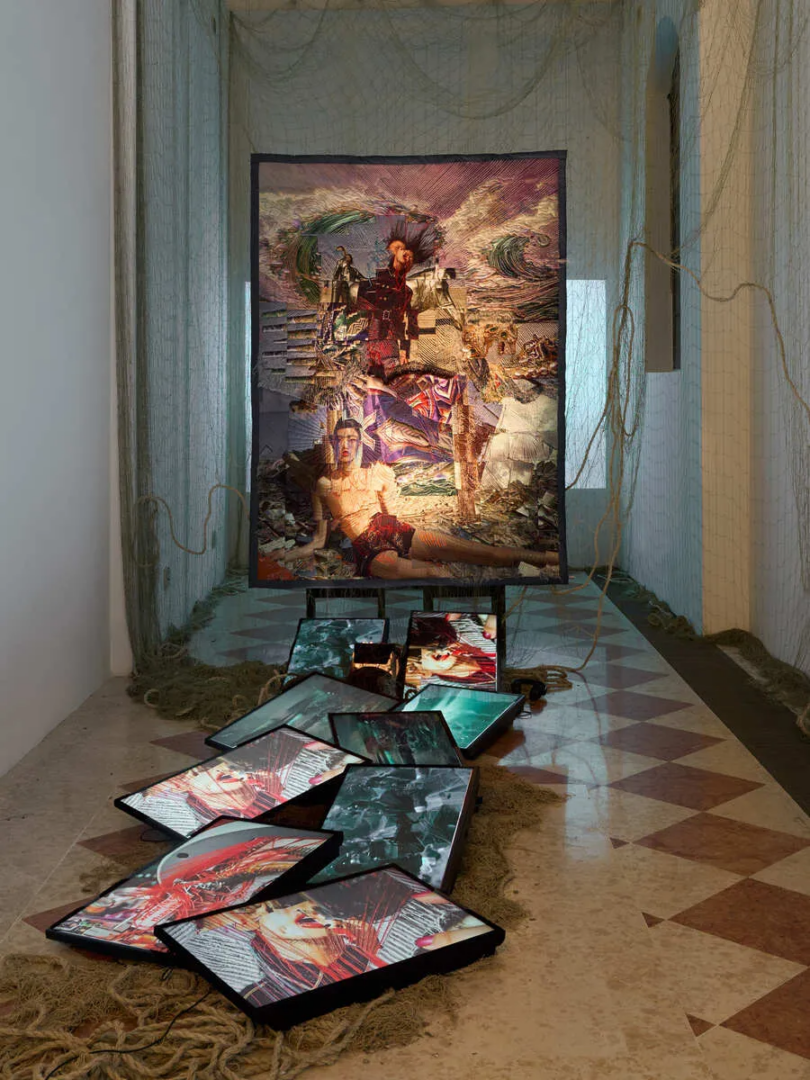
The logic repeated across the exhibition. Elnara Nasirli’s work depended on bioelectrical signals from a living olive tree. Almagul Menlibayeva and Suad Gara layered field footage, archival research, AI imagery and textile materials. Andrea Crespi’s Thetis suspended an ancient jellyfish through holographic systems — digital illusion resting on physical production. What connected the works was a shared condition: scientific collaboration, environmental fieldwork, and logistical networks embedded in the making itself.
Susanna Galstyan