Why everyone in the room wanted to be a Celine man
While fashion keeps speaking an hermetic language, Michael Rider prefers the grammar of heat: skin, sweat, crumpled linen, and men who look like they live enough to wrinkle their own clothes
Michael Rider at Celine: the concept of men in skinny
Michael Rider is not a wardrobe liquidator, the way Hedi Slimane was in 2018 or Phoebe Philo before him in 2008. Rather than clearing the house, Rider prefers to put the legacy in question. He may have disappointed those expecting Celine to immediately pivot into something new – but his reset has something familiar about it: lopsided, destabilizing in a fascinating way, without anxiety. He belongs to the count of designers apparently committed to keeping the concept of men in skinny trousers alive. It could read as an ironic commentary on Slimane’s notoriously lean silhouettes. On Rider’s models, they almost seem like a good idea.
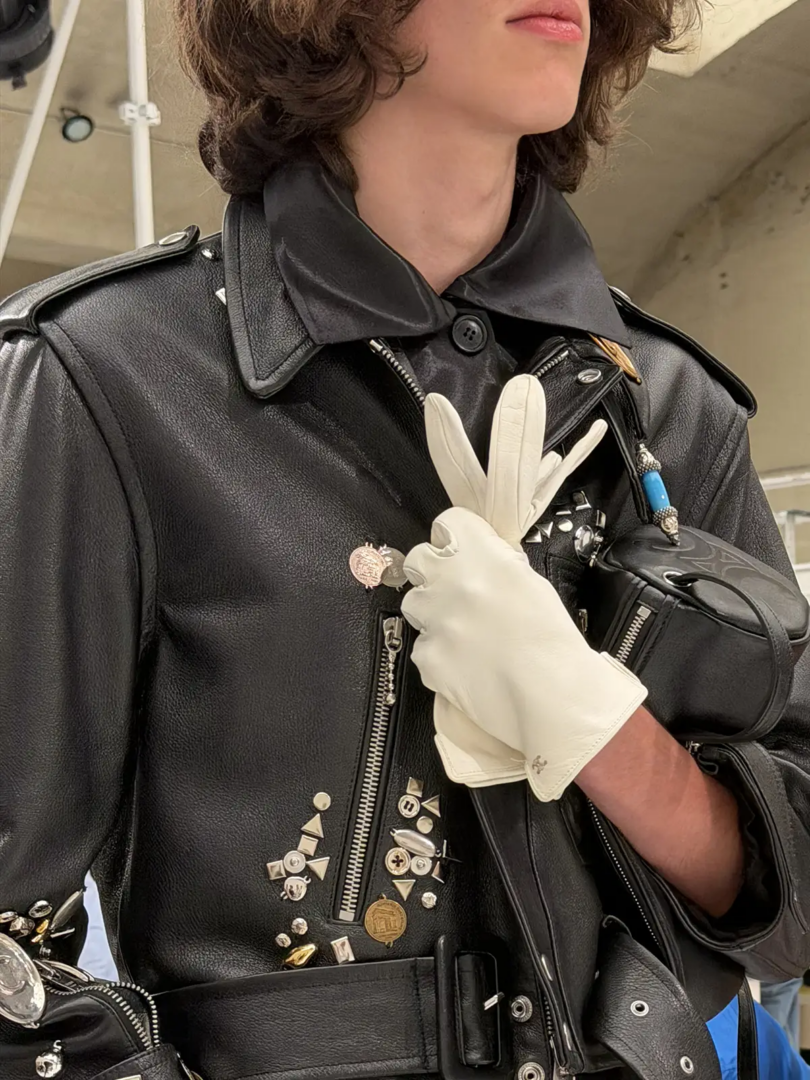
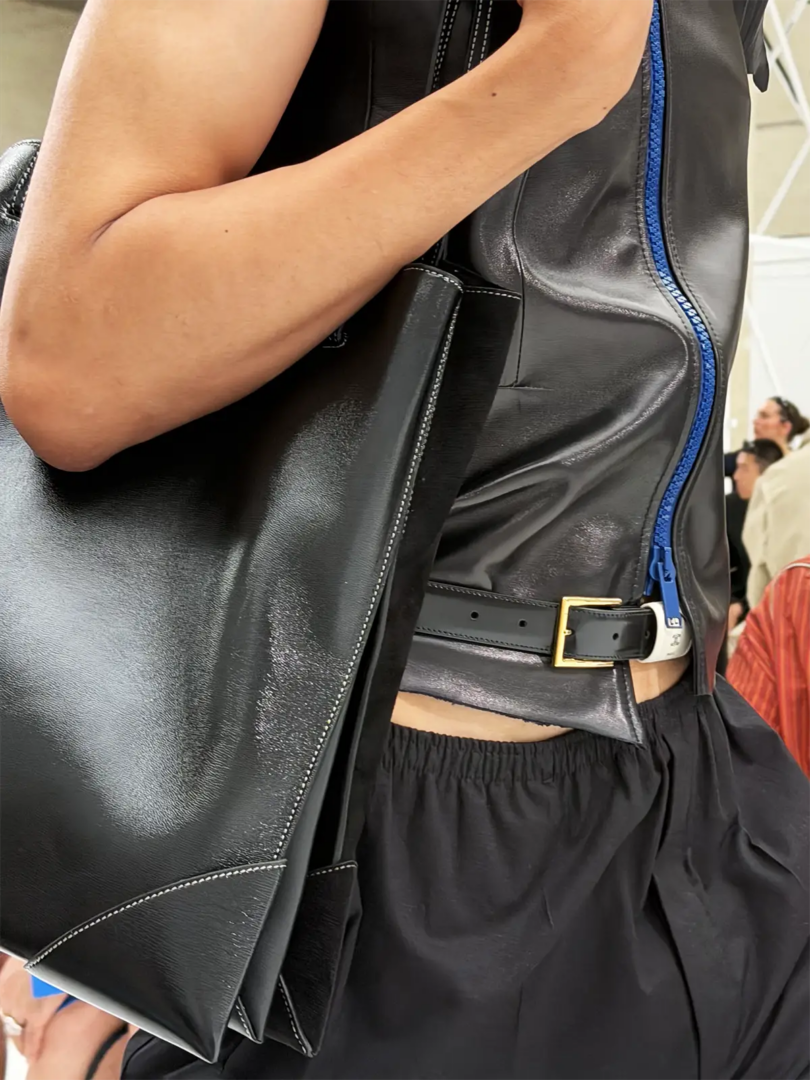
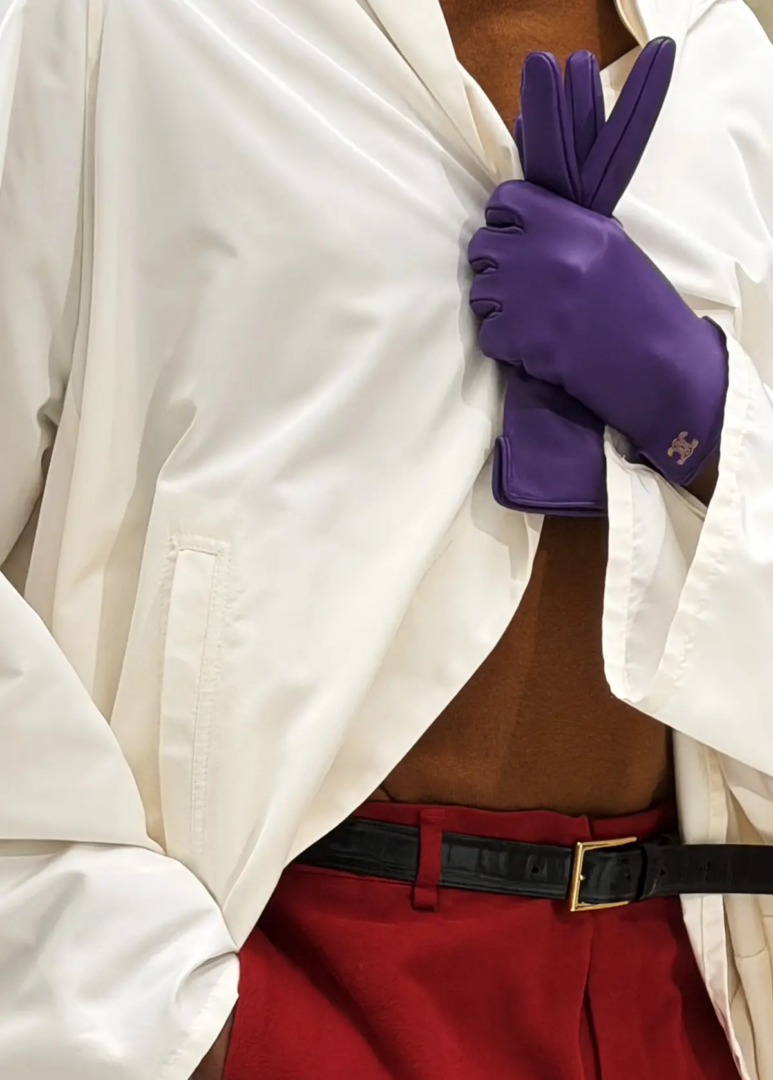
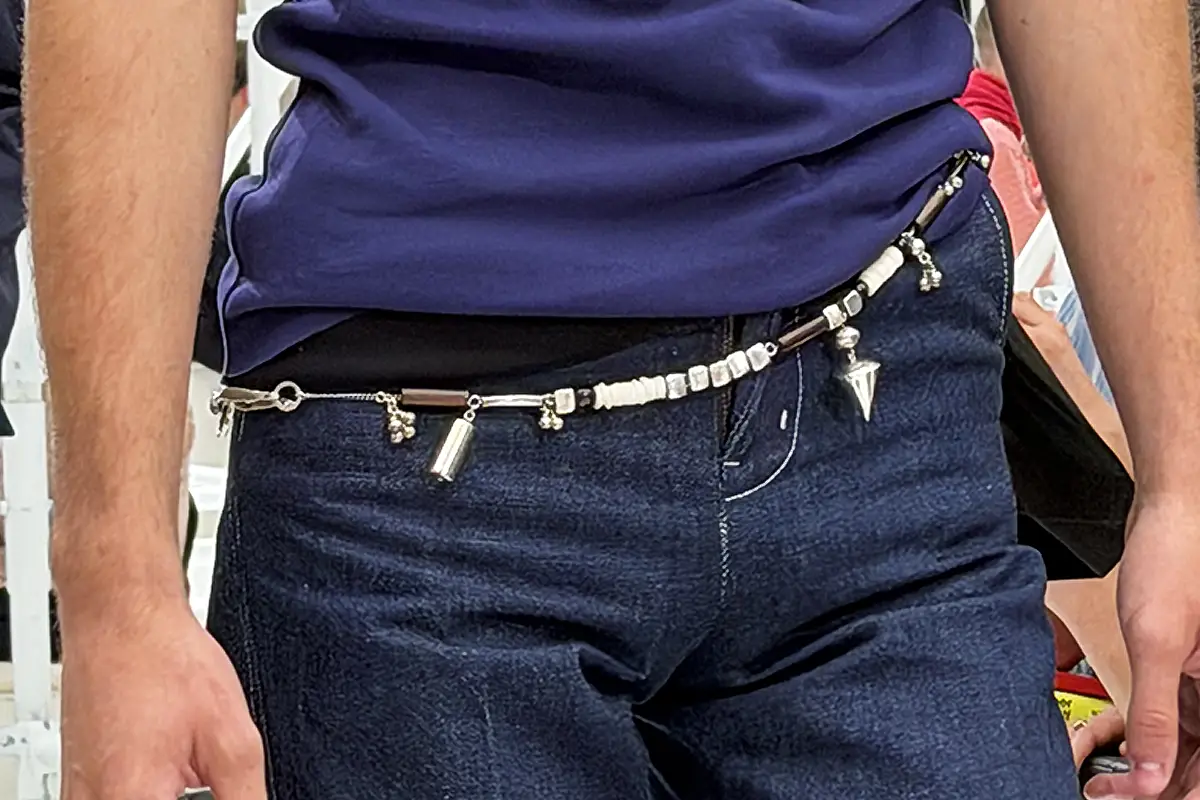
Rider is not a minimalist: strands of gold chains, bracelets, charms, belts, scarves, headbands, raw-edged ties, oversized blazers, waists shifted off-axis, cropped jackets, embellishments, hats and bags, tailored and structured cuts. Critical consensus holds that Rider is building something genuinely new, distinct from the mass of collections seen that same week in Paris. It is luminous and light, despite the accumulation of accessories across every look.
Before Celine, Michael Rider was a teacher and a pin distributor
Michael Rider has no formal fashion education. He learned mostly on the job: a stint at Balenciaga as senior designer under Nicolas Ghesquière, ten years at Celine (then still Céline) under Phoebe Philo, and six as creative director of Polo Ralph Lauren womenswear were enough to prepare him for what he does now. By the time he arrived, Rider was already considered an insider. Among the things credited to his first year at Celine: he brought the house back to the official Paris Fashion Week calendar, after Slimane — the man responsible for removing the accent — had decided the only schedule he could be bound to was his own. Humility is not a common quality in the industry. Rider has it, which makes him more human as well as talented. Chosen as Philo’s “pin distributor” at Celine — a role that had him moving like a shadow behind her, ready to hand over pins, scissors, or ribbon the moment she needed them — he learned to anticipate her every requirement. “Balenciaga, at that time, was like a hermetically sealed religion. There was silence, intensity, and people only spoke French. So I made myself learn everything.”
After his first stint at Celine under Philo, Rider stepped back from fashion. He returned to teaching — the work he had trained for and practiced before entering the industry. He enjoyed a stretch of life outside Paris, watching the fashion world from a distance, the way Dries Van Noten is said to do from his Ringenhof château while tending to his aromatic plants. Like most Americans, and by his own admission, Ralph Lauren is in his blood — which is why, when the call came to design the Polo women’s line, he couldn’t say no. There he learned not to over-intellectualize fashion: a habit that confuses people and keeps them at arm’s length. Perhaps that’s also why his collections work: he starts from real needs and produces clothes that don’t require abstract explanation to be interesting. He mixes price points, eras, and styles. His first collection included womenswear, menswear, and haute couture. Many try to pin him down: in the US he reads as French, in Europe he’s an American; there he’s bourgeois, here he’s preppy; for some he’s bold and sharp, for others easy and comfortable. But Rider says little about himself — he leaves others free to see what they prefer. “What scares me most is the lack of possibility. I like things open.”
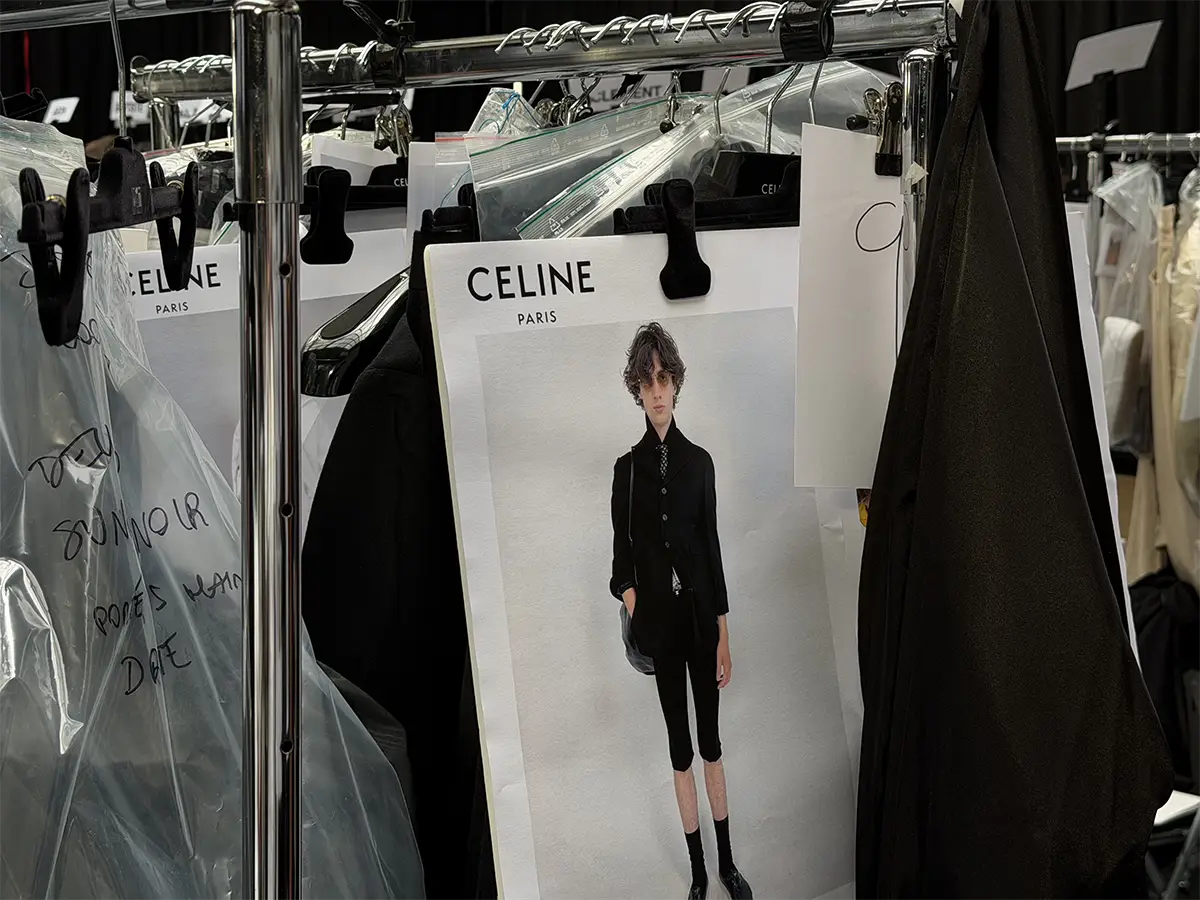
Celine menswear Spring Summer 2027: Heat. Rider is barely interested in fashion, but deeply in love with clothes
At the close of Rider’s first outing as Celine’s director, critic Cathy Horyn asked: “Do we really need more elegant French clothes with a ‘special’ touch? And do we really want to keep hearing that language?” She meant Slimane’s bourgeois French. After years of house codes in which every major-label collection looks like a hammer on the same nail — same lines, same palette, same prints — things are different with Rider. They were different for his second outing, the menswear show Spring Summer 2027. One of his qualities is variety. Sunday’s show was another well-executed salade mixte drawing on all of his past: from the wide volumes with abstract fastenings that defined the “old Celine” to the skinny tailoring and blouson jackets of Slimane, through striped waistcoats, patterned ties, and preppy knitwear that recalled Michael Kors’s Celine.
Driven by a strong personal pragmatism, Rider refuses to deliver long descriptive notes dense with artistic and cultural cross-references. Nothing wrong with that. He simply isn’t that way. For the latest show, titled with a coherence very much in keeping with the bleak current climate — Heat — he wrote an anti-hermetic list. A Rider style shopping list: “hard and delicate, soft and strong, travel light, know how to make do with a few very good things, personalize.” That last verb was in bold. An invitation to openness, which continued as an exhortation to listen to music, to dance instinctively, to be genuinely oneself. And finally: “Build something bigger. Something meant to last, with legs to walk and deep roots.” Perhaps a reminder to himself — which is exactly what Rider is doing at Celine. Convinced that beyond Paris and fashion week there is much else, Rider seems barely interested in fashion, but deeply in love with clothes.
Celine menswear Spring Summer 2027: the oxymoron of a disorderly, complex life under beautiful clothes, rather than the congruence of beautiful lives and beautiful clothes
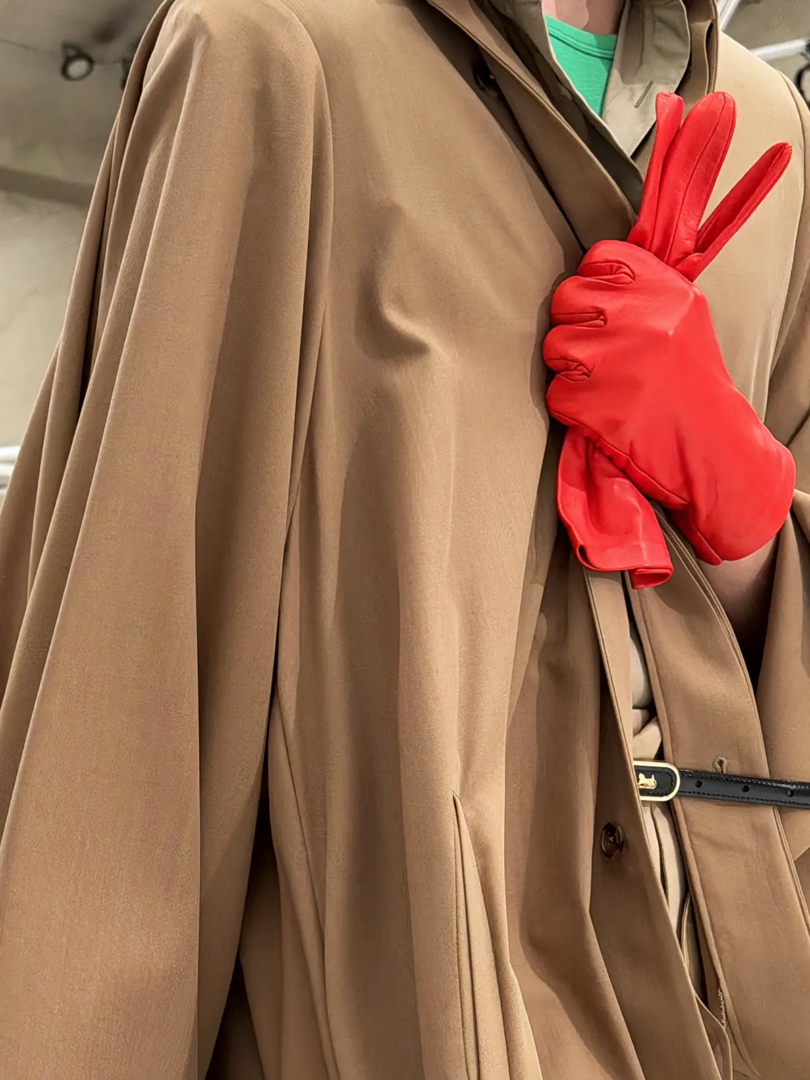
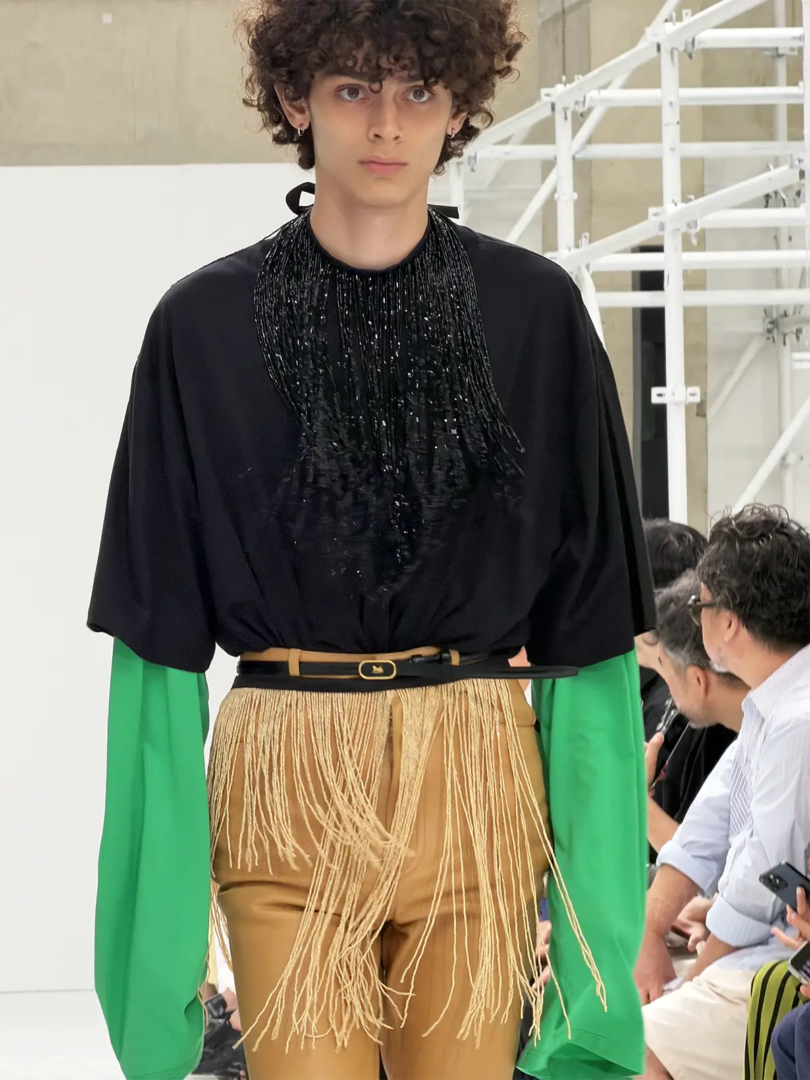
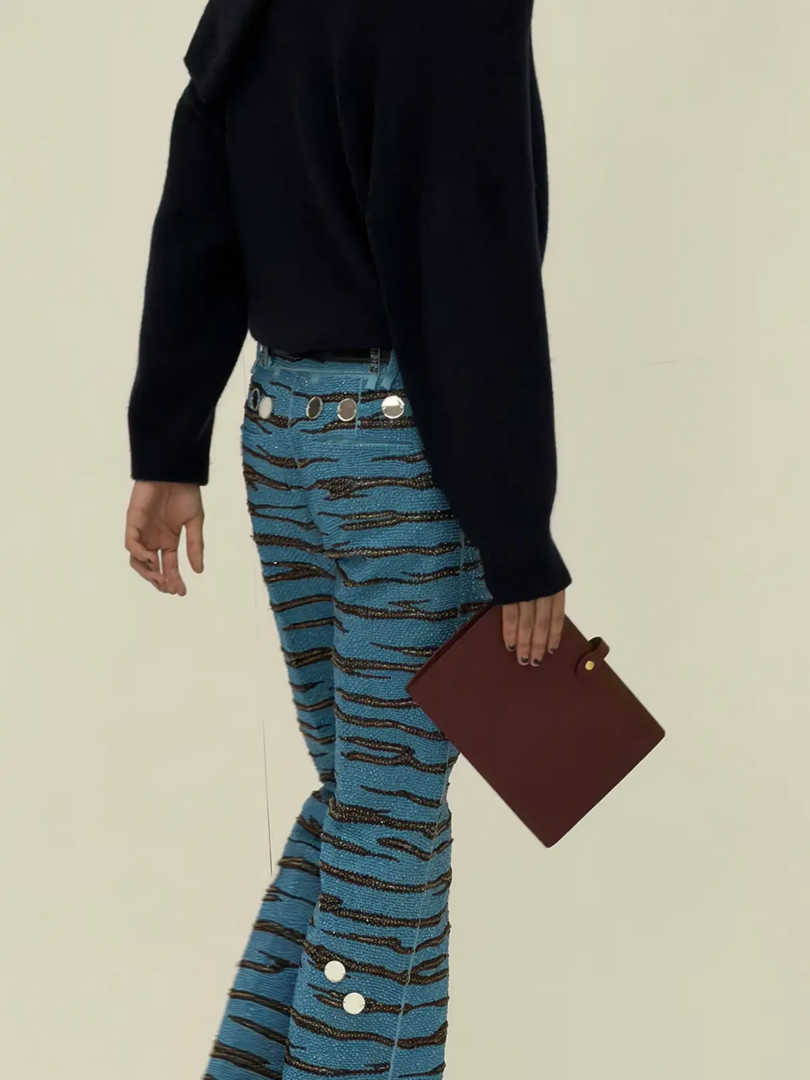
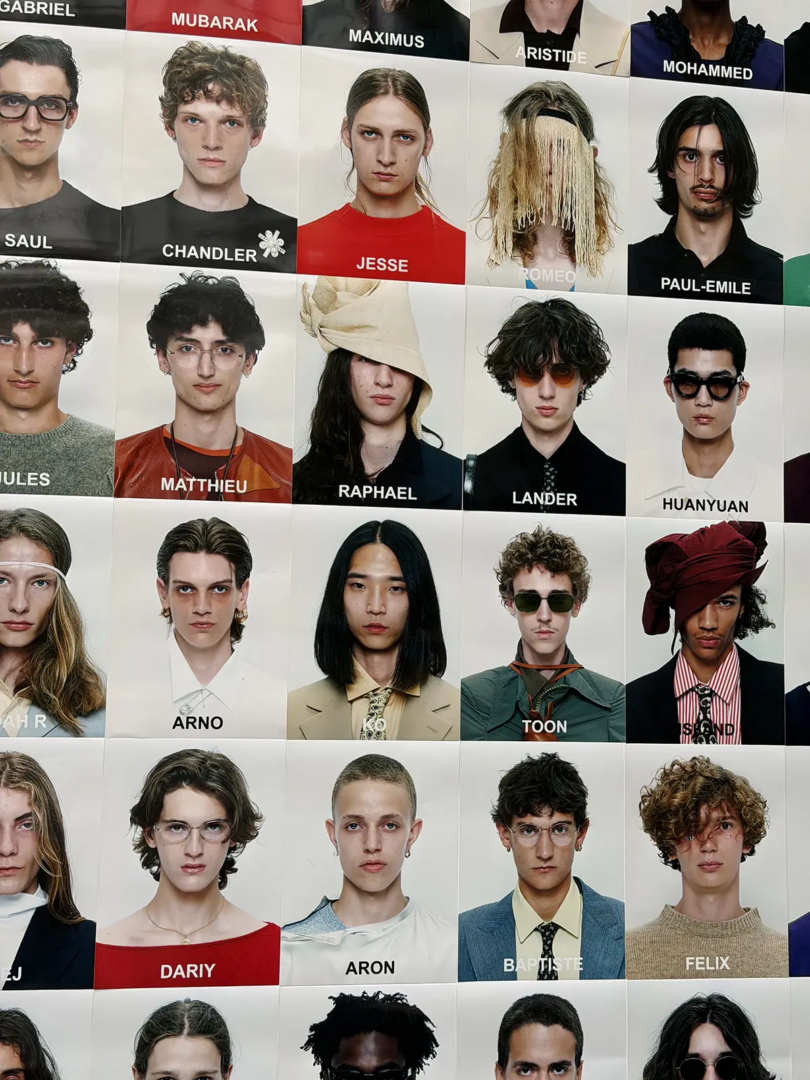
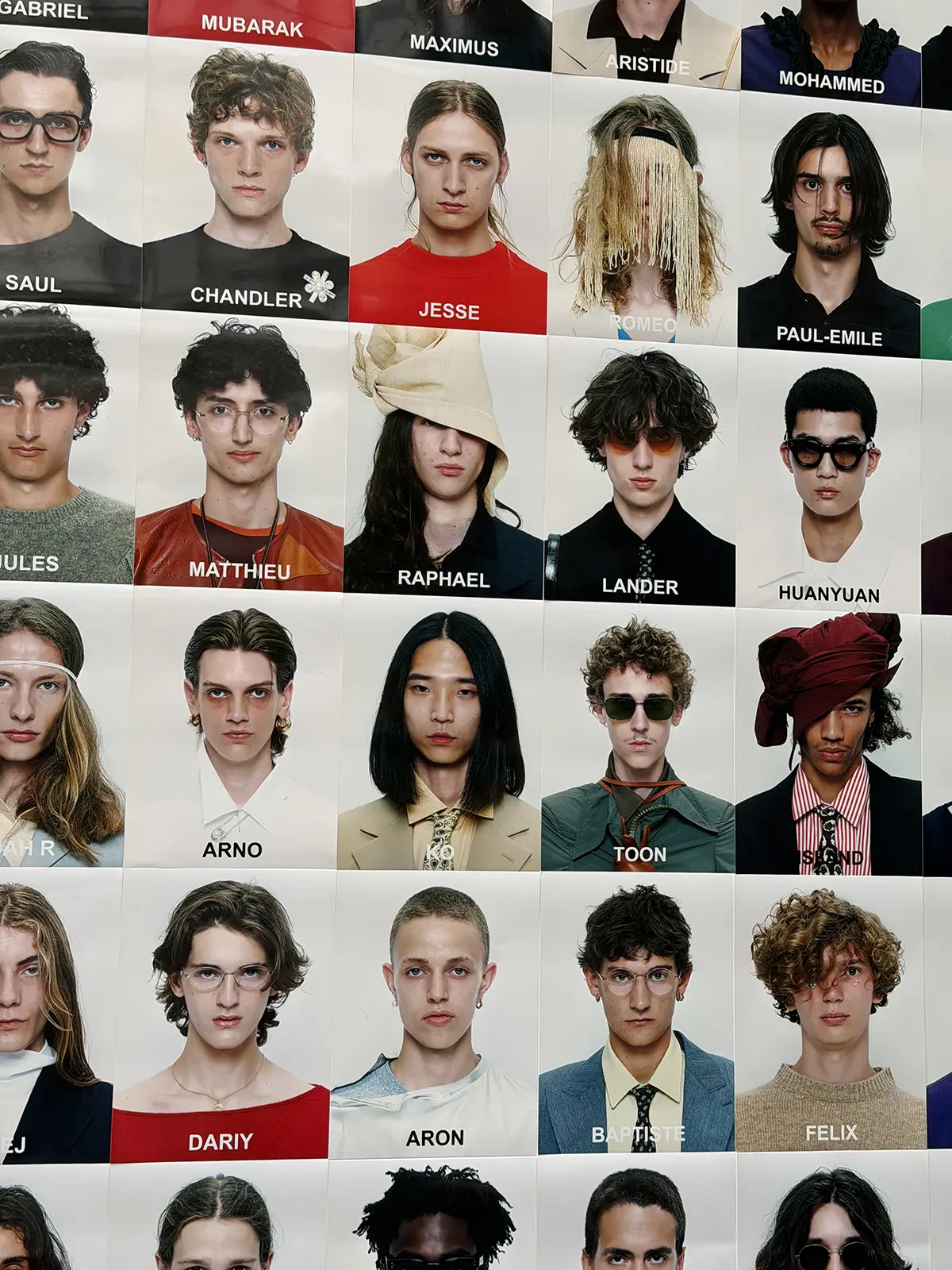
Michael Rider is a designer who thinks in individual pieces. He imagines them walking straight off the runway and onto the streets of Paris. He often adds touches of eccentricity: for Heat, a puffed cloak over a navy shirt and lacquered leather cigarette trousers. Or a thin floral belt over a performative menswear look — white tank top, agenda in hand. Or a hawk-brim hat over a black suit that nobody has pressed. On a bourgeois exoskeleton, he maps the infinite possibilities of personalization — that bolded verb he was careful to underline in the show notes. Rider admits he prefers the oxymoron of a disorderly, complex life under beautiful clothes, rather than the congruence of beautiful lives and beautiful clothes. That doesn’t mean he can’t produce simplicity when he wants: a black sartorial coat with a red ribbon at the waist and dark straight-leg trousers registers for its near-austere rigor. A lover of range, Rider moves between abundance and reduction, between tailored silhouettes and the loosened look of prep-school students on vacation without an iron in sight.
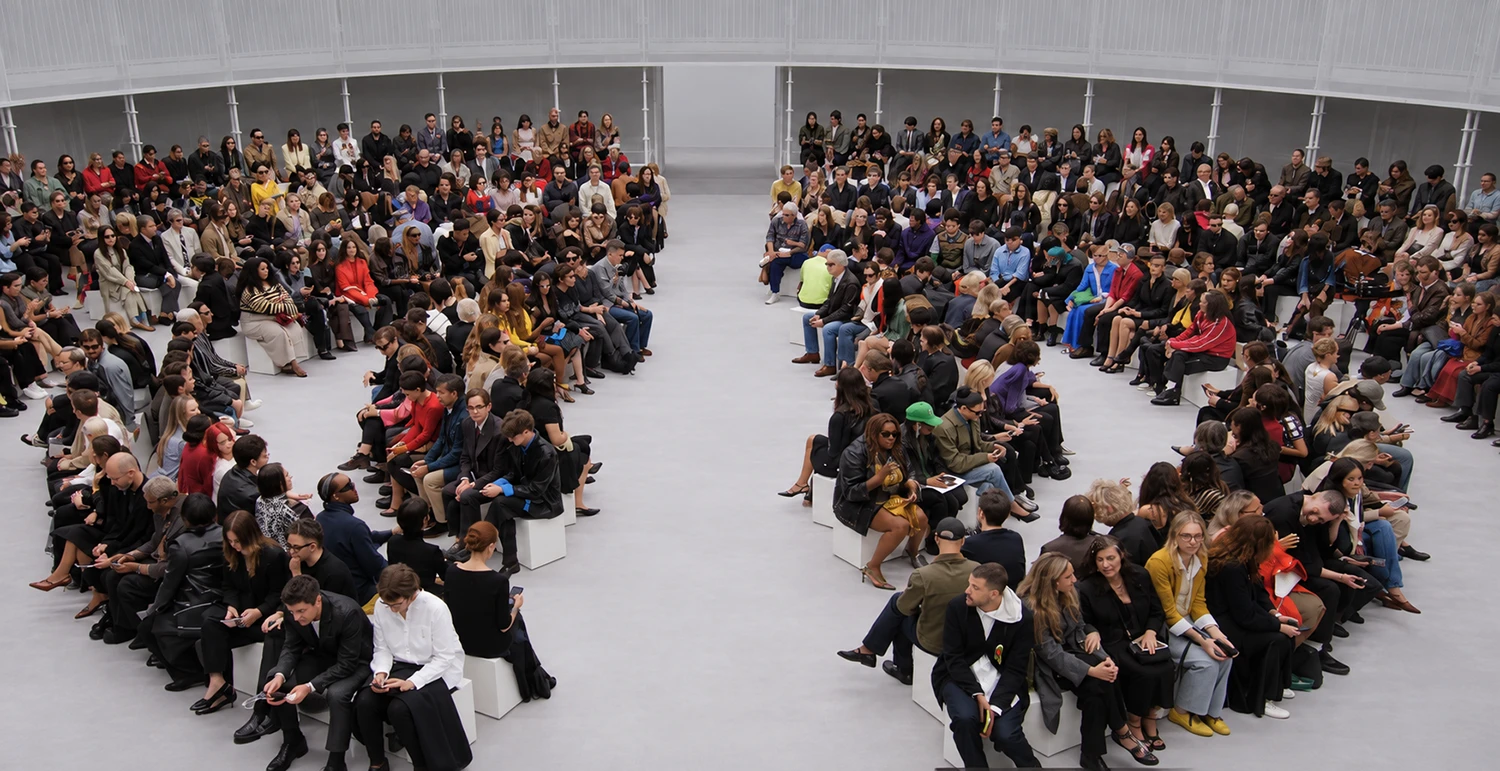
That predilection for chaos and fragmentation carried into the set: inside a white room, cream cushions alternated with printed ones. For anyone wondering why so many looks felt so far apart — some ready for a job interview, others for a weekend in Ibiza — Rider said he had created the characters we would want to be. Convinced that multiple identities can live within one person, just as in one brand, he tries everything, experiments on bodies, develops a collective process of desire. By the end of the show, everyone in the room would have wanted to be a Celine man.