D-Resort Göcek and the making of Turkey’s quietest yachting town
Low-rise buildings, open wood grids and reflecting pools frame D-Resort Göcek, set between the village, six marinas and the Twelve Islands, along a protected stretch of the Gulf of Fethiye
The town takes ten minutes to cross on foot. Low houses, a line of restaurants, a waterfront promenade, nothing built above two storeys, mountains directly behind. Göcek is a neighbourhood of the Fethiye district, in Muğla province.
Some guests land at Dalaman, twenty minutes away by road. Others arrive under their own keel, off the blue voyage routes that run along this coast. The town has built for both, and the standard of what it offers has risen with the traffic. It has done that while staying clear of Bodrum: everything here is small, and close to domestic in scale. Everything except its maritime vocation. Göcek holds more than 800 berths across six marinas and receives yachts of up to 85 metres. Its yards keep 36,000 square metres of hard standing, with travel lifts rated to 200 tonnes. Its population in 2025 was 5,149.
This is the setting D-Resort Göcek was built into, and it has grown inside it. The hotel opened under the name in 2013 with 57 rooms. It now has 102 rooms and suites. They stand alongside the village, among planting, in buildings scaled like houses, with a channel of water running through the site. The resort works as a village inside the village.
A gulf that does the work of a harbour: twelve islands and 80,537 protected hectares
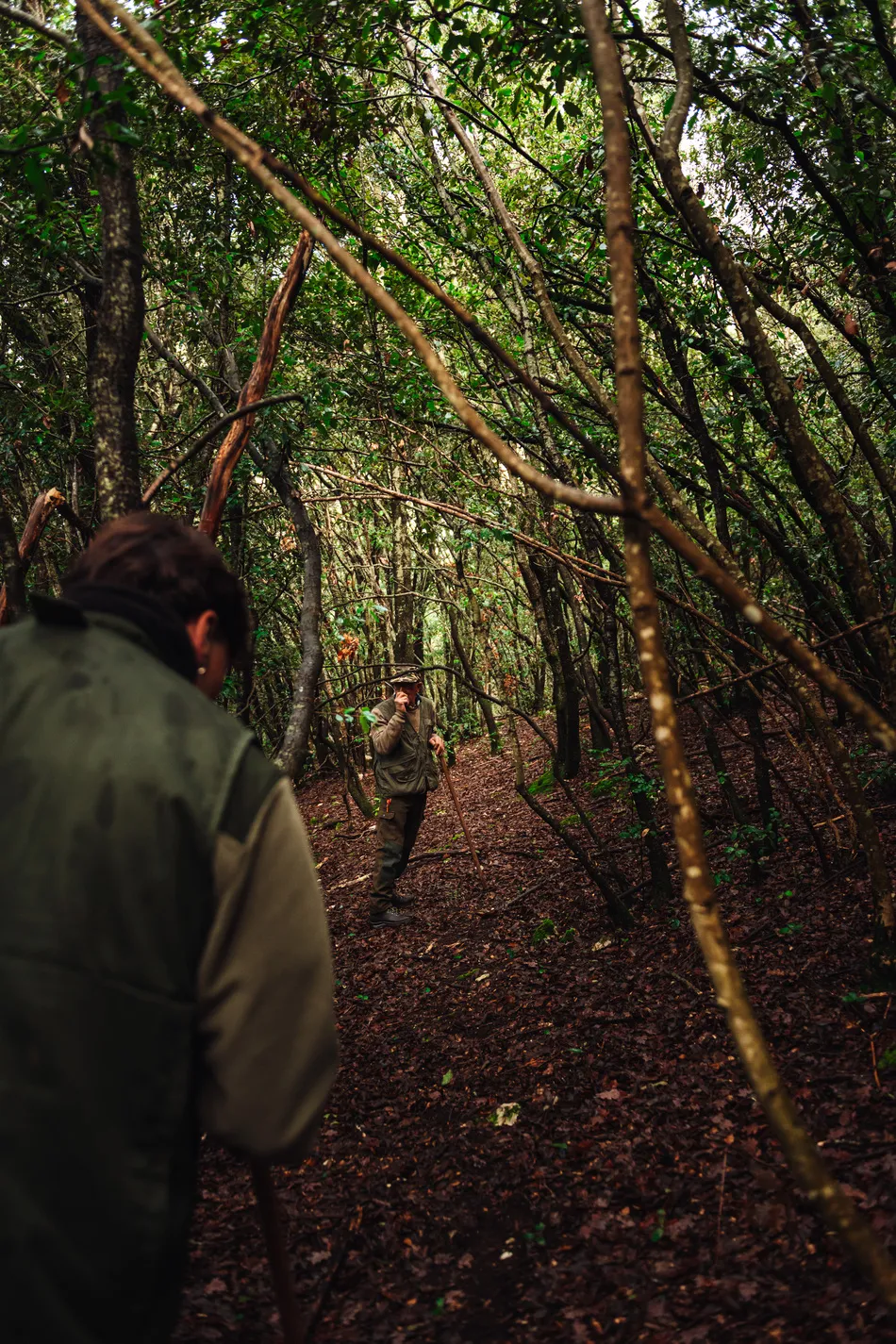
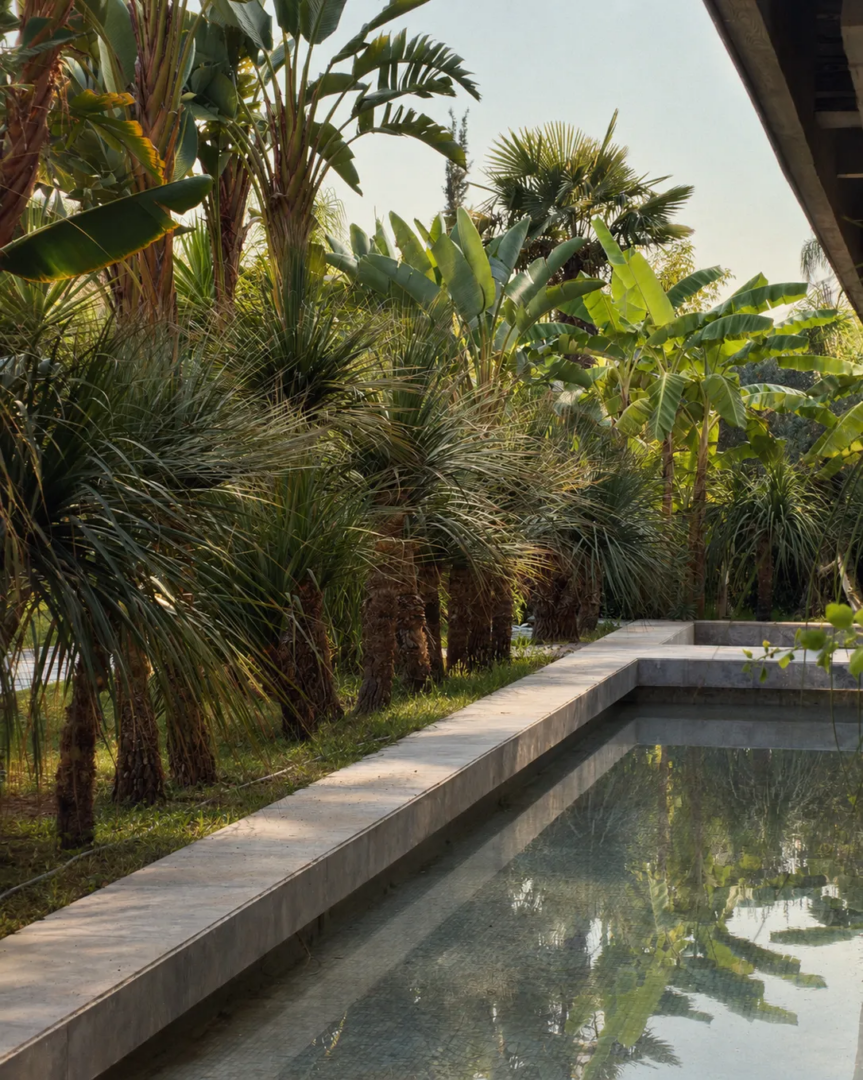
Göcek occupies the north-western corner of the Gulf of Fethiye, on the stretch of coast marketed as the Turquoise Coast and known in antiquity as the border between Caria and Lycia. The gulf is closed off by a chain of islands — the Oniki Adalar, or Twelve Islands, among them Tersane, Domuz, Yassıca and Göcek Island — which function as a natural breakwater. The result is a body of water sheltered on every side. Behind the town, pine-covered slopes come down to the waterline. The forest includes stands of Liquidambar orientalis, the oriental sweetgum, an endemic of south-western Anatolia whose resin was traded in antiquity and which gives Günlüklü Bay its name.
Distances inside the gulf are short, and the bays succeed one another within a few nautical miles: Bedri Rahmi, Cleopatra’s Bath with its Byzantine masonry, Boynuzbükü, Göbün, Sarsala, Tersane. The Turkish environment ministry lists Göcek among the main centres of yacht tourism on this coast. The landscape has been under statutory protection since 1988, when the Fethiye-Göcek Special Environmental Protection Area was established. The ministry gives it 80,537 hectares, taking in coastline, islands, forest and the habitats of Caretta caretta, the green turtle Chelonia mydas and the Göcek salamander Lyciasalamandra fazilae, which is found nowhere else. The designation carries a building height limit of two storeys.
On 9 September 2026 the environment ministry announced a wider programme for Fethiye Bay, ahead of COP31 in Antalya: 926 mooring points, sludge removal across 600 hectares over three years, and a booking platform, DERIA, to allocate them.
Hasan Mingü: a square built around a tree, and a coffered roof left open to the sky
D-Resort Göcek occupies the shore between the village and the marina. Doğuş Group bought the property from Turkon Holding in 2011, took over the management the following year, and reopened it in May 2013 under the present name, with 57 rooms, two restaurants and a bar. It now has 102 rooms and suites in fourteen categories. Hasan Mingü designed the hotel with his practice Midek in 2011. A designer of boats as well, he introduced thick glass, halogen lighting and exposed steel to Turkish interiors; Göcek is among the last hotels he built.
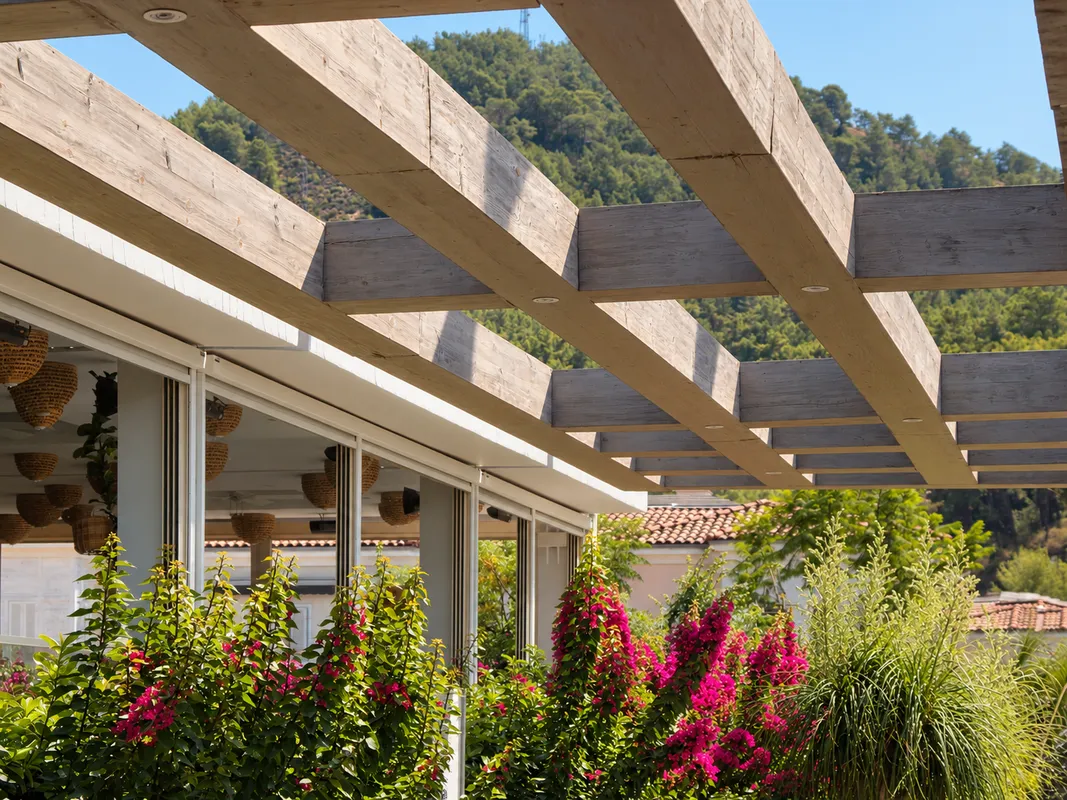
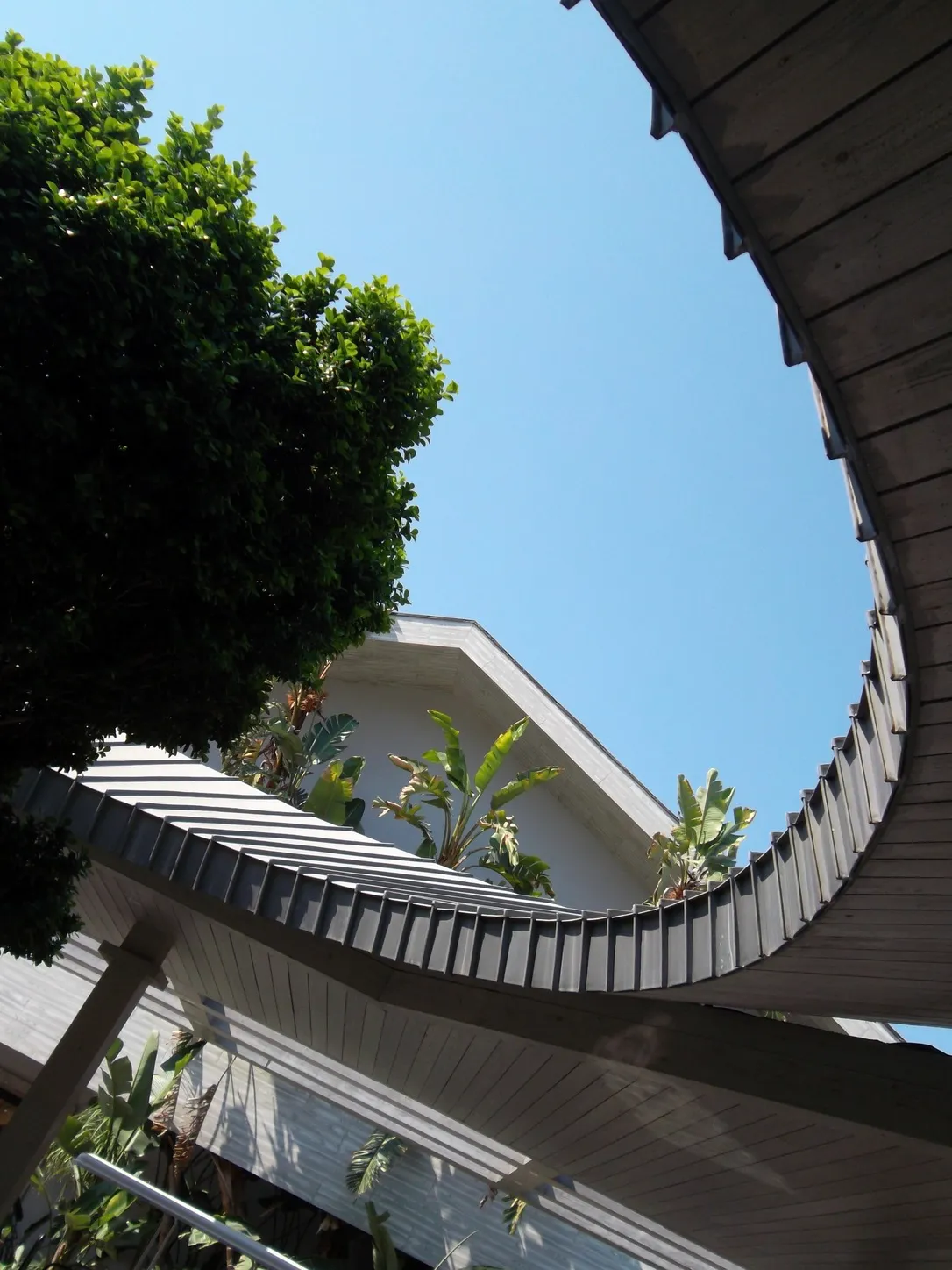
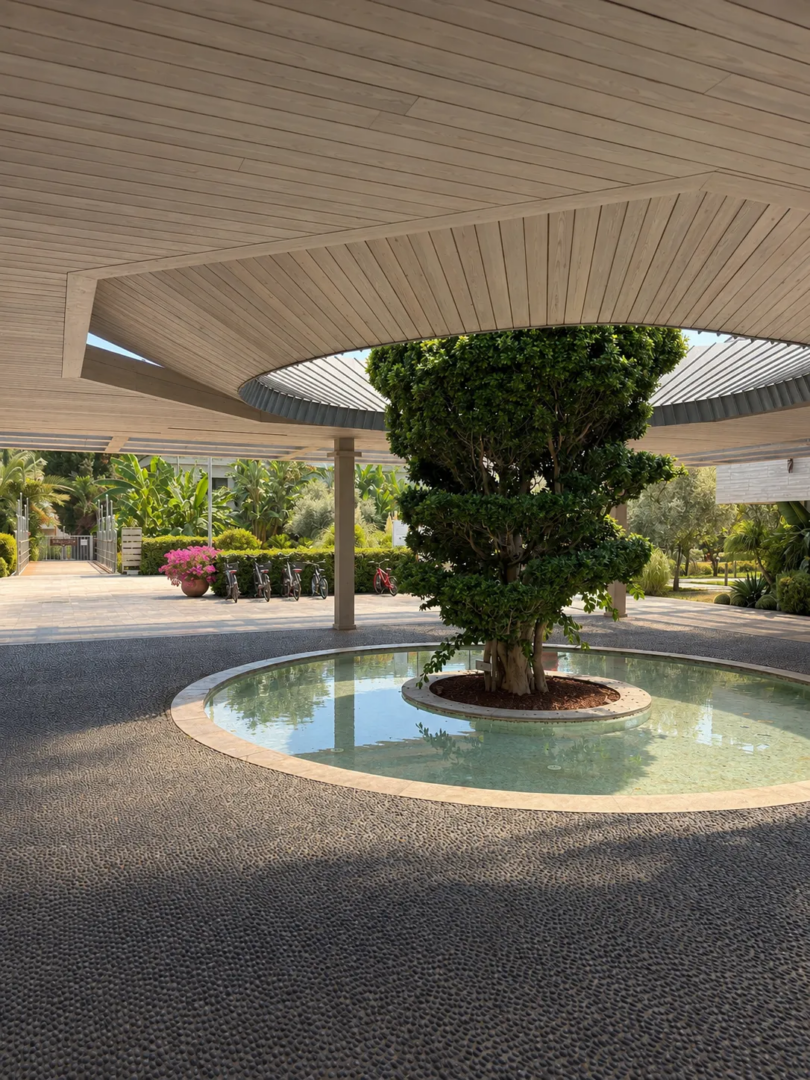
The hotel turns on a square, and the square belongs to a tree: a wood structure is set around the trunk, which rises through a circular opening cut in the roof and carries on into the open. The roof is a coffered grid, left unglazed, so what fills each bay overhead is sky, or mountain. Nothing is clad or softened. It is brutalism turned toward the landscape.
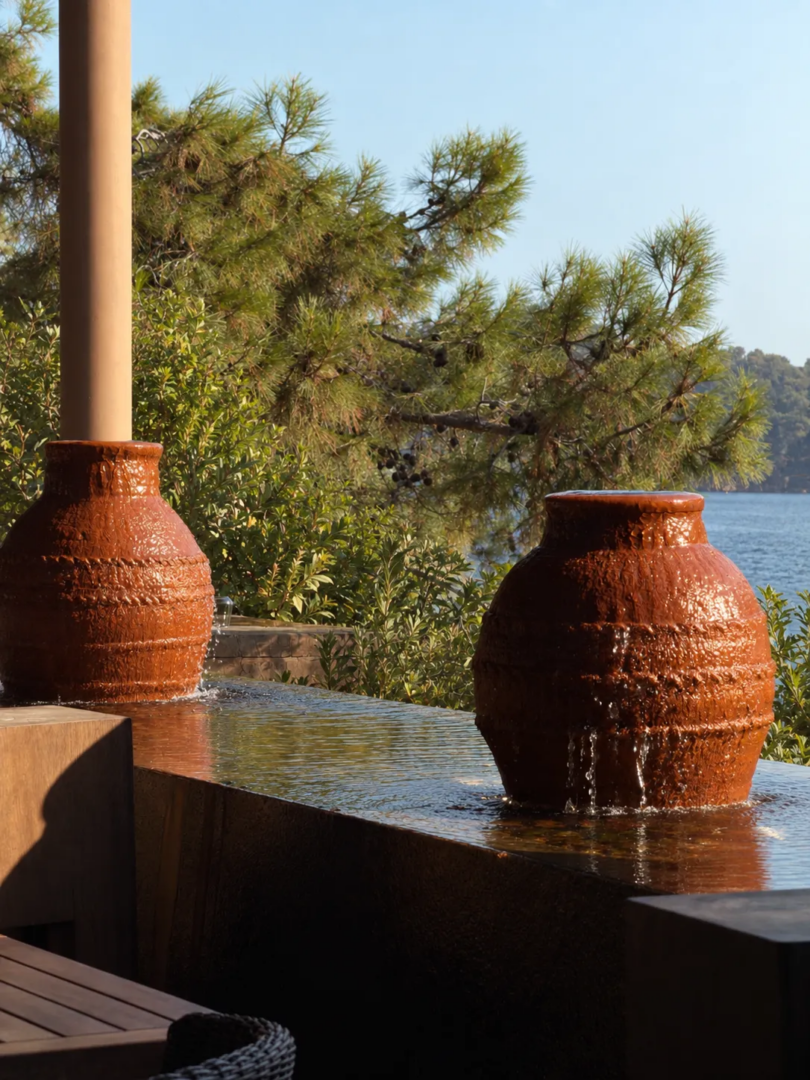
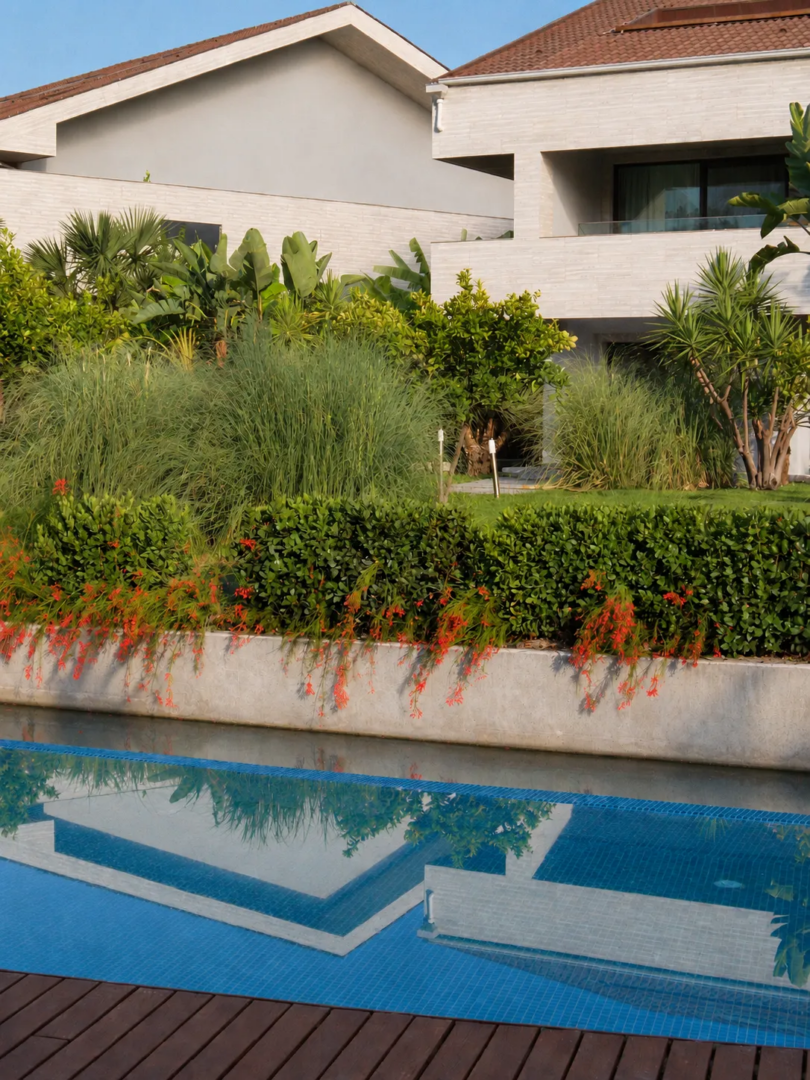
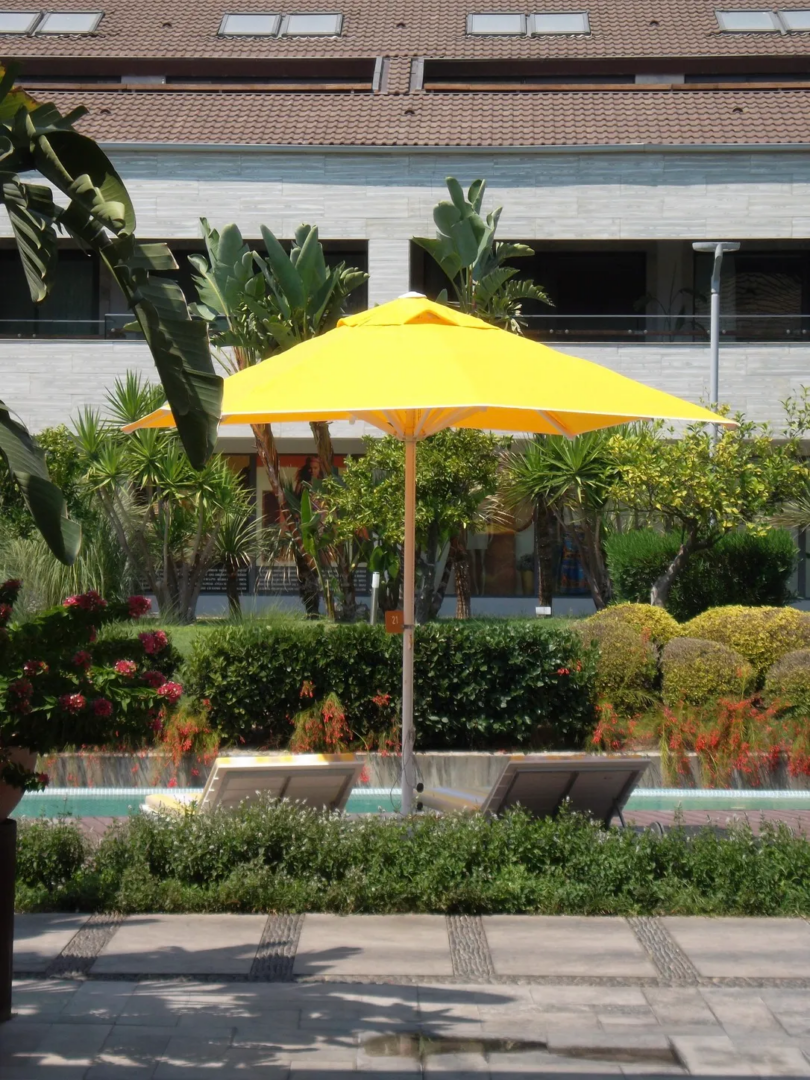
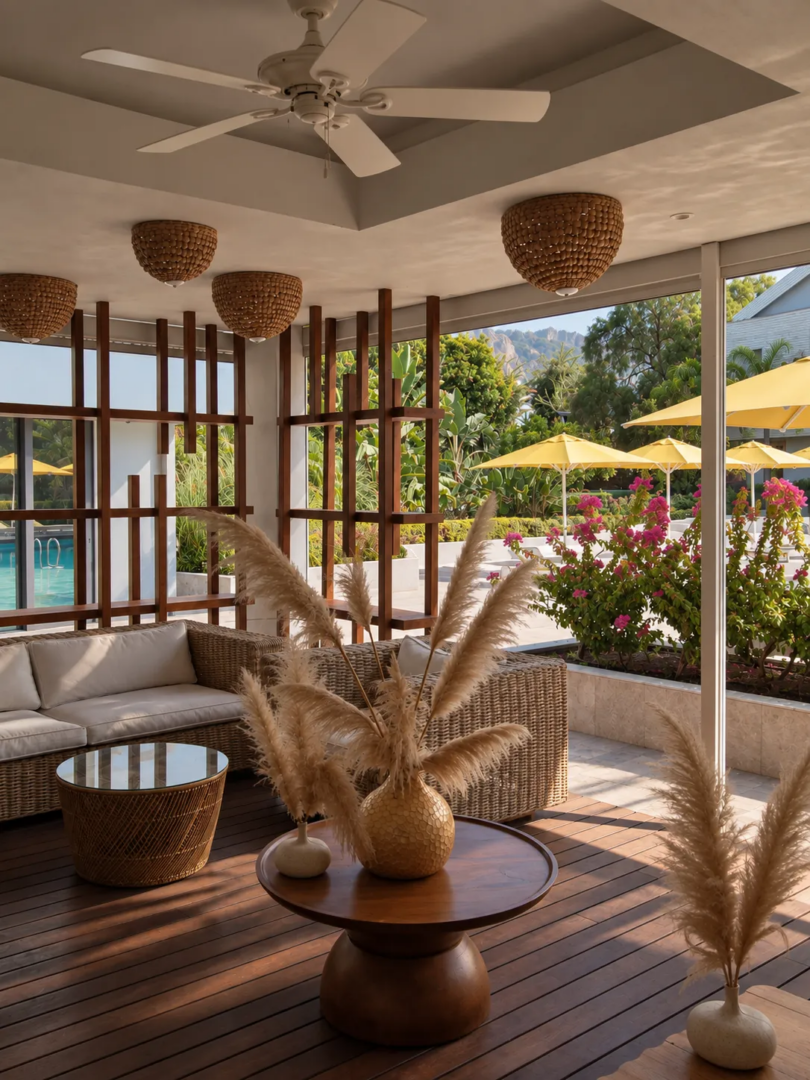
There is no hotel block. The buildings stay low and white, broken by timber, stone, glass, water and planting. They are scaled like houses, set among the vegetation. Water runs through the plan: sheets of it alternate with green corridors, and the parasols above them are yellow.
Olives, the pool bar, D-Gym and D-Spa: what runs inside the main village
The main body of D-Resort holds Olives. It carries the daily running of the hotel: breakfast is a buffet, Turkish cooking with Aegean references, and from midday the service turns à la carte. The mood is that of a small Mediterranean trattoria, airy and full of light. So is the pool bar, where a wall of mirrors and gold takes the light off the water and throws it back across the counter.
The main village also holds D-Gym, which covers 1,500 square metres, with fitness equipment, Pilates, functional training, individual programmes and outdoor personal training, and sells memberships by the month: one, three or six. D-Spa runs treatment rooms, an abachi-lined sauna, Turkish bath and hammam, steam room, ice station and private suites, with protocols drawing on Aegean medicinal herbs alongside Asian and Western practice.
The beach, the buggy and the Sundowner: what only opens up from the water
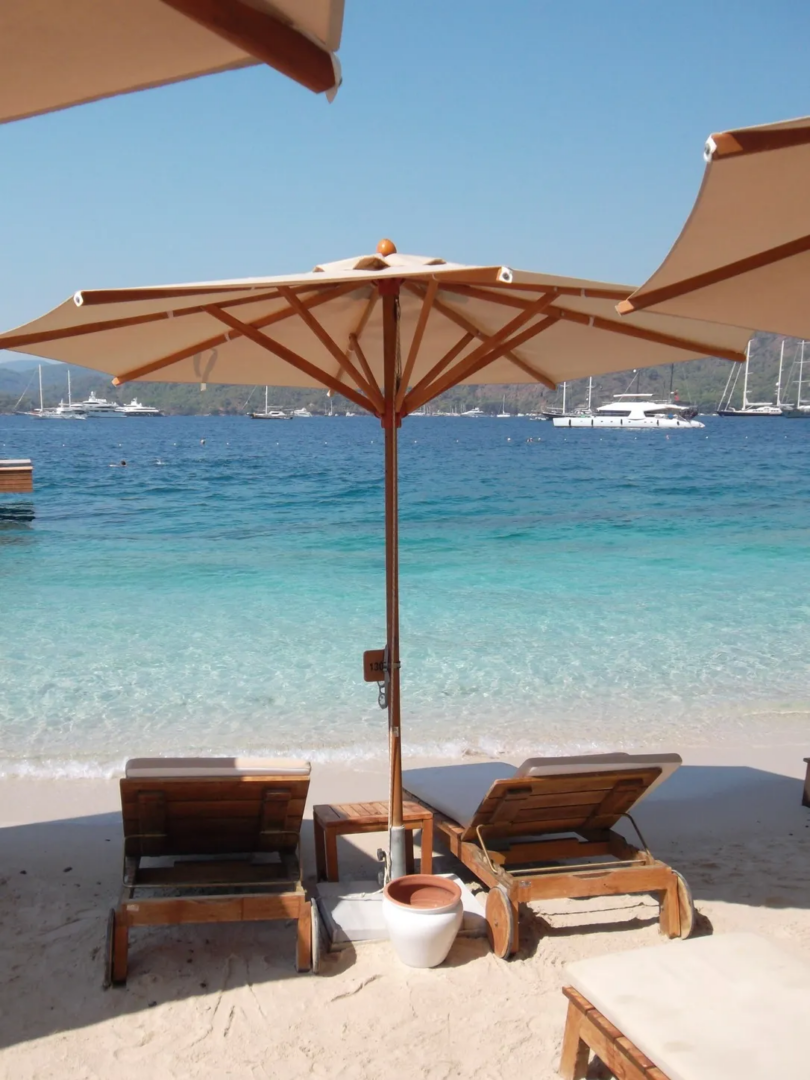
A buggy service runs to the beach, continuously through the day. The beach is further along the bay, screened by vegetation and backed by high ground. Pale sand, two jetties, loungers, two or three rows of parasols depending on how wide the sand runs. It opens from May to November.
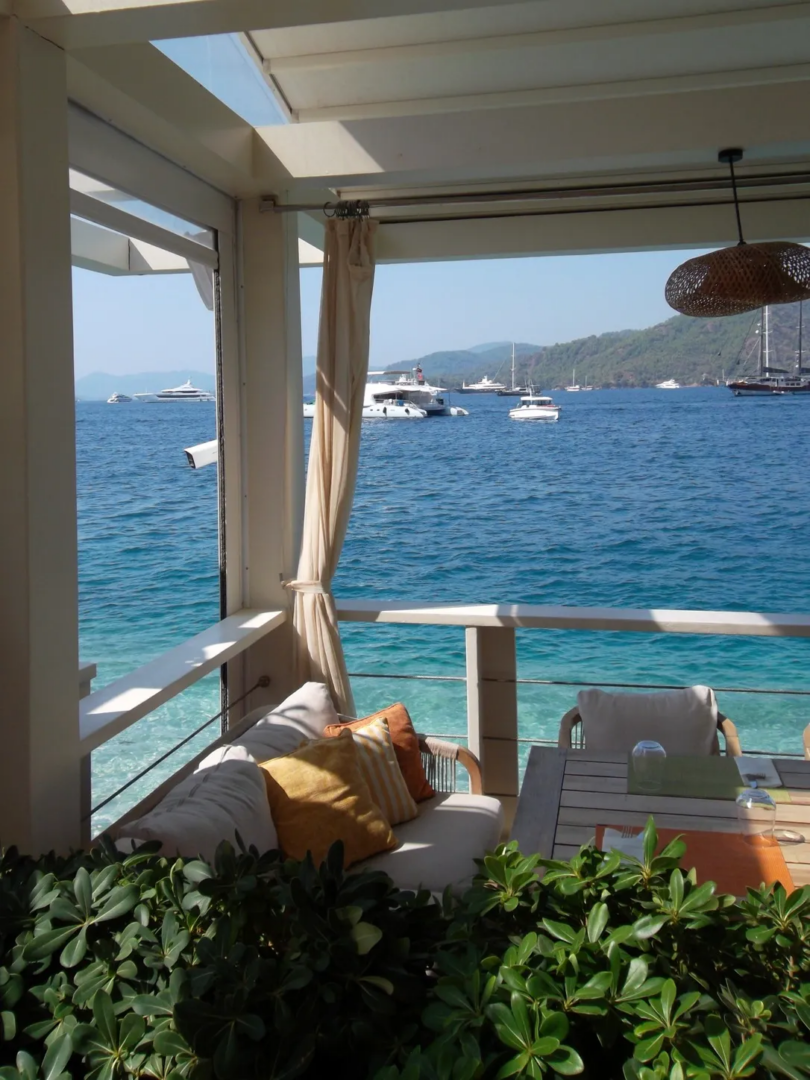
The water is pale blue at the shore and turns darker further out. The view closes on islands and hills, with no open sea in front of it, and in the evening the sun goes down behind the gulf. The hotel keeps a boat. Sundowner, built to order, runs out to the bays and islands. There are cycling routes too. What lies beyond the near islands only opens up from the water.
D’Breeze on the deck, Q Lounge among the pines: a sushi counter and a robata grill
This part of the property holds the other two restaurants. D’Breeze is down at the beach, and works the water directly. The kitchen draws on Aegean recipes, seafood and wood-fired cooking, and serves à la carte breakfast, lunch and dinner. It is a deck standing out over the water, and it changes register through the day: convivial at lunch, quieter and darker after sunset.
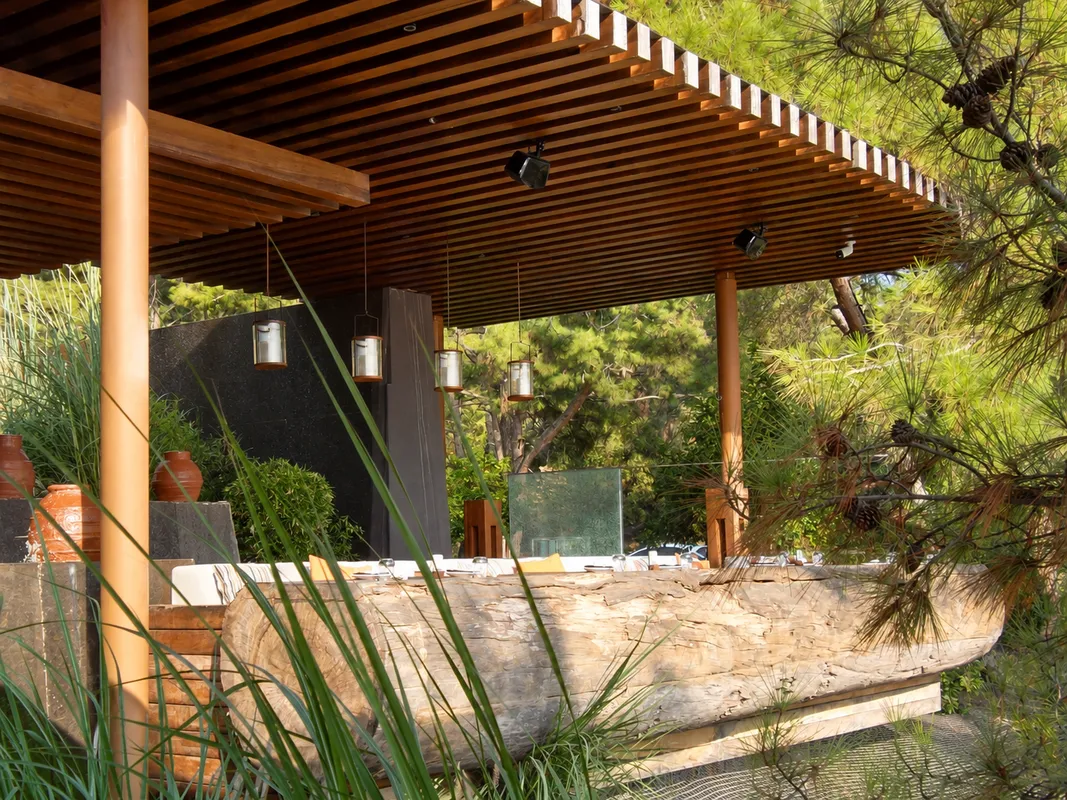
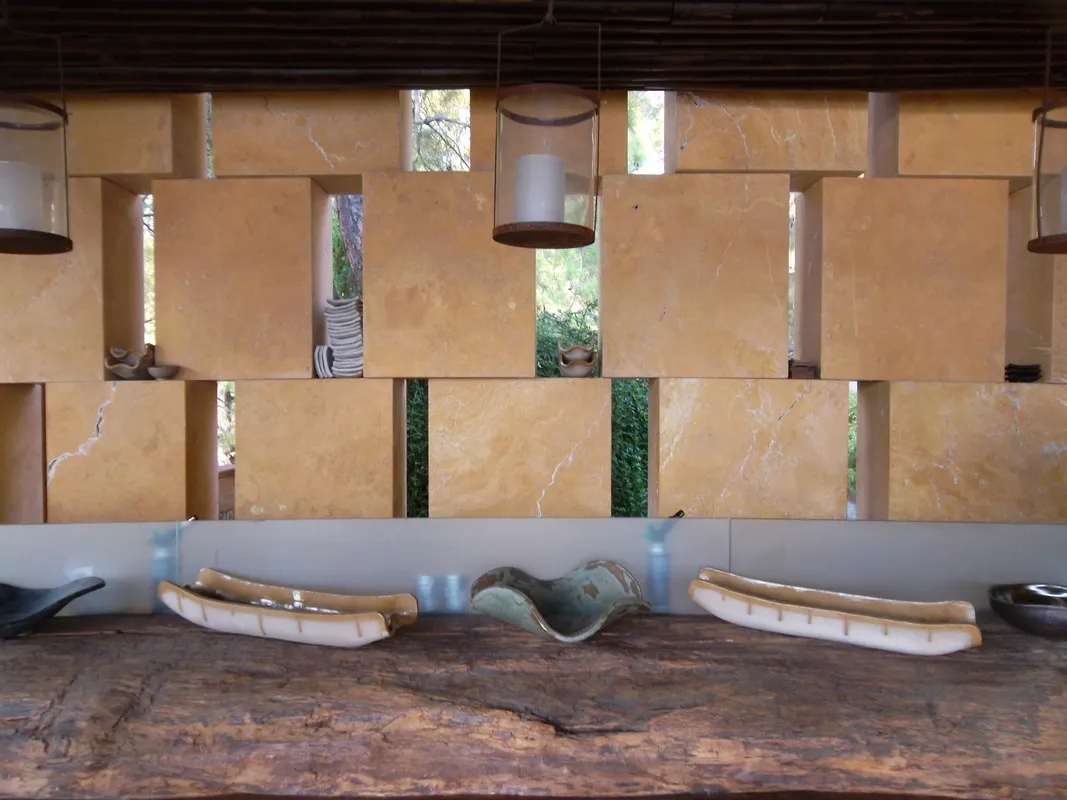
Q Lounge sits above it, among the pines. The materials are left raw here too, and so are the kitchens: the sushi counter at one end of the room, the robata grill at the other. There are fountains and moving water. The roof opens to the sky, and the structure pushes out over the bay, so the sea is seen from above. The menu combines contemporary Japanese cooking with local ingredients and Peruvian influences; the list runs to 150 wine labels, and the cocktails follow the same references. The bar stays open until one in the morning.
A 53 per cent cut in water consumption, and a turtle nest inside the grounds
D-Resort publishes its own reporting on environmental performance, updated to 2024, covering energy, water, waste and biodiversity. Comparing 2022 with 2023, the hotel reported a 53 per cent reduction in water consumption year on year, and a 10 per cent reduction in electricity. On biodiversity, the hotel states that Caretta caretta has been observed repeatedly in the adjacent water, that it works with DEKAMER when injured animals are found, and that a turtle laid eggs inside the resort grounds in 2023, after which the nest was protected.
From chrome ore to blue voyage: a bronze miner in the town square
The port function of Göcek is older than its yachts. The ancient settlement in the area was Kallimache, on the frontier between two civilisations, with Tersane Island serving as a working harbour under Rome and Byzantium. Under the Ottomans, the bay loaded two cargoes: pine timber, and chrome ore brought down from mines in the mountains behind the town, worked from the late nineteenth century. A bronze statue of a miner stands in the town square, put up for the men who came from the surrounding villages for that work.
The modern town is recent. It was laid out on a grid in the late 1980s and early 1990s, on coastal flats that had been marsh and farmland; the older village survives two to three kilometres uphill. Skopea Marina opened in 1989 on 5,371 square metres with 80 berths, and presents itself as the first private marina in Turkey. Road access was settled in June 2006, when a 980-metre tunnel — the first build-operate-transfer road tunnel in Turkey — cut the drive from Dalaman airport to about twenty minutes.
The nautical tradition the marinas serve is older still. The mavi yolculuk, the blue voyage, is the practice of cruising this coastline between Göcek, Fethiye, Marmaris, Gökova and the Datça peninsula, and it brought the first foreign boats into the gulf in the second half of the twentieth century. Racing followed: Göcek Race Week has run for years with D-Marin and D-Resort among the parties involved, and the 2025 Göcek Winter Trophy drew more than sixty boats.