Danny Boyle’s Ink: The film, the material and the industry behind it
Danny Boyle’s Ink opens Venice Film Festival 2026 with Rupert Murdoch’s story, but the real subject is the material behind the press industry
Danny Boyle’s INK opens Venice Film Festival 2026: A story about Rupert Murdoch and The Sun
The 83rd Venice Film Festival 2026 opens on September 2 with INK, Danny Boyle’s latest film and his first in competition at the Lido. Chosen as the opening film for this year’s edition, it’s adapted from screenwriter James Graham’s play about Rupert Murdoch, The Sun and the business of manufacturing headlines.
The story returns to 1969, when a young Rupert Murdoch acquired The Sun and, together with Larry Lamb, transformed it into the biggest-selling newspaper in the world. A story about how they became the most controversial tabloid, reshaping British press culture. Guy Pearce plays Rupert Murdoch, alongside Jack O’Connell as editor Larry Lamb and Claire Foy as journalist Jules Davies.
INK is not a straightforward retelling of the history of a newspaper. It’s a story about the dynamic behind it and the mechanics of influence. The film revolves around editorial decisions and commercial interests that shape public opinion. It arrives at a moment when the authority of journalism continues to be questioned. The title of the film, however, points to something bigger and older than media ownership: the medium that changed the trajectory of civilization.
What is ink? The story of the medium that shaped the human mind
For millennia, ink has carried words and images across paper, parchment and fabric. Less visible is the chemistry that makes it possible. Ink is a carefully formulated fluid made of three essential elements: colorant, vehicle, additives.
Every ink formulation begins with the colorant, the element responsible for the visible mark. It exists in two forms: pigment and dye. Pigments are finely ground solid particles that remain insoluble in the liquid formulation. They are dispersed throughout the vehicle using stabilizing agents, then deposited onto the surface as the ink dries. Because the color exists as particles and not dissolved molecules, pigment inks are generally more resistant to light and aging..
Dyes work differently. Their molecules dissolve completely into the vehicle and create color by absorbing specific wavelengths of visible light. They produce brighter, more saturated tones but are less resistant to water, UV exposure, and fading over time.
Once the colorant is selected, the vehicle carries it from the ink source to the surface receiving the print. It controls the ink’s flow, viscosity and drying behavior. The vehicle may be water-, oil- or solvent-based, or designed to cure under ultraviolet light. The final layer of the formulation comes from additives: small quantities of compounds that regulate drying, stability, texture and performance, ensuring the ink behaves consistently from the printing press to the final surface.

From carbon suspensions to industrial chemistry: A brief history of ink
The history of ink began long before it entered the narrative of the printing press. Ancient Egypt and China started working with it thousands of years ago, although it looked different back then. The first ink was based on the simplest, most durable colorant: carbon. Earlier civilizations developed methods to extract carbon particles in liquid and transfer them onto surfaces.
Ancient Egypt was the first to introduce carbon ink around 2500 BCE. Used for writing on papyrus, its formulation was much simpler: ground carbon black combined with water and a binding agent. A commonly used binding agent was called gum arabic, a natural resin from acacia trees. The process was simple: carbon particles brought the color, and the gum helped it work with the papyrus fibers.
The Egyptian carbon ink was stable enough to remain legible thousands of years later. Unlike the later metallic version, carbon ink doesn’t rely on chemical reactions to produce color; neither does it degrade the surface. The pigment stays on the surface instead of chemically reacting to it. And while carbon ink was the main medium, Egyptians then developed colored inks for titles, headings and highlighted passages. Red ink, used most often, was made from iron oxide pigments and ochres. The introduction of colored ink marked the beginning of hierarchy in written communication.
Independently from Egypt, yet around the same time, Ancient China developed its own carbon-based ink. Dating back several millennia, the earliest formulations of Chinese carbon ink were based on soot from burning pine wood. It was then mixed with animal glue, compressed into solid ink sticks, then stored and transported. The sticks had to be ground against an ink stone before use, then mixed with water for a proper consistency.
While Egyptian liquid ink could dry out quickly, Chinese solid ink brought a shift in technological development; it could be used anytime and adjust its density to the purpose. Over time, it became the primary medium for calligraphy and painting; the previously practical writing material now became an artistic medium.
Iron gall ink in medieval Europe and how it transformed knowledge across centuries
Thousands of years after Egypt and China introduced their own carbon inks, centuries after China created paper, iron gall ink became the primary medium used in the late medieval and early modern era. For more than a thousand years, between the 5th and the 19th centuries, iron gall ink was the medium used for religious manuscripts, scientific texts, legal and government records.
The formulation was different from carbon ink. Iron gall ink didn’t rely on carbon particles; it used a chemical reaction between tannins plant and iron salts. Oak gall, the main ingredient, was formed naturally when insects interacted with the plant tissue of the oak tree. The highly concentrated tannic acid in oak gall is what reacts with the iron sulfate (green vitriol), producing a dark iron-tannin complex. Oak galls, gum arabic, iron salts and water — the traditional recipe produced ink that first appeared grey, then turned deep black through exposure to oxygen.
The advantages of iron gall ink were many; over time, it became more popular than carbon ink. Iron gall ink allowed a new level of smooth flow from quills, sharper lines and permanence because of its chemical reaction. The chemistry also brought complications: over centuries, the ink continued the oxidation reaction, destroying the fibers in paper and parchment. Iron gall corrosion is common in medieval documents; the result was severe damage or complete loss of texts. In the end, history’s most important technology for preserving knowledge would become the threat to its survival.

Gutenberg’s oil-based ink: The rise of mass printing
When Johannes Gutenberg invented metal type in the mid-15th century, the world was still actively using water-based inks. The new printing press had the potential to revolutionize communication, but its success depended on the creation of a new type of ink. That’s what could make it commercially viable. Water-based inks worked well with quills, but not with metal type. The low viscosity of iron gall ink was too fluid to adhere to the new type. The result was blurred and weak, unable to withstand the repeated pressure of the printing press.
This is what pushed Gutenberg to work on developing a new ink type. Around the 1450s, he introduced a thick, oil-based ink. It was made by suspending ground carbon black in a vehicle composed of resinous varnishes and linseed oil. Heating linseed oil increased viscosity, while resin varnishes improved gloss and durability. The ink could now withstand the repeated pressure of printing. The oil-based ink solved many of the iron gall ink issues. High viscosity prevented ink from running between letters; oil-based vehicles worked well with metal surfaces, allowing even typing. Unlike the earlier types of ink that were more suitable for handwriting, Gutenberg’s ink allowed reproduction, moving ink from a writing medium to an industrial material.
The result of this innovation was the rise of mass communication. The Gutenberg Bible became the first ever book printed with metal movable type in Europe. Later on, books became less expensive to produce; access to literacy and learning became wider. Science, religion, literature, political ideas now spread all over the world, reaching larger audiences. This is why the rise of the printing press became one of the defining technologies of the Renaissance.
From craft-based activity to an industrial product: Ink in the 19th and 20th centuries
The printing press brought a new volume of publication, but until the 19th century, it remained dependent on established recipes. Ink was still prepared manually using local materials. But newspapers expanded massively, and so did the demand for larger access to ink. Big-volume publishing required consistent, industrial-scale ink production. This is when synthetic pigments and dyes came to replace the natural color sources; these alternatives were stable and predictable.
With synthetic dyes came a wider color range now available to printers; they were more durable, brighter and consistent. Another step towards more expansion, this resulted in customization for different industries. Newspapers needed affordable inks that could dry fast during high-speed production. Magazines required better color accuracy and surface quality. Lithography needed inks that could bring control over viscosity, fast drying and adhesion. The expansion continued all the way to the 20th century, when product packaging emerged as a growing printing ink consumer. Ink was no longer only in publishing; it was in every area of commercial production.
Contemporary ink continues to grow — but the picture is now different
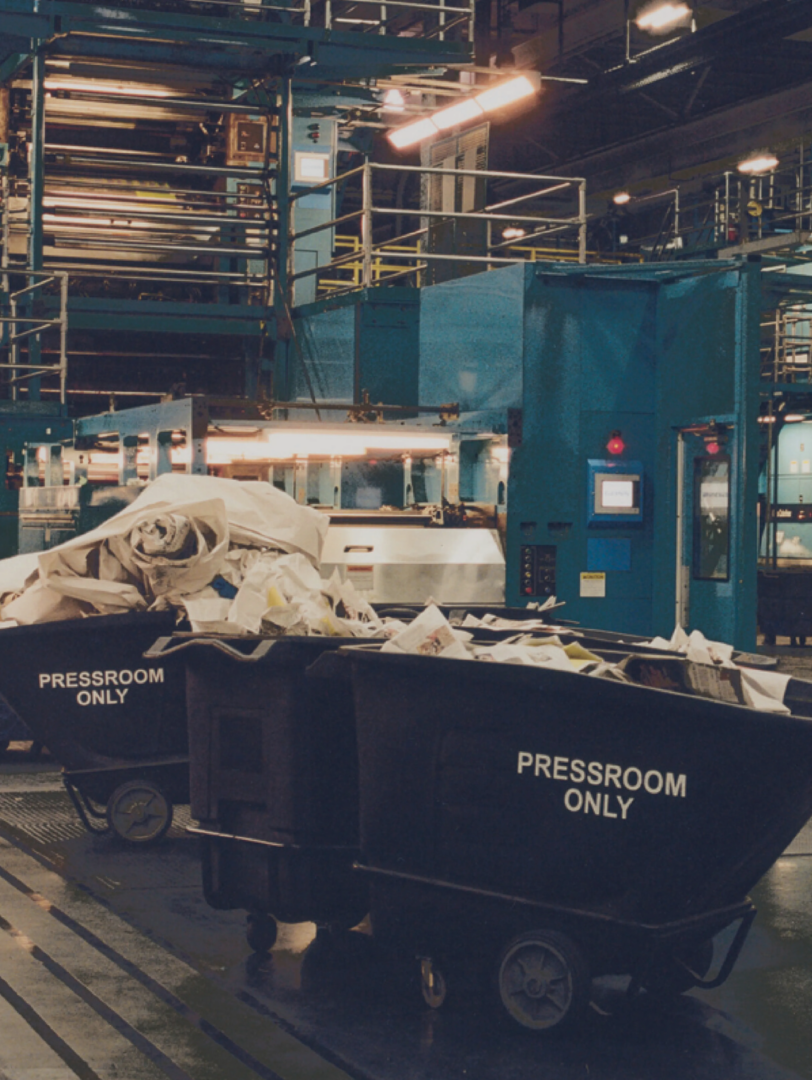
The rise of digital media didn’t eliminate ink; it changed where it’s used. Over the last three decades, ink demand has shifted from newspapers and magazines to packaging, labels, industrial applications, textile. Ink is now associated more with global consumer goods than publishing. The industry exists in categories: offset inks for books and magazines, flexographic inks for packaging and branding, gravure inks for high-speed packaging, digital inks for inkjet and laser systems.
While the conversation about the potential death of print is still ongoing, the ink market forecast shows a different picture. In 2026, the market is projected at $25.3 billion, expected to reach $32.9 billion by 2033, with a compound annual growth rate of 3.8% between 2026 and 2033.
Growth is still continuous, but it’s now driven by different demands. What used to be a market dependent on the publishing industry has now shifted towards packaging. Packaging and labels account for approximately 55% of the global printing ink market by value, making it the biggest and fastest-growing segment. The demand is high: food and beverage packaging, personal care, consumer goods, pharmaceuticals, continuous growth of e-commerce.
This has also changed the technologies driving ink development. The focus is no longer on offset printing for books and newspapers; manufacturers increasingly formulate inks for flexographic printing, gravure printing, digital inkjet systems and food-safe, low-migration packaging applications.
The change in segment shares resulted in a shift in regional shares as well. Asia has become the world’s largest printing and packaging manufacturing point. It’s driven by China’s industrial production and export economy. Together, Asia, Western Europe and North America account for more than four-fifths of global packaging print output, making them the main centers of ink consumption and production.
Tom de Peyret’s 1 New York Times Plaza, NY 11356: the printing plant as urban infrastructure
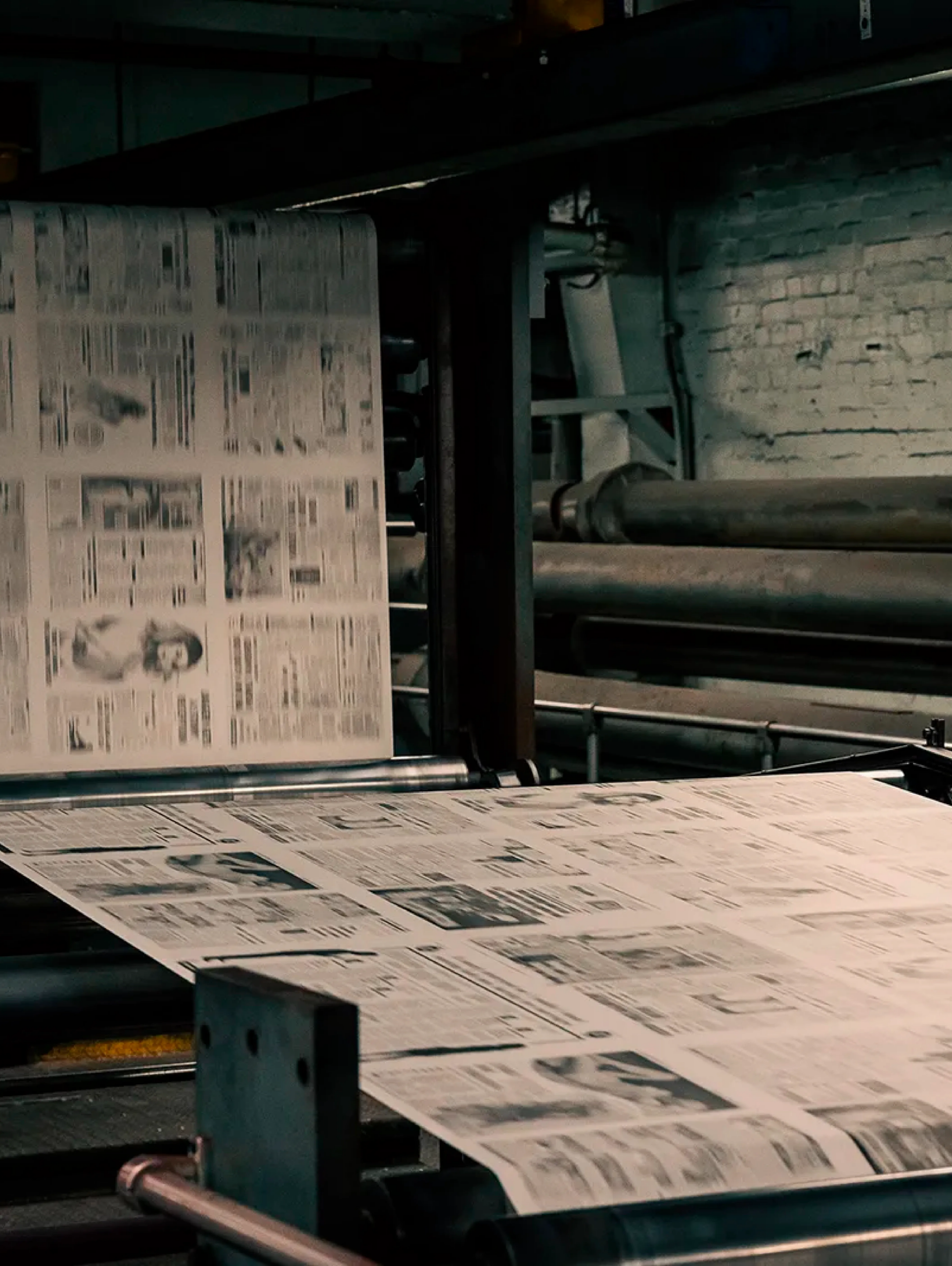
While the market data records the migration of ink from publishing to packaging, the presses that produced the twentieth-century newspaper are still running. Tom de Peyret photographed them for 1 New York Times Plaza, NY 11356, published by Poursuite Éditions: the address is the College Point printing plant in Queens, where the New York Times is printed each night. The book moves through the alleyways of the facility and through the parts of the city that support it — military grounds under construction, prisons, airports, disused zones charted only as non-lieux. New York appears in fragments: a bridge, a distant skyscraper, the paper’s logo. De Peyret works in the tradition of Philippe Vasset, entering areas that are off-record rather than photogenic, and treats the plant as one component of a machinery that distributes information, goods and capital across the Five Boroughs.
The book reproduces the condition it documents. De Peyret replicates the overlaid, slightly misregistered ink layers of newsprint, so that the object carries the evidence of its own production — the offset process visible as displacement between colors rather than concealed by it. What the photographs describe is the interval between the press and the reader: paper printed at night in Queens, loaded onto trucks, read hours later in hotel lobbies, airport terminals and public libraries. The form of the newspaper here is archaic, in the sense that it still depends on the physical transfer of pigment to a substrate and on the road network that moves it. It is the same offset chemistry that the ink industry is now reformulating for packaging, applied to the last mass-circulation product that requires it daily.

Ink has now entered textile production, becoming part of contemporary fashion manufacturing
Paper no longer owns printing ink entirely. Between continuously declining publication printing and a growing packaging segment, textile printing becomes the fastest-growing segment, with a projected CAGR of 5.9% between 2026 and 2033.
Ink now replaces or complements conventional dyeing in color, patterns and graphics applications onto fabric. Now that fashion production is more digital than ever before, short production demand has grown in response; textile printing has moved to digital systems producing garments on demand.
Two color systems dominate textile printing: pigment inks and reactive dyes, each one relying on a different chemical process. Pigment inks work through insoluble color particles suspended in a liquid vehicle. The pigment sits on the surface without penetrating the fabric. It’s then fixed with polymer binders during heat curing. Pigment inks use less water because no extensive washing is required, which is why they work well for cotton and blended fabrics.
Reactive dye — less a traditional ink and more a dye-based ink formulation — has a different process. The molecules absorb into the fabric, resulting in brighter colors and a softer feel. Because of this, it has become the industry standard for high-quality cotton printing. The resources required, however, are much more than pigment ink: steaming is required to activate the chemical reaction, followed by multiple washes to remove extra dye and chemicals.
The difference between rotary screen printing and digital inkjet is a question of volume, waste and control
Textile printing relied on rotary screen printing since the 1960s. The process involves a cylindrical screen for each color, through which ink is continuously pressed onto moving fabric. The process is simple once the screens are engraved and the machinery is calibrated; it’s faster and more efficient. The advantage is in the speed: it can print thousands of meters of fabric in an hour without compromising the quality. The drawback is in the economics: screen preparation is expensive and long, so it’s suitable for large production only. The result is overproduction: brands print more fabric than they sell.
While rotary screen printing remains the dominant method, digital inkjet has grown in popularity alongside it. The difference is in the process: microscopic nozzles put droplets of ink onto the fabric based on a digital design file. No screens are required, setup times are minimal, designs can be changed quickly. This allows printing in smaller quantities instead of leaning toward overproduction. Digital inkjet has become the method used for luxury collections and customized garments.
Textile production remains one of the most resource-intensive industries in the world. It’s the third highest source of pressure on water and land in Europe and the fifth highest use of raw materials and greenhouse gas emissions. Printing alone can’t solve the issue of overproduction, but it can reduce large-scale production caused by printing processes. Not only do digital systems reduce large-scale production, but they also minimize water and energy consumption involved in traditional textile printing. The environmental performance may not depend on this as much as fiber choice, but the role of printing still factors in it.
How sustainable is sustainable ink?
Environmental regulations are tightening. Brands are reducing their ecological footprint. The printing ink industry is responding by replacing petroleum-derived ingredients with renewable alternatives. This reduces volatile organic compounds (VOCs) emissions and reformulates inks for recycling systems.
Vegetable-based inks have emerged as alternatives to oils derived from petroleum. Renewable oils like soybean, sunflower, linseed or rapeseed oils are most commonly used for this. Linseed oil was already historically used as the key ingredient in Gutenberg’s printing ink, while soy ink is relatively newer, used in offset printing.
As raw materials, vegetable-based inks offer significant advantages: they emit fewer VOCs common during drying, improve de-inking during paper recycling and allow high pigment loading to reduce vehicle quantity. But are they made of plant-derived ingredients only? They contain synthetic resins, waxes, pigments and additives; the ink is still not biodegradable or non-toxic. A single renewable ingredient can help reduce impact, but environmental impact depends on the formulation rather than an ingredient.
Mineral oil migration: The invisible chemistry between ink and food packaging
Mineral oil migration in food packaging is a concern monitored closely. When used on paperboard or recycled fiber packaging, mineral oil hydrocarbons can migrate through the packaging and contaminate dry foods. The two groups of compounds, MOSH (Mineral Oil Saturated Hydrocarbons) and MOAH (Mineral Oil Aromatic Hydrocarbons), can have different impacts: while MOSH accumulates in human tissues, aromatic compounds in MOAH may present carcinogenic or genotoxic risks.
The industry response has included the development of low-migration inks, functional barrier coatings and alternative packaging materials designed to prevent hydrocarbons from reaching food. Many food packaging printers now use formulations that minimize migration while complying with increasingly stringent European food-contact requirements.

Ink is made to last; recycling depends on making it disappear through de-inking
Paper is one of the most successfully recycled materials, part of which comes from efficient de-inking that helps maintain fiber quality across recycling cycles. The process includes repulping paper with water, which separates fibers from the printed surface. Then, through froth flotation, hydrophobic ink particles attach to air bubbles and rise to the surface as foam. The foam is removed, while an additional washing eliminates remnants of pigments and fillers. This is when the fiber is reused. De-inking is efficient, but not all inks are removed equally. While conventional offset inks are compatible with flotation de-inking, UV-cured, toner-based and digitally printed formulations can be more difficult to separate from recycled fibers.
Ink: The material that keeps changing with the world around it
The four-thousand-year history of ink is less of a story and more of an account of the fact that it’s a material that refuses to fall victim to circumstances. Rather than disappear, it responds to change — in times, circumstances and innovations. It emerged as a natural material, adhered to chemistry, adapted to the demands of emerging industries.
The modern ink industry reveals how far the material has moved from its traditional association with books and newspapers. As publishing declined, ink didn’t become obsolete. It followed the expansion of other industries, becoming essential to packaging, textiles, logistics and product identification. The same chemistry that once carried political arguments, religious texts and scientific discoveries now carries barcodes, ingredient lists, brand identities and manufacturing information across global supply chains. By continuously adapting to changing human priorities, it has moved from the hands of scribes to industrial machines, from paper to fabrics, from communication to commerce.