The dildo: made in the Stone Age, banned by the Church, sold at Sephora
Female pleasure has always been somebody else’s political problem. The history of an object every civilization made and most tried to suppress
Dildoes. These objects now appear in design magazines, are discussed on mainstream podcasts, and are sold in beauty retail chains. The shift is not only a commercial indicator — it is a broader transformation in how sexuality is addressed in public discourse.
“On social media, there’s much more conversation, fewer taboos, less shame about getting into the details. We see this in the reviews we receive for Dafne products: women are open, honest, they know what they want, and they say it”. Lucia Costa founded Dafne, one of Italy’s leading brands in women’s sexual well-being, precisely as this shift was becoming visible in Italy.
“The number one priority is sex education. There is still a deal of work to be done, at the institutional level. Many problems could be resolved with a serious sex education program in schools — and we still don’t have one“.
The contrast between visibility and a persistent educational gap makes the history of the dildo worth tracing in full. Over millennia, sexual technologies have been designed, banned, hidden, medicalized, and commercialized depending on who was considered entitled to pleasure. That history is also a history of how the right to sexual autonomy has been defined, contested, and redistributed.
The oldest dildo in history: the Paleolithic siltstone phallus
In 2005, a team of archaeologists from the University of Tübingen led by Professor Nicholas Conard unearthed a phallic object made of siltstone in the Hohle Fels cave in Baden-Württemberg. Dated to approximately 28,000 years ago, 19.2 centimeters long and 3.6 centimeters wide, it was reassembled from 14 fragments scattered across six square meters. In a 2006 paper, Conard and Kieselbach described it as a symbolic representation of male genitalia and suggested the life-size phallus may have been used as a prehistoric sex toy — the oldest artifact of this kind ever documented.
During the Upper Paleolithic, phallic iconography appears across cultures as a symbol of fertility and generative power, carved into rocks and worn as protective amulets. In numerical terms, though, finds with phallic morphology are far less frequent than those depicting the female body. The so-called Paleolithic Venuses — figurines emphasizing breasts, hips, and abdomen — number over 200 documented examples, distributed from Western Europe to Siberia and dating from 40,000 to 11,000 years ago.
The Venus figurines have been interpreted primarily as cult objects associated with fertility and the continuity of life, though these readings remain contested and are not supported by direct evidence. The prehistoric phallus occupies a similar semantic field, but its function is more ambiguous and less documented. The boundary between ritual object and utilitarian object is rarely traceable with certainty — and the categories through which contemporary research classifies these artifacts reflect the interpretive limitations of the present as much as anything else.
Ancient Egypt: the phallus between myth, ritual, and resurrection
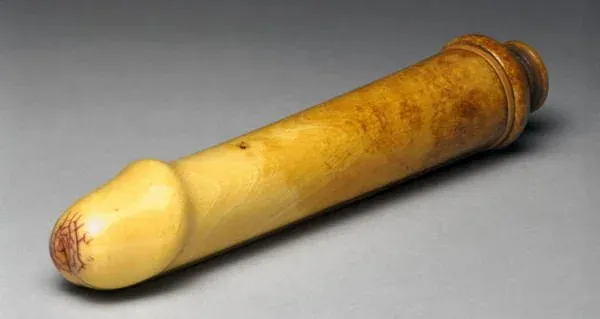
In ancient Egypt, the iconographic presence of the phallus runs through cosmological narratives, funerary cults, and representations of the divine. The origin is the myth of Osiris, documented in the Pyramid Texts and later reworked by Plutarch in De Iside et Osiride. Osiris, the primordial king, is killed by his brother Seth, who dismembers his body into fourteen parts and scatters them across the country. His wife Isis gathers all but one: the penis, swallowed by a fish in the Nile. In its absence, Isis constructs an artificial phallus — wood in some versions, gold in others — sufficient to conceive Horus and restore to Osiris the possibility of rebirth.
As Carolyn Graves-Brown observes in Dancing for Hathor (2010), the erect phallus in Egyptian culture represents male creative power understood as the vital force necessary for resurrection and the maintenance of cosmic order. It is not a symbol of sexuality in the modern sense, but an agent of continuity between life and death. Depictions of Osiris reclining with an erect phallus are a recurring element in temples and funerary goods — evidence of how thoroughly this symbol was embedded in the sacred sphere and the cyclical regeneration of life.
Ancient Greece and Rome: the olisbos, the fascinum, and the politics of pleasure
In ancient Greece, the term olisbos — from the verb olistheîn, to slip — designated an object with sexual connotations. It appears in Aristophanes’ comedy Lysistrata (411 BC), in which Athenian and Spartan women declare a sex strike to force their husbands to end the Peloponnesian War.
“And since the Milesians betrayed us, I haven’t even seen a single olisbos eight fingers long to give us some relief” (Lysistrata, lines 107–110).
Its presence in 6th-century BC Attic pottery confirms that the object circulated without particular stigma. The poet Herodas, in the 3rd century BC, dedicated an entire mime — The Dildo — to the lending of one of these objects between two women. The same civilization that excluded women from political life and the theatrical stage treated female pleasure with ease in comedy and literature.
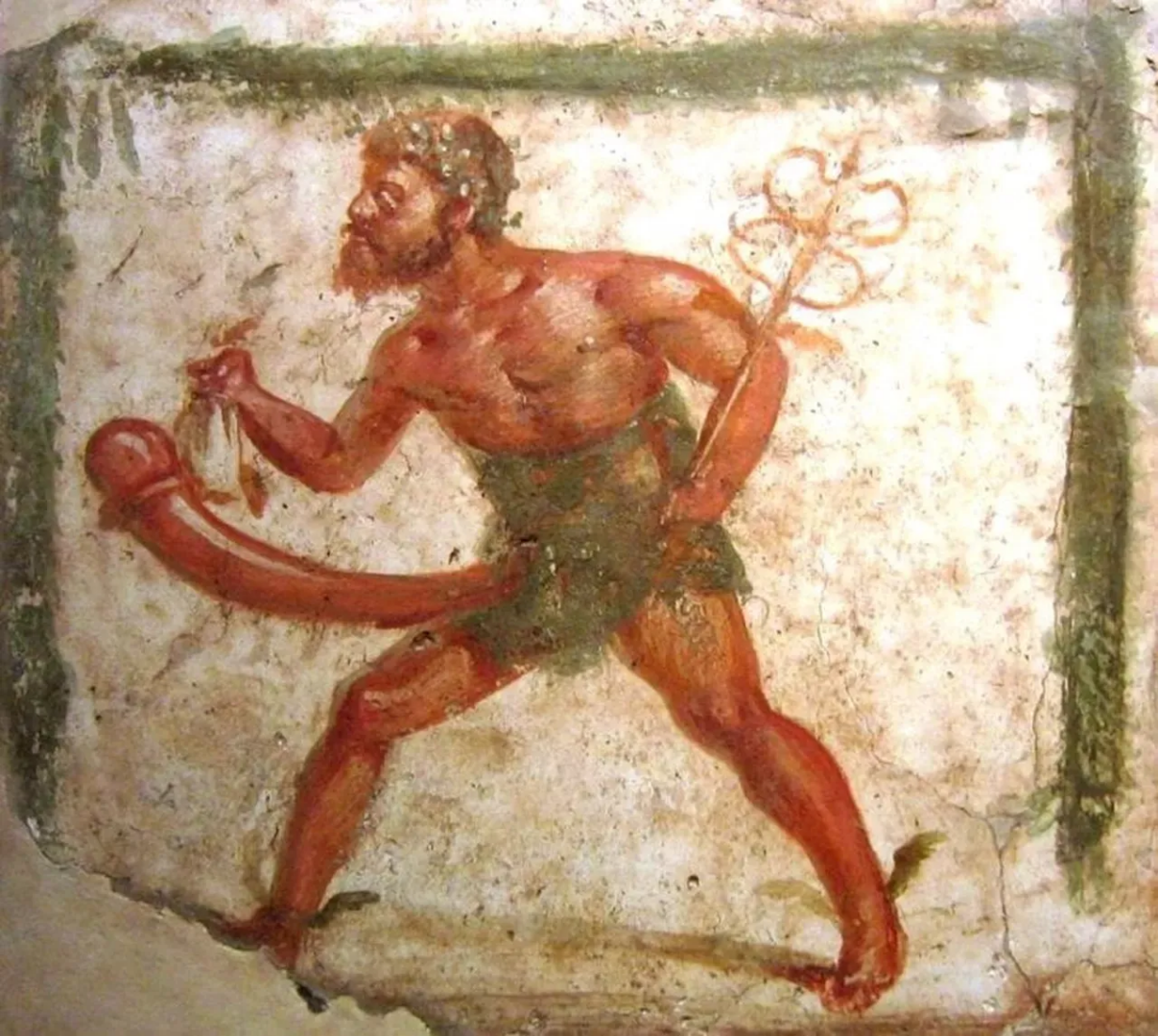
In Rome, the phallus served a dual purpose. The fascinum — the Latin term for the divine phallus — was an apotropaic symbol appearing on the thresholds of houses in Pompeii, above doors, at crossroads, and in children’s grave goods. Pliny the Elder, in his Naturalis Historia, defines it as medicus invidiae, a remedy against the evil eye, describing its veneration as a civic duty recognized by the Roman state. Alongside this public function, the erotic depictions on the walls of Pompeii attest to the use of phallic objects made of leather — the penis coriaceus — in an explicitly sexual context.
With the rise of Christianity from the 4th century onward, this landscape changed. Sexuality was reduced to procreation as its sole legitimate purpose, and non-reproductive pleasure entered the moral register of guilt. Augustine, at the turn of the 4th and 5th centuries, still described phallic rites in Italian villages — but the normative context had already shifted. What had served for centuries as ritual or protective function was progressively marginalized and hidden.
Medieval Islamic world and Han Dynasty China: pleasure as medical and spiritual knowledge
In the medieval Arab-Persian world, sexuality was the subject of serious literary and scholarly attention. The Jawāmiʿ al-Ladhdha — Encyclopedia of Pleasure — written in the 10th century by Alī ibn Naṣr al-Kātib, is the oldest surviving erotic manual in the Arabic language. It blends medical advice, anecdotes, poetry, and fiction, and devotes considerable space to female sexuality. As scholar Pernilla Myrne observes in Female Sexuality in the Early Medieval Islamic World (2020), erotic manuals from the Abbasid era, though written predominantly by male authors, emphasized women’s sexual needs and the importance of mutual satisfaction:
“Islamic medical authors embraced Greek medical ideas on sex differences and reproduction, in which women have a pivotal role. Physicians believed that abstinence could cause considerable physical health problems, but they also admitted that pleasure was desirable in itself. Nevertheless, physicians acknowledged women’s sexual needs — not only for improving fertility — for there is an underlying conviction that women’s excitement and pleasure are desirable”.
Between 1995 and 2011, excavations in Jiangsu Province, China, unearthed artifacts from Han Dynasty aristocratic tombs (206 BCE–220 CE), including bronze dildos and phallic jade objects. According to Fan Zhang, curator of the Yizheng Museum, bronze dildos found in elite tombs were most likely intended for use: they feature elaborate bases suggesting they were fastened with silk or leather laces and were individually crafted. The function of the jade objects is more ambiguous — jade was considered a spiritual material capable of preserving the body from decomposition after death, so some of these objects may have served a funerary rather than sexual purpose.
As in ancient Egypt, these cultures shared the understanding that pleasure and its symbolism belong to the cycle of life — and in some cases, the afterlife. The distinction between erotic, ritual, and medical function was likely not experienced as clear-cut.
The Victorian vibrator myth: what Rachel Maines got wrong
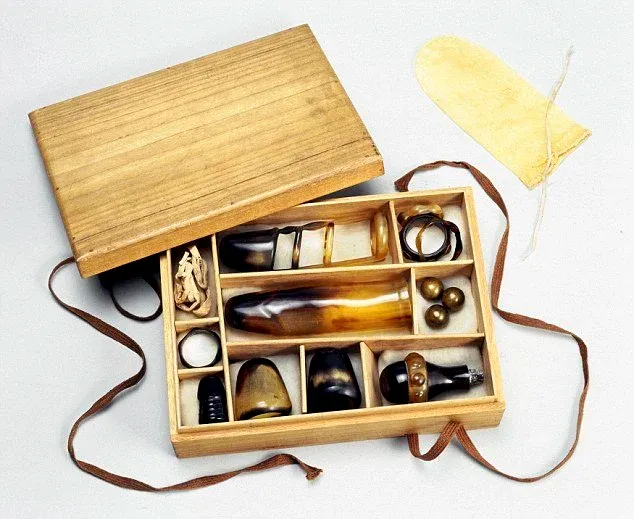
Among the most persistent stories about female sexuality is the theory that Victorian doctors treated female hysteria by inducing orgasms through genital massage, and that the electric vibrator was invented to mechanize this practice. The thesis was first proposed by Rachel Maines in her 1998 book The Technology of Orgasm, which won an American Historical Association award, inspired a Broadway play, and a 2011 film starring Maggie Gyllenhaal. Within a few years, the theory had become widely accepted and was cited across academic and mainstream publications — despite the fact that its sources had never been verified.
In 2017, historian Hallie Lieberman published Buzz: The Stimulating History of the Sex Toy, in which she examined Maines’s sources directly. The following year, with colleague Eric Schatzberg, she published a paper in the Journal of Positive Sexuality — “A Failure of Academic Quality Control: The Technology of Orgasm” — dismantling Maines’s three central arguments: that pelvic massage was an established medical practice, that Victorian doctors were unaware of the female orgasm, and that the vibrator was developed to replace this practice. Their conclusion: there is no documented evidence that doctors used electromechanical vibrators to induce orgasms in patients as a medical treatment.
The English physician Joseph Mortimer Granville developed the electromechanical vibrator in the 1880s as a tool for treating muscle pain, used primarily on male patients. Vibrating devices were used in gynecology for conditions such as vaginal muscle spasms or vulvar inflammation — without erotic purposes. Hysteria was a real, comprehensive diagnosis whose treatments included forced rest and, in the most severe cases, hysterectomy. Victorian medicine was less concerned with giving women pleasure than with finding efficient ways to control them.
Maines herself later described her thesis as a hypothesis based on limited sources. Yet it continued to circulate because it offered a seductive narrative: that female pleasure had found a way to exist even within the institutions that medicalized it. As Lieberman argues, the theory is ultimately harmful — it reduces female sexuality to something that happens in spite of the system, rather than as a product of women’s own autonomy:
“Everywhere I looked, I saw evidence that the mainstream sex-toy industry was promoting an ideology more in line with archaic gender and sexual norms than with radical sexual empowerment. Even the industry-standard term ‘sex toys’ was infantilizing. Male sexual problems were treated with ‘erectile dysfunction’ drugs, a serious-sounding term that legitimized these issues as diseases. Meanwhile, women’s sexuality was trivialized, fixed, or enhanced by ‘toys'”.
Betty Dodson and the feminist sex shops that changed the language of female pleasure
In the 1970s, female masturbation entered American public discourse as a political issue. Betty Dodson, a New York artist, began organizing consciousness-raising groups in her Manhattan apartment — gatherings where women spoke openly about their bodies, their experiences of pleasure, and the shame that had accompanied both. These gatherings evolved into Bodysex workshops, where participants explored their own anatomy and practiced masturbation collectively. In 1974, Dodson self-published Liberating Masturbation: A Meditation on Self-Love — filled with illustrations of vulvas and explicit imagery, it was the first text to systematically articulate a sex-positive theory of female masturbation, combining theoretical reflection with personal testimony. Dodson had discovered the Hitachi Magic Wand during her workshops and made it a central tool in her practice.
That same year, Dell Williams founded Eve’s Garden in New York, the first woman-owned and feminist-run sex toy shop in the United States. Three years later, in 1977, Joani Blank opened Good Vibrations in San Francisco: a space conceived as both educational and commercial, where products were presented in informative rather than prurient language. These stores were not merely retail enterprises but educational and community resources that helped redefine how women talked about their own bodies.
Within these spaces, the vibrator was recognized as an autonomous tool of pleasure. As Lynn Comella writes in Vibrator Nation (2017):
“Second-wave feminists, aided by the growing visibility of the gay and lesbian liberation movement, were dramatically reshaping cultural understandings of gender and sexuality. They challenged the patriarchal status quo that had taught women to see sex as an obligation rather than something they were entitled to pursue for the sake of their own pleasure”.
Dildo design today: material, aesthetics, and the object you leave on the shelf
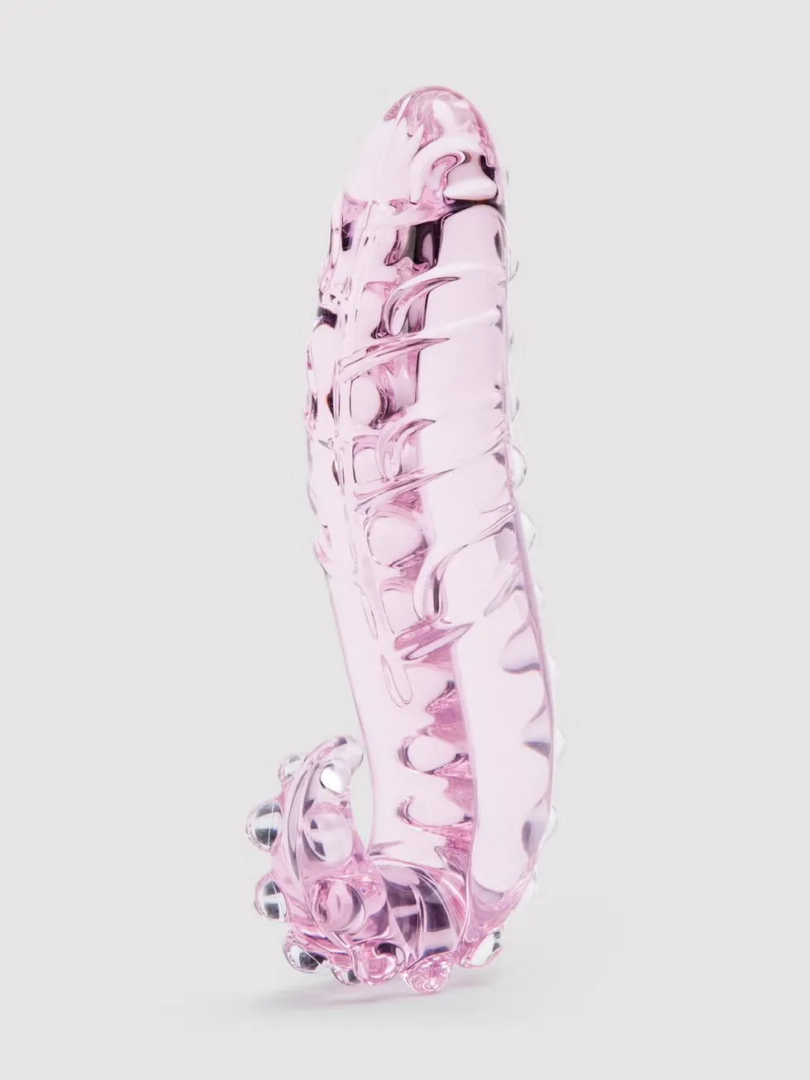
The contemporary sex toy is the result of precise design choices — ergonomics, material, aesthetics — that define the user experience and, increasingly, the relationship the buyer has with the object beyond the moment of use.
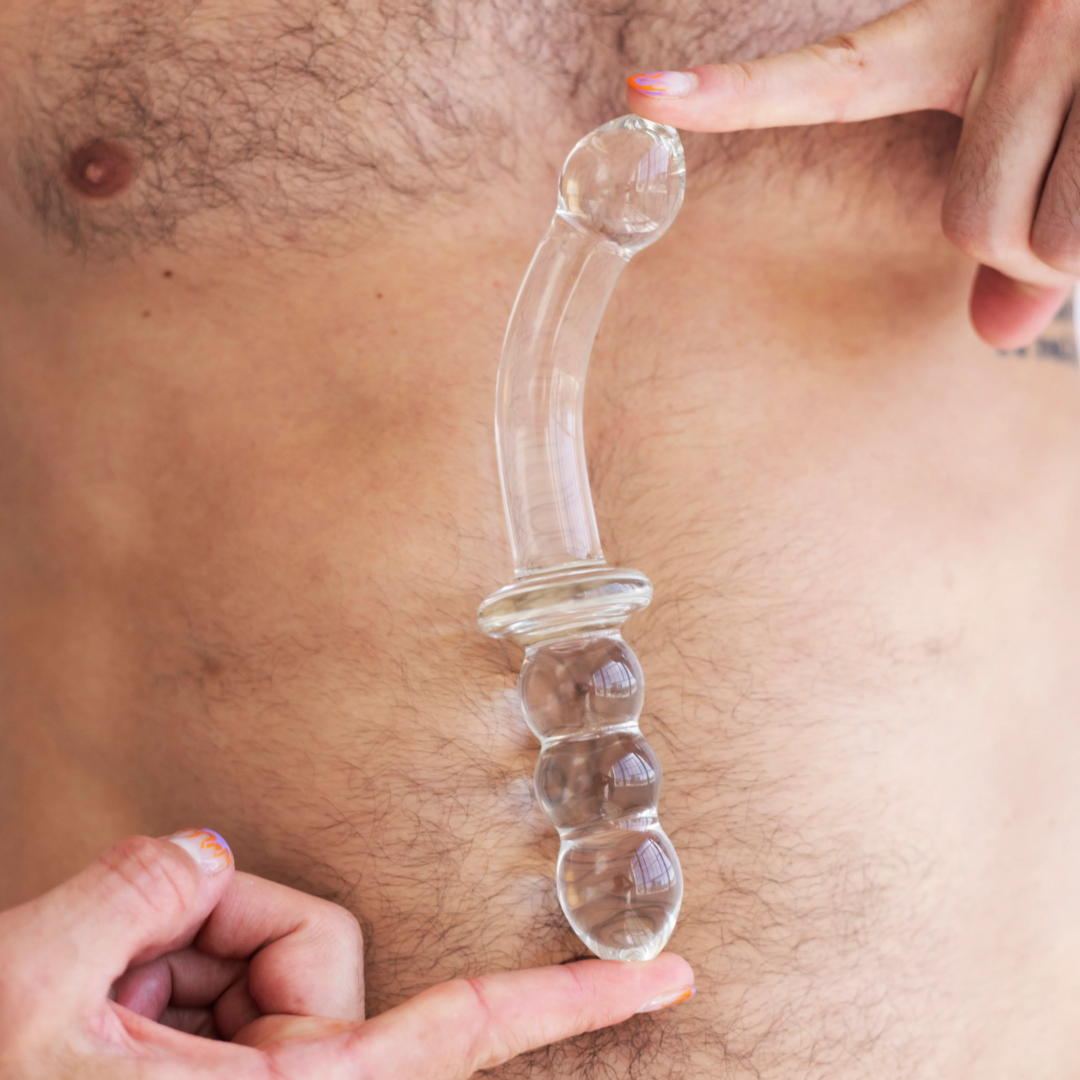
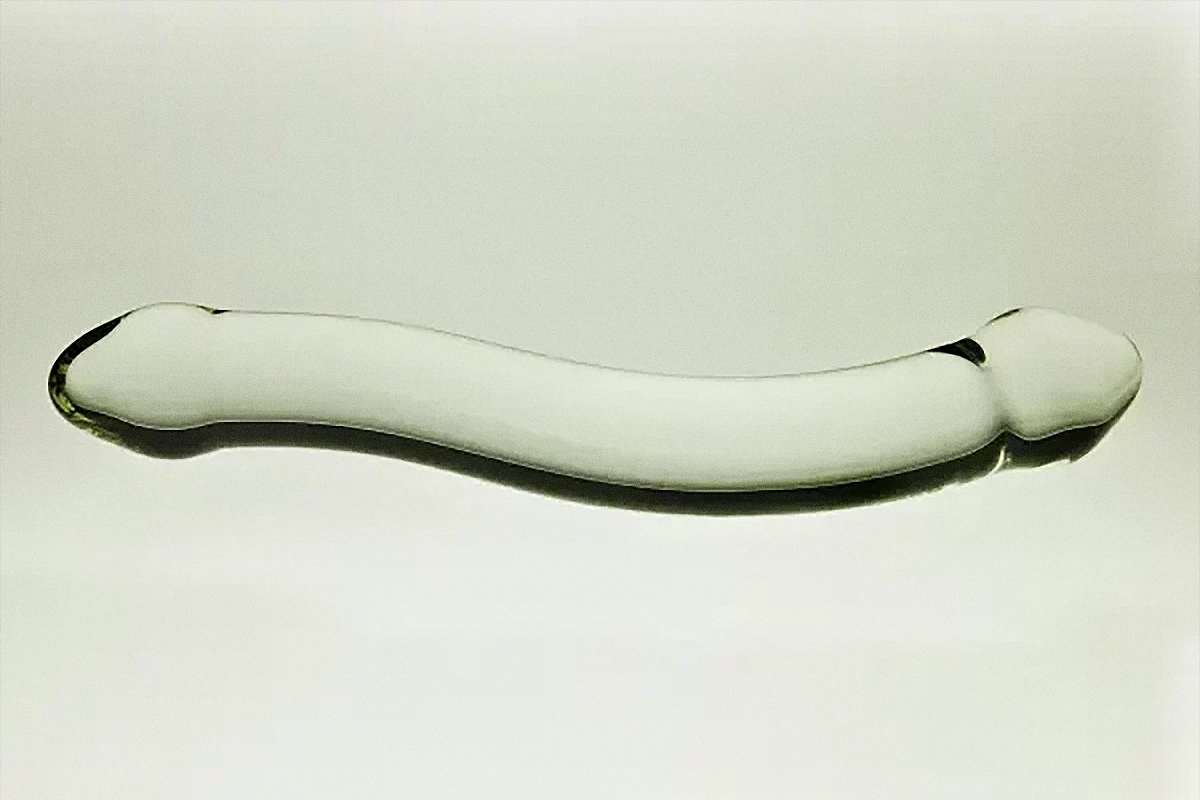
“The perfect dildo is made of borosilicate glass. Its smoothness and the ability to play with temperatures — hot or cold — make it an experience. Silicone remains popular for its softness, but with materials like glass or wood the design aspect comes to the fore. The dildo stops being merely an instrument of pleasure and becomes something closer to a collector’s item. Many of our customers display Petro on their nightstand or bookshelf” says Costa.
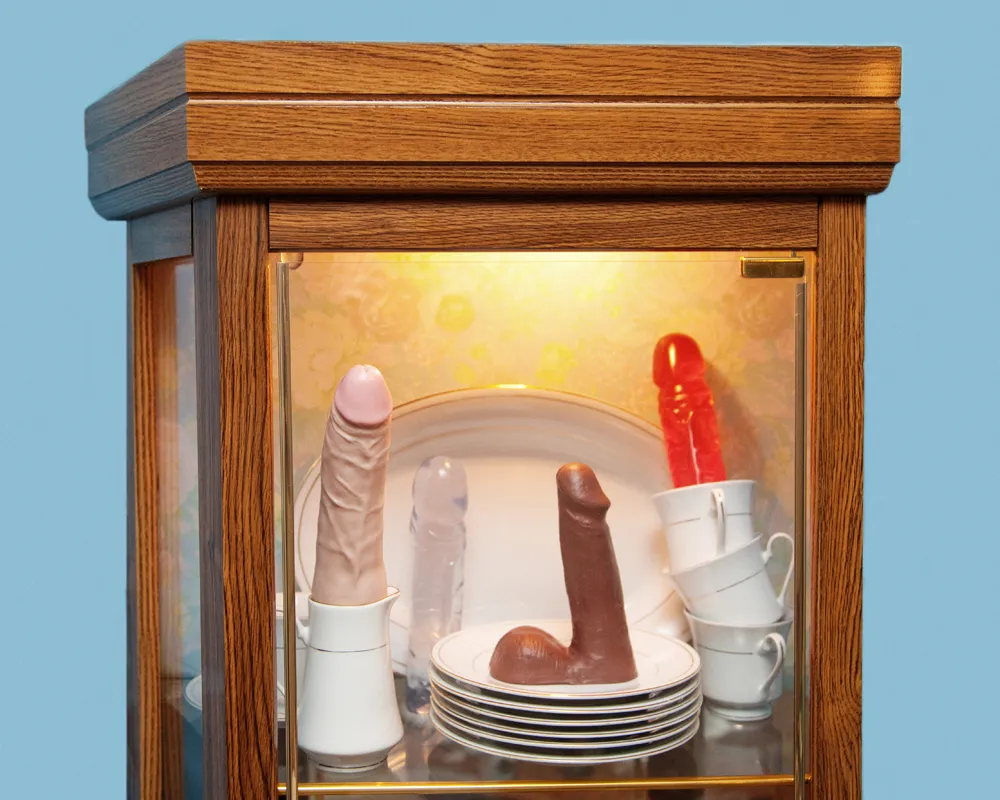
The shift from hidden objects to displayed ones is one of the most tangible signs of a cultural transformation that has been underway for some time. “In Italy we’re still rooted in our traditions”, Costa observes. “But what has changed — and it’s visible — is the tone of the conversation: irony, a natural approach to sexuality, especially on social media, have lifted a massive veil of taboo”.
The change is also measurable commercially. “New brands like Dafne began to emerge about ten years ago. Some, especially in America and Northern Europe, had immediate success, with sales in the millions. This has enabled product innovation and an increasingly integrated normalization within the concept of women’s well-being”.
The distinction between a dildo and a vibrator is also the first thing Costa clarifies for those new to the field. “They are different objects. The vibrator is precise, has specific functions, and leads to a defined pleasure. The dildo requires more time, more dedication, more exploration — there is an element of discovery that isn’t to be taken for granted“.
From siltstone to silicone: what the history of the dildo tells us about female autonomy
This distinction is also a key to the entire history traced here. The dildo is an ancient object — it precedes documented civilization, precedes any moral code that has attempted to regulate it. The vibrator is a recent technology that carries with it all the sociological complexity of the twentieth century: medicalization, market dynamics, the politics of pleasure, the still-contemporary taboo surrounding masturbation.
Beyond their differences, both fulfill the same need: sexual autonomy that depends on no one else, experienced alone or with a partner, as exploration or as a confirmation of one’s own desires. A form of pleasure and agency that has existed since before we had the means to document it — and that, evidently, has never needed to justify itself.
Micaela Flenda