Pride and the market: when activism becomes a product line
From Stonewall to the seasonal capsule collection, corporate Pride branding has transformed queer politics into a purchasable identity — the fashion industry, from Loewe to Saint Laurent, is still negotiating the terms
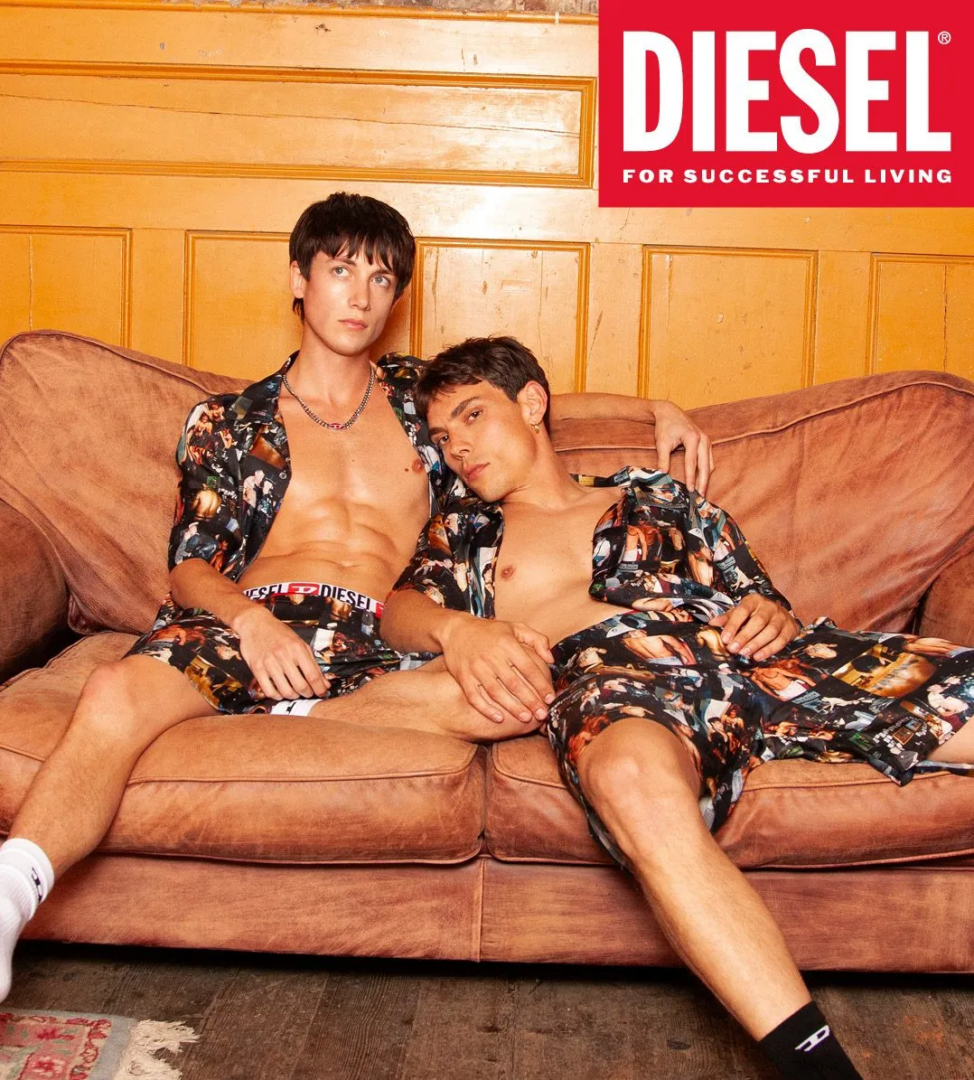
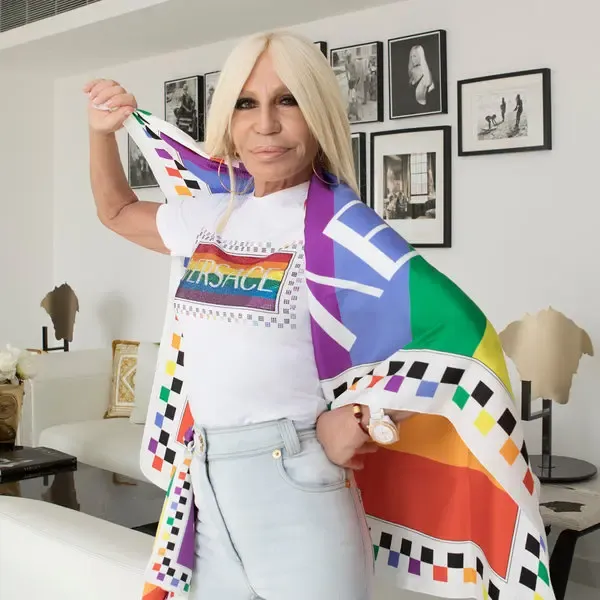
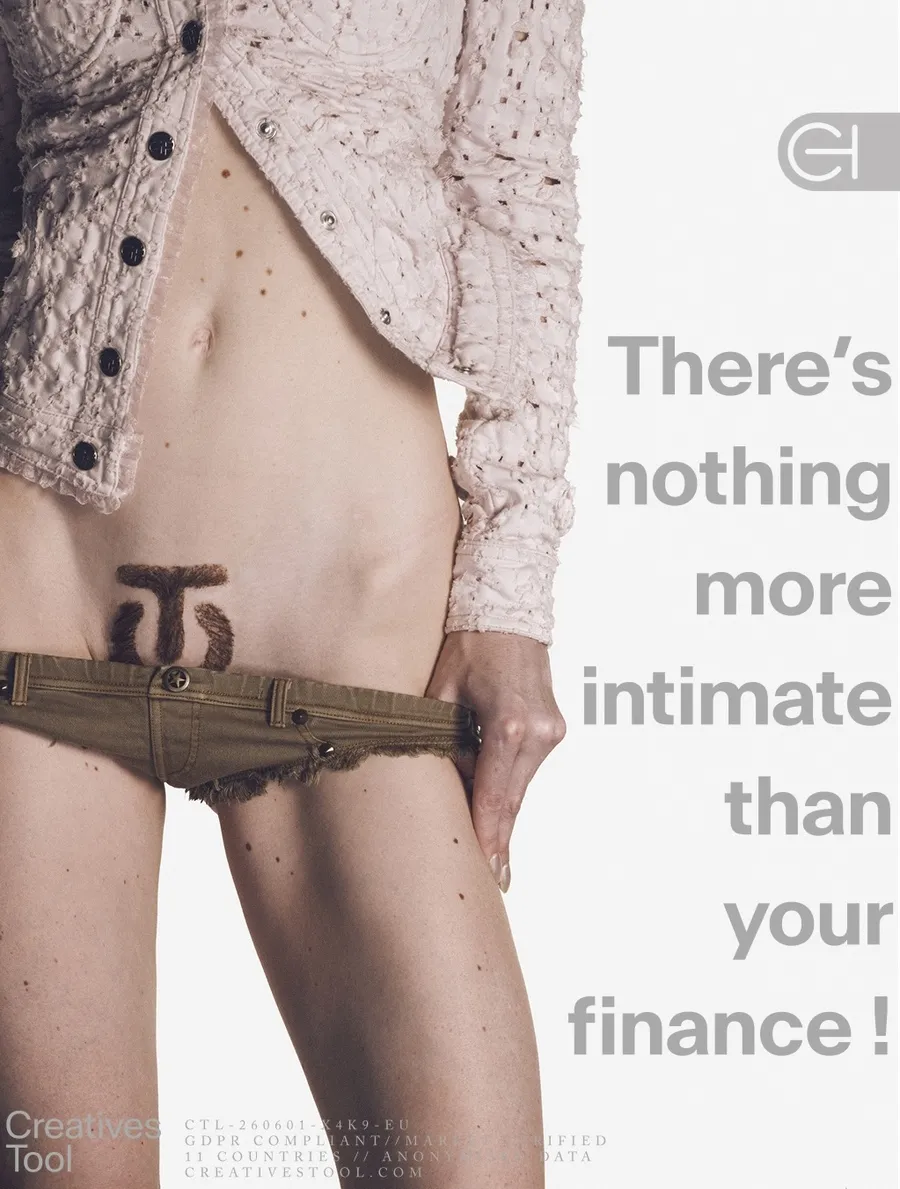
The 2019 Versace campaign features a limited-edition Pride shirt and support for LGBTQ+ causes during Pride Month. Donatella Versace publicly positioned the brand as an ally. The 2019 Helmut Lang collection reinterpreted the Progress Pride Flag. Part of the proceeds went to New York’s LGBTQ Center. Cartier featured a gay couple in its 2020 Valentine’s Day campaign — then faced online mockery after describing the couple as father and son. Now, a Tinder partnership. A seventeen-piece capsule. Diesel renamed its old manifesto, For Successful Living, as For Successful Loving, and sent it out into June.
Is this what successful living looks like? The market can accommodate queer identities more easily than queer politics. Pride branding transforms queerness from a critique of categories into a category itself. The relationship between queerness and capitalism is neither alliance nor opposition. It is a negotiation, and the terms keep shifting.
How Pride Month became a fashion marketing strategy
As Pride has gained mainstream acceptance, tensions have emerged between its activist origins and its increasing commercialization. Corporate participation in Pride reframes it as a celebration of diversity and inclusion, at the expense of political struggle, protest, and systemic inequality.
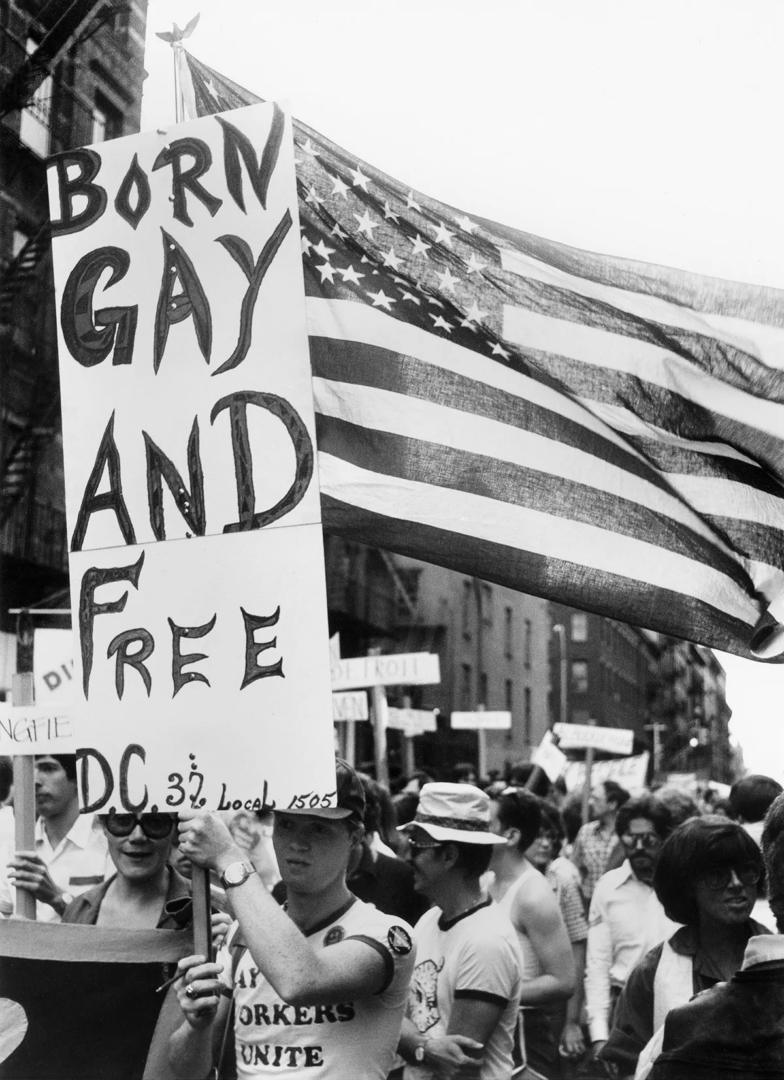
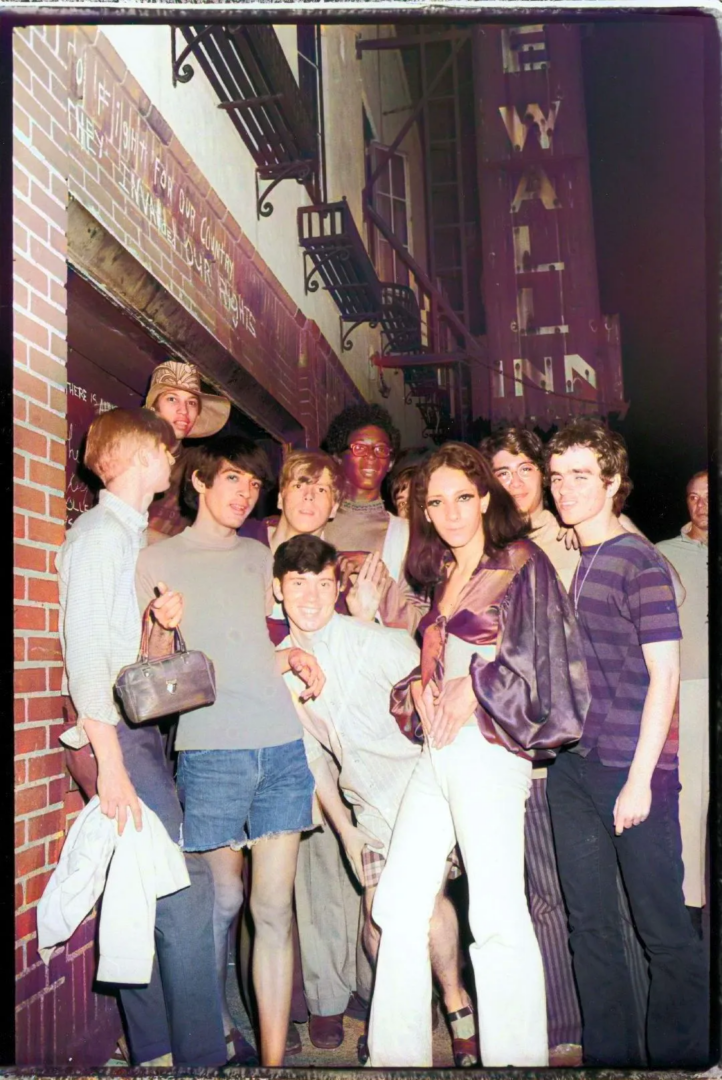
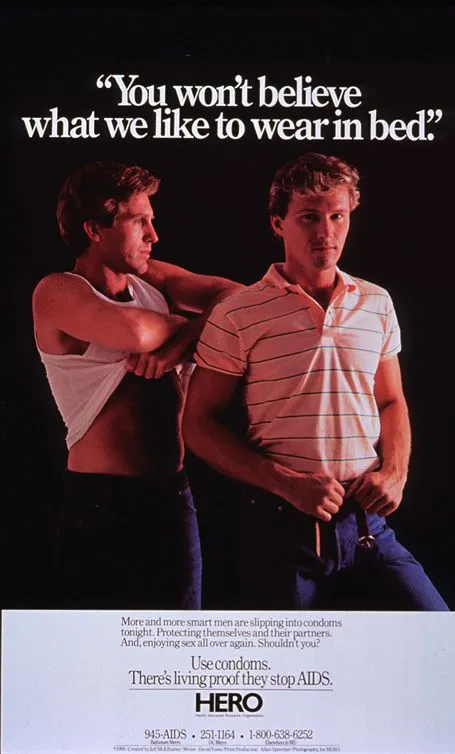
In June 1969, police raided the Stonewall Inn on Christopher Street in Manhattan. The people who fought back were drag performers, transgender women of color, working-class gay men, street queens — none of them there for brand partnerships. The organizations that formed afterward used slogans since removed from commemorative merchandise. ACT UP deployed direct-action tactics against pharmaceutical companies and financial institutions throughout the eighties and nineties. Their visual language was built for confrontation.
Two decades before Stonewall, Rudi Gernreich co-founded the Mattachine Society, one of the earliest American gay rights organizations, in 1950. His unisex designs of the sixties were provocations against the gendered expectations of mid-century society — inseparable from his political commitments. His work came from within queer life. It did not borrow from it to sell products.
Homonormativity and the narrowing of queer political demands
The demands of the post-Stonewall movement were specific: housing equity, healthcare access, decriminalization. Over time they narrowed to marriage equality and military service. Corporate branding accelerated that narrowing. The pink dollar required a stable, identifiable customer. Queerness in its disruptive forms resists a clean customer profile. What gets sold instead is a legible version: categorized, seasonal, safe.
Queerness has never referred solely to sexual orientation or gender identity. Within queer theory it has functioned as a critique of the social norms that organize identity itself. Gender emerges through repeated practices and performances that come to appear natural. Queerness exposes the instability of those categories — interrogating how structures are produced, maintained, and normalized rather than simply asking who is permitted within them.
For José Esteban Muñoz, queerness was equally a question of futurity. He wrote against the idea that existing social arrangements represent a finished horizon. Queerness, in his account, is an orientation toward what does not yet exist — a refusal of the claim that the present order. Its political significance extends beyond representation. It preserves the possibility that structures themselves might be otherwise.
Ballroom culture, voguing, and what fashion borrowed without paying back
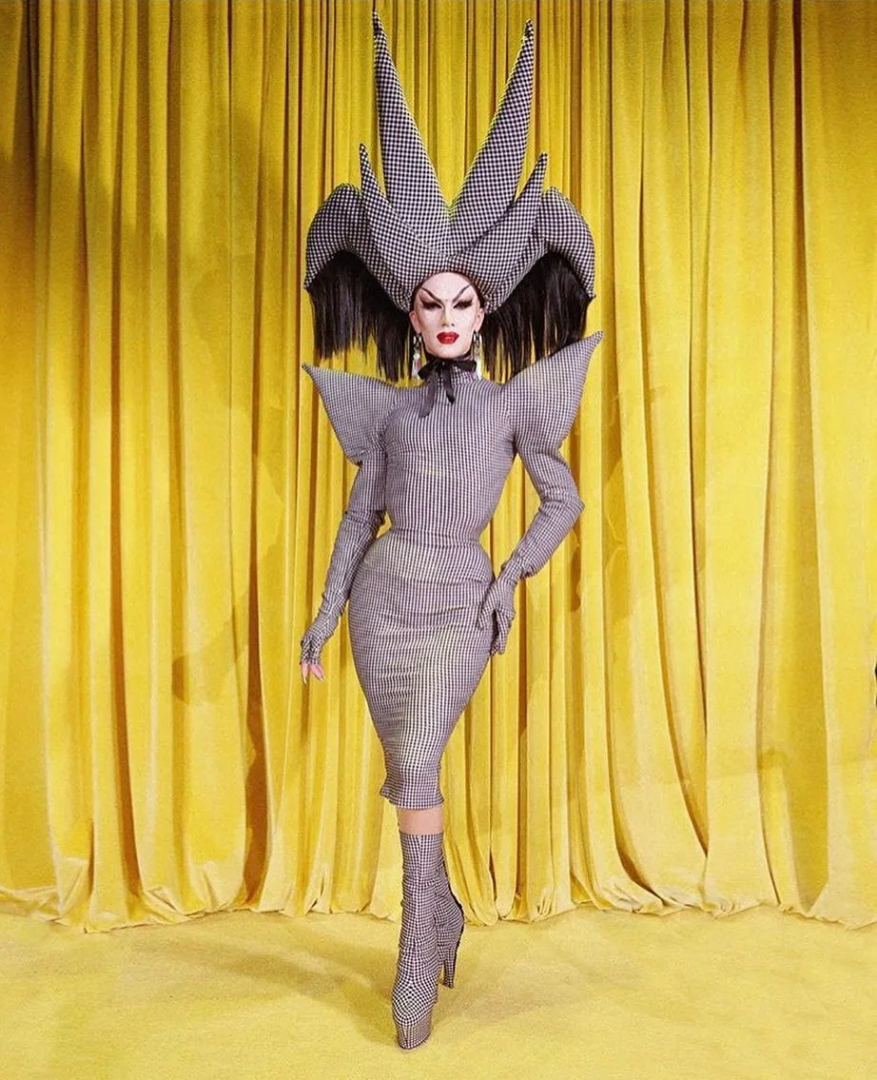
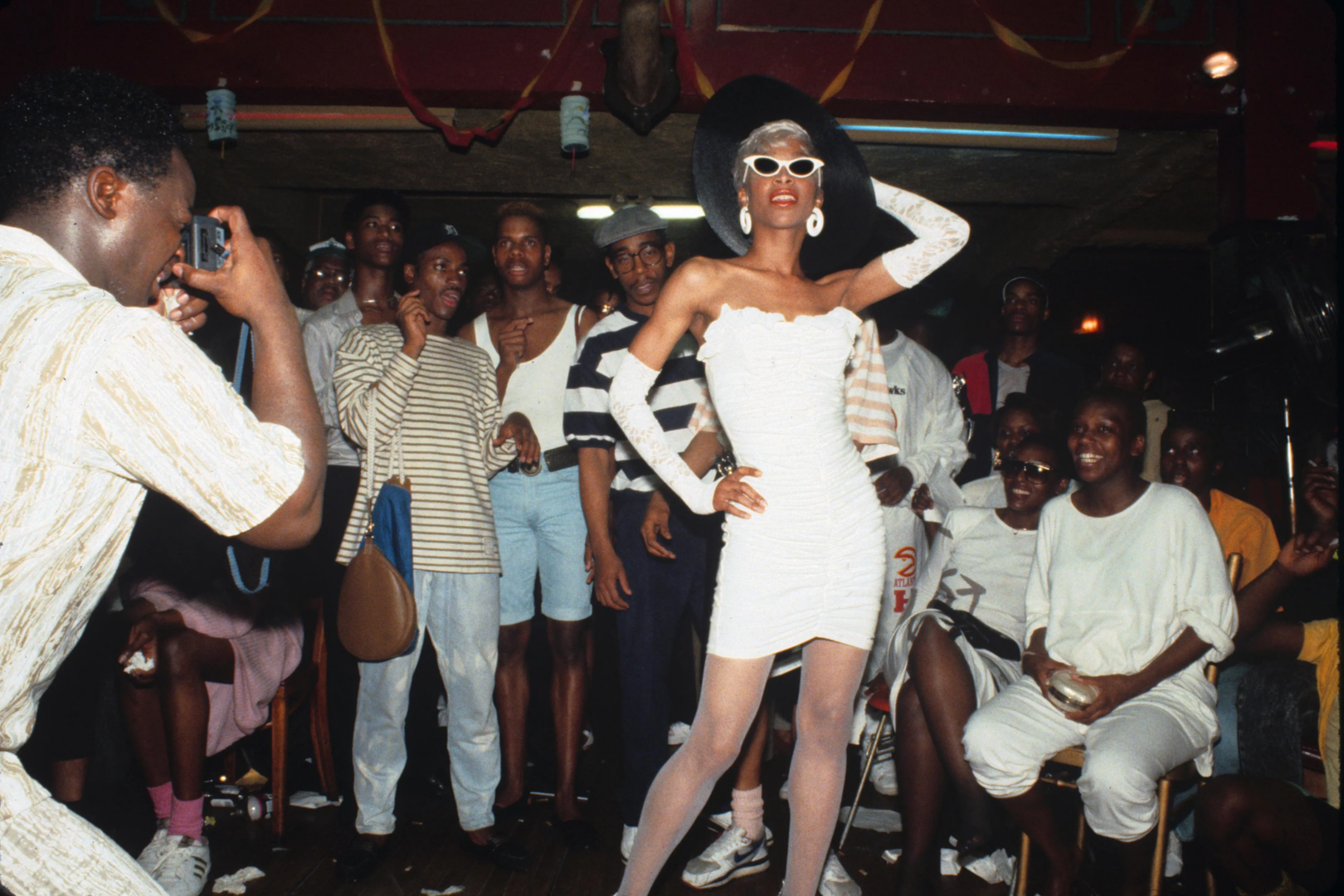
The visual language of the high-fashion runway comes from ballroom culture: the dramatic walk, the architectural silhouette, the exaggerated pose. Ballroom developed in Harlem and Brooklyn as a space for people excluded from both white society and mainstream gay organizations. Voguing and pageantry were acts of cultural reclamation — parodies of the imagery found in publications like Vogue. That is where the name comes from.
Fashion has had a queer relationship with gender — treating it as a performative act rather than a fixed category. Queer fashion enacts gender as unstable, constructed, open to reinterpretation. The fashion industry’s seasonal absorption of queer aesthetics attempts to freeze that force into a product.
The borrowing accelerated in the early nineties. Madonna’s Vogue. Jennie Livingston’s documentary Paris Is Burning. Both introduced ballroom to mass audiences as commercial products, generating revenue for mainstream artists while many of the culture’s builders remained without resources. As dancer and ballroom figure Lasseindra Ninja put it: there is no you without us though, remember.
Rainbow washing in fashion: what separates a campaign from a commitment
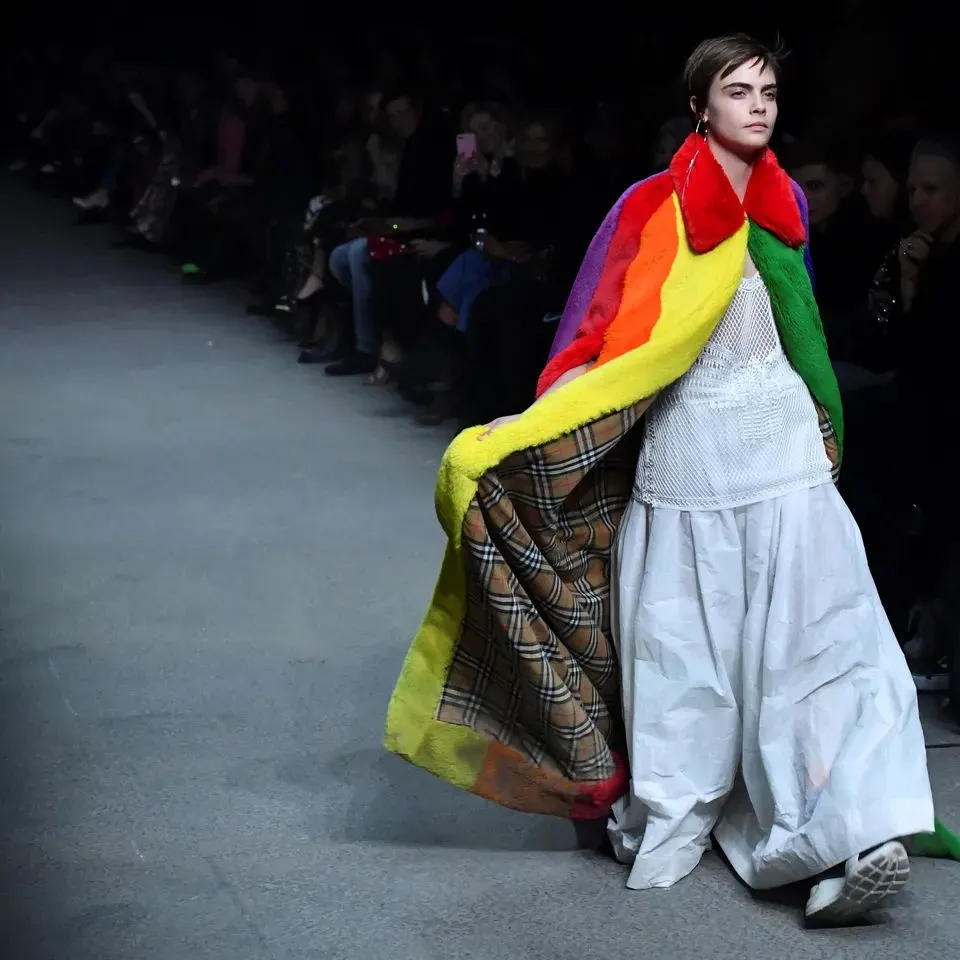
In 2013, Chanel sent two cisgender, heterosexual, white models down its Haute Couture runway in support of equal marriage rights in France — drawing criticism for using stand-ins rather than queer people. In 2018, Christopher Bailey dedicated his final Burberry collection to LGBTQ+ youth, with donations to the Albert Kennedy Trust, the Trevor Project, and the International Lesbian, Gay, Bisexual, Trans and Intersex Association. Louis Vuitton’s June 2018 debut under Virgil Abloh featured a rainbow runway titled Color Theory. Opening Ceremony’s Spring/Summer 2019 show partnered with Sasha Velour and directed proceeds to the Transgender Law Center.
The problem with these moments is that they end. Luxury fashion runs on seasonal renewal. A useful distinction exists between protest, process, and product as three registers of political visual practice. Most runway gestures fall into the third: they take the look of protest without embedding it in a process.
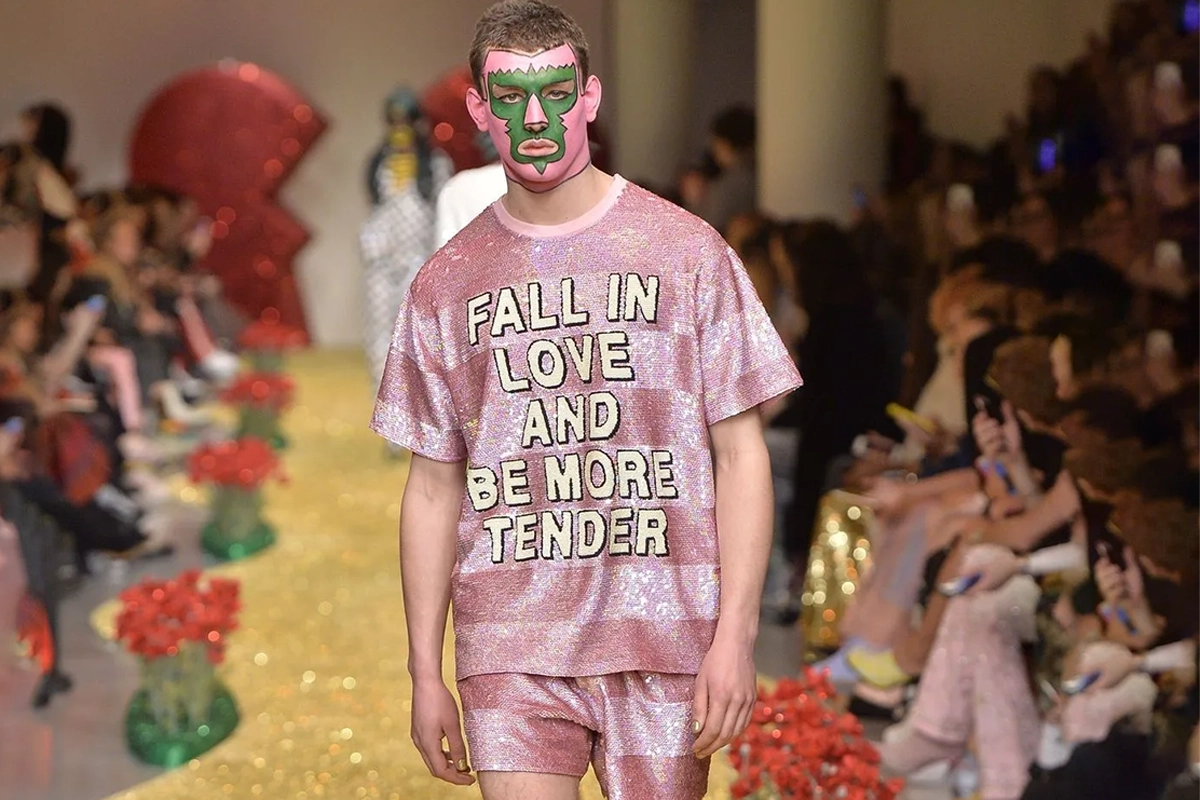
Roberto Filippello’s 2023 interview with the design collective Trashy, published in the Fashion Studies Journal, documents what refusal looks like in practice. The collective’s Spring/Summer 2021 collection, Pride for Pay, used commercial branding logic as a satirical tool to expose pinkwashing — the use of LGBTQ+ imagery to rebrand an institution while concealing what it does. The collection made the structure of co-optation its subject. That is a different operation than a capsule collection.
Independent publishing and zine culture regained ground by refusing corporate funding and keeping queer theory tied to political critique. The slogan Be gay, do crime, circulated through publications of the anarchist Mary Nardini Gang collective, makes a factual observation: queer survival has often been illegal by necessity, long before it became a target market.
Pinkwashing, corporate retreat, and the structural limits of brand allyship
The tension between queerness and corporate capitalism is a problem, and better campaigns will not resolve it. Every social commitment a company makes is conditional on its obligation to shareholders. The corporate retreat of 2023 to 2025 was an expression of those values, not a deviation from them.
The queer movement was founded around the refusal of conditions that made certain lives unlivable — and those conditions persist. The corporate Pride infrastructure has produced visibility for a narrow range of queer people: mostly white, cisgender, middle-class, and based in places where visibility carries limited risk. For those outside that range, the rainbow logo has rarely meant much in practice.
When brands package queerness into seasonal products, they attempt to re-codify a destabilizing force into a purchasable category. The brands that have held their position built their commitments into governance structures, pricing models, and supply-chain decisions — choices that cost something to reverse. The campaigns that endure are the ones that remain visible when Pride Month ends and political pressure begins.
Loewe, Jonathan Bailey, and the Shameless Fund: when visibility becomes redistribution
The Loewe and Jonathan Bailey collaboration illustrates what separates symbolic visibility from material commitment. The limited-edition Drink Your Milk T-shirt referenced Bailey’s role in Fellow Travellers, a story of forbidden love between two men in the 1950s. Every purchase contributed to The Shameless Fund, Bailey’s LGBTQ+ foundation — which addresses a measurable gap: only one penny of every hundred pounds donated to charity in the United Kingdom reaches LGBTQ+ causes. The initiative transformed visibility into redistribution, becoming part of a broader fundraising infrastructure supporting grassroots organizations internationally. Bailey stepped back from acting entirely in 2025 to run the fund. The campaign was commercial, and its commercial logic produced material outcomes that extended beyond the image.
Saint Laurent’s Pink Matter occupies a different position. Unlike Pride capsules built around rainbow merchandise, the project functioned as a platform for queer cultural production. Anthony Vaccarello curated the exhibition and fanzine; twenty-two artists contributed across photography, collage, graphic design, architecture, and visual culture. Rather than transforming queerness into a consumer identity, Pink Matter invested in queer image-making itself. Its value lies in cultural visibility and authorship, participating in the longer tradition of queer publishing and zine culture that provided spaces for self-representation outside mainstream institutions.
Bottega Veneta’s Qixi campaign illustrates the limits of a simple rainbow-washing framework. The film featured same-sex couples within a celebration traditionally associated with heterosexual romance — and did so within the Chinese market, where LGBTQ+ representation in advertising remains comparatively rare. The campaign generated no direct funding or institutional change. It remained a marketing exercise. But context matters. Where queer representation is still contested, depicting same-sex intimacy publicly can function as an intervention in cultural norms, and the campaign’s significance lies in its willingness to broaden who appears within narratives of love.
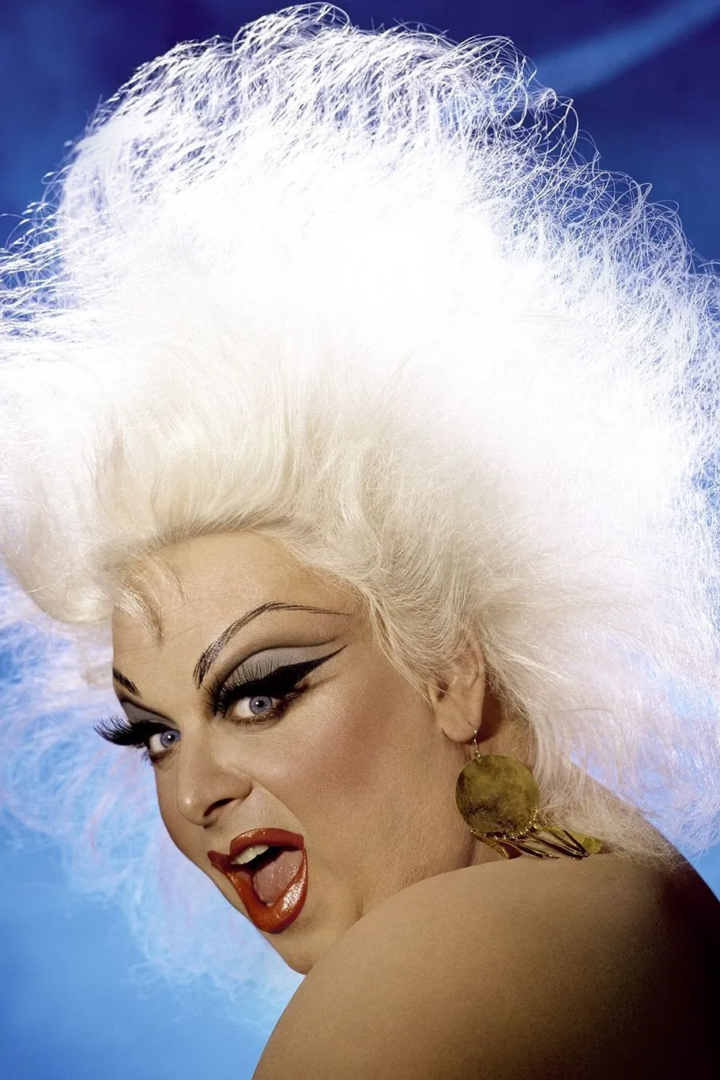
The Loewe x Divine project offers a different model. Jonathan Anderson turned his attention to queer cultural memory rather than Pride as a seasonal event. The project centered on an exhibition dedicated to Divine, the drag performer and actor whose work challenged conventions around gender, performance, and respectability long before LGBTQ+ visibility became commercially desirable. A limited collection supported Visual AIDS; donations also went to Baltimore Pride, a Black-led LGBTQ+ organization in Divine’s hometown. The project functioned as cultural stewardship: preserving and circulating a queer history the industry frequently references but rarely contextualizes. Rainbow washing extracts queer imagery from its political and historical context. The Divine project attempted the reverse — returning context, lineage, and material support to the culture from which those aesthetics emerged.
Queer fashion, clothing as protection, and who gets to be visible on their own terms
At a panel organized by the American LGBTQ+ Museum at the Fashion Institute of Technology in New York, three practitioners described clothing’s function in queer life — none of them as aesthetics.
Marcus Anthony Brock, an assistant professor at FIT, spoke of clothing as an amulet. Protection for bodies moving through a world that withholds recognition. Clothing is read before language, before politics, before anyone has spoken a word.
Angela Dene, a queer personal stylist, described style as a tool for embodiment — something used to locate and stabilize the self. Style begins when the noise is cut out. It is what you know about yourself when you wear it.
Austin Bjorkman, the first known openly trans designer to show at New York Fashion Week, described visibility as permission. When people see themselves in other people, it allows them to explore who they are. His label Trans Guy Supply exists to produce that recognition — confirmation that trans and nonbinary bodies belong in fashion on their own terms.
Queer fashion has never been solely aesthetic. It has functioned as recognition, protection, and community formation — often simultaneously, often under conditions of real risk. The question for brands is whether they participate in the conditions that make queer life possible.
LGBTQ+ representation in advertising and the gap between image and inclusion
The gap between campaign imagery and the experience of the people in it. Queer models and nonbinary practitioners have described being cast in campaigns where teams were unaware of their pronouns, unbriefed on trans or nonbinary experience, and unwilling to ask. The shoot proceeds. The image is used. The visibility is real. The inclusion is a fiction. What gets produced is extraction: the value of a queer body, separated from the person who inhabits it.
Gender is a performance. The filters, labels, and category systems that organize how products are sold carry the same assumptions the campaigns claim to address. A rainbow logo does not alter a sizing chart. A Pride campaign does not rebuild a website’s navigation menu.
Queer representation in national advertising has been linked to shifts in public attitudes and, from there, to legal protections — visibility carries weight. The criticism is that a company can run an inclusive campaign while paying poverty wages, withholding healthcare, and lobbying against labor rights. Corporations tend to treat the queer market as a single segment; it contains an enormous range of identities, experiences, and political positions. Homogenizing a community for commercial legibility is itself a form of erasure. When representation substitutes for redistribution, it protects the company from criticism without changing the conditions that make queer lives insecure.
The visible queer subject in advertising is almost invariably one who has already been made legible — smoothed into something the market can hold. The structural demands have been traded for a privatized, consumption-based identity. Representation arrives, but only once queerness has agreed to stop being disruptive.
Queerness points toward what does not yet exist. Corporate branding works in the present tense. It offers visibility in place of transformation. What disappears in that exchange is the ability to picture a different arrangement of things.
Mutual aid, ballroom houses, and the queer infrastructure that survived the corporate retreat
Capitalism has historically demonstrated an ability to absorb the very critiques directed against it. Subcultures become aesthetics. Resistance becomes branding. Queerness is not unique in this regard, but its transformation into a market category reveals the process.
As corporate funding contracted between 2023 and 2025, mutual aid networks grew to cover what the market withdrew. Grassroots organizations coordinated direct distribution of resources: housing funds, medical costs, and gender-affirming care outside the nonprofit structures corporations typically use. The underground ballroom scene kept operating as a self-sustaining network, its houses functioning as chosen families offering housing and support to young people rejected by their biological families.
Visibility also carries a cost the branding discussion rarely accounts for. Being visibly queer in public involves a continuous calculation of safety — an anticipation of how a body will be read before it has done anything, a management of other people’s reactions in real time. Practitioners describe building a thick wall: a psychological structure assembled over years to absorb what the world directs at a body that does not conform. The mental health costs within queer communities follow, in part, from the labor required to be visible without protection. Corporate Pride imagery uses the image of visibility while leaving the cost of it on the people who live it.
The Co-opted Flag: Queerness, Commerce, and Who Pays the Cost draws on the work of Judith Butler, José Esteban Muñoz, and Lisa Duggan; on research into LGBTQ+ advertising by Gillian Oakenfull; on Roberto Filippello’s work on pinkwashing and queer fashion; and on testimony from practitioners including Marcus Anthony Brock, Angela Dene, and Austin Bjorkman. Brands discussed include Loewe, Levi Strauss and Co., Calvin Klein, Diesel, Savage X Fenty, Rick Owens, Bottega Veneta, and Saint Laurent.