Correcting, sculpting, selling: Fashion’s permanent construction site
For fashion low target brands, a Ford Mustang, a Coca-Cola bottle, and a female body obey the same logic: form, desirability, and market value. The industry’s real economic engine
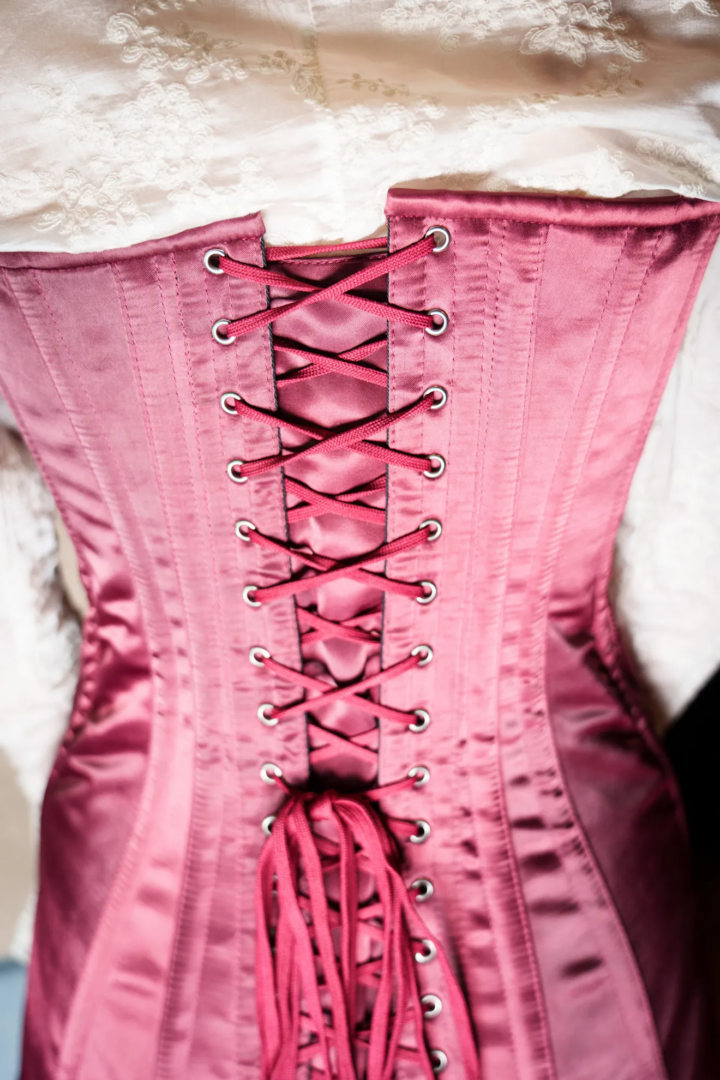
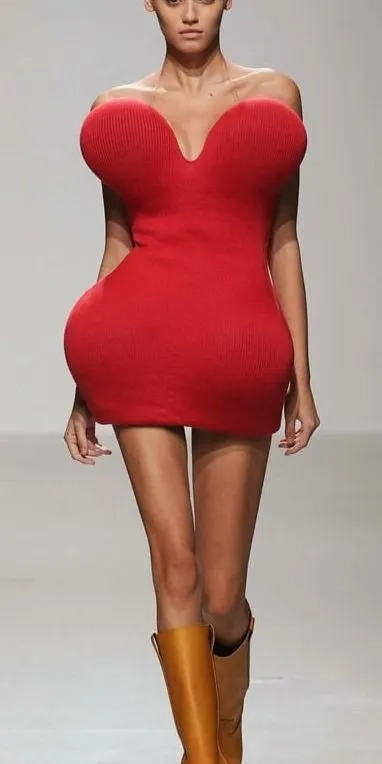
In Woman as Design (2009), cultural critic Stephen Bayley traces the evolution of how the female body has been perceived — from the Venus of Willendorf to Kate Moss. Across more than three hundred pages, he maps the parallels between the female body and consumer objects: lamps, Coca-Cola bottles, a Ford Mustang. He then catalogs the commodities of the female body and their commercial alienation: bras, garters, corsets, heels. He argues that the bra is a male invention, engineered to shape, package, and display organic sections in the most desirable configuration possible. He also claims that in periods of uncertainty — economic, social, or climatic — ovoid curves are preferable to cold sharp angles because they are more reassuring. Which, naturally, applies to the fashion industry as well. This is the anatomy that sells.
The body as a permanent project: fashion’s obsession with optimization
A 2026 inventory of what people are putting into and onto their bodies reads like a pharmaceutical logistics report: proteins, fillers, cryotherapy sessions, neuromodulators. Research published by the Proceedings of the National Academy of Sciences as part of a study titled Cultural Evolution of Beauty analyzed nearly eight hundred thousand images from runway shows, advertisements, and editorial shoots between 2000 and 2024, tracking the evolution of models’ body sizes over time. The conclusions are blunt: “On average, nothing happens. Everything is extremely stable.” The study reveals a paradox. Representation has broadened, and diversity has grown in many ways. Yet the definition of what constitutes a desirable body is resistant to change. A wider range of body types appears in the images, but the standard of the “typical” model has not shifted. Women’s bodies are presented as externally incomplete projects — vessels of terracotta to be improved and reshaped on a continuous basis.
Some ingredients — mercury and arsenic, used from the Renaissance through the early 2000s to brighten skin — have been banned from commerce as toxic. But other preoccupations, such as the shape of “breast pouches” (the ancestors of the bra), labiaplasty (surgical or laser correction of the labia minora), and hair removal, filled the conversations of Renaissance women just as they fill our feeds today. We live in the era of looksmaxxing, where men are now also advised to pursue steroids, strategic cheekbone trauma, and surgical mutilation to meet chronically extreme standards — protein-maxxing to build muscle, starve-maxxing to cut calories. A gender parity nobody asked for. A glut of fillers, cryotherapy, and neuromodulators. Il faut souffrir pour être belle.
America’s Next Top Model built the world we live in
The world we inhabit today was constructed on the foundations of programs like America’s Next Top Model. It is the fatal American dream: if you work hard enough, you will be rewarded with a body worth selling. You yourself can become the product. The idea that beauty is a skill that can be refined.
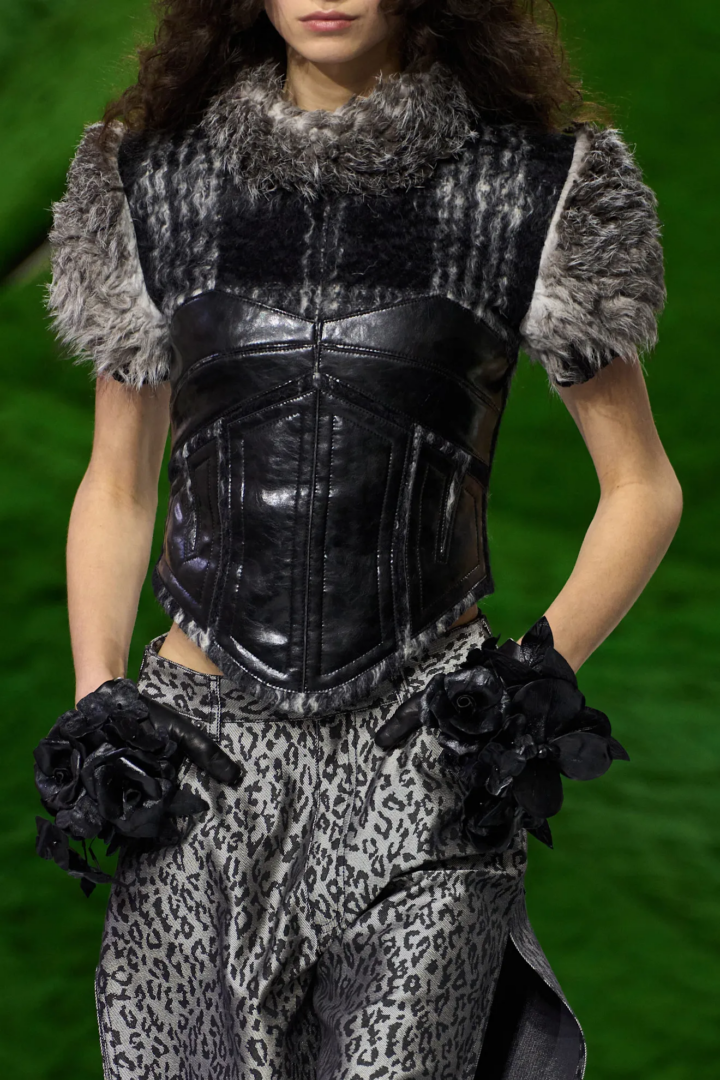
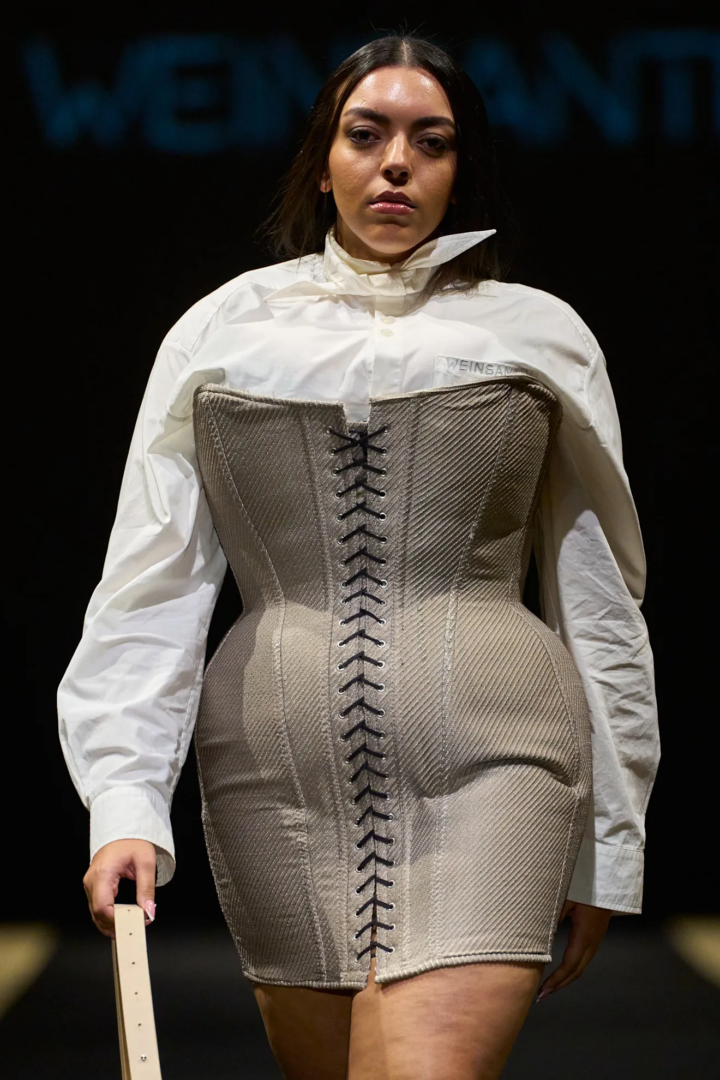
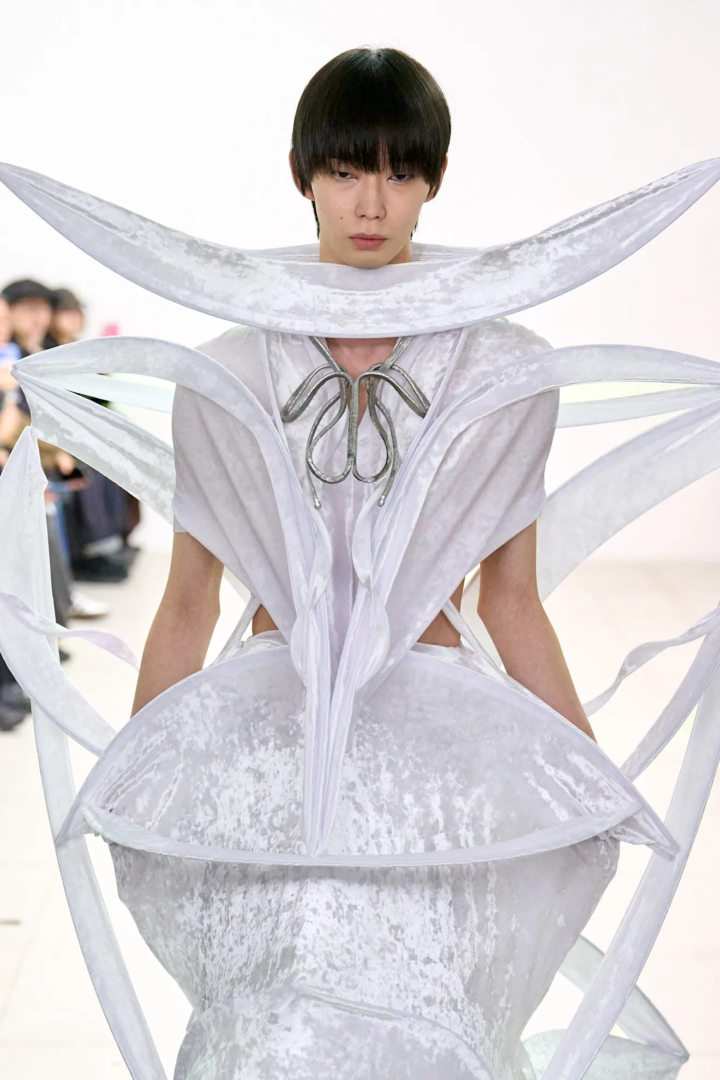
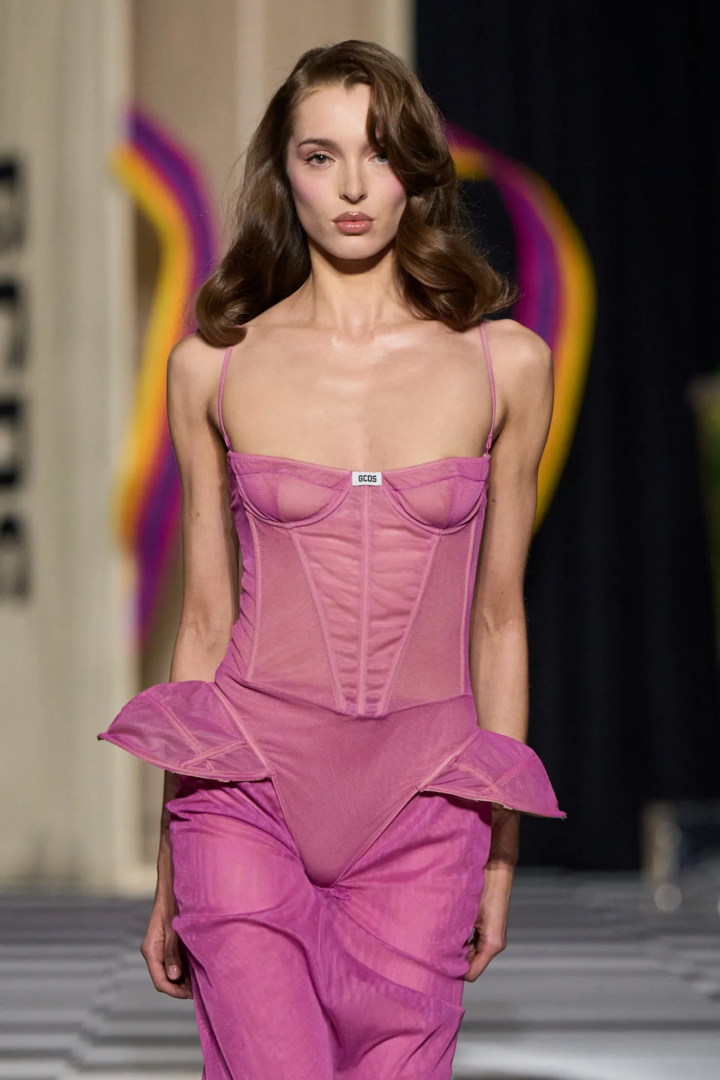
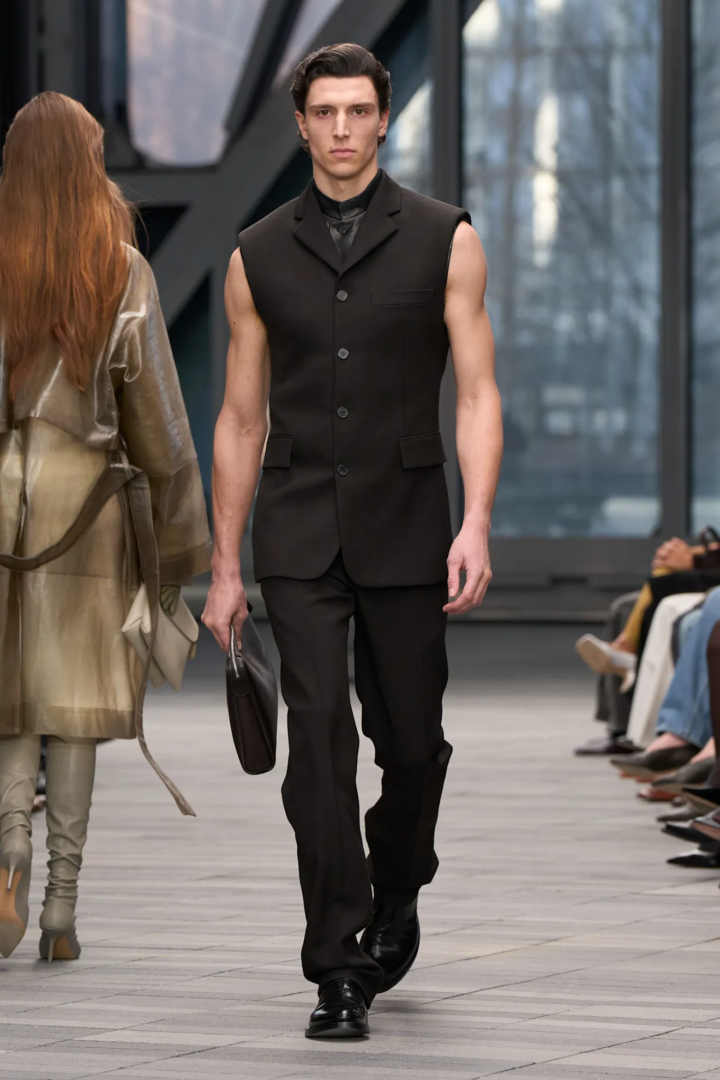
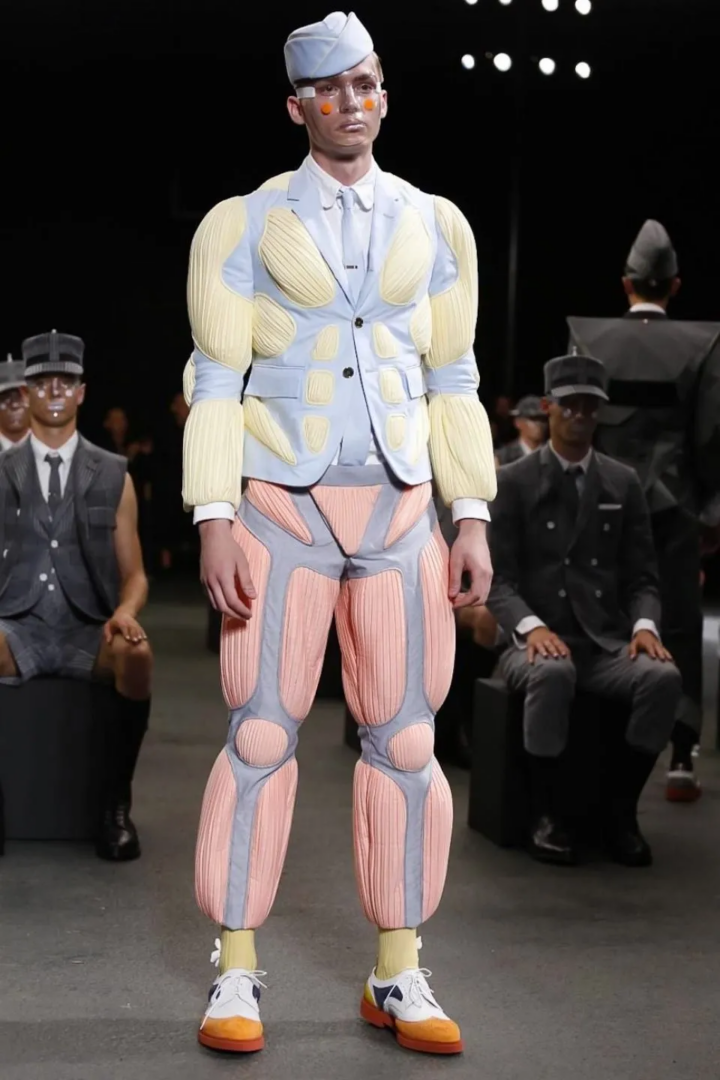
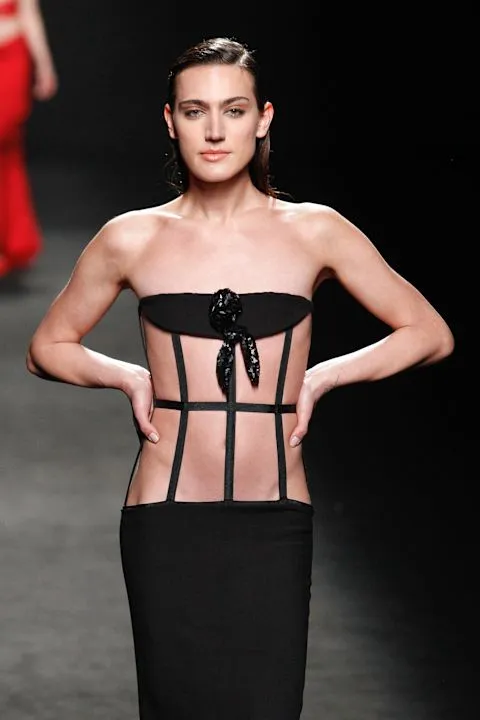
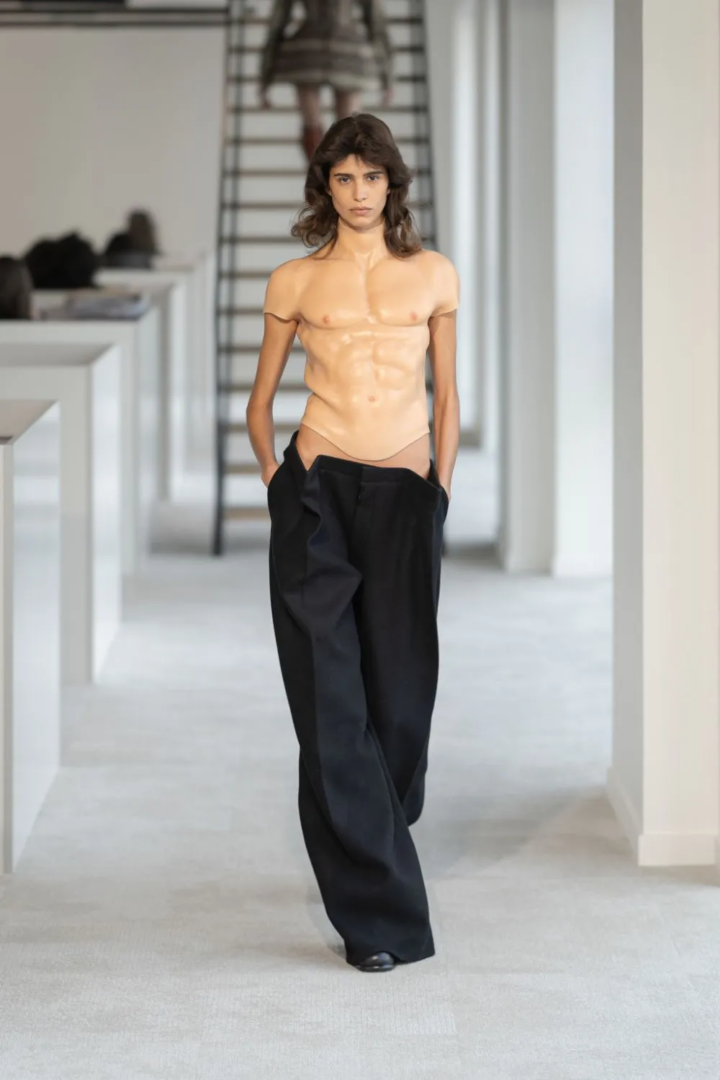
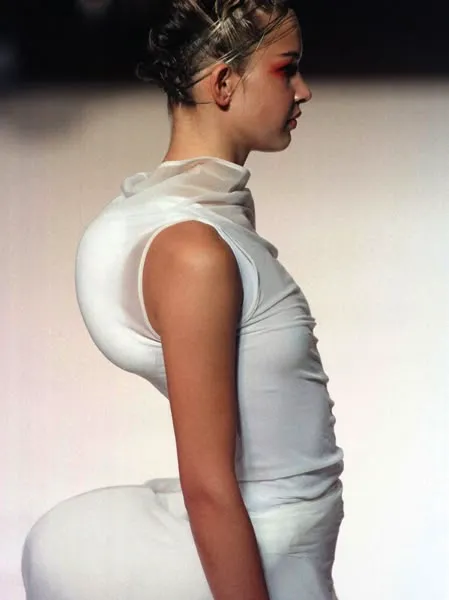
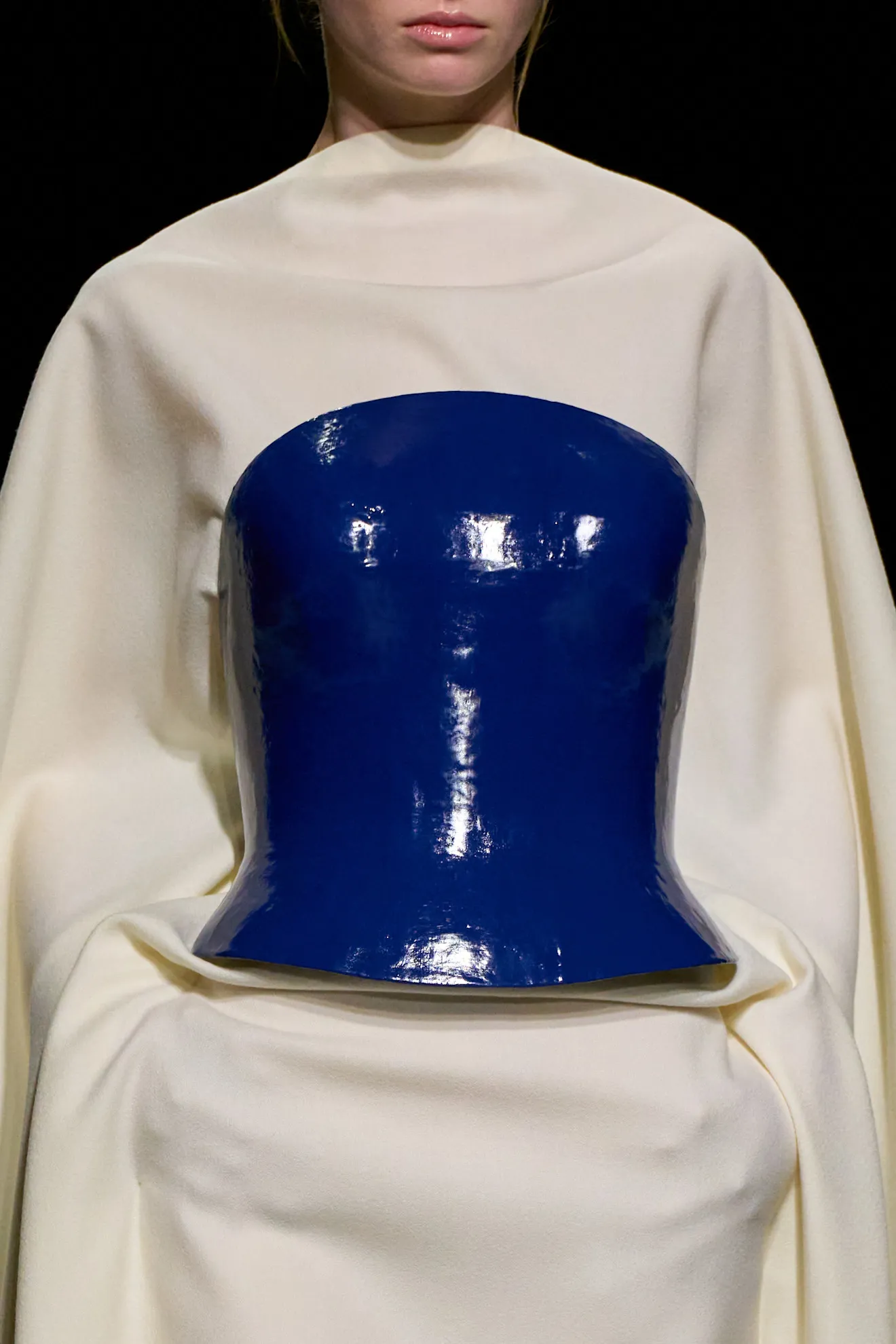
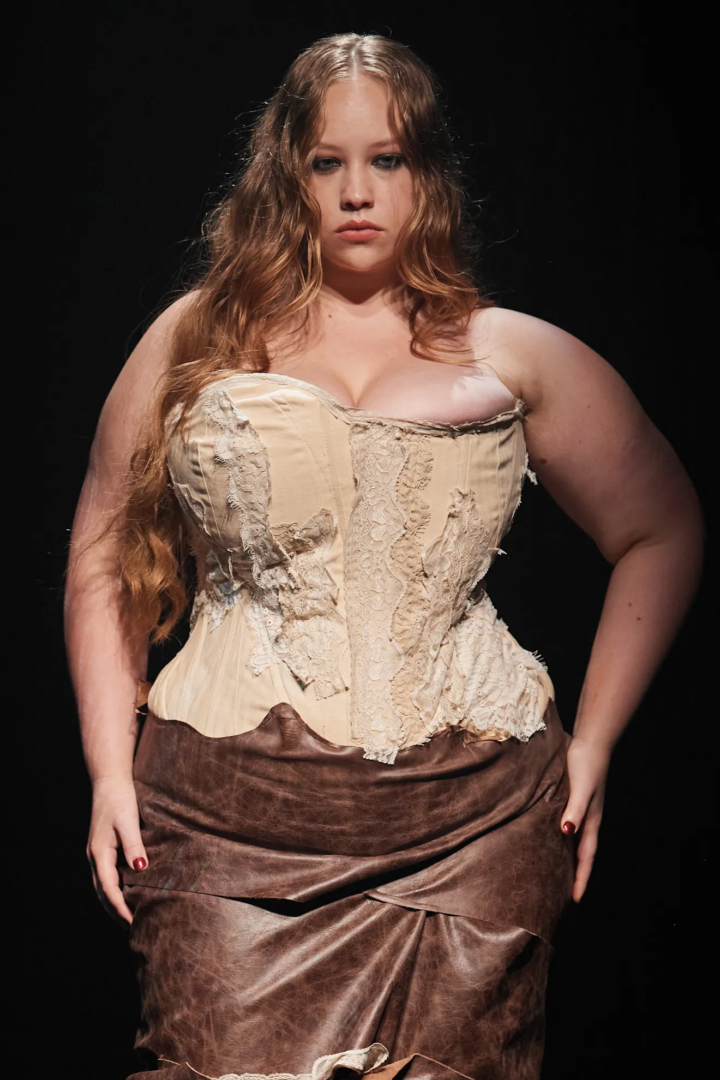
Where a daily Mounjaro tablet and a couple of procedures fall short, fashion steps in. For his debut as creative director at Dior, Jonathan Anderson presented pannier skirts — less a clothing accessory, more an eighteenth-century deformation machine for dilating the hips. At Jean Paul Gaultier, Duran Lantink added anatomical breastplates to skintight suits. At Calvin Klein, a lineup of models wore sleeveless tops and muscled biceps with perfectly groomed body hair — bicepmaxxing became the conversation. At Schiaparelli, Daniel Roseberry narrowed waistlines and carved the angles of bones directly into garments.
Kim Kardashian’s shapewear company sells underwear with extra padding at the hips and bras with built-in perky nipples. The concept of “natural” is itself an artifice. Our distortion field is extreme. There are also political dimensions to this. According to data analyst and researcher Molly Rooyakkers, this anatomical obsession is a response to two opposing forces: cultural conservatism on one side, which wants us polished and plated like Hollywood figurines, and the demand for spectacle on the other. Everything slots into a cultural moment dominated by peptides, strategic protein accumulation, and optimized bodies.
Nothing new: from Chanel’s geometry to Alaïa’s orthopedics
When it comes to female anatomy, nothing is truly new. The Little Black Dress — the supreme achievement of Chanelian design — is often compared to Kazimir Malevich’s Black Square. A textile adaptation of Malevichian forms, Mademoiselle Chanel’s dress was, in its time, an engineering of volumes aimed at reconfiguring the body within the geometric frame of a square. No excess, no material nobility. The machine was the muscle of her style. More precisely, a Ford Model T — the comparison appeared in the pages of Harper’s Bazaar in 1926. The doctrine of haute couture and the low-material aesthetic of mechanical technology were regenerated in the little black dress, the vestimentary format of the executive woman of the 1920s. “I gave freedom back to the body,” Chanel would later say, “a body that sweated in parade clothes, under lace, corsets, bodices, and a thousand paddings.” Writer Colette saw it differently: “Short, flat, geometric, quadrangular, the woman’s dress imposes silhouettes dictated by a parallelogram… a masterpiece of curmudgeonly engineering… a stovepipe.”
Even the flexible substance of Chanel models’ hair was not permitted to drift outside the square: the garçonne cut and the containment cap erased every organic manifestation, every possible excess. Ears, cheeks, and foreheads were reshaped through the abolition of curves and silhouette. To avoid the danger of excessive coldness: a few embroidered edges, a white collar, the ever-present pearls.
Azzedine Alaïa, a sculpture student at the Academy of Fine Arts in Tunis, moved to Paris — capital of haute couture — to make statues out of fabric rather than bronze and marble. To “transform haute couture into the orthopedics of the body.” As Elsa Schiaparelli had done before him — though with considerably more surrealist license — Alaïa rearticulated the skeletal and cartilaginous apparatus through skin-like, robust materials. He mutated the forms of fashion at a genetic level and laid the groundwork for a different female anatomy: tubular morphologies, controlled volumes, spirals in service of a statue-body plasticity, incapable of tasting space. An artist in mixing chiffon, silks, yarns, and leathers and coating them in a hardening substance. The grace of the static body.
Mugler’s cosmobodies: robots, armor, and the cold anatomy of spectacle
In the nineties, injected with special effects, Alaïa’s anatomical statues walked the runways of Thierry Mugler. With his models in armor, Mugler transposed into fashion the concepts of mecha design and fembot — robots with female features. He forged an aesthetic devoted to the roar of modernity and skyscrapers, as much as to the coldness of surgical anatomy. He upgraded bodies into cosmobodies. He did it by robotizing silhouettes, lining them in metal plates, and constructing — as backdrops to his shows — high-fantasy environments. He never imagined his women seated at a corporate boardroom table. He imagined them on cinematic screens, like Wonder Woman. With her skintight costume and the sophisticated perfection of her comic-book silhouette, Catwoman is the woman of Muglerean fashion.
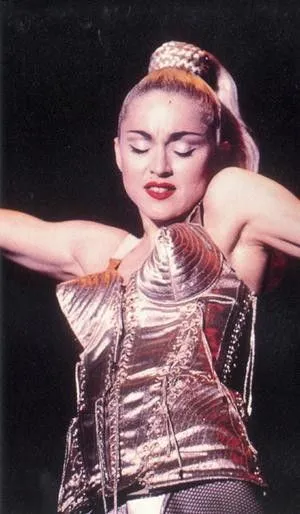
Mugler’s bionic creatures have little in common with Chanel’s geometries and her parallelogram-shaped garments, where the body moves without the fabric ever clinging. Mugler approved of machines, provided they came equipped with mirrors, bumpers, padding, fairings, and other maximalist flourishes. With a tailoring practice modeled on a mechanical workshop, the corset was accessorized with radiators, handles, grills, and compasses. The corset-body of Mugler is an assemblage of metal blades, surfaces ill-suited to performative gesture, even to simple movement. Better suited, perhaps, to the immobility of the beautiful-statuette woman.
The bitter aftertaste of glamourization
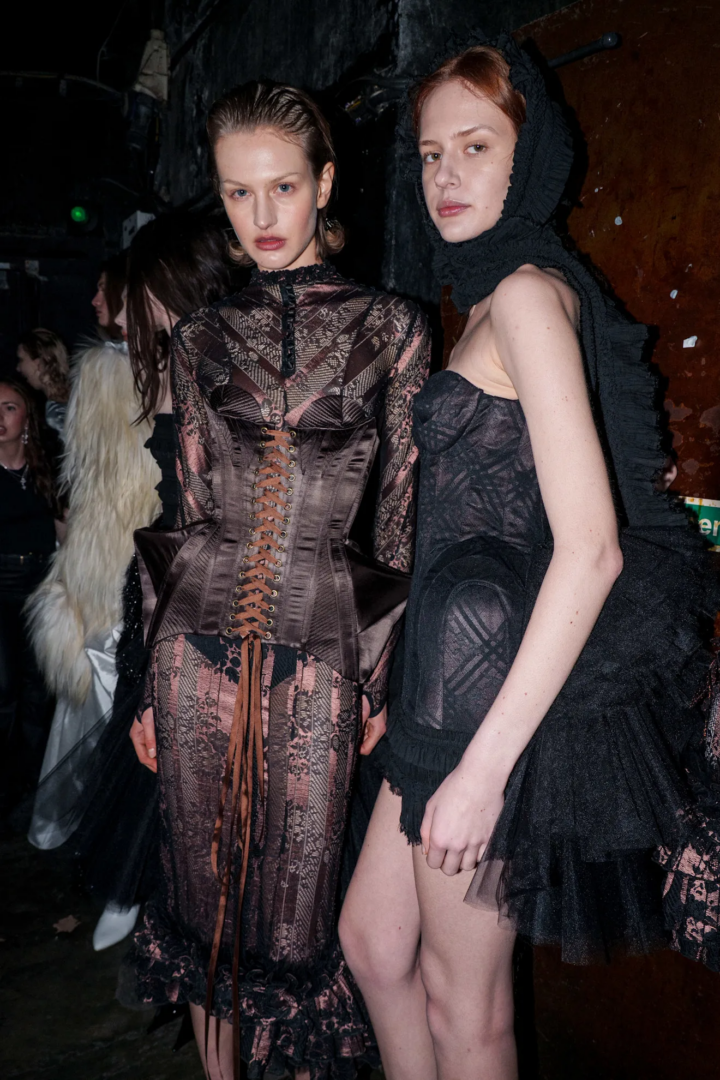
“When a designer’s vision of beauty is simultaneously frightening and fun, you know it’s contemporary.” So wrote critic Cathy Horyn in her analysis of Daniel Roseberry’s 2025 couture show for Schiaparelli in The Cut. The collection — a series of tailored looks modeled on the S-curves of the back, breasts, and hips — evoked Hollywood’s golden age. In the show notes, Roseberry said he was interested in a pursuit of perfection: porcelain complexions, inflexible hairstyles, and minuscule waists made sense to him.
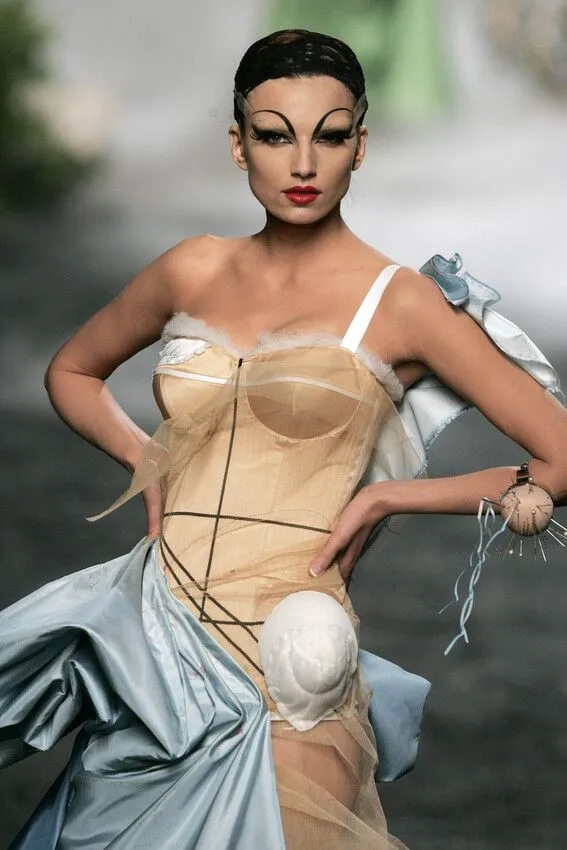
In Thierry Mugler’s work, the satire was legible: extreme glamourization was his signature. Roseberry, by contrast — and with him, most contemporary designers drawn to anatomical curves — does not ridicule the obsession with the female body. He does not tamper with the sclerosis of stereotyping, does not overturn anything, does not push far enough to read as parody — as John Galliano’s January 2024 couture for Maison Margiela did. Instead, aware of the extreme effect of his corsets, he leaves a warning in reverse — one that, in the more critical mind, should produce a counter-sentiment. Like Pirandello’s example of the clumsily made-up old woman: she makes you smile, but she also makes you think. In the end, what remains is the bitter aftertaste.
Anatomical exceptions: McQueen’s interrupted girls
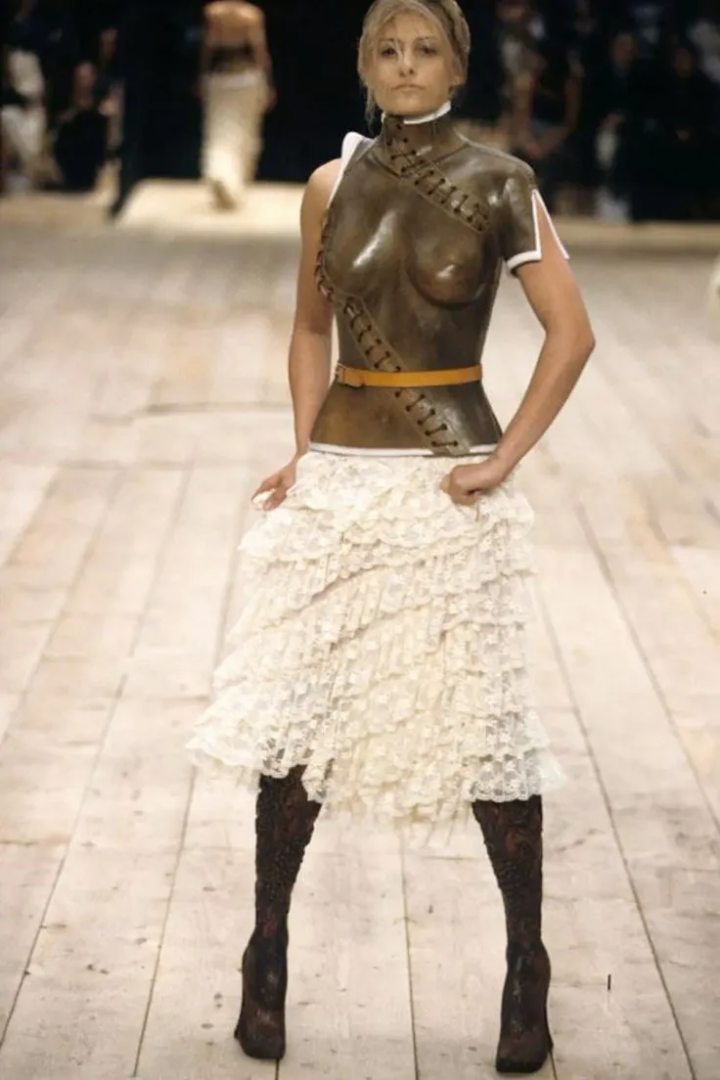
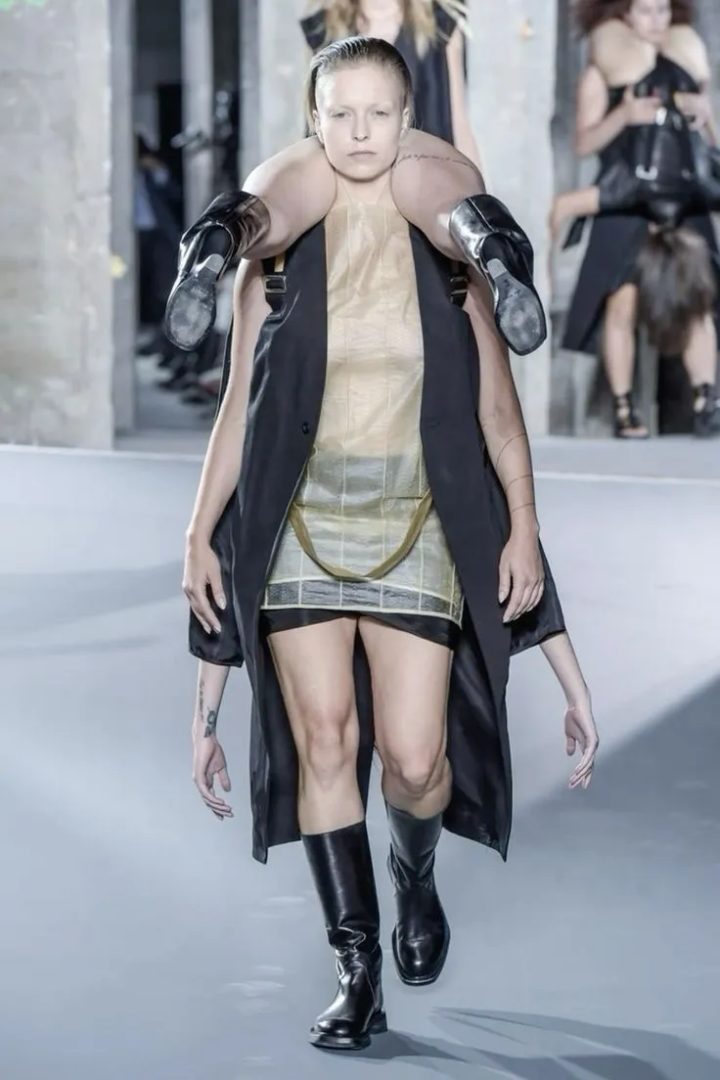
There are exceptions from which fashion should have learned. It has not. It was 1997 when the fashion industry is disturbed by a photograph of model Devon Aoki as a bionic geisha. Aoki wears Alexander McQueen, one eye veiled in blue, a gash on her forehead pinned open with a safety pin from which cherry blossoms grow. Subjected to special-effects post-production at the direction of Alexander McQueen himself — in collaboration with British photographer Nick Knight — Aoki was everything that fashion, deep in the frenzy of the nineties Supermodel era, had not yet encountered: the hallucination of a beauty arriving from another planetary system. On McQueen’s runways there already walked — a singular exception in a white, super-slim landscape — witches, queens, interrupted girls, “angels and demons” (the title, as it happens, of his first collection), with garment silhouettes placed against non-canonical anatomies.
A passionate constructor of unusual pastiche, McQueen scrambled the plane of aesthetic dimension, resigned from the plane of reality, and withdrew from the pernicious business of designing a harmonious, white, size-zero ideal of beauty. After all, looked at with a clear head, does the bionic geisha that Devon Aoki portrayed not have its own fascination? Does it not seem like a photograph capable of renewing the perceptual model of a perfective aura that, instead, ought to be erased, washed away? McQueen’s own words make the position clear: “I want to empower women. I want people to be afraid of the women I dress.”
Alessandro Michele and the refusal of tokenism
After Alexander McQueen, whoever made self-serving stylishness look dusty and dated was Gucci — under the creative direction of Alessandro Michele, who in 2020 cast Ellie Goldstein as the first model with Down syndrome for a major fashion house. “My idea of fashion has to do with imperfection, not perfection,” the designer stated, in open contradiction with an ideology obsessed, by contrast, with the cult of harmony.
But looking at the world through Michele’s unfiltered lens raises a question: are his models anomalous and bizarre, or is it the humanity of the respectable classes that is bizarre — believing itself to be the custodian of the norm? Is the varied, multiform, inclusive humanity of Michele’s world mad, or is it those who, in the observance of good manners, disseminate messages of chromatic — if not ethnic — purity? Choose, then — because modeling means being chosen by a casting director, an agent, or a talent scout on the street — atypical presences, off-canon figures, with the awareness that multiple representations are possible. Ban tokenism: models are not tokens, not coins of symbolic inclusivity. Too many in this industry have yet to understand that.