Hermès SS27: full-weight saddlery belts hold paper-thin leather
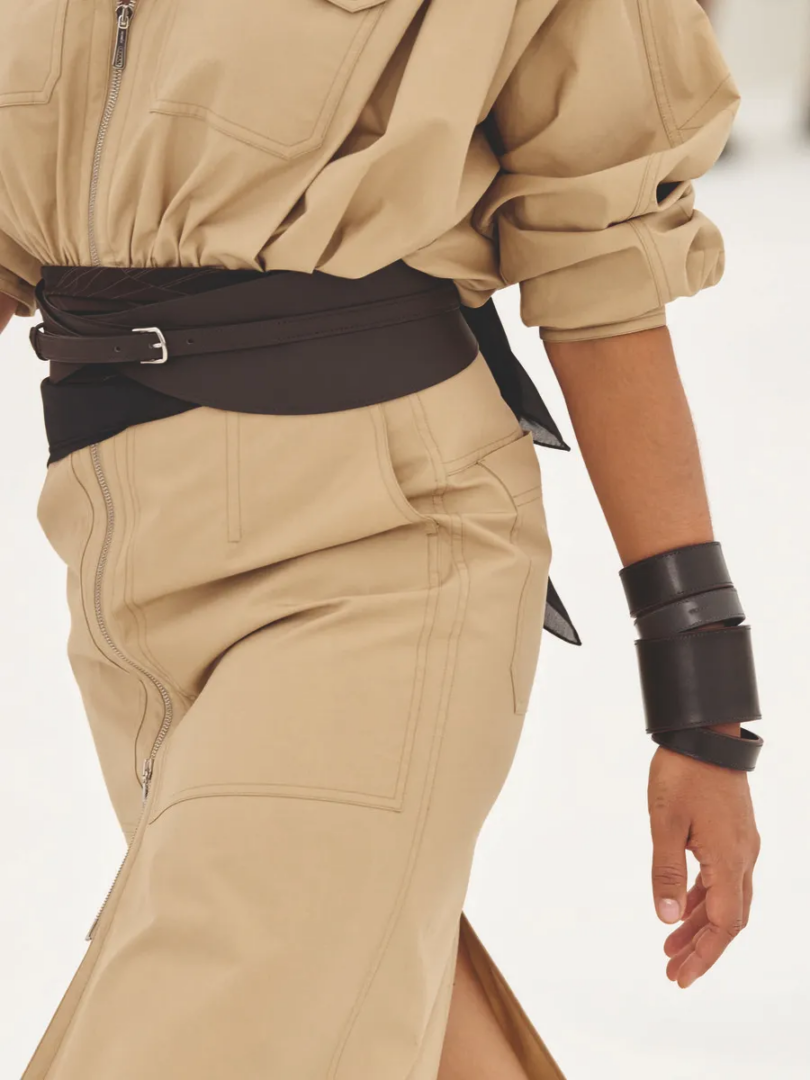
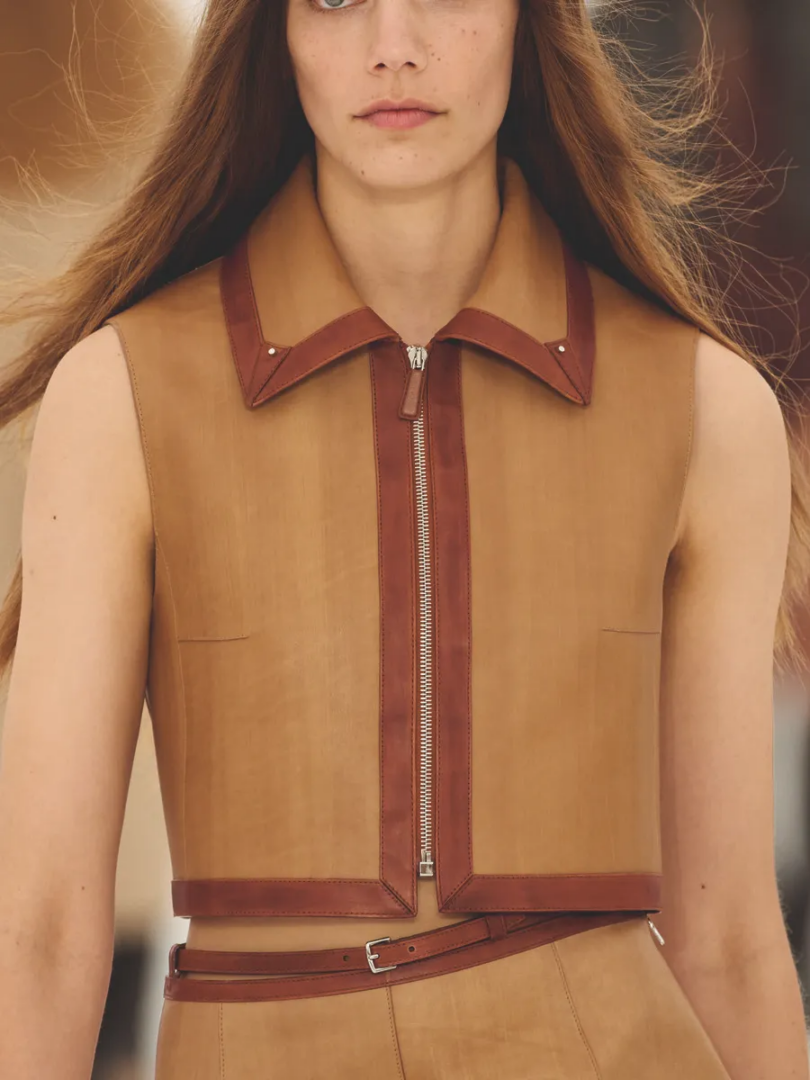
Nadège Vanhée uses the leather strap as structure: full-weight belts compress paper-thin leather, silk pongee and mesh at the waist
How a saddler makes a leather belt: the cut, the edge, the holes
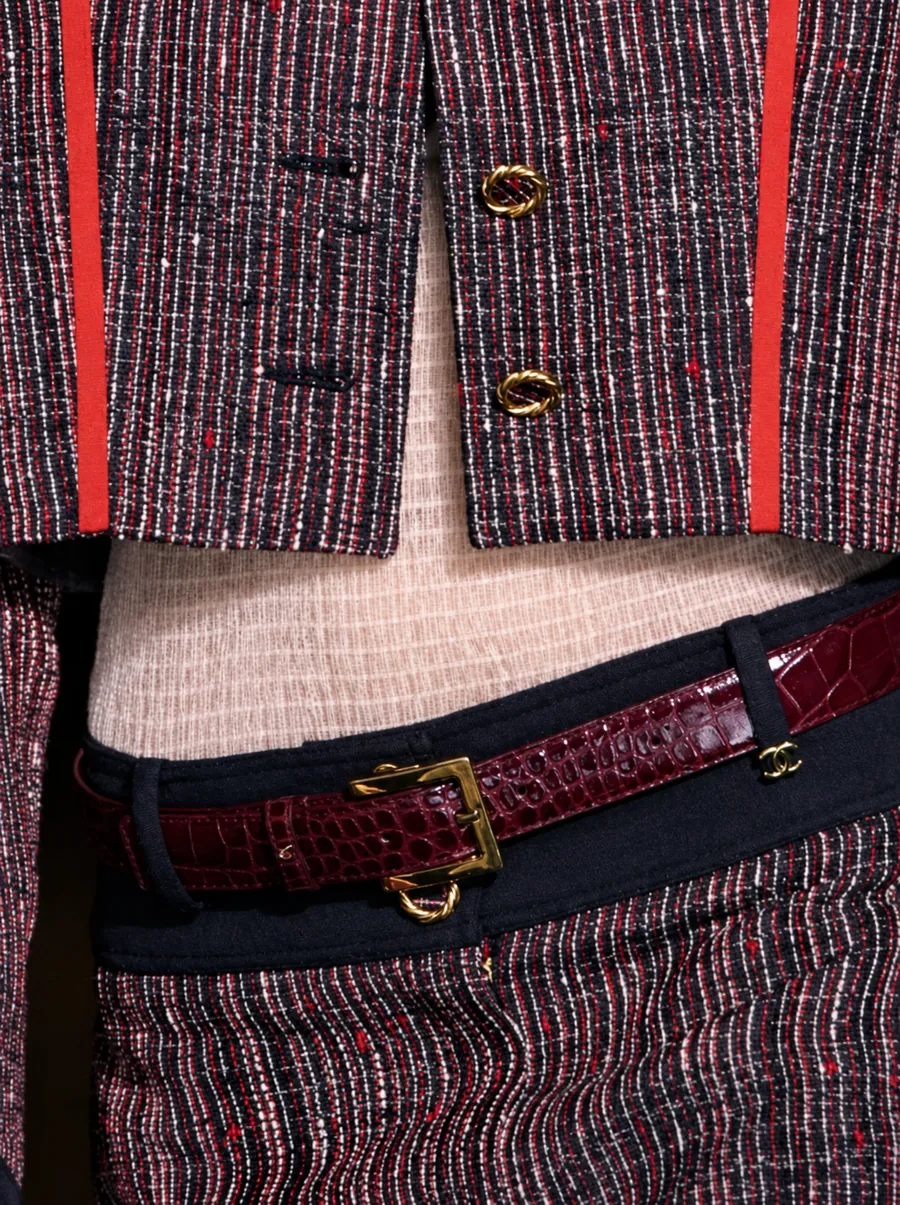
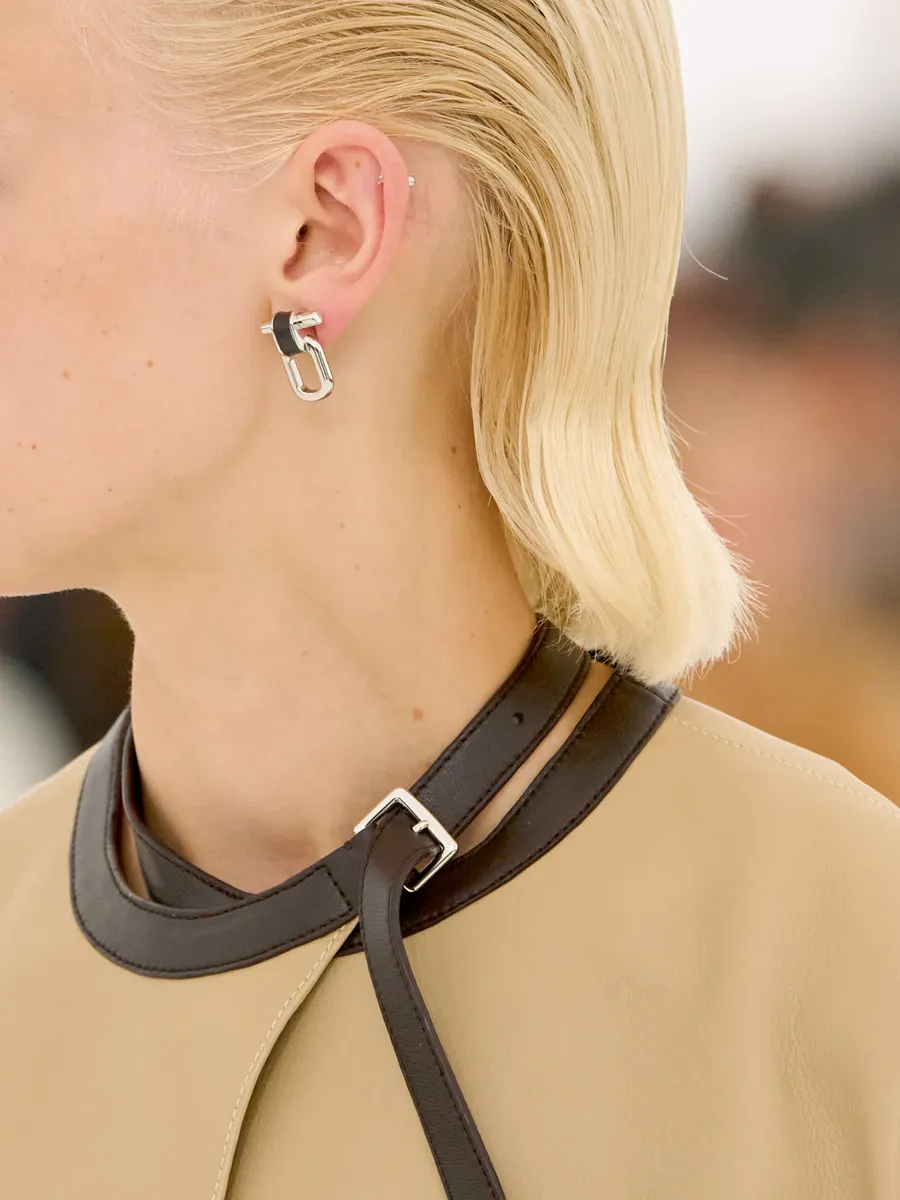
A saddler cuts a strap from the back of the hide, along the spine. The fiber is tight there, and the strap keeps its length. The edges come next. The saddler bevels them, dyes them and polishes them with wax. A raw edge would fray and take in water. The holes come last, punched at even intervals. The strap folds around the bar of the buckle and takes its keeper. Hermès plates many of its buckles in palladium or in gold.
The belt creates a hierarchy between materials. The leather strap must remain stable enough to transmit tension, while the garment beneath it must bend and gather. Its greater stiffness establishes the line around which the silk or knit changes shape.
The Étrivière and the sangle: stable names on Hermès belts
An étrivière is a stirrup leather, the strap that joins stirrup to the saddle. On a horse it carries the weight of the rider. The Étrivière belt takes its buckle from that strap. One version wraps twice around the waist. A sangle is a girth, the strap that passes under the horse and holds the saddle. One sangle holds a saddle, and the saddle carries two étrivières. The Kelly bag closes on two sangles. It began in the nineteen-thirties as a bag with straps. The Kelly belt has no prong: it closes on the turn lock of the bag.
The Hermès Collier de Chien, 1927: from a dog collar to a belt
In 1927 a client asked Hermès for a belt modeled on its dog collars. The result was the Collier de Chien: a wide strap with four studs and a ring on a plate. The belt moved to the wrist, as a cuff. The stud took the name Médor, a French name for a dog.
The Hermès H belt buckle, 1967: Catherine de Karolyi and drawer number 5382
In 1967 Catherine de Karolyi designed the first Hermès collection of women’s ready-to-wear. The same year she drew a buckle in the shape of an H. Clients lined up for it. The staff named it after the drawer where the buckles were kept, number 5382. The H shows no prong. A peg behind the letter goes into the holes.
On the runway, belts take more room than in recent seasons. They cross the waist in leather of full thickness. They go over sheer silk dresses, parkas, poplin and leather. Tan and burgundy are among their colors.
An orange shirt dress in poplin takes a belt with two buckles. Below the belt, the skirt breaks into strips. A belt closes a cream coat-dress in leather, which opens the same way below the hip. A tan belt holds pleated linen trousers under a cream blouson. Belted midi skirts sit under a silk scarf, tied around the chest as a bandeau. Some belts extend into corset shapes. Others carry a pouch and become belt bags.
Paper-thin leather, silk pongee, mesh: what the Hermès belts hold
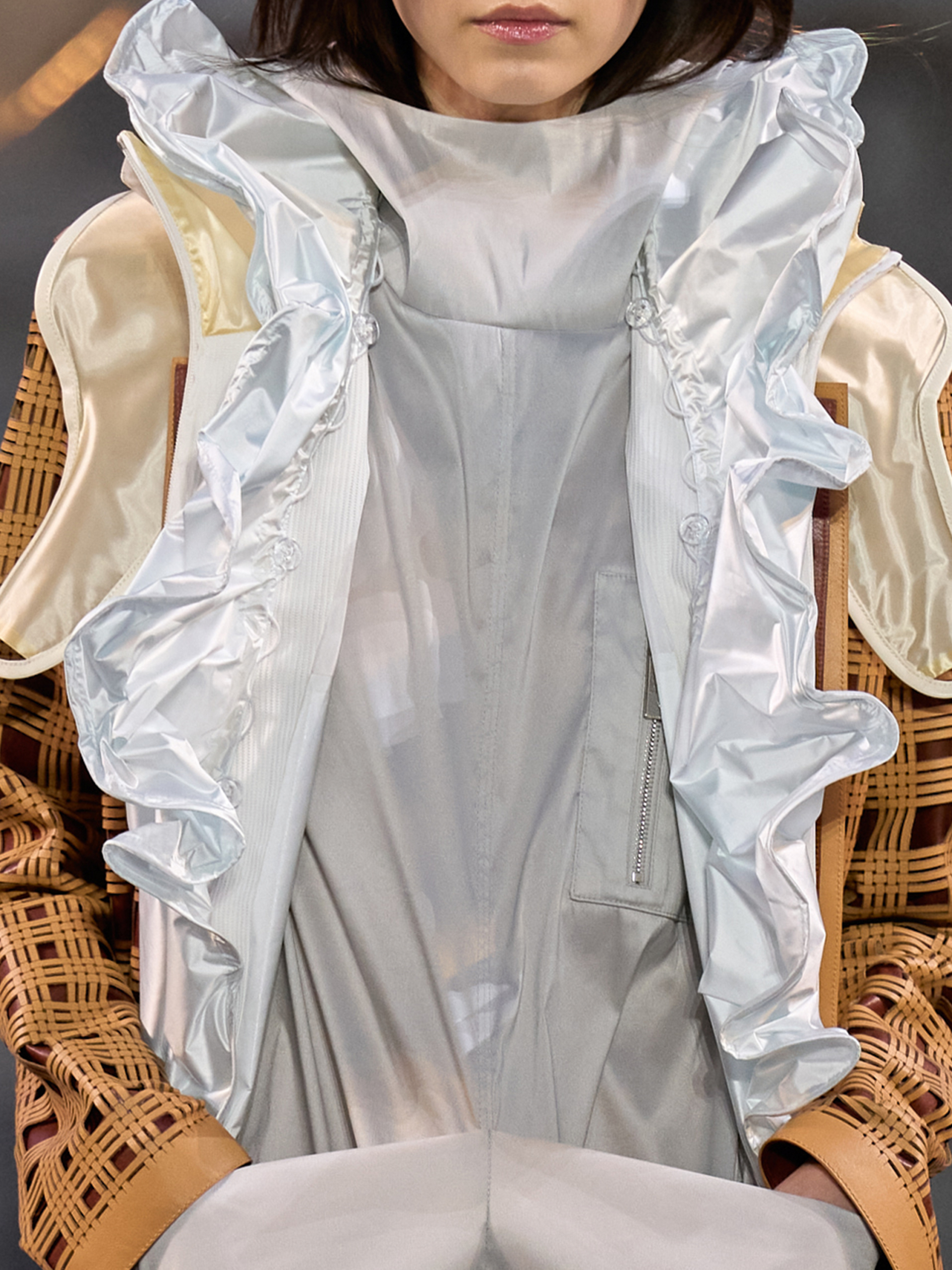
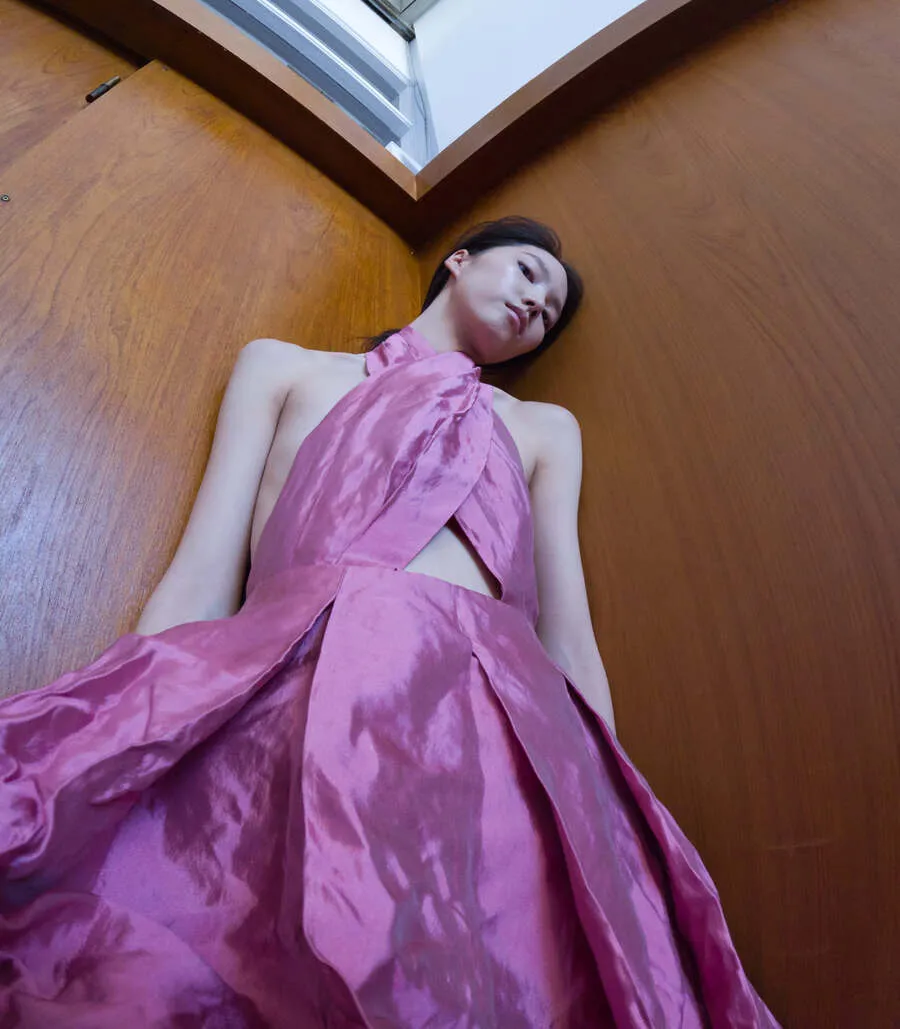
Vanhée cuts jackets and blousons in superfine calfskin, thin as paper. A tannery reaches that thickness by subtraction. One machine splits the hide into layers. Another shaves the flesh side. Parkas come in silk pongee, a plain-weave silk light enough to serve as a lining. Mesh carries strips of leather, embroidered in panels and in lattice. Knits come open, like fishing nets, over bandeau tops. One parka in orange billows over a knit mini dress. A belt gathers a parka or a dress into folds. The cloth fills with air above and below it.
The strap repeats in Hermès SS27: leather cuffs, chokers, sandals, bag straps
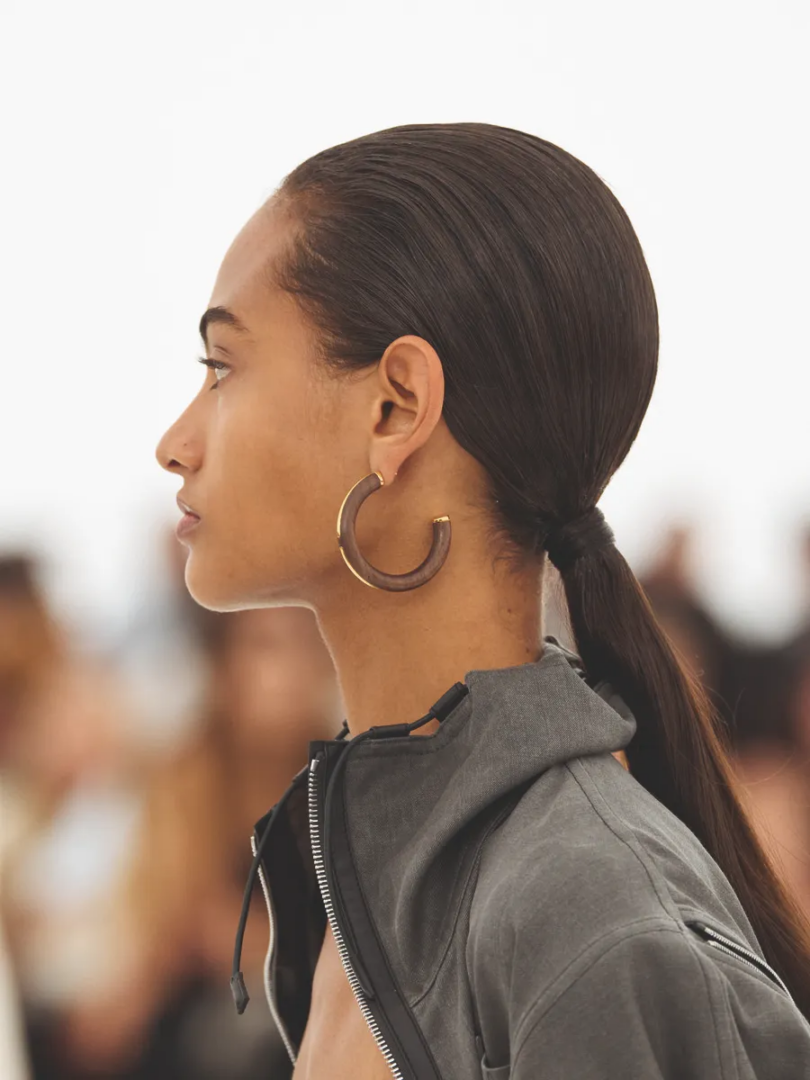
Leather cuffs stack on the wrists, in thick bands. Chokers in leather fasten with a horse-bit clasp. Thong sandals tie around the ankle. Others close with a T-strap. Flat boots carry whipstitched seams at the sides. On the bags, two Étrivière shopping bags carry the stirrup-leather buckle, on straps that adjust. A Kelly Hobo keeps the sangles of the Kelly. The Rênes tote takes its name from the reins. Long leather straps and cords at its sides do the work. Cords and straps run inside the clothes, built into their construction.
Zippers, cords, slits: the other fastenings of Hermès SS27
Zippers run through skirts, parkas, trousers and jackets. Small ones make a parka dress shorter or longer. On trousers they follow the side seam and take the leg from full to narrow. The zipper reached Hermès from North America in 1916, through Émile Hermès. In 1923 it closed a bag for motorists, later named the Bolide. This season a bag in that line carries a two-way zipper along its full length.
Cords adjust the volume of a parka. Slits open leather skirts to the thigh. The Mangeoire, a bucket bag from 1949, returns with its rope handle remade in metal.
The belt becomes a second skin and the air moves through them.