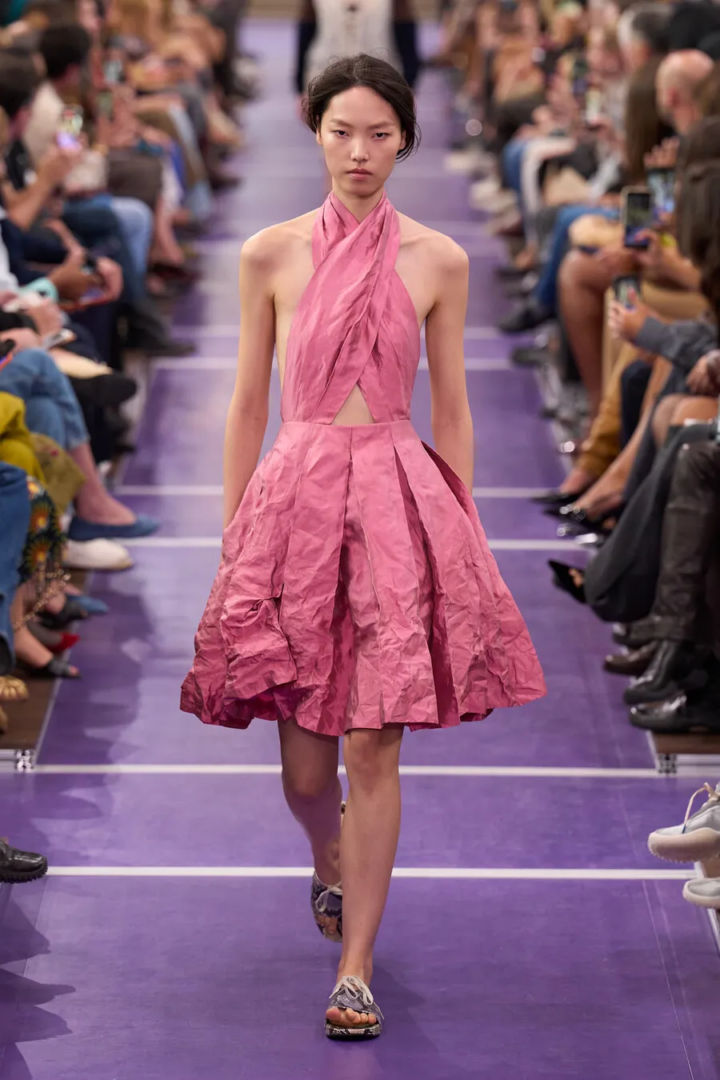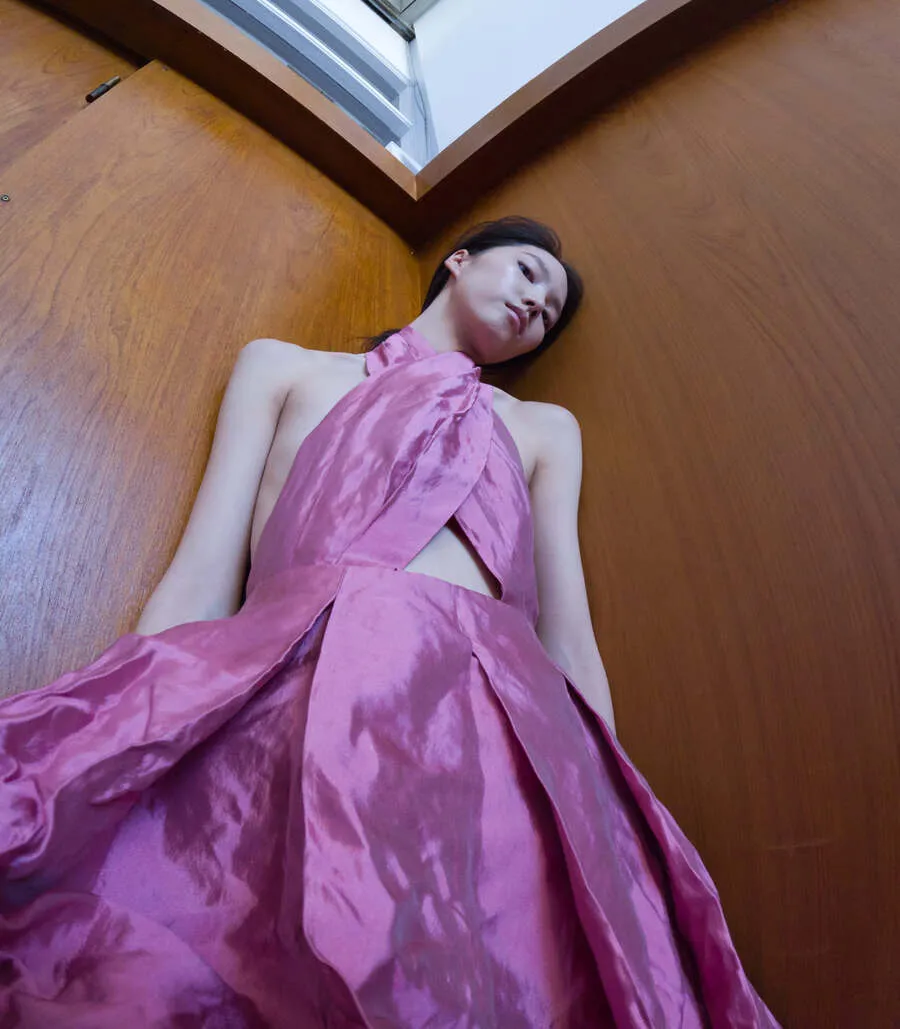
Miu Miu SS27 look 47 turns the satin dress against beauty
At the Spring/Summer 2027 show, creased satin and an altered neckline turn a recognisable archetype into a study of imperfection, part of Miuccia Prada’s attack on conventional beauty
Miu Miu Spring/Summer 2027, look 47: attacking beauty
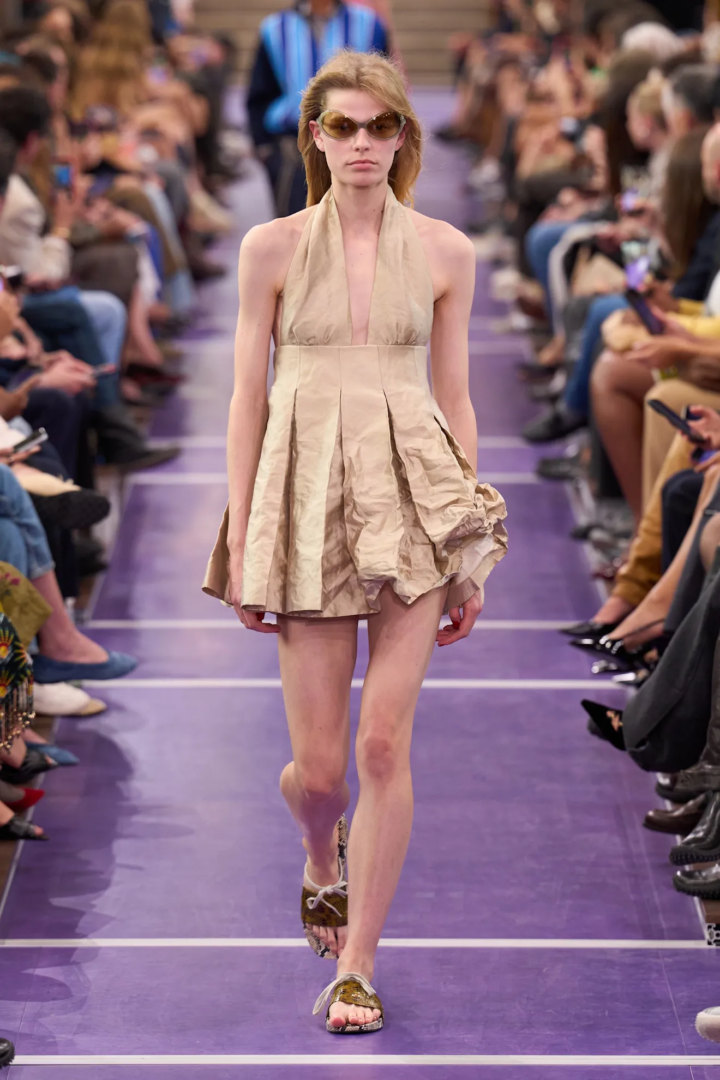
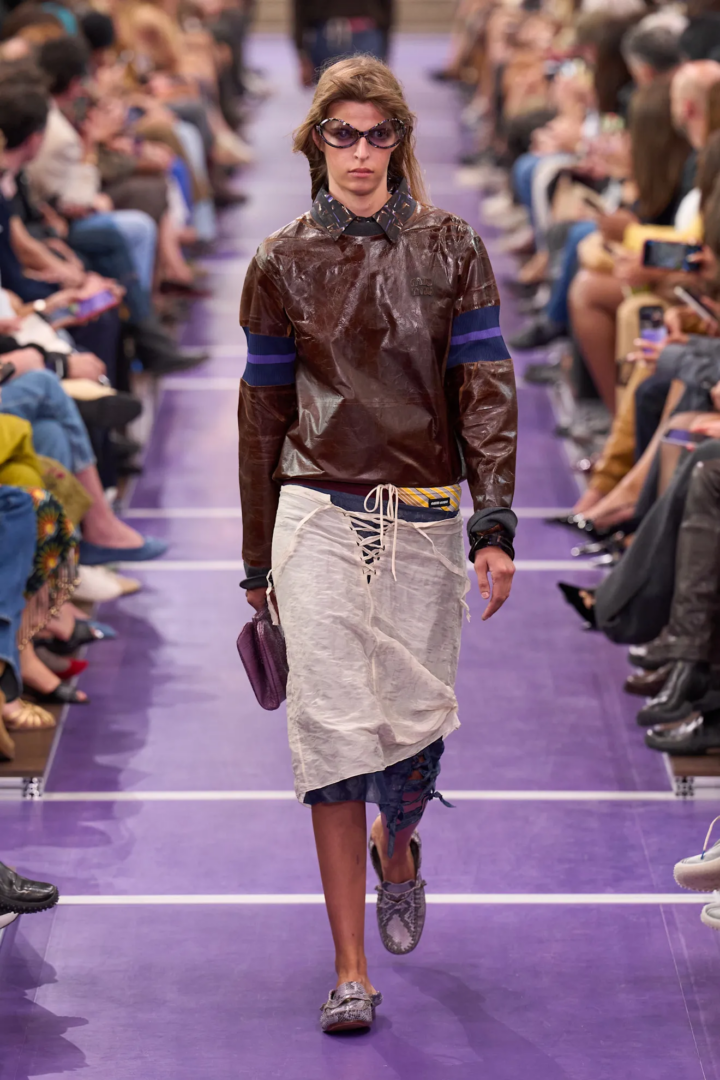
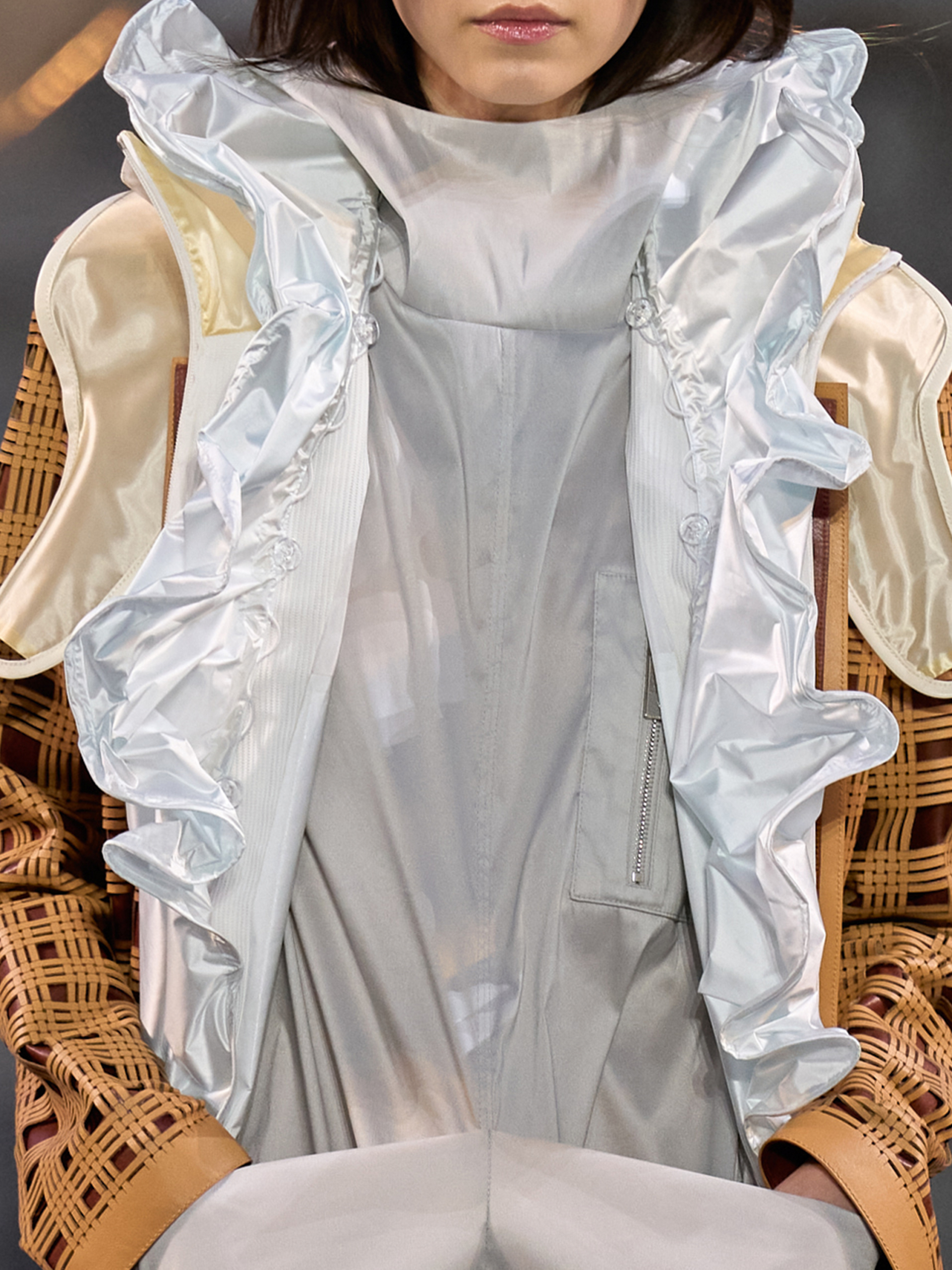
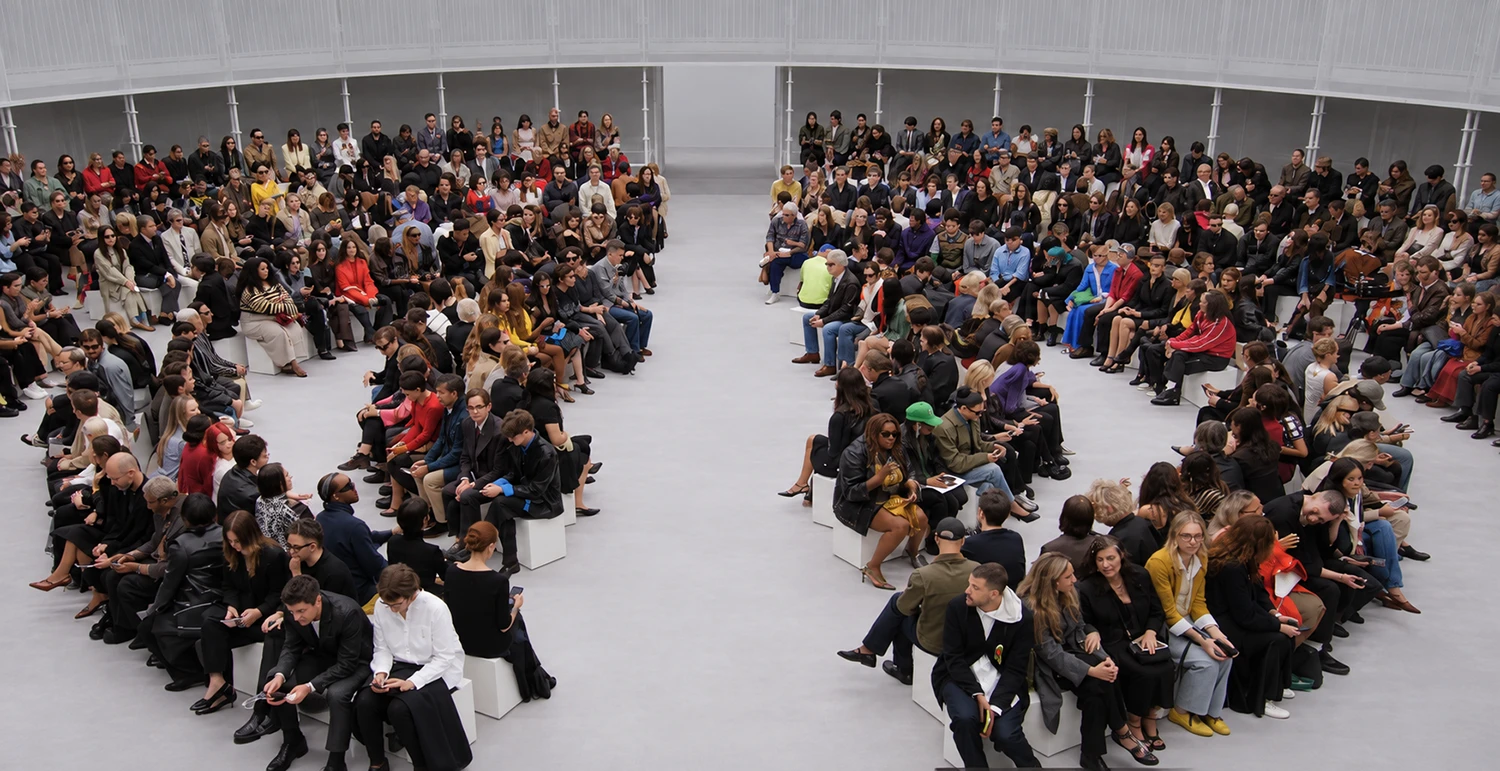
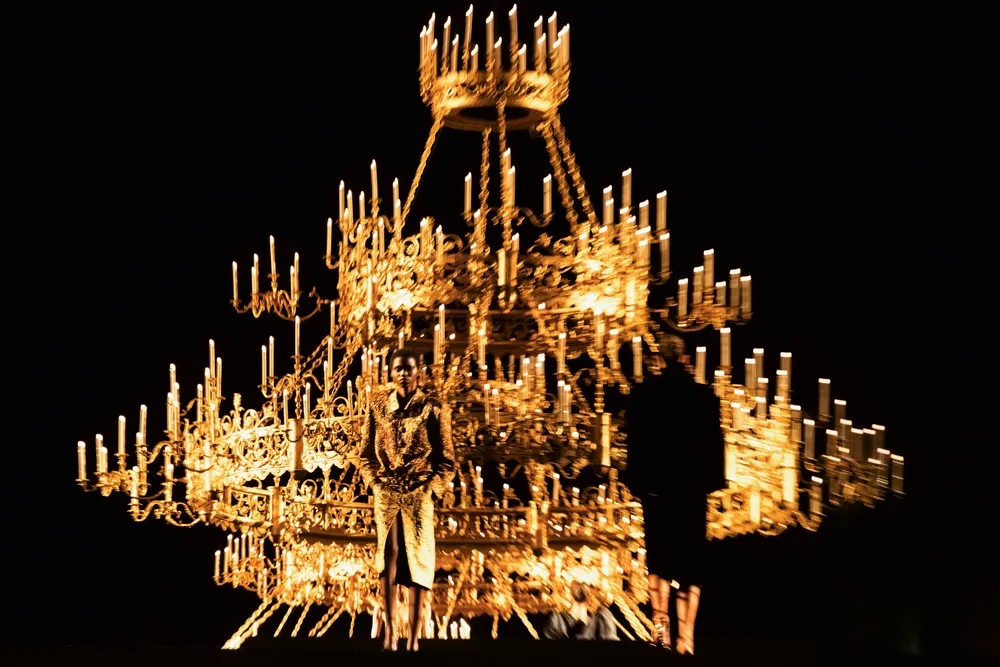
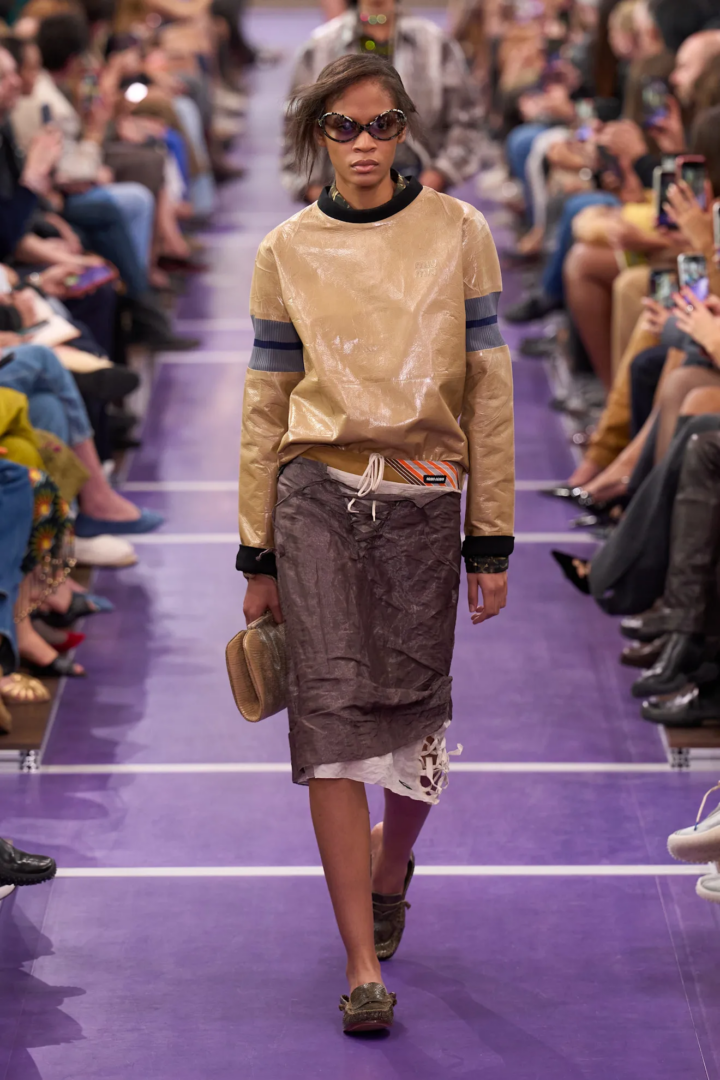
The clothes on the Miu Miu Spring/Summer 2027 runway were classics in the sense of “works that have not finished saying what they have to say” — the sixth of the fourteen definitions of a classic that Italo Calvino gives in Why Read the Classics (a book, here swapped for clothes). A classic is the thing you recognize when you see it, the same test the US Supreme Court justice Potter Stewart once gave for pornography. On the violet runway of the Palais d’Iéna in Paris, that anti-pretty candy-colored satin dress crossed at the neckline (look 47) was, in fact, a dress. It walked creased down the runway as if on a walk of shame — permanently creased, like look 45, whose left corner is pushed as far as a botched backcomb. The same goes for the idiosyncratic mix of sportswear, cut technical jerseys, with strict Prince of Wales schoolgirl skirts; or for the suede laminated with wax, because the creasing has to seep into everything, from the sugar-colored dresses to the leather goods. “Probably the thing I most want to attack in my life is the idea of beauty and sensuality. It’s my obsession,” admits Miuccia Prada, who founded Miu Miu and designs it.
Miu Miu Spring/Summer 2027: deconstructed classics
The Oxford English Dictionary defines deconstruction as “the action of undoing the construction of a thing.” In fashion, that means a spacing, a difference from the past and from what we call “classic”: a jacket’s lining worn on the outside, sleeves detached from the shoulder and moved to the hips like an anatomical belt, buttons set on the back with no buttonholes to take them. To space is to move away from the model while showing it plainly, to lift an element and set it somewhere else. If a garment’s basic job is “to cover and protect the body” — the phrase is the designer Martin Margiela’s — the deconstructed garment’s job is a concept: fashion’s deconstructivists reach for unfinished hems and creased, soiled, oily fabrics, as if fresh from a mechanic’s garage and not an atelier, and for high techniques like gaufrage, or embossing, that make cloth look old and moth-eaten.
The Miu Miu technique: cuir froissé ciré
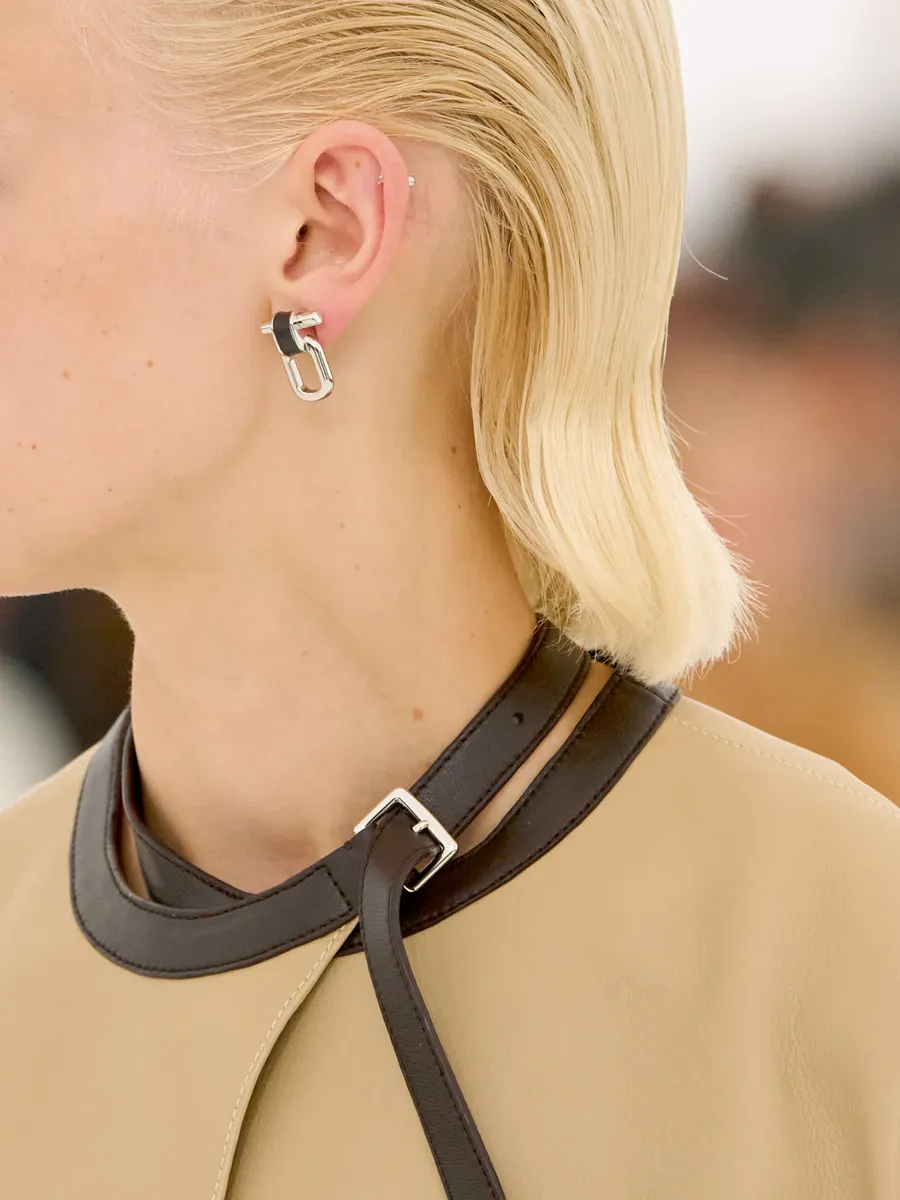
At first glance it could be craquelure, but the surface comes from a creased-leather process — cuir froissé ciré, waxed and crushed leather — used here on bombers, varsity-cut jackets, blazers and long-sleeve tops with stretch inserts. It starts from full-grain leather, treated with a wax and then blackened with aniline or dispersed pigments, to build a two-tone effect that surfaces in the folds. The decisive step is a casein-based fixative that stiffens the leather until it “breaks” in the drum: the mechanical action of the drum generates the crinkled grain, bringing out shifts of tone and depth that are not printed or applied but come from the structure of the material itself.
The result depends on the quality and the openness of the fiber more than on the intrinsic value of the hide. For an even crease, the fibers have to react in a controlled way to the stress: a hide too large or too open can mark unevenly and raise the scrap rate. That variability is the point — the leather loses the smooth perfection usually tied to a leather garment and takes on an almost topographic surface, where each fold is the concrete result of a physical process.
Épater le bourgeois
The messy-girl archetype was founded in 1993 along with Miu Miu. It is Ms. Prada’s own family nickname and, by her admission, a picture of “what she would like to be”: the Milanese It girl. “If I’ve ever done anything, it’s made the ugly attractive,” says Ms. Prada. Miu Miu’s line is exactly that of épater le bourgeois, to shock the respectable by catching their aesthetic certainties off guard — swapping embossed leather for trivial nylon, monochrome prints for 1970s wallpaper, Chelsea boots for rain galoshes, and on through the Prada remedies toward a visual re-education. With “wrong” colors, unvirtuous materials and tampering with the canonically beautiful, Miu Miu has made cacophony a signature.
Its runways are montages of opulence. Models cross them with full bags, turtlenecks over gem-studded underwear, feet covered in bandages tucked into plasticky loafers or dad sneakers — this season from a collaboration with New Balance. Often with no trousers, or in micro skirts or shorts closer to men’s boxers.
Discomfortablist: a woman who makes you uneasy
The best designers never let the dust settle under their feet; they break the cannibalism of the “traditional classic” establishment and trip it up with detours. In the trade, “classic, but with a twist” is a cliché, a watered-down phrase for those who, unable to deconstruct, just add a handful of glitter or a slightly flared hem. Deconstructivist fashion, by contrast, stands for a provocative postmodern beauty, set against both the male and the female silhouette — why make the distinction? It throws everything into the same pot, and shifts the attention from the garment’s utilitarian job of covering to its own value, as the carrier of a vision of how to dress.
By putting disorder into construction, the approach dismantles fashion’s traditional order — which is what showed up over the Paris weekend, next to a genuinely utilitarian, comfortable trend of clothes that only want to “dress well” (another handy fashion cliché), in Miuccia Prada’s Here and Now, the name chosen for the collection.
Since mid-2022 the brand has not left the top five of the Lyst Index, the quarterly ranking of the most in-demand fashion brands. This paradox of an eccentric, intellectual and political beauty — skinny jeans under a long fur coat, hotel slippers on the feet — has hardened into the not-quite-flattering label of ugly chic. But Ms. Prada’s aim is elsewhere: “There’s a mentality that has always been there in Miu Miu. A sense of freedom, of spontaneity.” It is the freedom of those who find comfort in disorder, and as a lost way of life that can be a good thing. A woman who talks about it — like the essayist Katie Roiphe, author of the collection In Praise of Messy Lives (2012) — gets called a discomfortablist. One who makes you uneasy. Often, she is a woman.
Stella Manferdini