Porn outlasts chic: why Hodakova escapes the boredom of fashion
Between corporate dungeons and tired sustainability, Ellen Hodakova Larsson rescues fashion from beige — discarded materials and fetish imagery to build a world far outside the conglomerates’ rooms
Restrain Yourself. Bondage Gear and the Glamour Industry Are the Same Thing
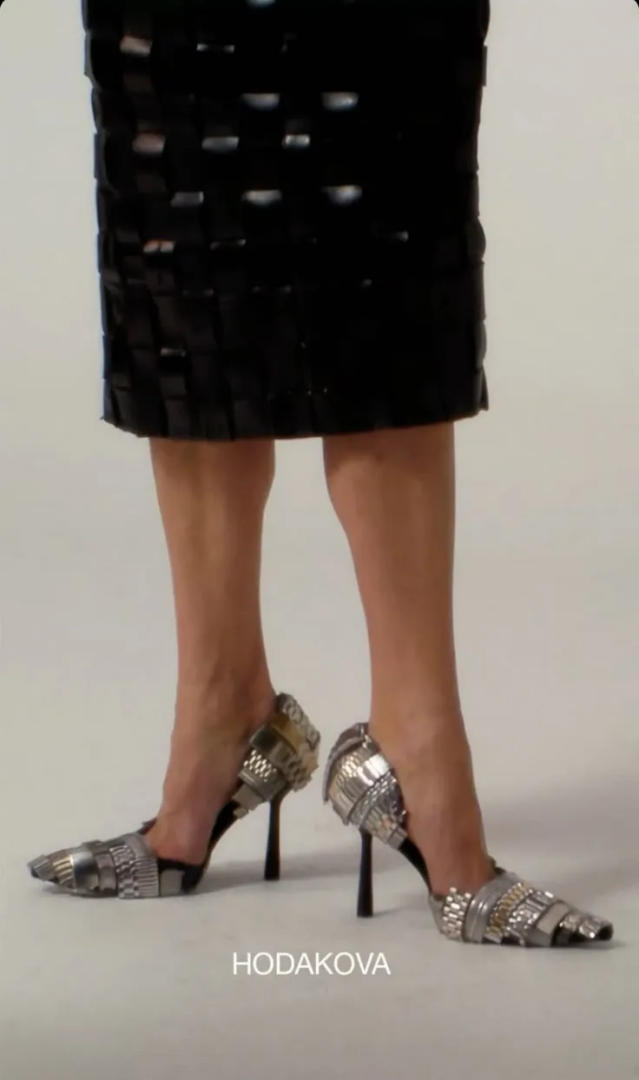
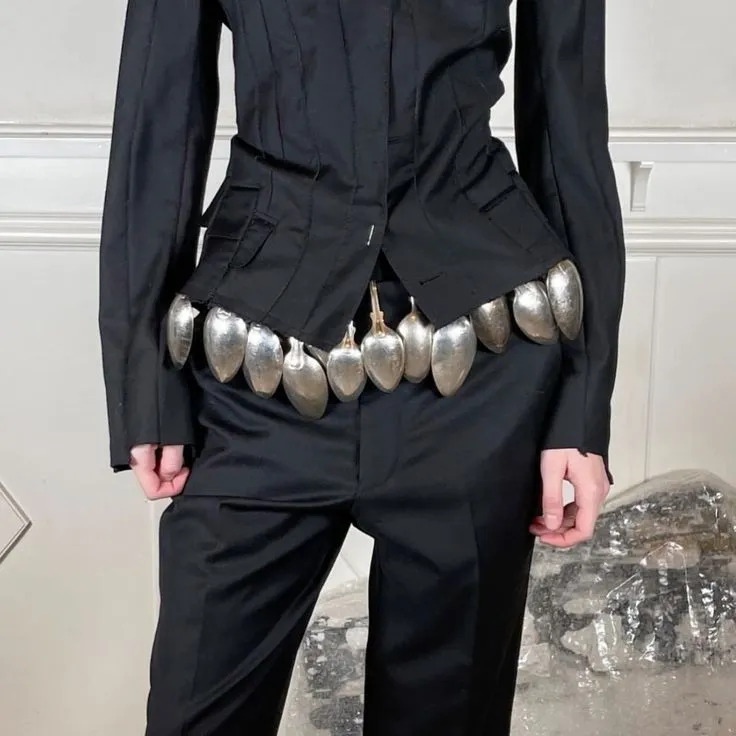
Ellen Hodakova Larsson turns serving platters into corsets and teacups into bras. She has made a miniskirt out of pink handbags, a fur coat out of thousands of ballpoint pens stitched together, shoes out of broken watches. In 2024, Cate Blanchett wore two antique sterling silver trays bent around her torso — a rough-hewn armour — for a Vogue China shoot. Months later, at the Toronto Film Festival, Blanchett appeared in a black blazer trimmed with over a hundred silver spoons, also Hodakova. The brand’s bestselling top is made from discarded padded bras and retails at close to six hundred dollars. None of this reads as gimmick. That is the difficult part.
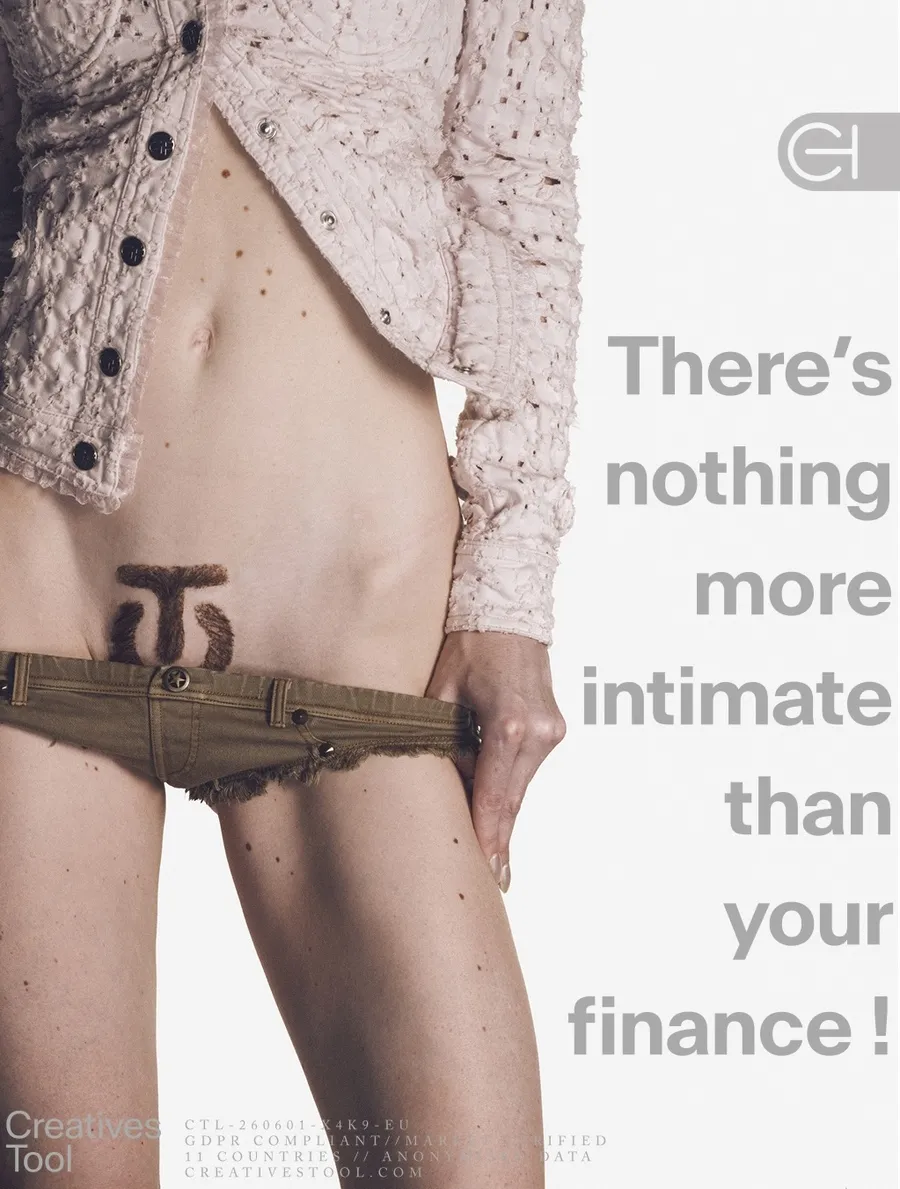
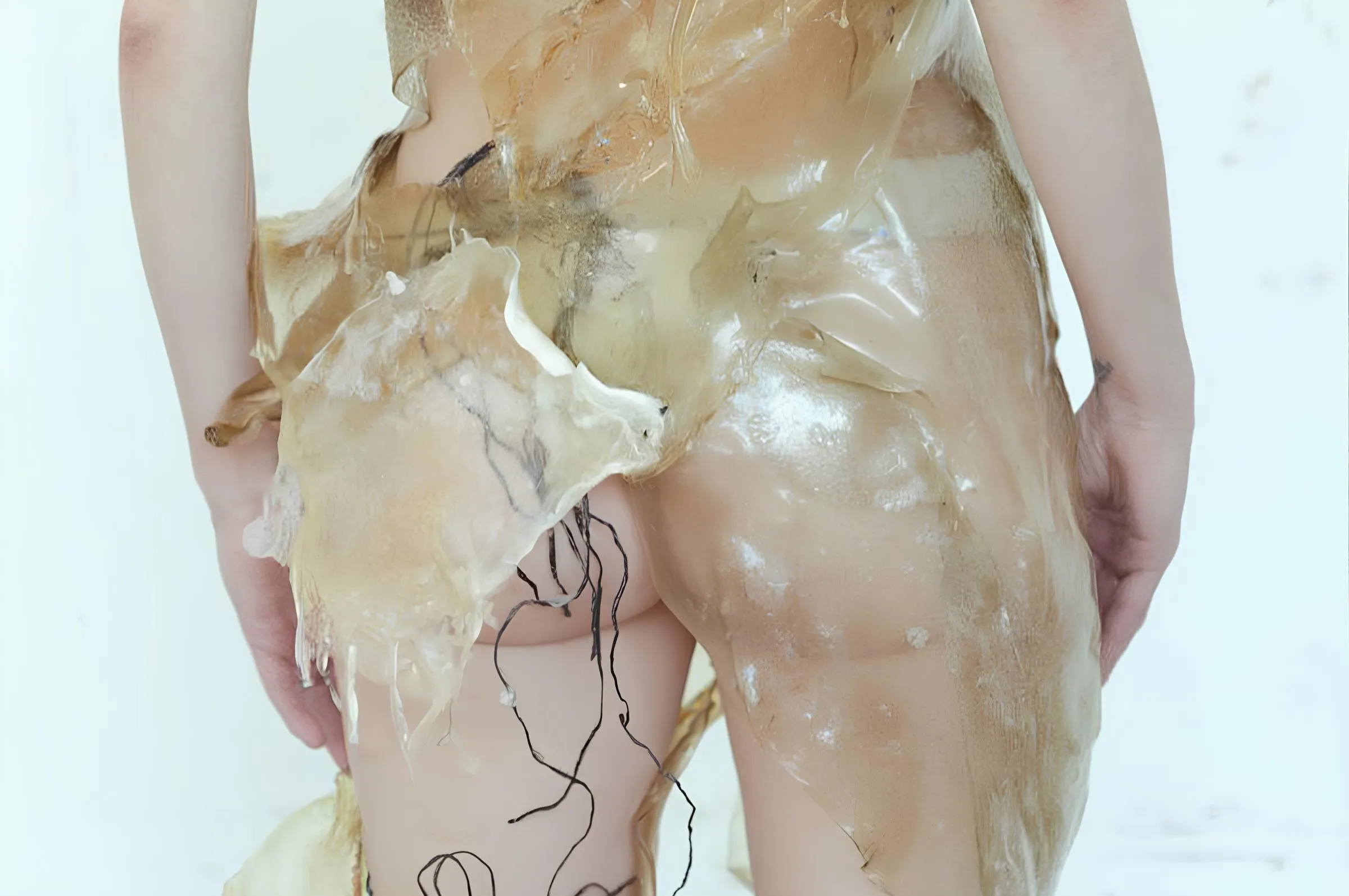
The great boredom of fashion. Heart-shaped pubic hair? Hodakova is preserving an endangered species
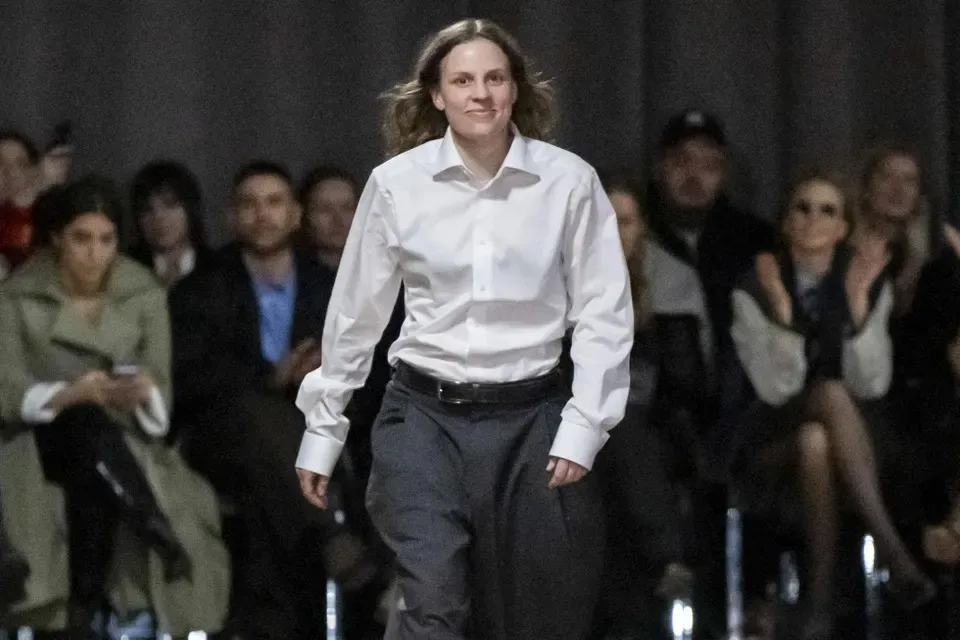
Fashion has gone beige. It is now a perfectly oiled machine of branding and marketing, supervised by conglomerates. A few designers remain outside the corporate assembly line, preserving what has become an endangered species — independence — as a counterpoint to the muscle of mainstream fashion. Not all of them succeed. Heart-shaped pubic hair is already familiar territory: banally provocative. The stronger proposition is a collection built around a sensibility and a rhetoric of recovery rather than trend. Hodakova is exactly that — not the usual marketing dressed up as an idea. Larsson nurtures an almost fierce respect for objects and their lives. She has developed a global infrastructure for sourcing, classifying and cleaning materials destined for reuse. Her raw material is deadstock and discarded objects. Hodakova is a reference point for a generation of creatives committed to reusing rather than producing. The term “upcycling” was coined in 1994 by German engineer Reiner Pilz and has been part of the creative and environmental conversation for over thirty years, but Larsson’s avant-garde approach has marked a point of no return — earning her the LVMH Prize in 2024.
“Repair, use, reuse.” The Hodakova method
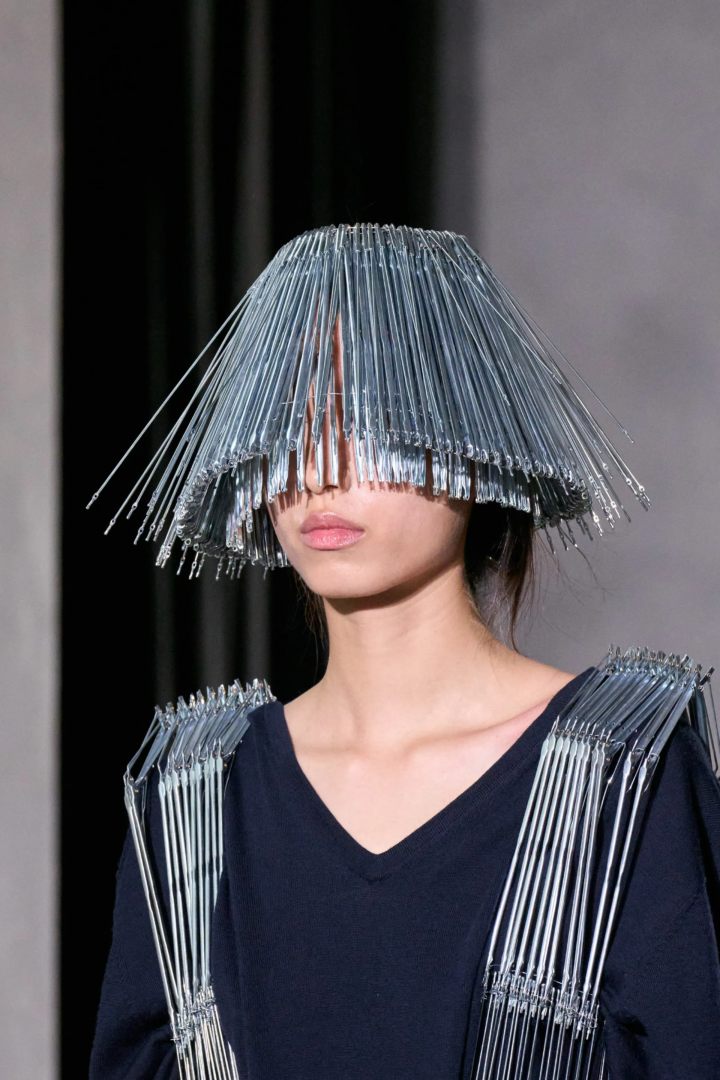
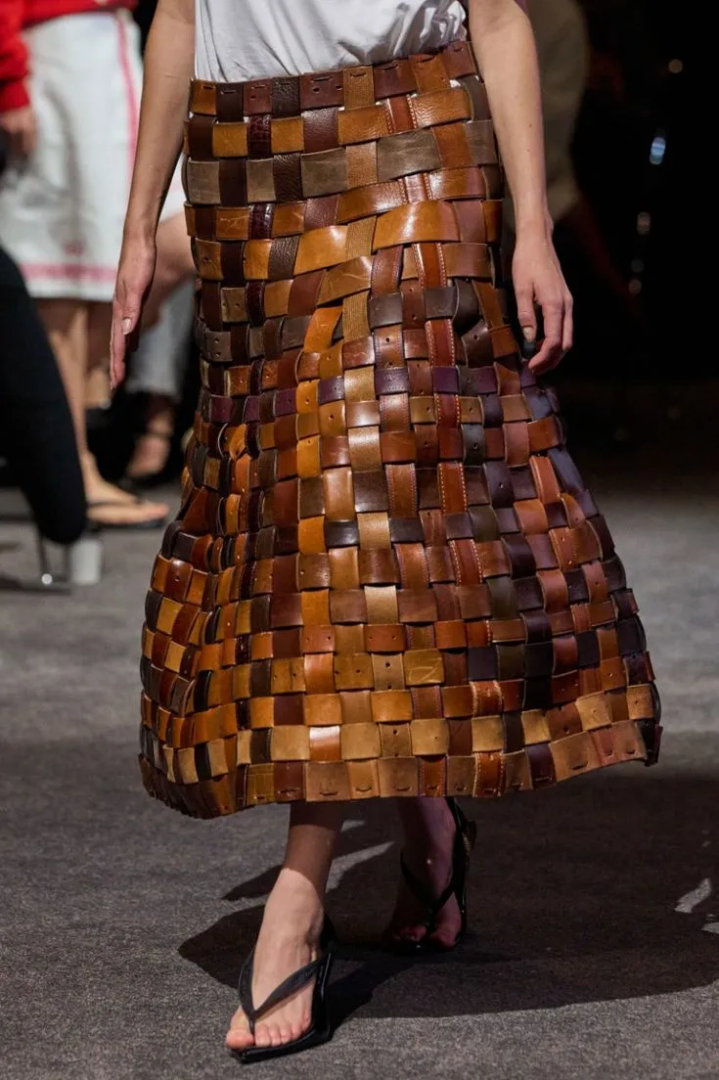
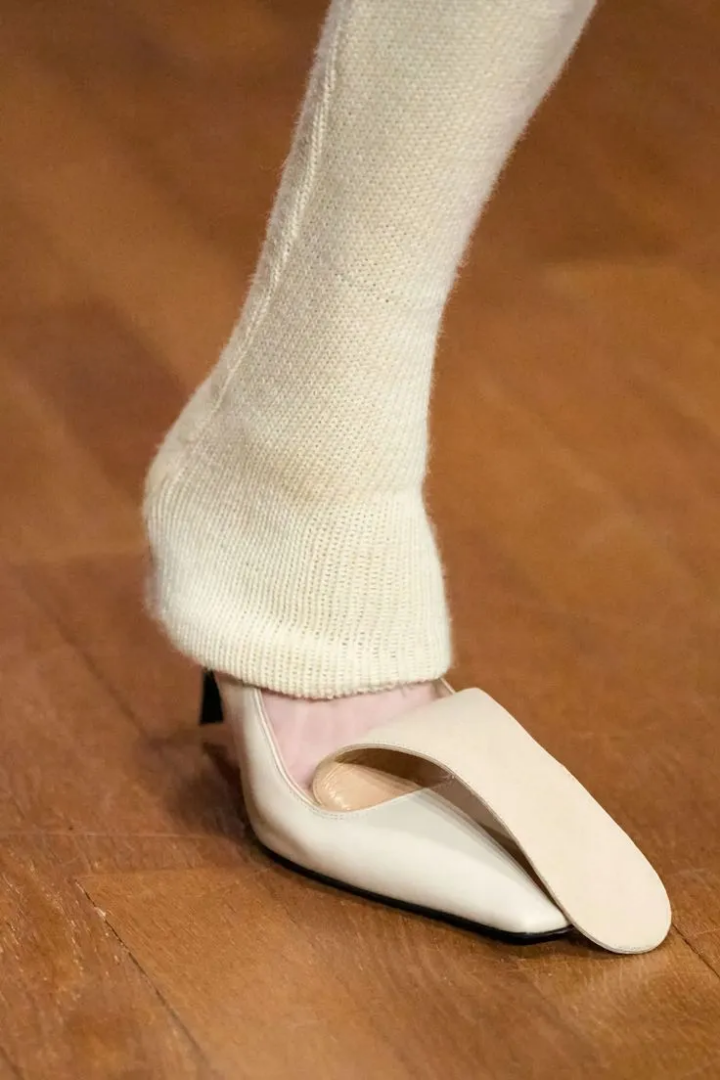
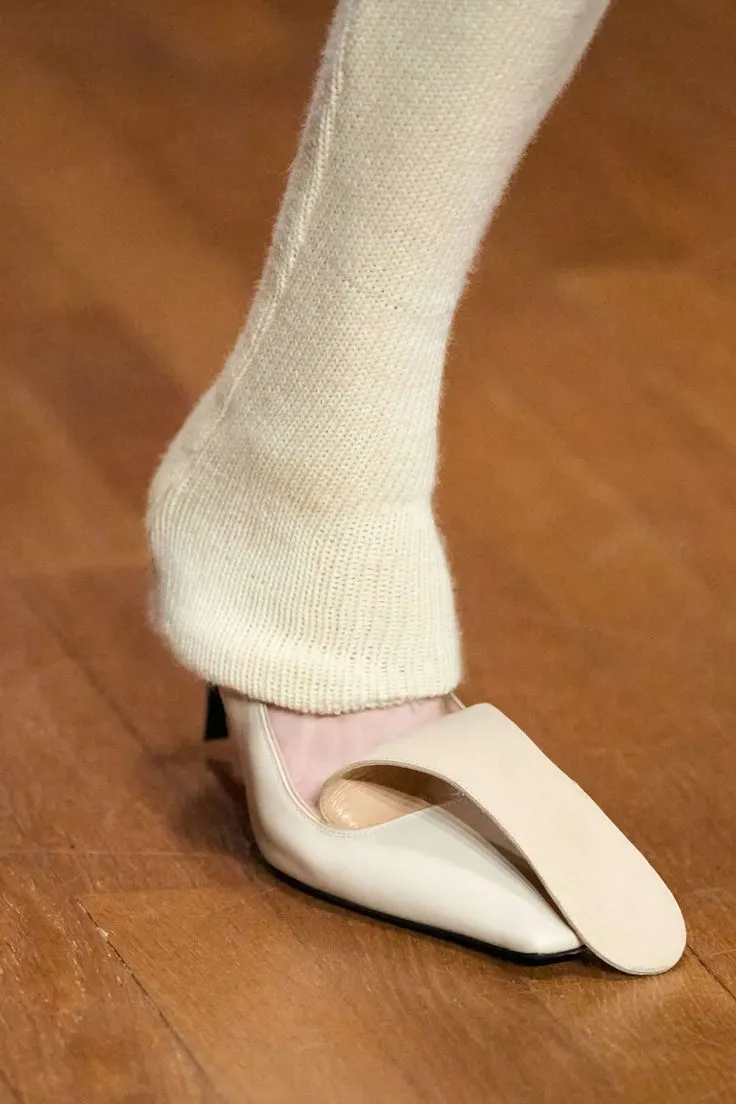
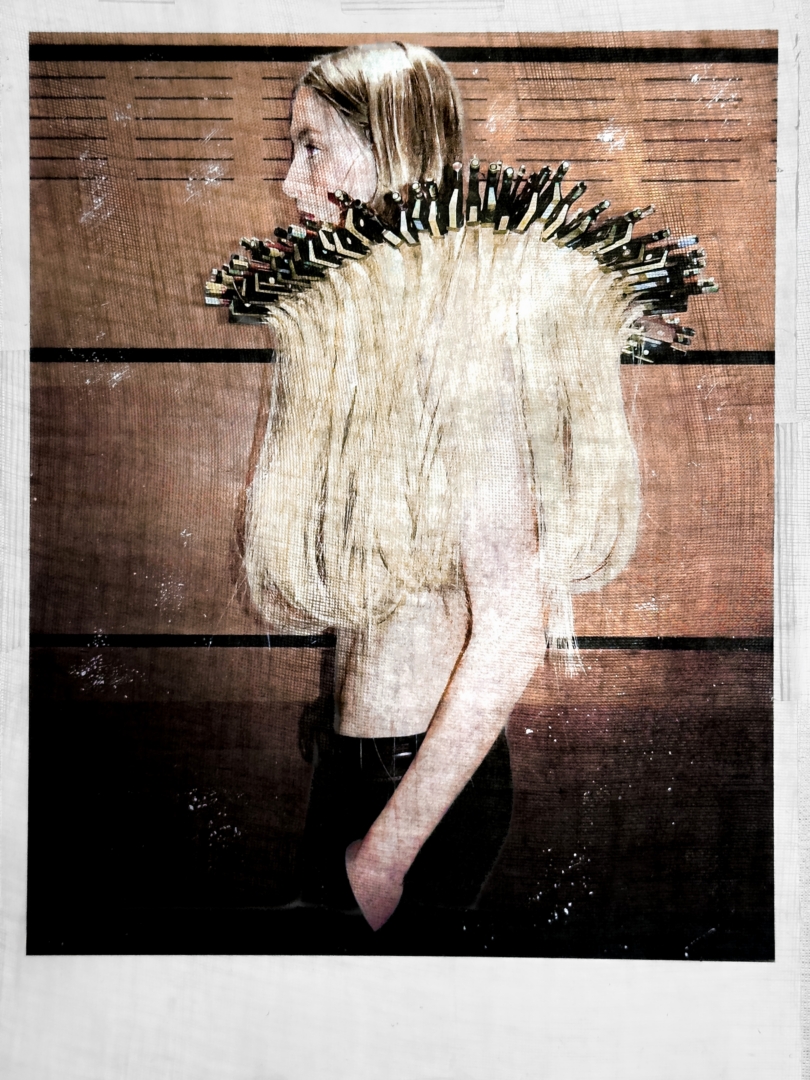
Unlike others who only partially incorporate discarded materials, Larsson recovers them wholesale. Ballpoint pens, watch faces, shopping bags, bin liners, ribbons, zips, even landscape paintings complete with their frames — anything can become a garment. She reached an audience beyond the independent fashion niche with a corset made from two antique sterling silver serving trays, bent around Cate Blanchett’s torso like a rudimentary suit of armour for a Vogue China shoot. That was 2024. The same year, Blanchett wore a halterneck top on a Los Angeles red carpet, also Hodakova — and later, at the Toronto Film Festival, a black blazer trimmed with over a hundred silver spoons. For spring-summer 2024 she stitched thousands of plastic pens together to replicate the texture of fur. Then came a briefcase converted into a leather dress bristling with pockets, pink handbags turned into miniskirts, discarded watches into heeled shoes.
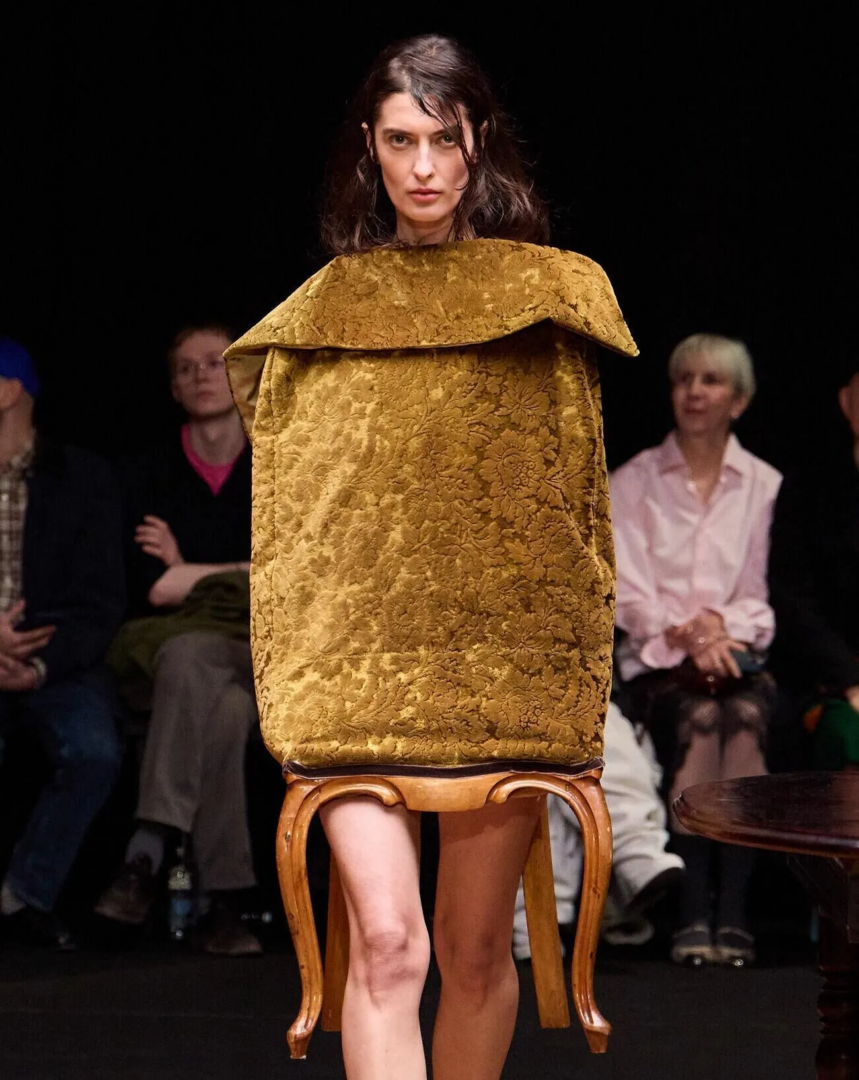
Larsson grew up in Strängnäs, in southern Sweden, on a horse farm she hopes one day to return to. She often romanticises a childhood spent picking wild berries and climbing pine trees. Her mother was close to obsessive about the British countryside and would routinely transform domestic objects — reupholstering chairs, relining lampshades with new patterns. Her father, a military man, taught her to care for leather shoes and keep suits pressed. That dual inheritance — the rural and the disciplined — runs through the work. Belts worn at the neck, riding boots converted into skirts, wallpaper-print fabrics, teacups transformed into bras, bed linen as dresses, furniture as armour: the references reach back into that world, partly. Partly they are an upcycled version of a fashion that abandons composure and gives in to a joy that consumer objects persistently lack.
Sustainability and bondage gear. In fashion, neither has lost its grip
In fashion, sustainability and recycling have become exhausted clichés — nobody believes them anymore when they appear in a press release. What makes Larsson’s work interesting is that she conceives of sustainability as a system rather than a trend, and the results never look holistic or pseudo-alternative. Despite growing up in the Swedish countryside, on that horse farm she hopes to return to, her clothes are deeply urban. The objects she uses carry their former rigidity — furniture, hardware, domestic implements — and in becoming garments they substitute the narrative of hard objects as fetishistic constraint with one of everyday objects as a home to inhabit, to wear. The line between the house and the body collapses.
This is not so far from where fashion has always operated. In 2014, the writer Sarah Nicole Prickett observed — in an editorial titled Restrain Yourself — that the corporate office had never looked so much like a sexual dungeon, and that the woman of that season was born free but spent the spring chained in Rabanne metal mesh, Pucci neoprene bralettes and Givenchy harnesses, her ankles locked into Giuseppe Zanotti shoes that functioned as podiatric straitjackets. Those stylistically subjugated models, embalmed in an asphyxiating glamour, were heirs to the Amazonian women photographed by Helmut Newton in cervical collars, leather saddles strapped to their haunches, latex gloves, belts with handle-like buckles and structured corsets. Newton’s models were themselves heirs to the fetish comics illustrated by Eric Stanton in the 1950s — Reunion in Ropes & Other Stories and Bondage Enthusiasts Bound in Leather, among others. When bondage equipment became the emblem of fashion’s rougher, more disinhibited and anti-bourgeois register, it already bore a strong resemblance to the industry itself.
In fashion, nothing holds like porn — from Gianni Versace to Hodakova
“High fashion may be fetishising the fetish,” Prickett argues, “but it was the fetish that first fetishised fashion.” As the director Chris Kraus once wrote, sadomasochism is a commedia dell’arte of collars, handcuffs and gags that never change meaning. Much of fashion is the same. Pornography outlasts chic. Most symbols get copied and recopied until, like adhesive tape, they lose their stickiness. Porn stays on. Almost nothing else manages it.
Gianni Versace was the first designer to flirt with sex and transgression on the runway, in what became known as hooker chic — straps, buckles, studs, latex. Significantly, his sister Donatella has since turned away from all of that, toward long glamazon dresses scaled to a more accommodating femininity. Jewelled handcuffs and fetish heels survived as exercises in imagination: bad taste sublimated through good branding. What got lost in the process was the understanding that clothing is not simply a mechanism for lifting the chest or narrowing the waist. It is a critical layer of self-presentation — sometimes as consequential as skin itself. Ellen Hodakova Larsson has not forgotten this.
A sweating pianist, chairs that walk, and the sentimental value of fetishism
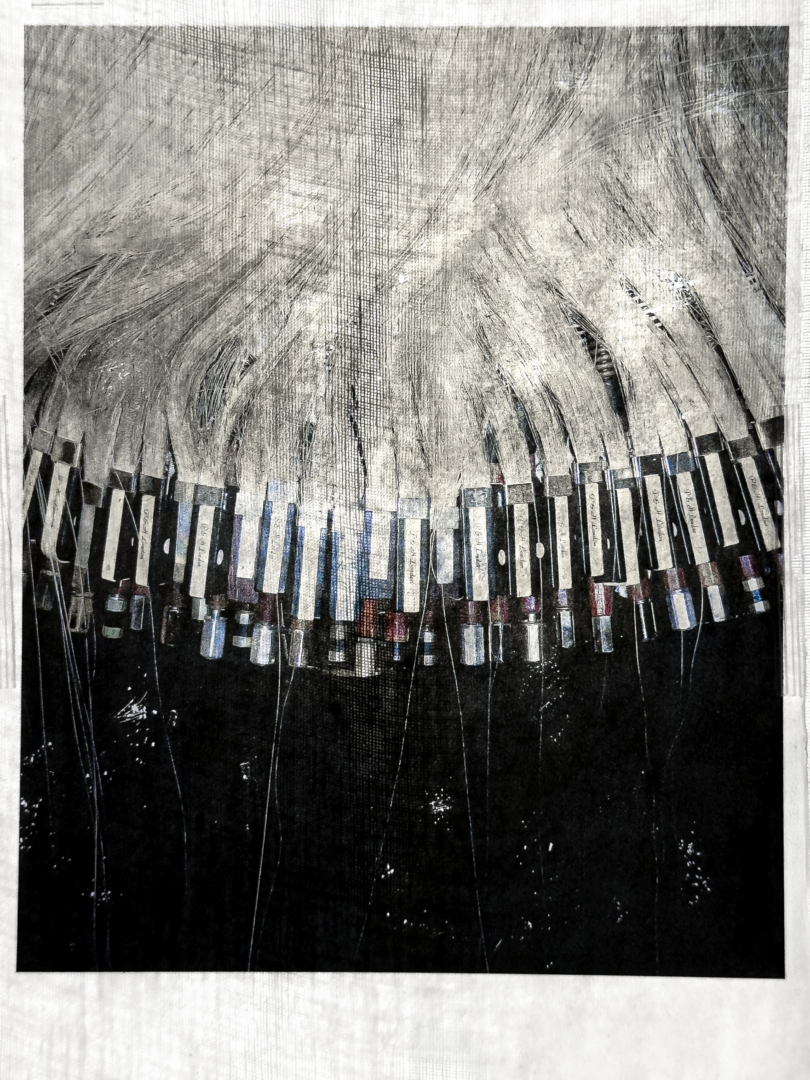
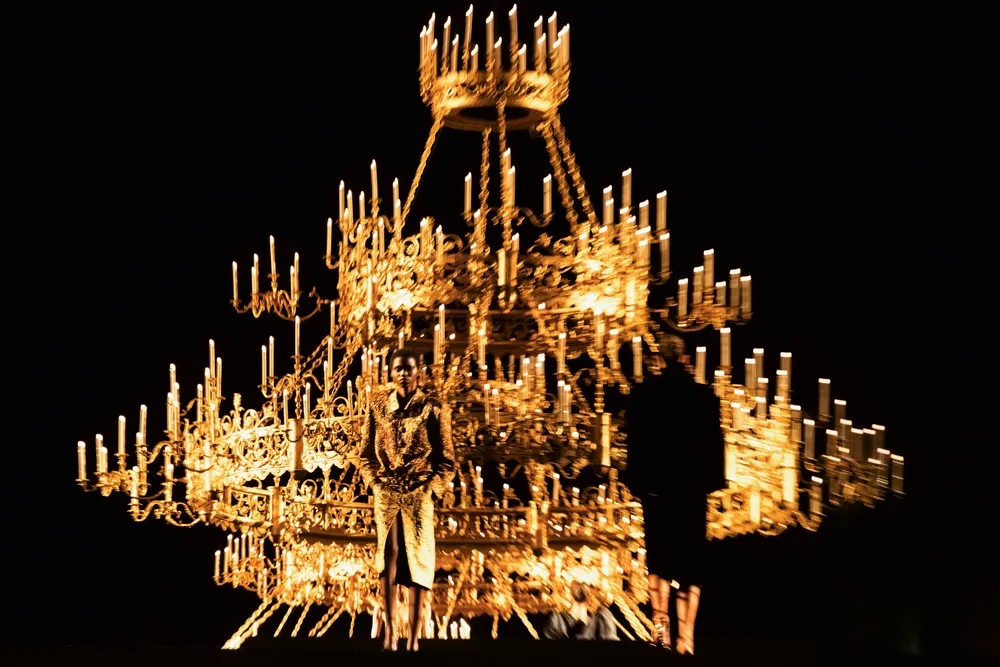
The image behind Hodakova’s autumn-winter 2026 collection is a sweating pianist absorbed in her own music, surrendering all composure. She disappears entirely into her imagination and pictures chairs that walk, coats that dance, chests of drawers that breathe. Strands of horsehair — which in the theatrical fiction of the show are violin strings — wind around the body and connect at the neck. Belts fastened at the throat, furniture worn as armour, rigid objects pressed against the body: it all loops back, obliquely, to the bondage aesthetic fashion has never managed to shed. But in Larsson’s hands the logic of constraint is not erotic. It is sentimental. The narrative shifts — from hard objects as fetishistic coercion, to everyday objects as a house to live in, to dress in. It is a reassuring vision: in uprootedness, home comes with you. Even fetishism can carry emotional weight.
Stella Manferdini