We knew my grandfather collected erotica: how does a collection resist?
Ysabelle Cheung inherited the keys to a nineteen-seventies private clubhouse in Wan Chai she had never heard of, and turned it into a gallery with Willem Molesworth
WM: I pulled out a black suitcase. The suitcase was spring-loaded and snapped open. Inside were 1997 handover gold coins.
YC: When I received the keys to a family building left by my grandfather, I expected a neglected building. Instead, upon unlocking the space, I found I had inherited traces of a world that existed in secret. The building, in Hong Kong’s Wan Chai area, turned out to be a former private clubhouse dating back to the nineteen-seventies. Until I received the keys, the place had remained outside my knowledge. No conversations, no family stories, no photographs. Growing up, I heard my uncles mention a secret garden where my grandfather hosted gatherings. Even they knew of it only indirectly. The story usually surfaced through his secretaries, who would refer to it in passing.
Late Qing erotica boxes: a coded visual language inside a family archive
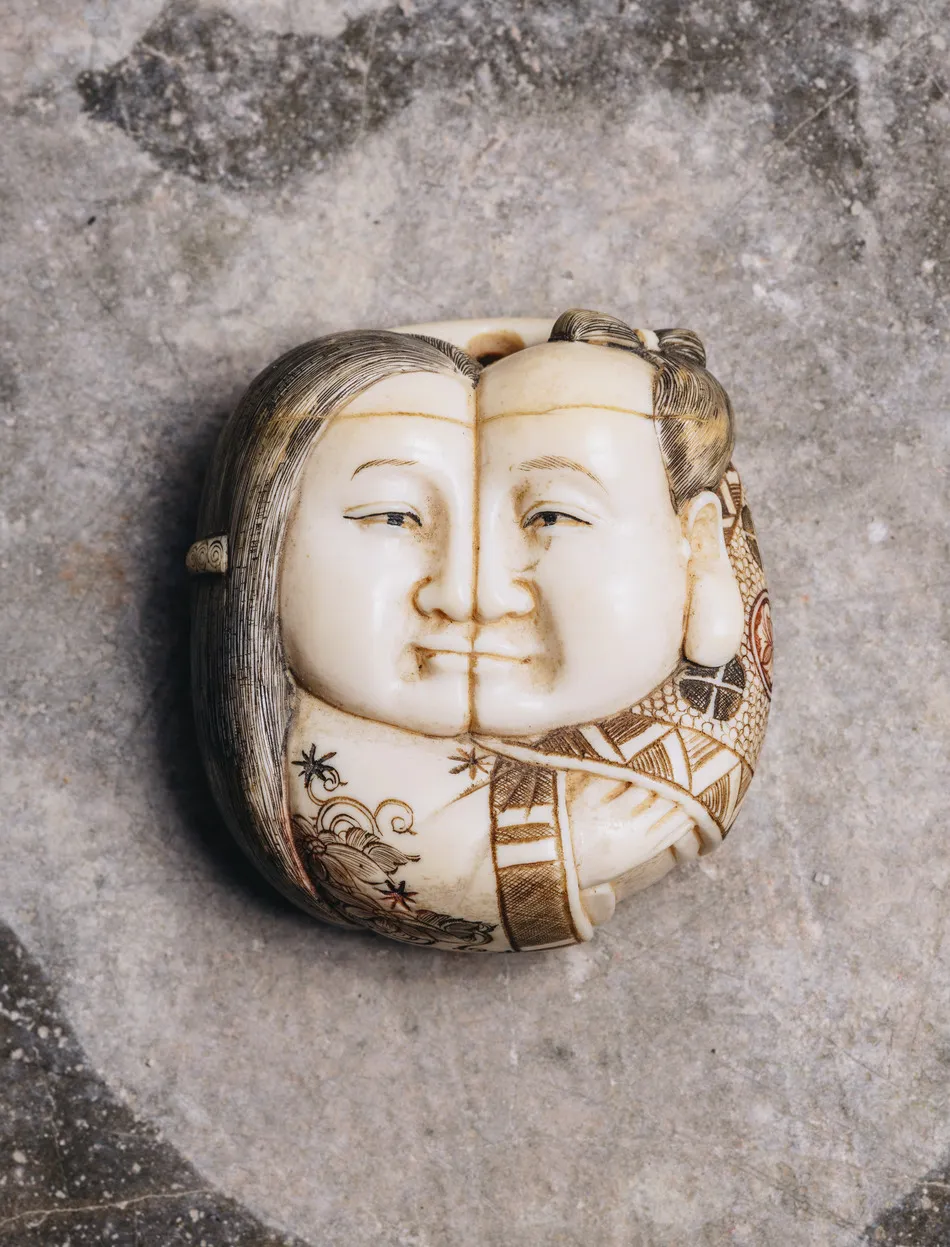
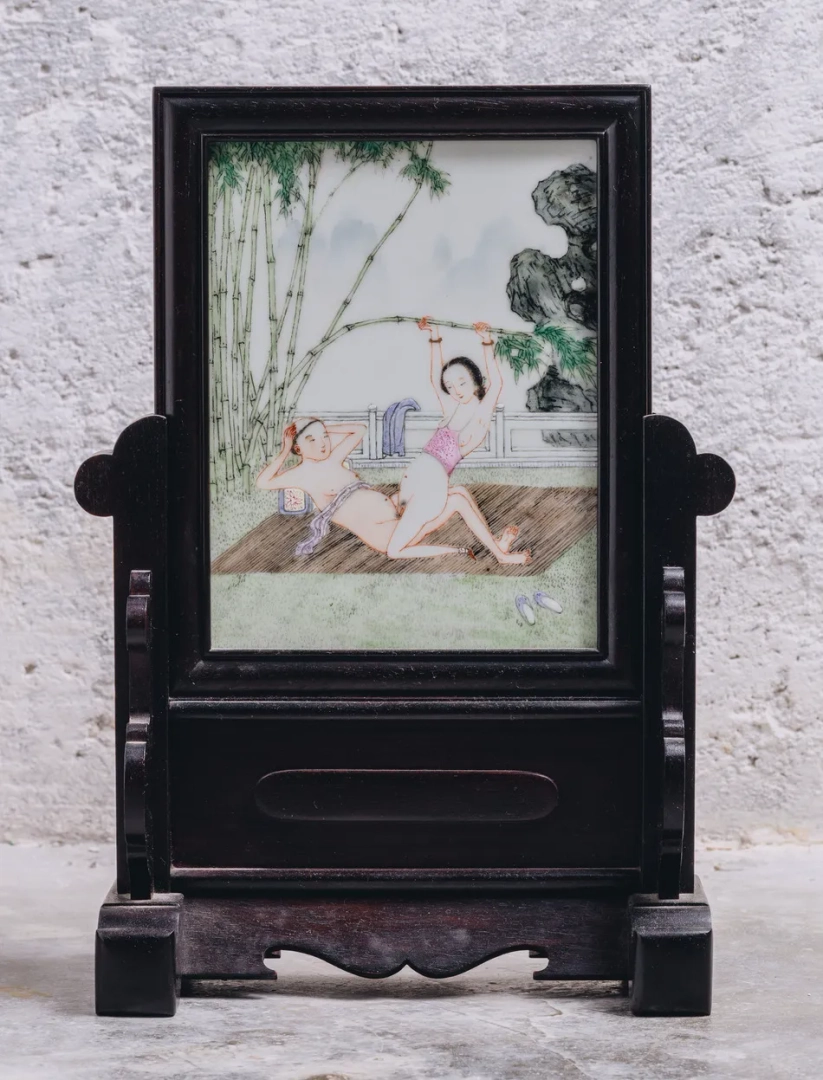
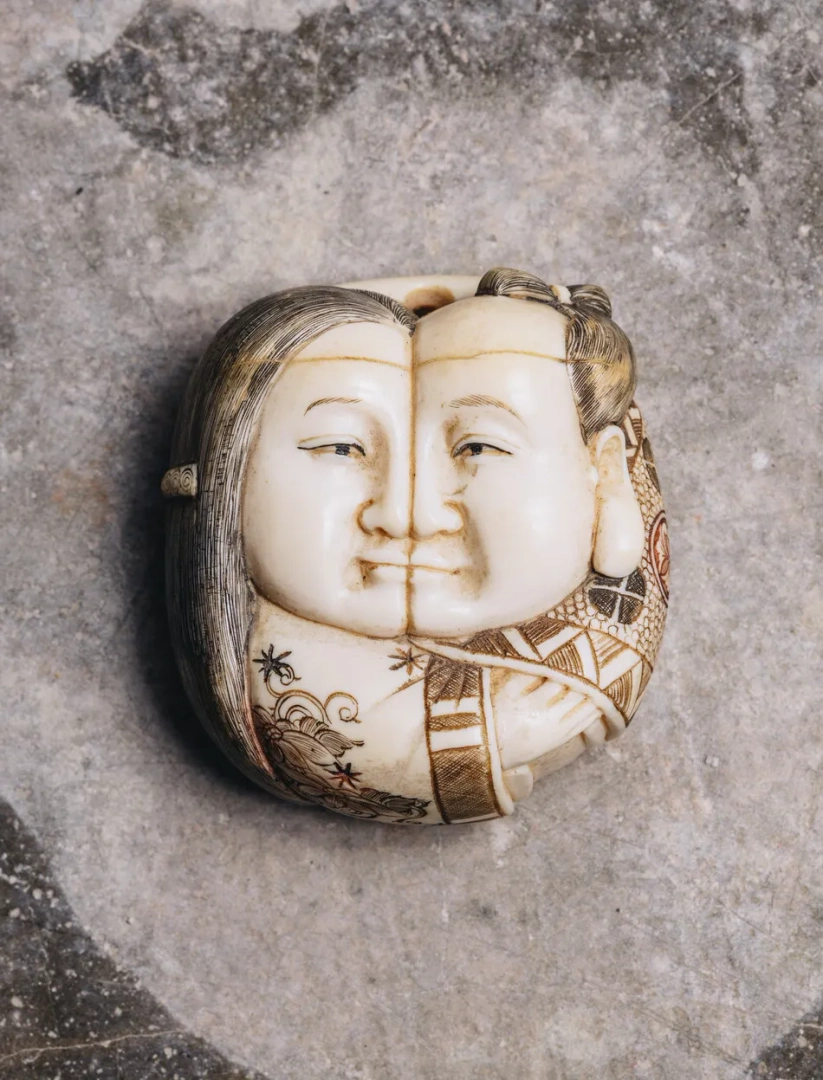
YC: We knew my grandfather collected erotica; but what we found was more intricate than we expected. Small boxes in carved wooden cases, with bat motifs on the surface. In the center, a happiness symbol, surrounded by cloud motifs. When you open them, there is an erotica scene inside.
WM: These are from the late Qing dynasty, about one hundred fifty years old. The setting is what interests me: a garden, scholarly objects in the background, textiles layered throughout. It’s a coded visual language, a wedding gift that communicates through implication, and says a great deal because of that restraint.
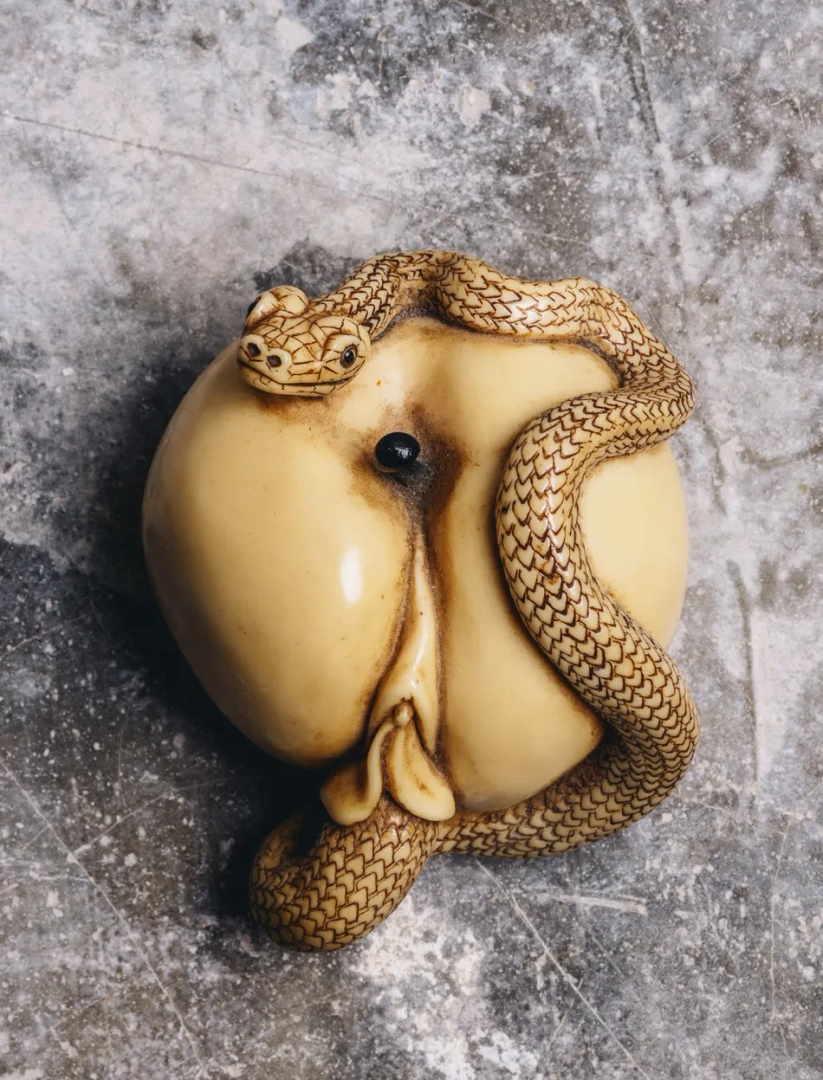
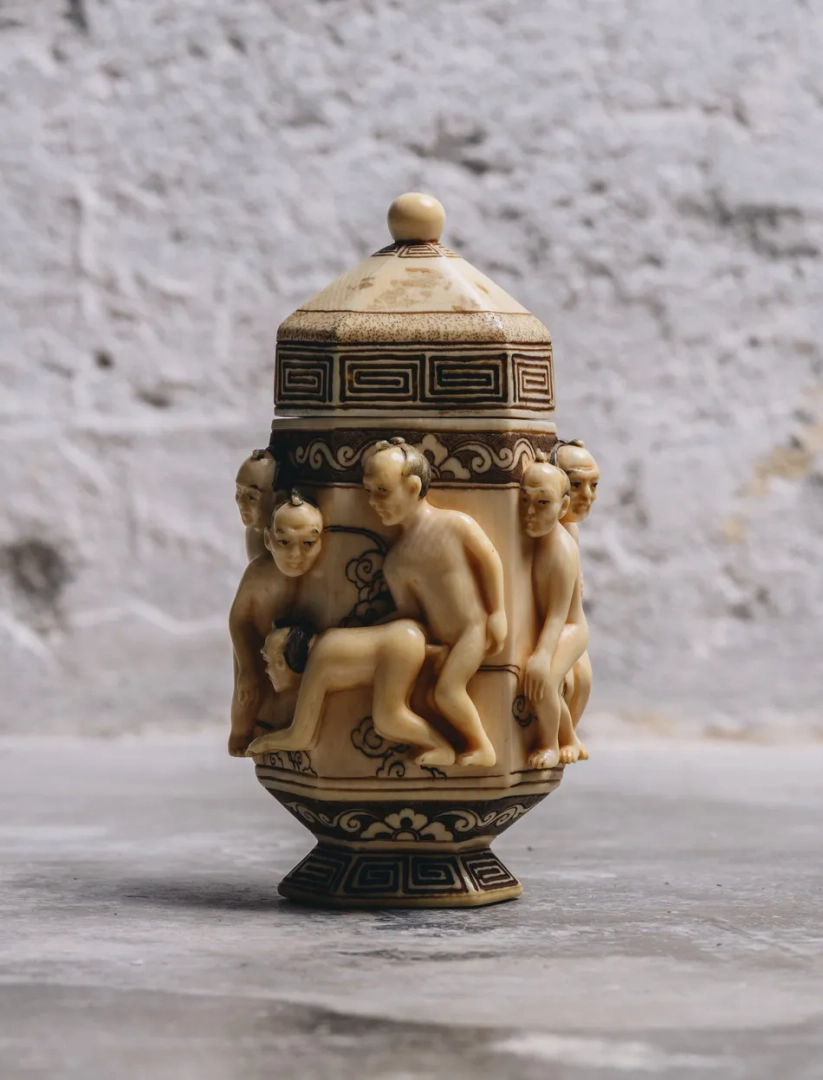
YC: Some of it we did display. With other pieces, we felt uncomfortable. Certain erotica objects were too radical for the current context. They carried metaphors that were difficult to situate within the space, and they risked shifting the reading of the archive into something more sensational than we intended.
WM: Even before you get to explicit material, there is a threshold. There is a ceramic piece depicting a man and a woman having sex. The woman on a table, the man is standing. To the side, a child is handing the father a peach while this is happening. It reads as a motif of harmony, about family continuity and peace.
Inheriting an archive: the labor of preservation inside a collapsing nineteen-seventies interior
YC: Right upon unlocking, we found piles and piles of objects, furniture, boxes. We knew we had to clean up the space, and it was clear that these things had belonged to people before us. The approach was archival. Since the space I had the keys to belonged to my family too, I felt a sense of responsibility to give something back through the project.
WM: There was a bar with a green marble countertop and a wooden structure underneath, and the wood had rotted, so the bar was collapsing. That was the condition of the space. We understood from the outset that preservation would be necessary, and only once we started working did we realize how extensive it would be.
An unstable archive: how meaning shifts depending on who walks in
YC: We display some of the objects in the study; my grandfather kept them outside any archival system. The makers of some of them remain unknown to us. Sometimes we get told, this book is worth thousands of dollars, or this object is rare. Or they identify things as wedding gifts given in specific cultural contexts, and we realize we had been reading them differently. Information sits outside the objects themselves. We are learning from the people who come in. Our goal was to open the gallery, and although we were archiving too, we had limited time. By the end, we were moving things from cardboard boxes into plastic storage and doing preservation work.
Wu Guanzhong counterfeits: copying, craftsmanship and the value of a fake in Chinese visual culture
YC: My grandfather trusted the person he was buying from and believed these works would accrue value. It gave me a new insight into how he thought, and it changed my own approach to counterfeits. These artworks were fake, and that is what made them interesting. They reveal a desire and ambition toward art and culture. Copying has a long tradition in Chinese visual culture. I remember looking at one of the Wu Guanzhong paintings and thinking we should have it checked again because it was well-made. These were counterfeits. The people who made them knew how to paint. Someone was willing to pay for that skill and place it on the market.
WM: There is a different tradition here when it comes to copying and reproducing artwork. Some of the paintings held in major museums across China are themselves copies of originals lost or untraceable for centuries. They are still regarded as masterworks. Copying is part of how artists learn. Historically, it’s been a way of paying respect to another artist’s work. At the same time, in our case, these works were purchased under the assumption that they were genuine, so an element of deception remains.
Adaptive reuse in Hong Kong: preservation through adaptation instead of renovation
YC: The archival research and sorting process made one thing clear: preservation would have to be practical. We avoided renovation. Nothing was torn down. Our architects, a Hong Kong-based duo called Beau, use the term adaptive reuse, which is what we ended up doing. We removed a superficial layer, and the core of the space remained. Everything we introduced was locally sourced.
WM: In Hong Kong, redevelopment means replacement. New materials are brought in, often from elsewhere. There’s a tendency to detach from what was there before. We were more interested in working with the existing history of the building. We tried to do as little as possible while still making it function as an art space. That meant peeling back decayed layers, waterproofing, restoring structure, and adding only what was necessary: lighting tracks, electricity, repositioned air conditioning. It’s a question of how willing you are to work with what is already there.
Photography Jocelyn Tam
Brutalism in Wan Chai: a Wong & Ouyang building held by a single back wall
WM: The building is brutalist, designed by Hong Kong firm Wong & Ouyang. It was part of their contribution to brutalism in the city. From the outside, it’s tiled over. At the top, you get these structural columns surrounding the space, while inside, the space runs free of columns. The building is held by a single back wall. We had both been working in the art world for about a decade when we started talking about doing something together. It was during the pandemic, after the protests, and Hong Kong felt like it was going through a shift. There was a sense of uncertainty about what the city was becoming. We wanted to make a gallery that stayed close to what was already happening culturally here, instead of reproducing another imported white cube model. The archive became a way of thinking about how stories move through objects; how cultural memory survives in what people decide to keep. We split it into three zones: a dining room, a living room, and a hallway. The hallway leads into three rooms that originally belonged to the three co-owners, now used as storage, an office, and a viewing room. What people often miss is that the hallway itself was once almost hidden, sitting behind the bar and partially blocked off. You can still read traces of the bar on the floor, and that sense of a private, recessed section has disappeared.
YC: Or maybe it registers as feeling rather than as observation. People move through the main space and then enter a narrower corridor, and there is a break in rhythm. An artwork appears where they expected none. That sense of privacy is still there, even where architecture stops making it legible.
Read the full interview and see all the images in Lampoon SALIVA