Humble luxury or quiet luxury? The loudest thing you can do is nothing
Quiet luxury performs restraint. Humble luxury performs virtue – whispering “I don’t care” loudly: status is now defined by the coherence of one’s position – not its visibility – which brands will endure?
As the logomania cycle turns again and fashion houses colonize the domestic interior, the luxury market has bifurcated around a question that sounds philosophical but is in fact financial: does the most powerful status signal today lie in what you hide, or in why you hide it?
The central paradox of the 2026 luxury landscape: the industry no longer speaks a single language. It has been divided into at least four distinct idioms — humble luxury, quiet luxury, logomania, and conspicuous consumption — each with its own philosophy, its own target demographic, its own financial logic, and its own cultural narrative. What unites them is little more than price. What divides them is everything else.
The macroeconomic context is instructive. According to Bain & Company and Fondazione Altagamma, global luxury spending in 2025 reached €1.44 trillion, while the personal luxury goods market — clothing, leather goods, jewellery — settled at €358 billion, a slight contraction year on year. It is the first meaningful retrenchment after years of post-pandemic expansion. Yet the aggregate figures obscure a more revealing story: some brands are growing at double-digit rates while others shed a quarter of their revenues in a single quarter. The sector is not in uniform crisis; it is undergoing structural reconfiguration. The question that most urgently presents itself is not whether luxury will survive, but which version of it will.
Quiet luxury emerged as a corrective to a visual excess
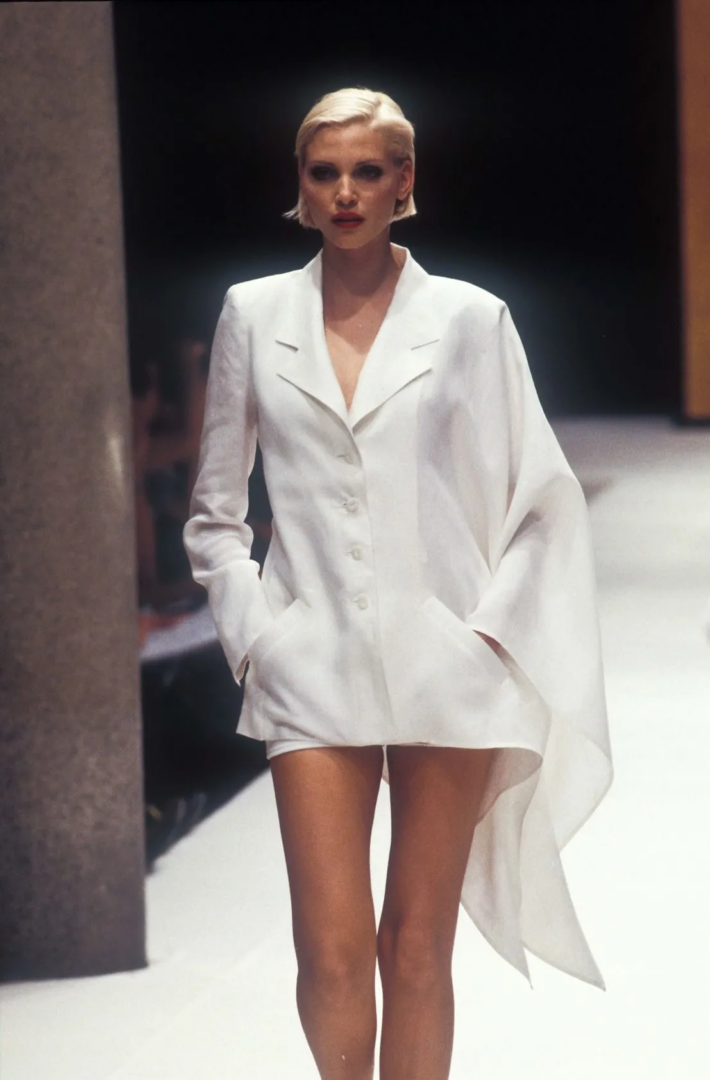
Quiet luxury emerged as a corrective to the visual excess of the 2010s — a decade in which the monogram had been democratised almost to the point of meaninglessness. Its defining aesthetic choices are by now familiar: the elimination of visible branding, the foregrounding of exceptional materials, impeccable construction, a chromatic palette tending toward neutral. It is the luxury of those who can afford to demonstrate nothing. Its primary social function is exclusionary: legible only to those who already belong to the same rarefied circle, it operates as what sociologists of consumption might call an in-group signifier — a kind of sartorial Freemason’s handshake.
The cultural moment that propelled quiet luxury into mainstream consciousness was, predictably, a television series. HBO’s Succession dressed its characters — the Roy family and their attendants of power — heavily in Loro Piana, Brunello Cucinelli, and The Row, alongside Armani, Max Mara, and Maison Margiela. The absence of visible logos across the principal wardrobe was coded as the ultimate marker of old money disdain for performance. The series did not invent the aesthetic; it translated it for a global audience that had not previously possessed the vocabulary to read it.
The financial performance of quiet luxury brands has been, by any measure, exceptional. Hermès closed the first nine months of 2025 with consolidated revenues of €11.9 billion — a 9% increase at constant exchange rates — with its leather goods and saddlery division growing at 13.3% and representing nearly half of total group revenues. Demand, structurally, exceeds supply. Waiting lists for the Birkin and Kelly bags are measured in years. The “gamification” of scarcity, as one analyst has termed it, does not frustrate clients who already possess everything. It animates them.
The second idiom: Humble luxury is something more radical
Humble luxury is something more radical, and in many respects more philosophically ambitious. It does not merely strip away the logo. It refuses ostentation as a category — in its pricing communication, its distribution strategy, its corporate narrative. It is a luxury that disavows itself as such, or at least stages that disavowal with considerable conviction.
Brunello Cucinelli is the paradigm case. The company’s founder has constructed an empire worth over a billion euros in annual revenues on a philosophy he calls “humanistic capitalism”: wages paid twenty per cent above the manufacturing industry average, production entrusted to more than three hundred small Italian firms concentrated in Umbria, the restoration of the medieval village of Solomeo at corporate expense, complete with amphitheatre, theatre, and — improbably, magnificently — a garden of the philosophers. In a different register, The Row, the brand founded by Mary-Kate and Ashley Olsen, applies the same logic: prices above €10,000 for a single coat, a communication strategy of deliberate minimalism — no celebrities, no sponsored content, no runway spectacle — and distribution kept deliberately circumscribed. Loro Piana grounds its narrative in the materiality of its raw fibres — vicuña wool gathered once every two years from Andean camelids, baby cashmere from the fleece of newborn kids, proprietary weaves so rare that each garment requires contributions from multiple animals.
The distinction from quiet luxury is philosophical as much as aesthetic. Quiet luxury still functions as status. It constructs distinction and recognition among peers. Humble luxury reaches for something ostensibly higher — or at least performs reaching for it — positioning itself as an ethical alternative to conventional luxury consumption: luxury as craft, culture, human value. If quiet luxury whispers “I am wealthy,” humble luxury whispers “I am indifferent to whether you know.”
In 2025, Brunello Cucinelli became the subject of allegations concerning continued operations in Russia in contravention of European Union sanctions on luxury goods exports. The company issued repeated denials; Reuters reported in early 2026 that the group had since strengthened its compliance procedures. The episode — whatever its ultimate resolution — illustrates a characteristic vulnerability of the humble luxury proposition: the entire edifice is built on the coherence of a moral narrative, and narrative coherence is fragile. No one scrutinises Gucci’s logo stitching for ethical consistency. The rules of the game are different.
The fashion house enters the home
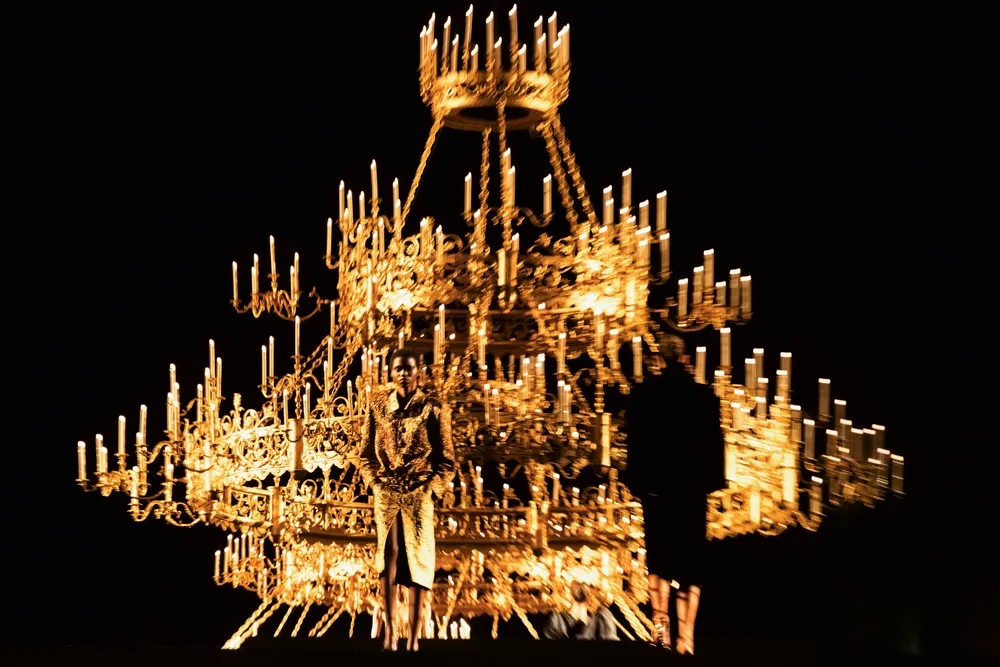
When Bottega Veneta furnished the seating for its spring 2025 show with 460 animal-shaped leather beanbags — dinosaurs, foxes, horses, whales, rabbits — the gesture registered as both spectacle and declaration. A limited selection of fifteen models was subsequently made available for purchase; the rest remained theatrical. Fashion had decided it wanted to furnish our lives, not merely clothe our bodies.
The expansion of luxury fashion houses into interior design is not itself new. Ralph Lauren Home has existed since 1983; Hermès has offered a comprehensive domestic collection for decades, extending its equestrian savoir-faire into tableware, throws, and bronze objects. Fendi Casa, with its modular sofas and architecturally conceived furniture, has long been a reference point in high-end interiors. What changed in 2025 and 2026 was the scale and the ambition of the commitment.
At Milan Design Week in April 2026, as every year, Louis Vuitton launched the Obets Nomades collection. Gucci, under Demna, approached the fair through archival storytelling and immersive installations. Hermès presented scenographic environments translating its craft heritage into domestic objects of studied refinement. Bottega Veneta opened Maison Bottega Veneta at Via Sant’Andrea 15 — a permanent space dedicated to the brand’s domestic universe, governed by the same principles of material rigour and logo-free legibility that define its fashion output.
The underlying logic is that of the total brand. The ultra-luxury consumer — who, according to BCG and Altagamma, represents less than one per cent of the market but generates twenty-three per cent of its value — does not purchase a garment or a handbag in isolation. The transaction is one of affiliation: with a value system, a visual language, a conception of how one ought to inhabit the world. Extending that system to the walls of a home is not diversification. It is an ideological expansion.
The polarisation that governs the fashion market reproduces itself faithfully in the domestic sphere. Hermès and Bottega Veneta carry their codes of discretion into the home: materials of quality, forms of studied restraint, identity constructed through craft signature rather than explicit branding. On the opposite pole, Versace Home — Medusa-emblazoned cushions, baroque armchairs, gold deployed without apology — and Dolce & Gabbana Casa — Sicilian ceramic references, operatic richness, the celebrated Smeg collaboration that transformed the domestic refrigerator into a status object — make of the domestic interior what their fashion makes of the body: a surface for declaration.
“In 2026, status will be defined by how you live, not what you own. Experiences — travel, wellness, cultural immersion — will dominate consumer priorities. The home becomes the last frontier of luxury identity.” – Euromonitor International, February 2026.
Logomania: the return of the declared self
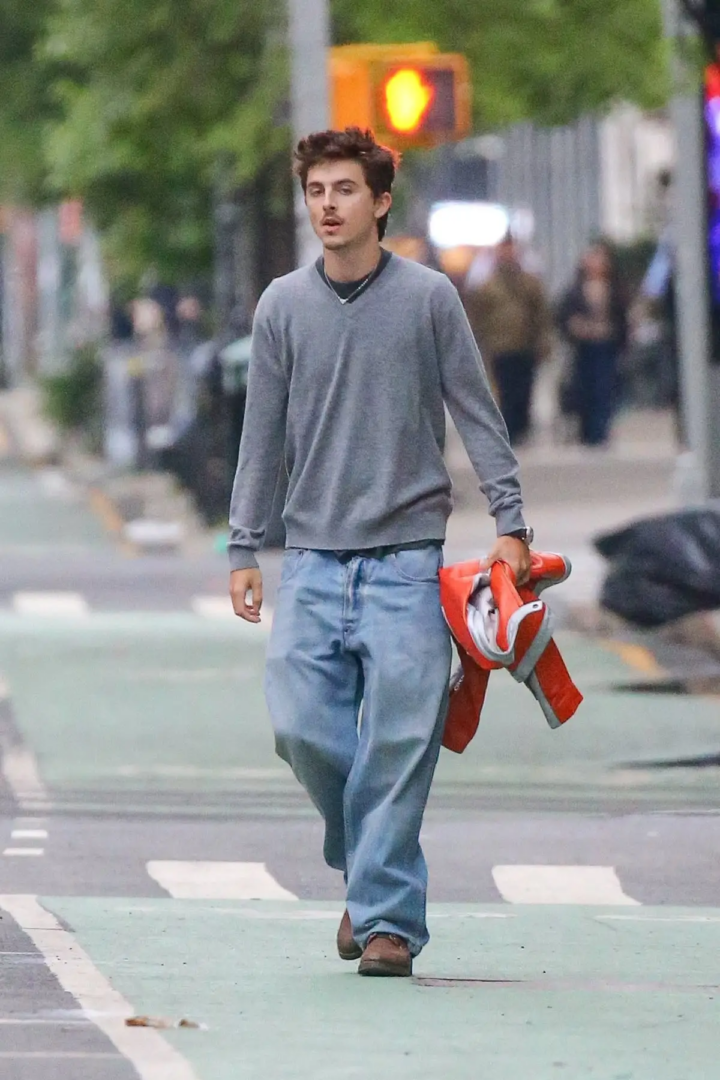
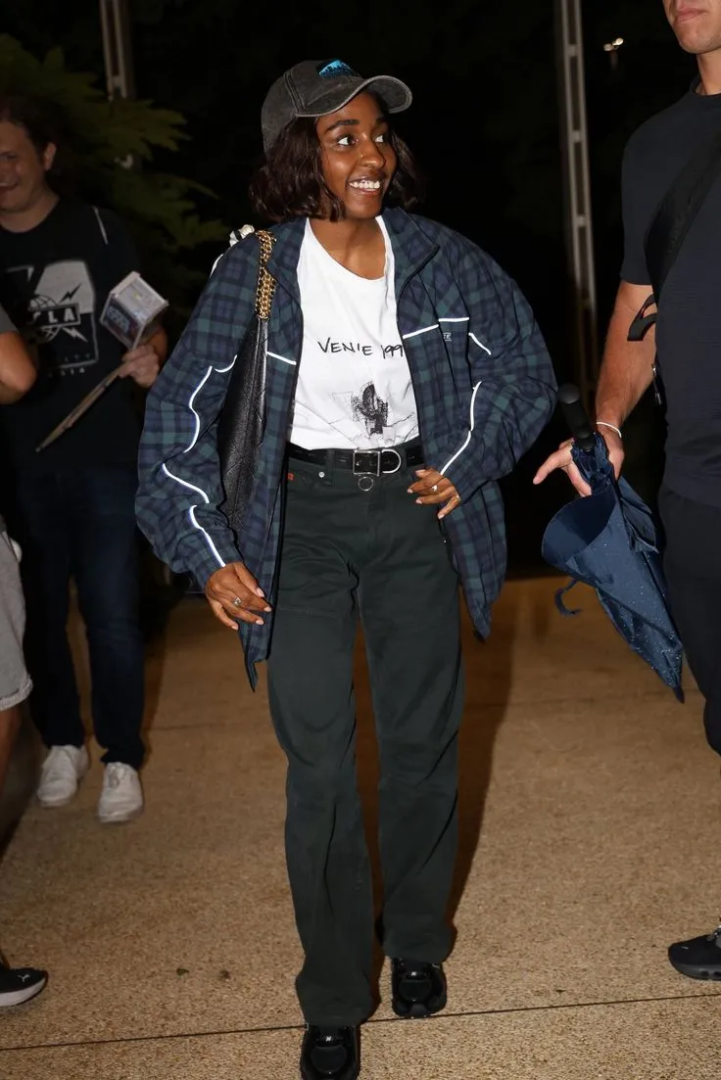
The logo’s history as status signifier runs from the American yuppie culture of the 1980s through Harlem, where Dapper Dan reappropriated luxury monograms as instruments of cultural self-representation — a tension between corporate asset and cultural property that resurfaces every time logomania cycles back. As monograms proliferated onto counterfeit bags and entry-level accessories, they lost their exclusionary power; the quiet luxury corrective followed. By spring 2025, the pendulum had swung again: logo visibility on the major runways increased significantly, a reading corroborated by the broader critical response to the season. The quiet luxury consensus had broken.
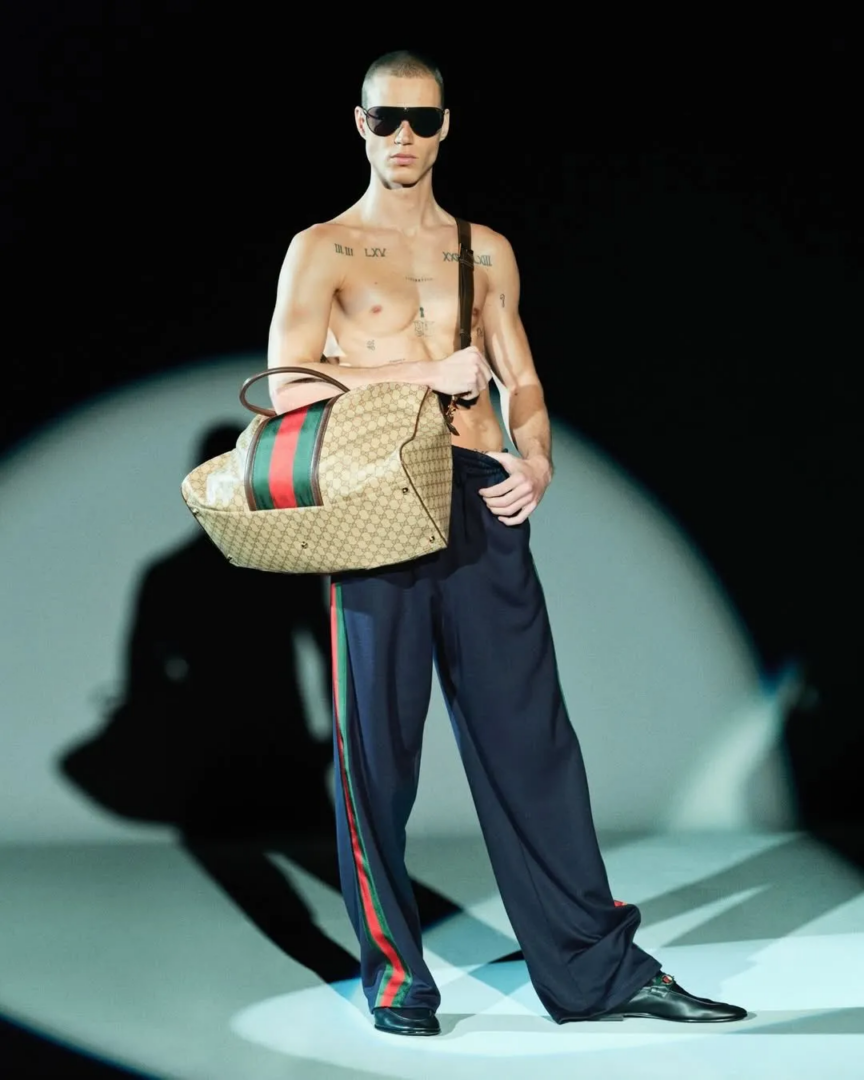
Kering’s response was to appoint Demna Gvasalia to Gucci, a brand that had shed 25% of its revenues in Q2 2025 under a quietly elegant predecessor. Demna’s autumn 2025 preview returned immediately to the double-G monogram, the horsebit belt, a 1990s sexual charge reread through contemporary maximalism. The commercial logic is transparent: logo-bearing leather goods under €3,000 remain the dominant share of luxury sales. The aspirational consumer wants the logo; the UHNWI does not; a brand of Gucci’s scale cannot afford to lose either. The cultural verdict was compressed, as it often is, into a tweet: “2026 is the new 2016.” The observation is only partially ironic — the logo returns not as regression but as transformation, functioning now as accent rather than uniform, community membership rather than status broadcast.
The reference was to the year in which streetwear had colonised the luxury houses — Gucci, Louis Vuitton, Prada — through collaborations with Supreme and Off-White, and in which the logo had last enjoyed this degree of cultural vitality.
Automotive luxury: performance, restraint, and the electric question
The luxury automotive sector distils the same tensions in their most extreme form. US sales of ultra-luxury vehicles fell 11% in 2025 to 15,670 units (WardsAuto), yet the disaggregated picture is more revealing: Ferrari maintained near-flat global deliveries (13,640 units in 2025 versus 13,752 in 2024) while growing 2.3% in US retail, consistent with its policy of constraining supply below demand — waiting lists are part of the product. Lamborghini hit a record 10,000+ deliveries on the strength of its Urus SUV and hybridised range; its first fully electric model has been deferred from 2028 to 2029, with CEO Stephan Winkelmann declaring demand for electric supercars “sluggish.” Rolls-Royce, by contrast, is the sector’s most coherent case for electrification: its Spectre delivers the silence and insulation the brand has always sold, more completely than any combustion engine can. Across the segment, the broader trajectory has shifted from scale to singularity — Ferrari One-Off commissions above €10 million, Bentley’s Mulliner, Rolls-Royce’s rear-compartment private libraries. One still declares. The grammar has changed.
The maximalist party and its discontents
Gucci’s recent history constitutes, in miniature, a case study in the difficulty of occupying the contested middle ground of the luxury market. Three distinct identities in a decade: the campy, neo-Gothic maximalisme of Alessandro Michele (2015–2022), which achieved extraordinary commercial results before exhausting both its creator and its audience; the restrained, critically admired tenure of Sabato De Sarno (2023–2024), which satisfied reviewers while haemorrhaging revenues; and the current Demna chapter, whose commercial logic is more legible but whose creative coherence remains to be demonstrated across a full collection cycle.
The lesson is unambiguous. In the market segment that Gucci occupies — accessible luxury, an aspirational brand with a vast and demographically heterogeneous customer base — quiet luxury does not, as a primary positioning, sell. The consumer who spends €500 on a Gucci wallet wants that expenditure acknowledged. The consumer who spends €50,000 on a Hermès bag does not. The two populations demand different products, and the structural challenge for any brand with the scale and diversity of Gucci’s clientele is that abandoning either population is commercially catastrophic.
The broader ecosystem of maximalist luxury — Versace, Dolce & Gabbana, Mugler under Casey Cadwallader, Diesel transformed by Glenn Martens — maintains a resilient demand. One reading of the 2025–2026 maximalism revival is that it represents not merely a cyclical reaction to quiet luxury’s dominance but a response to collective anxiety: Gen Z consumers, operating under significant economic and existential pressure, seek in festive, provocative, body-conscious fashion a sense of abundance that their material circumstances may not otherwise provide. Euromonitor’s broader consumer research supports the thesis that experience and emotional release are increasingly central to luxury purchasing decisions at this end of the market. Escapism, as an economic category, has rarely lacked for customers.
The market in numbers: a bifurcated landscape
The financial record of 2025 maps the bifurcation with precision. Hermès — the most rigorously disciplined practitioner of controlled scarcity in the industry — closed the first nine months of 2025 with €11.9 billion in consolidated revenues, growing at 9% at constant exchange rates, with double-digit growth in both Europe and the United States. Its model — absolute control of distribution, categorical refusal of promotional pricing, the cultivation of desire through managed unavailability — demonstrates a resistance to macroeconomic turbulence that borders on the structural.
The Prada Group closed 2025 with net revenues of €5.718 billion, +9% reported and +8% organic, marking a fifth consecutive year of growth. The engine of that growth was Miu Miu: retail sales up 35% for the full year (following an extraordinary 93% expansion in 2024), the brand now accounting for a substantial and growing share of total group revenues. The brand Prada itself recorded flat retail sales (-1% at constant rates), reflecting a repositioning process that has yet to resolve itself commercially. The Prada Group’s 2025 acquisition of Versace — completed in December at a cost of approximately €1.25 billion — signals an ambition to dominate the full range of luxury registers, from the restrained prestige of Prada to the declarative glamour of Versace.
Kering’s trajectory describes the opposite arc. First-half 2025 revenues fell 16%; net profit was halved. Gucci — which represents approximately 41% of group revenues (and a disproportionate share of operating profit) — recorded an 18% decline in Q3 2025. Bottega Veneta, whose quiet luxury positioning has never wavered, grew 3% in the same quarter: a figure whose modesty should not obscure its significance, given the context in which it was achieved.
The structural division that these figures describe is one between ultra-premium luxury — where UHNWI clients, representing less than 1% of the market but 23% of its value, continue to spend without material constraint — and aspirational luxury, where the global middle class is subject to accumulating pressure from inflation, elevated interest rates, and weakening consumer confidence. A consistent theme in sector analysis is that the primary threat to an ultra-luxury brand is not economic recession but ubiquity — the risk of becoming too recognisable, too widely distributed. Hermès does not merely recognise this risk; it actively guards against it, discontinuing products that have become too familiar.
The pre-owned luxury market constitutes a separate but related development. Bain & Company estimates the global secondhand luxury market at approximately €50 billion in 2025, with growth moderating to 4–6% year-on-year following the exceptional post-pandemic expansion. Brands including Gucci, Louis Vuitton, Armani, and Ralph Lauren have launched official resale programmes; the secondary market is no longer an alternative to new luxury but its complement — and frequently the point of entry through which younger consumers develop what one analyst has called “luxury literacy”: the capacity to read and evaluate the industry’s codes before committing to full-price purchases.
Which luxury survives?
The luxury industry in 2026 is no longer, in any meaningful sense, a single industry. It is a contested territory occupied by at least four distinct value propositions, each coherent in its own terms, each addressing a different configuration of desire, aspiration, and self-conception. The question of which paradigm “wins” is therefore misdirected: what is at stake is not a competition between models but the capacity of individual brands to position themselves with sufficient clarity and consistency to be legible to their chosen public.
The evidence suggests that those brands which have chosen their idiom with the greatest conviction have performed best. Hermès — which has never wavered from the proposition of handcraft, controlled scarcity, and distribution discipline — continues to grow while the market contracts around it. Miu Miu — which chose maximalism and cultural engagement with the clarity and commitment of a manifesto — became the sector’s most dynamic phenomenon. Bottega Veneta — which has maintained its “logo non-logo” proposition across multiple creative directors without fundamental compromise — grew modestly and profitably even within a struggling group.
The most instructive failures are those of category confusion: brands that attempted to address the full spectrum of luxury consumer desires simultaneously and satisfied none of them completely. The Gucci of the De Sarno years attempted a quiet luxury repositioning within a brand whose entire client base had been constructed on the premise of visibility. The misalignment between brand promise and product language was experienced as dissonance rather than evolution.
Three structural developments seem likely to define the next phase. The home collection will continue to absorb the creative energies of the major houses: with the body thoroughly colonised, the domestic interior offers the last significant territory for luxury’s expansion. The pre-owned market will consolidate its position as an integral, rather than marginal, component of the luxury economy. And the automotive sector will work through the contradictions of its electrification imperative — a process that will likely produce further deferrals, unexpected alliances, and the occasional creative solution of the Rolls-Royce variety.
Matteo Mammoli