The Zeitgeist of Louis-Gabriel Nouchi: literature and Onlyfans
The reader on the metro and the OnlyFans subscriber are likely one person. Louis-Gabriel Nouchi has built an entire brand around that overlap, and SS27 is the latest chapter
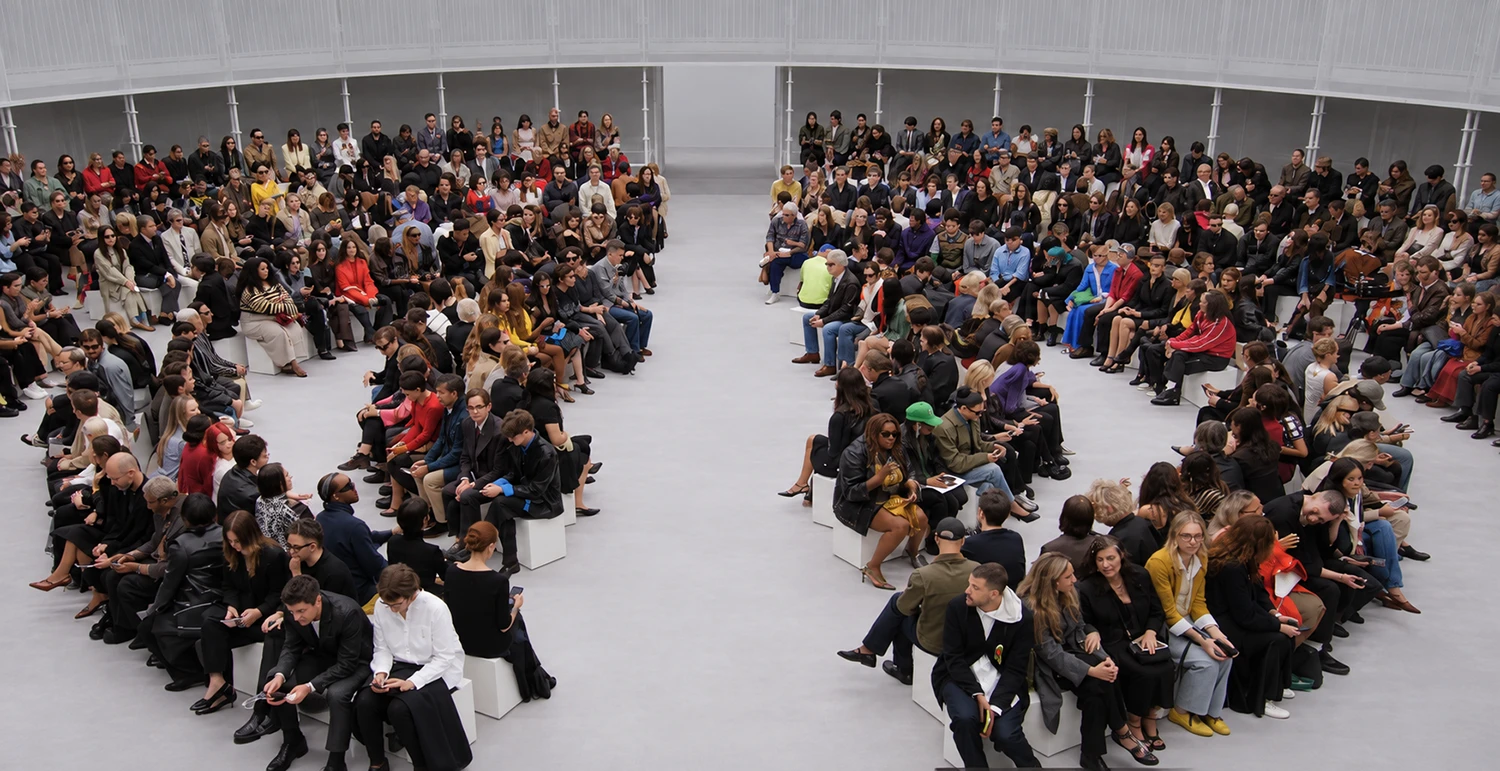
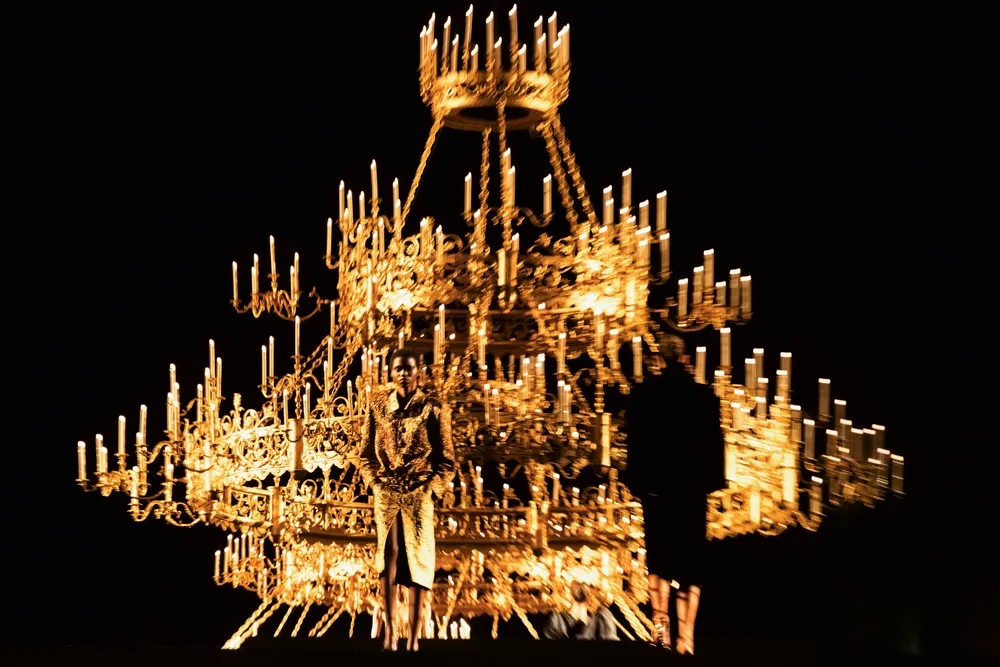
Louis-Gabriel Nouchi showed his Spring Summer 2027 collection in Paris on June 27, 2026. Two days later, LGN launched its physical capsule with OnlyFans. His work has always moved between books and bodies, between canonical literature and the parts of desire that culture prefers to regulate or censor.
Nouchi is interested in something more precise than shock value or the predictable collision between “literary menswear” and an adult-content platform: how desire circulates through clothes, platforms, characters, books and bodies. The person reading Bret Easton Ellis on the metro and the person subscribing to an OnlyFans channel may be the same person.
Louis-Gabriel Nouchi SS27: Twin Peaks as feeling and atmosphere
LGN’s SS27 collection is built from Twin Peaks – “not as a reference, but as a feeling”. Twin Peaks is one of the most exhausted references in fashion. Hedi Slimane, Raf Simons and Alessandro Michele have all moved through the Lynchian archive in different ways. The risk, for any designer returning to that universe, is repetition.
Nouchi avoids the literal route, grounding the collection in a feeling drawn from Twin Peaks: mood and atmosphere translated directly into clothing. A cold summer, mist, controlled surfaces, disturbed interiors. Lynch surfaces through tone and texture, with a clean exterior concealing something dangerous underneath.
Twin Peaks supplies Nouchi with structure: a way of organizing character and surface tension into a collection. Dale Cooper, the detective, becomes an emblem of composed unease. Laura Palmer, the victim turned icon, becomes the figure through whom an entire town’s violence surfaces. In Lynch, desire stays bound to secrecy and fear. In Nouchi, clothing operates in the same register.
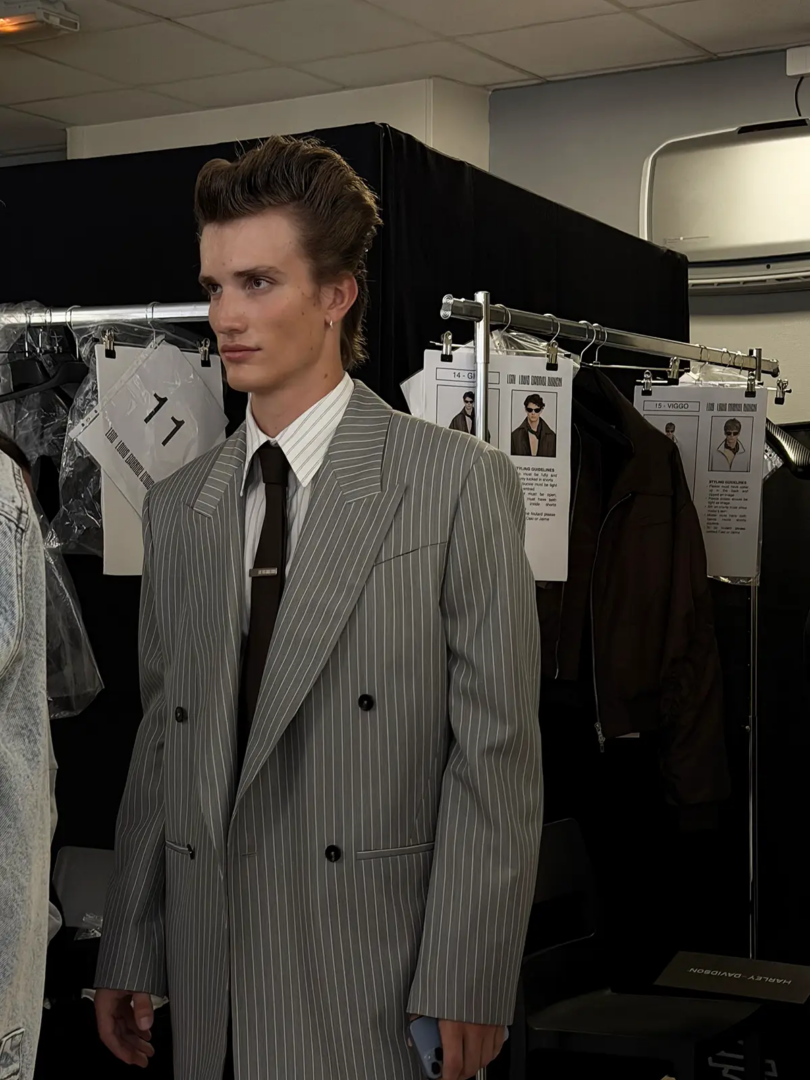
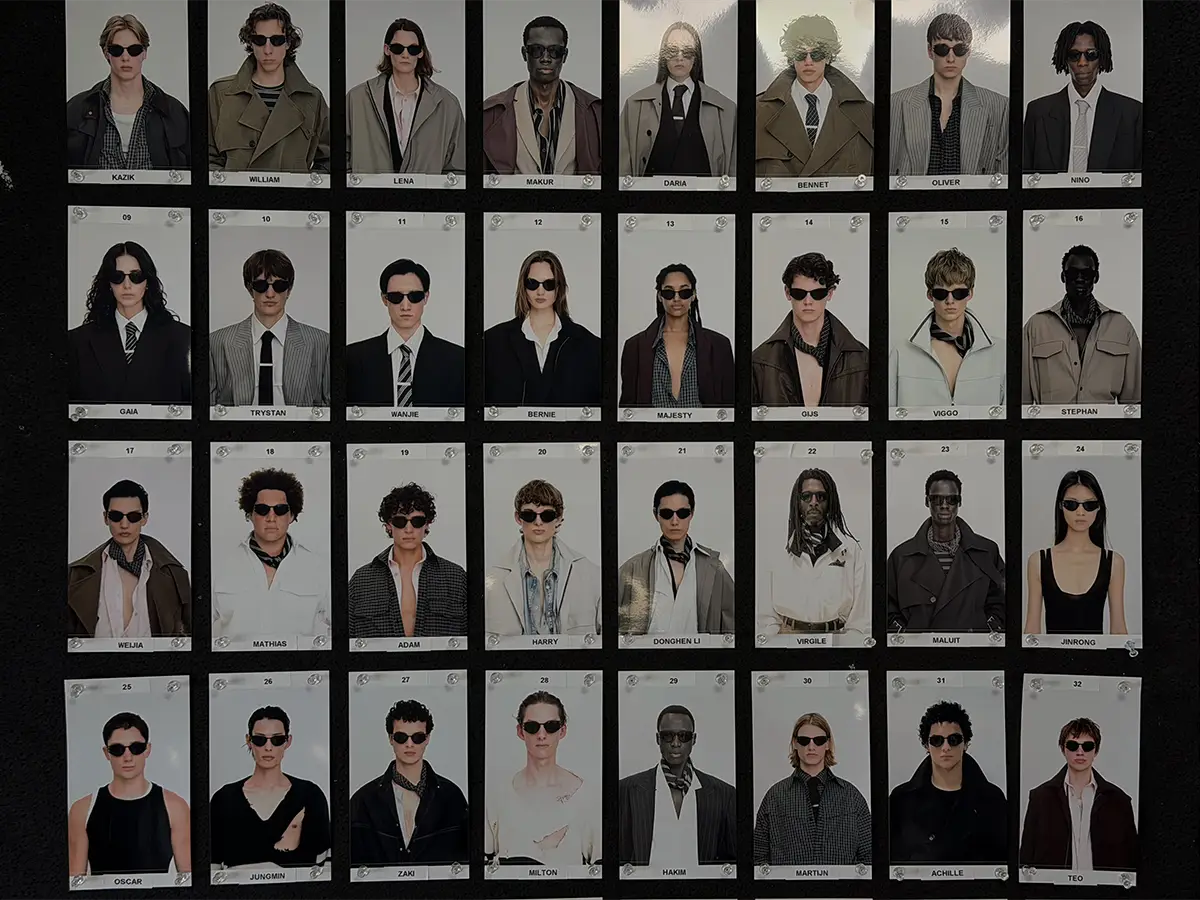
Pinstripe suits break open. Jackets expose the torso. Trench coats are cropped high at the hip. Y-fronts appear under outerwear. Stomper boots by Harley-Davidson ground the silhouettes in a harder physical register. The body interrupts tailoring.
The trouserless body and the collapse of masculine authority
The trouserless silhouette has circulated widely across recent menswear, from Saint Laurent to Rick Owens to Egonlab. At LGN, it functions as syntax: a structural language built into the collection. Nouchi removes the trouser to destabilize where masculine authority sits. Traditionally, authority in menswear is carried by the suit: shoulder, lapel, trouser, shoe. In SS27, that architecture remains, but it is interrupted. The jacket is still there. The coat is still there. The codes of power are present. Yet the lower body is exposed and vulnerable.
This is one of LGN’s recurring tensions. The clothes negotiate exposure, testing how much of the body can enter a formal language before that language begins to collapse. The result reads as a sharper kind of vulnerability: physical and severe. Nouchi designs masculinity under pressure.
Archetypes of desire: detective, waitress, teenager, femme fatale
In the SS27 show notes, the silhouettes are built around characters: a detective, a waitress, a rebellious teenager, a femme fatale. Each is a role carrying social function, sexual charge and narrative expectation. The detective watches. The waitress serves. The teenager refuses. The femme fatale understands the rules and weaponizes them. Each figure belongs to a recognizable cultural inventory. Each also carries an erotic position: control, availability, rebellion, threat.
This is where Nouchi’s work connects to a longer visual tradition. Tom of Finland understood the erotic power of archetypes. Policemen, sailors, bikers and construction workers were emptied of their institutional function and reinvested with sexual meaning.
LGN operates with a similar awareness, in its own language. The detective carries erotic charge through exposed tailoring. The waitress reads as contemporary and sensual. The femme fatale becomes precise, charged with real menace. These figures filter through tailoring, underwear, satin, pointelle, wax cotton, grain de poudre, ostrich feathers and sheer fabrics, turning into fragments of a wardrobe where social identity and private fantasy overlap. The erotic charge lies in that gap: what the role says, and what the body inside it may be hiding.
The LGN library: literature as working method inside each collection
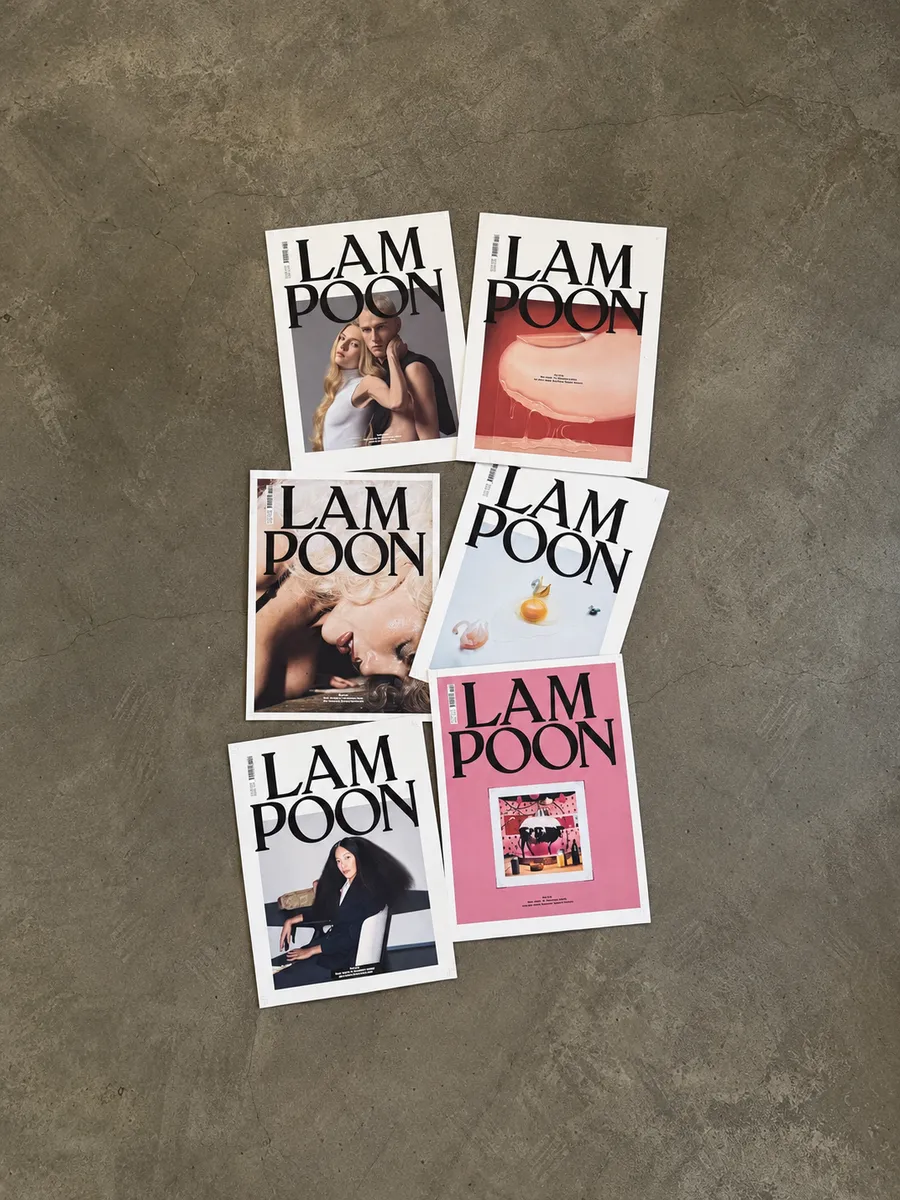
Louis-Gabriel Nouchi has often described his brand as a bibliothèque, a library. “People who read are…” runs the tagline on LGN’s official YouTube channel. The sentence stops there, and the imagination moves fast. Each collection begins with a book, a writer or a literary atmosphere, treated as a mechanism for thinking through the work. The process starts with words. A source text is broken down into sensations, keywords, colors, tensions. From there, the collection develops.
The reading list is central to understanding the brand – texts of obsession, surveillance, seduction, violence, compulsion, altered states and control. Mishima brings beauty and destruction. Baudelaire brings artificial pleasure. Laclos brings seduction as strategy. Ellis brings toxic masculinity and surface violence. Süskind brings scent and murder. Orwell brings surveillance and institutional pressure.
Nouchi is drawn to outsiders and antiheroes. Figures unable or unwilling to belong to the world as it is. Their conflict becomes garment structure. Desire becomes cut. Instability becomes silhouette. Literature in LGN functions because it has always contained what polite culture tries to clean up: sex, violence, class, obsession, humiliation, surveillance, appetite. OnlyFans clarifies that system.
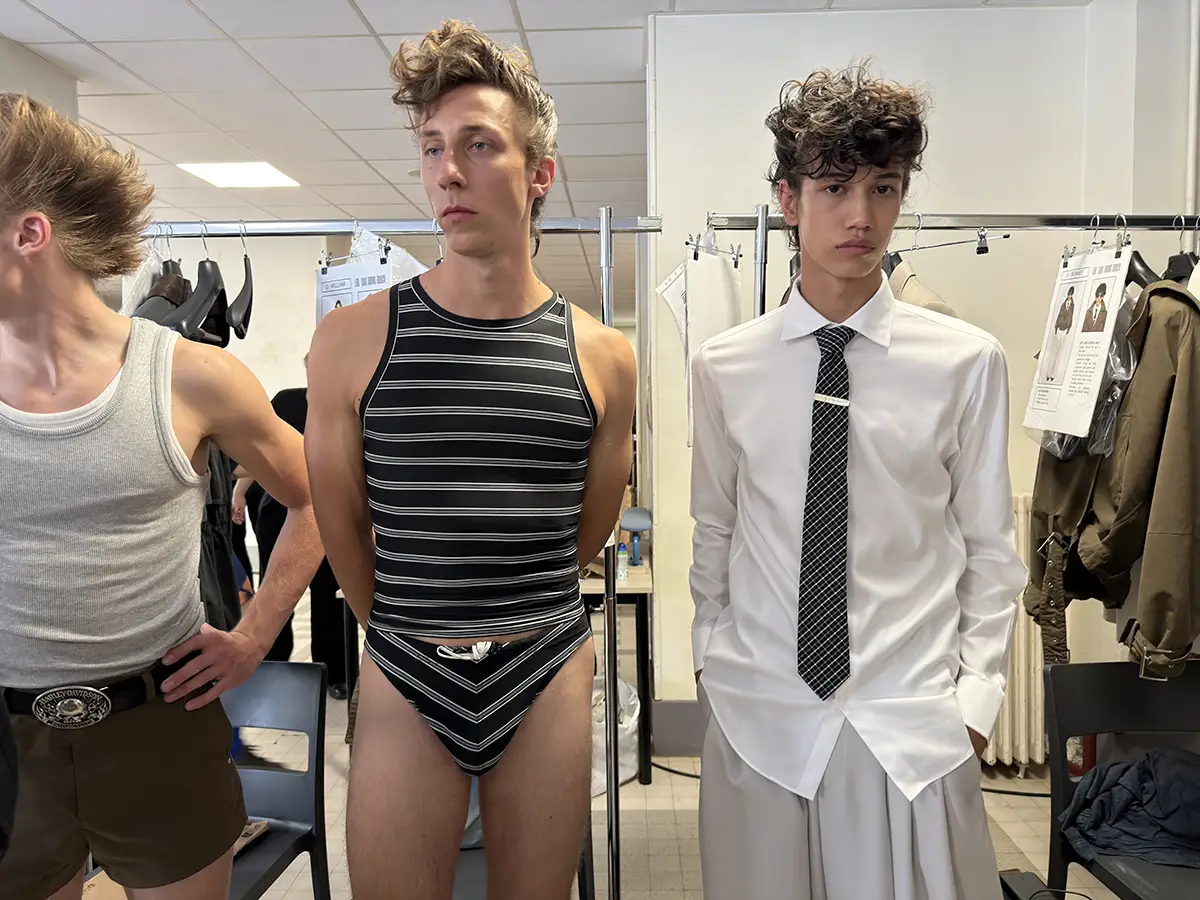
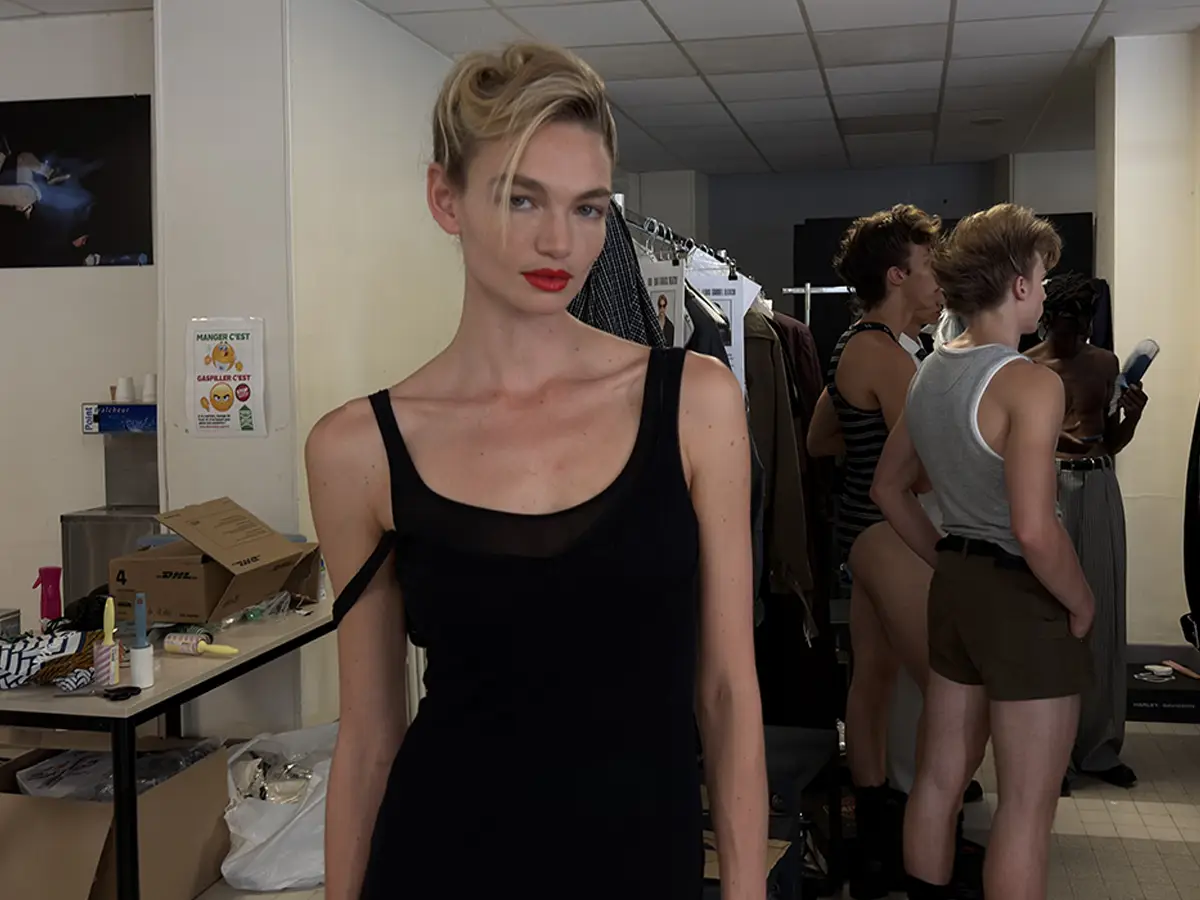
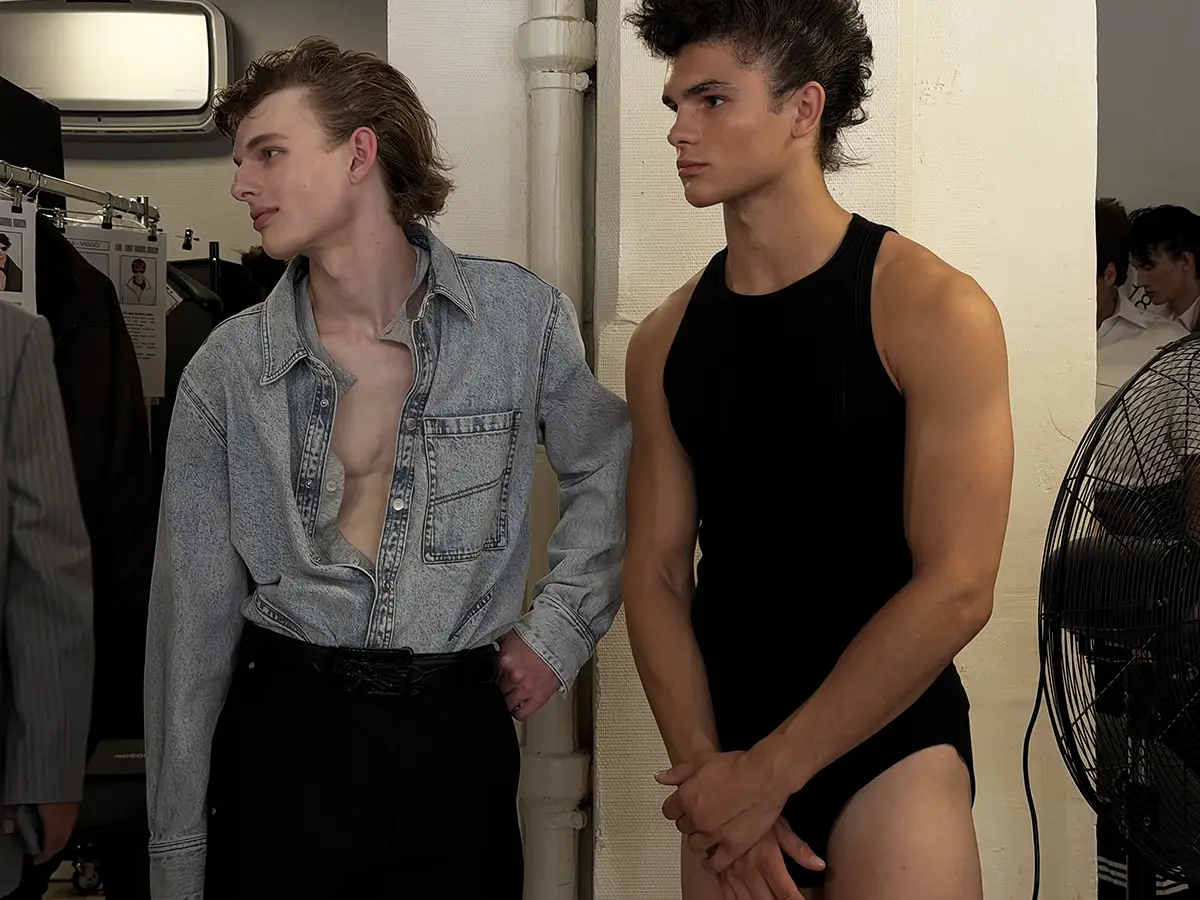
LGN × OnlyFans: desire outside institutional mediation
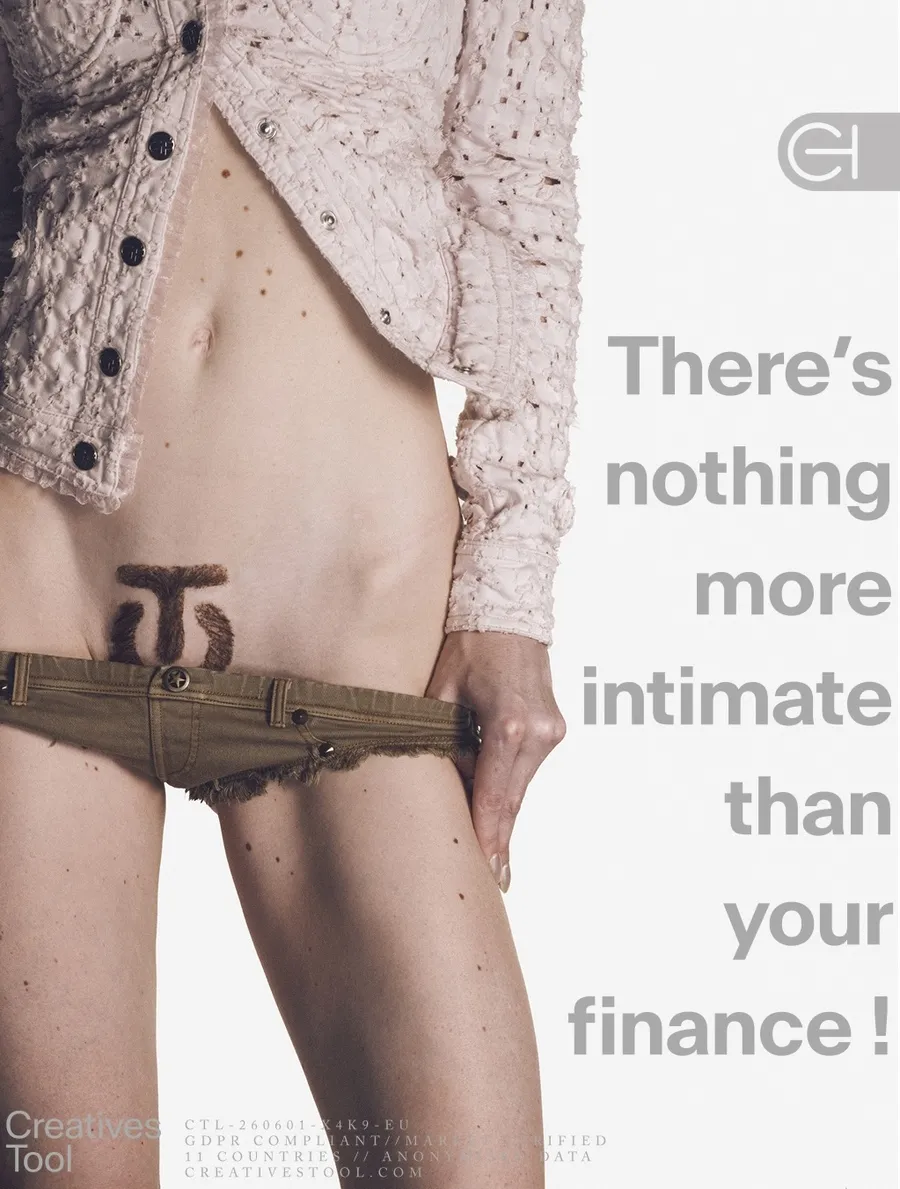
The LGN × OnlyFans capsule launched on June 29, 2026, two days after the SS27 show. The collaboration had been developing since FW26, when Nouchi announced an LGN channel on the platform. The idea centered on creating a space for behind-the-scenes material, ASMR experiments, erotic readings and collaborations with artists working around desire and the body.
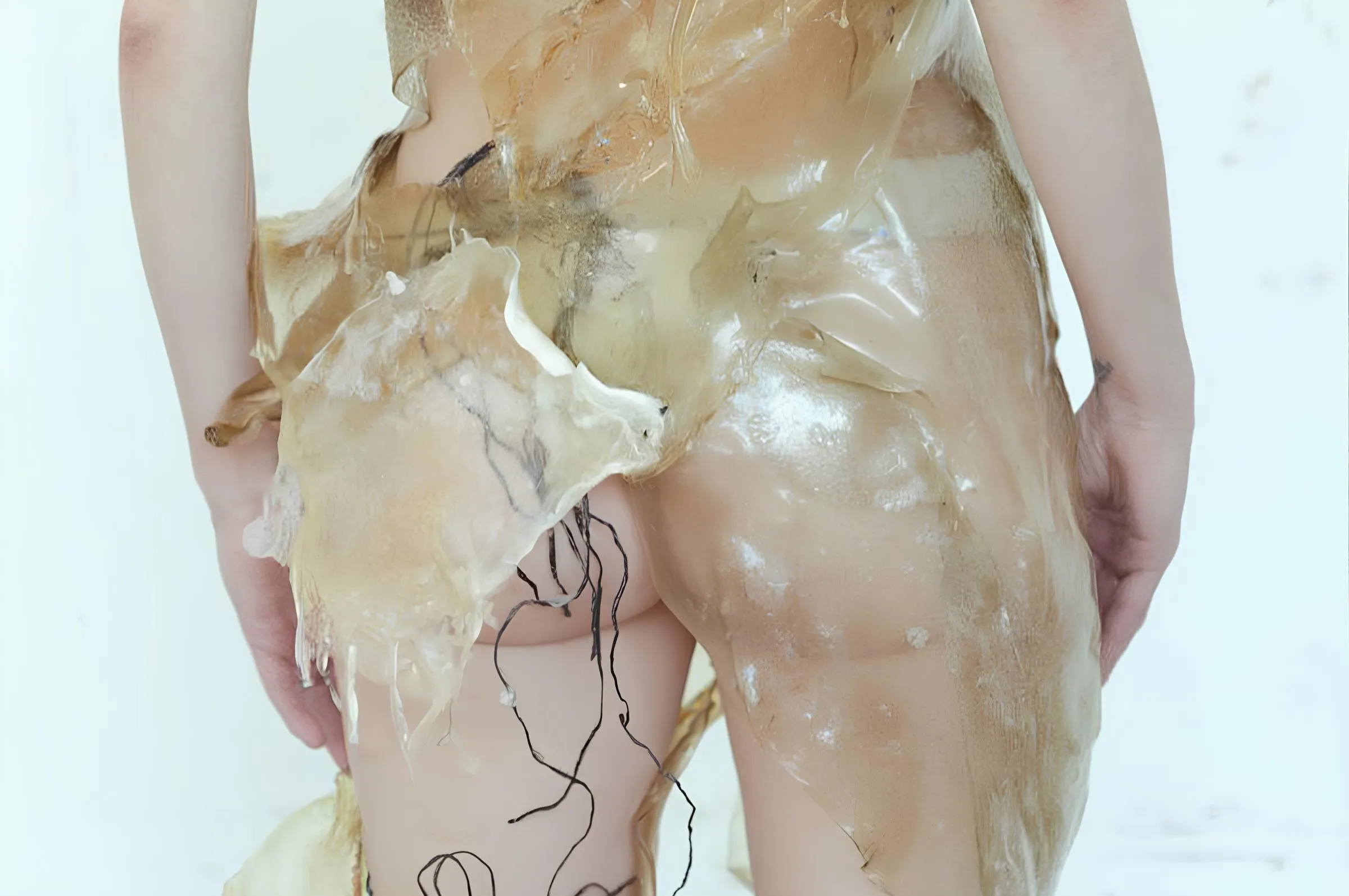
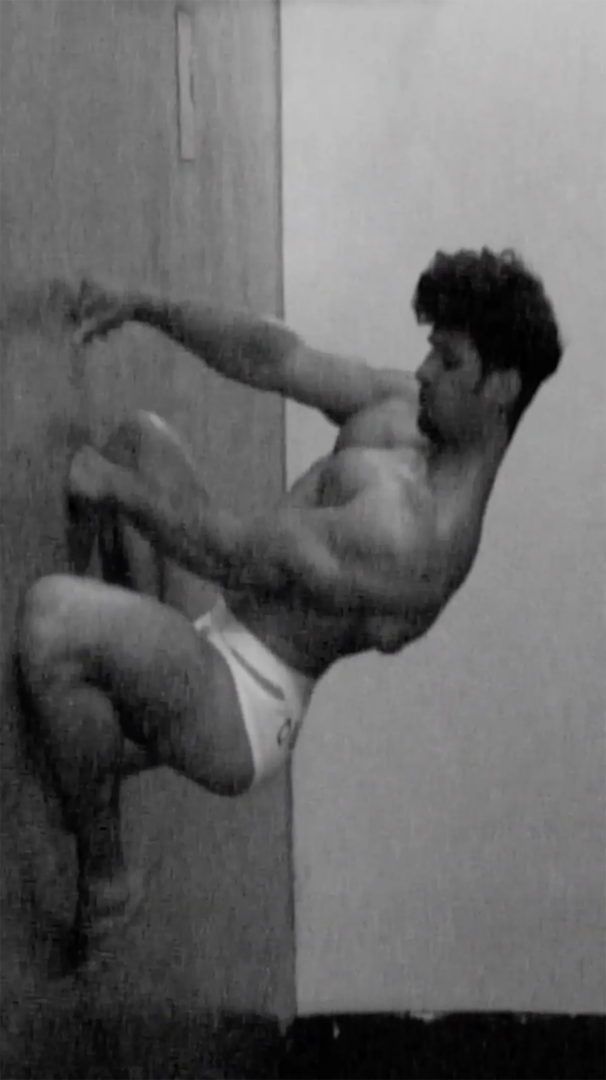
The physical capsule moves between underwear and sportswear. Photographed by Tré Koch on bodybuilder Shamu Azizam in London, the campaign refers to the directness of 1990s fashion imagery. The body is central, embedded in the brand’s broader investigation into exposure and control.
OnlyFans changes the conditions of fashion communication. Mainstream platforms such as Instagram and TikTok allow the body only when it is translated into acceptable categories: fitness, beauty, celebrity, lifestyle, campaign image. The erotic body is constantly present, but constantly regulated. It must stay calibrated: visible enough to sell, contained enough to keep the platform comfortable.
OnlyFans introduces another economy of looking: payment, access, intimacy, membership. Nouchi frames the platform as something closer to a paid magazine or a members-only club. For LGN, the platform becomes a way to think about desire outside the sanitized codes of mainstream social media.
Literature and OnlyFans sit together inside the same cultural blind spot. We accept violence and sexual manipulation inside canonical books, then treat direct erotic economies as if they belonged to another world. Nouchi refuses that separation.

Louis-Gabriel Nouchi and the body as cultural material
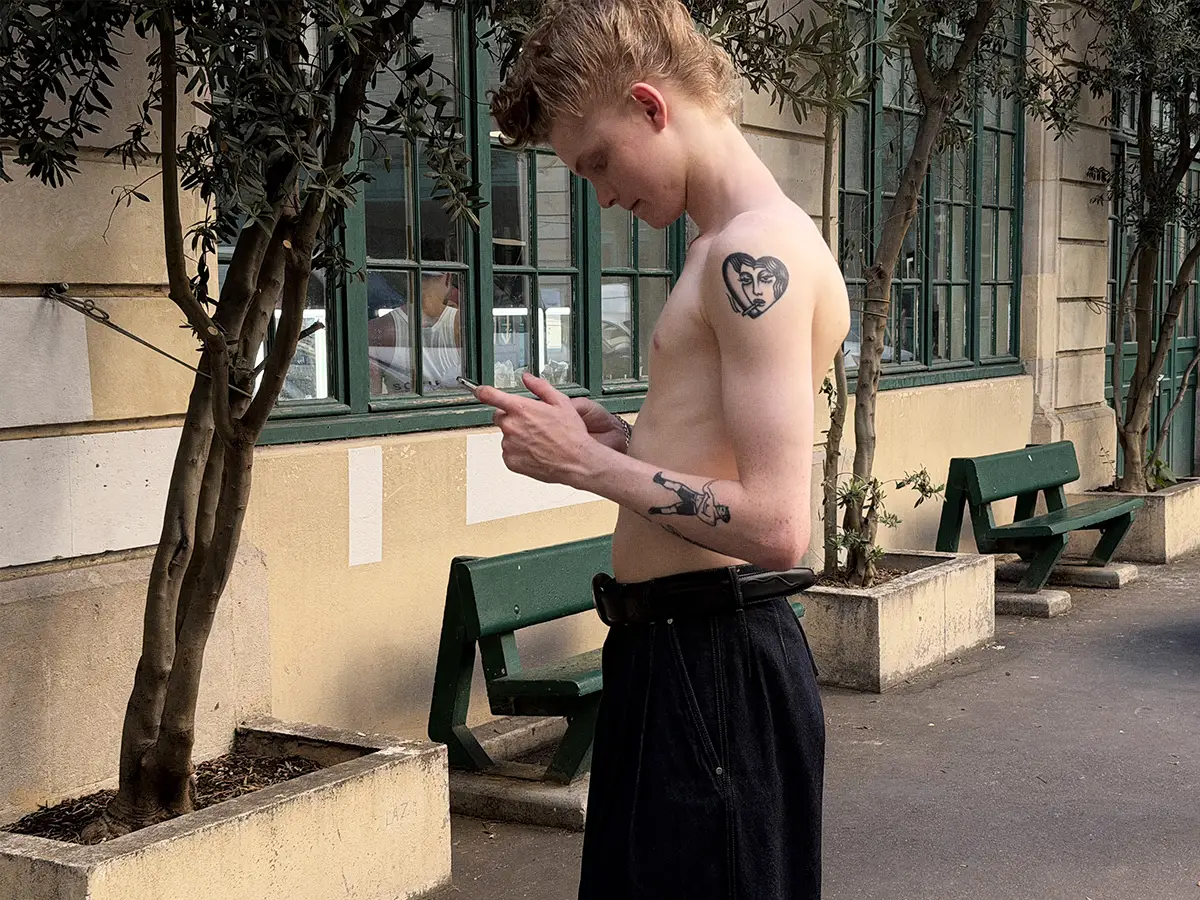
The aesthetic of LGN cannot be separated from Nouchi himself. The dark eyes, thick moustache, boots, fitted clothes, white socks worn short. The look carries a history: Castro district codes, 1970s San Francisco, Tom of Finland, contemporary bear and leather communities. On Nouchi, however, it reads first as personal style before it becomes brand language.
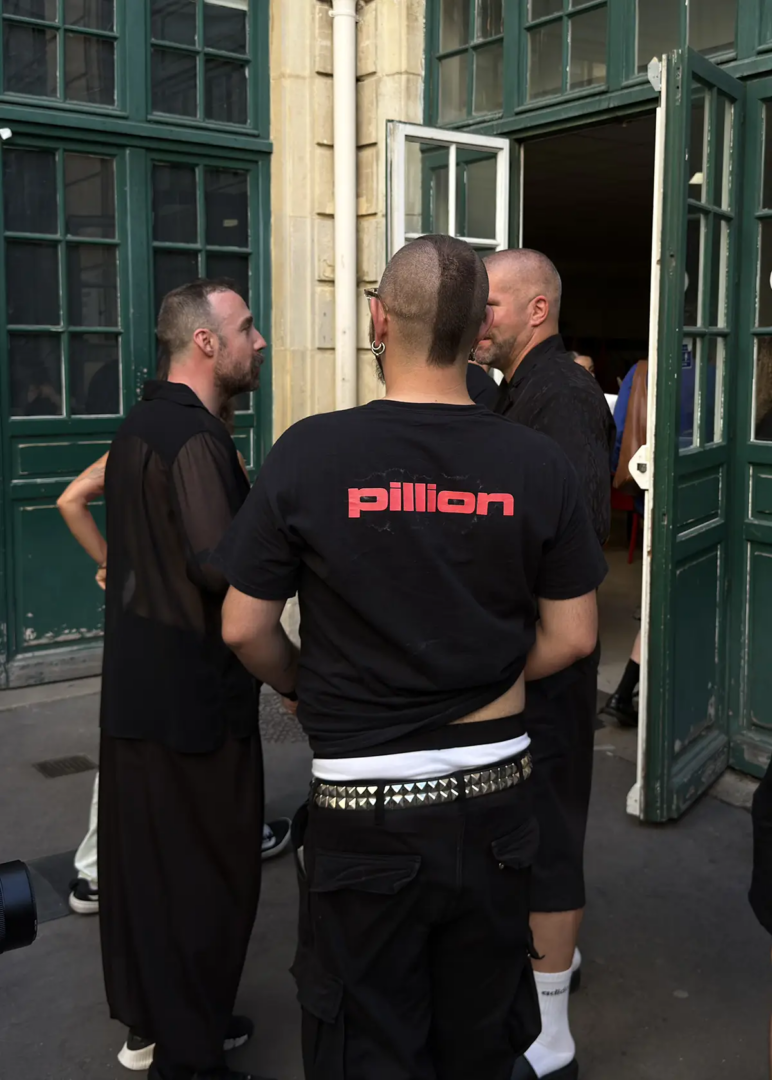
Backstage at SS27, Marc Goehring — the show’s stylist — was seen wearing a Pillion T-shirt, referencing the 2025 film in which Alexander Skarsgård plays a gay biker and BDSM enthusiast. Skarsgård is one of the cultural figures Nouchi has dressed. LGN gravitates toward men who carry desire openly, with a rawness that resists the polish of conventional sex appeal.
Biography: Louis-Gabriel Nouchi
Louis-Gabriel Nouchi is a French fashion designer and the founder of LGN, an independent Paris-based brand launched in 2017. He studied at La Cambre, the École Nationale Supérieure des Arts Visuels in Brussels, before working in editorial at Vogue Paris and in design alongside Raf Simons.
He came to wider attention in 2014 as a finalist at the Hyères International Festival of Fashion and Photography, where he received both the Camper Prize and the Palais de Tokyo Prize. LGN was officially launched with the capsule collection Préface and has since become one of the most recognizable voices in contemporary French menswear.
In 2023, Nouchi received the ANDAM Grand Prize, including €300,000 and executive mentorship. In 2024, he designed around 700 costumes for the performers in the Paris Paralympics Opening Ceremony, one of the largest public commissions of his career.
He has dressed Alexander Skarsgård, Colman Domingo and Pedro Pascal, among others. The deeper continuity runs conceptual: literature, masculinity, desire, vulnerability, bodily diversity and the tension between exposure and control.
The LGN archive: from Mishima to Twin Peaks
Across seasons, LGN has built a wardrobe from difficult books. SS20 drew from Yukio Mishima’s The Temple of the Golden Pavilion, a novel about beauty and destructive devotion. FW22/23 was titled Les Paradis Artificiels, after Baudelaire’s essays on hashish and opium. SS23 took Choderlos de Laclos’s Les Liaisons Dangereuses as a study in seduction and aristocratic violence.
FW23/24 moved through Bret Easton Ellis’s American Psycho, translating toxic masculinity and surface brutality into tailoring. SS25 started from Patrick Süskind’s Perfume: The Story of a Murderer, with carnality, scent, touch and murder as coordinates. FW25/26 entered George Orwell’s 1984, working through surveillance and conformity.
Matteo Mammoli