Saliva: few drops on a classical portrait — Naruki Kukita and the Bukkake series
From a Bushwick studio the painter works in oil and pre-Impressionist layers, adds the anime figure last, and teaches in a dojo where students learn the form before breaking it
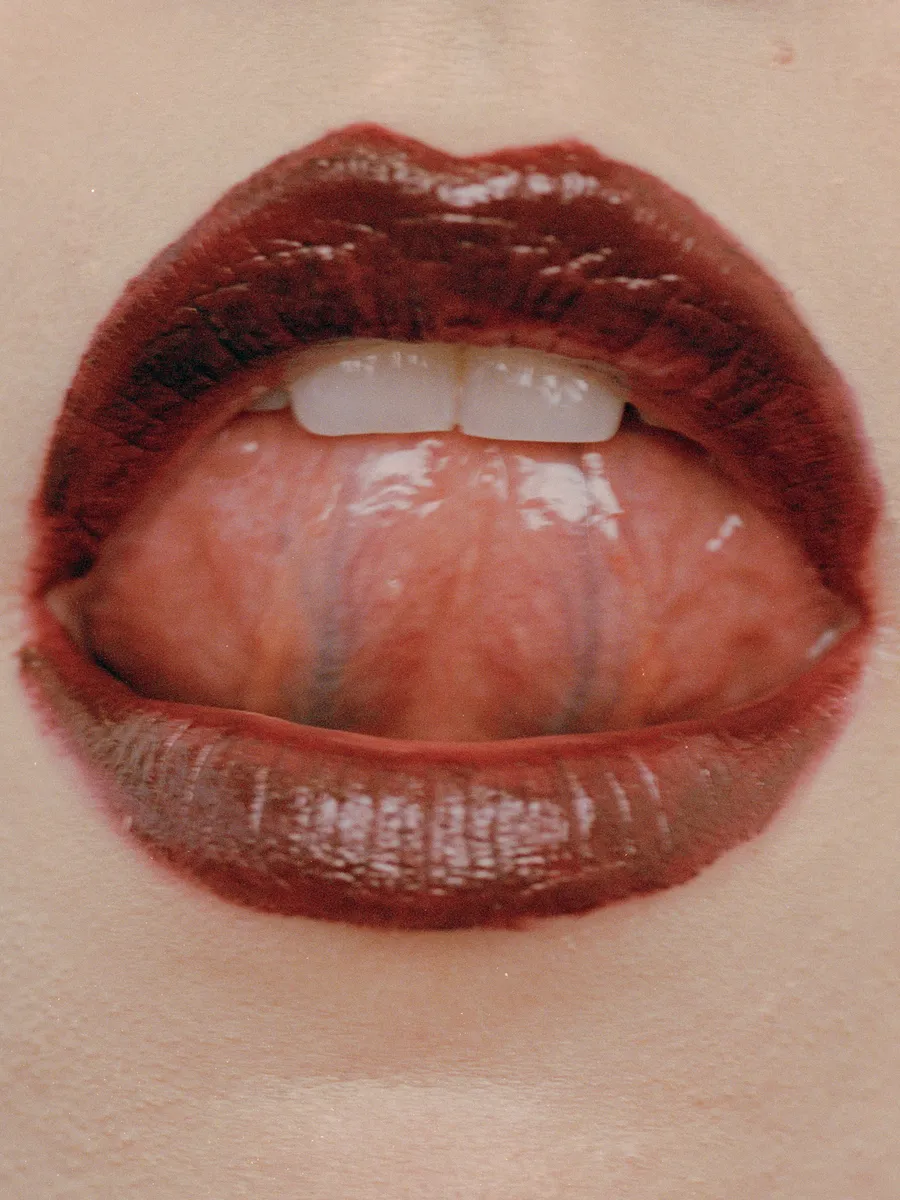
Naruki Kukita. “Place several toothpicks together against the fingertips and we cannot tell how many there are; against the lips, we can. That is the sensory resolution of the lips. I want to paint the human voraciousness of wanting to feel another person through the most sensitive organ we have.”
Born in Japan and based in Brooklyn, he paints from live models — friends, students, performers — in a Bushwick studio where he also teaches. He works in oil, transfers his sketches to canvas with a grid, and adds two elements last: the fluids, and an anime character.
Why pornography supplies compositions that sports and fashion photography cannot
Naruki Kukita. Sports photography has dynamic movement, but it is shot from a distance with a telephoto lens. Fashion photography places models frontally to show the clothing, with little movement. Pornography works across angles and distances, with a wide range of situations, expressions and poses, and it is built rationally: the purpose, to maximize the model’s sexual appeal, is defined, and the angles and the poses are organized to serve it. That produces images without hesitation or ambiguity.
The final composition depends on the distance I want between the viewer and the subject. The more boldly the subject is cropped, and the closer it appears, the more intimacy the viewer feels.
I started making those sketches in the corners of notebooks in my teens, when I was beginning to awaken sexually. I felt guilty about drawing them, and afraid my family would find them, so I destroyed them at once. None of them exist.
A few drops on a classical portrait: the Bukkake series and the Duchamp precedent
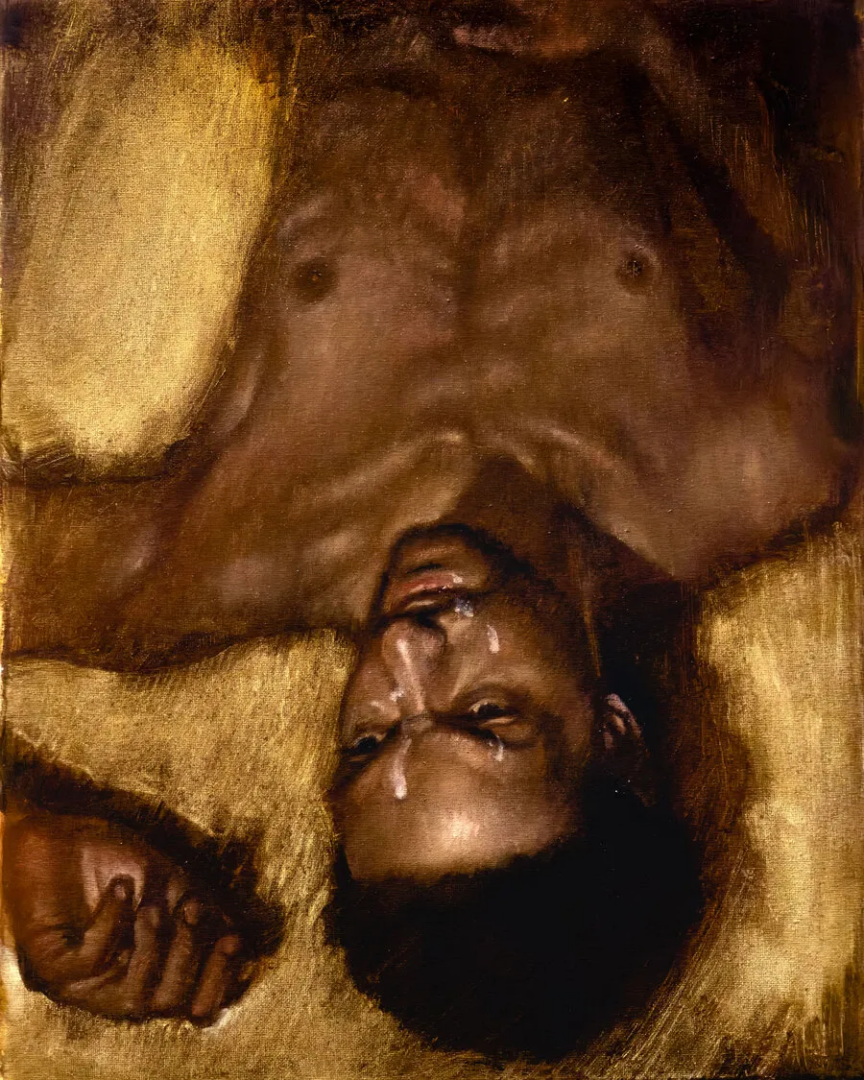
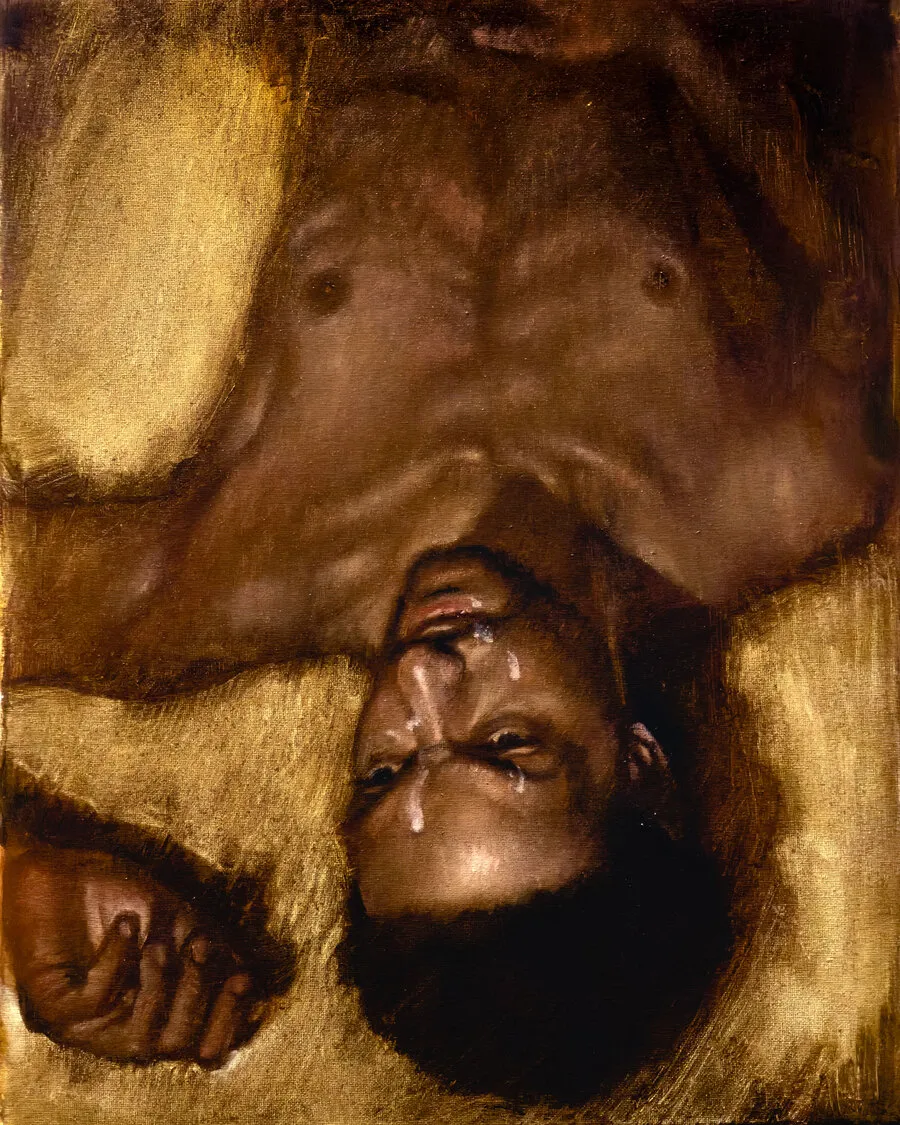
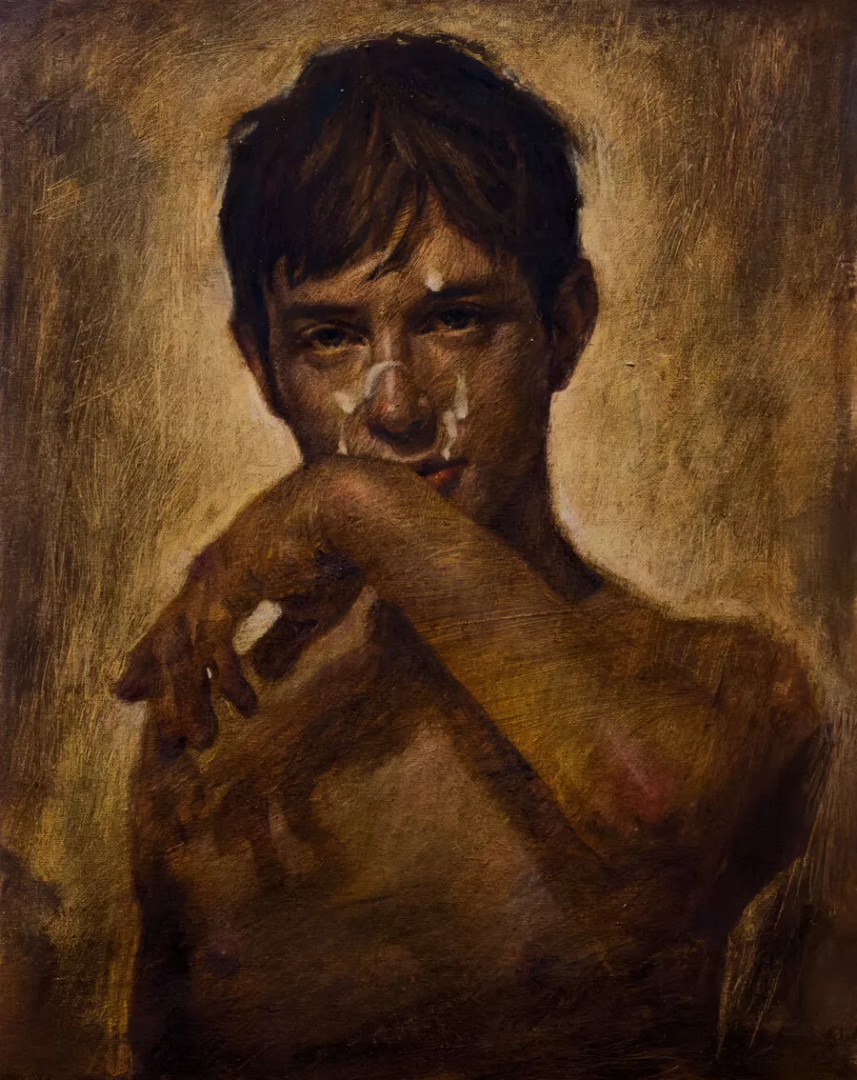
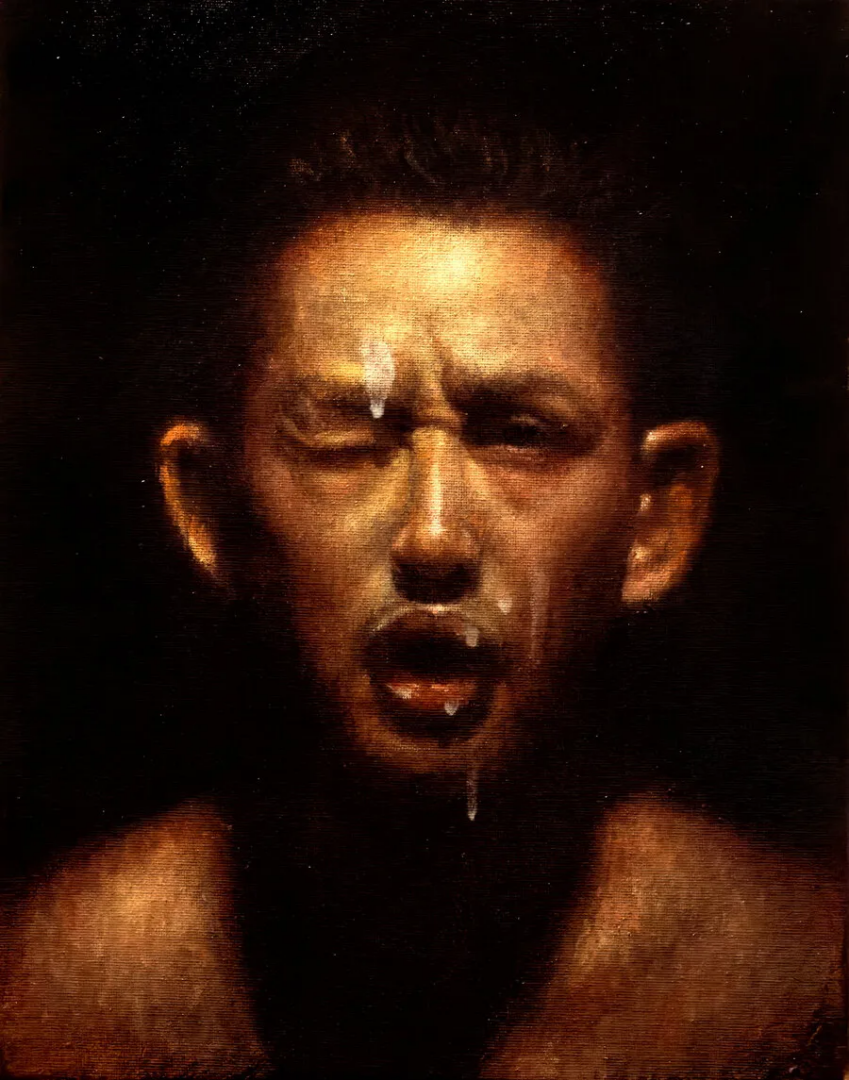
Naruki Kukita. I paint portraits in oil, with traditional techniques. The Bukkake series began with my interest in how the impression of a painting changes when a few drops of bodily fluid are added to a conventional portrait. No full nudity, no genitalia, no extreme pose: a few drops on the face turn a painting with a classical atmosphere into something provocative. It is close to the sensibility of Duchamp adding a mustache to the Mona Lisa. It carries my admiration for tradition and my contempt for it.
I fuse two opposing elements in a single work: old and new, serious and humorous, Western and Eastern, clean and dirty, respect and contempt. In the Bukkake series the starting point was the chemical reaction between an anti-symbolic realist representation and a bodily fluid added as a symbol.
Painting wet skin: reflectivity, the edges of the highlights, and the memory of breath
Naruki Kukita. An open mouth, or an expression on a face, suggests breath. Temperature and smell can be suggested through the control of color temperature. Reflectivity is what makes a wet texture. Materials separate by how sharply or softly the edges of the highlights are painted: for fabric, low reflectivity, I soften the edges; for a liquid, high reflectivity, I sharpen them. Skin works the same way. Soft edges give soft skin, sharp edges give muscular skin, or sweat.
As art schools have always employed nude models, a nude model helps the painter: the muscles and the skeletal structure are legible, and I get what I need quickly. Many of my friends are performers or porn actors and are comfortable with their bodies, so I have occasions to ask them to pose.
Nude models and consent after MeToo: Matthew Camp as Saint Sebastian, a Pietà for a Jewish family
Naruki Kukita. Before a session I tell the model to pose only within the range where they are comfortable, and to avoid anything they might regret. Since MeToo I have been careful about this. The composition takes shape while I work, so at the session stage I cannot show them the final image; once the work is finished I show it to them, and they review it before it is exhibited.
I work in two ways. Either I start from an idea and look for the model who suits it, or I start from a model I want to paint and look for the theme that brings out that person. With Matthew Camp it was the second. I had known him since before 2010 and had wanted to paint him for years. In most sessions I am the one easing the model’s tension; Matthew is approachable, and he relaxed me. Considering which theme would bring him out, I chose Saint Sebastian.
I once asked a friend to model for a Pietà, the scene where Christ, taken down from the cross, is held by his mother. I explained the theme at the first session. Later I met his mother, who told me: «Or family is Jewish.» I had not known. I thought I had made a mistake and felt apologetic. Neither of them was angry.
Removed posts on Instagram and Facebook: what a painter can publish
Naruki Kukita. I have had warnings and posts removed on Facebook and Instagram many times. I post cautiously now, afraid of what could happen to the account. Friends of mine have had accounts suspended, and I have works I cannot post at all. The restrictions may be lighter for oil paintings than for photographs, and my paintings have still been taken down repeatedly.
From the live model to the grid: two hours of sketching, no Photoshop, pre-Impressionist layers
Naruki Kukita. I do not use Photoshop. The work begins by sketching from a live model. The model comes to the studio and I spend around two hours drawing: I talk with them, understand their character, and find the lighting and the angles that bring out their appeal. Photographing before sketching is inefficient. If my vision is still low-resolution I can take dozens of frames and find later that none of them holds what the painting needs. I have an internal template for the human figure, built through experience, and sketching tells me how far the person in front of me departs from it.
My method is old-fashioned. I sketch on paper and draw a grid over it, draw the same grid on the canvas, and transfer. I set light and dark values in a single color, then build layers of warm and cool. It is pre-Impressionist painting. The virtual figure goes in after the realist sections, like the last piece of a puzzle, and the fluids go in at the end.
Oil against acrylic: brands, mediums, and a polemic against art-materials geeks
Naruki Kukita. I use cotton canvas at times, and gesso to prepare the surface, and for painting only oil. Oil gives more control than acrylic. Acrylic dries fast, so the time for working wet, wet-on-wet included, is short. With oil I use different oils to speed the drying or slow it. Oil also covers a wider range: stiff or soft, thin or thick, transparent or opaque, gloss to matte, from fluid effects close to watercolor to thick effects close to pastel.
Colors with the same name differ between brands. Van Dyke Brown from Winsor & Newton is warm; Gamblin’s is cooler, close to black. I choose the brand by the color I need, the medium by the purpose — thick or thin, fast drying for a multilayered painting, wet-on-wet inside a single layer — and the canvas the same way: finely woven linen for detail, coarse weave for a rougher, more intuitive work.
The Bushwick studio: rising rents, neutral light at 5300K, and what he left behind in Japan
Naruki Kukita. My studio is in Bushwick. Artists moved there and started renting studios between the late 2000s and the early 2010s, and I took mine in the same period. Rents have risen for fifteen years. Holding a studio in Bushwick has become difficult, and artists are leaving.
My students work with the same easels and materials I use; I keep no separate set of tools for teaching. The lighting is neutral, around 5300K, so the finished painting does not shift from the colors I intended when it is seen under gallery light or daylight. Anatomical models and skulls stay around the studio, and I use them to follow what happens beneath the surface.
I miss natural hot springs, the outdoor baths. There are public bathhouses in the United States, but few where you can sit in naturally heated spring water. What I am glad to have left behind is the lack of racial diversity: around 97 percent of the population of Japan is Japanese, 3 percent foreign, and I felt suffocated there. New York gives me people from other backgrounds, and those encounters feed the work.
Rubens, Akira Toriyama, and Gerhard Richter: several dimensions in one picture plane
Naruki Kukita. From early childhood until my second year of high school I went to church every week, and biblical paintings by Rubens and Leonardo shaped me. In the same years I grew up on manga and anime, Akira Toriyama and Katsuhiro Otomo among others, and copied them daily. They became flesh and blood. Both are in the hybrid structure of the work now, and that fusion has to do with being from Japan: Japanese culture has a history of taking what arrives from abroad, modifying it and making something else.
The anime character goes in at the end, when the realist sections are almost complete. I build a character that suits the world of the work; it is not fixed in advance, and I redraw it until the form is right. I do not treat anime characters as inorganic. Looking back at finished works, the anime figures carry more expression than the realistically painted humans. The conceptual, symbolic figure is the emotional one.
The history of painting is a history of asking how space should be constructed. Before Impressionism painters pursued three-dimensional space inside a two-dimensional plane; after Impressionism the plane flattened and its two-dimensionality was emphasized; space can also be built in layers, as in Gerhard Richter. A work does not need to sit in one dimension. Realist figures, anime characters and elements from other dimensions coexist in the same picture. This comes from growing up inside a hybrid culture, and from wanting a diverse society: more forms of expression should be allowed to exist, and the work holds the hope that people from different backgrounds can live in the same society.
As VR and AR develop, the boundary between virtual and physical reality will blur, and the destination of desire will become harder to locate, in the virtual or in the physical.
A dojo instead of a school: Shu-Ha-Ri and learning the form before breaking it
Naruki Kukita. A dojo and a school are different places. Contemporary art schools respect the freedom of their students and put little weight on teaching an established form. A dojo teaches the form first. Students enrolled at Parsons, School of Visual Arts, New York University and Pratt come to mine to study painting, and they tell me their professors teach few specific techniques while they want concrete skills.
I do not let students draw freely from the start. I teach them the form I possess, which is why I use the word «dojo» instead of «school». The traditional Japanese arts have a learning process called Shu-Ha-Ri: study the teachings and the established forms and build a foundation; experiment beyond them and break the forms learned; move past them and make an original style. It is the saying attributed to Picasso: «Learn the rules like a pro, so you can break them like an artist.» My dojo is a place for the first stage.
Editorial Team