Rubber as structure and surface: Rich Aybar tests one material
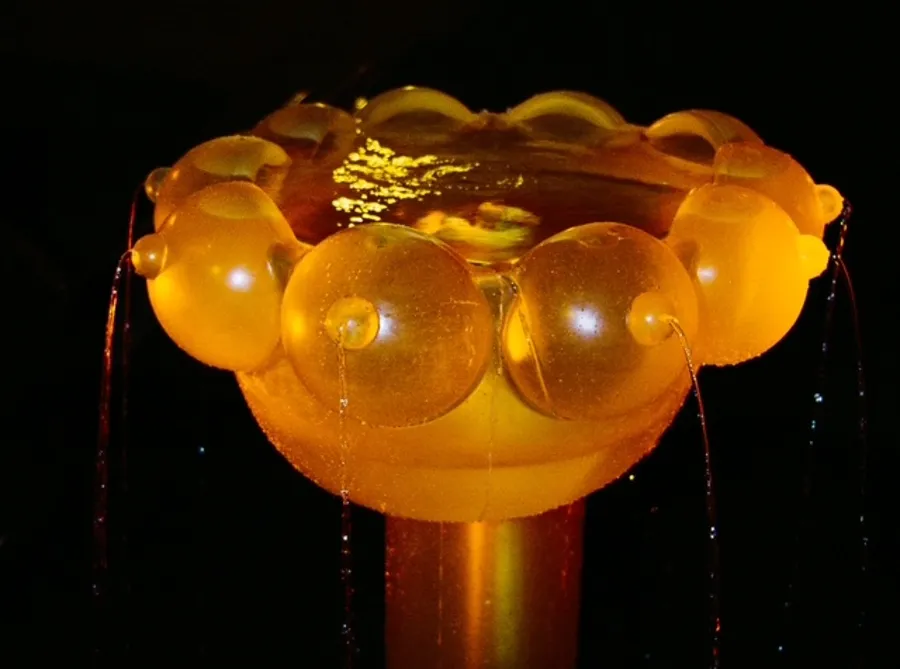
Photographs of his work read as glass or resin. The haptic quality does not transfer. Aybar asks how far a single material goes as structure, surface, and the layer against the body
Rich Aybar: “You work to construct an editorial that takes forty pages to make. A team travels to a place, you spend weeks doing research and calling in the clothing for it. In the end, it’s replaced by an image that sits at the center of the conversation. After the glimmer of the image disappears, is there something in front of you? Can you touch it? Does it endure?”
From pine sap to rubber furniture: Rich Aybar on following material curiosity beyond fashion
Rich Aybar: My interest in materials predates my move into design. I grew up in the Dominican Republic, where I first encountered sap produced by pine trees; I used to play with it as a kid. That material encounter stayed with me.
Years later, when I was working in fashion, Hood By Air sent me to Turkey to solve a problem involving fabrics. I had to decide which garment was going to tell the story using a limited set of materials. I was struck by how much agency I had in defining what the collection was going to look like; I was physically assembling that narrative. That was the first time I understood that what I had been doing in fashion wasn’t simply making clothes. It was using garments to construct narratives. I was using color, materials, and form as storytelling tools.
Rubber, negative space, and structural integrity: How far a single material can go
Rich Aybar: Later, as I found an interest in rubber, I was surprised by how little people understood the material. That realization eventually developed into a specific curiosity around materials. When I began working with rubber, the material itself became the starting point for my design practice. It raised questions about structure, absence, and the relationship between the object and the body.
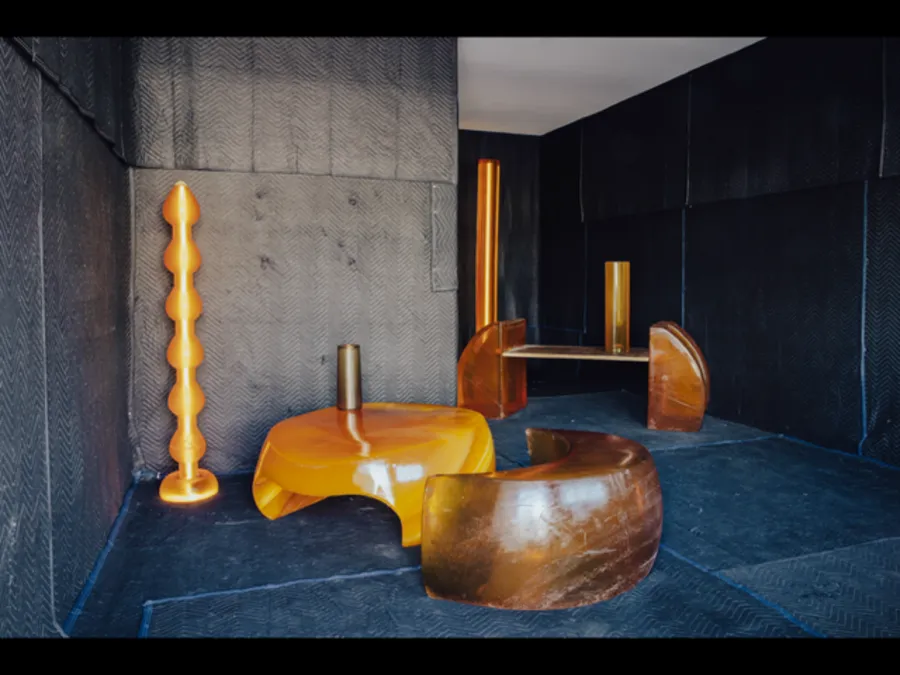
Once I made a solid piece of furniture out of rubber, many questions followed. What happens if you introduce negative space? What happens when you create cavities or remove material? Does it still maintain its structural integrity? I became more interested in how far a single material could go, whether it could function as structure, surface, and the layer between the body and the object at the same time.
From image to object: Why permanence becomes part of the practice
Rich Aybar: In fashion, you work to construct an editorial that takes forty pages to complete. A team travels to a place, you spend weeks doing research and calling in the clothing for it. In the end, it’s replaced by an image that sits at the center of the conversation. After the glimmer of the image disappears, is there something in front of you? Can you touch it? Does it endure?
The move from fashion styling to furniture also changed my relationship with the lifespan of creative work. An editorial can take weeks of research, travel, and production before becoming an image that’s replaced by the next one in no time. For me, the physical object offered another pace and another way of considering what remains after the image has passed.
Objects have their own changeability, but there is something about sitting with it longer. When you work on an object, the making takes more time. I work with molds, which are costly, so I have to be sure. Many prototypes. Walking around the piece for a while. It requires more consideration.
I don’t see my transition to design as abandoning fashion. It’s an expansion of what I was already doing. Fashion taught me I wasn’t simply making clothes. I was using garments, color, and materials to construct narratives. I was always curious about materials. I always wanted to create environments and to shape the experience of someone entering them. Design became another medium to continue doing that.
Rubber as material: Between the geological and the human body
Rich Aybar: I work primarily with polyurethane rubber, alongside Burmese and Amazonian Hevea latex. My interest in the material begins with its contradictions. Polyurethane rubber derives from the petrochemical process, yet petroleum itself is geological. It originates from organic matter. This is why rubber sits between the geological and the manufactured, the organic and the industrial.
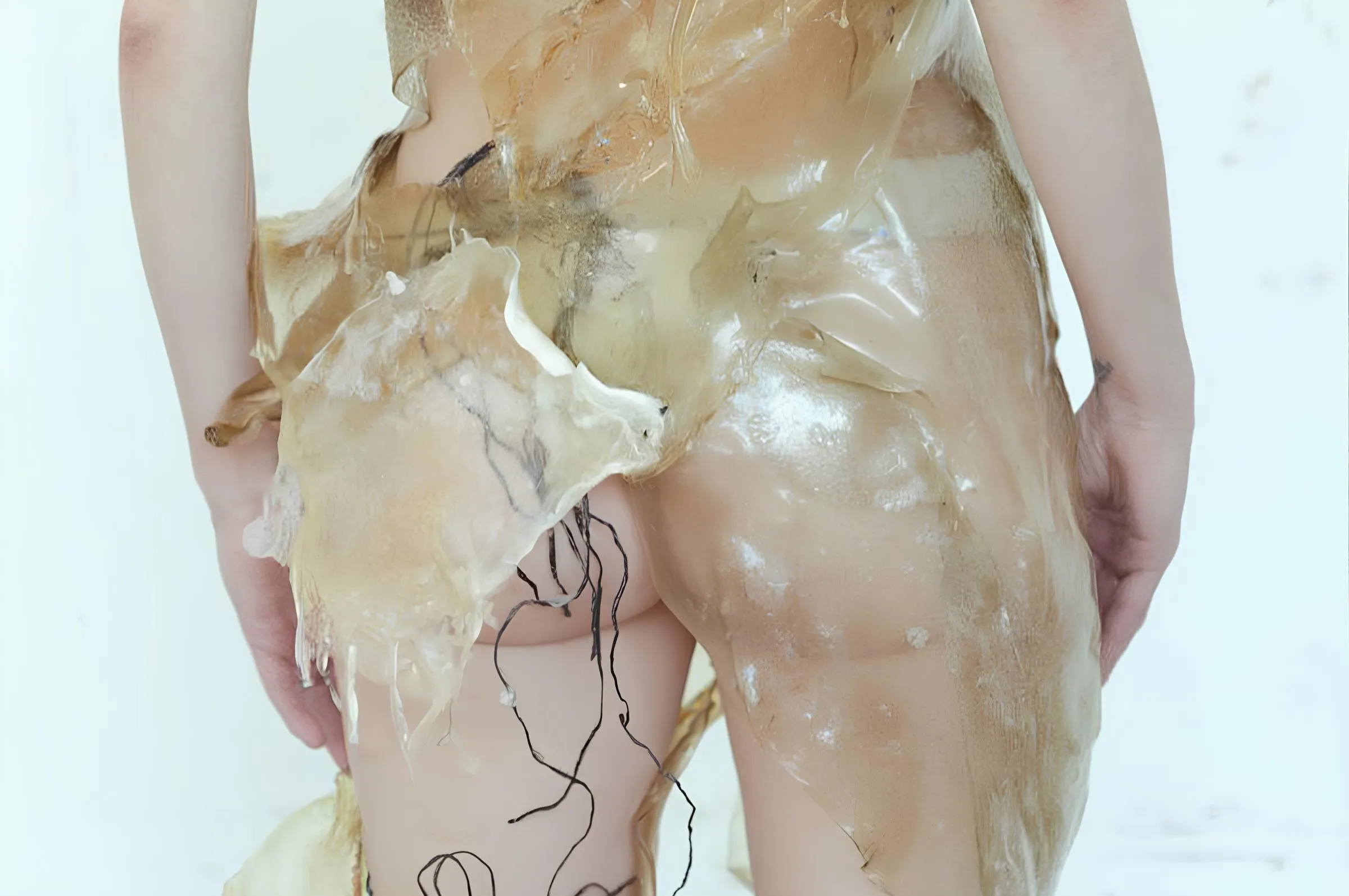
What I value in the material is its industrial readiness, its durability, its haptic relationship to the body. It is soft and malleable in a way that recalls the human body, which makes it particularly functional for furniture. Visually, it moves between opposing registers, recalling minerals and gristle, hard and soft at the same time. The translucency introduces another dimension. The rubber is prismatic: it bends, folds, translates light across its surface. I think about this in relation to the use of light as a narrative device, from stained glass windows to the sundial, where light has been used to delineate space and time.
Rubber also already exists within a largely invisible relationship with the human body. It permeates everyday life, the rituals around self-care and self-love, without necessarily being recognized as a material with its own visual or cultural language. For me, this familiarity sits against its lack of representation in the world of design. That contradiction is part of the material’s interest: something so embedded in everyday life remains relatively absent from the design canon.
From petroleum residue to furniture: The process of making
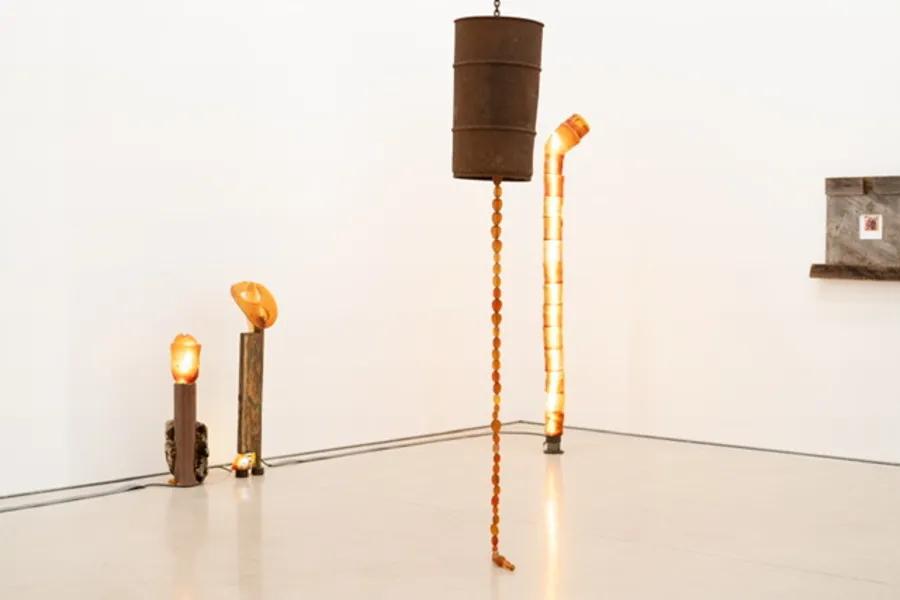
Rich Aybar: The process begins with petroleum. When petroleum is distilled, its different layers are captured for fuel use, from kerosene through to bitumen. Some of the heavier residues are captured and reprocessed into a liquid rubber. I mix these liquids and pour them into a mold, where they react through an exothermic reaction and harden into the form that has been created.
The process makes the material itself part of the construction of the object. I don’t treat rubber as a surface applied to an existing structure. It becomes the structure. This returns to the questions that first emerged in my experimentation with the material: what happens when negative space is introduced, when material is removed, when a cavity replaces mass? How much can be taken away while maintaining structural integrity? The mold establishes the initial geometry, but it’s the behavior of the rubber that determines how that geometry becomes an object.
This makes material research inseparable from the design process. The question is not simply what rubber looks like, but what it allows an object to do. It can become structure, surface, the interstitial layer between the body and the object. Its softness, translucency, weight, and reaction to light are not secondary characteristics; they determine the conditions of the work itself.
Can material be translated through an image?
Rich Aybar: The image has not disappeared from my practice. It remains necessary for communicating the work, establishing its visual language, and opening opportunities for new commissions. But photography cannot fully transmit the physical qualities that make rubber central to my work. Images struggle to communicate the haptic quality of my material, how it feels to touch. People look at my work and think it’s glass or resin. That doesn’t come through.
In spite of this, images still work on some level. I’ve used photographs from past shows to convince people to commission new ones. An image can reassure someone, give them a sense of what I’m doing, illustrate an intention before they encounter the work itself. But there’s always a gap between what an image communicates and what the object actually does. You can show someone a photograph and make them understand the form, but you still have to bring them to the finish line and explain: it looks this way, but it behaves another way. The material reveals itself differently when you’re standing in front of it, when you touch it, when you see how it catches light or responds to the body.
AI, images, and the knowledge behind the image
Rich Aybar: As image production becomes easier and faster, I think there’s still a place for human creativity. AI can produce an image, but it doesn’t replace the knowledge, references, and intention that come before it. The act of constructing a narrative is separate from the image itself, and that act of storytelling will remain with us for as long as we exist. Whether we’re making cave paintings or podcasts, we’re trying to share what we know, to communicate something about how we see the world. The tools change, but that impulse doesn’t. I think no amount of AI can replace the human need to tell a story.
Fashion as a method: What remains when the medium changes
Rich Aybar: What I learned working in fashion was not a fixed set of technical skills, but a way of working. Fashion taught me the value of play. I learned how to experiment without requiring the destination to be clear from the beginning, allowing my work to develop through the process of making. Eventually, you have to allow yourself not to know where you’re going.
I remember the process in designers’ showrooms and how intuitive it was contrary to the idea that a collection begins with a fully formed vision. The intention behind a collection wasn’t always obvious. Only when designers started putting pieces together did a story begin to emerge. You take the first step and discover the work as you go.
That way of working continues to shape my practice now. The medium has changed from garments to objects, materials, and spaces, but the process remains rooted in curiosity, experimentation, and the willingness to let the work reveal its own direction. Fashion was never the final destination. It was where I learned how to look, how to construct a narrative, how to keep going before I knew exactly what I was making.