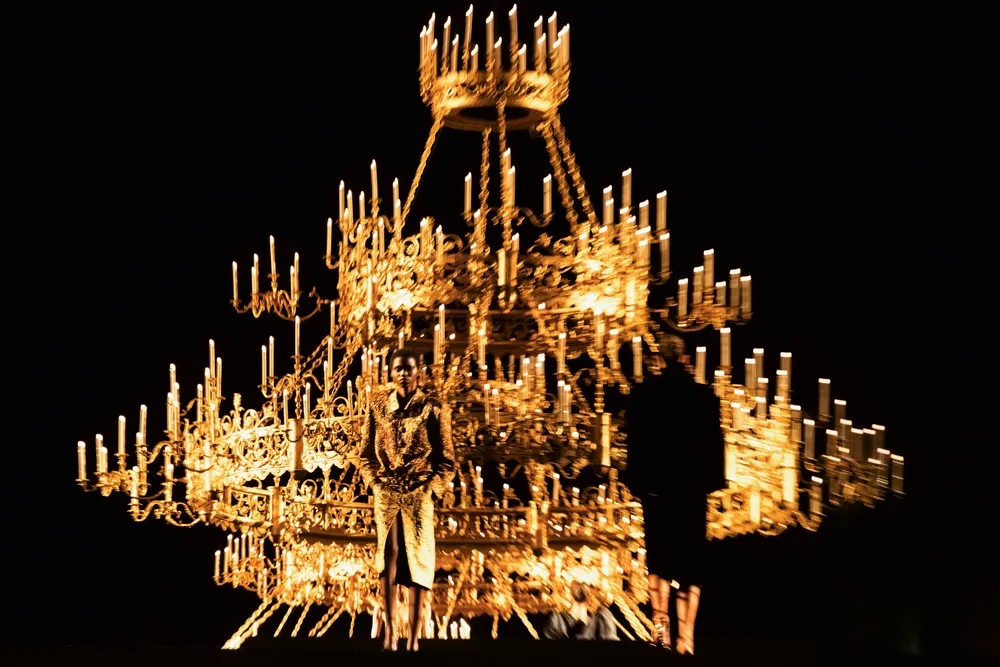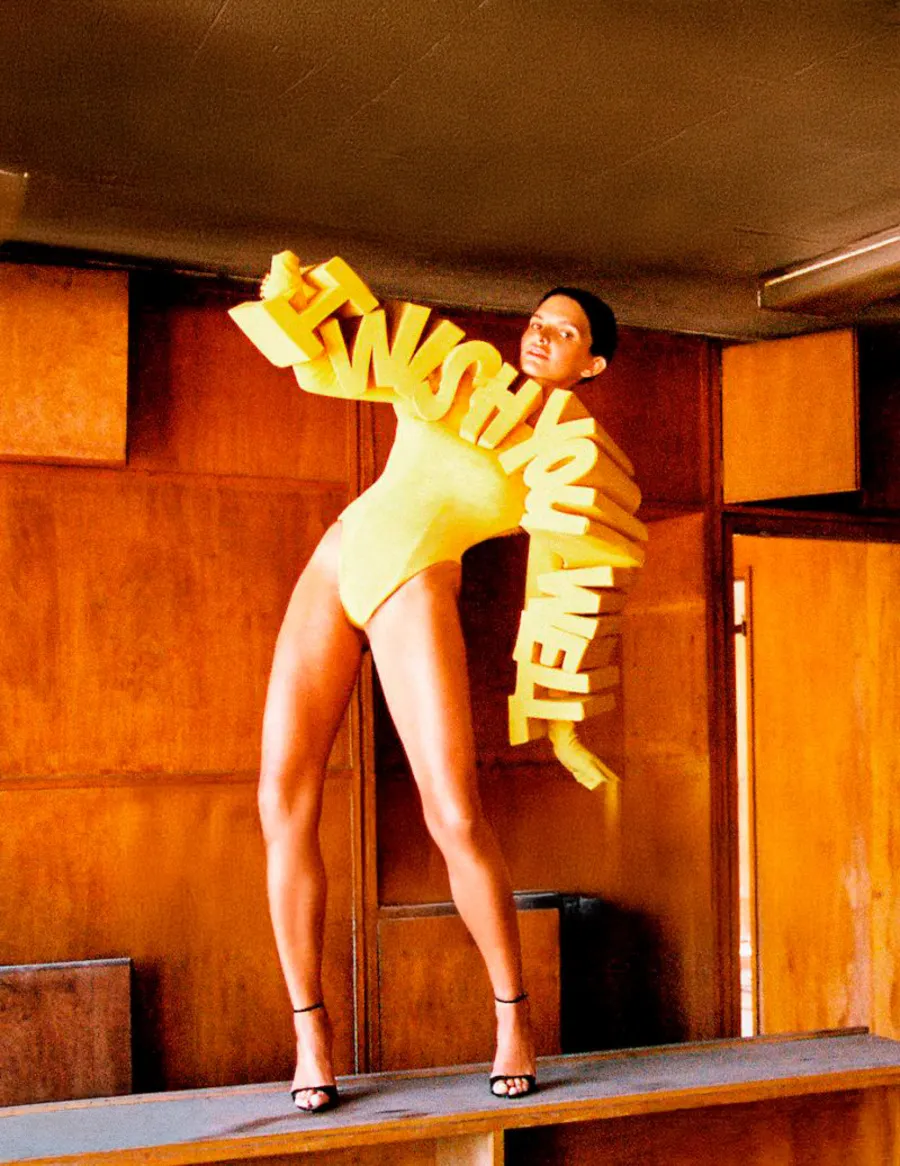
Radical tailoring: What does it mean today?
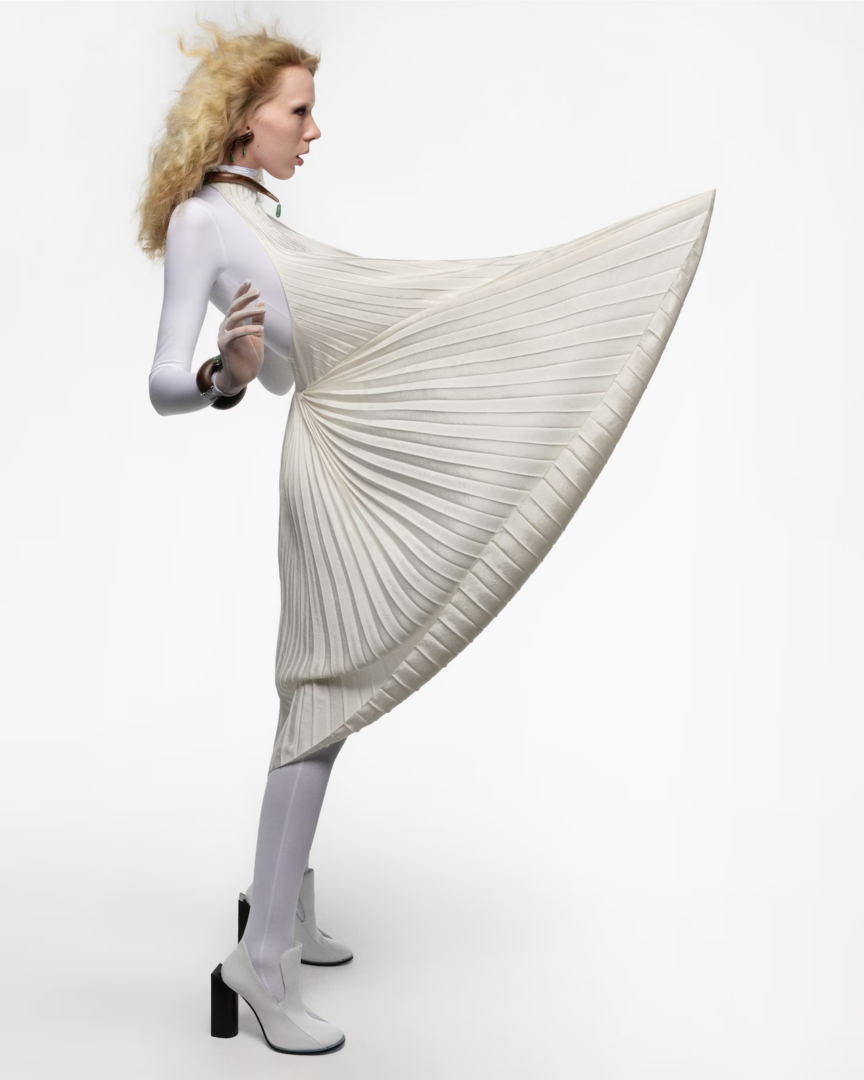
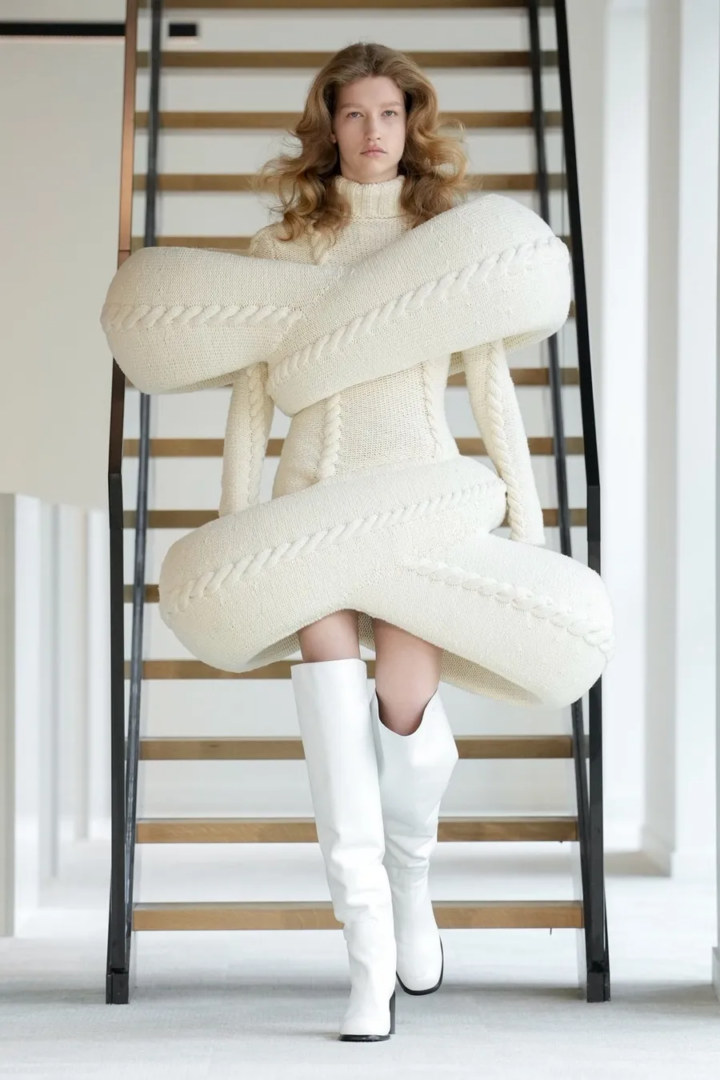
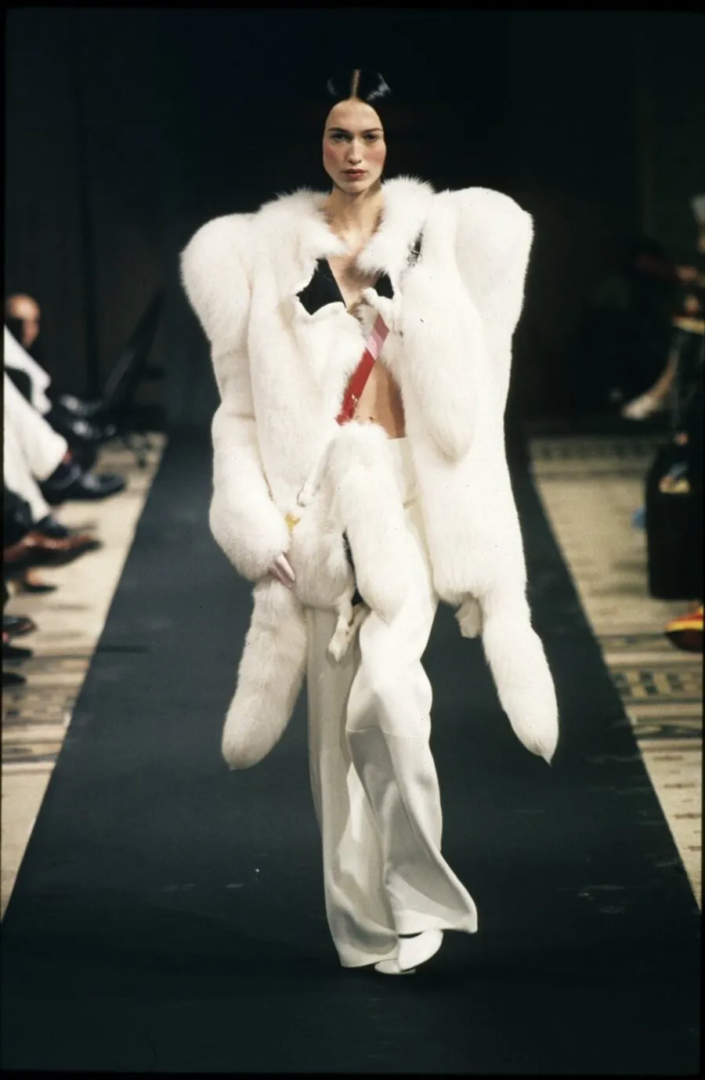
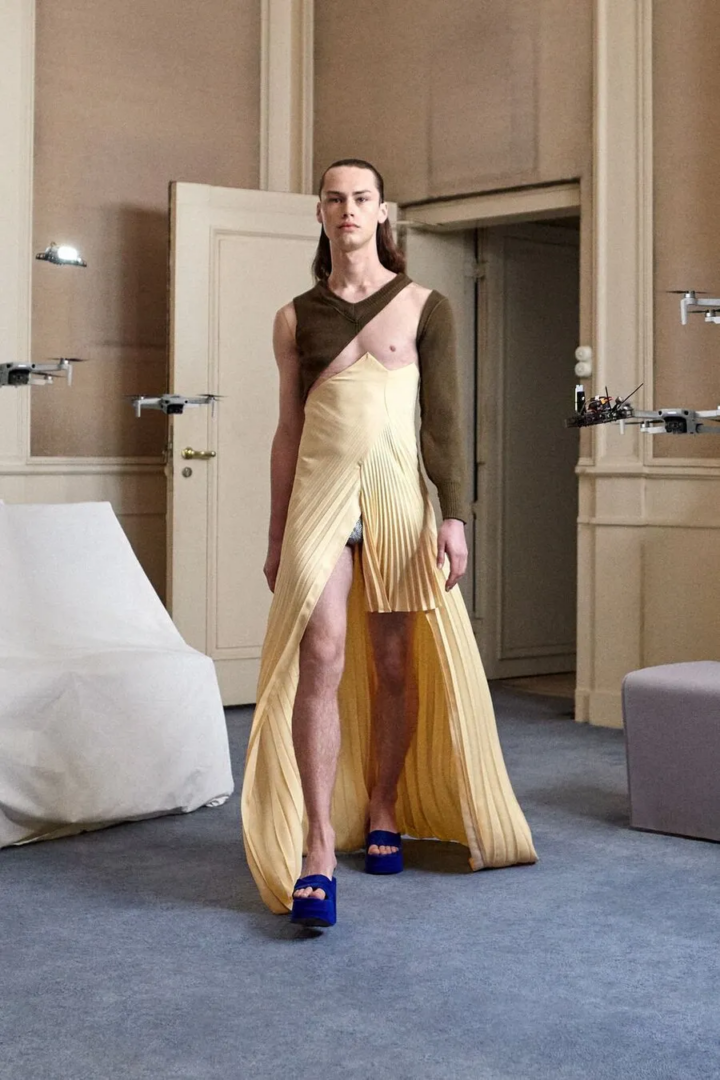
Radical tailoring: when tailoring moves beyond human anatomy, using construction to enlarge, displace, and reconstruct the dressed body
“Radical” is used loosely for anything extreme or unusual. It concerns not the theatrical surface of a garment but the construction beneath it. The strangeness comes from manipulating the grammar of tailoring. Traditional tailoring asks how to shape cloth to fit this body. Radical tailoring reverses the question: What body could this cloth make?
Radical tailoring’s history runs from Cristóbal Balenciaga’s postwar volumes, through the Japanese and Belgian designers who took the seams apart in the eighties and nineties, to Duran Lantink’s couture at Jean Paul Gaultier this summer. The questions here are not about what these garments mean.
How radical tailoring changes the relationship between body and dress
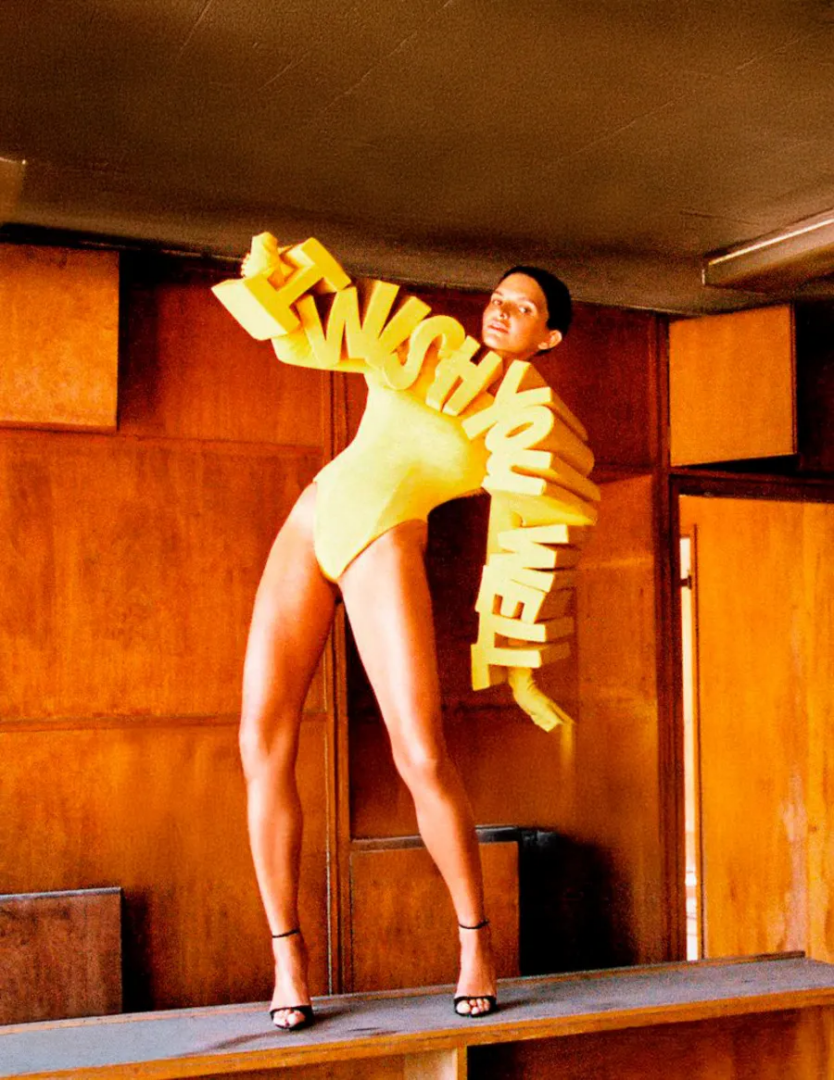
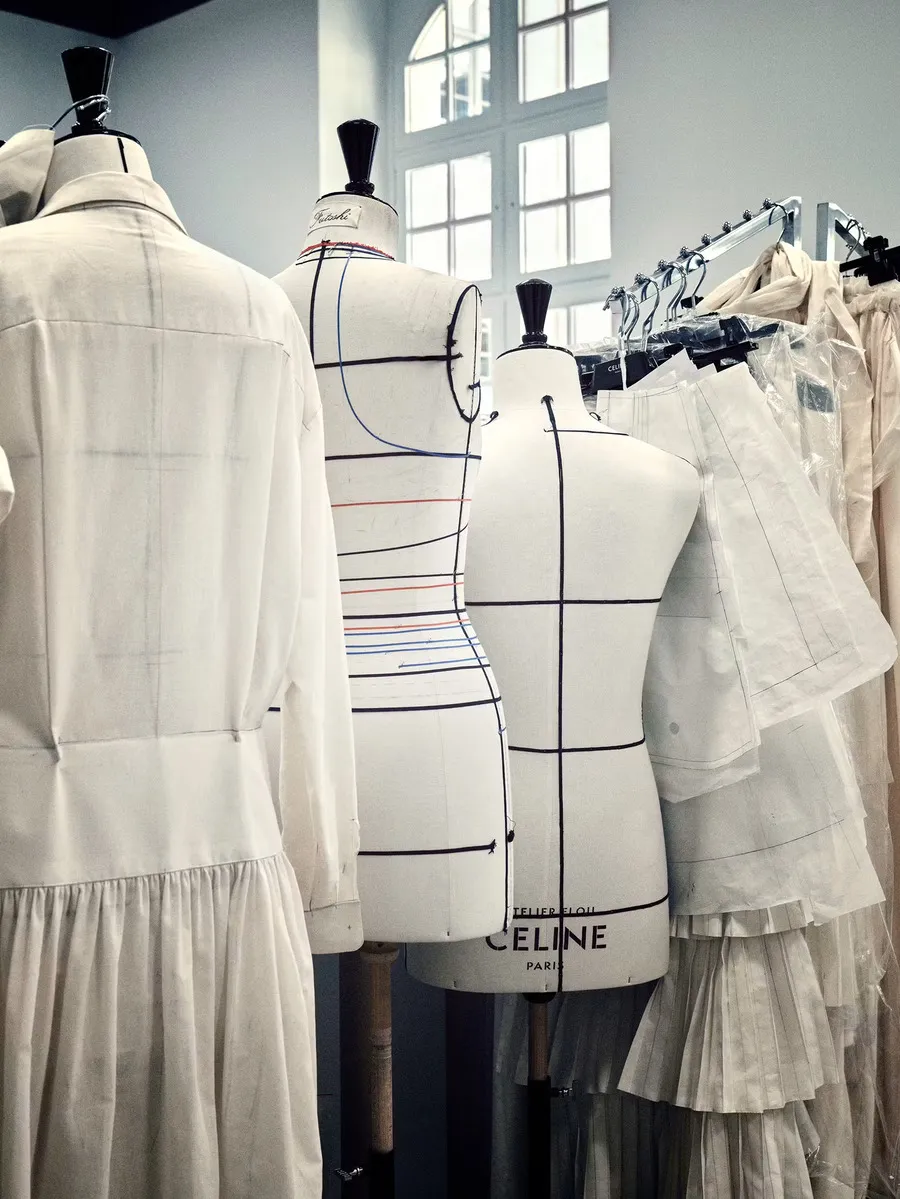
Measurements establish a block, or base pattern; darts, seams, shaping, and internal support allow cloth to conform to the figure; fittings correct the garment against the wearer. The result is proportioned and contained. The body is assumed to be stable, and the garment exists to accommodate it. A shoulder can extend beyond anatomy, a waist can be displaced, a hip enlarged; volumes emerge where the body has none.
Paris: Haute couture, Balenciaga, Kawakubo, Margiela, and construction as confrontation
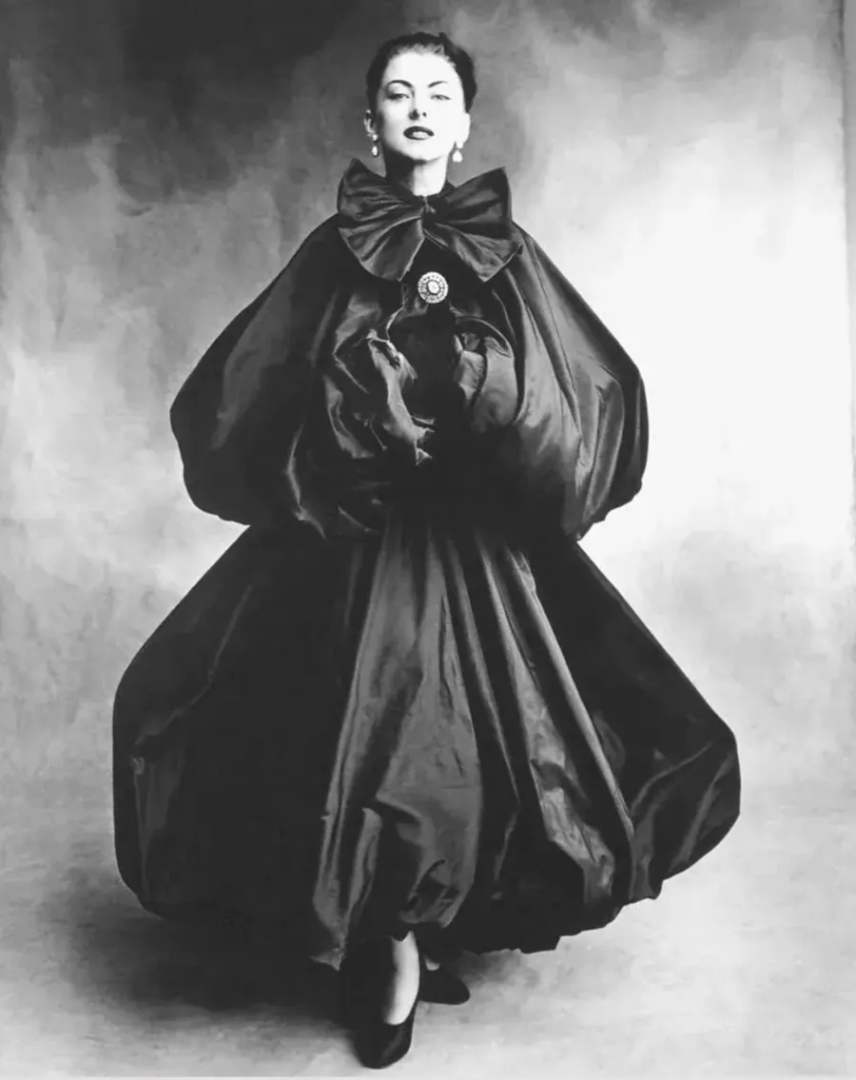
The barrel line, the cocoon coat, the sack dress, the babydoll. In 1958 Cristóbal Balenciaga developed gazar with the Swiss textile house Abraham. Gazar is stiff enough to hold an edge and a geometric surface, so the volume could stand off the body in the cloth itself.
Paris remained the arena where couture’s authority met designers from elsewhere. Rei Kawakubo and Yohji Yamamoto showed there for the first time in 1981, and the Western ideal of a fitted, symmetrical suit lost its authority. Mrs. Kawakubo brought asymmetry, raw hems, seams that did not line up; for SS97, Body Meets Dress, Dress Meets Body set padded bumps at the bust, back, and midriff. Mr. Yamamoto took out the lining and let the cloth fall loose around the body. Martin Margiela, who opened his house in Paris in 1988, turned tailoring inside out: the shoulder pads, the basting threads, and the lining came to the surface. He recut flea-market garments and military surplus, cut jackets from the linen of the tailor’s dummy, and in 2000 enlarged men’s clothes to two hundred percent: the pattern scaled up, with nothing added inside.
In Paris, construction became a means of confrontation: the inside of a jacket exposed, the proportions of the body corrupted. Radical tailoring inherits this impulse. It takes couture’s hierarchy and technique and pushes them until the garment no longer confirms the body it was made to serve, but proposes another one.
Italy: Ready-to-wear, Armani, Capucci, and the architecture of the dress
Italy’s ready-to-wear system emerged from the ambition to make design circulate through modern life. After 1951, when Giovanni Battista Giorgini presented Italian fashion to American buyers in Florence, clothing became inseparable from the country’s textile districts, workshops, and industrial networks. Italian fashion made production part of the creative act: the designer, the mill, the factory, and the market worked as one system, so that design begins with how a garment moves, how it is made, and how a fabric behaves. Giorgio Armani made that principle literal in the seventies, removing the shoulder pads, stiff inner canvas, and lining from the jacket so it followed the wearer rather than correcting him. He lowered the button stance and widened the lapel, on the model of the unlined Neapolitan jacket. In 1976 he applied the method to women’s clothes; the power suit gave women entering executive offices a jacket neither corseted nor copied from menswear.
Roberto Capucci demonstrates the structural excess. Stiff Mikado silk and internal supports make the dress stand apart from the waist and hips, until the seam operates like a beam. His Linea a Scatola of 1958 set the dress in a box geometry; later dresses worked pleated silk and taffeta over straw, bamboo, plastic, and rosary beads. He approached the dress as architecture: a structure built to hold its form whether or not a body is inside it. Italy produced both release and constructional excess.
Viktor&Rolf: The visible mechanics of radical tailoring
Viktor&Rolf push it further. Their garments don’t simply follow the body or sit upon it. They alter its proportions, extend its limits, and build new volumes around it. For more than three decades, Viktor&Rolf have moved between the fashion system and the exhibition space, yet Italy has never hosted a solo display of their work. September 25 – 10 Corso Como opens Viktor&Rolf. Spectrum, twenty haute couture looks set in pairs.
Viktor Horsting and Rolf Snoeren showed their second couture collection in Paris 1998: the title, Atomic Bomb: mushroom-cloud silhouettes made by silk balloons stuffed with pillows at the neckline. On the second pass the balloons came out, and the same garments fell flat against the body.
For AW22 the house described its couture as «radical tailoring»: masculine jackets and coats that narrow at the hips and stand away from the upper body, inflated beyond the anatomy beneath. It was less about adding fabric than about constructing new space around the body. «Hard becomes soft, shape becomes drape».
Spectrum brings twenty haute couture looks from more than three decades of the designers’ work to the Galleria at 10 Corso Como in Milan. The exhibition’s pairings make that continuity visible. Seen side by side, the garments reveal a language that goes beyond exaggeration into construction itself. Their proportions trace back to the systems that produce them: pattern, material, support, load, release.
Pattern, material, support: How a radical silhouette is built
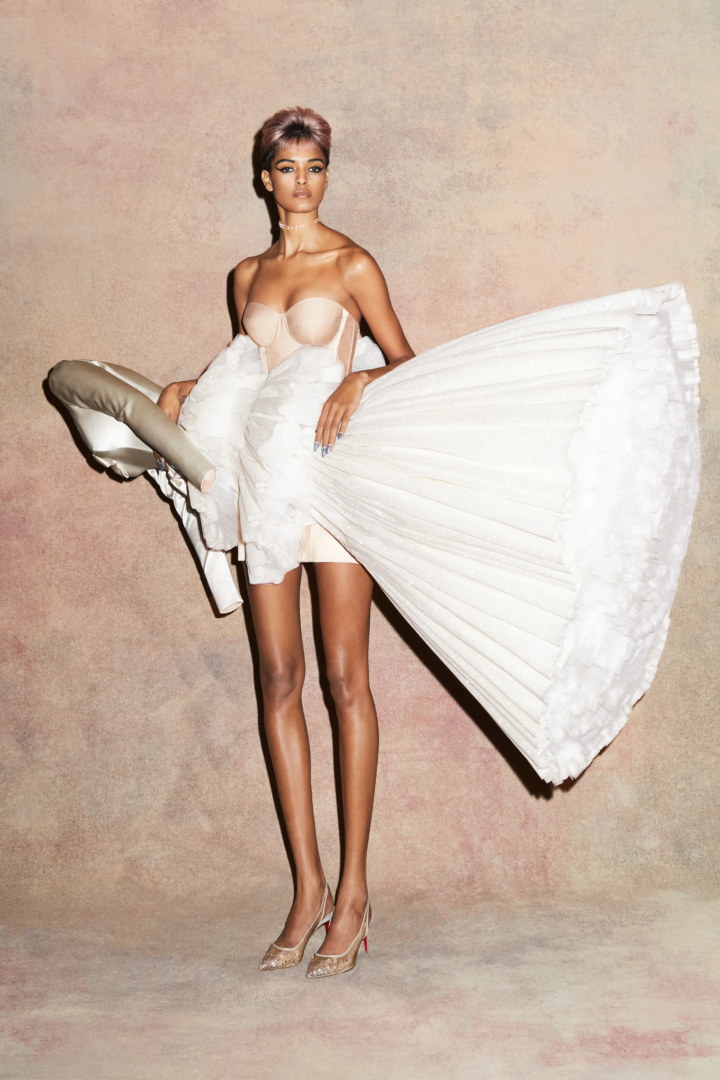
A body is three-dimensional; cloth is flat. A surface curved in two directions at once, such as a shoulder, a sphere, or a hip, cannot be flattened without segments, darts, or cloth stretched and shrunk with heat. Radical tailoring moves that curvature to a place where the body has none. The continuous volume that appears on the body is a collection of shapes whose edges meet through calculation.
Volume is the currency of radical tailoring, and it is through volume that the practice becomes legible. Volume isn’t an exaggeration. Enlargement, compression, displacement, projection, asymmetry: each produces volume, and each to a different effect.
Material decisions: What the cloth can hold
Material sets the conditions. Weight, elasticity, stiffness, transparency, density, drape: fabric doesn’t simply cover a structure; it determines what kind of structure can be built. Stiff fabrics such as wool, gazar, taffeta, organza, and densely woven cotton hold an edge and a geometric surface; softer ones such as silk collapse, gather, and fold.
Support decides where the form lives: in the cloth, a wire, a corset, a hoop, or a harness. The exterior can only hold its geometry if the layers underneath give it somewhere to go.
Radical tailoring now: Duran Lantink, deadstock, and the scanned body
Traditional tailoring begins with measurement. Couture draping begins with the stand. Duran Lantink, born in The Hague in 1987, can begin with the discarded garment, the scanned body, or a digital modification of both.
He builds from what fashion has already produced and failed to sell. Deadstock is not a neutral supply of fabric in his hands. It arrives with an earlier cut, an earlier body, and an earlier promise of desirability already inside it. He cuts through jackets, denim, knitwear, and luxury remnants at the places where a garment has been made to take strain (the dart, the seam allowance, the armhole) and forces unlike pieces into a new anatomy. The result is not patchwork. It is surgery. A garment keeps the memory of the body it was designed for, then is made to serve another one. Its construction resists the clean repeatability of a standard production pattern.
For Spring/Summer 2024 in Paris, ninety-five percent of the material was upcycled; reused denim, nylon, Lycra, vintage lace, and deadstock entered the collection as raw matter. Some blazers were lined with Balenciaga leftovers, while the new material was hand-knitted wool.
The Autumn/Winter 2025 collection, Duranimal, moved the intervention onto the body. Mica Argañaraz opened in a prosthetic male torso; Chandler Frye closed in silicone breasts that moved as he walked. Between them came animal print, classic plaid, sculptural knitwear, enlarged hips, and bareback denim. The prostheses interrupted the habitual agreement between the face, the torso, the garment, and the gender the viewer expects to recognize. The body arrived already altered; the clothes completed the disturbance.
When Jean Paul Gaultier appointed Mr. Lantink creative director in April 2025, it placed this practice inside a house whose history is built on corsetry and the exposed mechanics of dress. His first haute couture collection for the house, shown in July 2026, opened with a black coat that projected the hips forward, as if the pelvis had shifted under the skin. Five looks used 3D-printed components; internal frameworks carried the garments away from the anatomy. Leon Dame’s torso was scanned in three dimensions and reshaped digitally. Leon Dame’s torso was scanned in three dimensions and reshaped digitally. The atelier sanded and primed the print, then dipped it in latex until it matched his skin, with moles painted by hand. The scan begins with a specific body, but the finished piece refuses to return it. It is a technical record of a torso used to build something that no torso contains.
Carolina Benjumea, Melis Ozek