Couture is a dog’s life, and Piccioli signed up at Balenciaga anyway
For fall-winter 2026, Pierpaolo Piccioli stages Balenciaga’s fifty-fifth couture collection around a Cité Universitaire courtyard, fusing tailoring and flou to prove couture still breathes today
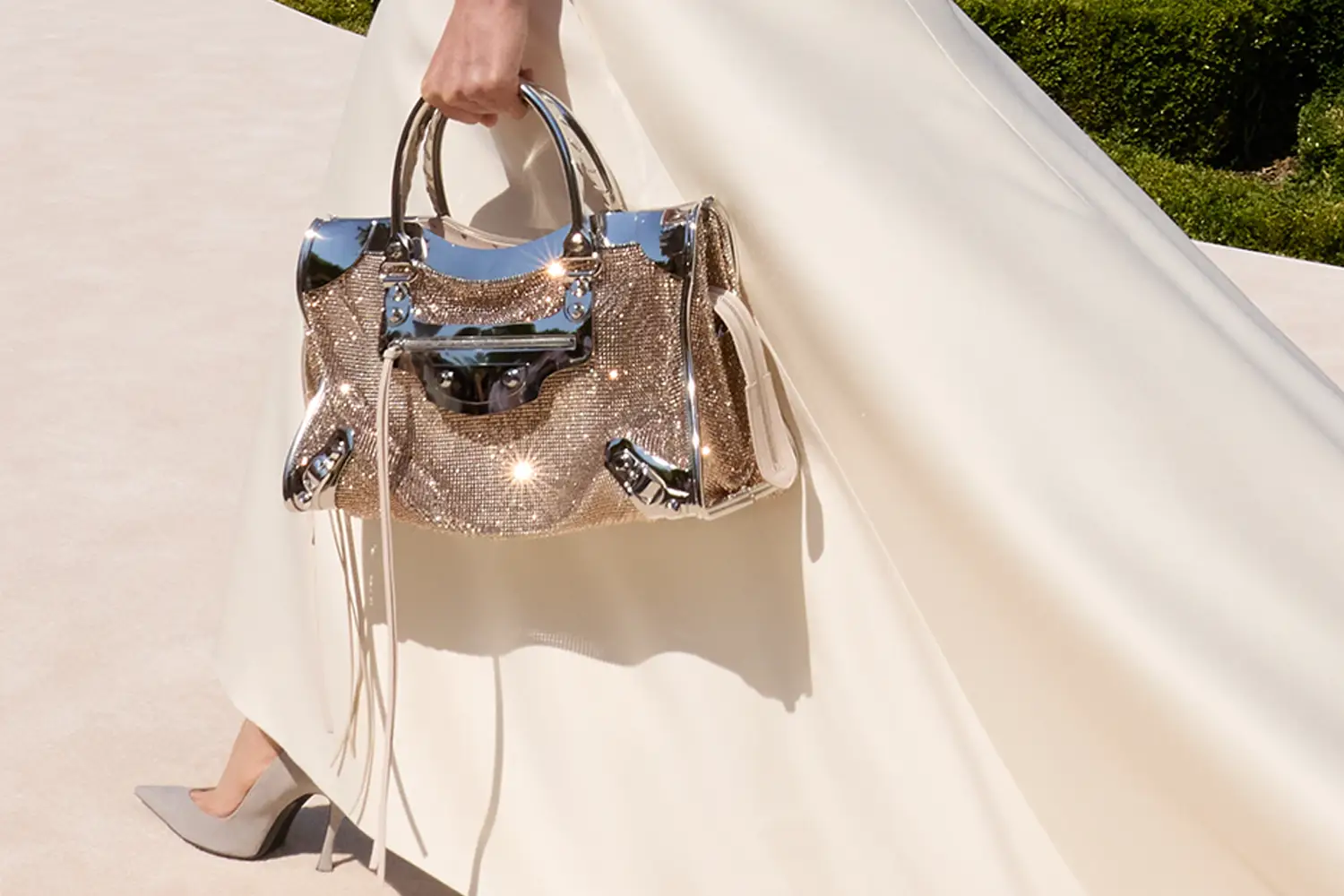
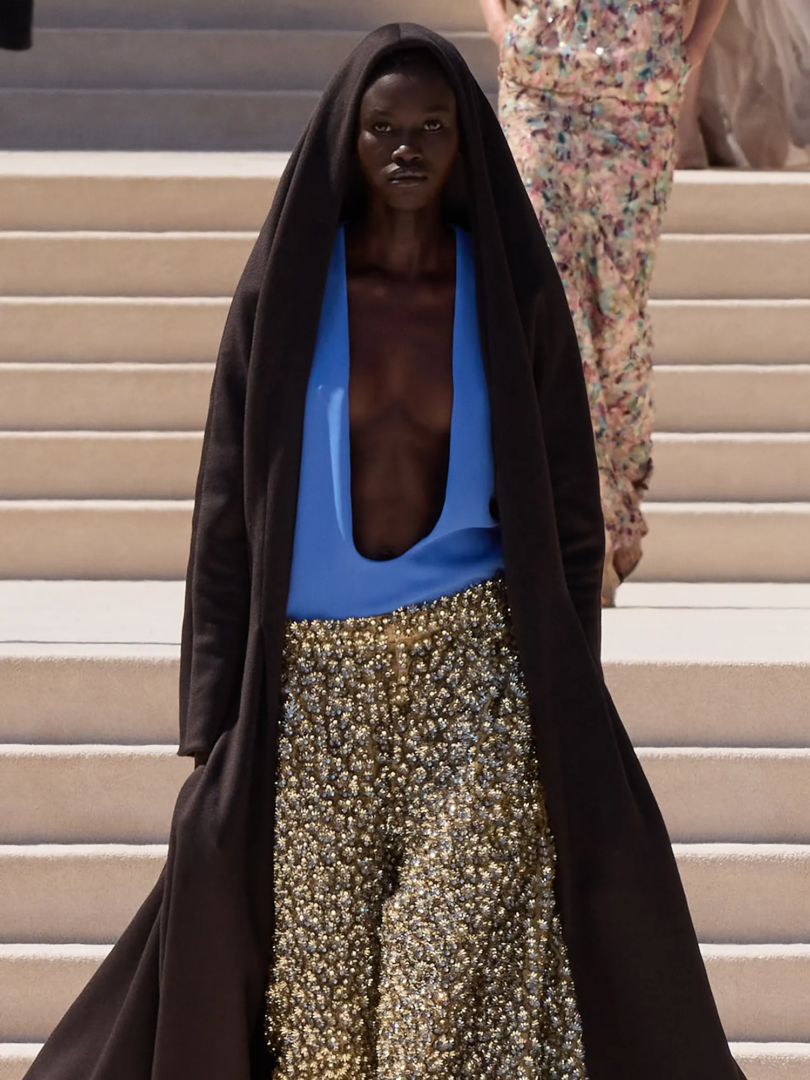
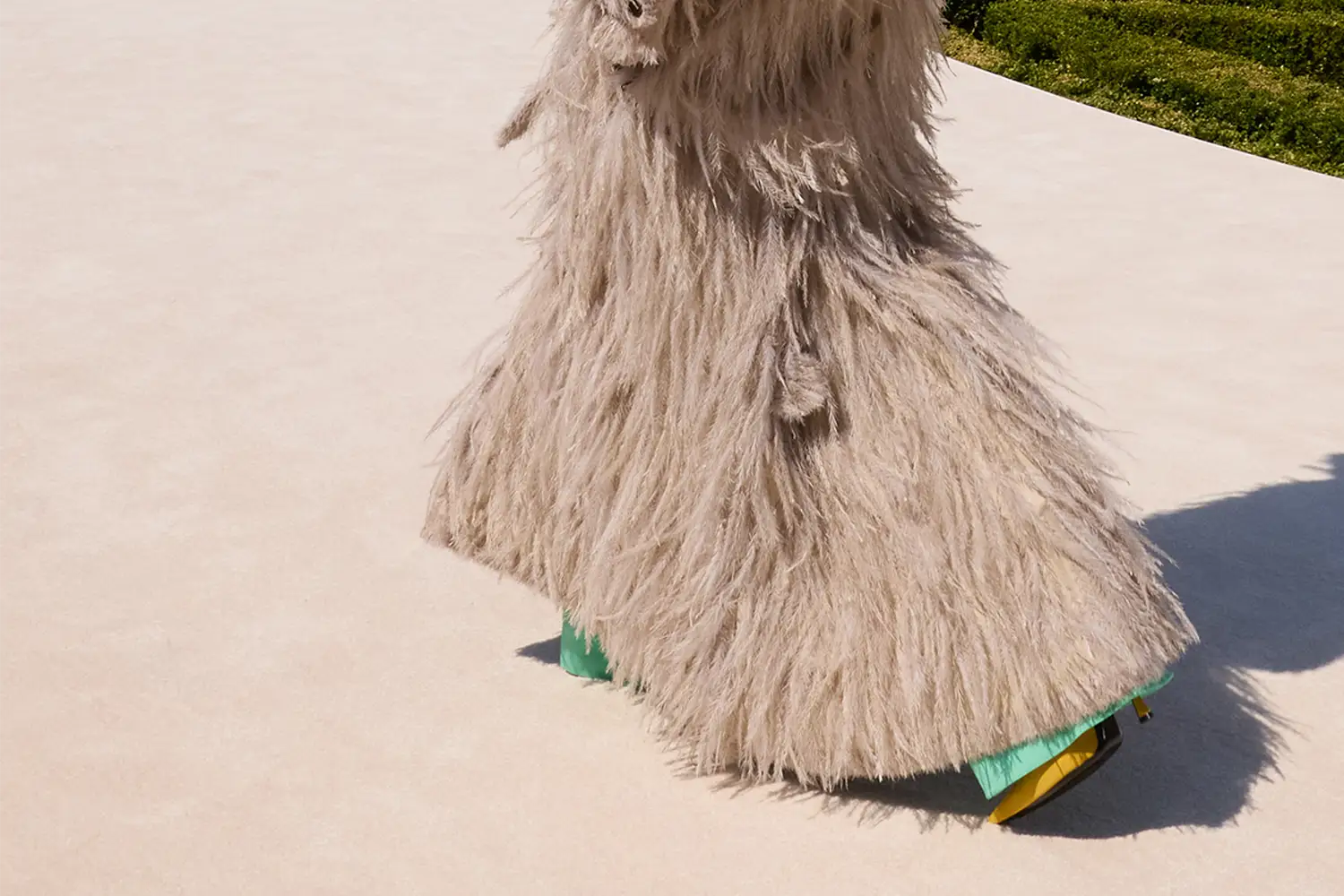
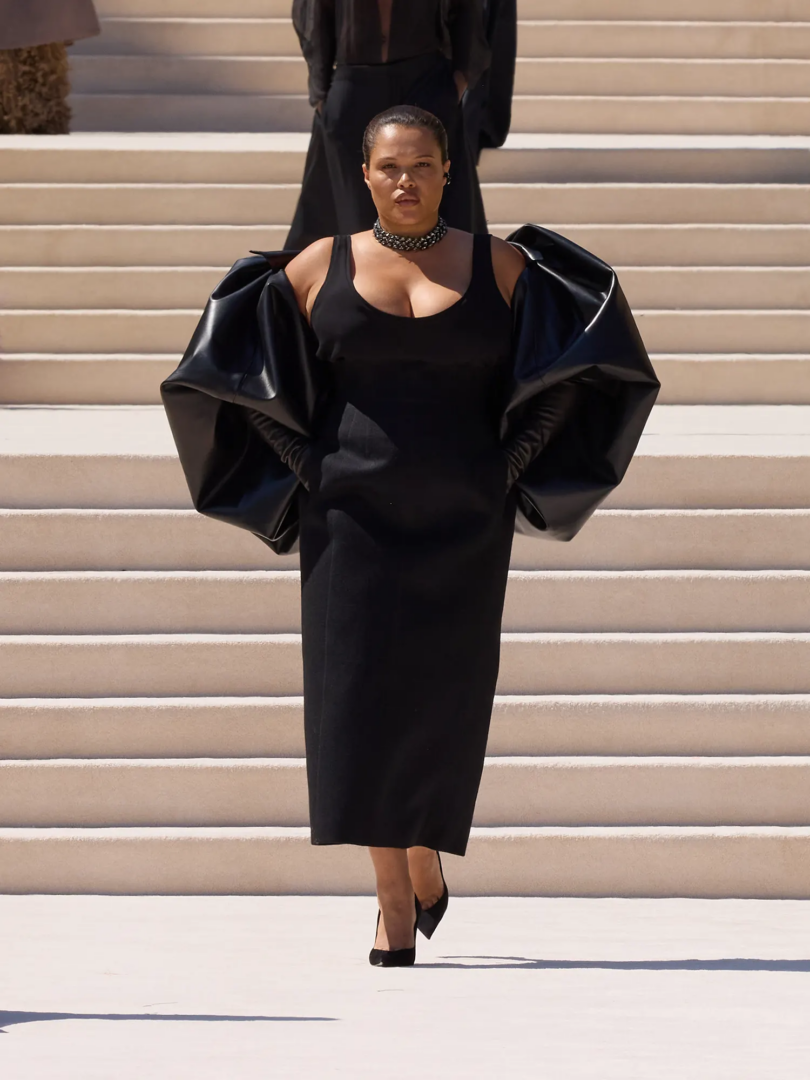
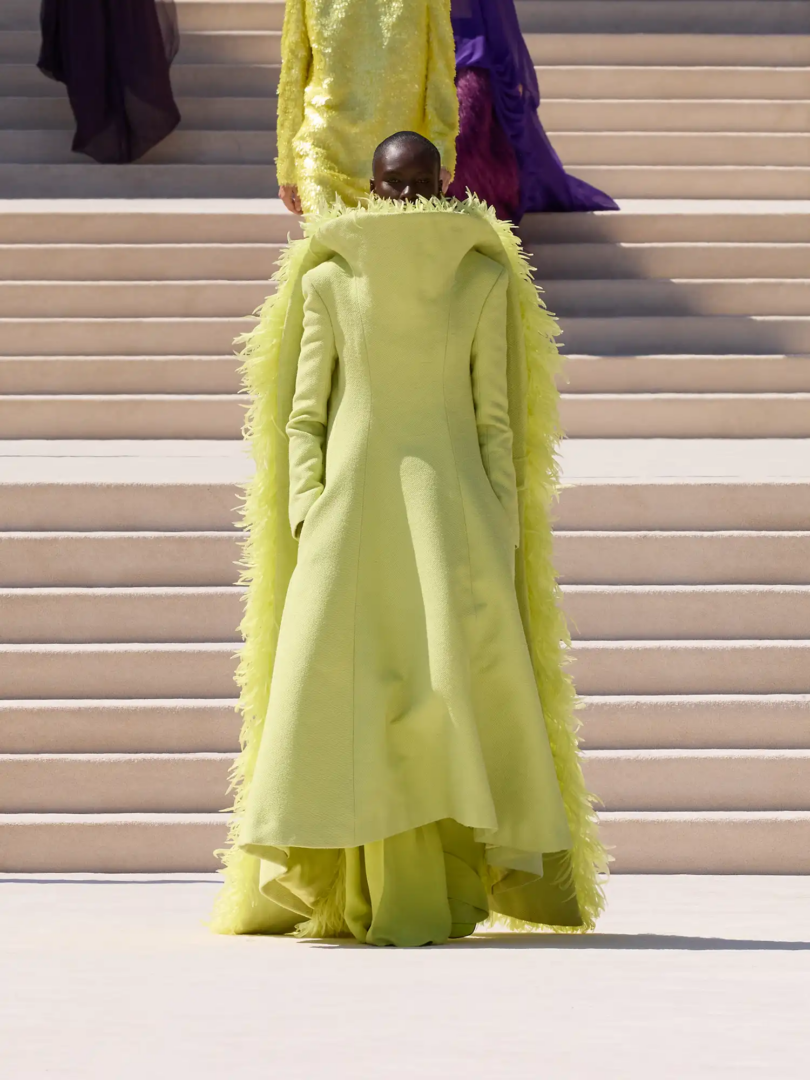
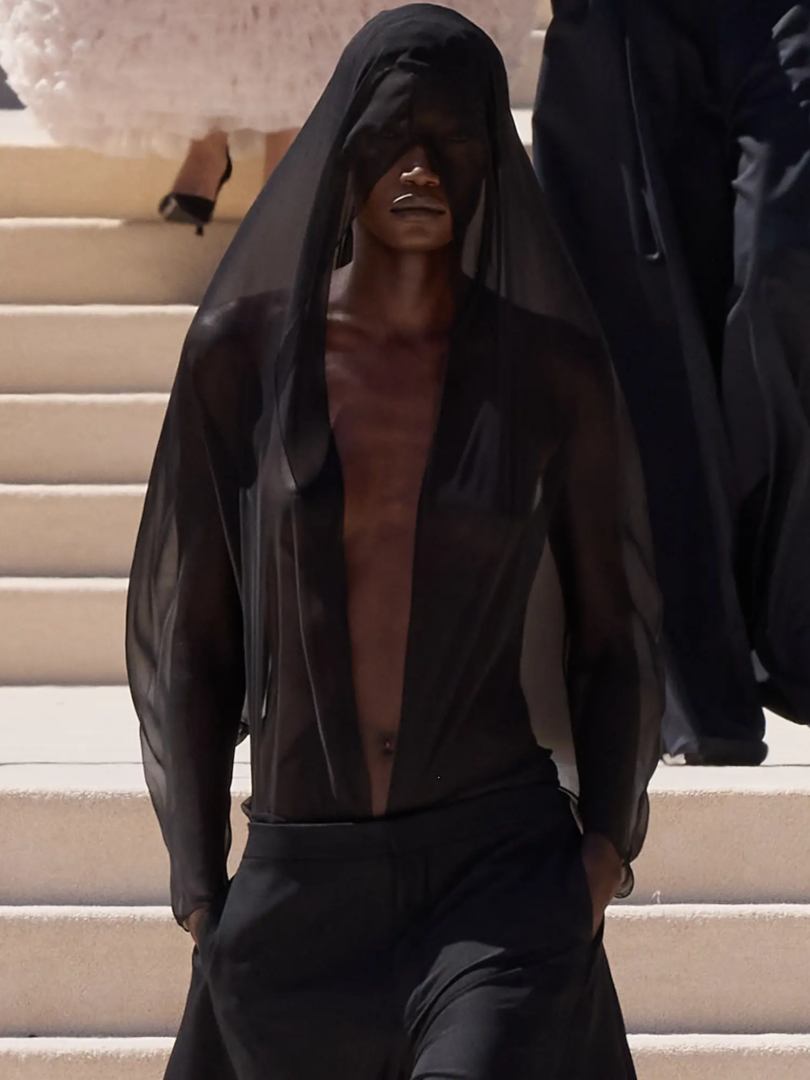
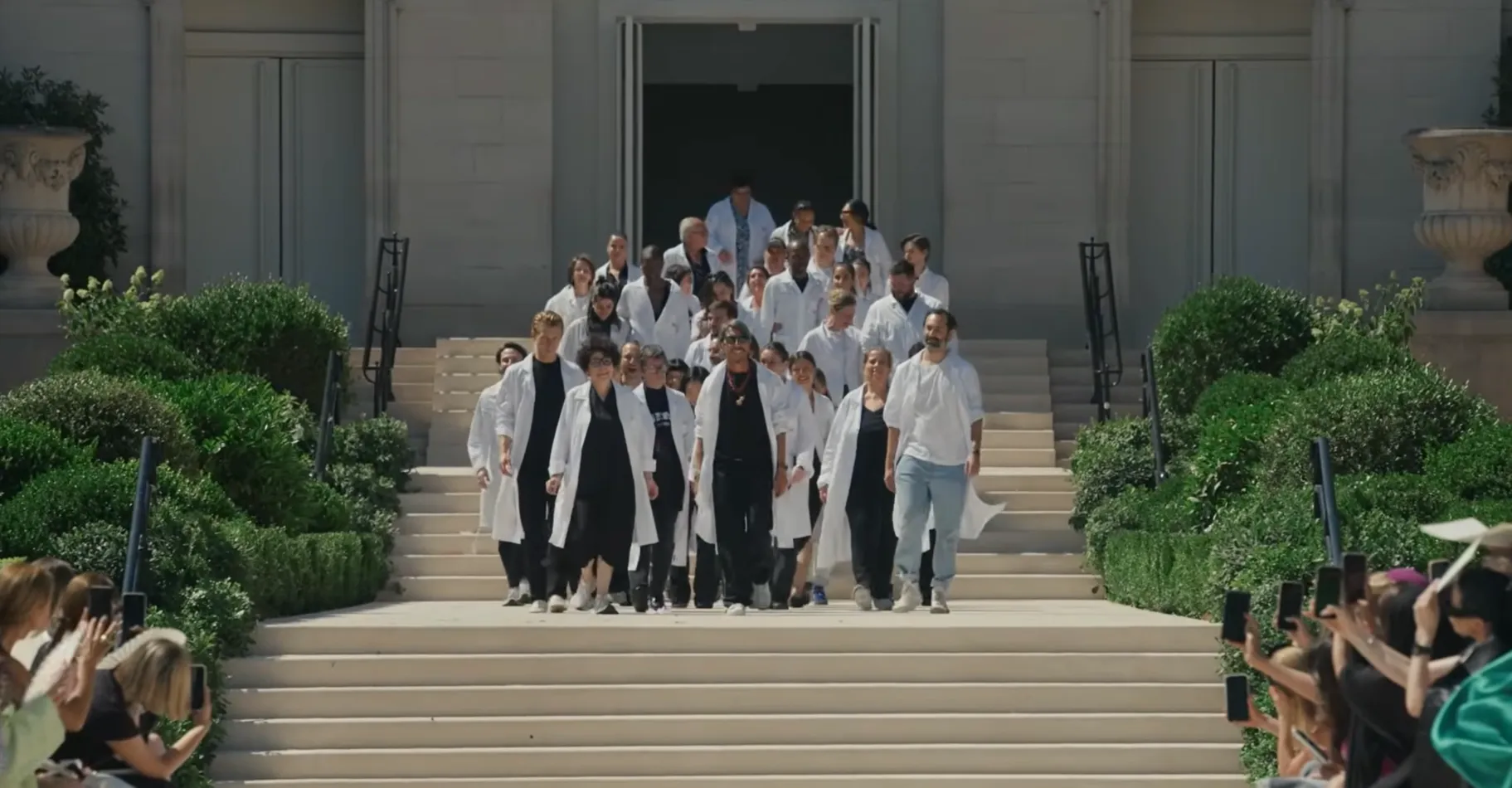
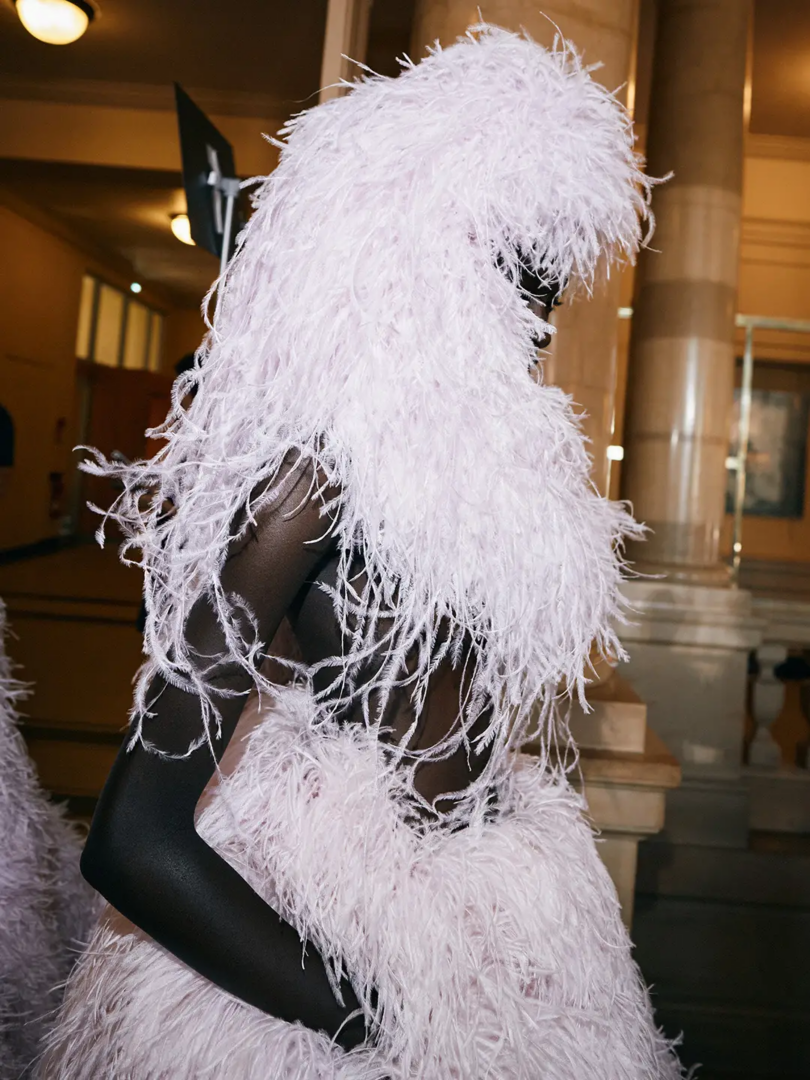
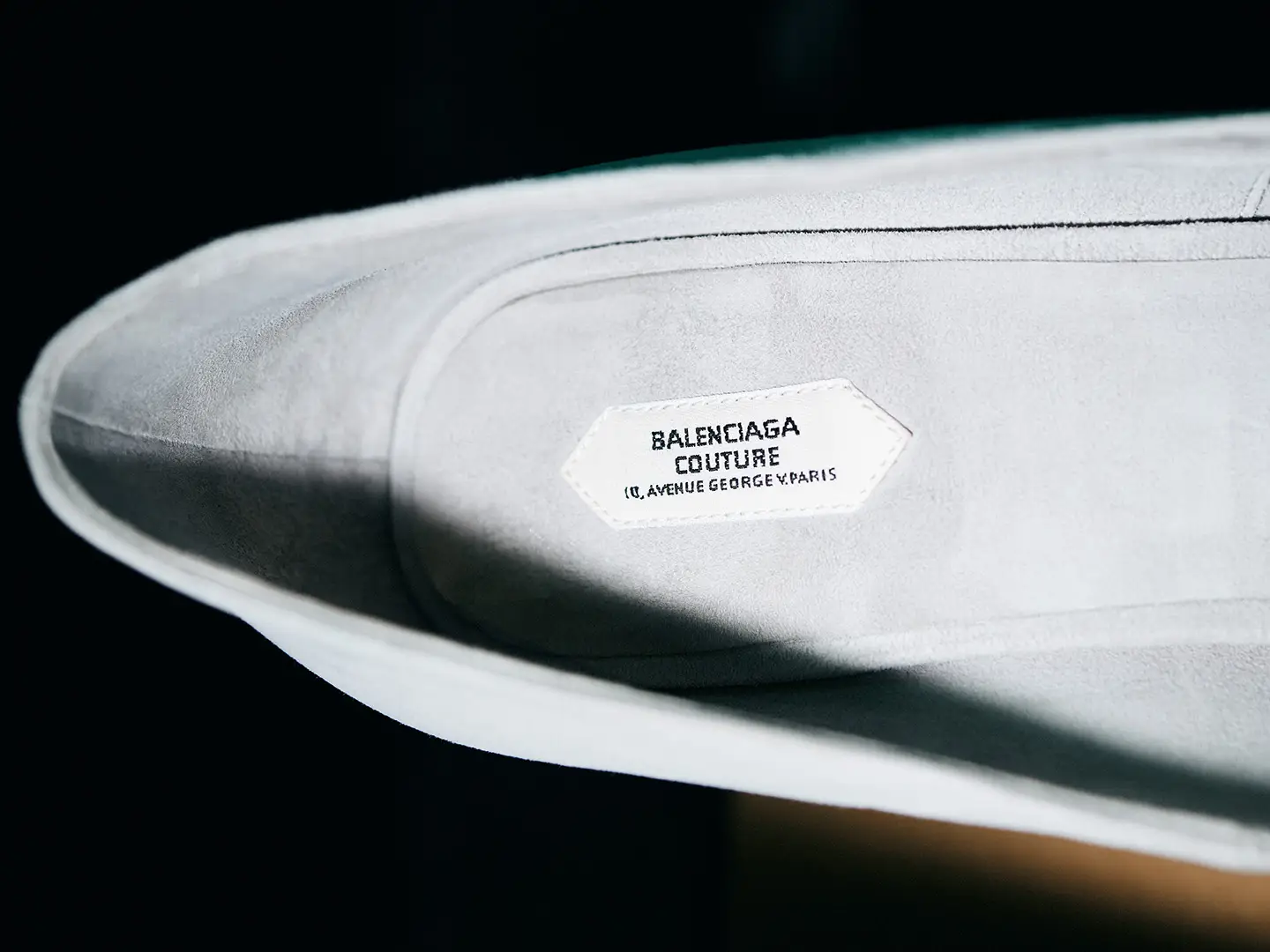
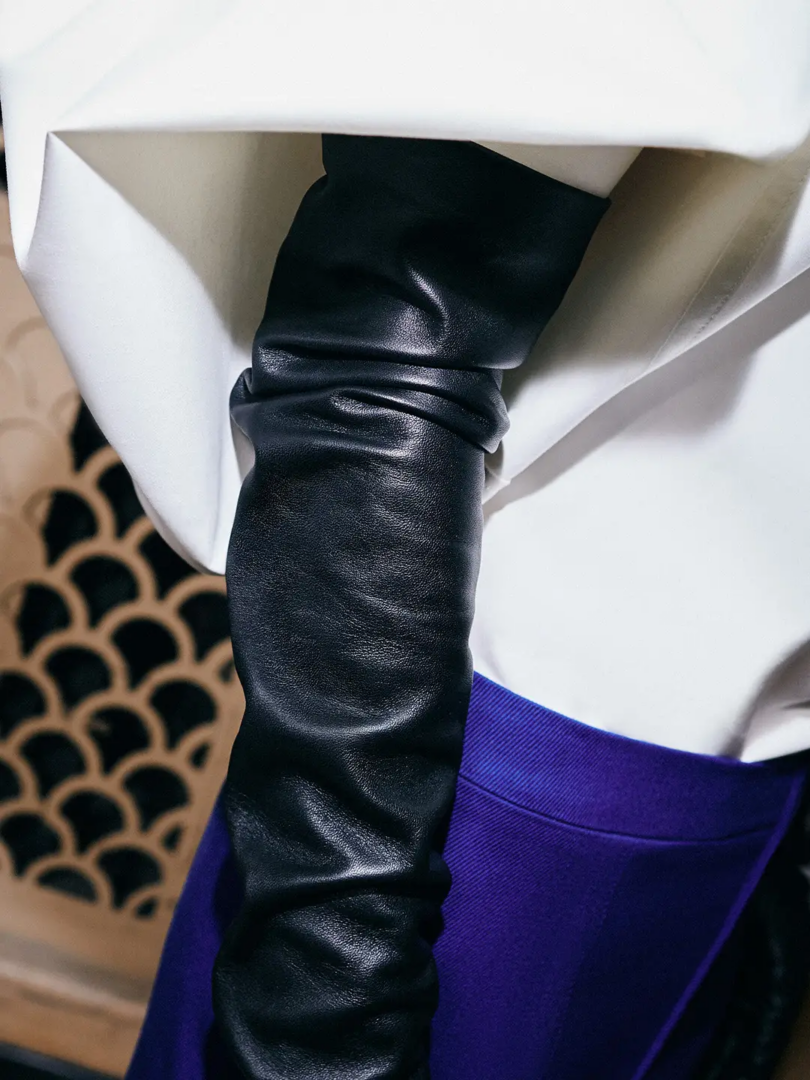
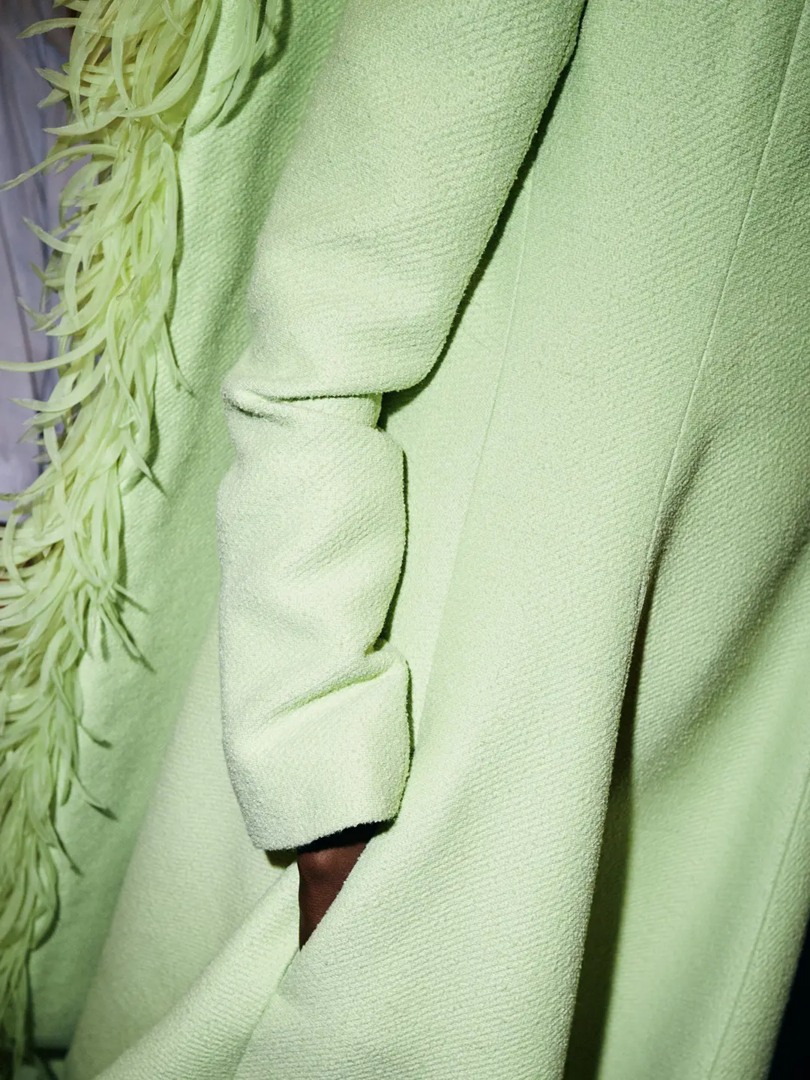
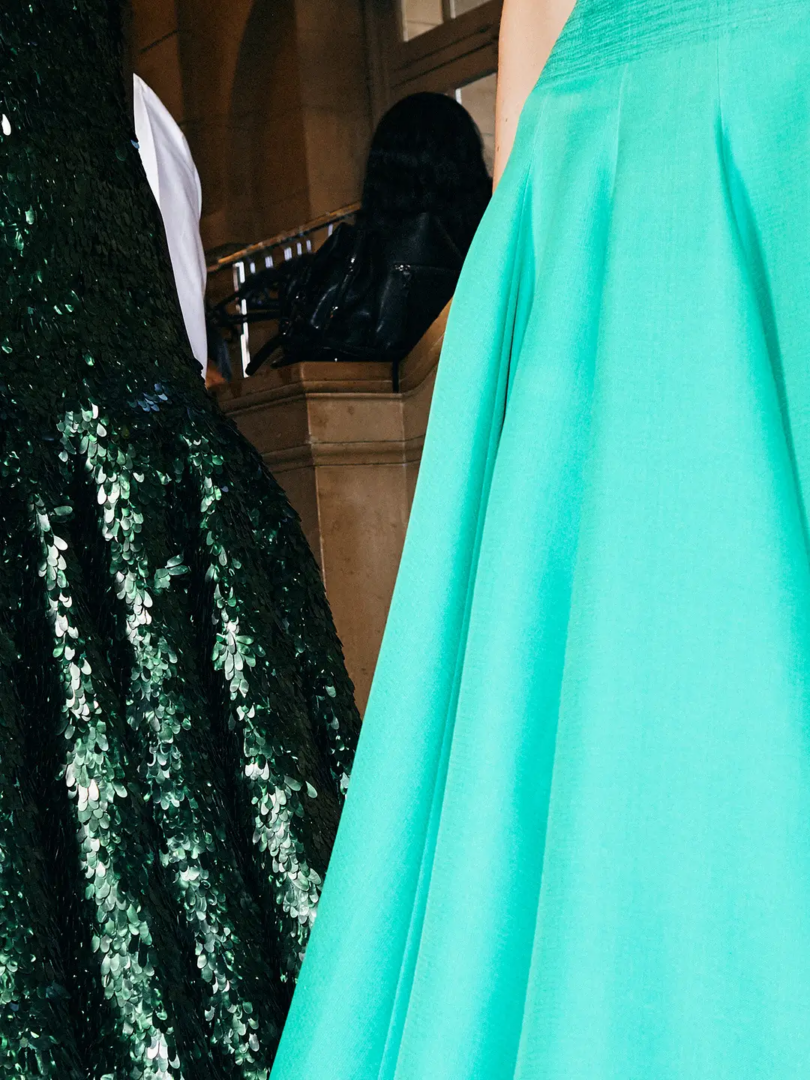
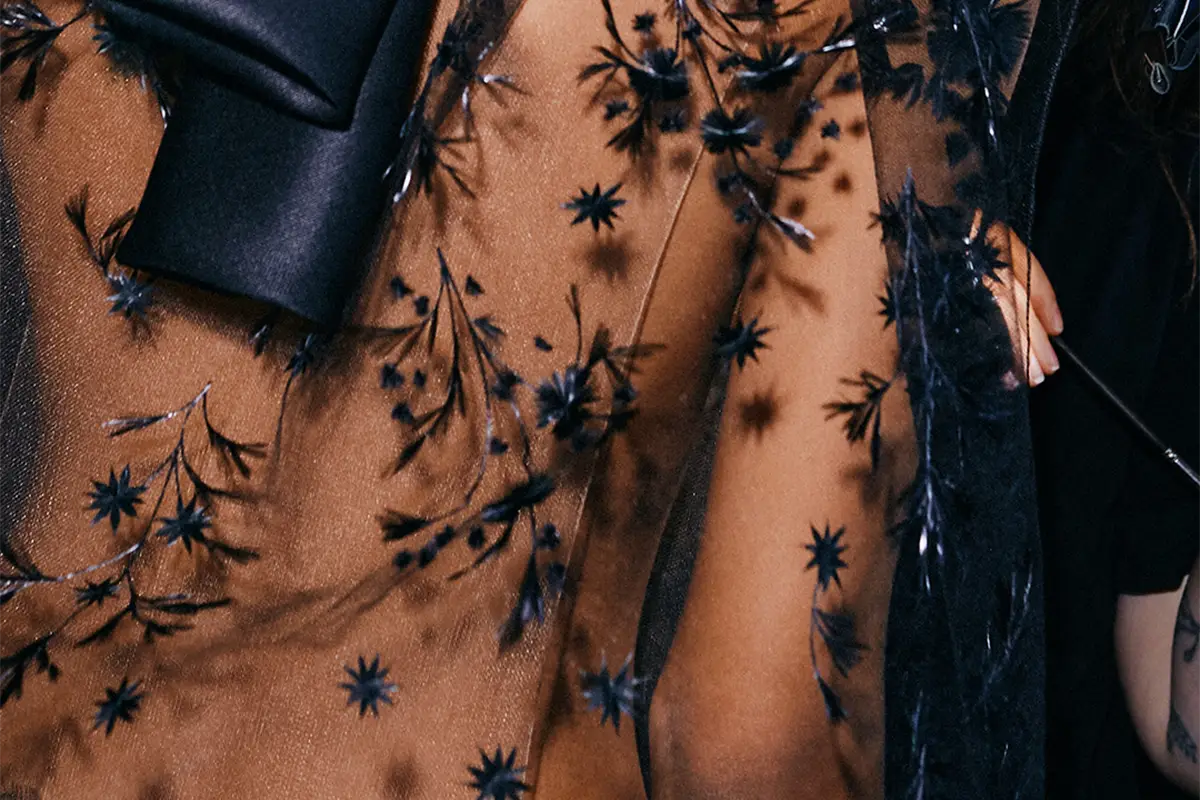
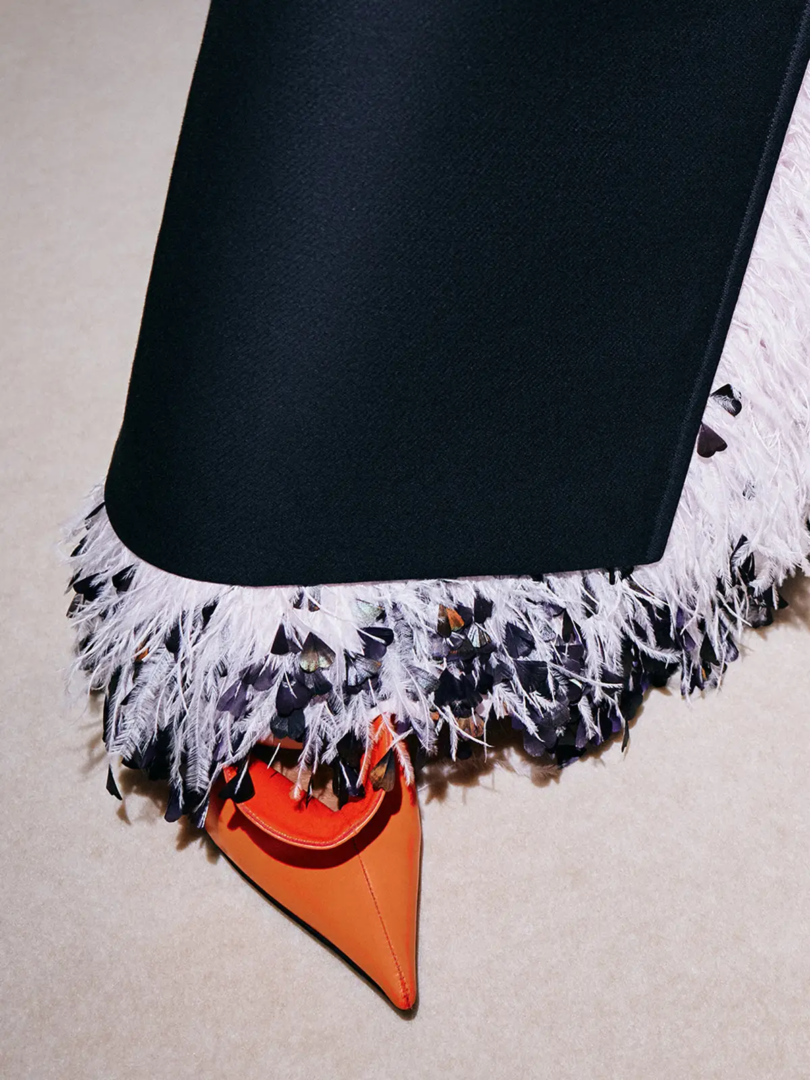
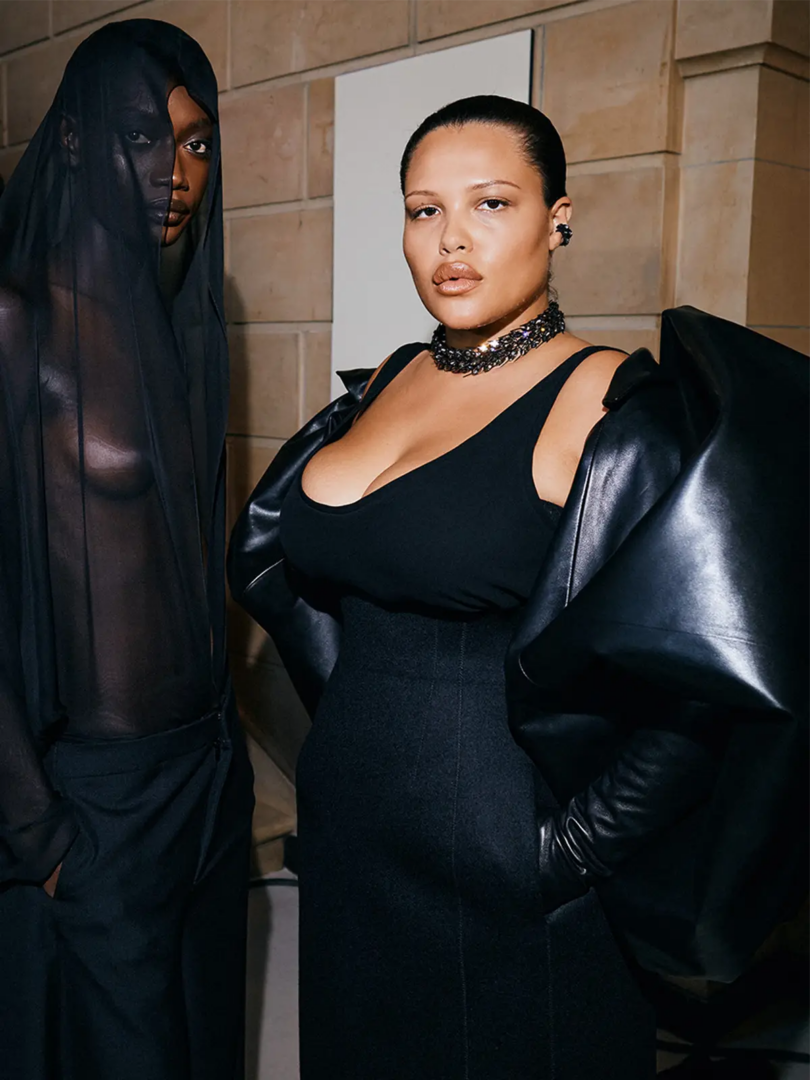
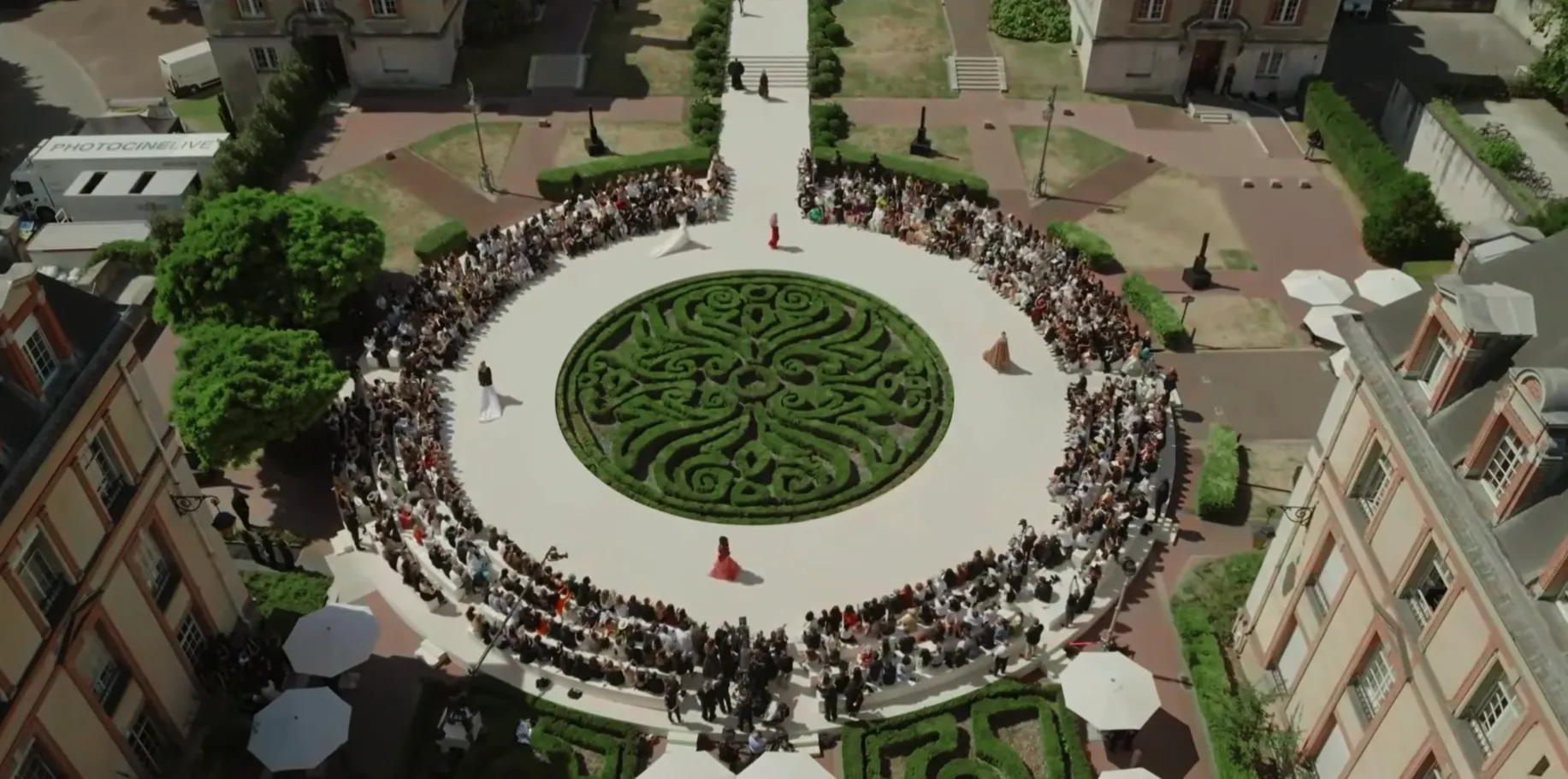
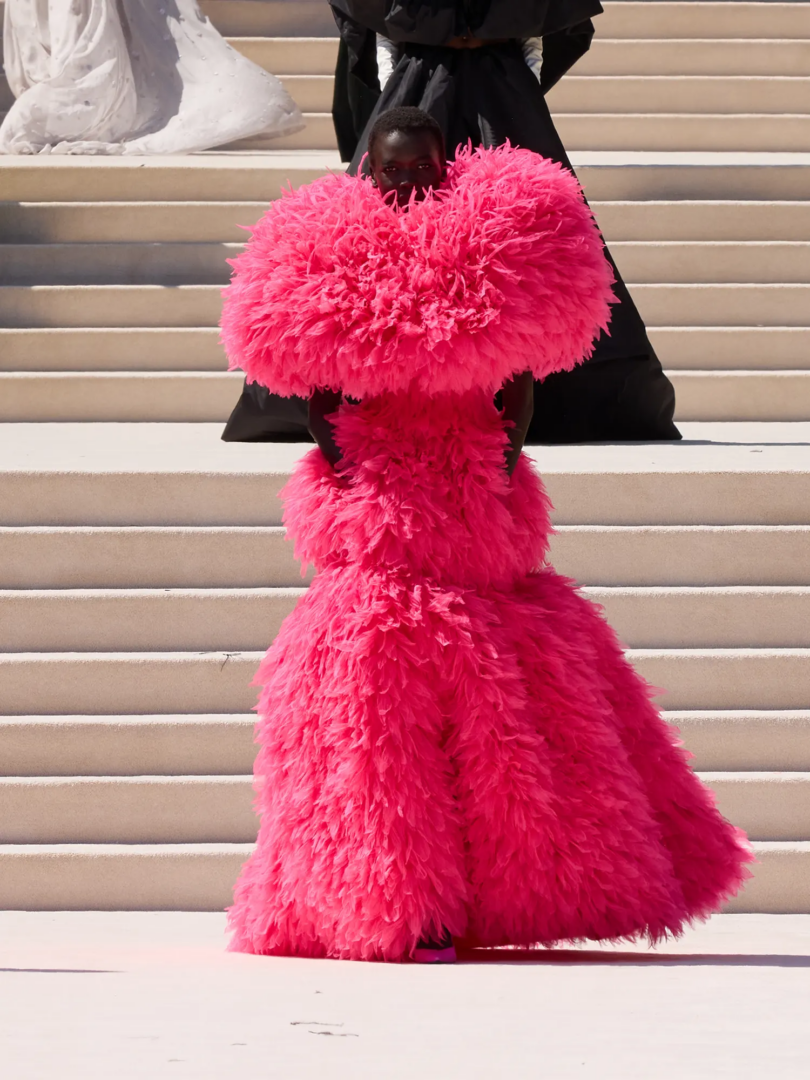
Pierpaolo Piccioli’s was no homage to the Master. When someone suggested as much, he wrinkled his nose. After all, Cristóbal Balenciaga would never have paired a phosphorescent yellow coat with lilac feathered trousers, or purple opera gloves with red tailored slacks. We’re used to picturing Balenciaga in black, a habit owed to the black-and-white photographs. But he was a master of form as much as of color: he knew when a run of saturated tones had to give way to one of absolute blacks. It’s a way to cleanse the eye and return attention to the silhouettes — the equivalent of the lemon sorbet served between courses at a fine restaurant. Piccioli’s other departure was the setting: couture collection no. 55 didn’t unfold in the legendary salons at 10 Avenue George V, but around a rotunda set amid the greenery of the Cité Universitaire. Piccioli wanted to bring couture back into the streets, under a blinding sun. Even if, in all likelihood, no woman today would shut herself indoors to mourn the loss of a certain brand’s couture, Piccioli showed that inside fashion’s grinding machine of consumption there’s still room for it.
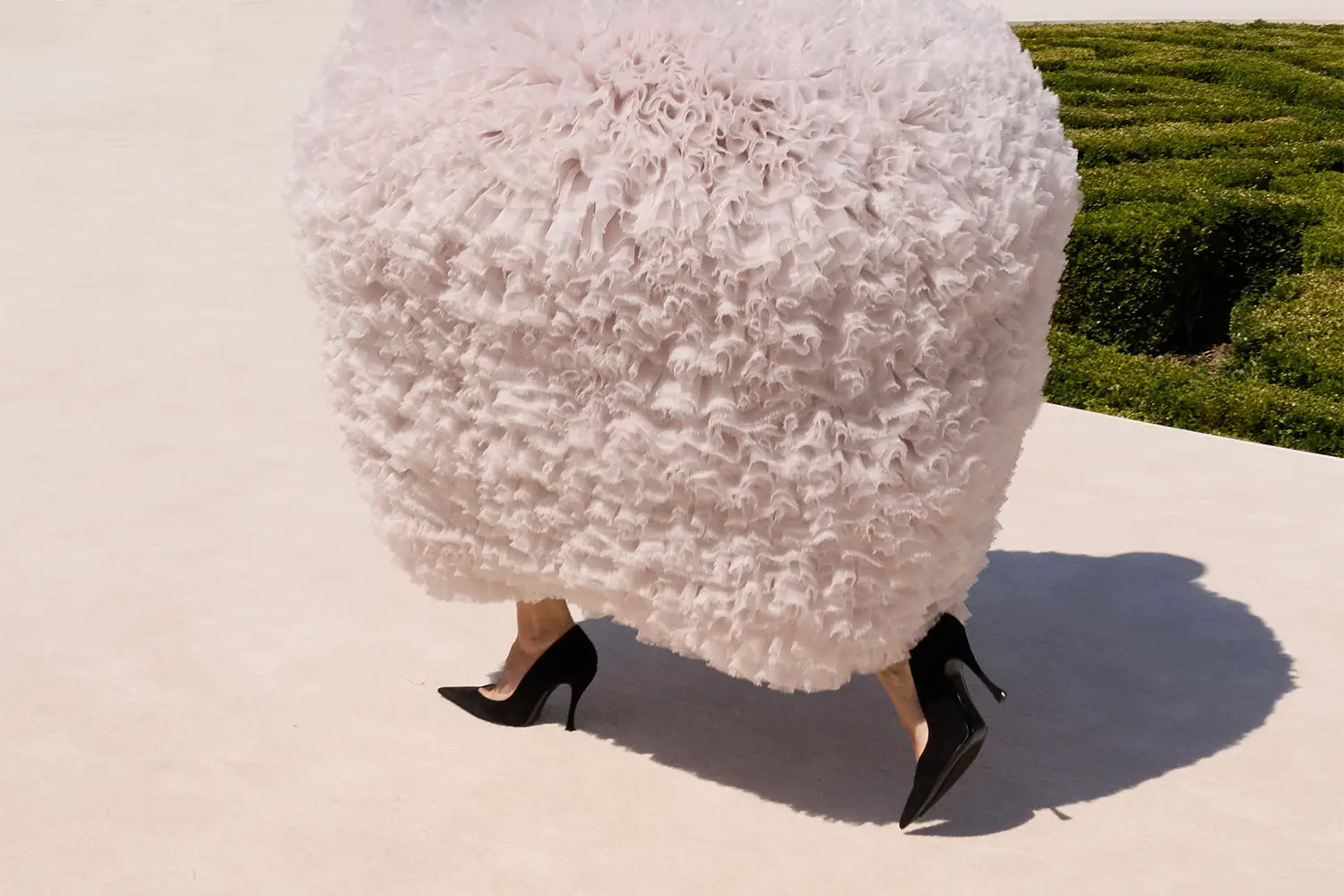
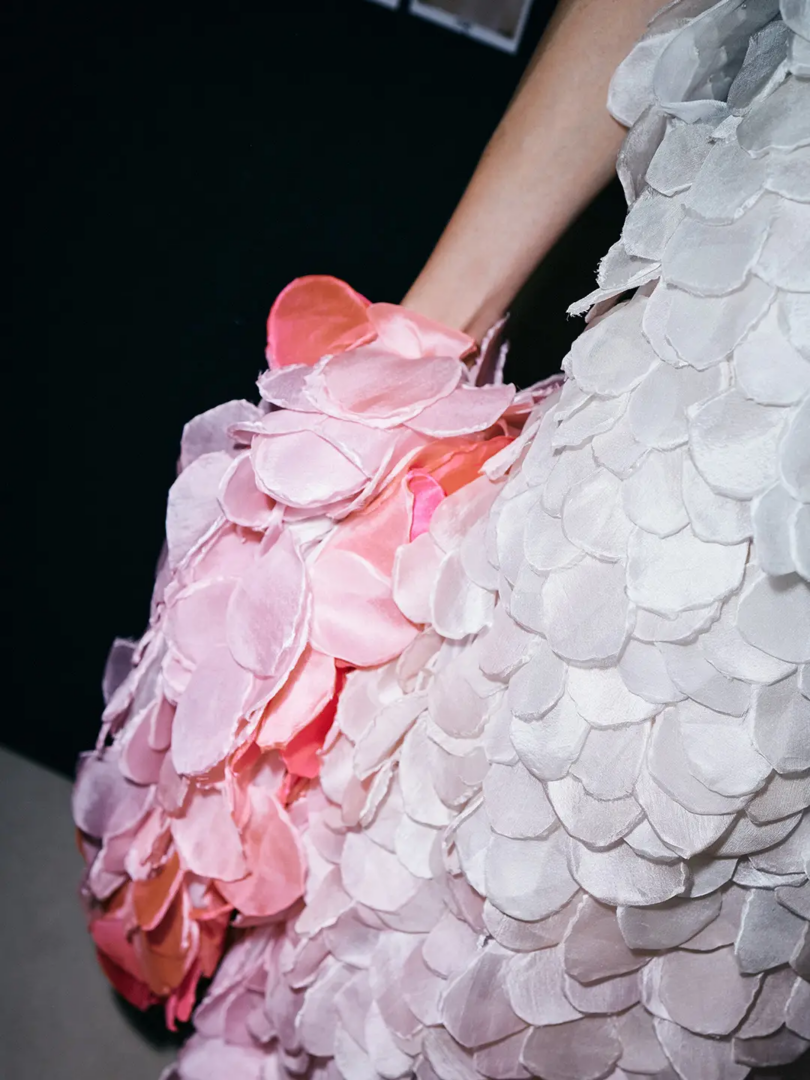
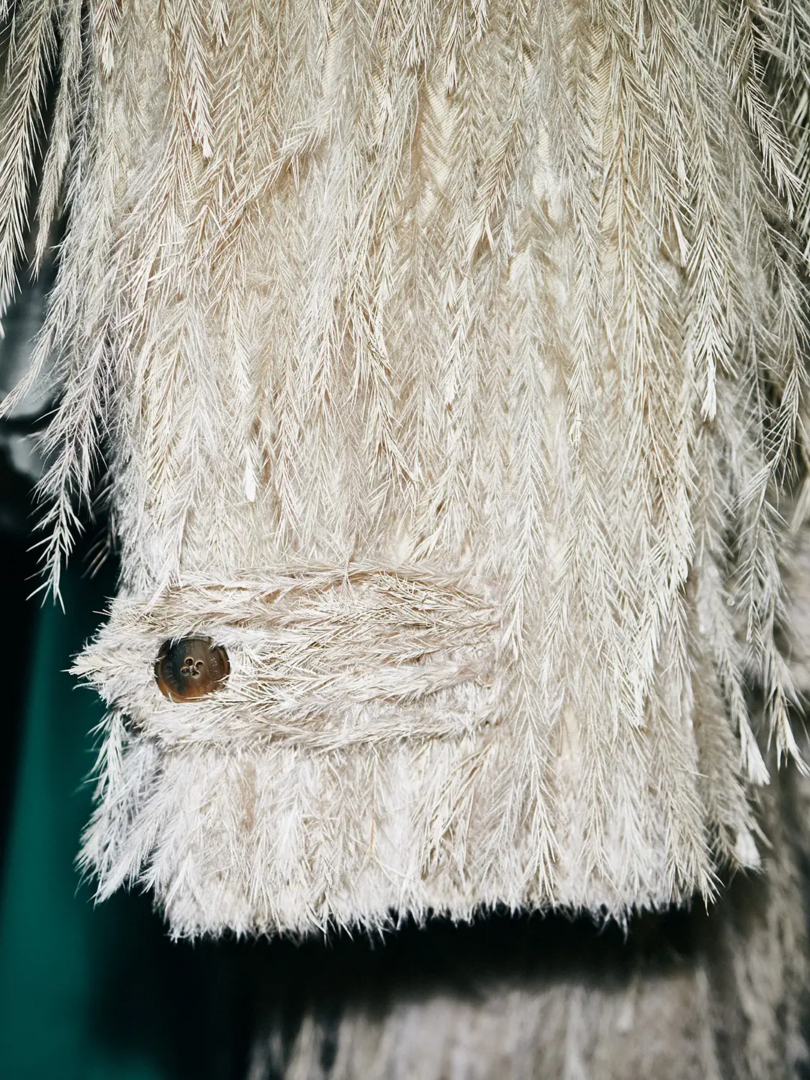
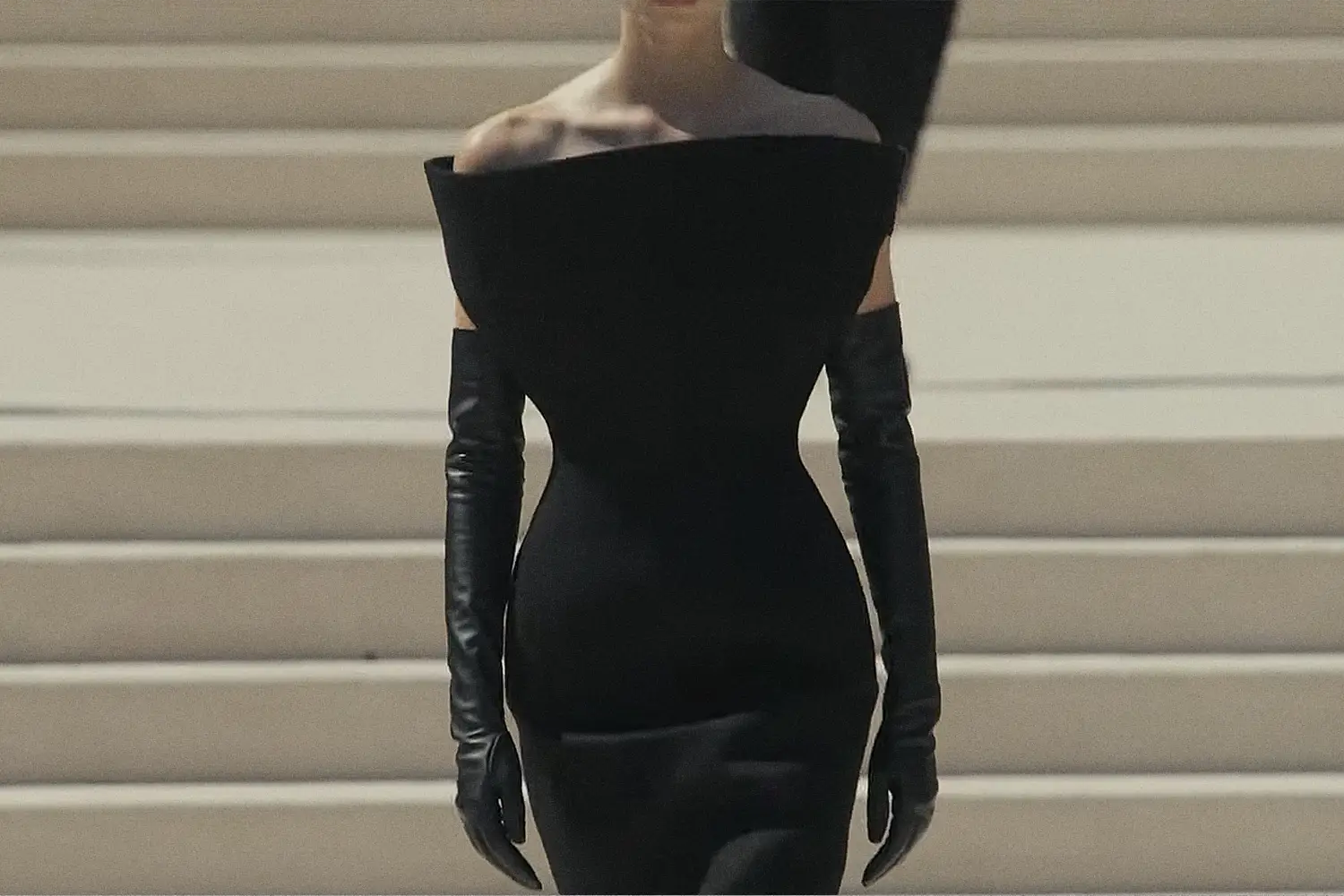
Having grown up in a Roman palazzo steeped in haute couture — Valentino’s — he finds couture his natural habitat. It isn’t a niche but a method: he has proven as much by bringing couture fabrics into ready-to-wear, injecting cocoon shapes into office ensembles, and reworking lines and proportions with a lightness and architecture that come easily to him. For the show held on the morning of July 8, he fused tailoring and flou (the latter a term for soft, airy fabrics). 24,150 feathers of shredded gazar were applied to one bustier dress; 8,000 petals hand-painted one by one to another; and garments built from volumes stacked like botanical sculptures took months to make. In many cases the Balenciaga lineage was plain — bubble silhouettes, sculptural profiles, bursts of feathers, elongated forms — yet no mothball dust settled on the clothes.
Couture is a dog’s life
Cristóbal Balenciaga was what you’d call a luxury recluse. He dined alone or with his friend Coco Chanel, visited the homes of his childhood in Spain, and drove to work in his blue Jaguar. Across his career he never granted an interview and rarely saw his clients, however devoted. When he closed his house in 1968, Countess Mona Bismarck reportedly didn’t leave home for three days, so distraught was she. Balenciaga, for his part, retired to Spain. After retiring he sat for only two interviews: one with Paris Match in 1968 and one with Prudence Glynn for The Times in August 1971. Though Prudence Glynn’s expectations were rather vague, Cristóbal Balenciaga was nothing like she’d imagined: tall, charming, quick to smile. The last thing she’d have expected from so solemn a figure was wit and vivacity. He held an intense aversion to publicity: he never let himself be seen or photographed, never made statements. Not even his colleagues could say what he was like: they recalled glimpsing him once or twice, the way one might a member of the royal family. Long a prized quarry for journalists and quote-hunters, they would lunch at his favorite restaurants hoping to steal a single syllable from him. But Balenciaga would sooner have gone hungry. And not out of haughtiness. As he told Prudence Glynn, the reason was the sheer impossibility he felt in explaining his own métier (the word he tended to use). Another was that he couldn’t do so without speaking ill of other designers.
By Balenciaga’s reckoning, there had been three great creators: Coco Chanel, Madeleine Vionnet, and Louise Boulanger. Chanel was the more commercial one: a milliner more than a couturière in the strict sense. She could neither sew nor cut, yet her work was deeply personal. Before every dress she asked herself: “Would I wear this myself?” Balenciaga too was a master of simplicity, but unlike Chanel he could meet every single demand of haute couture — from the revolutionary idea to the paper pattern down to the buttonholes. By lowering the neckline so the collar stood away from the neck, he brought the very idea of classic English tailoring to its fulfillment. He created the first sack dress, the three-quarter sleeve, the skirt with patch pockets at the front, the aristocratic evening gown, and the harem skirt. Which leads one to wonder: why did it all end in 1968? Because “c’est la vie d’un chien,” he maintained. “It’s a dog’s life.” A year after the interview, on March 23, 1972, Balenciaga would die in Valencia, Spain.
Ready-to-wear never interested Balenciaga. Machine-made trimmings are a true barbarity
Aged, though not overly so, he confided: “The world that sustained haute couture is gone. True haute couture is a luxury that has simply become impossible to produce. Givenchy carries on because he knows that world, he saw what it really meant, but he has to handle ready-to-wear and the boutiques too, and the work is wearing him down. You’ve barely finished one collection and you already have to start the next: no rest, no reprieve.” To the list he added overhead, insurance, the fact that fabric makers had lost their momentum, delivery delays, and a system that no longer made economic sense. In the years before 1968, Paris had a particular atmosphere: here you could find every kind of artisan making feathers, buttons, flowers, and trimmings you couldn’t find anywhere else. His secretary recalled that on a trip to New York he once wrinkled his nose at the absence of a single small handmade fabric rose. That was already a world ruled by the machine. A true barbarity. Ready-to-wear never interested Balenciaga, a man who carried the art of handwork to perfection. As late as the 1960s he staged a show in a room of empty chairs, with no music and no clients. Only the hum of an 8-millimeter camera. It’s easy to see why common opinion always took him for an ascetic, a puritan, even a curmudgeon — and why he’s spoken of as a saint of couture.
Melchior Thimister before Pierpaolo Piccioli. It would be reassuring to think talent conquers all, but that too would be a fairy tale
As is well known, the house reopened in 1987 under Michel Goma. In 1992 Josephus Melchior Thimister would step into the control room. Ralph Rucci called him “the greatest designer of his generation.” For Anna Wintour he was one of fashion’s stars of the new century. Able to move between poetry and a kind of raw, Byronic romanticism, he was among the last to believe in loyalty to the creative muse above all else. He had faith in the purity of the concept and the perfectly executed line. Not unlike the Master, he came to discover that the twentieth century was sliding into the age of marketing and the constant flow of product. The keywords were mission statement and vision. Even though, until 2021 under Demna, Balenciaga would produce only ready-to-wear (who knows what the Master would have made of it), Thimister’s first collection is often cited as the moment haute couture came home. Entirely in black and white, it was the moment people began paying attention to Balenciaga again.
There was something ineffably elegant about it, and also something tortured. Yet Thimister too would have to collide with the reality Cristóbal Balenciaga described in 1971: after founding his own eponymous brand, he found himself chasing the side jobs he’d taken to keep it afloat, facing financial instability, closures, comebacks, and closures again. Thimister had the qualities once associated with the designer: excess, eccentricity, drama. But all at once those qualities had become superfluous. We’d like to think talent conquers all, but that’s a fairy tale. A crevasse opened between the before and the after, and Melchior Thimister — who took his own life in 2019 — fell into it.
Balenciaga Haute Couture fall-winter 2026: Piccioli is no dystopian provocateur but a romantic with a gift for couture
Times haven’t changed. If anything, they’ve gotten worse. Balenciaga’s current creative director, Pierpaolo Piccioli, must contend today not only with the shadow of the Master from Getaria but also with those of his well-known predecessors Nicolas Ghesquière (1997–2012) and Demna (2015–2025). Responsible for women’s, men’s, accessories, and haute couture, Piccioli is considered one of fashion’s great romantics — a quality that brings him close to Thimister. Unlike Demna, the dystopian provocateur who dressed the streets in oversized hoodies and gargantuan sneakers, Piccioli — first at Fendi, then at Valentino — was always credited with a gift for couture. When, on a 2018 trip to New York, he saw a 1967 Cristóbal Balenciaga wedding dress, he snapped a photo and posted it to his Instagram. It was his first social media post. Beneath the image he wrote the caption “Simplicity is complexity resolved.” It’s a Brancusi quote.
It partly captures what Balenciaga meant in calling himself “a master of simplicity.” It all seems to hold together. As fashion critic Cathy Horyn pointed out, before Demna, Balenciaga was a brand of splendid clothes that never lacked for color or structure. And Pierpaolo Piccioli, author of the PP Pink variation on Valentino red, carries the seed of color and architecture within him. Perhaps that’s why his first two ready-to-wear collections convinced fewer people: caught between trying to preserve Demna’s streetwear vocabulary and summoning haute couture at the same time, he stayed suspended in a middle ground of hoodies, collars, and sack dresses. His couture debut on July 8 went differently.