Why you so obsessed with me? An encyclopedia of fashion obsessions
From Luna Rossa and Triple S to the Baguette and Dior’s Saddle Bag, an encyclopedia of contemporary fashion obsessions — examining how repetition, visibility, and circulation build desire
Fashion obsession now appears fully formed. Seen once, then again, then everywhere. Exposure drives it — a modern proximity sustained through online presence rather than physical closeness. Visibility, recognition, replication: the conditions remain the same. Persistence overpowers innovation. Anything that stays in sight long enough becomes inevitable.
Obsession comes from the Latin obsidere — to occupy. To be taken over, surrounded, held in place. Historically, it meant fixation to the point of interruption. The term has since abandoned its isolating quality. Fashion obsession now integrates the subject into the collective. What was once internal has become environmental. The pressure has moved outward.
Modern fashion culture runs on circulation, not rarity. Controlled visibility makes an object recognizable at a distance, identifiable without context. Over the past few decades, certain bags, shoes, and accessories have reached a level of desirability previously foreign to fashion. Some lasted months, others decades — but each became an obsession by representing something larger than its physical form.
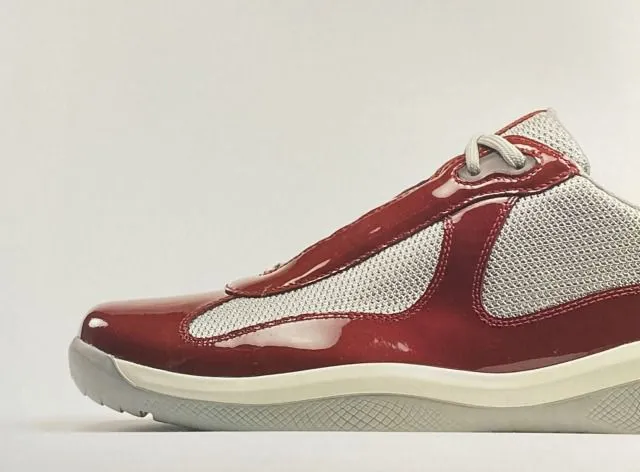
Luna Rossa sneakers: the sailing shoe that became a fashion obsession
A low-profile technical sneaker. Lightweight, aerodynamic, reduced to function. The construction prioritizes grip, flexibility, and contact with the surface. The silhouette is narrow and contained, the visual language stripped back. Neutral tones, synthetic materials, zero interference.
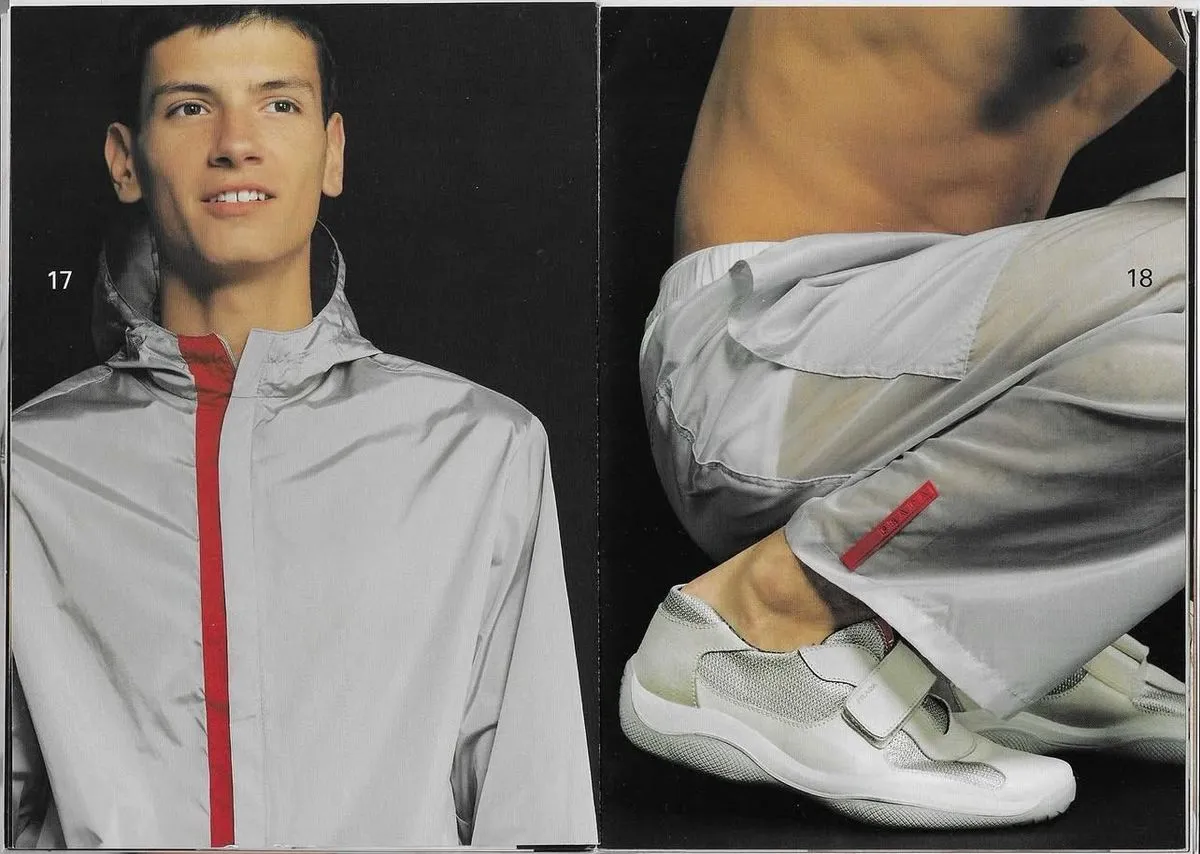
The Luna Rossa sneaker comes from a performance environment. Developed for the Luna Rossa Prada Pirelli Team competing in the America’s Cup, the shoe was built for sailing’s specific demands — instability, motion, constant shifts in balance. Responsiveness to shifting weight, durability under friction, traction on wet surfaces: this is where the shoe’s logic originates. For years, it stayed within that closed circuit.
The shift came after 2020, as fashion moved toward performance codes. Technical apparel stepped outside its original context and into everyday dressing. Functionality and mobility became central; materials signaling lightness, control, and resistance followed. The Luna Rossa sneaker required no reinterpretation — the aesthetic was already built. Integration into fashion environments brought new exposure: social media, airports, transitional spaces, efficient wardrobes. Repetition built familiarity; familiarity built recognition.
Luna Rossa no longer signals participation in sailing. The core values of the sport — discipline, control, technical precision — remain present in the shoe’s identity. The fashion obsession with Luna Rossa sits precisely there: a symbolic alignment with performance culture, carried on foot. The sneakers now appear in design-conscious, fashion-adjacent spaces that favor clarity over excess.
Balenciaga Triple S: the ugly sneaker that rewrote fashion’s rules on proportion
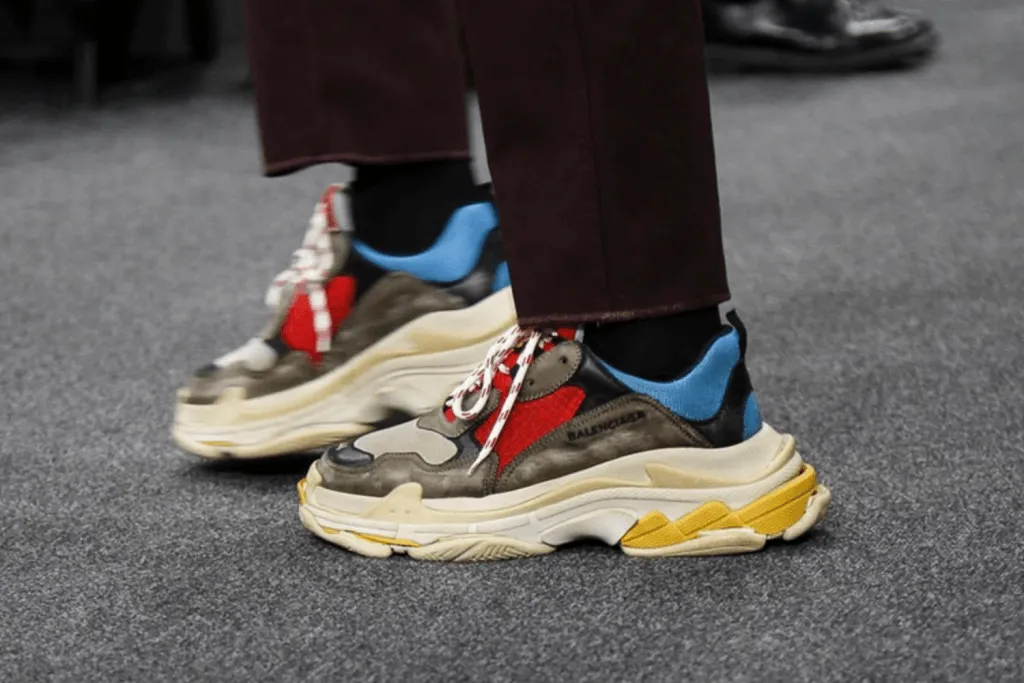
A sneaker built on excess. Exaggerated proportions, layered sole, visible weight. Over-constructed, with three sole units stacked into one. Height, instability, density — every element is deliberate. Multiple materials, panels, and references crowd the surface.
The Balenciaga Triple S emerged in 2017 under Demna Gvasalia, drawing from running shoes, orthopedic forms, and workwear — sources with no interest in aesthetics. Runway first, editorial contexts second, then a small group of early adopters. Once visibility hit online, circulation expanded. The shape was unmistakable. The form carried itself.
An early and defining specimen of the ugly sneaker trend, the Triple S grew through exposure. Celebrity repetition, street style, digital environments where distinction is the currency — these stabilized the obsession. Disruption became norm. Exaggeration became expected. The Triple S shifted the market’s understanding of proportion and laid the ground for a decade of oversized sneaker design.
Saturation followed the peak. Replication accelerated it. Once the form became too familiar, visibility lost its charge. The Triple S belongs now to a broad field, circulating across different levels of consumption and imitation. It functions as a structure — a reference point for those who treat scale, layering, and excess as a baseline. The obsession extended beyond the object to the aesthetic conditions it established.
Ecco il paragrafo, costruito con la stessa struttura degli altri — forma, contesto, circolazione, obsession loop:
Maison Margiela Tabi: the split-toe boot that turned anatomical deformity into status
A boot with a bifurcated toe. The split runs from the tip to the base, separating the big toe from the rest of the foot. The silhouette references the tabi — the traditional Japanese sock worn with sandals, rooted in craft and ceremony. The heel is sculptural, exaggerated, set apart from the upper. Nothing about the form gestures toward comfort or neutrality.
Martin Margiela introduced the Tabi boot in 1989, for his debut runway collection. The foot was presented as an anatomical object — altered, exposed, made strange. Deconstruction was the operating logic: Margiela worked by stripping objects of their invisibility, forcing attention toward what clothing and footwear are made to conceal. The Tabi made the foot impossible to ignore. Discomfort — visual, physical, conceptual — was the point.
For years, the Tabi remained within a narrow circuit: collectors, conceptual fashion, the early Margiela community. Obsession existed, but it was enclosed. The shoe’s logic ran counter to legibility, and legibility is what drives mainstream circulation.
The shift came after 2015, as fashion culture began reprocessing the archive. John Galliano’s appointment as creative director in 2014 renewed interest in Margiela’s foundational language. The Tabi resurfaced — not as a relic, but as a position. Digital circulation accelerated the process. On social media, the split toe became a recognizable signal: of a specific design literacy, of comfort with aesthetic provocation, of alignment with fashion’s more demanding registers. Celebrity and editorial adoption followed. The Tabi ballerina extended the silhouette’s reach — the same anatomical gesture translated into a format with broader seasonal relevance.
Dior Book Tote: the embroidered canvas bag that became a status symbol
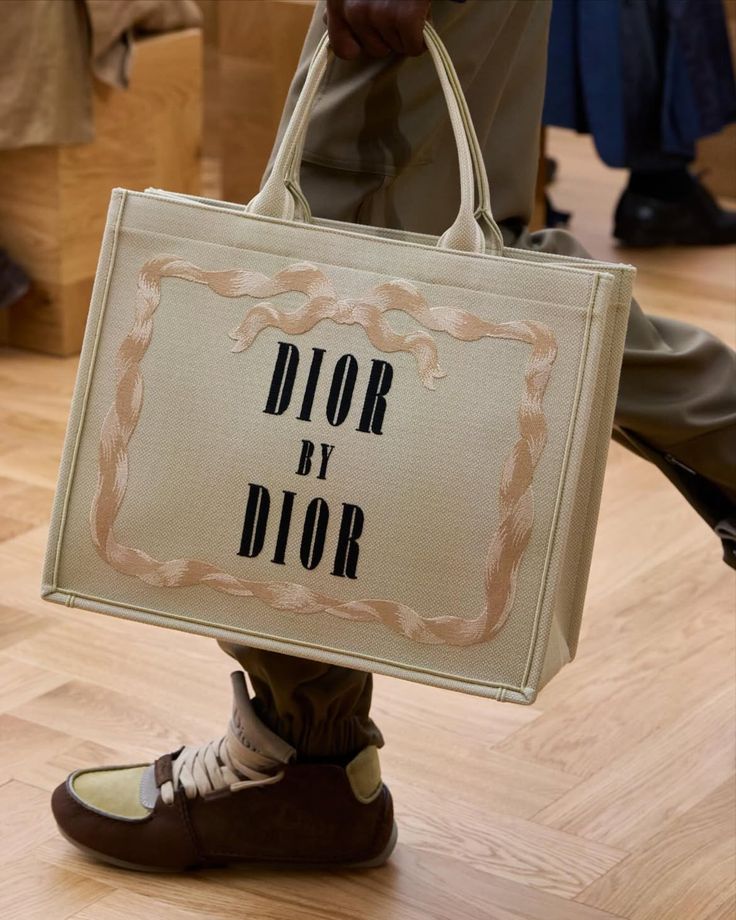
A canvas tote, structured, rectangular, fully exposed. The surface is uninterrupted — embroidered, with “Christian Dior” centered and impossible to miss. Each bag takes up to forty hours to complete. Available in five sizes — Mini Phone, Mini, Small, Medium, Large — every version is designed to be visible in any setting.
Introduced by Maria Grazia Chiuri in 2018 with the Oblique pattern, the Dior Book Tote draws from archival references — Marc Bohan’s drawings from 1967. The construction is rooted in craft; function remains simple and central. The embroidered textiles and rigid structure communicate the making of the object, and the identity is fixed and immediate.
Early visibility was deliberate. The bag first appeared within fashion week environments, carried by stylists, editors, and industry professionals. The second wave brought influencers, models, and high-frequency travelers — establishing its association with transit and movement. Eva Chen, Chiara Ferragni, and Olivia Palermo were among the first to carry it, positioning the Book Tote within an aspirational and reproducible context.
Airports, hotel lobbies, fashion districts: high-visibility, high-movement environments. Social media accelerated what was already in motion. The consistency of the format — same proportions, same logo placement across every version — made recognition automatic and the obsession self-reinforcing. The Dior Book Tote became a status symbol through presence, not exclusivity. The obsession has always been with what it signals: placement, recognition, a specific set of lifestyle conditions.
Fendi Baguette Bag: the 90s icon that keeps coming back
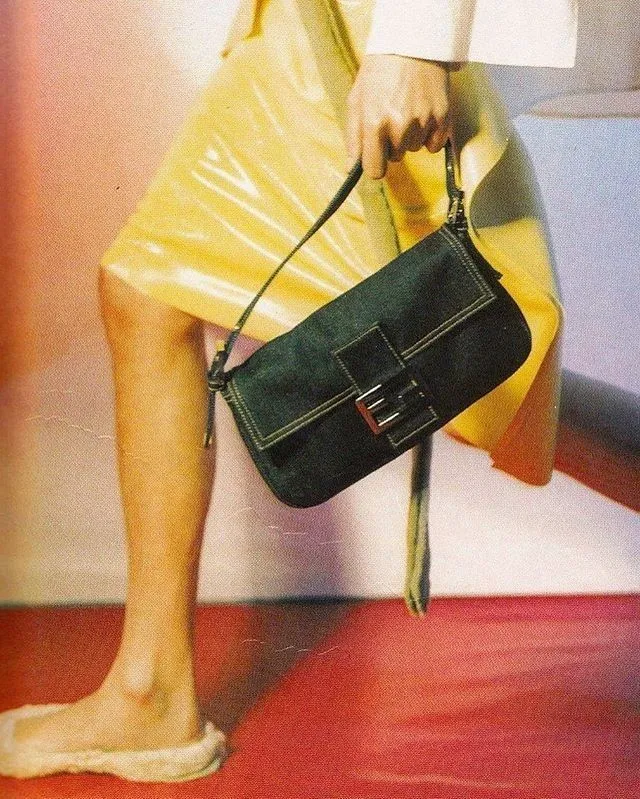
A rectangular, compact shoulder bag with minimal volume, a short strap, carried close under the arm. Designed to sit against the body. Small, deliberate proportions, stable structure across variations.
Introduced by Silvia Venturini Fendi in 1997, the Baguette bag takes its name from the way it’s carried — tucked under the arm like a baguette. It broke the traditional logic of handbags that favored practicality and capacity. The Baguette reduced both. Function stepped aside.
The bag’s rise was immediate — and predates social media. Sex and the City carried it forward. Carrie Bradshaw wore the Fendi Baguette across multiple variations, week after week, episode after episode. Fashion was central to the show’s narrative, and the repetition was episodic, structured. The bag became a cultural reference point through fixed structure and an expansive range of variations in fabric, color, and embellishment.
After a period of decline, the Fendi Baguette returned in 2018–2019, riding the 90s fashion revival. This time, exposure was both cultural and algorithmic. The episodic structure was gone, replaced by intensified online circulation. The obsession rebuilt itself, layered for some — new for others. The reintroduction freed the bag from its original cultural context. The Baguette now signals awareness of fashion history, of reference and cycles. It circulates across generations.
Bottega Veneta Cassette Bag: quiet luxury and the power of logo-free design
A padded leather bag built from intrecciato weaving. Wide leather strips form an immediately recognizable grid across the surface. Soft but controlled, volume distributed across the full piece. No logo. Recognition depends on the form alone.
Designed by Daniel Lee in 2019, the Bottega Veneta Cassette arrived during a visible recession in logo-driven branding. Rather than replace Bottega’s signature intrecciato technique, Lee scaled it. The weaving became both surface and structure — amplified into an identifier strong enough to replace a name.
Initial circulation was controlled: runway, editors, stylists. The pattern compensated for the absent logo and became the brand in itself. The second wave was strategic and fast. High-profile celebrity adoption created visibility; influencer adoption made it consistent. Multiple iterations — crossbody, padded, chain-strap — gave the Cassette a stable visual identity, arriving as quiet luxury gathered momentum across fashion. The bag appeared across different contexts and remained central without overpowering them.
The obsession built through digital circulation and a controlled aesthetic identity. The desire came from repetition and from aspiration — alignment with a design language that treated restraint as status. Originals and imitations reproduce the same structure, the same proportions, the same visual logic. The obsession is with its clarity: a form immediately identifiable without needing to be named.
Dior Saddle Bag: the asymmetric icon with a cyclical obsession
An asymmetrical handbag defined by its curve. The silhouette references a saddle — dipped at the center, extended at the ends, structurally uneven. It breaks the standard geometry of bags. Balance is absent and the design makes no attempt to find it. The form is immediate and difficult to neutralize. The Saddle Bag disrupts an outfit rather than completing it.
Introduced by John Galliano for Dior in 1999, the Saddle arrived when fashion embraced theatricality and excess. Objects of the era prioritized narrative over function, and the bag aligned with that logic. Its purpose was visual. Capacity was beside the point.
After the SS 1999 runway, the Dior Saddle Bag appeared in season three of Sex and the City, carried by Carrie Bradshaw — used to conceal a cigarette on a date with Aidan. The first circulation was fast and culturally embedded. Repetition followed; the asymmetric silhouette stabilized into recognizability.
By the mid-2000s, minimalism had arrived and the Saddle Bag was displaced. Fashion favored neutrality and function; the Saddle offered neither.
In 2018, Maria Grazia Chiuri reintroduced the Dior Saddle Bag — same asymmetry, same proportions, different visual system. Continuous exposure followed: editorial placements, celebrities, influencers. Bella Hadid and Beyoncé brought the bag into contemporary circulation. The obsession rebuilt, layered for some and new for others. The Saddle now functions as a reference to its own aesthetic origin — a cyclical obsession that moves in and out of visibility without losing its structure.
Moon Boot: the après-ski boot that became a fashion statement
A padded, oversized après-ski boot. Defined by its volume, rounded sole, and symmetrical structure — designed to fit either foot, marketed from the start as the first ambidextrous après-ski boot. Functional in snow, and a deliberate statement anywhere else.
The origin traces to the late 1960s, when Italian footwear entrepreneur Giancarlo Zanatta drew inspiration from the Apollo 11 Moon Landing. After visiting New York in 1969, Zanatta designed the Moon Boot in the visual language of the landing — weightless movement, inflated forms, synthetic materials. It gained traction through 70s winter tourism, then settled into decades of seasonal, contained use.
The shift came in 2020, following a management change. The Moon Boot repositioned, stepping out of alpine environments and into fashion imagery. Celebrities moved first. Dua Lipa was seen wearing Moon Boots away from snow, styled against minimal clothing. The contrast was unexpected, immediate, and repeatable. Visibility became continuous — celebrities, then influencers, then general circulation. The Moon Boot spread across platforms, collapsing the visual distance between ski resorts and city streets.
The après-ski boot now sits between sport and fashion. It appears in winter cities, transit spaces, holiday destinations, and curated interiors. It’s worn by people operating mobile, image-conscious, platform-aware lives. Skiing remains an embedded signal, but the Moon Boot has become a seasonal fashion statement — a documented aesthetic choice made far from the slopes.