Maria Grazia Chiuri’s Roman couture debut: Fendi after Fendi
The color people actually wear is black, Chiuri says, and she rebuilds a house on that diagnosis: a Fendi couture debut of severity, craft, and almost no fur at all
Histoire d’Eau. Hardly anyone manages to see eroticism in Chiuri’s compositions. Almost no one sees the fetishism of a bare foot in the fountains of Rome.
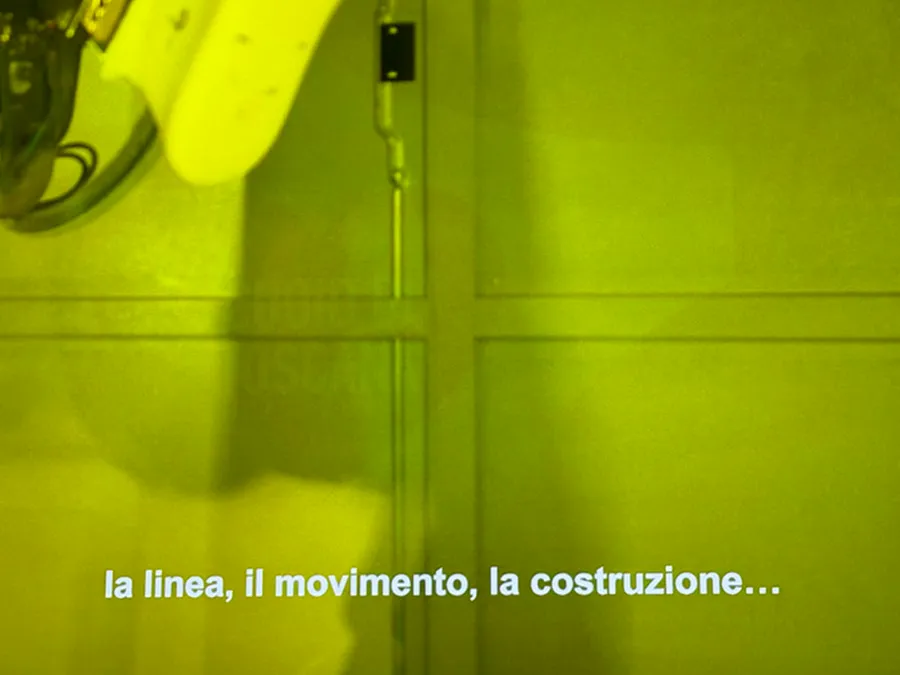
The first hint Maria Grazia Chiuri, newly appointed creative director of Fendi, offered about her haute couture debut for the Roman house was a clip from Histoire d’Eau — “Story of Water.” It’s a 1977 short film credited with coining the term “fashion film.” The direction went to Jacques de Bascher, the Parisian dandy who was the great love of Lagerfeld’s life. Bascher had no filmmaking experience whatsoever. That visual naivety shows as he films the model-tourist Susy Dyson, dressed head to toe in Fendi, wandering Rome and lowering herself into the water of its fountains. An amateur, the director pays unusual attention to places, to water, to feet — which, with an almost fetishistic obsession, open the way to digressions on the eroticism of Fendi’s creations.
A woman drifting nearly aimlessly through a deserted Rome, stepping into its monuments of water, buying furs, lunching with the Fendi sisters: it’s peculiar that Chiuri chose these as the founding images of her first couture. Almost nothing happens. The camera lingers on the way a garment lets you inhabit a space and, more broadly, live in it. Water clings to the fabrics, and Rome becomes a liquid body crossed by an impractical woman who seems to ignore every convention. It’s peculiar that Maria Grazia Chiuri picked it, because she is one of the most lucid, most resolved designers of our time. A woman who designs practical compositions for women. Hardly anyone manages to see eroticism in Chiuri’s compositions. Almost no one sees the fetishism of a bare foot.
Fendi haute couture fall-winter 2026: Maria Grazia Chiuri is a designer of neither entertainment nor Fun Fur
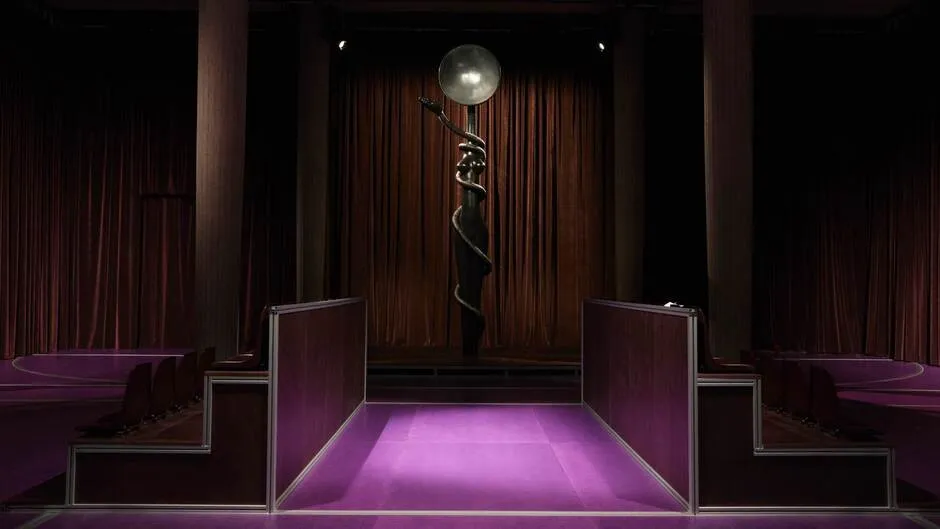
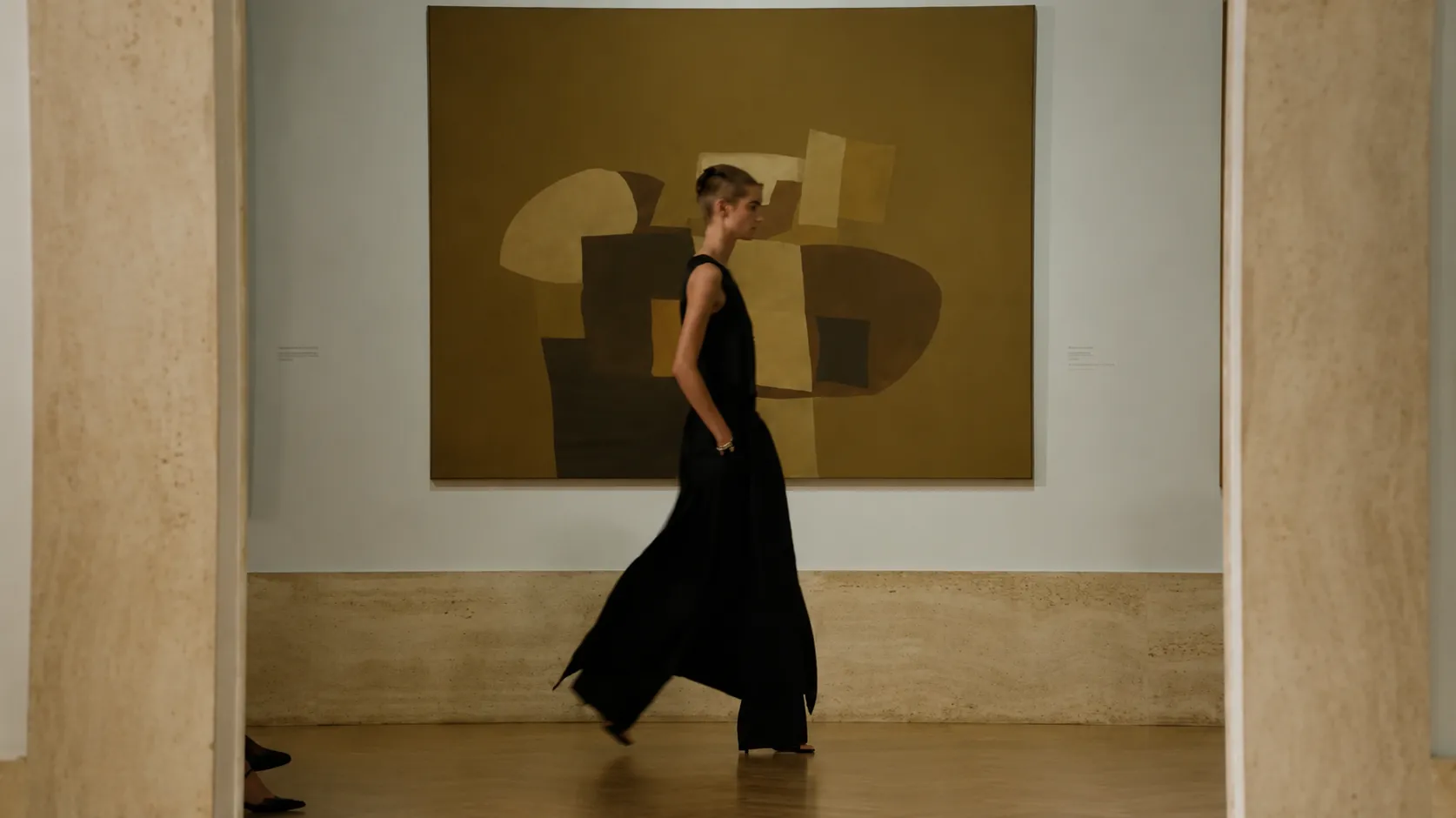
The July 9 show moved through the Galleria Nazionale d’Arte Moderna e Contemporanea, a space overflowing with the works and images of a century of experiment across the arts. The choice of the museum isn’t decorative but functional. It’s a way of reasserting a vocation for that ambiguous zone where clothes stop being consumption and try to become language. Is that possible? Perhaps not in 2026. Or perhaps only for a very few. Rome isn’t a backdrop for Chiuri but an organism: its surfaces, the stone, the travertine, the shadows thrown off by its architecture are the subject of the collection.
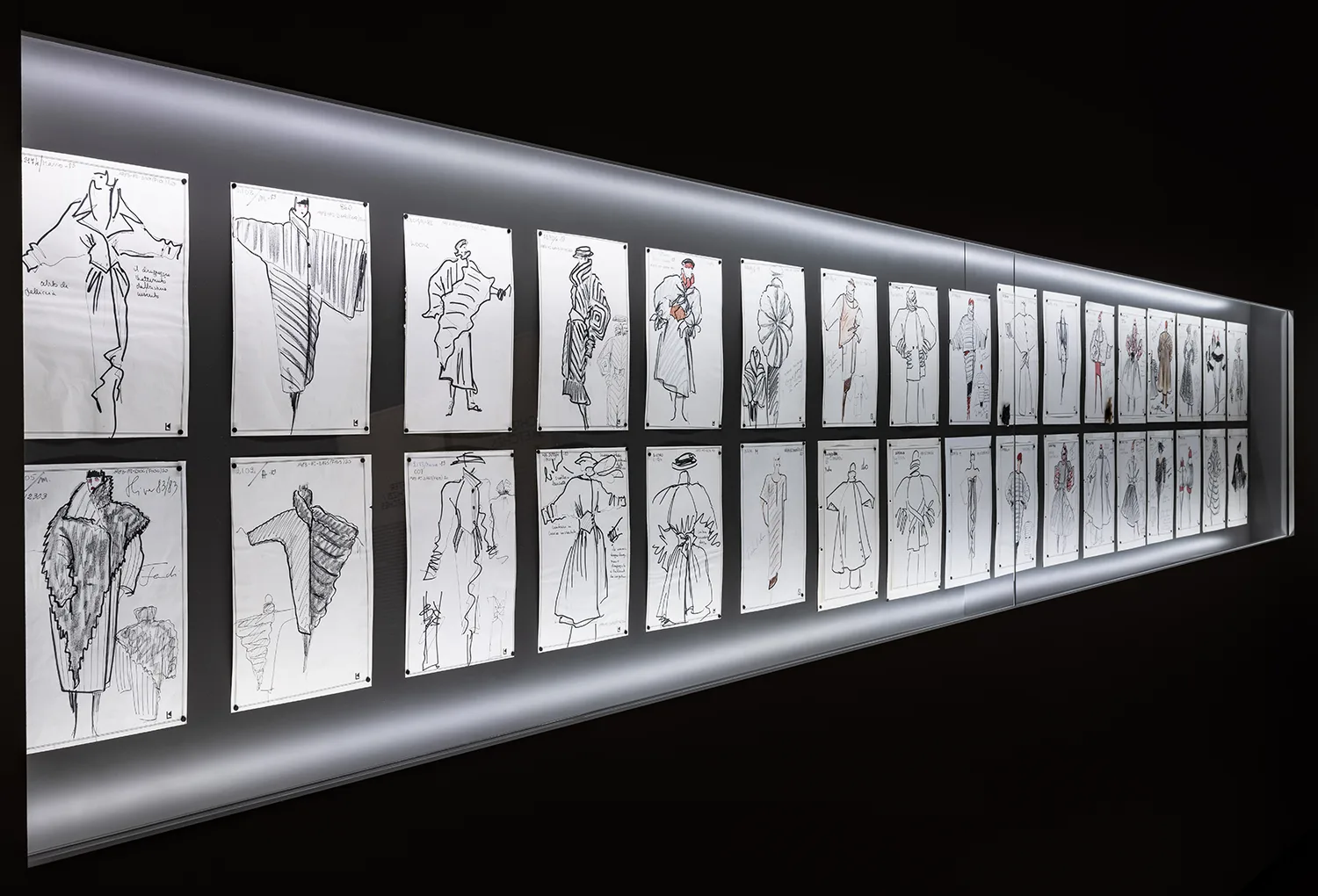
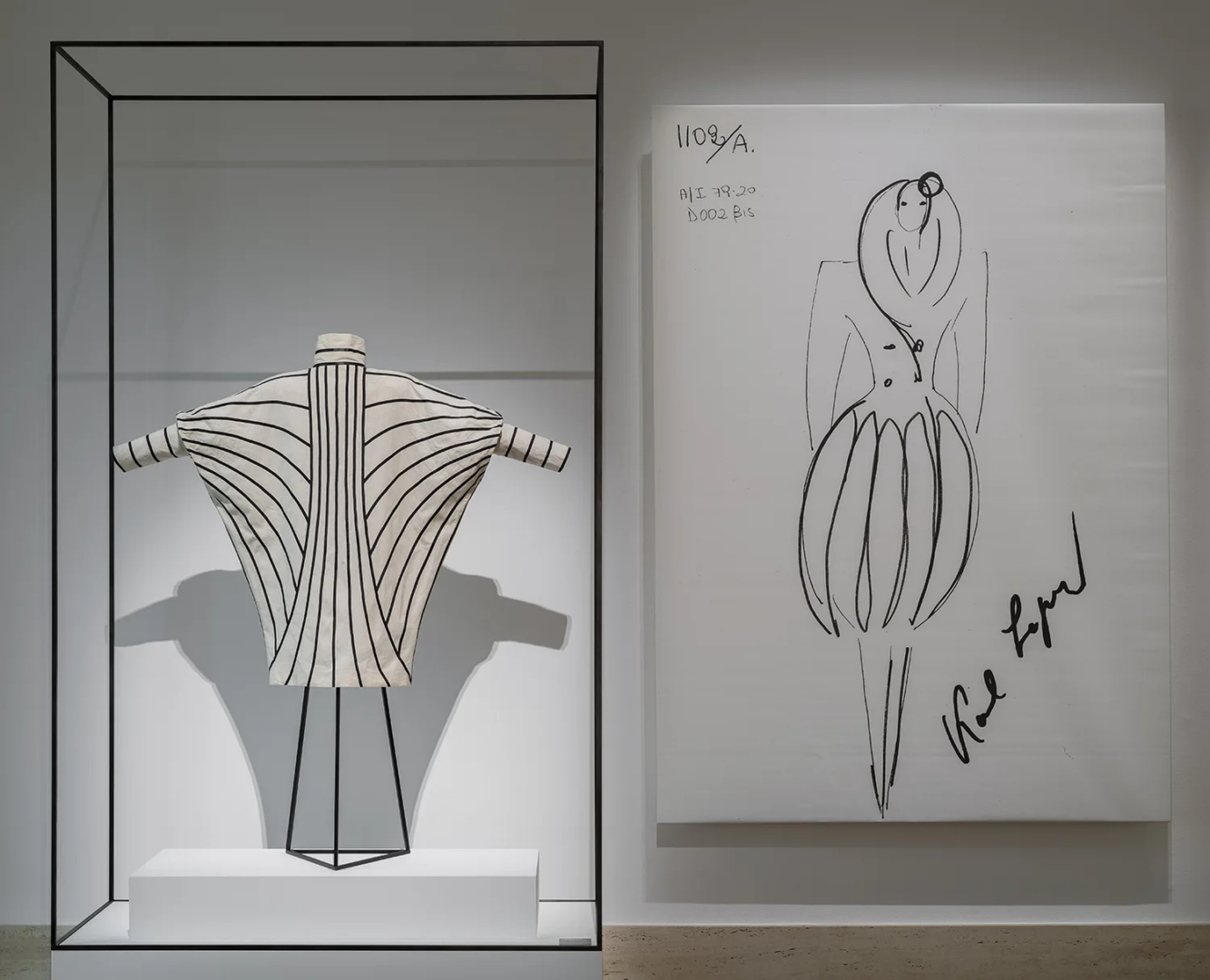
The debut also coincides with the opening of After. Steps Through Work. Fendi / Karl Lagerfeld 1985, the retrospective devoted to the more than fifty years of dialogue between Lagerfeld and Fendi, on view from July 10 through October 25. Lagerfeld was expected to be present, then — and he was, in the method, in the idea of the labyrinth, in the geometries of the Vienna Secession, in the stripes and optical motifs of the dresses of Emilie Flöge, a designer Lagerfeld held dear. Less so in the exuberance, which was of course nowhere to be found. No surprise: Chiuri is not a designer of entertainment. Running a house built on fur at a moment when fur has fallen from grace is no easy assignment. Making practicality the mantra of a brand whose logo carries the word fun is an oxymoron of method.
Fendi haute couture fall-winter 2026: you have to be pragmatic to rebuild an industry in the middle of an identity crisis
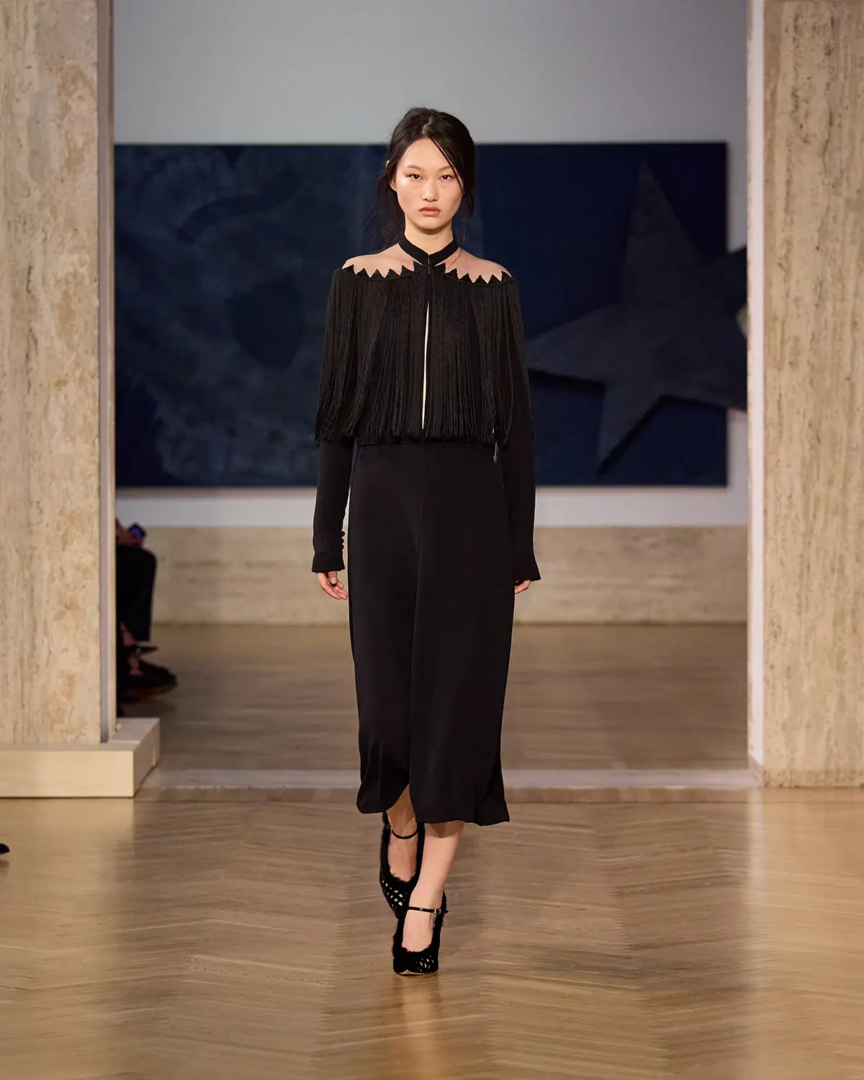
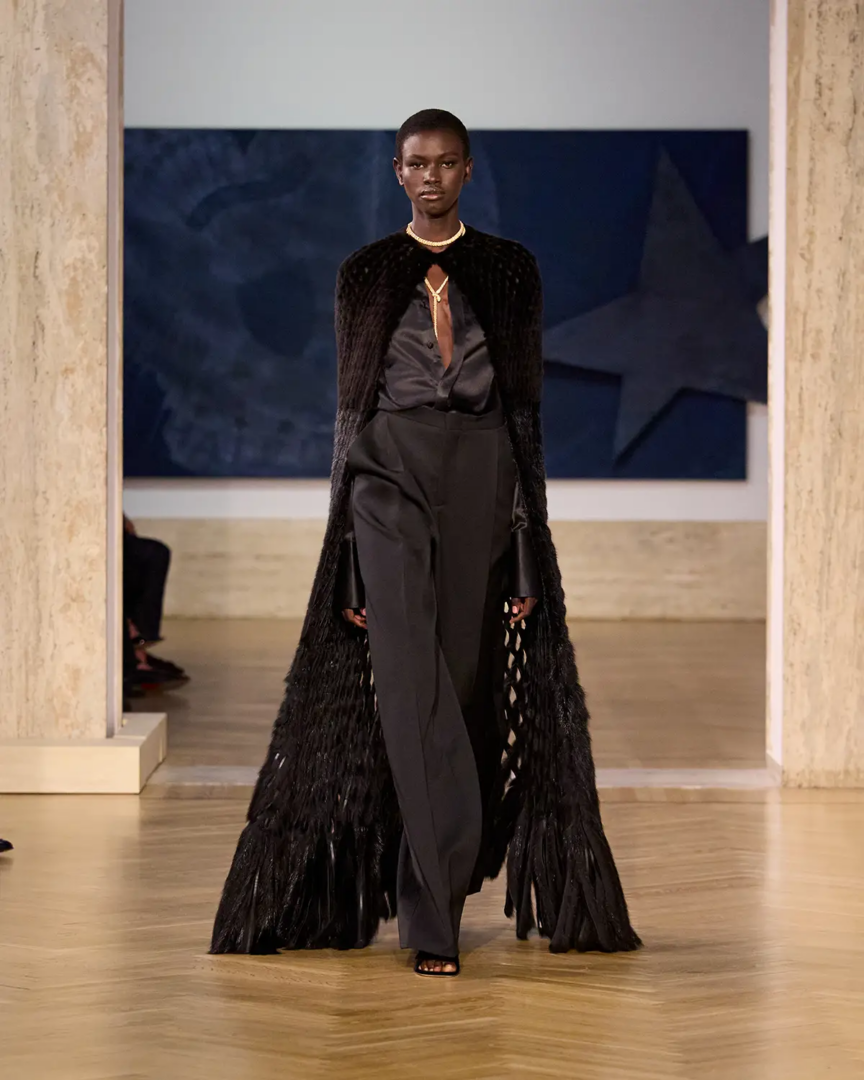
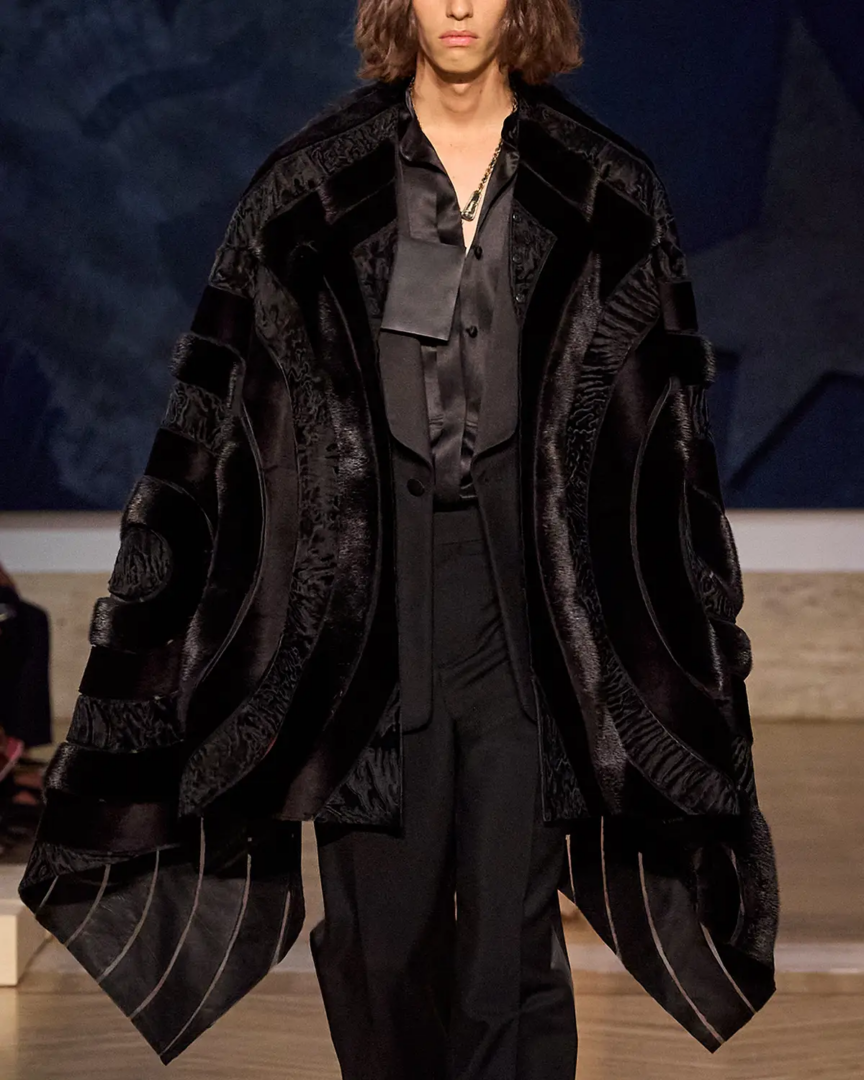
If she isn’t faithful to the logo, Maria Grazia Chiuri is faithful to herself. She delivers a sober reading of a house long known for its colorful interpretation of glamour. The color people actually wear, she maintains, is black. Sometimes ivory, blue, and a touch of red. That’s it. You have to be pragmatic to rebuild an industry in the middle of an identity crisis. Whether zeroing out color really moves the conversation about fashion forward is another matter (with apologies to Balenciaga and Pierpaolo Piccioli). The natural consequence is to put silhouette and cut at the center — two things Fendi’s identity has never been defined by. She also spoke of a wardrobe shared between men and women, sending both down the Roman runway: but the idea is common currency by now, and Chiuri took it no further.
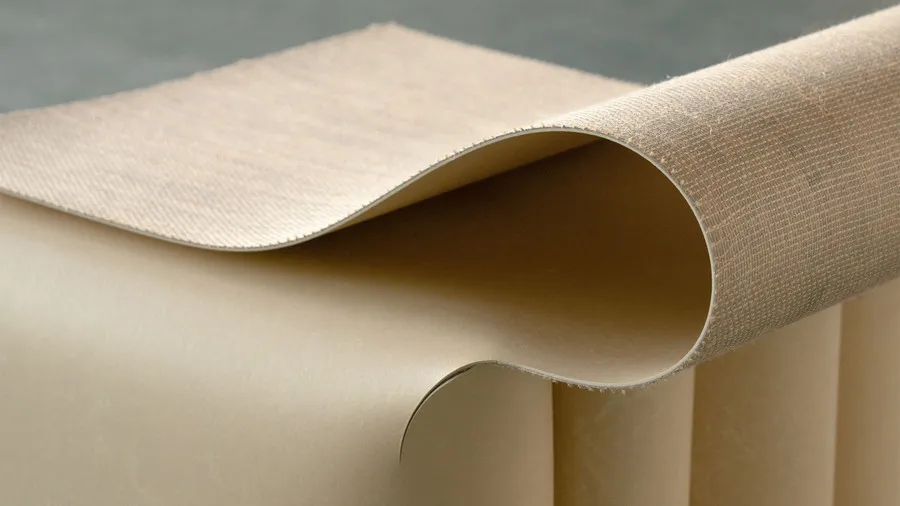
A woman and a designer of settled habits, she staged a show in the rooms of the Galleria Nazionale that flaunted, as her collections always do, a bond with the world of art, a leaning toward a “real” fashion with both feet on the ground. No flights of fancy. This isn’t the moment for them: we aren’t at the court of the Sun King. The clothes refused abundant decoration; Kaiser Karl’s exuberance was buried under a mountain of blacks. Some spoke of severe cuts. A few verged on the monastic. Even the punitive. It took a closer look to see there was something else there too. “Fendi is craft,” Chiuri maintains. That much was clear in the lace, the embroidery, the inlays of exquisite handwork. Many were as hypnotic as a labyrinth seen from above. The silhouettes wrapped the body rather than constraining it. A georgette dress with inserts of black and white leather strips was an example of haute couture “à la Chiuri”: impossible to do as ready-to-wear, because it has to be readapted to each body so that the graphic motif lands centered. Velvet was translated into tuxedos, the kimono reworked into tailored jackets for him and for her. The caftans could not have been further from the corseted pieces we saw in Paris over the past week.
Some capes came with plain high-waisted trousers — trousers being extremely rare in couture. What was deeply sensual, and not remotely monastic, were the furs: few, and upcycled, over semi-sheer dresses. Otherwise you had to remind yourself you were looking at a Fendi collection. Silvia Venturini Fendi has always shown her own leaning toward the paratactic lines of neo-minimalism. In her case, though, they never shut the door on the pleasures of color, which she used to oxygenate her silhouettes with a rush of dopamine.
Karl Lagerfeld before Maria Grazia Chiuri: a Sun King obsessed with fountains and furs
Louis XIV was obsessed with fountains. At Versailles he had fifty installed. Every day six hundred and twenty jets atomized more water than the entire city of Paris consumed. As the king walked the grounds, attendants shut off the fountains behind him so the ones ahead could throw water at full force. In an age when ordinary people had to portion out water with care, that logistical nightmare, run by a squad of professional fountain-keepers, was a symbol of power. Karl Lagerfeld, creative director of Fendi from 1965 until his death in 2019, was crowned the Sun King of fashion. He didn’t command the natural forces of water the way the King of France did, but he cultivated a deep passion for the aquatic world. He staged a show around the ornamental basins of Versailles, and devoted an exhibition and a volume titled The Glory of Water to the fountains of Rome. In 2013, on Lagerfeld’s advice, Fendi invested two and a half million euros in the restoration of the Trevi Fountain — the same fountain Anita Ekberg waded into in her Dolce Vita, and where hundreds of thousands of tourists toss coins every day in search of a little luck.
Put in vulgarly practical terms, the investment bought Fendi the city’s blessing to use the fountain as the setting for its fall-winter 2016 haute couture. Titled Legends & Fairy Tales, the show was a spectacle on water, models crossing a plexiglass runway aligned exactly with the fountain’s rim. The capes carried a certain regal bearing, the dresses were water-lily pale, the furs had been cut, inlaid, and reassembled into intricate woodland landscapes. Before that day, no one had ever seen fur worked into openwork until it read like lace, like georgette.
Karl Lagerfeld’s first haute couture, haute fourrure, was barbaric and raw, one animal devouring another
Lagerfeld is also considered the man who defined the modern role of creative director. His partnership with the Fendi family is counted among the most brilliant in recent fashion. Alert to the importance of giving a logo instant recognizability, he was the one who converted Fendi into the double-F monogram — an unimpeachable symbol, perhaps even the dream of any graphic designer. Lagerfeld optimizes it into the visual chiasmus of the second F flipped upside down. It doesn’t stand for “Fendi, Fendi,” as some may believe, but for Fun Fur: a fur that’s a good time, in technicolor. Fur was regarded as a bourgeois garment, desiccated inside static, obsolete cuts.
Lagerfeld changed ex abrupto the way it was built, treated, and even worn. He manipulated it and dyed it in unmoored colors, acid and fluorescent. Fendi’s first haute couture collection, rechristened haute fourrure, fall-winter 2015–2016, had an almost barbaric quality, with linings stripped out and edges left raw. Lagerfeld preferred to bring out the animal’s rawness rather than make it refined and genteel. Describing the way he let experiment eat through bourgeois good taste, the New York Times once wrote that it looked as though one animal were devouring another. Later, injecting fur with an even higher fun factor, he would design the Ravioli model — one more low-and-popular reappropriation of a homemade product, resolved into a print of stuffed triangular carbohydrates. Nothing could be further from the imperial austerity of Maria Grazia Chiuri.