Lazoschmidl: your grandmother’s print, your phone’s front camera
The most transgressive thing in menswear right now is a bathrobe worn out the door and a floral print that belonged to your grandmother – Lazoschmidl SS27 Daynight, Paris Fashion Week
The most transgressive thing in menswear right now is a bathrobe worn out the door and a floral print that belonged to your grandmother – Lazoschmidl SS27 Daynight, Paris Fashion Week.
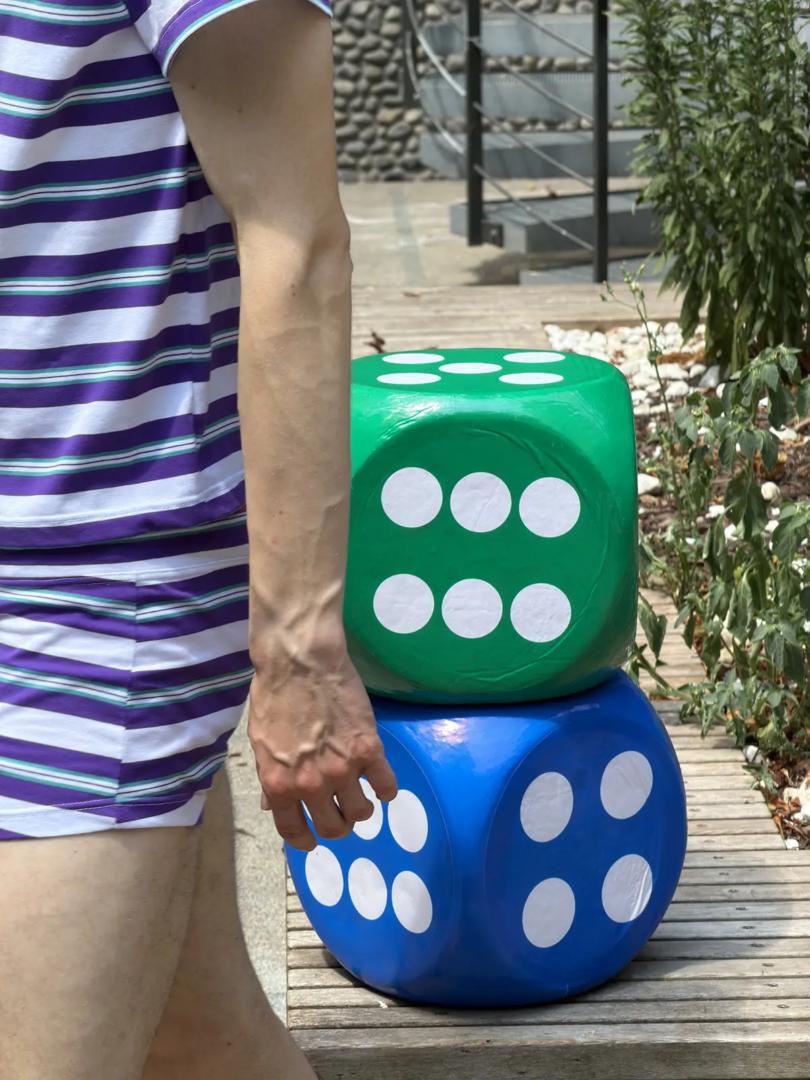
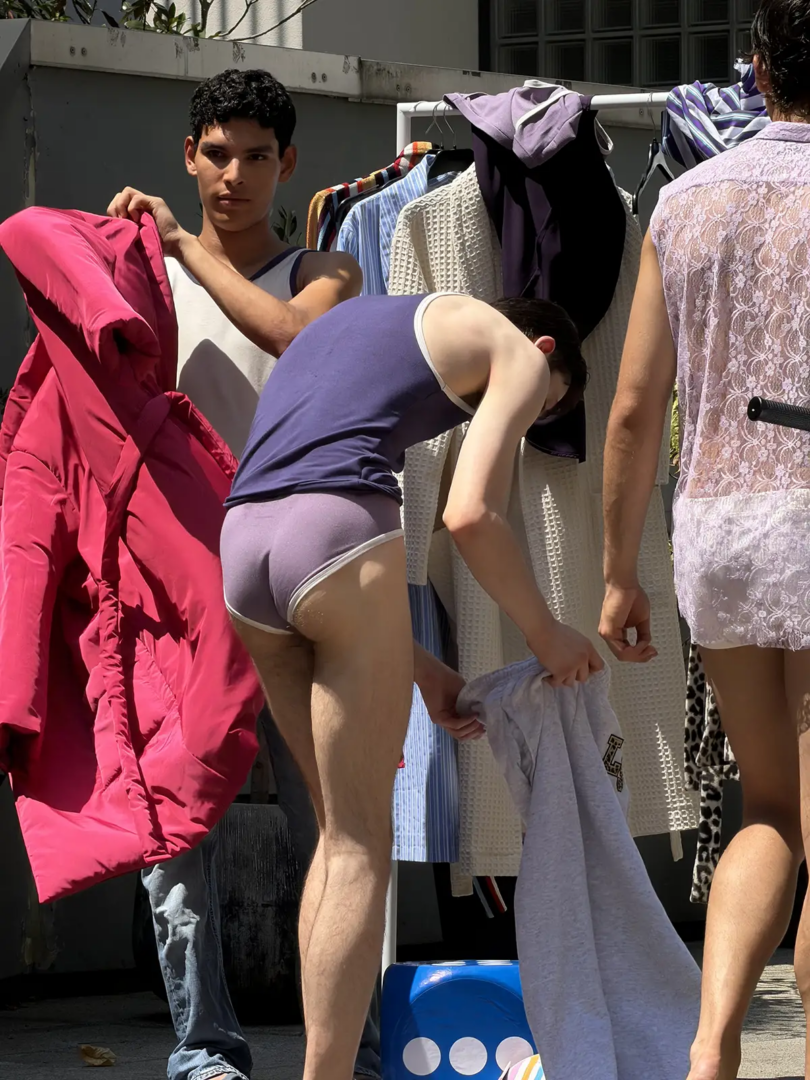
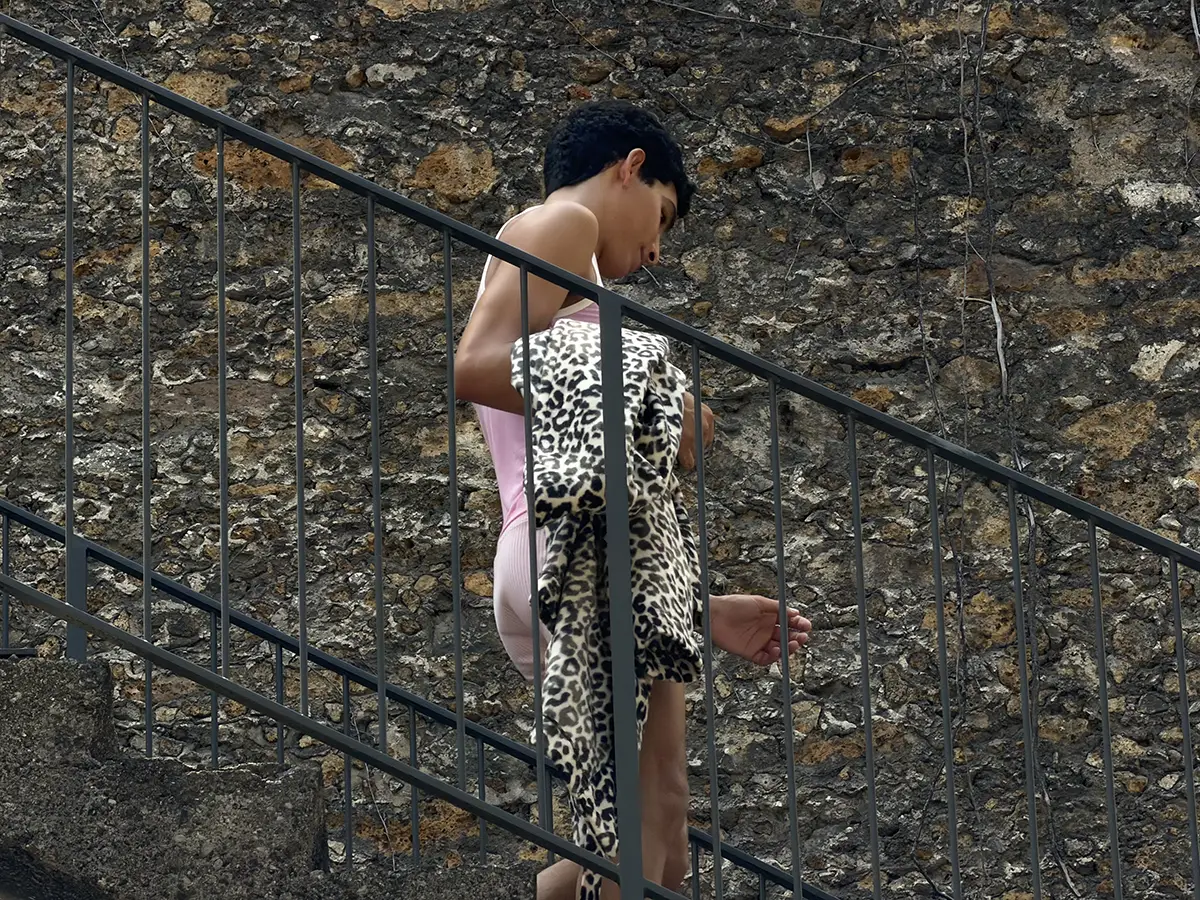
The bathrobe is already a coat. That is the central image of Daynight, Lazoschmidl’s SS27 collection presented on the Paris Fashion Week menswear calendar on June 26 – a bathrobe worn past the lobby, onto the street, into the ordinary world. It is a statement about where menswear has refused to look: the hours between sleeping and performing, the body between states, the domestic threshold that fashion has always treated as pre-fashion, a phase to move through on the way to being dressed.
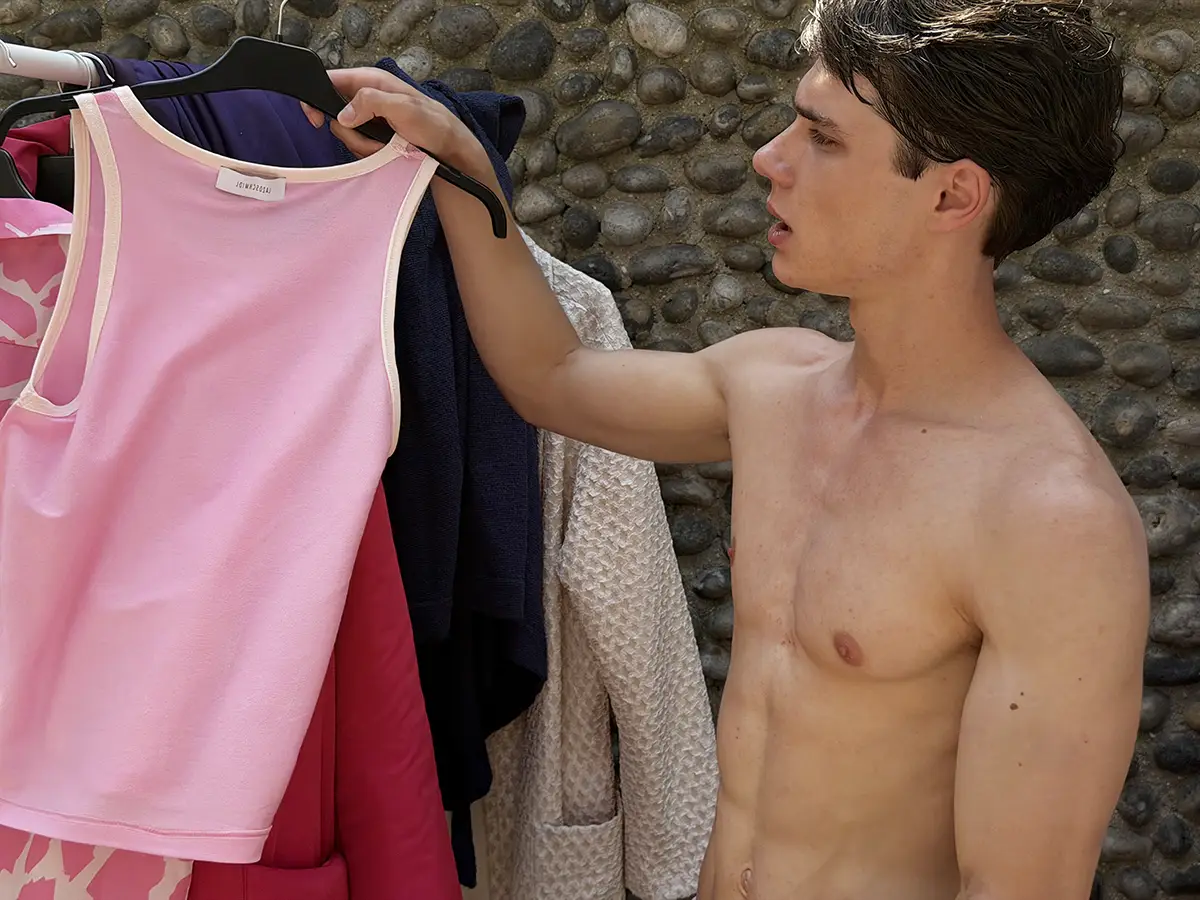
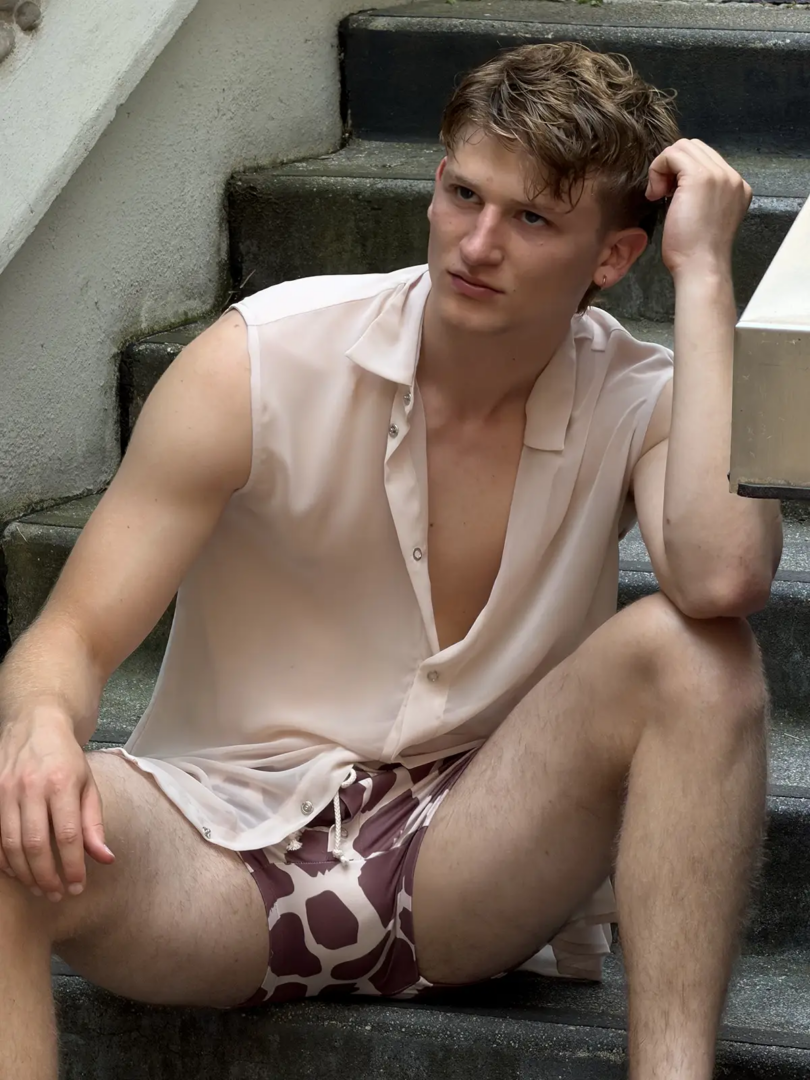
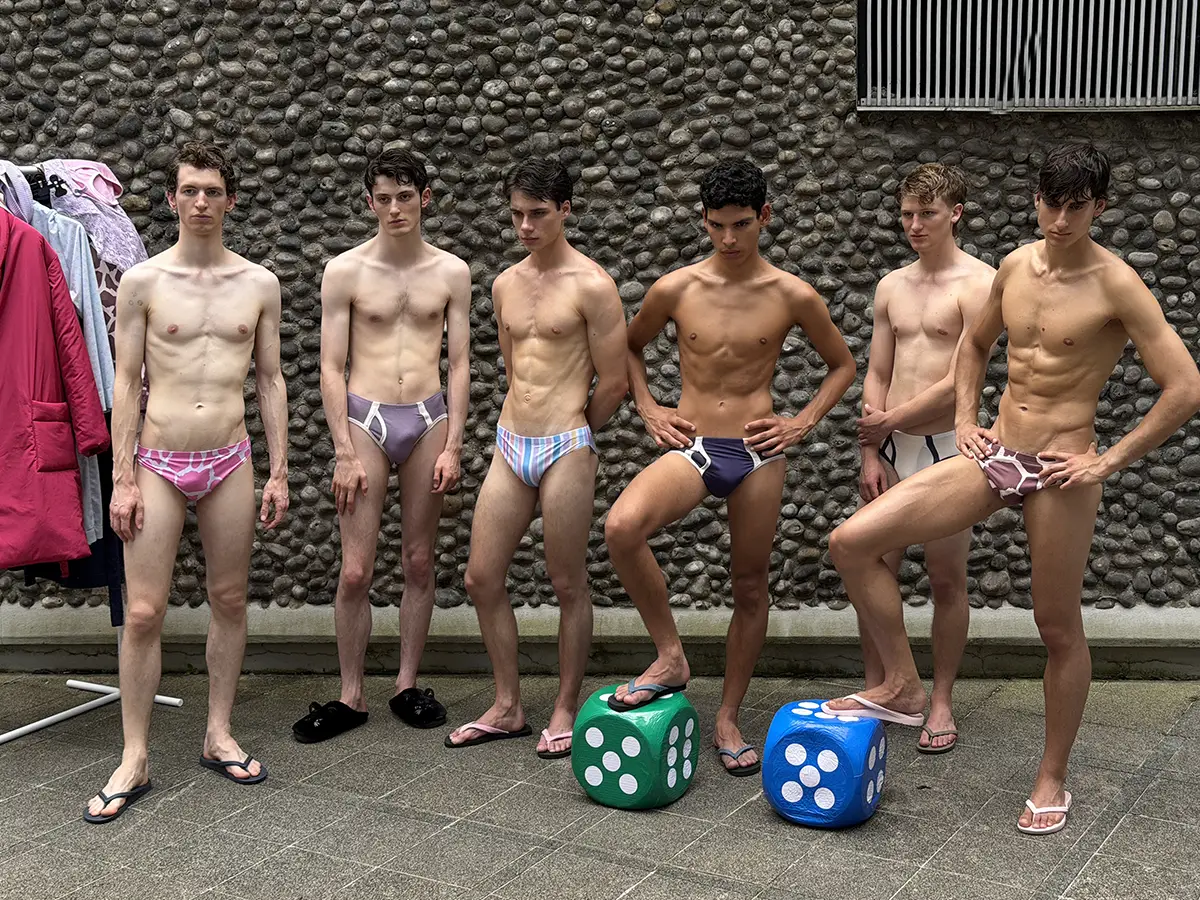
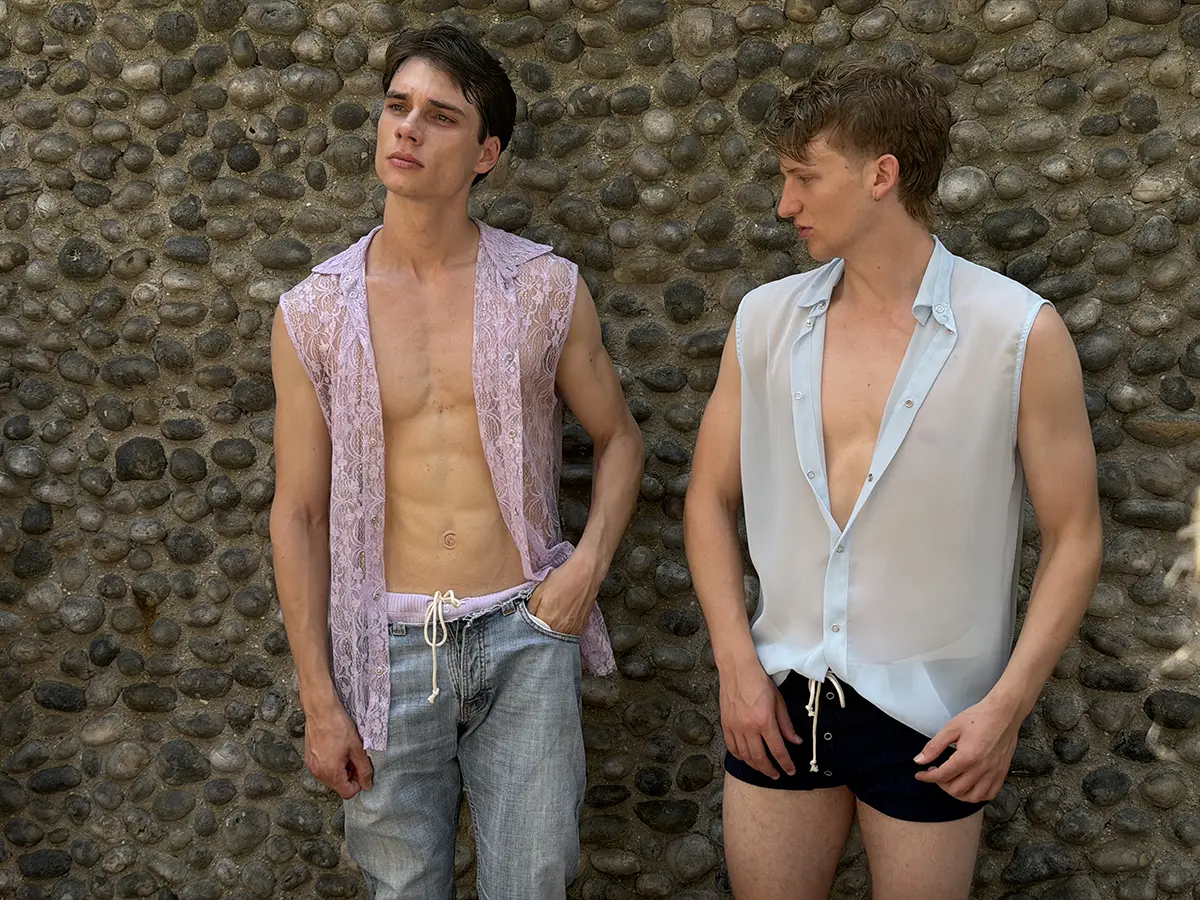
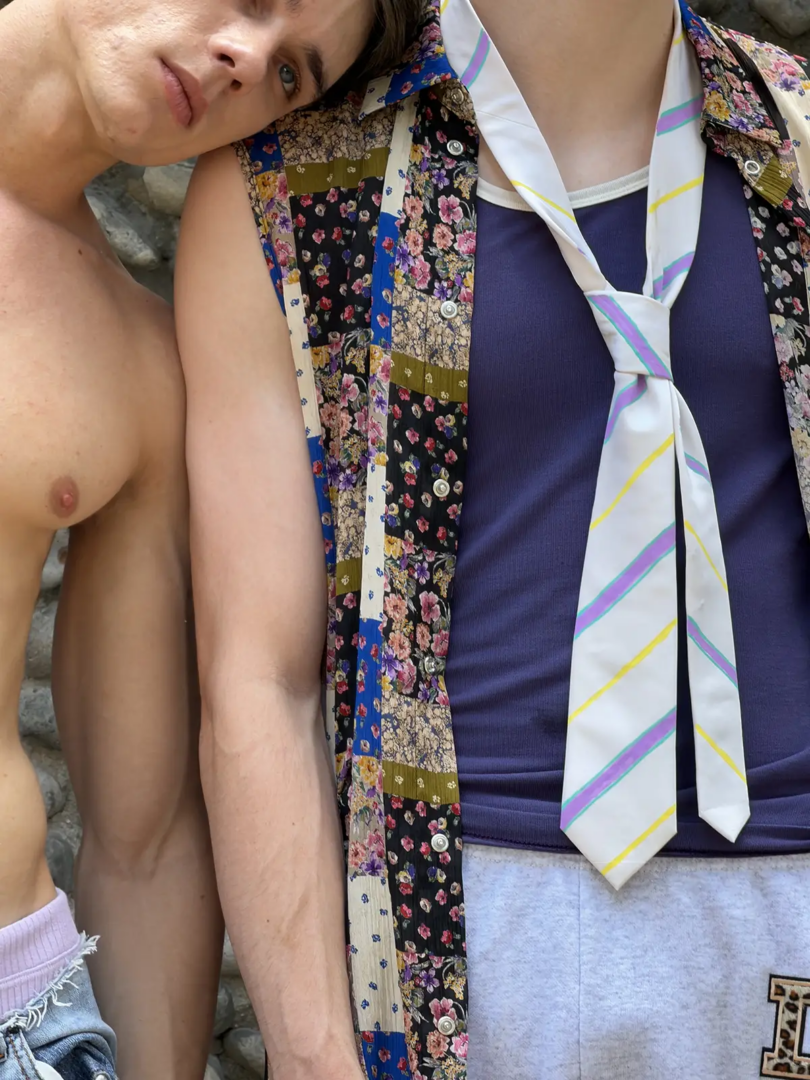
Josef Lazo and Andreas Schmidl have been dismantling that refusal since 2014. What changes with Daynight is the register. Earlier collections – Mistakes, Pre-Work Post-Orgasmic, Rendezvous – located their argument in transgression and exposure. SS27 goes quieter. The stage is the kitchen at 2am, the supermarket on a Sunday, the slept-in morning. The collection asks what desire looks like before the performance begins, and finds it already fully present: in a grandmother’s floral print on translucent chiffon, in ribbed cotton worn beyond the bedroom, in the reversed logo on a waistband designed to be read only in a mirror.
How Lazoschmidl SS27 reclaims the erotic charge of the grandmother’s aesthetic in contemporary menswear
The references for Daynight are The Golden Girls and Grace and Frankie. This is either the most obvious thing a fashion brand could do in 2026 or the most subversive, depending on how seriously you take it. Lazoschmidl take it seriously.
What those references point to is a specific visual world fashion has spent decades refusing: faded floral wallpaper, patterned upholstery, the saturated cluttered interiors of a life actually lived in. The grandmother’s aesthetic – organised around comfort, accumulation, and the refusal of minimalism – has been systematically excluded from aspirational culture. Quiet luxury wants bare surfaces. Streetwear wants irony. Even the grandmacore trend that surfaced around 2022 largely aestheticised the grandmother from the outside, treating her prints and crocheted edges as costume.
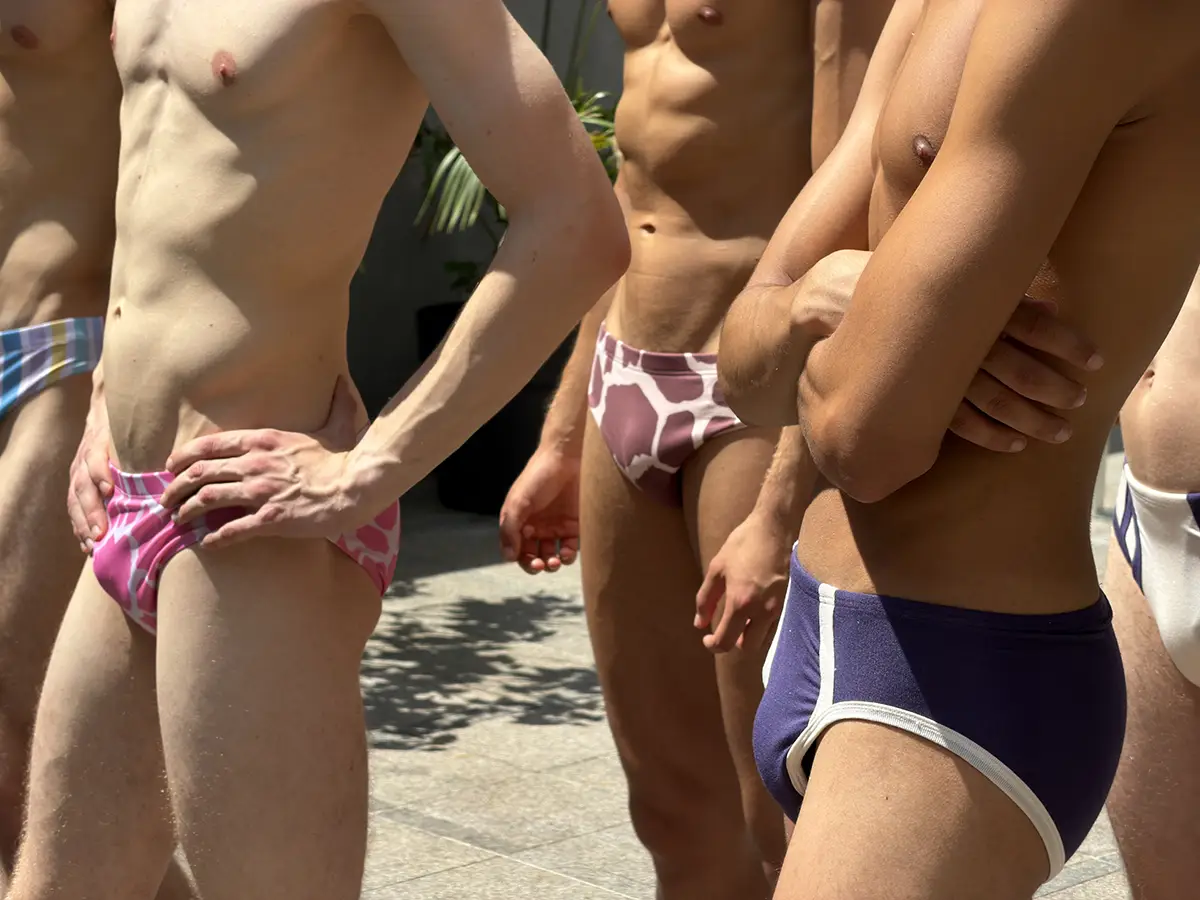
Lazoschmidl does something different: they take the erotic charge that fashion has historically located in the new and the sleek, and restore it to what was already there in the faded floral, the giraffe-jersey trouser, the nostalgic piping on ribbed cotton.
The mechanism is displacement. Move an object out of its context and it becomes something else. A bathrobe worn as a coat is no longer a bathrobe – it is a proposition. A domestic print on bougie translucent chiffon is no longer domestic – it is a seduction. Lazoschmidl take the visual vocabulary of a generation of women that culture classified as post-desirable and reinsert it into menswear as the most charged thing in the room.
The grandmother’s interior was never unfashionable because it was ugly. It was unfashionable because it belonged to someone the fashion system had stopped looking at. Restoring its erotic charge means restoring the erotic charge of the person it came from. The faded floral is not reclaimed through nostalgia. It is reclaimed through desire.
What the mirror selfie and smartphone culture have done to masculine desire, and why Lazoschmidl built a collection around it
For most of fashion’s history, the moment of visibility was external and deferred. You dressed, you left the house, you were seen. The front camera collapsed that structure. Now the rehearsal is the performance – the body photographs itself mid-process, the bedroom has become a production set, and the person inside it is simultaneously the model, the photographer, and the art director.
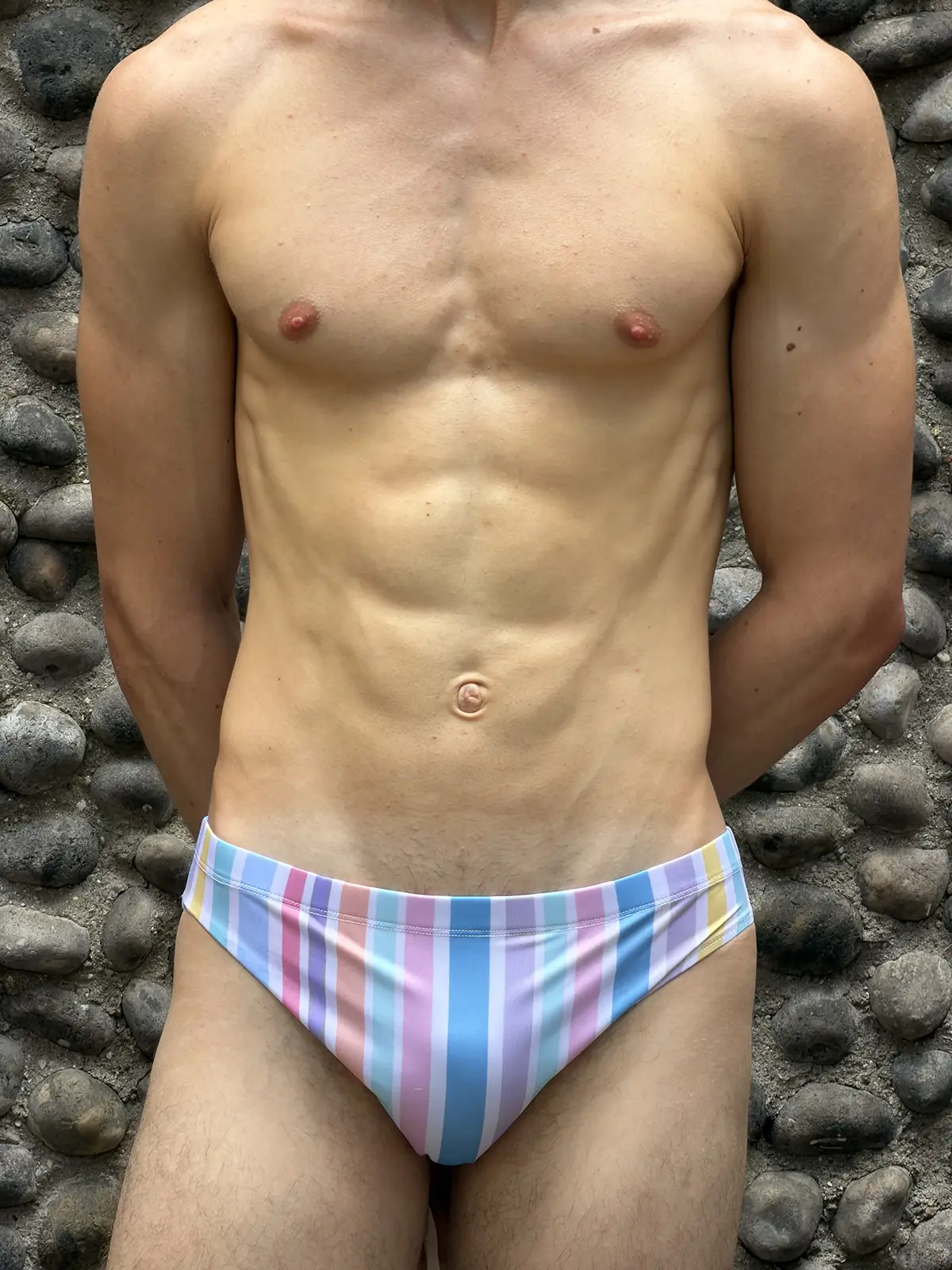
Lazoschmidl understood this before most brands had figured out Instagram. The underwear waistbands carry the logo printed in reverse – held to a mirror for a selfie, the text reads forward. The garment was engineered for the screen: not for a photographer, not for a runway, not for a retail display, but for the wearer alone, pointing a phone at their own reflection. The body that photographs itself controls the frame. Exposure becomes ownership.
The brand calls this condition perplex euphoria – the emotional state produced when desire, exposure, performance, and visibility become impossible to separate. It is perplex because the freedom looks choreographed, liberation that has learned to pose. It is euphoria because the pleasure is real regardless. For SS26 Rendezvous, the logic expanded into physical space: ten male models occupied semi-transparent acrylic booths for one hundred and fifty minutes, undressing and grooming in real time while an audience watched. Nobody left early.
The fanzine released alongside every collection – Unpublished Material, one hundred copies per edition – operates in the same register. The models produce the images themselves. Issue numbers are printed in reverse on covers that read correctly only in a mirror. The wearer, the camera, the image: all the same person. For SS27 the fanzine is titled Chores. Photographed by Alan Marty inside a Parisian art collector’s home, it turns vacuuming, repairing pipes, and folding laundry into something deliberate and watched – household labor rendered as performance. A second visual essay by Emanuel Koroly follows the garments in transitional states: leaving the house, returning from a night out, staying in. The domestic as stage. The body between roles as the most interesting thing to photograph.
Deadstock denim, recycled PET, and the anti-ascetic sustainability argument running through every Lazoschmidl garment
What distinguishes Lazoschmidl from the dozen labels working adjacent territory – quiet subversions between utility and intimacy, feminised tailoring and exposed construction – is the philosophical consistency of the material choices. Josef Lazo trained in womenswear at the London College of Fashion. The fabrics he and Schmidl work with are simply the right materials for a garment that refuses to suppress the body inside it: lurex, sheer organza, silk, jockstraps with butterfly hardware, harness systems that sit directly against the skin.
Heavy patchwork denim is sliced to expose gossamer chiffon. Industrial zippers run alongside translucent panels. Structural workwear overalls are cut to bare the skin beneath. The roughness that masculine dress codes have used to signal authority is placed in direct contact with the skin it was built to suppress. The tension is not aesthetic contrast. It is the argument made structural: factory against bedroom, concrete against intimacy, steel touching flesh.
The ecological position is equally consistent, and equally anti-ascetic. Sustainable fashion has largely operated through restraint – beige linen, muted palettes, quiet luxury that performs ecological virtue by removing pleasure from the equation. Lazoschmidl builds queer nightlife attire from deadstock fabrics and recycled PET plastic, assembles denim by hand through the Beckman Denim Dimensions project using salvaged vintage second-hand, runs swimwear on recycled plastic and underwear on certified organic cotton. None of this is announced. The bottles the system discarded become the material the body wears on the floor of a queer club. The brand does not ask the consumer to enjoy less. It asks them to enjoy differently. The resourcefulness is in the excess.
From piss-stain denim to baby-pink taffeta: twelve years of Lazoschmidl dismantling the authority of the men’s suit
The suit suppresses the body to project authority. The managed silhouette communicates dominance by making the flesh inside it invisible. Lazoschmidl’s counter-argument runs the entire length of the brand’s history: Grand Poop’s piss-stain denim in 2014 – deliberate biological markers, the evidence of a body that insists on its own biology rather than disappearing inside the garment. FW25 Mistakes’ business suits in mismatched pajama fabrics, sheer panels cutting through tailored wool, blazers worn over micro-briefs as the outermost layer of a no-pants office look. FW26 Pre-Work Post-Orgasmic’s corporate suits cut entirely in baby-pink technical taffeta, a spoken-word voiceover stating plainly that getting dressed is not about creativity but about control – and the collection arguing the inverse.
The suppression, in Lazoschmidl’s reading, was never desirable. Only useful. That usefulness expires the moment you walk back through your own front door.
Lazoschmidl
Lazoschmidl is a German-Swedish menswear label founded in 2014 by Josef Lazo and Andreas Schmidl. Winner of the Swedish Fashion Council Innovation Prize in 2016. Part of the Paris Fashion Week Menswear Official Calendar since June 2019. SS27 Daynight was presented on June 26, 2026. The brand operates made-to-order. The fanzine Chores was released during the SS27 presentation in an edition of one hundred copies.
Matteo Mammoli, Melis Ozek