Closeness is a fiction: Marie Tomanova shoots herself daily for a year
Three Empty Weeks in July – at Harkawik, New York, through July 11, 2026: a durational body of work shot on a Fujifilm Instax Square SQ6 implicates the viewer in a constructed fiction of closeness
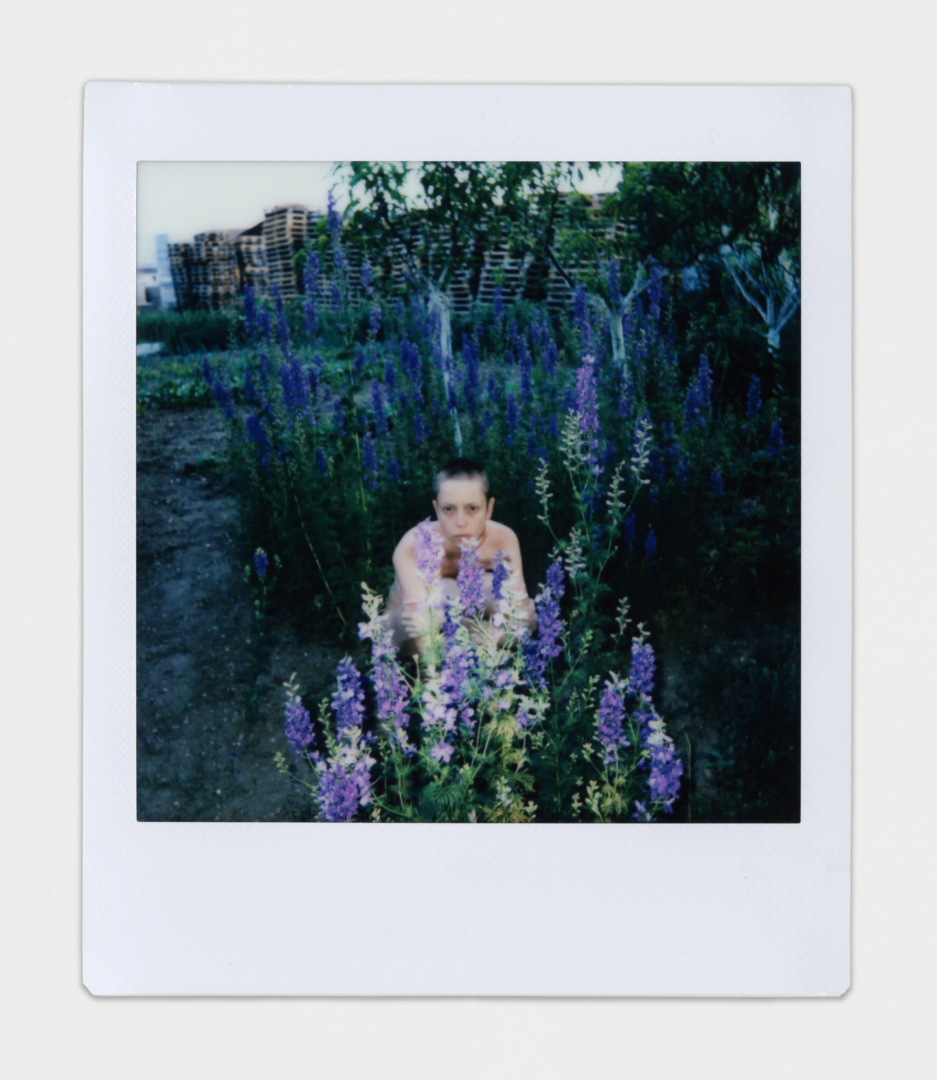
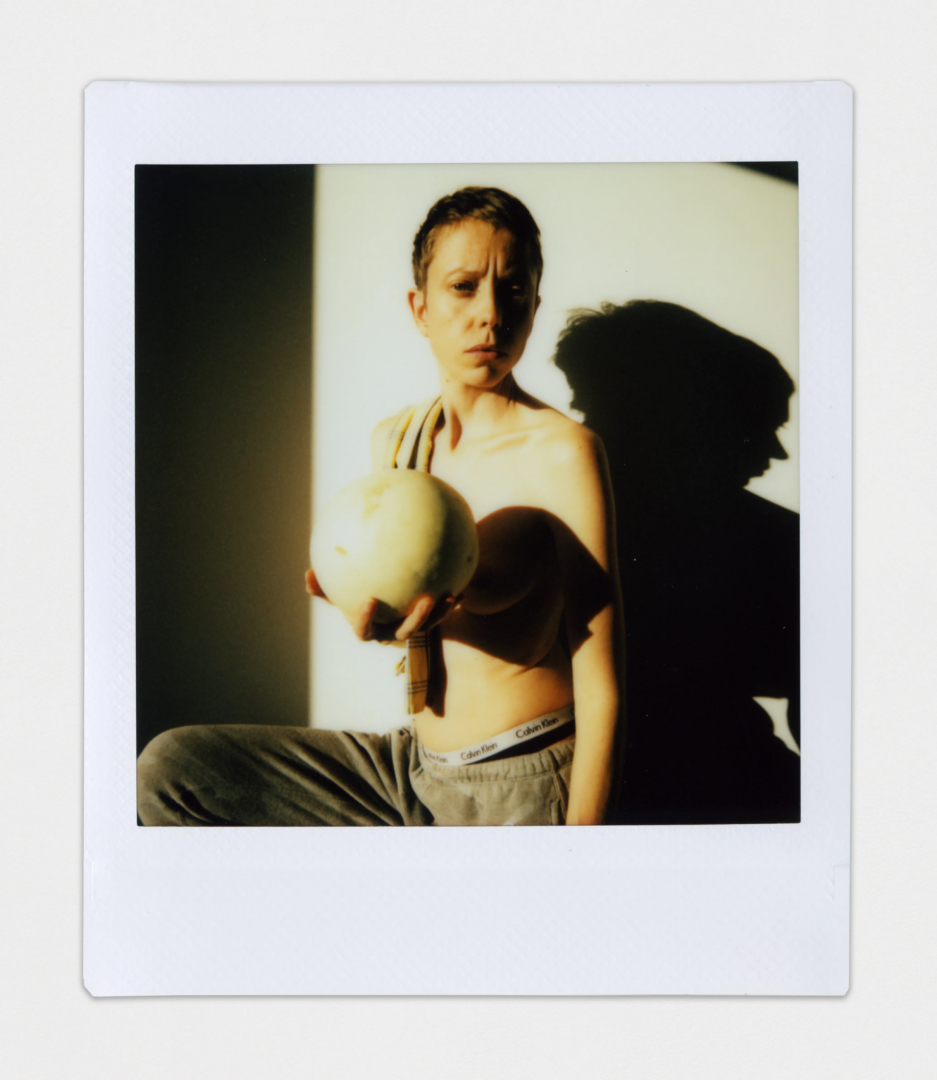
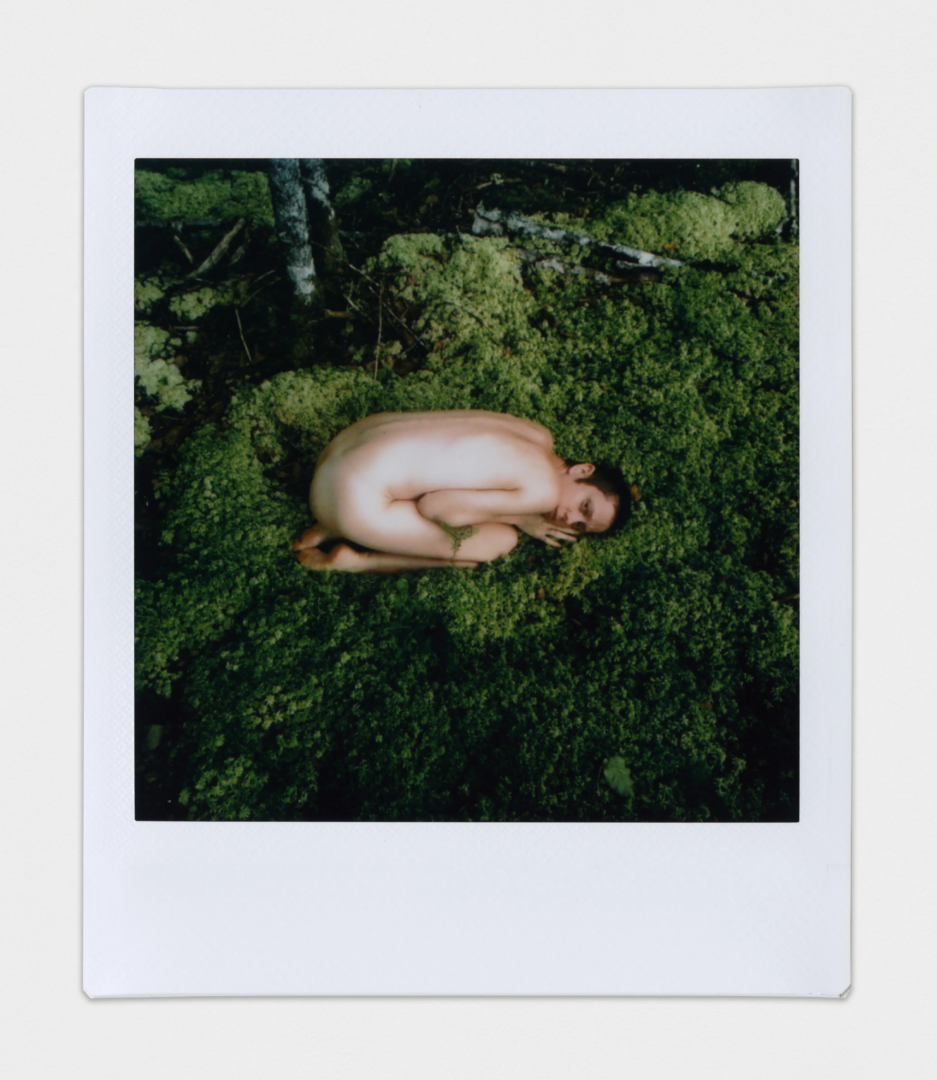
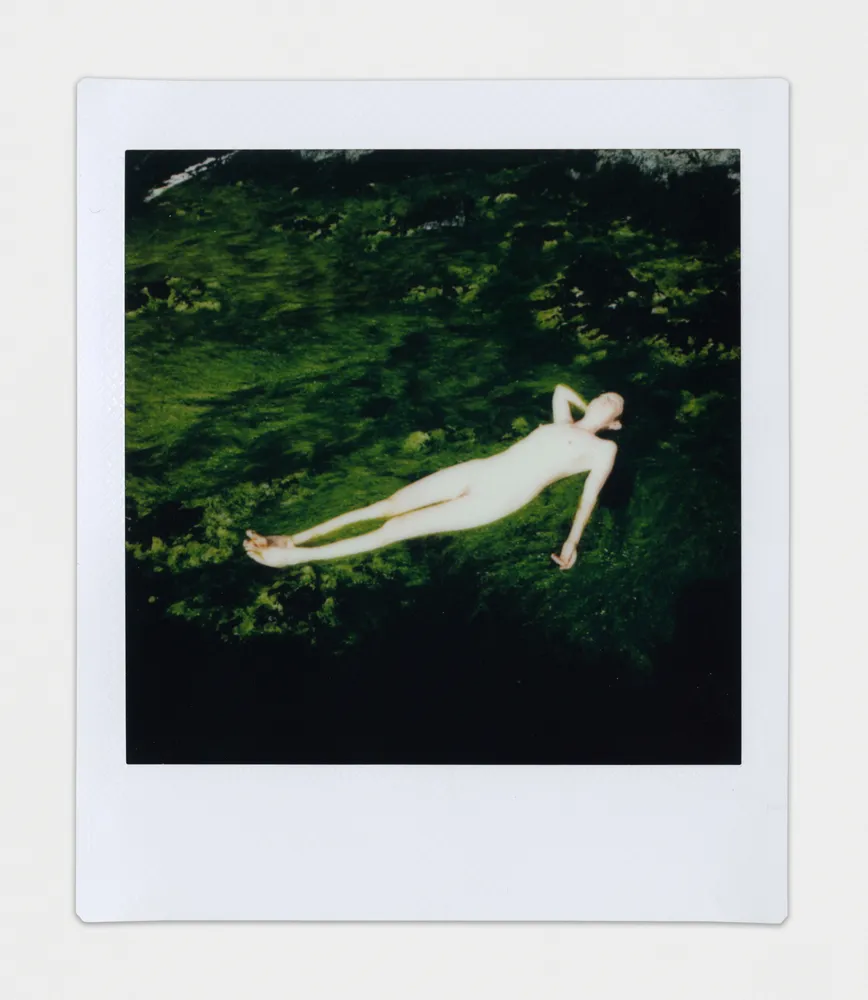
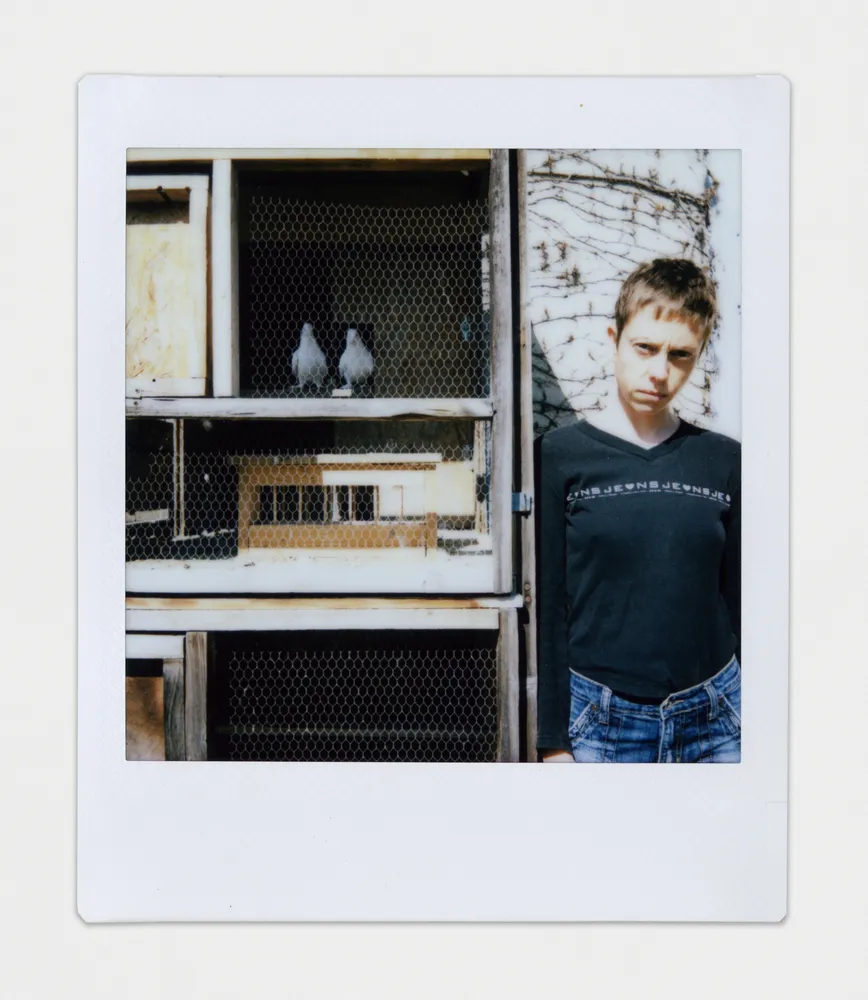
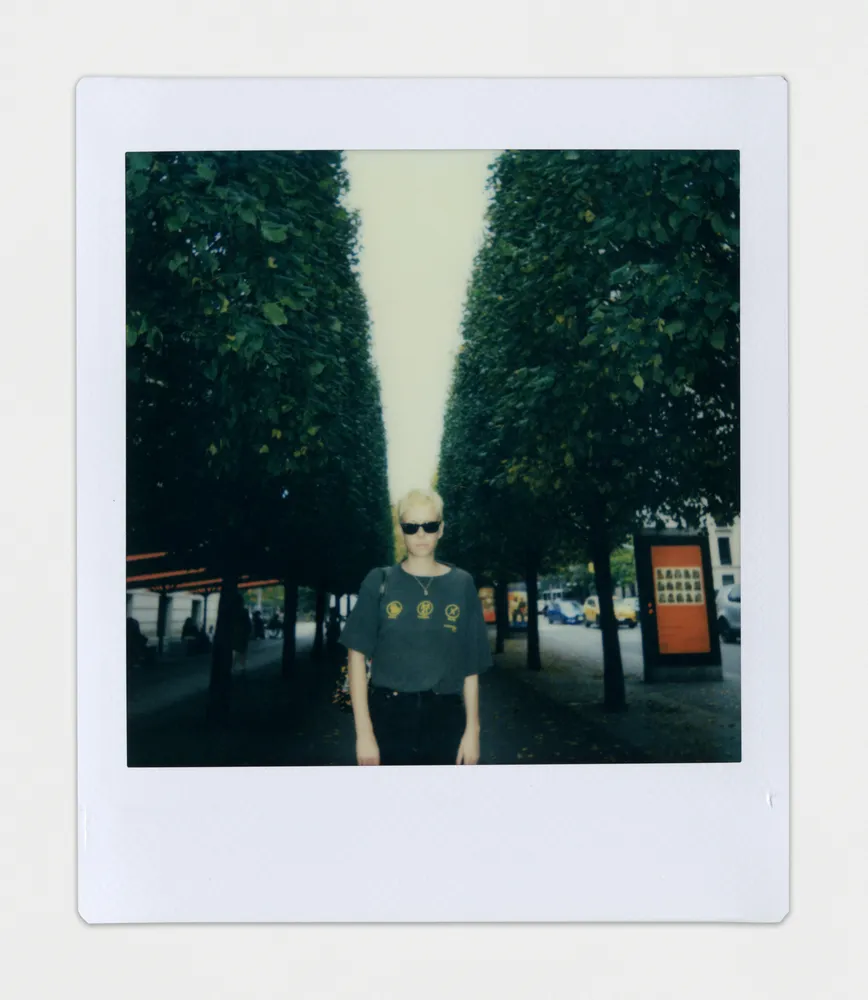
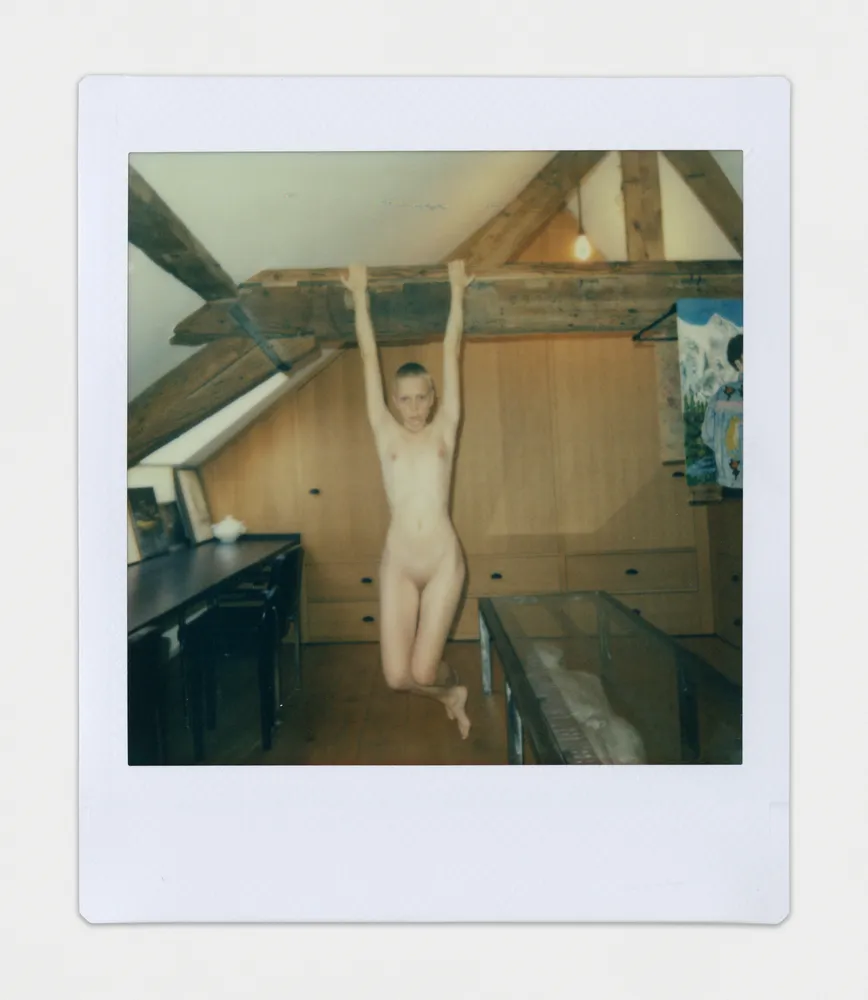
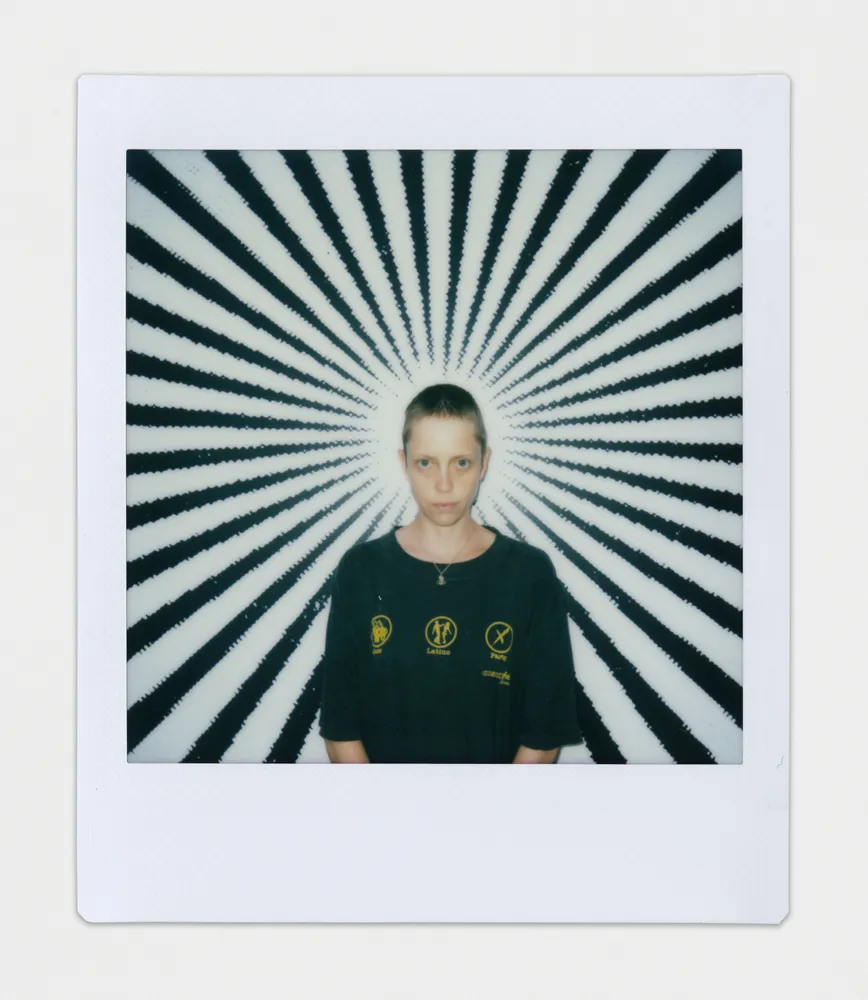
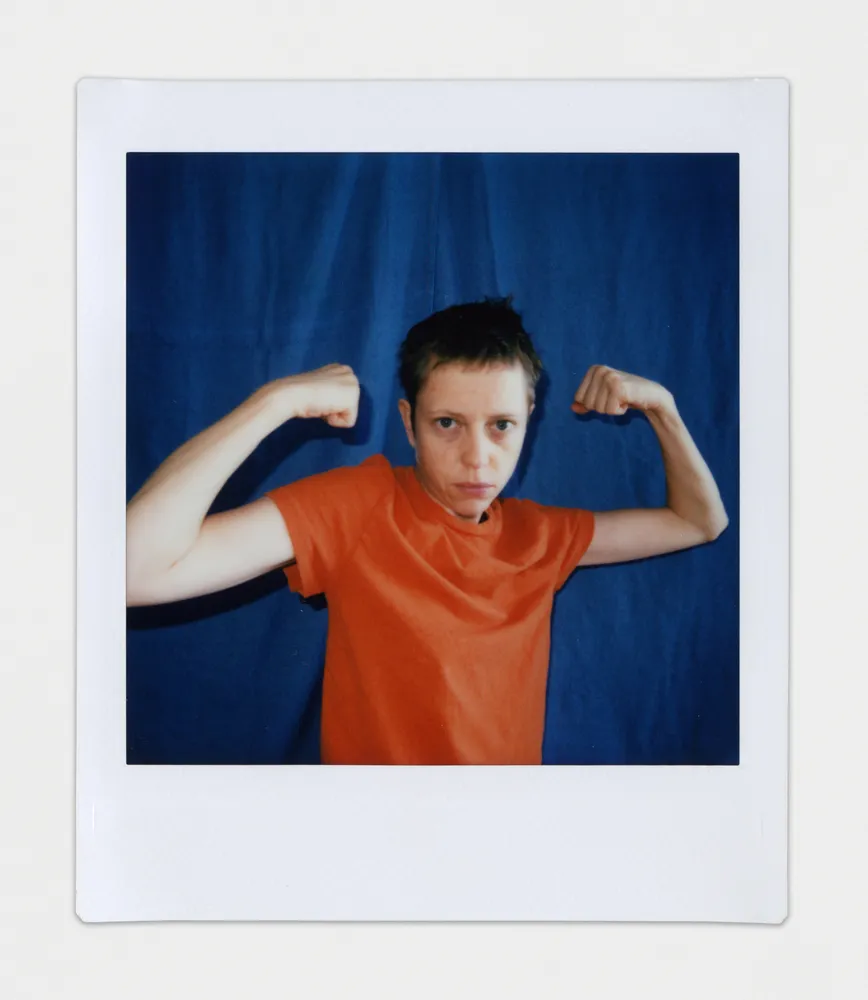
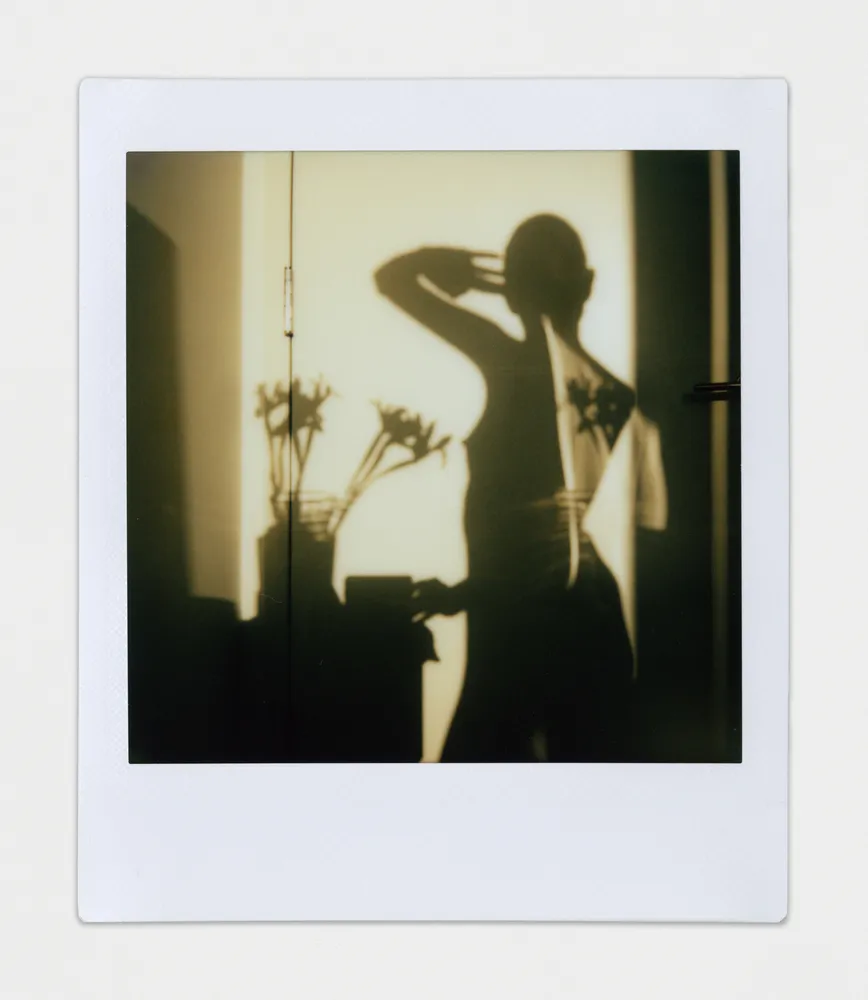
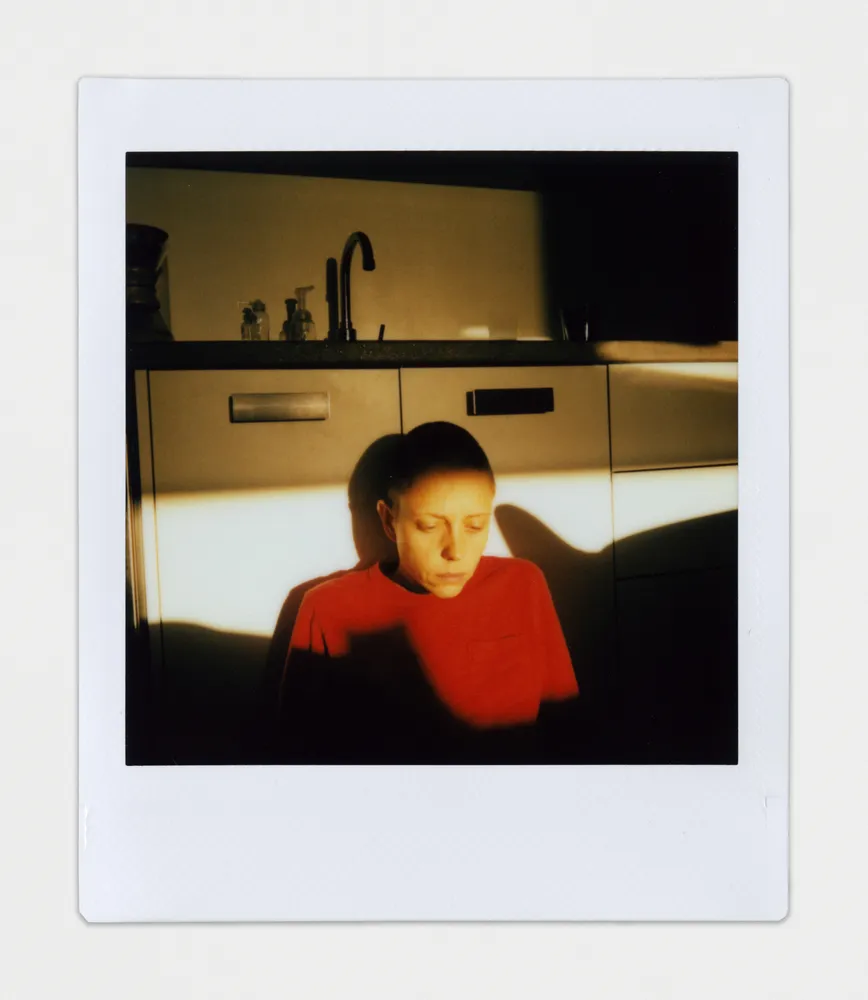
Three Empty Weeks in July is on view at Harkawik’s Tribeca space through July 11, 2026. On January 1, 2022, Marie Tomanova began photographing herself every day with a Fujifilm Instax Square SQ6 — a premeditated, repeating gesture accumulated over one years into an archive whose title names the interruption rather than the work. The three weeks in July when she stopped shooting are left as an open gap inside the project, marking what any documentary practice necessarily leaves out.
The show is Tomanova’s first with Harkawik, and her most formally ambitious to date. Previous bodies of work — three photobooks made between 2019 and 2022 tracking immigration, belonging, and the shock of return — were oriented toward the social landscape, toward communities and places. This project turns inward and then evacuates the interior: it is about the self as subject only to the extent that it is about the impossibility of accessing one through images.
How Marie Tomanova uses the Fujifilm Instax Square SQ6 to build a one-year archive of daily self-portraits that resist interpretation
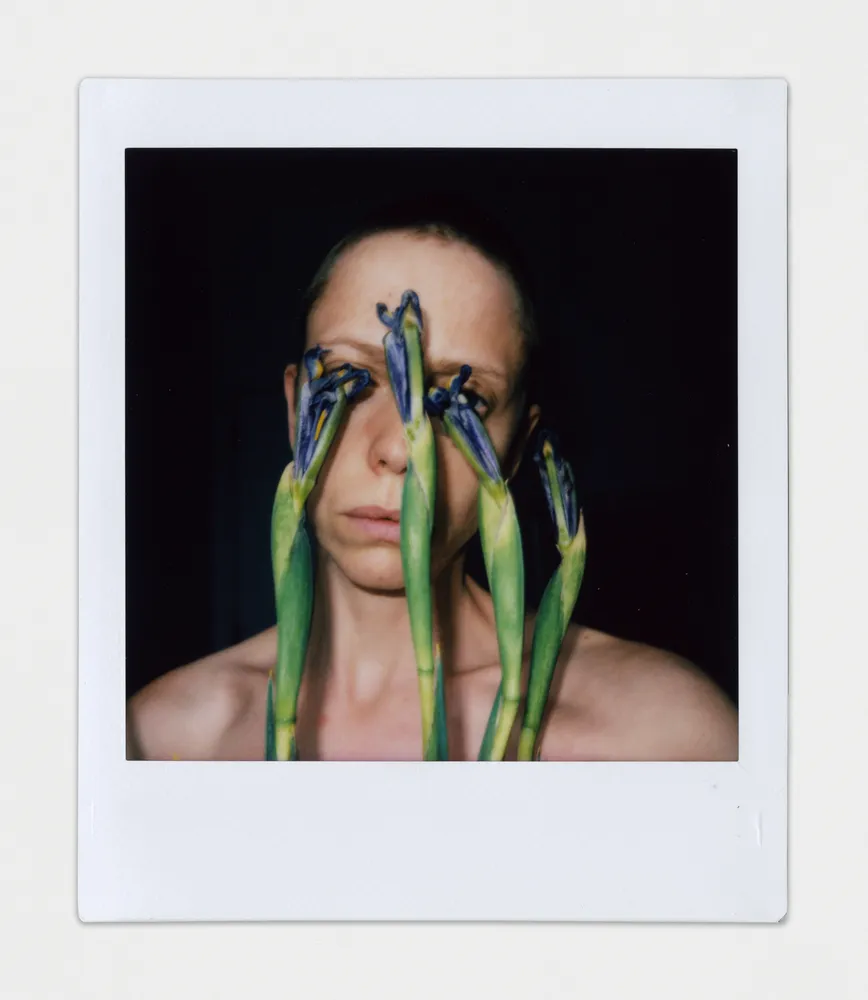
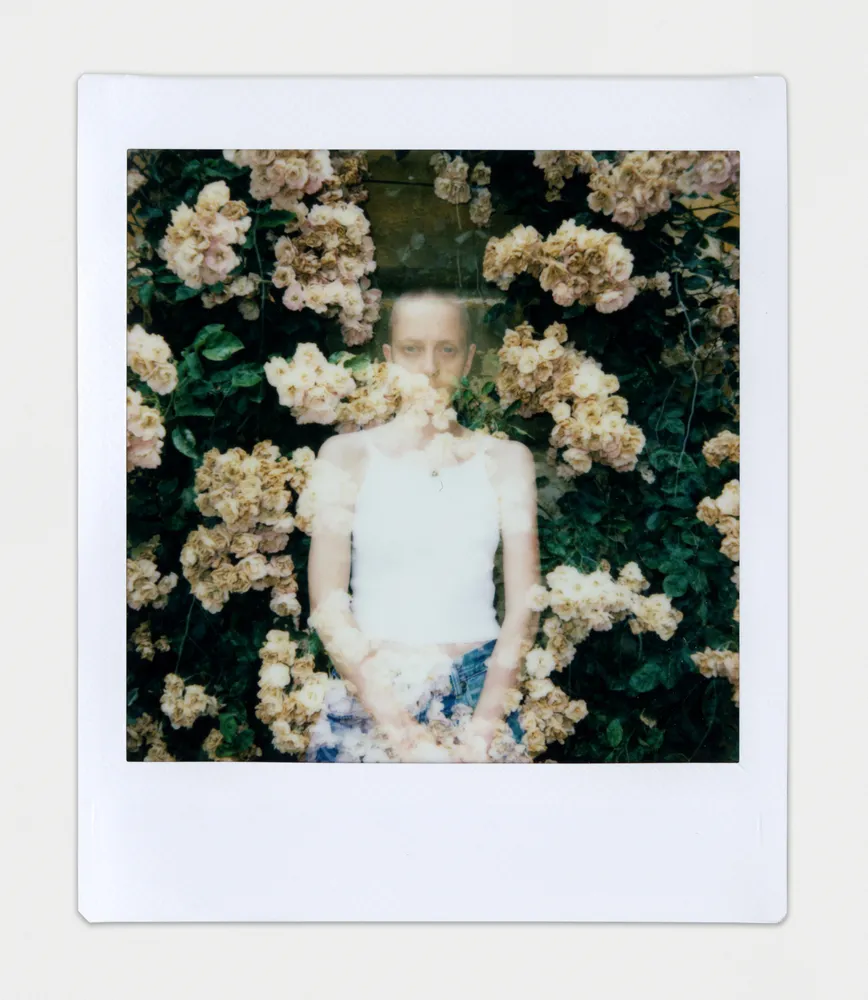
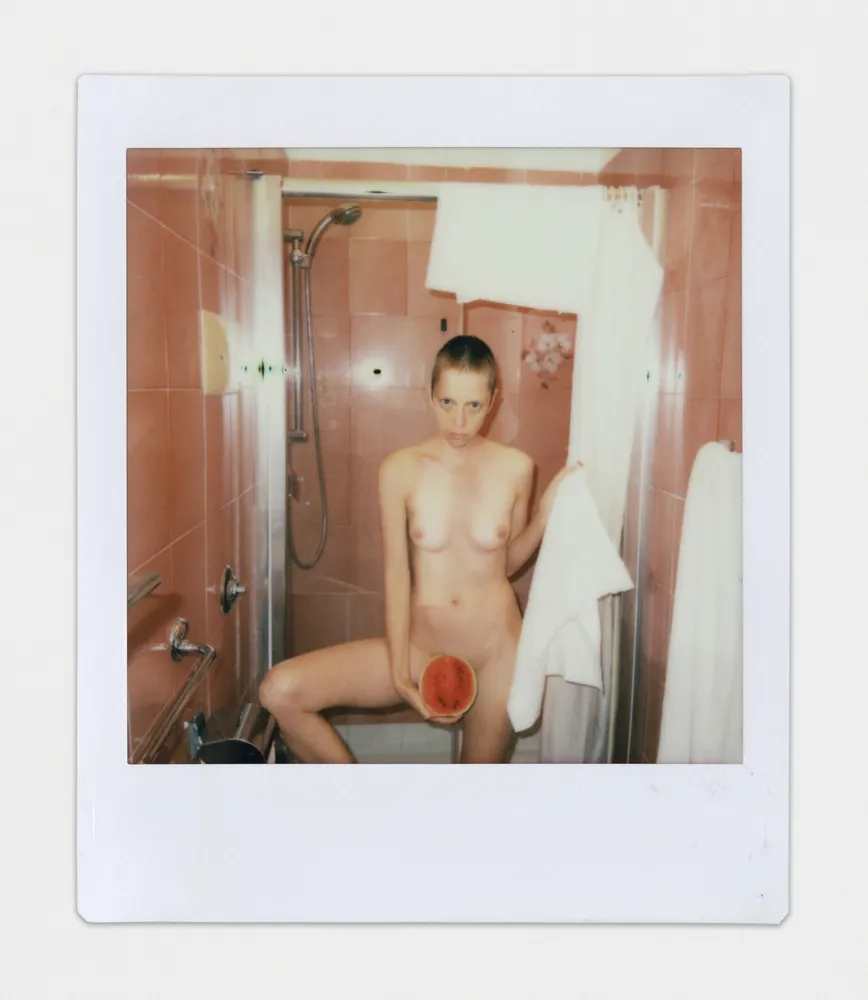
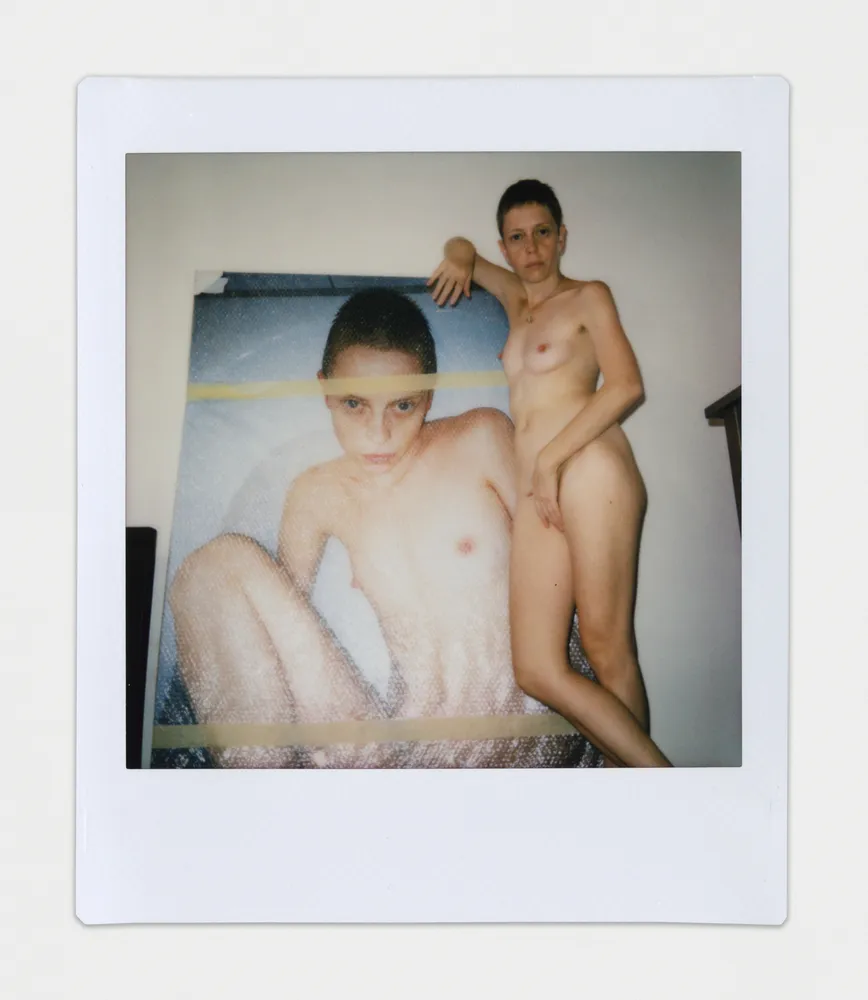
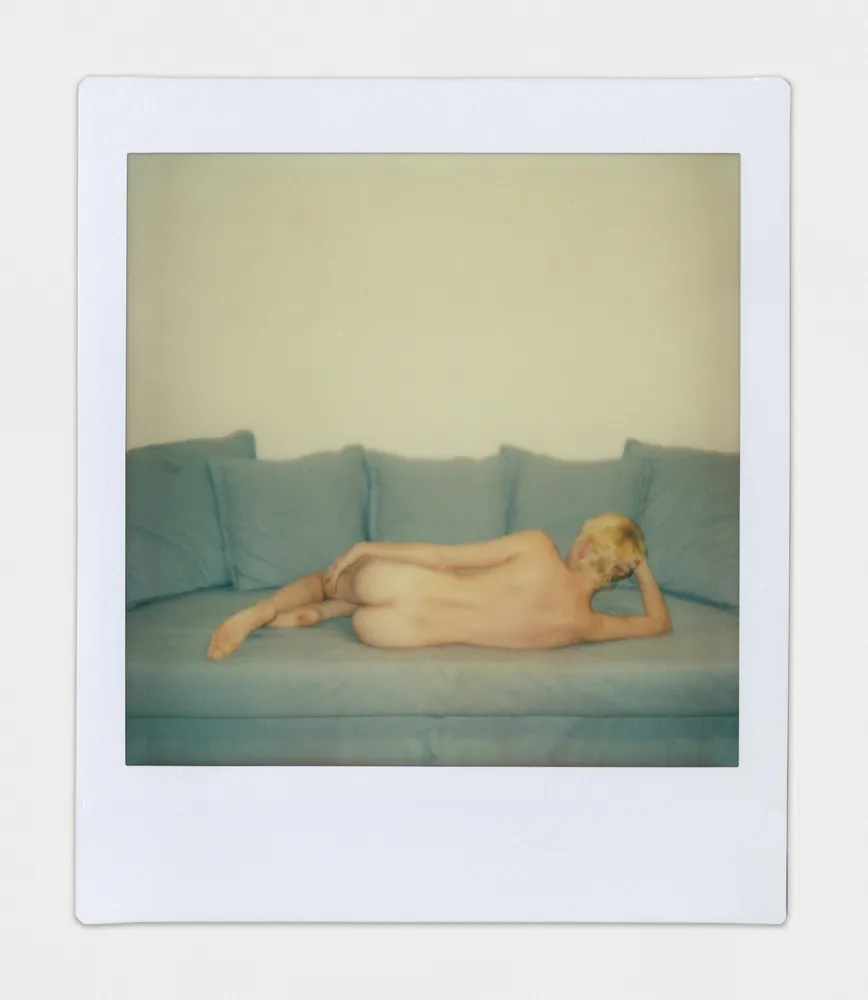
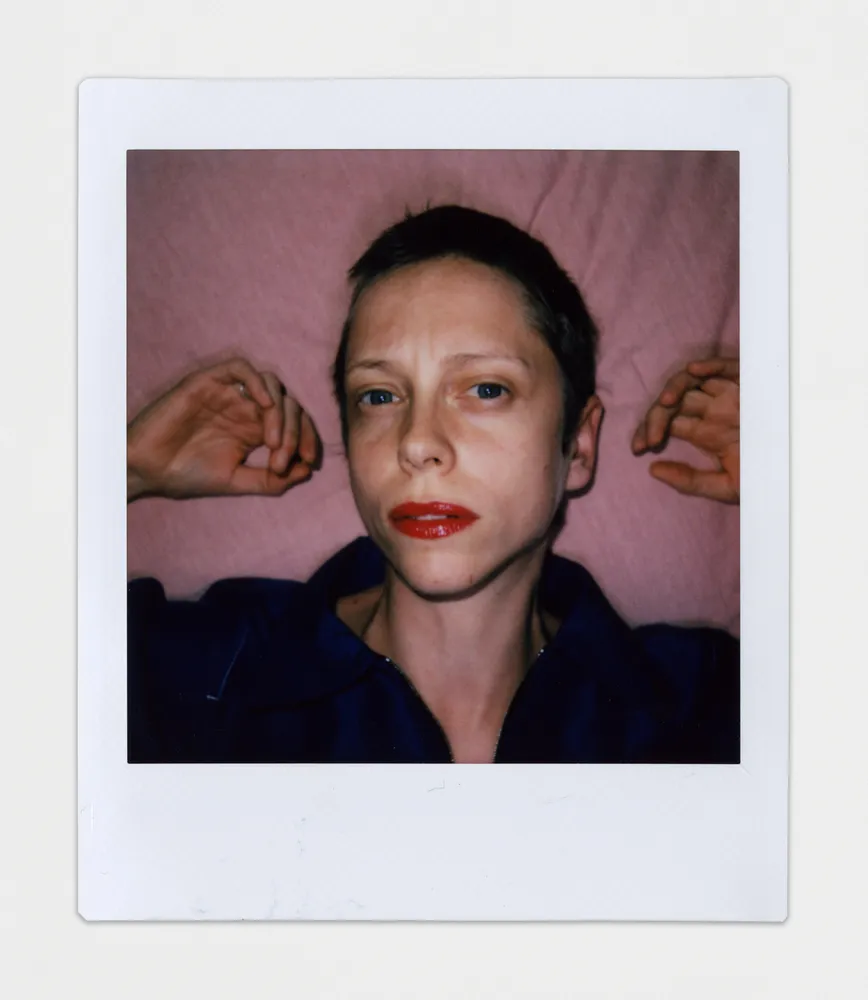
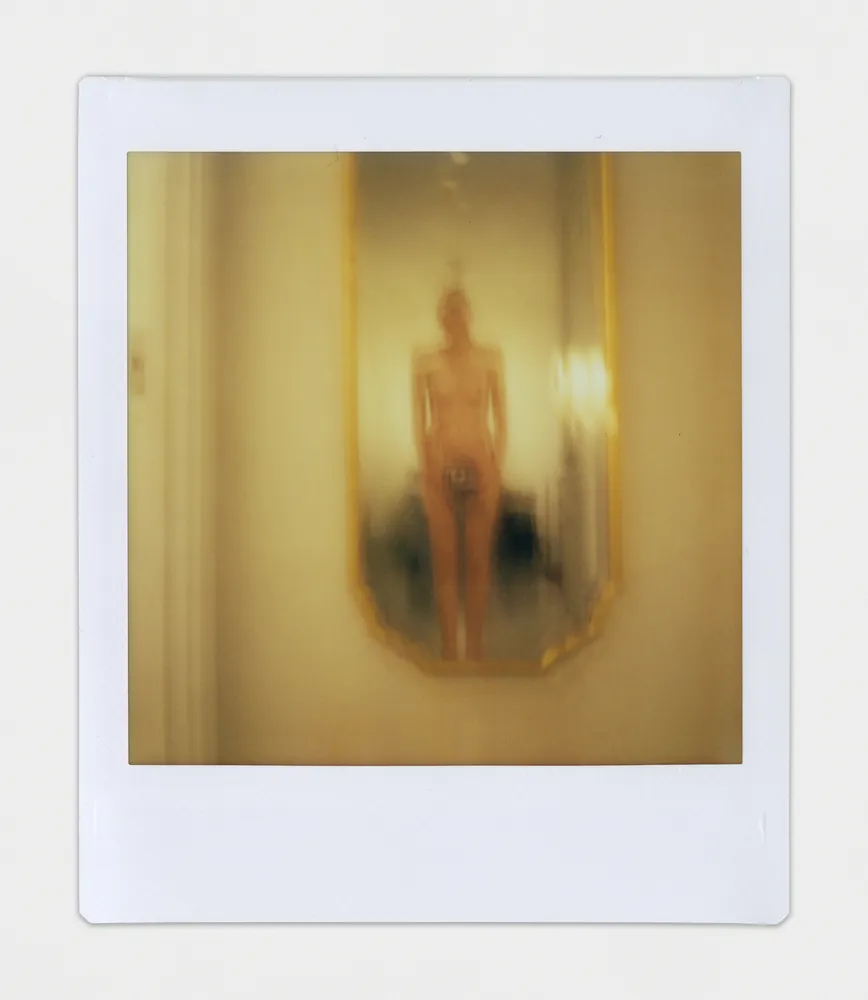
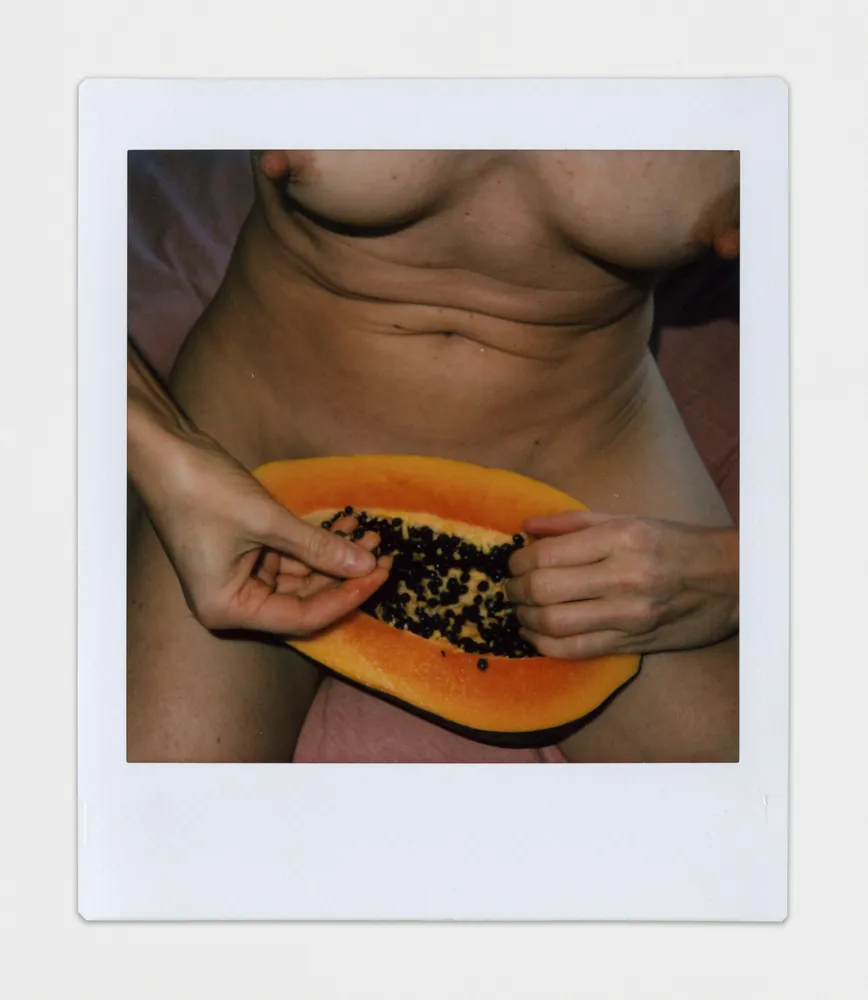
The Fujifilm Instax Square SQ6 is a consumer instant camera producing 62×62mm prints that develop in roughly ninety seconds. Each print is a singular physical object. Its double exposure mode superimposes two sequential shutter releases onto a single frame — a feature marketed to casual users that Tomanova treats as a formal instrument: she layers her body onto landscapes, buildings, or itself, so that light and shadow acquire volumetric presence within the same small surface. The camera’s constraints — fixed focal length, narrow flash range, three fixed focus zones — are conditions she works within. The Instax format carries the cultural connotations of accessibility, of teenage bedrooms and birthday parties. Sustaining it as the sole medium of a one-year durational practice is a critical claim about what kinds of image-making deserve serious attention.
The square format matters too. The 1:1 ratio, shared with the original Polaroid and later with Instagram’s founding layout, refuses the portrait/landscape decision — the image is neither vertical nor horizontal, neither a body nor a vista. It is a neutral container into which Tomanova places herself daily, under conditions she controls and withholds from the viewer.
Why signifiers of place, identity, and time are systematically obscured across the entire body of work
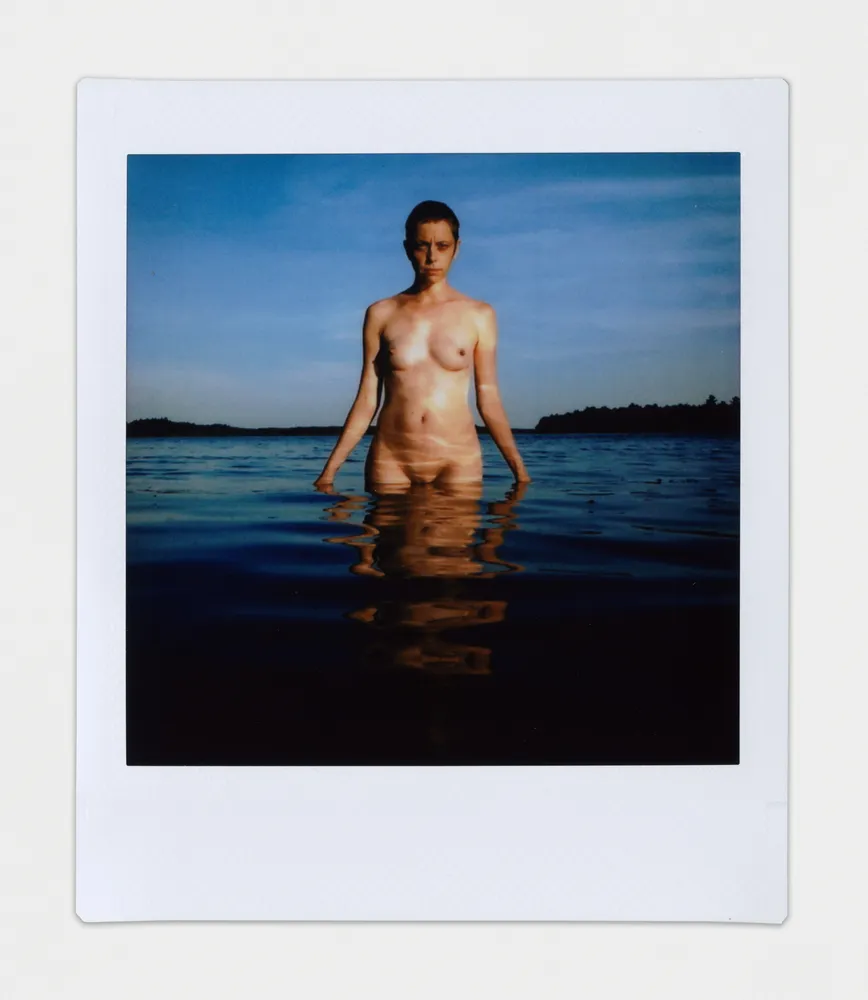
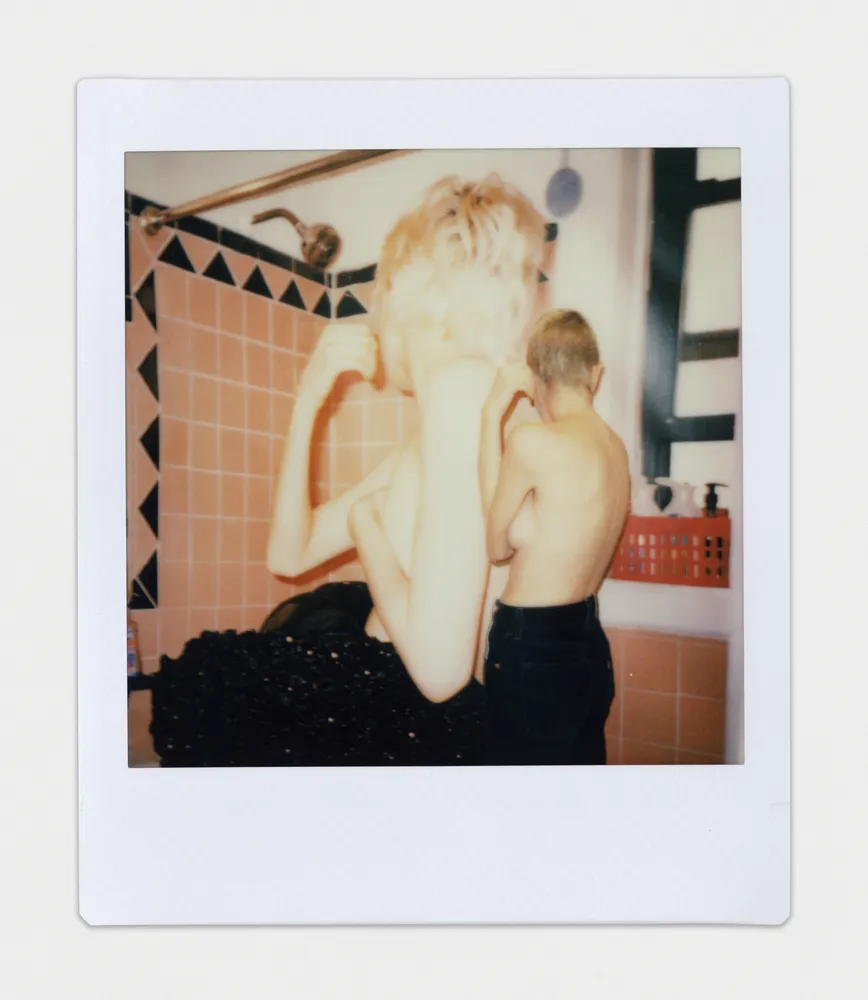
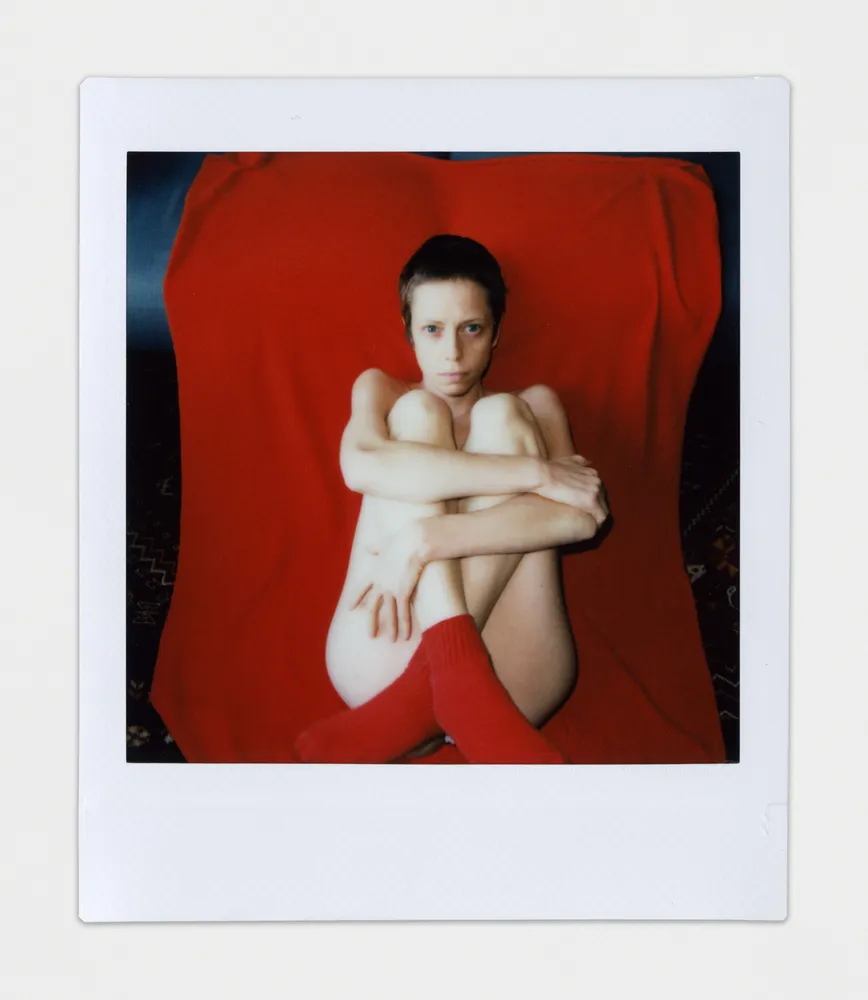
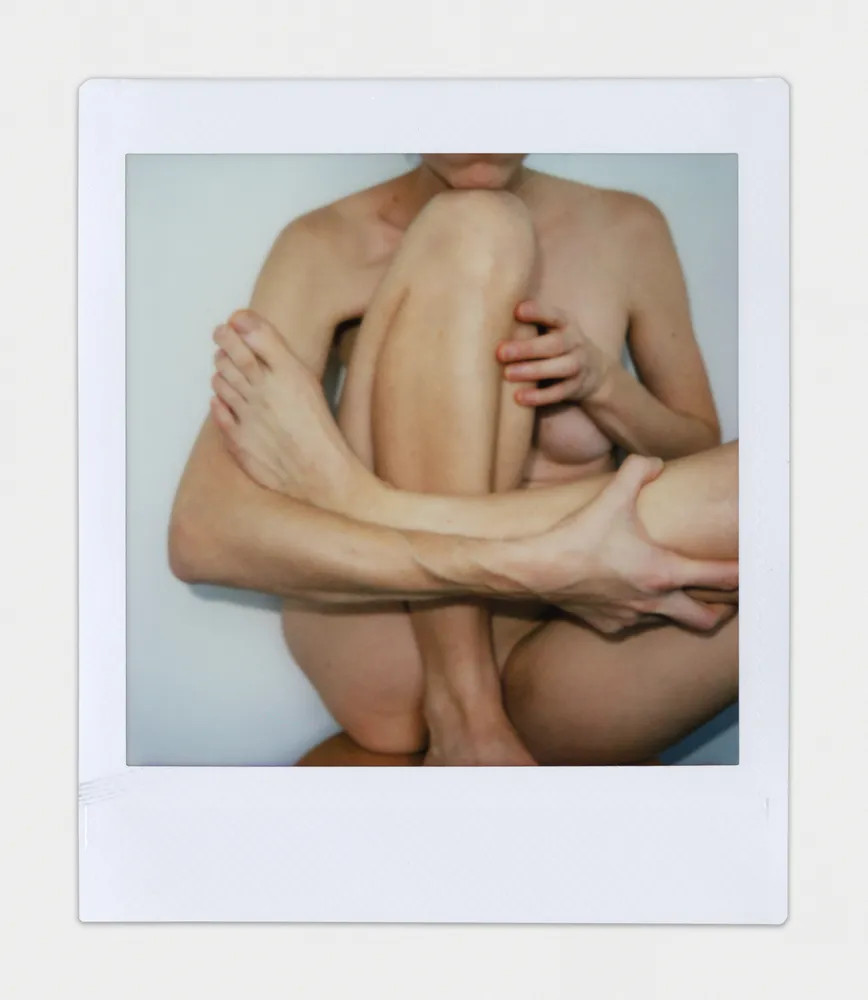
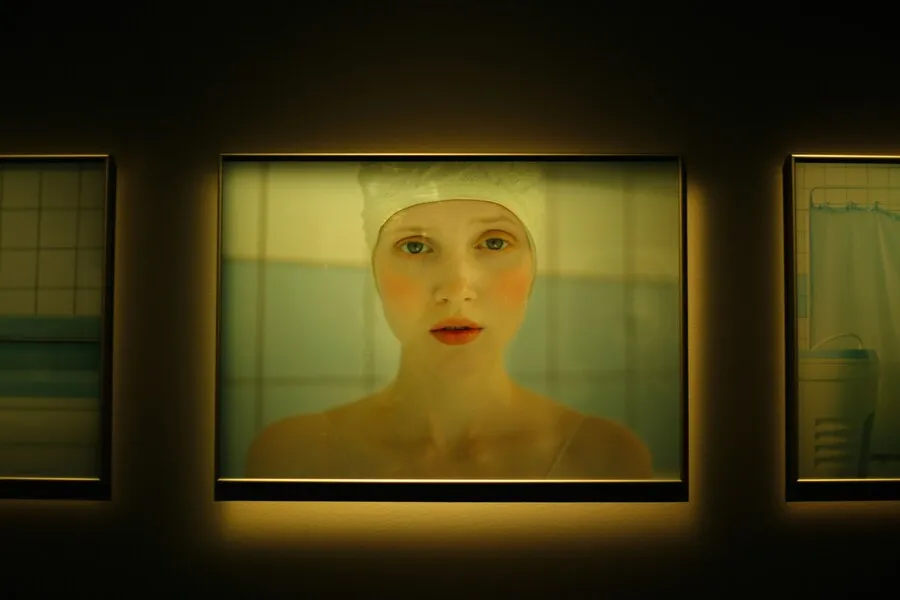
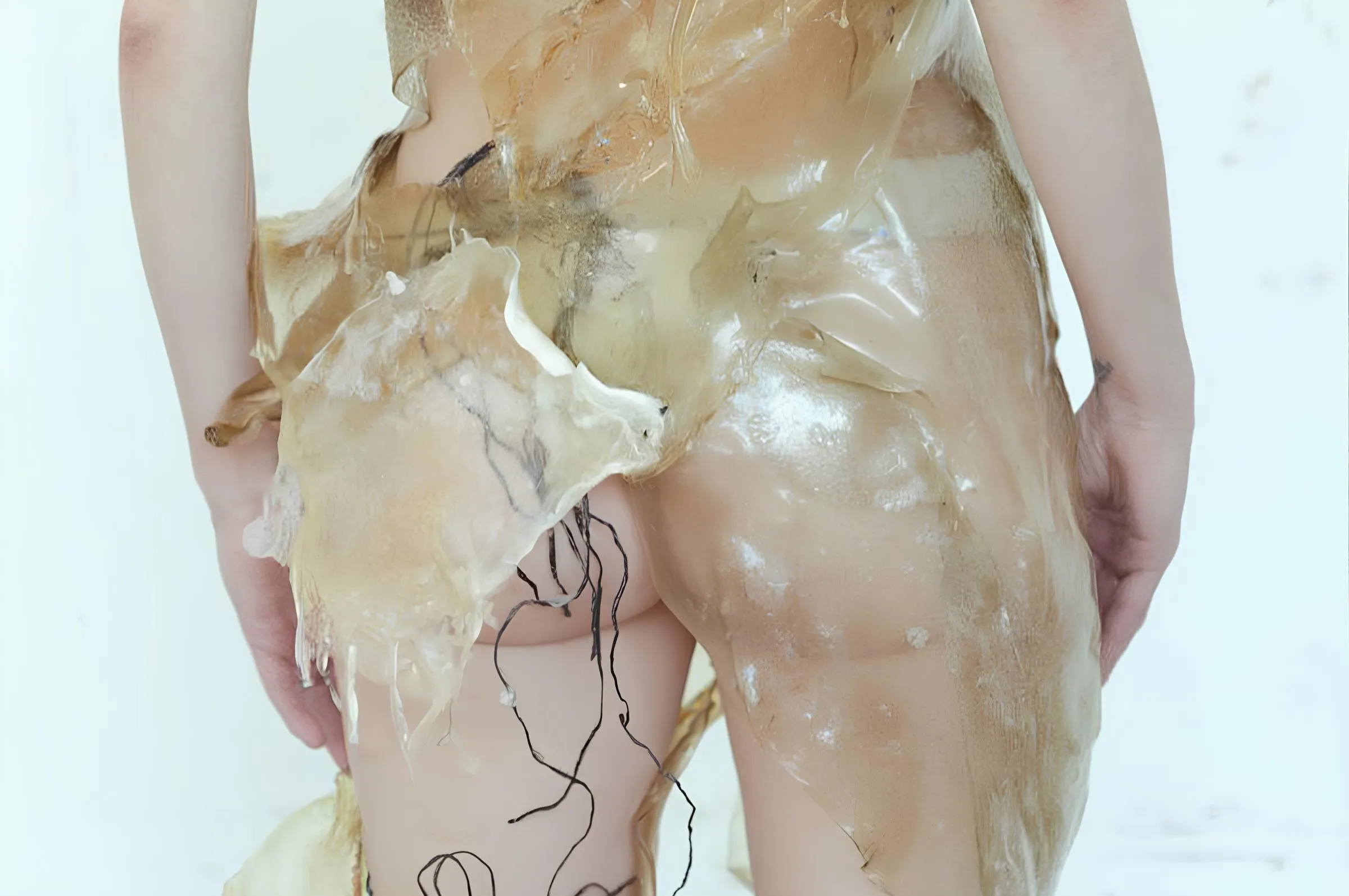
The images refuse easy location. Signifiers of place and time are made illegible. Tomanova frequently assumes crouching or fetal positions — poses that read as deflection, as if the camera were an intrusion rather than an instrument she holds. Fruit, flowers, and foliage recur: they cover the genitals in a gesture that has a long iconographic history in Western painting, and simultaneously function as erotic displacement, loading the natural material with a symbolic freight — purity, fertility, beauty — that presses against the body it frames. The effect is to expose the cultural imperative rather than comply with it.
The double exposure compounds the ambiguity. When Tomanova superimposes her body on a building or a landscape, figure and ground become inseparable. The body is present and ghosted simultaneously. This is Francesca Woodman’s formal inheritance — the dissolution of the female body within its environment — relocated from the abandoned interiors of Providence and Rome to wherever Tomanova happened to be on a given day across one years. Where Woodman used long exposure to blur the body through duration, Tomanova collapses two moments into one frame.
The lineage the work activates is specific and worth tracing. Nan Goldin’s The Ballad of Sexual Dependency (1986) established the diaristic impulse taken to structural extremes — an archive of intimacy between photographer and community that the viewer enters as an intruder. Melissa Shook’s daily self-portrait project, begun in 1972, is the most literal formal precedent for what Tomanova does here. Friedl Kubelka’s Jahreszeiten (1974–76), daily self-portraits made over one year, is the most direct antecedent, placing Three Empty Weeks in July within a feminist conceptual genealogy that runs through the periphery of Vienna Actionism. Yurie Nagashima is the most politically acute point of reference: her nude self-portraits with her family, made in Japan in the early 1990s, were conceived as a deliberate refusal of the male-controlled representation of the female body — a formal assertion of ownership over one’s own image.
The gap as structural element: what the three empty weeks in July reveal about durational art and documentary incompleteness
Three Empty Weeks in July belongs to a tradition in conceptual art in which the work is constituted by a set of rules and the process of following them. On Kawara’s Today series of date paintings, sustained from 1966 until his death in 2014; Tehching Hsieh’s year-long performances in which he punched a time clock every hour; Sophie Calle’s Suite Vénitienne, in which she followed a stranger through Venice for a month — all treat duration and constraint as the primary medium, with individual outputs mattering less than the accumulated fact of the daily commitment.
Tomanova’s specific contribution to this tradition is the gap itself. The three weeks when she was inactive are structural, built into the title and left unresolved within the archive. They mark the halting incompleteness of any documentary practice — the acknowledgment that an archive of a life is always already full of holes, and that pretending otherwise is the first lie any diarist tells. The gap is where that pretense breaks down. Breaking it down is part of the argument.
Why Marie Tomanova’s daily self-portrait project exposes the constructed intimacy of contemporary image culture
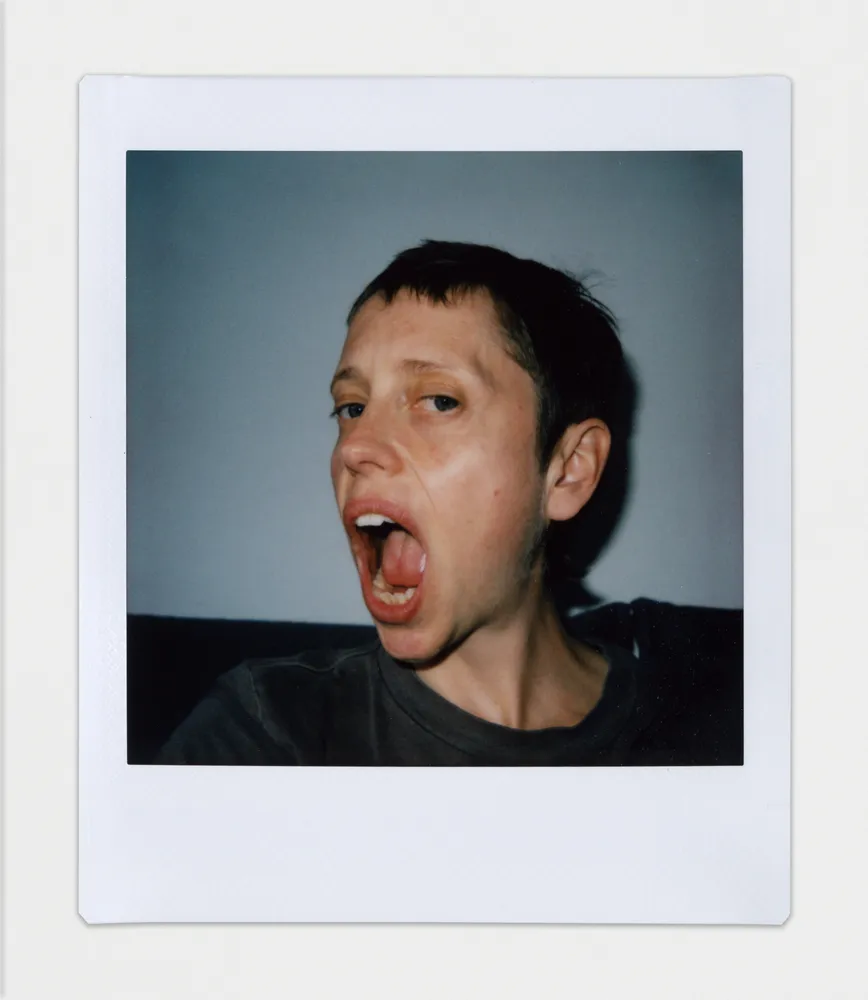
The strongest claim the work makes is about the viewer. The closeness one feels when looking at intimate self-portraits is a constructed sensation — a fiction the viewer produces and then mistakes for access. Daily photographs of a person, however personal, however raw or manic or solemn, yield a sensation, not a subject. The images carry no captions, no coordinates, no explanatory context. The viewer fills that absence with projection, and the projection reveals more about the cultural appetite for intimacy than about the person in the frame.
Tomanova’s earlier Displacements series (2012–2016) located herself in an unfamiliar landscape by photographing herself within it — self-translation through image, identity established through context. Three Empty Weeks in July systematically refuses that operation. The indistinct background, the obscured face, the repeated crouching pose withhold the contextual information that would allow the viewer to feel they had learned something. What is produced instead is the sensation of closeness, drained of content.
The daily self-portrait has become one of the defining image-genres of the last fifteen years, driven by platforms that reward regularity, vulnerability, and the performance of authenticity. Tomanova works inside that formation while refusing its logic: she produces the daily image with the consumer camera, and withholds the transparency the social media selfie promises. The viewer’s expectation of access — the belief that more images mean more knowledge — becomes the subject of the work rather than the mechanism of its reception.
Marie Tomanova (b. 1984, Valtice, Czech Republic) lives and works in New York. She holds an MFA in painting from Brno University of Technology. Her photobooks include Young American (Paradigm Publishing, 2019), New York New York (Hatje Cantz, 2021), It Was Once My Universe (SuperLabo, 2022), and Kate, For You (Untitled Publishing, 2025). Her work has been shown at the Rencontres d’Arles (Louis Roederer Discovery Award, 2021), Paris Photo (2023), and the Moravian Gallery, Brno (2025). An HBO documentary on her practice, World Between Us, directed by Marie Dvořáková, premiered at the Ji.hlava International Documentary Film Festival in 2024.
Marie Tomanova: Three Empty Weeks in July is on view at Harkawik, 88 Walker Street, New York, NY 10013, through July 11, 2026. Tuesday–Saturday, 11 a.m.–6 p.m.